This story was originally reported by Candice Norwood of The 19th. Meet Candice and read more of their reporting on gender, politics and policy.
A mother shoved to the ground in front of her children in the hallways of a immigration courthouse in New York. A young woman pulled from her car and handcuffed on a busy street in Key Largo, Florida. A child care worker dragged out of her workplace in Chicago, in front of parents and children. A pregnant woman yanked by one arm through the snowy streets of Minneapolis.
In each of these cases, the aggressors were men working for Immigration and Customs Enforcement (ICE) and their actions were caught on video widely shared online.
Then came Renee Nicole Good.
The 37-year-old mother of three and her wife had dropped off their 6-year-old son at school and were blocks away from home when they stopped by an ICE protest to “support their neighbors,” according to Good’s wife, Becca. People had gathered to blow whistles and shout to alert nearby residents about ICE’s presence in Minneapolis’ Central neighborhood.
 Video taken at the scene from different angles and analyzed by multiple news outlets shows Good trying to leave as an ICE agent grasps at the driver-side door handle of her car. A second agent, later identified as Jonathan Ross, was standing toward the front of the car. He fired at least three shots aimed at Good as she attempted to drive away. An agent can be heard saying in one of the videos, “Fucking bitch” after the shots were fired.
Good was killed.
Trump and Vice President JD Vance have, without evidence, accused Good of attacking Ross and justified his actions as self-defense.
There is no database tracking when ICE agents use force against women. But a growing number of videos captured throughout the first year of the second Trump administration offer some insight into the violent encounters that women have experienced: broken car windows, yanking, shoving, pepper-spraying and shootings, all of them out in the open and available on social media.
ICE agents’ history of violence against men, women and transgender people in detention facilities has been documented. Gender-based violence researchers told The 19th that the widespread visibility of physical violence against women in public spaces does not happen in a vacuum and goes hand-in-hand with the policies and messaging coming from the administration.
 The visible attacks shared online come on the heels of President Donald Trump insulting women reporters as “piggy” and “ugly” and downplaying the severity of domestic violence. They also come at a time when reproductive rights and access to gender-affirming care have been significantly restricted, and as funding for gender-based violence services and research centering women and LGBTQ+ people has been stripped.
“All of these things converge to entrap women and make more violence in their lives and have fewer ways for them to escape the violence,” said Dr. Carolyn West, a professor of psychology at the University of Washington Tacoma. “So, it's not just the violence in your home, it's the violence in your workplace, it's the violence in the larger community. It's state-sponsored violence; all of these things converging together.”
“State-sponsored violence,” as West refers to it, is a term used by researchers to discuss violence perpetrated by government authorities, including local and federal police and ICE agents.
Between 1999 and 2015, the percentage of women who made up the population of people experiencing police use of force increased from 13 percent to 25 percent according to an analysis by the nonprofit think tank Prison Policy Initiative.
A study published in the journal for the National Academy of Sciences, based on data from 2013 to 2018, found that Indigenous women and girls experienced a lifetime risk of 4 per 100,000 potentially being killed by police, while the rate for Black women and girls ranged from 2.4 to 5.4 per 100,000; the rate for White women and girls was 2 deaths per 100,000. A 2022 survey of LGBTQ+ people found that 25 percent said they were verbally assaulted during their most recent encounter with police, 13.4 percent said they were sexually harassed and 12.8 percent said they were physically assaulted.
Data tracking use of force by members of law enforcement is underreported and not standardized across the thousands of law enforcement agencies throughout the country, so what is available does not fully reflect the scope of the issue.
For example, the most recent data from government sources, news and academic analysis do not capture specific rates of force among immigration officials against women. One report, by the American Immigration Council, indicates that ICE encounters and arrests with women increased from the end of the Obama administration through the beginning of Trump’s first term. Scenes of Latinas on the receiving end of violence by ICE agents are more common among recent online videos, in part because about half of all immigrants in the United States are from Latin America.
This dearth of more complete data is more apparent in the current Trump administration, researchers said. Over the course of the last year, executive orders on gender and diversity, equity, inclusion and accessibility banned the use of certain words. As a result, federal departments and some advocacy groups that cater to marginalized populations removed these words from information in their grant applications and on their websites.
“I'm writing something now and I’ve got seven configurations of the word gender that can't be used in a grant application,” said Dr. Earl Smith, a professor of women and gender studies at the University of Delaware.
West stated that the lagging research and support for data create a vicious cycle: without updated data, it becomes impossible to show there is a problem, she said.
“It's almost like a willful ignorance,” West said. “If we can not collect the data, if we defund all these programs, and if nobody's counting, then there’s the gaslighting that says, ‘Well, there's no data to say there’s a problem.’”
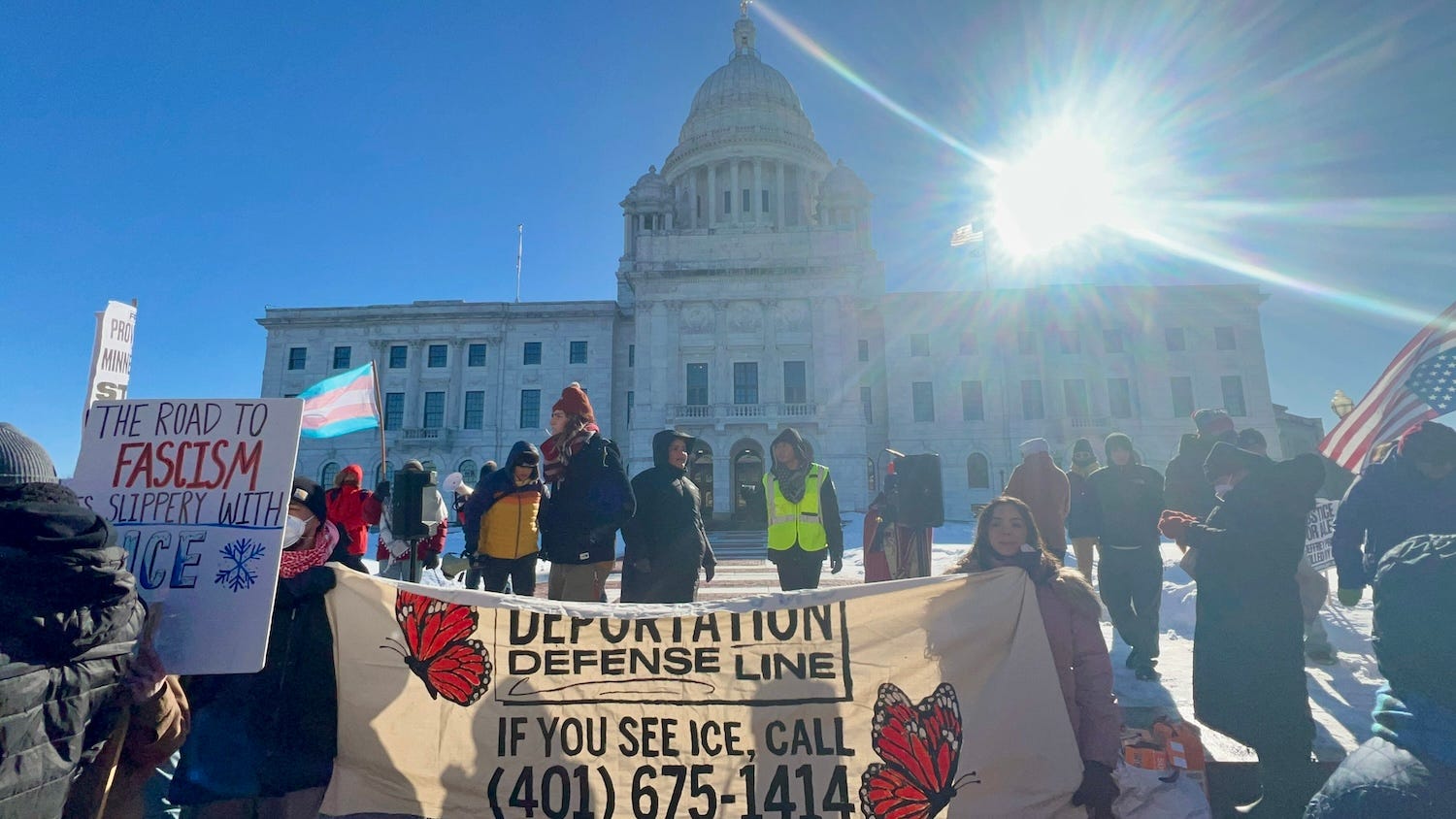
This has been part of the challenge when speaking about violence by ICE agents since the start of the second Trump administration, researchers said. Without comprehensive tracking, it is difficult to demonstrate a pattern of behavior and its effects. Still, as immigration enforcement escalates to unprecedented levels during the second Trump administration, unbothered by objections and court challenges by state and city leaders, the increasing presence of online videos depicting violent ICE encounters with women has caught public attention, fueling outrage and protest that, at times, has led to more violence.
Six days after the fatal shooting of Good, a video shared and liked by thousands on the social media site Bluesky shows ICE agents in Minneapolis breaking the car window, cutting the seatbelt and forcibly removing a woman of color from her car as she screams, “I’m disabled.”
In another video, a woman can be heard saying “shame on you” to an ICE agent in Minneapolis. In response, the officer says, “Have you all not learned from the past couple of days?" presumably referring to Good’s killing. He then appears to grab the woman’s phone out of her hand.
Reflecting on this dynamic, Hillary Potter, an associate professor of Women and Gender Studies at the University of Colorado Boulder, said, “I wonder how much of that culture of machismo, toxic masculinity, whatever you want to call it, is impacting how ICE agents are treating women in the field.”
Potter and other researchers agreed that violence against Black, Brown and LGBTQ+ women has been normalized for years. Good was a White queer woman who was killed while participating in a neighborhood protest to show solidarity with immigrant communities. In Minneapolis, Latinos, Somalis and Hmong people have been the main targets of ICE enforcement actions.
“This is new to the current generation of folks looking in,” Smith said. “But Black folks for sure, Somalis, for sure, Hmong people in Minneapolis — they know the deal. They've been abused for years.”
Trump, meanwhile, has called Good “very violent” and “very radical,” and said she was “very, very disrespectful to law enforcement” before she was shot dead. It is a similar kind of language he has used to vilify immigrants of color and justify his administration’s pursuit.
“We've seen countless numbers of marginalized women, transgender women, who have been brutalized by law enforcement,” West said. “So it's really interesting to me at this time that White people are seeing that they're not going to be protected either. Your Whiteness and your femaleness is not going to protect you, not from these systems.”




.webp)