Blue is not Green: ...What, exactly, is the money for?
Rhode Island will soon be voting on five ballot measures to
borrow money for education, housing, economic development, cultural
improvements, and the green economy. 
These signs can be found across North Kingstown
I want to focus on Question 3: a $100 million investment in the so-called Blue Economy. The question reads:
- Economic
Development $100 million: Approval of this question will allow the
State to issue general obligation bonds, refunding bonds, and/or temporary
notes in an amount not to exceed one hundred million dollars to fund
industrial facilities infrastructure improvements for economic development
purposes, to fund site development and growth industry infrastructure, to
be allocated as follows:
- Site
Development: Provides $55 million for land acquisition or assembly,
environmental remediation, infrastructure and utility installation, site
preparation or development, and project investments. Eligible uses
include, but are not limited to, large-scale industrial site development
to create pad-ready locations and/or facilities, infrastructure
improvements and investments within the Quonset Business Park, and land
acquisition, preparation, and project investments within the I-195
District.
- Growth
Industry Infrastructure: Provides $45 million for infrastructure,
facilities, projects, and investments that support Rhode Island’s ocean,
defense, life sciences, data analytics, and related industries. Eligible
uses include, but are not limited to, water-based test ranges and onshore
ocean- or defense-related innovation/production facilities, as well as
facilities, projects, and investments that advance businesses and job
growth in the life sciences.
Question 3 will almost certainly pass. As far as I can tell, every bond question sent to Rhode Island voters for approval over the last two decades has passed. [Note: A $100 million bond, paid back over 20 years at 5% interest, will ultimately cost Rhode Island taxpayers over $160 million.] But what, exactly, is the money for?
The phrase “[e]ligible uses include, but are
not limited to” is extremely broad. A literal reading of the phrase could
include any imaginable expenditure. Similarly broad is the phrase, “investments
that support Rhode Island’s ocean, defense, life sciences, data analytics, and
related industries.” Does “data analytics” include data centers? Such an
investment is certainly covered by the phrases “related industries” and “not
limited to.”
The Blue Economy is bullshit
You may have heard the phrase “Blue Economy” bandied about
by our federal delegation and local state and corporate leaders. The Grow Blue Partnership, a Rhode
Island-based coalition of industry groups, environmental organizations,
government agencies, and academic institutions, including the University of
Rhode Island (URI), defines the Blue Economy as “the sustainable use of the
ocean to create a resilient economy and good-paying jobs.” Which sounds great,
until you realize that defense contractors make up a substantial chunk of the
Blue Economy.
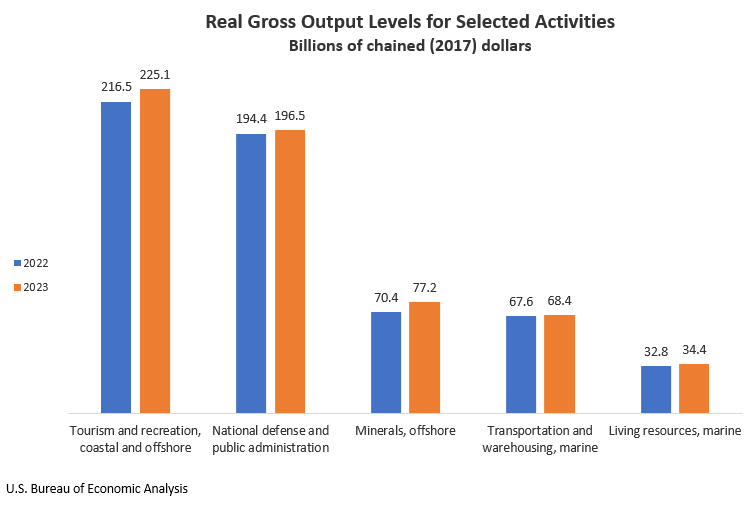
The Bureau of Economic Analysis estimates that defense accounts for 23-33% of all Blue Economy dollars and is the second-largest sector, after tourism and recreation.
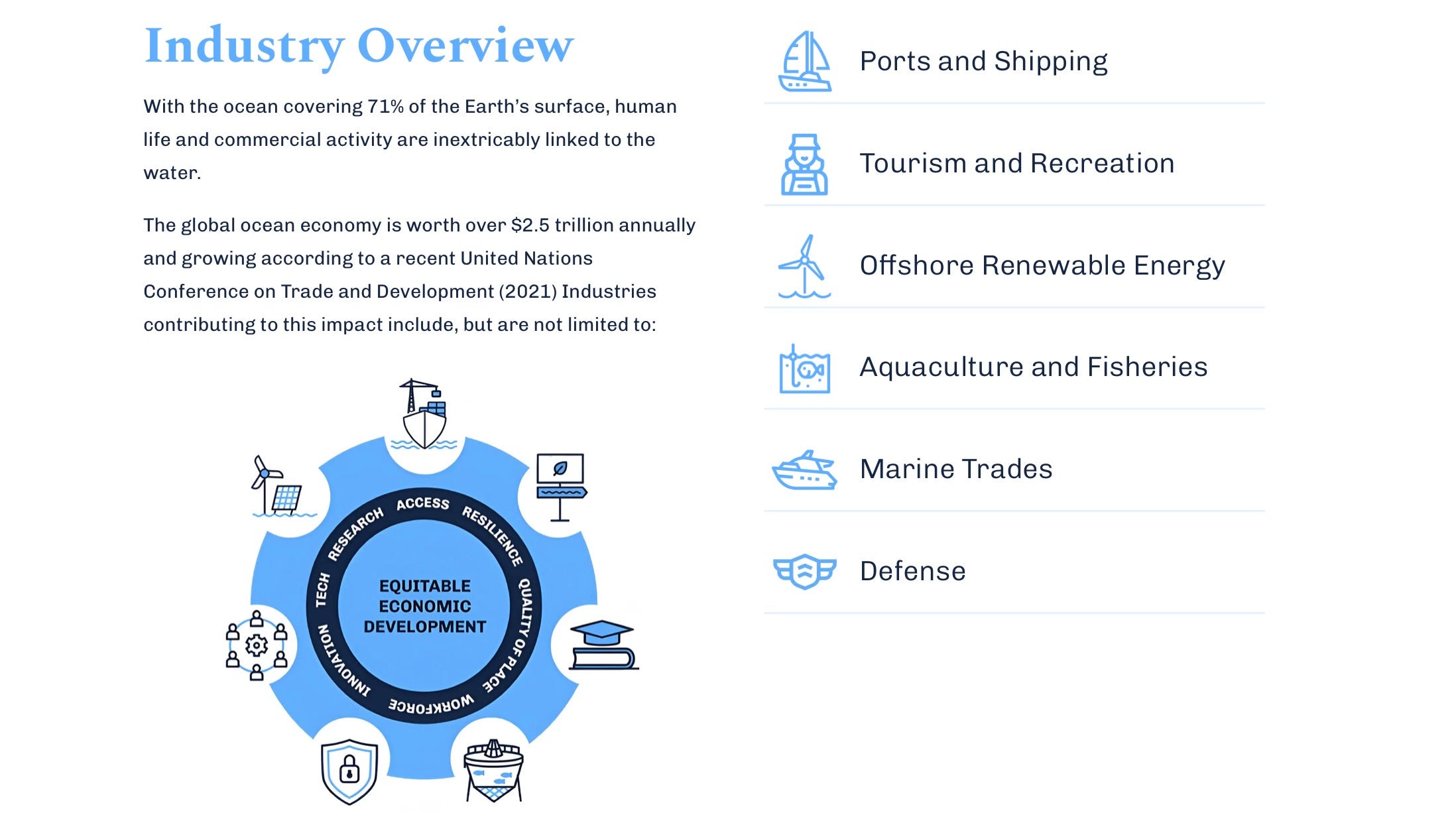
The Blue Economy is sold as wind turbines, fisheries, quahog farms, and sailboats, and it is that, but it also includes nuclear submarines, missile guidance systems, and surveillance technology.
For more on the Blue Economy and why it’s bullshit, see:
- The
‘Blue Economy’ Myth: We Have to Stop Thinking the Ocean Can Be Run Like a
Business
- It’s
the (Blue) Economy, Stupid! Marine Regeneration and Prosperity Beyond
Growth at the UNOC 2025 Ocean Basecamp
- Rethinking the
Blue Economy: Integrating social science for sustainability and justice
The R.I. Ports Coalition, a 501(c)4 organization
Driving passage of Question 3 is the R.I. Ports Coalition, a
501(c)4 nonprofit organization “formed in 2016 to advocate for Rhode Island’s
ports and maritime industry, and the overall growth of our state’s economy.”
Who are they? Take a look:
- Board
of Directors
- Gavin
Black, President; Moran
Shipping
- Patricia
Testa, Treasurer; Quonset
Development Corporation
- Justin
Miranda, Secretary; North
Atlantic Distribution (NORAD, not to be confused with the North
American Aerospace Defense Command)
- Top
5 Donors
- Electric Boat: General Dynamics
regularly ranks as one of the top five military contractors in the United
States
- DiPrete Engineering Associates
- J. Goodison Company: Shipyard and
Marine Repair Services
- J.R. Vinagro Corporation
- New
England Waste Systems: Recently constructed a 47,500-square-foot
road-to-rail construction and demolition debris transfer station in
Quonset.
This is the Blue Economy. It’s not about seafood, beaches,
and saving the whales. It’s about the profit-driven exploitation of the oceans
as a resource and a theater of war.
Blue is not Green
Rhode Island made a big investment in offshore turbines. Revolution
Wind just came online and will soon provide almost a third of Rhode
Island’s electric power. Future wind projects, now canceled or imperiled by the
Trump Administration, might have made Rhode Island energy independent,
and will hopefully resume one day. This is what people commonly think of when
they think about a Blue Economy: green energy projects and a cleaner, greener
future for our oceans.
If Question 3 were honestly phrased, we would read about a
series of investments - some good, some bad - some in keeping with what Rhode
Islanders desire in terms of energy independence and a cleaner, greener future,
and some in direct contradiction to those desires. Even carefully phrased Bond
questions have resulted in money being spent in ways voters did not intend to
support.
Under Governor Daniel McKee, the Rhode Island
Public Transit Authority (RIPTA) repurposed $17 million from a 2014
transit bond to fund the relocation of Providence’s main bus hub out of Kennedy
Plaza. The bond said nothing about relocating the bus hub; the bond was
intended to “fund enhancements and renovations to mass transit hub
infrastructure…”
Economic development can be a worthwhile investment. But voters should know exactly what kind of development we’re paying for. Any promises made today about how the money will be spent will be meaningless: the decisions will be made years from now, likely by people who have yet to be elected. Rhode Islanders don’t want their money contributing to fossil fuel projects and data centers. We should reject ambiguously worded bond questions that leave such possibilities open.