Let them play it, not eat it

The study tested products for more than 122 industrial and
environmental contaminants and toxins, including heavy metals, phthalates,
pesticides, herbicide residues and processing by-products. The findings show
that while heavy metals are widespread across the cat food category,
contaminant levels can vary significantly depending on protein source, food
format and ingredient composition.
The new research expands Clean Label Project’s ongoing
examination of the pet food category following its dog food study released
earlier this year, giving cat owners a similar look at contaminants that are
not disclosed on traditional product labels.
“Cat owners trust that the food they put in their pet’s bowl every day is safe, but there is an enormous amount of information they simply cannot get from the label,” said Molly Hamilton, Executive Director of Clean Label Project. “Finding heavy metals in nearly every product we tested is concerning, but what is especially striking is how dramatically contaminant levels can vary depending on the protein source and type of food.”
Key findings from the study include:
– Heavy metals were widespread. Lead was detected in 99% of
products, cadmium in 96% and arsenic in 94%.
– Protein source mattered. Nearly 85% of poultry-based foods met Clean Label
Project’s purity standard, compared with 25.7% of fish and seafood products.
– Fish-based foods had far more mercury. Fish and seafood products contained
about 18x more mercury overall, and fish-based wet foods about 28x more than
other wet foods.
– Dry food carried more lead. Dry cat food contained roughly 3x more lead than
wet or air-dried products.
– More plant ingredients meant more herbicide residue. Each additional plant
ingredient among the first 10 was associated with about 40% higher glyphosate
levels.
– Packaging mattered too. Canned and pouched foods carried about 5x more DEHP
than bagged products where it was detected.
Seafood stood out as one of the clearest patterns in the
study. Nearly half of fish and seafood products ranked among those with the
highest mercury levels, while no poultry-based products did. Fish-based
products also contained approximately 2.5 times more cadmium than other
products.
The findings do not mean these contaminants are
intentionally added to cat food. Heavy metals can occur naturally in soil,
water and marine environments and enter products through both animal and plant
ingredients. Other contaminants may be introduced through processing or
packaging. Clean Label Project’s analysis found that lower contaminant levels
are achievable through ingredient sourcing, supplier testing and stronger
quality controls.
What the Label Doesn’t Tell You
The study also examined whether the first ingredient listed
on a cat food package provides consumers with a complete picture of what is in
the product.
In more than one-third of products tested, the first-listed
ingredient was outnumbered by ingredients from another category within the
first 10 ingredients. In many cases, a meat or fish ingredient appeared first,
but the broader ingredient list contained multiple plant-based ingredients.
Products with more plant ingredients near the top of the
ingredient list tended to contain higher levels of glyphosate, while products
where plant ingredients outnumbered the named meat or fish also carried more
lead.
“Cats may eat the same food every day for years, so even
small differences in what is in that food can matter over time,” Hamilton said.
“The good news is that our testing shows lower contaminant levels are
achievable. Cat owners deserve greater transparency, and brands have an
opportunity to look more closely at their ingredients, sourcing and finished
products to reduce unnecessary exposure.”
Expanding the Look at Pet Food
The cat food study follows Clean Label Project’s dog food
research released earlier this year and represents the organization’s continued
expansion of independent testing across the pet food category.
Together, the studies are intended to give pet owners
greater visibility into how ingredients, sourcing, processing and product
format may influence contaminants in foods their pets often consume day after
day.
Clean Label Project purchased 100 cat food products from
62 brands across three product formats: dry, wet, and air-dried or
freeze-dried. Testing was performed by an independent analytical chemistry
laboratory using accredited analytical methods.
Because wet and dry foods differ significantly in water
content and calorie density, results were standardized on a
per-1,000-kilocalorie basis, allowing products to be compared based on
equivalent caloric intake rather than simply by food weight.
The full Clean Label
Project Cat Food Category Report, along with the organization’s Clean
Sixteen lists recognizing the highest-rated wet and dry cat foods for purity,
is available at cleanlabelproject.org.
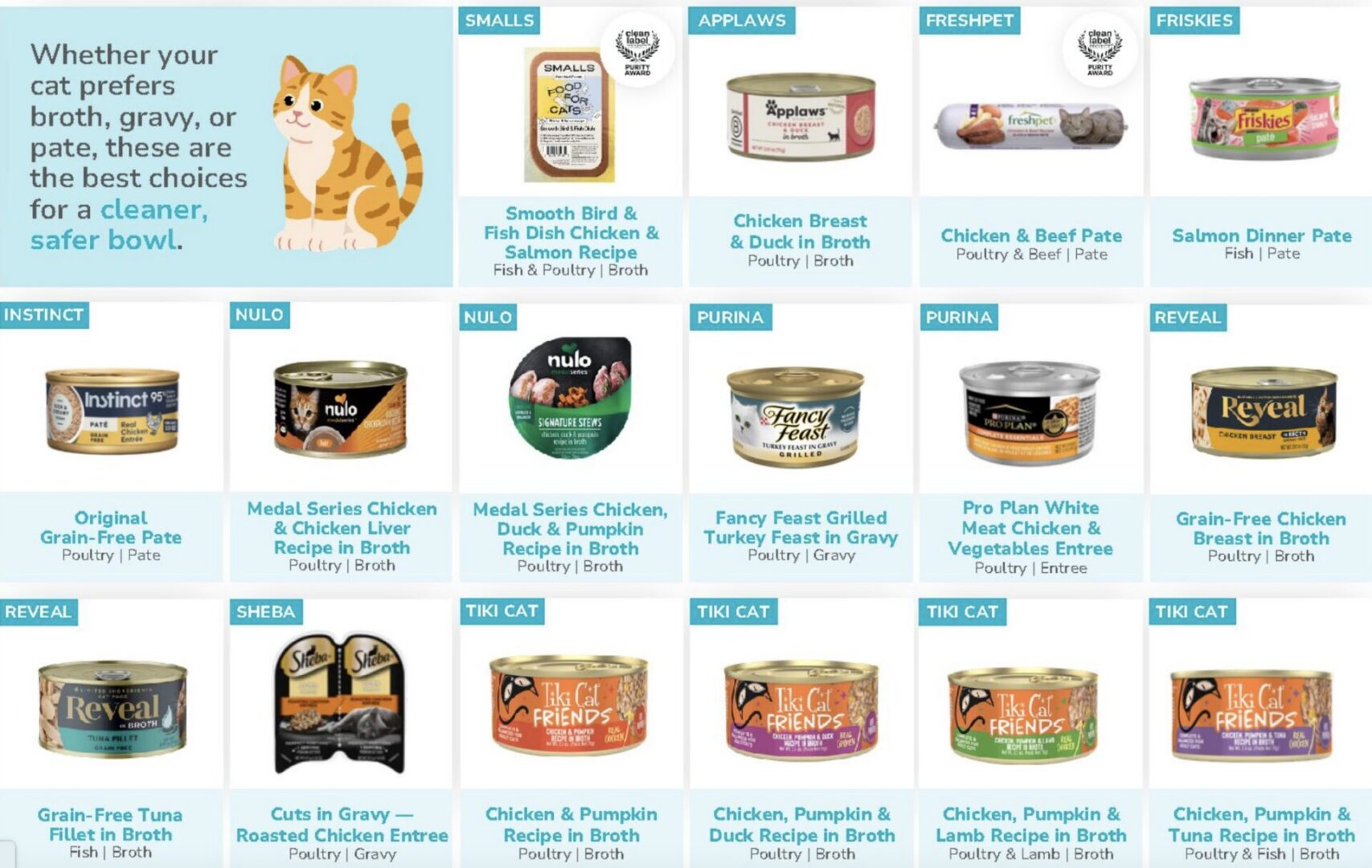
The following companies have cat foods that are Clean Label
Project Certified®:
https://cleanlabelproject.org/cat-food-category-tested-products/
Here are some choices – DRY FOOD:

Here are some choices for WET FOOD:
About Clean Label Project
Clean Label Project is a nonprofit dedicated to promoting transparency in
consumer product labeling and holding manufacturers accountable through
independent testing for environmental and industrial contaminants. The
organization’s mission is to uncover hidden risks associated with environmental
contaminants and toxins found in everyday products, with the guiding principle
that reducing contaminants is critical to safeguarding long-term health.
To learn more, visit cleanlabelproject.org.

