Menu Bar

Home           Calendar           Topics          Just Charlestown          About Us
Showing posts with label Planning Commission. Show all posts

Sunday, June 28, 2026

Who’s running for town office in Charlestown?

CCA gives up on trying to regain control of the Town Council

Will Ruth Platner survive?

By Will Collette

For more than a decade, Charlestown politics has been dominated by the Charlestown Citizens Alliance (CCA) and those who oppose them, most recently Charlestown Residents United (CRU). Rituals like this year’s June 25 deadline for filing Declarations of Candidacy for election to municipal office became closely watched events.

For a decade, the CCA ruled Charlestown by creating boogeymen to sow fear while turning Charlestown into a virtual gated community for elderly rich people. That worked for a while until the CCA got caught screwing up the town’s finances, a scandal highlighted by the “$3 million Oopsie.”

That cost the CCA control of the Charlestown Town Council in 2022 and their total ouster in 2024. In short order, the CRU cleaned up the CCA’s money messes, according to the RI Auditor General.

In most recent election cycles, 10 people stepped up to compete for the five Town Council seats. The CCA would field five and their opposition would field five. This year, only eight people are running.

There are three declared Democrats: incumbent Council President Deb Carney, retired journalist Cynthia Drummond and the close-second finisher in last December’s Special Election Jill Fonneman. Democrat/CRU incumbent Peter Slom is not running for re-election.

There are three declared Republican candidates: incumbents Craig Marr and Steve Stokes as well as newcomer Matt Westover.

There are two “Unaffiliated” but CCA endorsed: Bonnita Van Slyke and Sasha Puchalski.

Last year, the CCA made a minor comeback with CCA leader Ruth Platner getting her puppet Bonnita Van Slyke back onto the Council by a thin margin in a 3-way special election to fill the late Rippy Serra’s vacant seat.

But this year, the CCA has quietly surrendered by only running Van Slyke as a bona fide CCA candidate. They have announced they are also endorsing “unaffiliated” candidate Sasha Puchalski (daughter of the well-known Sandy Puchalski), though her actual relationship to the CCA is unknown as this point.

They also endorsed two Council candidates who didn’t ask for their endorsement. One is incumbent Steve Stokes, a staunch CRU member running as a Republican. The other is Democrat Cynthia Drummond who expressly told South County Star editor Alex Nunes that the only endorsement she wanted was that of the Charlestown Democratic Town Committee.

According to Nunes, “Drummond said she will run as a Democrat endorsed by the Charlestown Democratic Town Committee… She said she will not seek an endorsement from either of the town’s rival political action committees, Charlestown Citizens Alliance and Charlestown Residents United, although she said both are supportive of her candidacy.”

So, the CCA election strategy is to endorse candidates opposed to the CCA while running their old warhorse Bonnita Van Slyke. The last time Bonnita Van Slyke ran for Council in a General Election (2024), she ran dead last. Given her dubious record, it’s unlikely she’ll do much better in November and will have to give up the seat she barely won in the Special Election.

If the CCA is too feeble to run a full slate of its own people, then stealing candidates from the opposition might be their way to claim control.

I predict that after the votes are counted, the CCA will issue a statement claiming “CCA-endorsed candidates win majorities on Charlestown Town Council, Planning Commission and Chariho School Committee.”

CCA 2026 campaign cry: Save Ruthie!

It now looks like the CCA’s focus will be to preserve founding member and de facto leader Ruth Platner’s control of the Planning Commission.

Platner has used the Planning Commission to push her radical agenda of blocking families with children by excluding affordable housing, favoring rich beachfront property owners and acquiring land through shady land deals. In recent elections, her vote tallies have denied her full 6-year terms, forcing her to run as an “alternate.”

Since she controls the CCA, she could then force the CCA Planning Commission majority into naming her as Chair despite her vote tally.

But in the 2026 election, Platner could lose her CCA majority on the Planning Commission. She herself is running for re-election as is her sidekick Frances Topping plus two CCA acolytes Coleen Yaroshenko and Gordon Willcox

Three non-CCA, CRU-leaning candidates are running against them: Laura Rom, Katherine Gingras and Cheryl Lill.

Three current Planning Commission members whose terms expire in 2028 and 2030 hold their seats. One is a Platner person (Sarah St. Laurent) and two are not (Glenn Babcock and Patricia Stamp). CCA alternative member Carol Ann Mossa is not seeking re-election and will leave the PC this year.

If Platner’s slate loses to the opposition, the new Planning Commission majority may end Platner’s to Charlestown’s Planning Commissar-For-Life position.

Indeed, there is a chance she could lose her seat. Including alternates, the Planning Commission has seven members. Three seats are held by incumbents. That leaves four seats up for grabs in November. There are seven people running, Ruth plus three CCA people and three anti-CCA people. Ruth has to finish in the top four of seven to hold onto her seat.

The last time there was a concerted effort to oust Platner, in 2018, she finished last in a field of four. 

The CCA is also claiming by endorsement three candidates for the Chariho School Committee: Holly Eaves, Linda Lyall and Craig Louzon. However, all three are on the ballot as Democrats. The CCA’s primary voice on the School Committee, Donna Chambers, died earlier this year.

Two guys are running for Town Moderator, an honorific post whose only function is to chair the annual Charlestown budget meeting. CCA’s Dave Wilkinson is running for re-election against Tony Jones who is running as a Republican.

The next step is that these declared candidates will need to gather 50 signatures of registered Charlestown voters to get their names on the ballot.

I’m not running

I repeat: I am not running against our terrific incumbent state Rep. Tina Spears in the September 9 Democratic Primary despite being listed as a candidate on the Secretary of State's website.

It’s a paperwork glitch – my fault. When I filed my declaration to remain a member of the Democratic House District 36 Committee, I checked the wrong box. I’ve already notified the Charlestown Board of Canvassers and will do whatever I need to do to withdraw. And since I’m not going to collect any signatures, I will not be on the ballot.

As Civil War hero Gen. William Tecumseh Sherman said in 1884, "If nominated, I will not run. If elected, I will not serve."

Sunday, June 21, 2026

Election Year means Ruth Platner powers up the Charlestown Choo Choo for the 5th time

Enough with the irresponsible fearmongering!

By Will Collette

Since its founding in 2008, the Charlestown Citizens Alliance (CCA) used fear to gain control over Charlestown town government and to stay in power for a decade until its ouster in the 2022 general election.

The CCA’s leader and founder, Ruth Platner, has an extraordinary record of conjuring up enemies and boogeymen that only she and the CCA can conquer. As chair of Charlestown's Planning Commission, she has a platform to spread false fear. However, over the years, just about all these existential threats have been either imaginary or grossly exaggerated.

Ruth’s most persistent boogeyman has been trumped up fear that Amtrak will cut a swath through northern Charlestown, obliterating precious farmland as well as natural and historic treasures. Amtrak gave this boogeyman a name when they included it in a 2016 draft preliminary long-term plan: “the Old Saybrook-Kenyon Bypass.” I call it the “Charlestown Choo-Choo Hoax” because it was a goofy plan that never had chance of happening.

She's trying to raise this dead issue again, as you can read for yourself HERE. This was posted on Saturday and is her third post on the Charlestown Choo-Choo in the past month.

A stretch of the Northeast Corridor between New Haven and Westerly runs right along the shoreline in Connecticut. In my last job before retirement, I commuted to Manhattan several times a month, always taking the train and loving every minute of its passage through the salt marshes between the Westerly station and New London. I’d ride on the seaward side, count osprey nests and wonder at the beauty of that stretch, easily my favorite of any between Boston and Richmond, VA.

But that section of track faces natural destruction, either in some major storm or from climate-driven sea level rise, severing the Northeast Corridor rail line. It will have to be replaced.

The Old Saybrook-Kenyon Bypass was an option offered in an Amtrak in a 2016 planning document that the CCA-controlled town government failed to read. As CCA leader and Town Council President Tom Gentz said at the time, “Who has time to wade through that?

People in eastern Connecticut were the first to begin protesting the plan. In January 2017, chagrined CCA leaders tried to catch up by painting the Old Saybrook-Kenyon Bypass as the end of the world as we know it, at least for Charlestown.

I tried to point out the chances of the Bypass were slim to none, given that newly elected Donald Trump hates trains and would never commit to a multi-billion infrastructure project in the ultra-Blue northeast. The project had no Congressional support, and in fact, Congress drastically cut Amtrak funding for Northeast Corridor improvements.

I speculated at the time that the Bypass would only be built if Trump privatized Amtrak and sold it either to Elon Musk or one of his sons.

Look, nobody liked the Bypass. I didn’t like the Bypass. Even Amtrak began distancing themselves from it. They quickly issued a legally binding Record of Decision in July 2017 effectively killing the plan only six months after Charlestown first heard of it.

That should have been the end of it. But Ruth Platner felt the CCA got so much mileage out of supposedly blocking this sketchy threat that she keeps trying to revive it to help the CCA make a political comeback. This is the fifth time she's tried to fire up Charlestown over this dead project.

Look back at Platner’s 2021 claim that “They’re Back!” See how she tried to stir the pot again in 2022 and especially weird move in 2024 attempting to use AI to simulate what a new rail line would look like.

She's at it again, recycling the same claims of a Charlestown Armageddon. On May 26, she wrote (her emphasis included):

“Amtrak made an announcement on May 21, 2026, that the study required by the FRA’s 2017 Record of Decision had finally received federal government and other funding to proceed. Amtrak estimates that the study—the New Haven to Providence Capacity Planning Study—will take up to two years.

“… The selection of the new preferred alternative will be the outcome of the study. We’ll keep you updated as we learn more, and we may also need your help in contacting our federal and state officials as we move through the planning process. We are committed to protecting Charlestown and the natural resources and public and private property that would be destroyed if anything like the “Old Saybrook to Kenyon Bypass” returns.”

I suggest you read the actual report HERE: New Haven to Providence Capacity Planning Study.

I read it. Carefully. Line by line. Guess what I found? 

Nothing, absolutely nothing about the Old Saybrook-Kenyon bypass that died 10 years ago. It’s as if it never existed. This supposedly alarming document is nothing more than a watered-down version of Amtrak's ongoing effort to try to figure out how to improve service from New Haven to Providence. On June 20, Platner's shocking reveal is that Amtrak has created a website! OMG, the horror!

But in the actual report, the only concrete item I found in the report pertaining to our area was support for making the popular improvements at the Westerly Amtrak station that our state Senator Victoria Gu has been campaigning for.

So, Ruth: STOP IT! Sure, CCA’s formula for winning elections is to claim there are monsters under every bed that only you can kill. But your cynical attempts to manipulate people’s fears come at a terrible cost.

Here's what I mean: 

From 1982 to 1999, I was organizing director for two national environmental groups, first at Lois Gibbs' Center for Health and Environmental Justice, then the Citizens Coal Council. I worked with local citizens' groups to fight hazardous waste dumps, incinerators, coal mines, sludge lagoons and more. These fights were very intense, so intense that I learned early on that they could cause marriages to break up and, in some cases, suicide. 

My staff and I were careful to NEVER exaggerate or fear-monger because that only increases the stress. I'm already hearing that Platner's irresponsible efforts to jack up tension over the Charlestown Choo-Choo is indeed doing just that.

And if that's not convincing, just look at what Donald Trump's lies and exaggerated threats are doing to his followers and the rest of the country.

During the 2024 election, I catalogued all the various threats Platner has used over the years: How the Charlestown Citizens Alliance used fake enemies and bogus emergencies to gain and keep power.

Looks like I’m going to need to do an updated version.

Monday, September 15, 2025

Charlestown will soon hold a special election to fill Town Council vacancy

Meanwhile, CCA reminds voters again why they lost the last two elections

By Will Collette

Rippy Serra, RIP
At a December 2 Special Election, Charlestown voters will be asked to pick a replacement for recently deceased Town Council Vice-president Rippy Serra who died unexpectedly on August 8. This means another election pitting Charlestown’s former rulers, the Charlestown Citizens Alliance (CCA) against their arch-rivals, Charlestown Residents United (CRU).

Rippy was one of the leaders of CRU who whipped the CCA in the 2022 election, ending their 10-year reign as Charlestown’s rulers. The CRU completed the job by beating all five CCA Council candidates in 2024.

Earlier than expected, we get to see the CCA’s plan to regain Charlestown hegemony when they pick one of their own to seek to regain a seat on the Town Council. The oddsmakers favor CCA warhorse Bonnita Van Slyke who, in the CCA’s Bizarro Charlestown, earned the honor through her last place finish in the 2024 election. But who knows, we could be in for a surprise.

Since getting pounded in 2024, the CCA has been relatively muted, posting mainly public event notices on their website. But occasionally, they post a political piece that touts their core value of stopping all housing development while pushing more town land purchases.

Dark Sky is nice, but not a cash cow

How the CCA views plans for Ninigret Park
In the 2024 election, the CCA made Charlestown’s dark sky their central campaign theme accusing the CRU of wanting to install stadium lights on every street corner, while the CCA wants to keep Charlestown dark, even during the daytime, so we can see distant galaxies with the naked eye.

Of course, I’m exaggerating but so has the CCA every time they have seriously suggested that the CRU wants to despoil Ninigret Park so they can obliterate the nighttime sky. The difference is that I’m joking and they’re not.

The CCA launched a new dark sky offensive right after losing the 2024 election with a piece called Stargazing Tourism: How Charlestown’s Dark Skies Could Boost Our Local Economy under the byline of Sarah Fletcher. Fletcher is a losing CCA Town Council candidate who had a 6th place finish.

In this article the CCA claims Charlestown is ripe for “astro-tourism” through which Charlestown can emulate England’s northernmost region, Northumberland. The CCA claims Northumberland takes in “an estimated €25 million each year from visitors who come just to enjoy the stars.” As usual, the CCA doesn’t source their claim and I could find nothing to back it up other than articles that discuss the region’s high hopes for tourism.

Northumberland and Hadrian's Wall. From Wikipedia, 
By PaulT (Gunther Tschuch) - Own work, CC BY-SA 4.0
I’ve been to Northumberland and neighboring Scotland. I went there to walk Hadrian’s Wall, as well as some ancient castle ruins. There is an enormous swath of dour, treeless moorland between Newcastle and Edinburgh, attractive in a Heathcliff-Wuthering Heights sort of way, where indeed the sky is dark and great for stargazing. But there’s no evidence of the CCA’s claimed tourist bonanza.

As if they knew this article was coming, the CCA ran a piece this morning noting a positive mention in Travel and Leisure magazine about the Frosty Drew Observatory in Ninigret Park. My congratulations to Frosty Drew but I remain unconvinced this will have any effect on Charlestown's tourism economy.

Look, I’ve often said I love our dark sky – I wanted to be an astronomer when I was a kid. Relative to Providence, our sky is wonderful. But I’ve travelled enough to know that the CCA’s fetish for dark skies only means they’ve never seen the sky over Montana. Or New Mexico. Or the Rockies. Or Nebraska. Or even New Hampshire and Vermont. Given the multitude of places near and far with darker skies than ours, it’s silly to think our small patch of night sky will make us a tourist mecca.

Unless the CCA manages to black out South Kingstown, Narragansett and Westerly and bans cars from travelling at night with lights on, Charlestown will never be the black hole tourist haven the CCA wants it to be. Besides, given how our population during the summer swells from 8,000 to 30,000, do we really need more tourists?

If the CCA wants to run on the dark sky issue again in the upcoming special election, fine.

The frenzy to buy more open space

The CCA has also ventured opinions about how the CRU is managing the budget and dealing with the balance left in the town’s open space bonding authority.

There’s a tie-in between the CCA’s odd and ultimately dysfunctional management of town finances and their dark sky fetish since it all seems centered on CCA founder and de facto leader Ruth Platner’s fixation on the need to endlessly expand town-owned open space.

According to maps in Platner’s own Comprehensive Plan, more than 60% of Charlestown’s land mass is already protected from development. 

Platner’s iron-fisted control of the Charlestown Planning Commission has made new housing construction as difficult as possible even under new state legislation to alleviate the affordable housing crisis.

In 2015, Platner championed a $2 million bond that Platner used as collateral to acquire land, usually at inflated prices, to set aside as open space. 

Contrary to Platner’s claim that she has the voters’ mandate, the 2015 bond issue passed by only 11 votes. That’s a margin of less than 1%.

Despite the bond authority, the actual purchases of land – over a million dollars’ worth - were made through the use of taxpayer money from the town’s General Fund with some state taxpayer funding. That doesn’t count the $2.14 million that came out of 2004 bonds to buy the moraine property that was proposed as the site of the Whalerock wind turbines.

We’ve been paying cash rather than issue the low-interest municipal bonds authorized in the 2015 referendum. This fits the CCA’s peculiar notion that the town should generally pay in cash for capital investments rather than issue bonds like normal municipalities.

Remember, we all avail ourselves of low-interest financing such as mortgages and car loans to make major capital investments. For normal people, it makes more sense to use credit than saving for years to be able to pay cash for a house or a car or stove.

These days, you only see major cash transactions when money laundering is involved or purchases by elderly folks who grew up during the Great Depression. I don’t propose a spend-and-borrow spree but do suggest we should act like a normal municipality.

The result of the CCA credit-phobia was the creation of various accounts throughout the Charlestown budget to cover various contingencies. The CCA also increased property taxes nearly every year during its reign to pump up the town’s Uncommitted Fund Balance.

They were reluctant to spend any of that money except, of course, on Platner’s shady land deals.

The Saw Mill Pond scam

Ruth Platner complained bitterly after one such deal fell through. She blames CRU Council members for blocking the 2022 Saw Mill Pond deal even though it was one of the CCA Council members who caused the deal to fail. It’s a case worth a closer look especially since it’s a key Platner bullet point in her case against Charlestown Residents United.

This deal began in 2021 with a mysterious, unprecedented motion by then CCA Council rep Bonnita Van Slyke to authorize Charlestown to pursue DEM funding for a piece of property. She wanted the location, name of the owner and even the proposed sale price kept secret from the public. The CCA majority on the Council naturally approved this motion.

In early 2022, DEM approved a $400,000 50% matching grant. That meant the deal price was going to be at least $800,000. We also found out that the piece of property was ALREADY designated as open space and had been getting tax breaks for years under the Farm, Forest and Open Space program. The assessed value of this property was $312,800. 

CRU Council members Deb Carney and the late Grace Klinger pushed for an honest appraisal before buying land for more than double the assessed value since it was already open space. The 3-2 CCA majority usually overrode such objections, but not this time.

Former CCA Council member Cody Clarkin (←left) recused himself because his mom was an abutter. Without his vote, the deal died on a 2-2 tie vote. 

So ended the CCA Council majority’s last shady land deal before voters booted them out of power later that year.

How much is enough?

Generally, the CCA believes you can’t have too much money salted away. The CCA still takes that position, criticizing the CRU-led Town Council for failing to continue to build up the fund balance. For its part, the CRU has held that raising taxes just to salt away cash to never use it except in dire emergencies – or to satisfy Ruth Platner’s land lust - is poor money management.

If they were still controlling Charlestown, the CCA would probably put all of the town's revenue into mayonnaise jars buried in former Budget Commission Chair Richard Sartor's back yard. 

It's a fair question to ask how much the town needs to save especially since the Trump regime has made it clear states and localities are on their own in local emergencies. We already have enough uncommitted cash to run the town for a year with no outside help. But the CCA wants to add more plus some unspecified amount for other catastrophes that might occur over a 10 year period.

Charlestown is lucky to have so much cash that we can even have this conversation, but at what point does it become ridiculous to pay more taxes to soothe the CCA’s anxieties?

The CCA’s antiquated beliefs in squirreling away cash ultimately bit them in the ass. Having so many excess fund accounts led to sloppy money management that culminated in the infamous 2022 “$3 million oopsie.” Town auditors noticed $3 million was missing, later found to have been “misallocated” for two years to a fund where it didn’t belong.

Rather than learn the Watergate lesson that it’s the cover-up that gets you, the CCA tried to lie, deny and deflect their way out of trouble. However, it cost the CCA the 2022 and 2024 elections.

Getting our money back

The CCA has pitched a fit over a proposal from Council President Deb Carney to actually issue the $2 million in open space bonds and use half of it to reimburse the town’s General Fund for the money the CCA spent to buy land for Platner.

Platner says this would violate the will of the 50.9% of the voters who ok’d the 2015 bond issue. Except, as Platner knows, the ballot question read:

“Shall the Town of Charlestown finance the acquisition, preservation or protection of open space or any interest therein alone or in conjunction with federal agencies, state agencies, land conservancies, land trusts or preservation organizations for preservation and approve the issuance of bonds and notes therefor in an amount not to exceed $2,000,000?” 

The CCA used General Fund money to buy the land, not bond money. Deb Carney’s proposal to use the bond authority to put money back into the General Fund keeps faith with the voters’ intention to issue bonds for open space buys.

The key word is “therefor” which means “for that object or purpose.” Voters approved $2 million in bonds to “finance the acquisition…of open space…” not to set up an untouchable cash kitty. Paying for land deals from the General Fund and then failing to use bonding authority to put the money back was not what voters approved in 2015.

I hope Platner and the CCA test their self-serving interpretation of the 2015 bond referendum with today’s voters in the upcoming special election. I also hope Charlestown voters will pay attention and come out to vote. Our town budget only drew 160 voters out of 6,895 active voters on the rolls.

We’ll see how close I’ve come to forecasting how the CCA will approach the upcoming December 2 Special Election. In my opinion, the main issue remains the same as it was for the last two General Elections: who can you trust to manage YOUR money?

Thursday, May 15, 2025

A new angle on an old CCA lie

Platner pans progress

By Will Collette

Charlestown Planning Commissar Ruth Platner, leader of the Charlestown Citizens Alliance (CCA), has put out a new version of an old CCA lie, claiming that Charlestown is being treated unfairly because the state will not allow the town to ignore the law.

In Platner’s latest screed against the state for wanting Charlestown allow more homes to be built for average families, she headlines the issue this way: New State Plan, Housing 2030, Mandates Rural Towns Grow At A Faster Rate Than Urban Areas.

She's referring to Housing 2030, Gov. Dan McKee’s attempt to appear proactive about Rhode Island’s affordable housing crisis. His plan has been mainly seen as too little, too late but to Platner, it seems like an existential threat. Why? Because it singles out rural towns, particularly Charlestown, as most in need of new housing, more so than the cities.

Duh. Of course rural towns need to do more because over the past 25+ years, they’ve done less.

In her new CCA blog article, Platner continues to try to manipulate data to make her case that Charlestown is being treated unfairly. This is far from the first time that Platner has followed the adage the “if you torture statistics enough, you can make them say anything.”

In March 2024, she attempted a particularly obnoxious approach using census data to “prove” her thesis that “Charlestown has grown 11 times faster than the state.” Her point was that the state wanted Charlestown to grow even faster and really, enough is enough.

Except Platner cooked the census numbers. Using 50 years of data, she arrived at the 11 times number. But all of Charlestown’s growth was pre-2000. In this century, Charlestown’s growth has flatlined as Platner admitted in the Charlestown Comprehensive Plan:

"The Town of Charlestown experienced rapid population growth in the last decade of the 20th century, moving from 6,478 residents in 1990 to 7,859 in 2000, a change of 1,381 residents or 21.3%. 

Since 2000, however, population growth has declined or been flat, as is shown in the above table (See Plan, page 10-2, Table HC-1) showing an estimated town population of 7,772 in 2015 (a decline of 87 residents or 1.1%). Population projections provided by the RI Office of Statewide Planning show a return to a growth trend, with a population of 9,329 by 2040. 

This represents a 20% increase between 2015 and 2040. However, this level of growth is not likely to be realized given recent trends, the ageing [SIC] of the local populace and expected modest declines in average household size. While the actual numbers are likely to be considerably less, these projections will be utilized in this chapter for estimating housing growth, and the need for low and moderate-income units relating to the state’s 10% threshold…”. 

Since 2000 and certainly since Platner rose to become Planning Commissar, the most powerful politician in Charlestown, the town has devolved into a gated senior citizens’ enclave as Platner and the CCA blocked new housing for working families.

Here's a Charlestown house that just sold to a Connecticut couple.
It was assessed at $1,060,000 and sold for $1,300,000.
(Charlestown Tax Assessor)
Here’s what Platner herself wrote about Charlestown housing under her dominion:

“From 2010 to 2023, 357 new homes were built in Charlestown. However, those 357 new dwellings barely register in the census data as many are consumed for non-resident use. An additional 54 new house lots were approved in 2023 and have not been built yet; the majority are likely to be second homes."

She made an even blunter assessment in a CCA blog article:

“The supply of affluent people willing to pay high prices for homes and short or long-term rentals will consume any increase in housing production.”

Currently, the best many low and moderate income
buyers can hope for in Charlestown is a campsite
at Burlingame Park (DEM photo)
Even though Charlestown’s overall population may not increase by much, Platner admits town demographics are changing. This is what she wrote in the Comprehensive Plan:

While median age will trend upward and the segment of the population over age 60 will continue to grow, other general population characteristics should remain steady or change in modest form. 

“This trend may suggest a greater need for housing designed for and more suited to elderly occupancy and needs, including elderly rental, single-story accessible designs, smaller unit footprints and limits on bedrooms. Location wise [SIC] such housing should consider issues of service availability, ease of access and walkability. Entry level family housing, both homeownership and rental, will remain a need over the timeframe of this plan."

Those 8,000 of us who make Charlestown our home understand the status quo that Ruth Platner created and desperately seeks to maintain. 

Contrary to Platner's claims, Charlestown experienced massive population growth each and every year. 

EcoRI photo by Frank Carini
During June, July and August, our population jets up to 30,000. We pay for an infrastructure year-round to serve those 30,000. We put up with their trash, bad driving and the inflationary effects their property purchases place on Charlestown real estate.

This morning's Providence Journal carried a deep dig analysis - spread over several articles - of housing sales statewide over the past five years. The first piece is entitled "Out-of-state buyers are purchasing more RI homes. Is that a good thing or bad thing?"

The ProJo confirms that we're not imagining the influx of out of state buyers. They also bluntly note that they buy here because we're cheaper than where they live, plus they can and do out-bid local residents.

They provide more detail in a second piece, "RIers can't compete with out-of-state home buyers. Why building more is the only way out." Their data analysis and conclusions directly contradict the CCA's and Ruth Platner's stance on housing. 

There are two more articles that focus primarily on high-end property, of the type that have been selling for enormous prices in Charlestown and the demographics of the new buyers. These articles are entitled Where are out-of-state home buyers coming from, and what brings them to Rhode Island? and Out-of-state buyers snap up nearly half of RI homes over $1 million. Where they're going. 

Finally they rank Charlestown 4th among RI municipalities for non-resident buyers behind only Block Island, Little Compton and Newport

Another recent sale of a Charlestown property to a Connecticut couple.
This house was assessed at $2,415,400 and was bought at $2,850,000
These five reports back up findings that non-resident buyers are driving up housing prices and forcing potential first-time and low-income buyers out of the market. Legally, they can't be stopped. The Commerce Clause of the Constitution prohibits state and local interference with interstate commerce. And we can't outbid them.

The ProJo's main conclusion is: RIers can't compete with out-of-state home buyers. Why building more is the only way out. This is the point where Ruth Platner's head explodes. The ProJo collection of articles and research eviscerates the arguments she and the CCA have promoted since the millennium. I look forward to her counterpoint to the Providence Journal.

Platner thinks the solution to Charlestown’s problems is to accept the swarms of absentee property owners and summer people while restricting housing for everyone else, young or old. And she’ll continue to search for ways to rationalize that approach.

If you’ve followed Progressive Charlestown’s coverage of the many times Platner and the CCA have made different and contradictory claims, you’ll notice a pattern. When Platner produces an official document that will be fact-checked prior to state or federal approval, or is subject to perjury, she keeps the bullshit to a minimum.

But when she writes (or ghost-writes) campaign material or propaganda for the CCA blog, anything goes.

For me as a political writer, it’s a lot easier to debate a politician’s claims by using their own words. When Ruth the politician makes a claim, often about housing or open space, it’s a simple matter of finding what Ruth wrote when she faced the pain and penalty of perjury because it's usually the opposite.

Two-faced politicians are a plague on our civil society. Charlestown voters made it clear in 2022 and 2024 that they are sick of lies and deception.

Tuesday, May 13, 2025

New budget goes to Charlestown voters on June 2

CCA chimes in on Charlestown proposed budget

By Will Collette

Charlestown voters will have the final say on the town’s proposed $30 million+ budget. This new budget increases town expenditures by around 1.5%, compared to a 2.39% inflation rate for the past 12 months.

Under this budget, Charlestown’s tax rate is projected to increase from the current $5.78 per $1000 in assessed property value to $5.93. That’s an increase of 2.6%. Hopefully, this will be offset for permanent residents by a planned Homestead tax break if – fingers crossed – we get General Assembly approval and can swiftly pass a town ordinance. That might be overly optimistic, though.

Even at $5.93, Charlestown’s tax rate since the Charlestown Residents United won control of the Council continues to be lower than it was during any time in the past 50 years. Your actual tax is the tax rate times the assessed value of your property. Those assessments are also at an all-time high.

The all-day financial referendum will be held from 8 a.m. to 8 p.m. on Monday, June 2, at Town Hall. Mail Ballot Applications are available on request at (401) 364-1200 or by e-mailing Town Clerk Amy Weinreich at arweinreich@charlestownri.gov.

I have been watching the reaction from the Charlestown Citizens Alliance (CCA), Charlestown’s past rulers who were kicked to the curb by Charlestown Residents United in the last two elections. Their reaction was pretty muted compared to the kinds of rants we’ve seen from the CCA over the past 15 years.

They kvetched a little about plans to create a new home for the Parks and Recreation Department in Ninigret Park. What a concept! At its April 14 meeting, the Town Council set aside $75,000 as a contingency to pay for any needed design or engineering work. One plan is to convert the existing gatehouse into office space. If that is impractical (i.e. if repair work is too expensive), Plan B is to build a new building.

That plus improvements to existing facilities in the Park bother the CCA. Frankly, anything in the Park bothers the CCA who have fought against any and all projects, except of course, “Faith’s Folly,” their over-budget asphalt abomination of a bike path. If anyone other than CCA founding member Faith Labossiere had proposed laying down that much asphalt anywhere in town, CCA Leader and Planning Commissar Ruth Platner would light her hair on fire.

The CCA groused a little at the Town Council’s refusal to continue small grants to the Charlestown Land Trust and Community 2000. Both organizations are currently well-funded and well-endowed.

According to the Charlestown Land Trust’s most recent federal IRS-990 filing, they hold more than $2.76 million in assets, although I believe the true value is far higher, given that their acreage includes lots of prime property. The Land Trust has long and deep ties to the CCA.

More relevant to whether the town should contribute to them is another fact included in their IRS filing. The CLT only spends about 65% of what it raises. They reported an income of ~$80,000 but only spent ~$52,000.

Community 2000, a scholarship fund, reports similar data in its IRS filing. It has an endowment of $2.3 million. They only spend 60% of what they raise. In their most recent tax filing, they raised ~$228,000 but spent only ~$137,000.

While I have no quarrel with the mission of either of these two organizations, I think their own tax data show they don’t need Charlestown taxpayer money.

But here’s the kicker: The CCA makes the claim that “The Council also eliminated funds designated for the Charlestown Land Trust ($1,500) and for Community 2000 ($1,000).”

In fact, there was NO MONEY designated to be removed. Like so many of the CCA’s fiscal complaints, this is imaginary. While this is small potatoes compared to the CCA’s many other fiscal gaffs, it shows that the CCA just doesn’t seem to learn that you can’t make this shit up and get away with it.

The CCA’s sharpest critique was aimed at the Town Council’s decision to fund this year’s budget increase from the town’s bloated unrestricted fund balance.

During the CCA’s reign, increasing the size of the town’s fund balance became an obsession to the point where it seemed as if no amount of “rainy day” reserves was enough. The old Budget Commission Chair and controversial former town administrator Richard Sartor continually pushed to put more cash into reserves. Among other things, Sartor pushed for Charlestown to pay cash for capital projects, as if using bonds to fund capital projects was a mortal sin. Maybe Sartor never had a mortgage.

The CCA concedes that even after taking out this year’s budget increases, the unrestricted fund balance still meets the minimum levels (23-33%) they themselves forced on the town. Their complaint: if the town continues to tap the fund balance in the future, this might reduce the fund balance below their comfort level.

They also think the current Town Council doesn’t have adequate plans for future capital projects.

Deputy Dan Slattery
Again with the irony. Since at least 2012, the town Capital Improvement Plan (CIP) has been a CCA obsession, especially when their former President Deputy Dan Slattery served on the Town Council. I wrote about that obsession in detail HERE.

If you don’t want to read it, here are the Cliff Notes: State law and the Town Charter both mandate municipalities to have five-year capital improvement plans. For some reason in 2012, Deputy Dan wasn’t satisfied with the result and tried to make this a big deal even though CCA leader and Planning Commissar Ruth Platner denied the Planning Commission had no role to play. Her Planning posse only dealt with birds and bushes, not buildings and bridges.

After Deputy Dan left, the CCA seemed to lose all interest in the capital improvement plan. If anything, they seemed to see it as an impediment to spending money on shady land deals or any of a number of other crackpot schemes they came up with, often on the spur of the moment.

Prime among them is the 2019 CCA-controlled Council decision to spend a $3 million surplus on a a “community center” in Ninigret Park. This scheme came out of the blue with no plan, design or actual budget for a new building that no one either asked for or wanted. It wasn’t in the approved Ninigret Park Master Plan nor the existing town Capital Improvement Plan. For good reason, taxpayers voted it down.

The CCA makes no mention of the September 2024 Rhode Island Auditor General’s report that shows in hard numbers that the new CRU controlled Town Council has cleaned up the fiscal mess left behind by the CCA.

The contradictions and hypocritical comments from the CCA are par for the course, but I still wonder why they chose to make them. They had to know they would be fact-checked.

One thing did surprise me in the CCA’s remarks on the budget. This year’s town budget reflects a 2% drop in Charlestown’s share of the cost to run the Chariho School District. That’s a savings of ~$287,000.

The saving is entirely due to a drop in the number of students going to Chariho from Charlestown. Why doesn’t the CCA take credit for this? After all, the drop in students is due to the relentless 15-year campaign by the CCA and its founder and leader Ruth Platner to drive families with kids out of Charlestown while ensuring that new families don’t come in.

Tuesday, February 25, 2025

Platner levels charge that I did what she always does, and she doesn’t like it

Calling Sigmund Freud!

By Will Collette

Ruth Platner, left, and Bonnita Van Slyke, right
In the midst of national chaos and Constitutional crisis, it\s easy to forget that politics is also a feature of municipal life here in Charlestown. Though our local issues may seem trivial compared to King Donald and President Musk’s destruction of the fabric of our republic, those issues do get argued as passionately – if not weirdly – as Trump’s claim that we MUST take over Greenland by any means necessary.

Welcome to Charlestown political ping-pong.

The issue at hand stems from charges made by Charlestown Citizens Alliance (CCA) spokes troll Bonnita Van Slyke that the Charlestown Residents United (CRU), which holds all five Town Council seats, committed a heinous crime against Charlestown’s established norms.

That crime was the Council’s decision to appoint Laura Rom to fill a vacancy on the Planning Commission created when CCA Commissioner Lisa St. Godard resigned her seat just days after winning reelection. 

According to Van Slyke, that seat belonged by divine right to one of the CCA people.

Except that's not true. 

As usual, Van Slyke regurgitated talking points fed to her by the CCA’s de facto leader Ruth Platner who is also Charlestown’s top Planning Commissar. According to Platner and Van Slyke, there are strictly established pecking orders for how vacancies are filled. For the Planning Commission, the sacred order is for each member to move up one slot when a vacancy occurs.

Platner and Van Slyke claim that this is what the Town Charter demands (it doesn’t) and what the Planning Commission has always done since its formation yea onto colonial times without fail.

Except that’s not true either, as I wrote in my dissection of an earlier Van Slyke-Platner treatise. During its 10-year rule over Charlestown, the CCA practiced patronage appointments over merit more often than not. 

I noted that in 2018, Platner herself broke this so-called inviolable dictum by getting herself appointed Planning Commission chair even though she finished last among an all-CCA slate. That last-place finish earned her only a second alternate position yet somehow, she jumped the line from the bottom to the top.

I also detailed more than a decade of CCA’s persistent use of the spoils system to provide patronage and political payola to their supporters and punishment for those who fail to support the CCA in general and Ruth Platner in particular. Read the article HERE to see the numerous examples.

That rubbed Platner the wrong way.

She claims that “apologists for the current Town Council” [that's me] cherry-picked the facts. She further claims that I “falsely claim that I [Platner] was not elected in 2018.”

I never said that or anything remotely like it. This is a tactic Platner has often used called setting up a “strawman argument.” Here’s the definition of a strawman argument:

A strawman fallacy or straw man argument is a rhetorical ploy that misrepresents an opponent’s position to make it easier to attack.

Obviously, it is easier for Platner to debate something I never said than to answer for the CCA’s documented history of brutal patronage policies.

Platner also claims I committed another rhetorical dirty trick – “cherry-picking.” 

I titled this article “Calling Sigmund Freud” because so much of Platner’s and Van Slyke’s writings are excellent examples of what Freud called “projection.”

Here's Psychology Today's definition:

“Projection is the process of displacing one’s feelings onto a different person, animal, or object. The term is most commonly used to describe defensive projection—attributing one’s own unacceptable urges to another.”

In a recent article, I detailed the extent to which Platner will go to cherry-pick facts to mold them into a false narrative. Almost a year ago, Platner widely disseminated her attack on the state’s push for more affordable housing by claiming “Charlestown Has Grown 11 Times Faster Than The State Yet The State Says We Must Grow Faster.

Such a remarkable claim demands equally remarkable evidence which Platner offers by citing Charlestown and state population data for 1970 through 2020 that mathematically supports Platner’s claim.

US Census data. Pick 1970 as your starting point
and you get Platner's result. Pick 2000 and you get an
entirely different result. Classic cherry-picking
Platner cherry-picked the data to come up with this remarkable claim. 

However, almost all of Charlestown’s growth occurred between 1970 and 2000. That makes a difference because since 2000, Charlestown's population flatlined and even shrunk some years. 

Why? Because the CCA brought home construction, especially for affordable housing, to a screaming halt.

Platner knew exactly what she was doing because she had this to say about the same data when Platner wrote Charlestown’s Comprehensive Plan:

"The Town of Charlestown experienced rapid population growth in the last decade of the 20th century, moving from 6,478 residents in 1990 to 7,859 in 2000, a change of 1,381 residents or 21.3%. 

Since 2000, however, population growth has declined or been flat, as is shown in the above table (See Plan, page 10-2, Table HC-1) showing an estimated town population of 7,772 in 2015 (a decline of 87 residents or 1.1%). Population projections provided by the RI Office of Statewide Planning show a return to a growth trend, with a population of 9,329 by 2040. 

This represents a 20% increase between 2015 and 2040. However, this level of growth is not likely to be realized given recent trends, the ageing [SIC] of the local populace and expected modest declines in average household size. While the actual numbers are likely to be considerably less, these projections will be utilized in this chapter for estimating housing growth, and the need for low and moderate-income units relating to the state’s 10% threshold…”. 

So which Platner version is true? The claim that Charlestown's growth has dramatically outpaced the state's or the one where she correctly notes that growth came to a screeching halt 25 years ago. Both use the same data to sing two very different tunes.

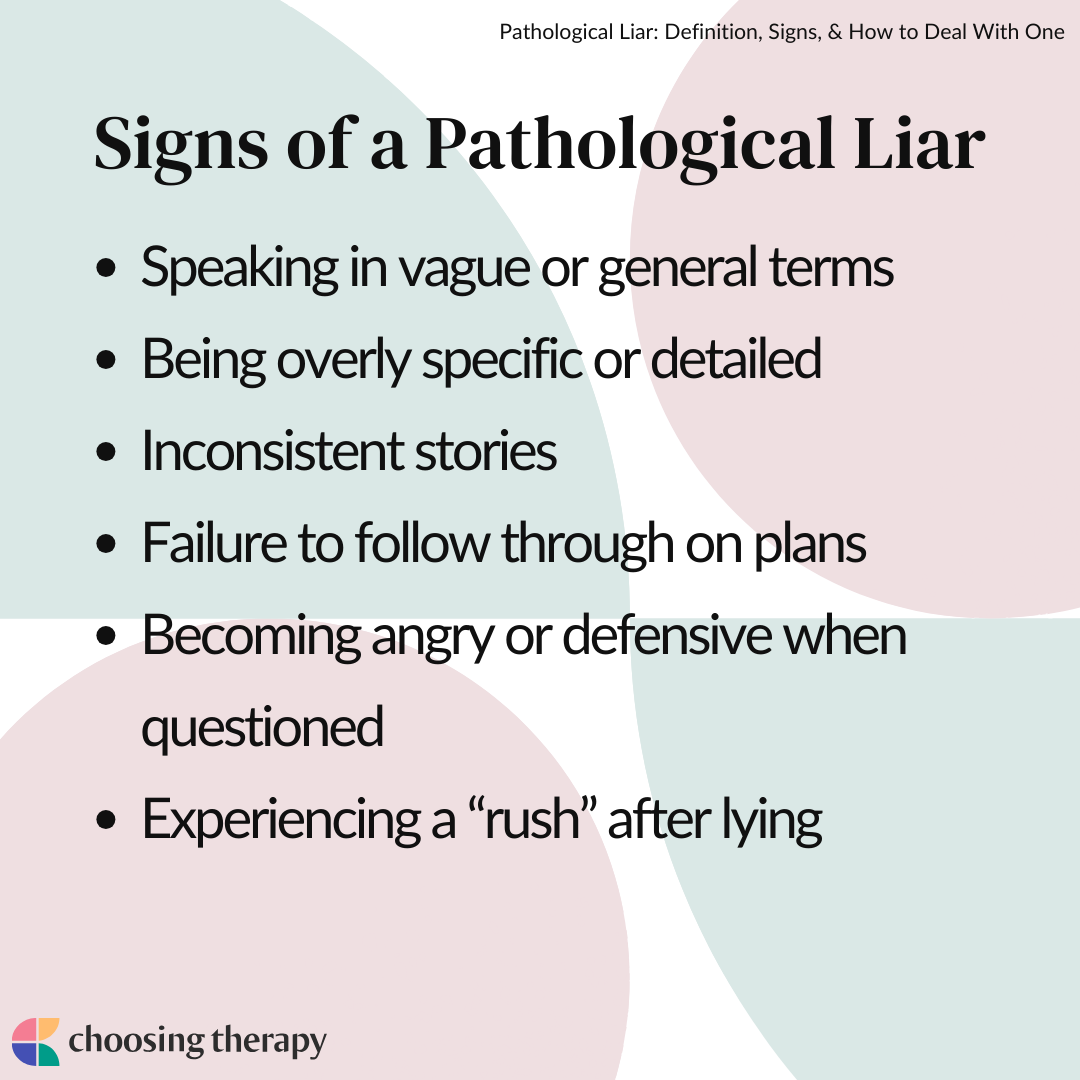
Yeah, it’s tiresome to wade through the Byzantine minutiae to address such a picayune issue as Ruth Platner’s hurt feelings with so much else going on. The compulsive lying by Platner, and Van Slyke, is also pretty annoying. I've known people who didn't seem to be able to help themselves and lied even when there was need to do so.

Pathological lying is a genuine mental disorder often associated with malignant narcissists (e.g. Donald Trump). Maybe the CCA needs a resident shrink.

Some say we are living in a post-truth era where facts don’t matter. In Charlestown under CCA rule, we've been living fact-free since 2008.

I refuse to accept that. I believe we have a duty to call out politicians who lie, cheat, distort data and just simply make stuff up to push their agenda. 

The fight for truth is one that needs to be fought at every level, from the global stage to our own little Charlestown. We must each do what we can where and when we can.