Menu Bar

Home           Calendar           Topics          Just Charlestown          About Us
Showing posts with label NIMBY. Show all posts

Monday, April 6, 2026

Judge orders Matunuk owner Perry Raso be given another shot at starting to aqua-farm scallops

‘Do it again, but the right way.’

By Nancy Lavin, Rhode Island Current

Perry Raso. Photo: Chip Riegel, Edible Rhody
The embattled Rhode Island Coastal Resources Management Council was dealt another blow last week after a Superior Court judge tossed one of its most high-profile and controversial decisions because the panel violated its own procedures.

The 48-page order from Associate Justice Joseph Montalbano reopens the longstanding battle between acclaimed restaurateur and oyster farmer Perry Raso and nearby property owners, remanding the case back to the council for additional public hearings and consideration. 

Raso, originally known for the now-closed Matunuck Oyster Bar, sought to expand his shellfish empire with a scallop farm in Potter Pond in South Kingstown. The expansion spawned public outcry by property residents who argued the shellfish beds would interfere with recreational boating, fishing and other activities within the cove. A five-year standoff ended in June 2023, when the coastal agency’s appointed panel approved a scaled-down version of Raso’s original proposal, cutting 40% of the acreage and banning floating cages. The council later signed off on further modifications submitted by Raso that changed the size, layout and position of the submerged scallop nets.

Two sets of property owners took their case to the judiciary, filing two separate lawsuits in Providence County Superior Court in September 2024, later consolidated into a single case. The property owners, through their attorneys, again argued the scallop beds interfered with their ability to enjoy the cove — a point Montalbano rejected in his order.

However, Montalbano, who is on track to become the court’s presiding justice, found credence in the plaintiffs’ arguments over process. Specifically, he said the council flouted its own rules by failing to fully explain the rationale for its decision, which contradicted the recommendation from a smaller subcommittee that gave a preliminary, and more comprehensive, review. The council also violated its procedures by failing to give public notice or opportunity for additional public input in the “substantial” revisions Raso submitted after the final vote.

Friday, September 12, 2025

World's worst wind NIMBY seeks to destroy wind industry using gross misinformation

Why wind farms attract so much misinformation and conspiracy theory

Marc Hudson, University of Sussex

When Donald Trump recently claimed, during what was supposed to be a press conference about an EU trade deal, that wind turbines were a “con job” that “drive whales loco”, kill birds and even people, he wasn’t just repeating old myths. He was tapping into a global pattern of conspiracy theories around renewable energy – particularly wind farms. (Trump calls them “windmills” – a climate denier trope.)

Like 19th century fears that telephones would spread diseases, wind farm conspiracy theories reflect deeper anxieties about change. They combine distrust of government, nostalgia for the fossil fuel era, and a resistance to confronting the complexities of the modern world.

And research shows that, once these fears are embedded in someone’s worldview, no amount of fact checking is likely to shift them.

A short history of resistance to renewables

Although we’ve known about climate change from carbon dioxide as probable and relatively imminent since at least the 1950s, early arguments for renewables tended to be seen more as a way of breaking the stranglehold of large fossil-fuel companies.

The idea that fossil companies would delay access to renewable energy was nicely illustrated in a classic episode of The Simpsons when Mr. Burns builds a tower to blot out the sun over Springfield, forcing people to buy his nuclear power.

Back in the real world, similar dynamics were at play. In 2004, Australian prime minister John Howard gathered fossil fuel CEOs help him slow the growth of renewables, under the auspices of a Low Emissions Technology Advisory Group.

Meanwhile, advocates of renewables – especially wind – often found it difficult to build public support for wind, in part because the existing power providers (mines, oil fields, nuclear) tend to be out of sight and out of mind.

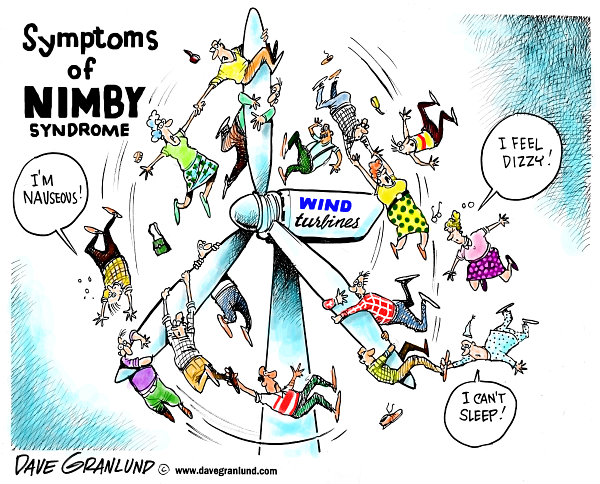
Public opposition has also been fed by health scares, such as “wind turbine syndrome”. Labelled a “non-disease” and non-existent by medical experts, it continued to circulate for years.

Friday, September 5, 2025

State court backs Westerly planning board’s rejection of 2,300-housing unit

No to housing on Winnapaug Country Club

By Christopher Shea, Rhode Island Current

The owner of a century-old Westerly country club has once again been told he can’t redevelop the 120-acre property. 

Winn Properties had tried to use the state’s affordable housing laws to build 2,300 homes on the site but the town’s planning board rejected the proposal last July, a decision upheld by a Washington County Superior Court judge last week. 

In his decision, Associate Justice Jeffrey A. Lanphear ruled the board had “competent evidence” to reject the proposal to redevelop the century-old Winnapaug Country Club.

Winn Properties, which has owned the Shore Road country since 2021, proposed leveling the 18-hole public course in order to build 90 three-story buildings — 30% of which would be reserved for low and middle-income residents. 

Nicholas Scola, who owns Winn Properties with his wife Jill, had previously proposed turning the country club into a golf resort, plans that were shot down by the Town Council in 2022.

On Wednesday, Scola referred comment on the Superior Court’s ruling to their attorney, Matthew J. Landry. Landry did not immediately respond to inquiries from Rhode Island Current.

Winn Properties sought to make use of the state’s Low and Moderate Income Housing law, which limits the ability of municipalities to block high-density projects if less than 10% of the community’s residences qualify as affordable, in order to get the project off the ground.

Westerly’s affordable housing stock sat at around 6.45% as of 2024, according to data compiled by RIHousing, the quasi-state agency that finances affordable home construction.

Tuesday, July 29, 2025

Facts and Fiction about wind energy heard at Rhode Island's Energy Facility Siting Board

Wind NIMBYs spew Trumpish nonsense

Steve Ahlquist

Europe already gets 20% of its energy supply from
wind energy
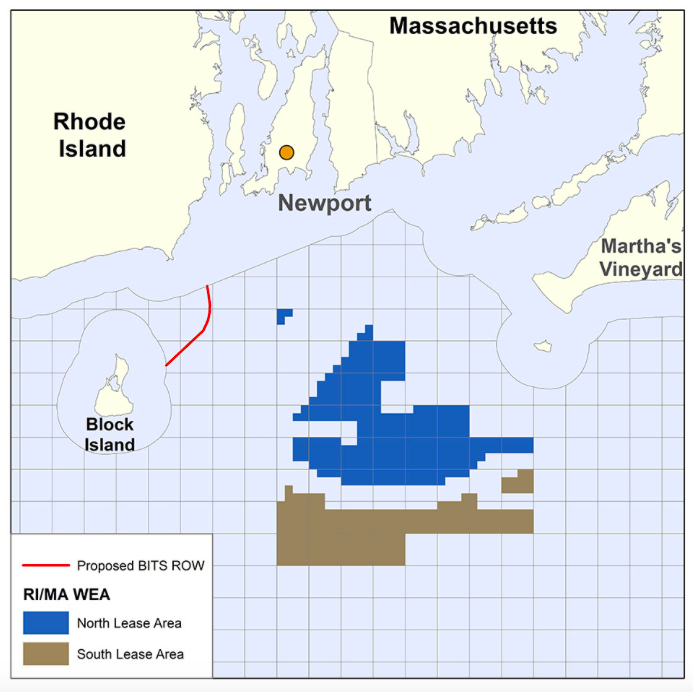
On July 23, the Rhode Island Energy Facilities Siting Board (EFSB) held a public hearing on the SouthCoast Wind project at Portsmouth Middle School. The SouthCoast Wind project is in Massachusetts waters and has been approved to build the turbines, but a critical part of the project involves Rhode Island. To get the wind power from the turbines to the regional

About 20 miles of electric cables must pass through Rhode Island waters and Aquidneck Island to reach the transmission system at Brayton Point in Somerset.

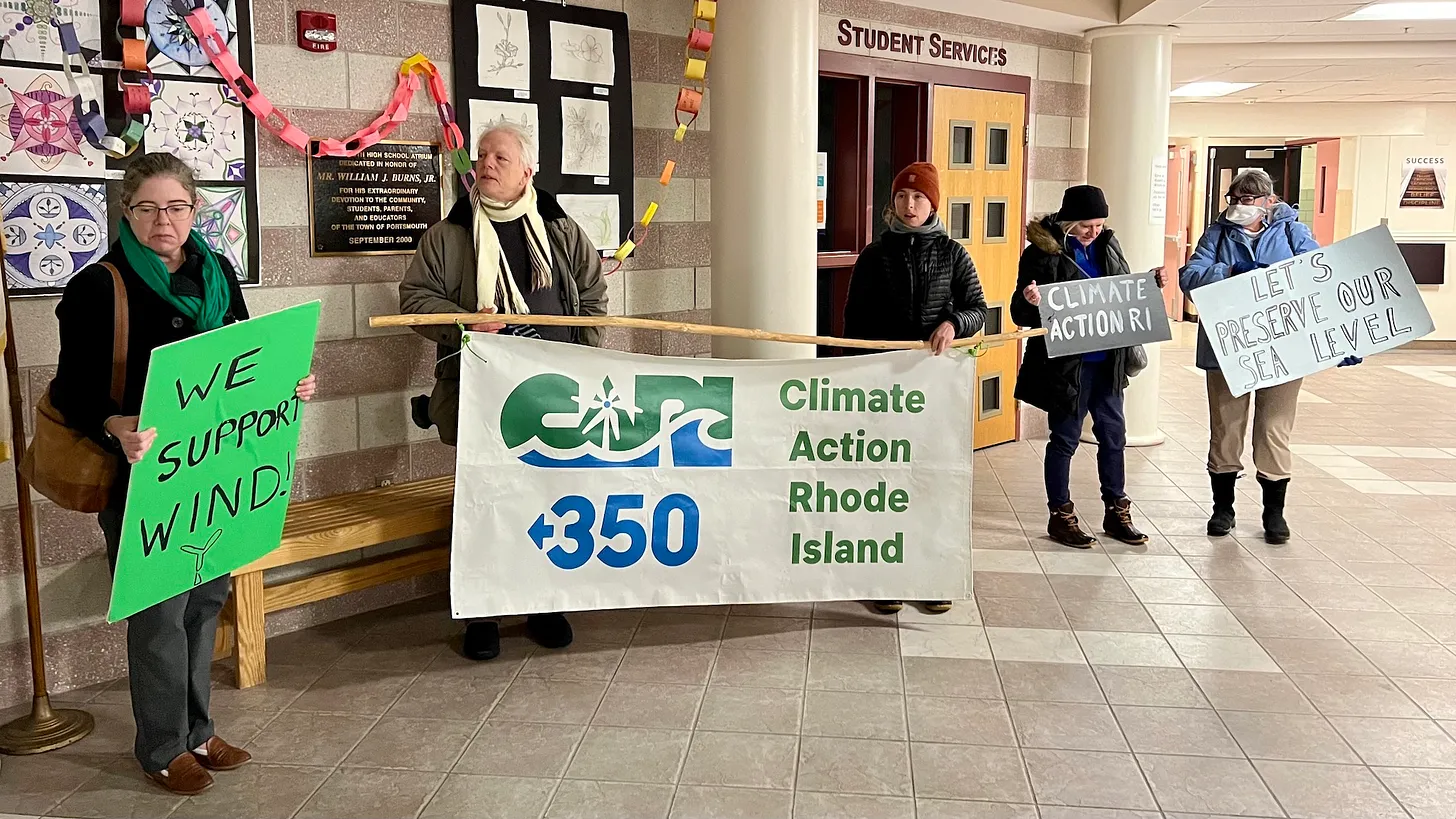
Proponents and opponents of wind energy filled the middle school auditorium, and the three-member EFSB listened for over four hours. Twenty-seven people spoke in favor of the project, noting the benefits of cheaper, more environmentally safe energy and the jobs the construction of the project will bring. Twenty-six people spoke against the project, most seemingly regurgitating the talking points of fossil fuel-backed right-wing think tanks.

With so many people testifying, a comprehensive overview would be time-consuming. So instead, I chose, as best I can, a representative testimony from each side, starting with wind energy opponent and Portsmouth resident Sal Carceller:

“I’m a resident of Portsmouth. Not only am I a resident of Portsmouth, with a view of the Sakonnet River. I’m blessed where I live. It’s one of the most beautiful places in the Northeast. I’ve traveled throughout the world. I spent considerable time at McCorrie Point with my family, friends, and others. I even spend evenings there.

“I have a question for the siting board. Have you visited any sites along the Sakkonet in Portsmouth? You don’t have to answer, but I will make a suggestion. Please go to McCorrie Point so that you understand what you’re about to approve. I don’t have an opinion, but I can tell you that it doesn’t make sense. You are not crossing a river just to cross it. You’re traversing that river from its mouth to Brayton Point, the entire river, a class A, class one waterway, the only one in Rhode Island, and one of the few. It is imperative that we get this correct.

“What’s going to happen is - I’m not a scientist, I’m a statistical analyst by trade. I’ve done data science and analytics, so I look at numbers. I’m going to ask the siting board to consider this: Would you ever approve a project that you knew was destined for failure and would never be used? You don’t have to answer that, but ask yourself while sitting at McCorrie Point, and then let’s talk about where we are today.

“Why is offshore wind no longer favored under the current administration? They were voted in, whether you like it or not. I’m going to go through a couple of bullet points:

“One. Executive Order halts offshore wind expansion. In January of 2025, the President of the United States signed an Executive Order1 that withdrew the entire outer continental shelf from the future of offshore wind leasing. Not only did he do that, he paused all new and renewable lease permits and rights of way for wind energy on federal lands and waters. Next, he’s also initiated a review of the existing leases with potential cancellation/modifications.

“Two. New federal oversight delays projects. All wind and solar projects on federal lands and waters must now receive personal approval from the Interior Secretary, Doug Burgum. This change adds significant regulatory delays and uncertainty to project timelines. I’m just telling you what the lay of the land is, compared to when we first started these conversations. High costs from tariffs and subsidy rollbacks - tariffs on imported steel, aluminum, and turbine components have increased project costs. That’s going to turn into increased electric rates.

“I’m no fool. New tax legislation, signed by the President, is rolling back clean energy tax credits from the Inflation Reduction Act, making it financially harder for offshore wind developers.

“Now let’s talk about what has been done to the industry: industry pullbacks and writedowns. Ecuador recorded a $955 million write-down on its U.S. offshore wind portfolio. Citing administration policy changes, they’re divesting. Shell withdrew from the Atlantic Shores project off New Jersey, and this one. Projects like SouthCoast Wind have been delayed by years, losing hundreds of millions of expected value. SouthCoast wind knows it’s in trouble. They already said they are likely going to delay by four years.

“I only have a few more points—impact on the state climate goals. States like New York, New Jersey, Massachusetts, and Rhode Island rely heavily on offshore wind to meet their emission targets. The targets were made under a different administration. I don’t know if the targets are right or wrong. What if we’re wrong? We’re going to ruin a river. That’s going to delay timelines, create potential energy supply gaps, and pose challenges to meet the climate mandates.

“We’ve heard that from our president’s mouth. He favors fossil fuels and nuclear over renewables. He has repeatedly criticized wind energy as visually unappealing, environmentally harmful, and economically inefficient.

Sunday, June 1, 2025

RI Republicans think the way to cut electricity bills is to curb renewable energy

To prove they are mega MAGA macho, they've dumped a symbolic package of bills to wipe out green energy

By Will Collette

Is that Mike Chippendale heading down from Foster
to his news conference? 
Not to be outdone by their lord and master Donald Trump, his hatred of “windmills” and love of coal, Republican General Assembly members led by House Minority leader Mike Chippendale just announced a collection of bills to promote fossil fuels at the expense of energy efficiency.

These bills have NO chance of passage, not just because they have no merit, but because they are being introduced at the end of the General Assembly session. Apparently Chippendale et al. are sending some symbolic message to somebody – maybe King Donald – that they are as MAGA-maniacal as anybody.

Like most energy conversations, they begin with the largely true, widely held belief that electricity bills are too high. But from there, it’s all downhill.

I live in Charlestown, one of Rhode Island’s most vulnerable communities to the effects of climate change. Storms are worse and more frequent even trashing the Charlestown Breachway. Our beaches are eroding. The sea level is rising. Seawater is infiltrating groundwater. It’s very hard to get homeowner’s insurance at any price.

Over the past 25 years, Cathy and I have taken action to increase our energy efficiency by getting an energy audit, adding insulation, putting on a light-colored steel roof and, through the much missed Solarize Charlestown program, installed an array of solar panels in 2017. We’ve also replaced our appliances with the most energy efficient available and added heat pumps.

I would love to add residential sized vertical axis wind turbines, but Charlestown’s town ordinance makes it impossible to do so (click HERE to see why). This is a legacy of the NIMBY faction of the Charlestown Citizens Alliance (CCA), and I hope to see that ordinance repealed soon.

Every change we made cost money upfront but was made easier through state and federal rebates and tax credits and, in the case of our solar panels, being able to sell our excess power back into the grid. Every energy investment we have made has paid us back through lower electricity usage.

Donald Trump and Congressional Republicans want to end all of that and now we’ve heard from state Republicans that they want to do the same here in Rhode Island.

Chippendale said, “Far too often, the utility is painted as the villain, but many of these cost increases stem from legislative mandates — laws passed by the General Assembly that forced utilities to buy expensive energy or fund inefficient programs…”

He condemned the payback solar panel owners like us get for selling our excess energy: “Right now, solar customers are credited at the full retail rate for energy. They produce up to 125% of their usage. That’s not market-based. It’s an inflated rate that gets passed on to every single ratepayer in this state.”

WTF? “Full retail rate” isn’t “market-based?” As it is, the number of solar panels you can install has to roughly match your usage. Personally, I would have wanted to add more since the marginal increased cost would have meant more generated power. That’s market-based, Mike. And like the energy companies, the utility pays us at the rate called for by law.

The other market-based reality ignored by the MAGA world is the rapid expansion of green energy generation and how through the economies of scale, green energy prices have been consistently dropping. 

All across Red State Middle America, wind and solar power companies have been booming, generating employment booms as well as energy at levels that now surpass fossil fuels. Trying to reverse this market trend makes no economic sense. As Mike would say, not “market-based.”

Even Charlestown’s ex-state Rep. Blake “Flip” Filippi is on board with this regressive approach to energy, shown in this tweet on X (note: Trump is pictured with coal miners, not natural gas drillers):

I do not understand the MAGA obsession with wasting energy. Or hating energy efficiency. Or leaning into increased use of polluting fuels. Who benefits other than the fossil fuel companies?

Is it just about “owning the libs?”

Ever since Jimmy Carter’s sweater and the first Arab oil embargo in 1973, most Americans have come to believe we need to be smarter about energy. Energy efficiency is an unqualified good thing regardless of your location on the political spectrum. Burning less fossil fuels is an unqualified good thing.

We’ve come a long way in 50 years and we still have quite a distance to go. Why Chippendale and MAGA-world want to turn the clock back is baffling and unjustified.

Sunday, December 8, 2024

Brown University paper finds that expertise from nationwide opponents of renewables offers scripts and guidance to local anti-wind activists

Anti-wind NIMBYs backed by fossil fuel industry

By Mary Lhowe / ecoRI News contributor


Supporters and opponents of offshore wind often engage in a kind of schoolyard game where people — often with no factual basis — accuse their opponents of being on the payrolls of larger entities that pay the bills and call the shots.

 A new paper researching anti-wind funding by an institute at Brown University mostly bypasses images of monetary payoffs by outside forces.

Instead, the paper focuses on non-cash valuables that several big national organizations — often funded by the oil and gas industry — offer to anti-wind activists in New England and across the country. Those valuables may include networks of conservative think tanks, celebrity speakers, legal advice, expertise in crafting public opinion, public relations language, and other aids that the research paper calls “information subsidies.”

These information subsidies and expert resources fighting offshore wind move within a large and interactive network of groups and individuals, including many in Rhode Island and across the region. Much of the money supporting national-level anti-wind groups comes from the fossil fuel industry and conservative or libertarian think tanks.

Wednesday, August 28, 2024

Another reason why Charlestown should repeal its anti-residential wind ordinance

This silent wind turbine for the home outperforms solar panels

BD. GarcĂ­a

New LIAM F-1 silent wind turbine
Windmills have been the emblem of the Netherlands since ancient times, a tradition that has not been lost to this day. Far from it, the country has become one of the leading wind energy nations in Europe. 

That said, it is not surprising that this new, smaller, more efficient and quieter wind turbine designed for domestic use comes from there. So, why do you need solar panel at home? You can have a silent wind turbine like this one.

The Netherlands reinvents windmills: an ultra-efficient silent wind turbine

It may be difficult, especially for younger generations, to think of the Netherlands as a heavy industrial powerhouse highly dependent on fossil fuels. However, until the 1970s, pollution due to large numbers of cars and emissions from natural gas and coal-fired power plants fueled a thriving chemical industry.

Air pollution, land scarcity due to its high population density and rising sea levels that threatened to flood its cities led to a sustained effort to decarbonize its economy and diversify its energy sources and industries. Today, the Netherlands is an emblem of innovation in sustainable technologies and policies.

For this transition, one of the key technologies was wind energy, in which today they are one of the main leaders, developing important innovations in this field. The most recent of these innovations is the LIAM F1 UWT, a small and quiet wind turbine for urban use with the capacity to generate between 300 and 2500 kWh, approximately half of the average household consumption.

The new trend in wind energy: generators so small that you can install them on your rooftop

Wind energy is one of the most widespread renewable energy sources worldwide, especially in Europe. However, traditional wind turbines require large tracts of land, with their gigantic blades that generate a negative visual impact, pose a risk to birds and prevent the use of these lands.

This is why the aim is to reduce their size and increase their efficiency in order to exploit the weaker, more erratic winds that flow close to the ground and between buildings in urban environments. One such solution is the hexagonal wind turbines developed by a Scottish company. The LIAM F1 silent wind turbine, developed by The Archimedes, ups the ante in this field.

With a helical design inspired by Archimedes’ Spiral, this silent wind turbine has a diameter of 1.50 m and weighs no more than 100 kg. Its design allows it to move according to changes in wind direction to make the most of all air currents. This enables it to generate, on average, 1500 kWh per year with winds of only 5 m/s.

EDITOR'S NOTE: Charlestown is one of the only towns in America to effectively ban wind-to-energy devices of all types. A CCA-pushed NIMBY ordinance creates so many terms and conditions that even small, silent residential units are effectively banned. No one in Charlestown has managed to get past this self-imposed barrier to this energy source.

Ironically, Dr. Bruce Gouin's Arrowhead Dental showed how vertical axis turbines are not only quiet but pleasant to look at. He placed a group of them as an art installation around the beautiful grounds at Arrowhead. But they don't generate electricity - if they did, they would be illegal.

Ironically, Dr Gouin was one of the most vocal opponents of residential wind power and supported Charlestown's draconian ordinance, an ordinance that needs to be repealed to allow residential wind power.   - Will Collette

Tuesday, June 25, 2024

Affordability, Environment Loom Large in Consideration of Westerly Housing Development

In nearby Westerly, battle rages over country club vs. housing development

By Colleen Cronin / ecoRI News staff

Photo: Winnapaug Country Club | Westerly, RI Golf Course
As the clock rounded 11:30 p.m., everyone sitting in Town Hall was eager to go home.

Feet tapping, heads in hands, attendees of a Planning Board meeting Tuesday night listened to town planner Nancy Letendre read from a memo she had written to the board about why a proposed 2,300-unit development on the Winnapaug Country Club didn’t fit into Westerly’s comprehensive plan.

Besides approving prior meeting minutes, nearly the entirety of the 5-and-a-half-hour meeting was dedicated to discussion on the potential redevelopment — the culmination of about six months of public debate on the matter.

Developer Winn Properties and its expert witnesses argued that adding the housing units — they claimed 30% would be affordable — would accomplish many of Westerly’s housing goals and wouldn’t negatively impact the local environment. 

But detractors, many of whom belong to the group Keep Westerly Green and wore that color to show their opposition to the project, said the large number of units would change the character and jeopardize the town’s environmental health.

By the end of the meeting, it was clear that most of the Planning Board members sided with the latter group. As they spoke, one by one, explaining their likely vote for denial, whispers among the green shirts grew louder, with some throwing up fist pumps or thumbs up.

Ultimately, the board didn’t vote Tuesday to deny the project — instead it voted to allow the town planner to draft a decision denying the project, which the board is expected to vote on at its next meeting.

Although it’s unlikely the project will move forward as planned, the fight over its approval highlighted a debate in town over issues like affordability and the environment that are unlikely to go away.

Friday, May 17, 2024

Why US offshore wind power is struggling

What's the fix?

Christopher NiezreckiUMass Lowell

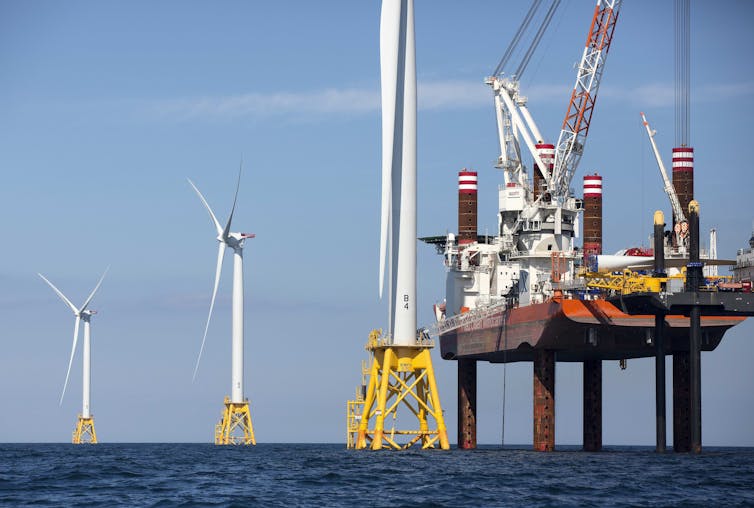
The first U.S. offshore wind farm was built in 2016 off
Rhode Island’s Block Island. AP Photo/Michael Dwyer
America’s first large-scale offshore wind farms began sending power to the Northeast in early 2024, but a wave of wind farm project cancellations and rising costs have left many people with doubts about the industry’s future in the U.S.

Several big hitters, including Ă˜rsted, Equinor, BP and Avangrid, have canceled contracts or sought to renegotiate them in recent months. 

Pulling out meant the companies faced cancellation penalties ranging from US$16 million to several hundred million dollars per project. It also resulted in Siemens Energy, the world’s largest maker of offshore wind turbines, anticipating financial losses in 2024 of around $2.2 billion.

Altogether, projects that had been canceled by the end of 2023 were expected to total more than 12 gigawatts of power, representing more than half of the capacity in the project pipeline.

So, what happened, and can the U.S. offshore wind industry recover?

Thursday, April 11, 2024

Judge Dismisses Suit by Anti-Wind Group That Sought to Block R.I.’s Approval of Revolution Wind Project

Wind NIMBY case thrown out

By Mary Lhowe / ecoRI News contributor

Even as the Revolution Wind project, approved by the state and federal governments, begins the work that will end with 65 turbines installed on the ocean floor southeast of Rhode Island, the project has survived a Hail Mary lawsuit by a citizens group bent on stopping offshore wind development.

A Newport County Superior Court judge ruled April 5 against Green Oceans in the group’s civil lawsuit, which sought to overturn a May 2023 vote by the Coastal Resources Management Council. That CRMC vote asserted that Revolution Wind met the requirements of the state’s Ocean Special Area Management Plan.

The wind project got its final federal approval in fall 2023 and land-based construction is now underway, with turbine installation projected to begin this year.

Green Oceans, a Rhode Island-based group that opposes offshore wind, filed suit against CRMC last June, claiming the council violated the state Constitution, state regulations, and its own responsibilities when it approved the Revolution Wind project on May 12, 2023.

Judge Richard Raspallo dismissed the civil suit on two main grounds. The first was that the Green Oceans appeal was filed too late, on June 20, 2023, well past the 30-day deadline following CRMC’s May 12 vote. The second was that Green Oceans was not a formal intervenor or party to the CRMC decision, so it had no standing to sue, and also no standing to receive an extension of the appeal filing deadline.

Thursday, March 21, 2024

The visual effect of wind turbines on property values is small and diminishing in space and time

Anti-wind NIMBYs grossly exaggerate their effect

Wei GuoLeonie Wenz  and Maximilian Auffhammer 

A substantial expansion of renewable energy generation is necessary for decarbonizing the U.S. economy. Wind power is the fastest-growing renewable source of electricity in the United States. 

It has been argued that wind turbines are a visual disamenity. We statistically estimate the impact of having at least one wind turbine within sight on home values, using data from more than 300 million home sales and 60,000 wind turbines in the United States from 1997 to 2020. 

We find robust evidence of a 1% drop of home values within a wind turbine’s viewshed. The effect is larger for homes closer to more wind turbines, but is no longer detectable by the end of the 20-y period covered by our data.

Saturday, March 9, 2024

New Brown University Study finds Pervasive Disinformation in Congress about Offshore Wind

Anti-wind groups supported by network of fossil fuel industry centers

By Brown University’s Climate and Development Lab (CDL)

Where misinformation comes from and how it is spread

For the world to act on climate change, it is urgent that the United States develop fair and effective energy policies. To do so, decision makers need a full and balanced set of information about our technological options. 

Instead, disinformation is spreading, fueled by incumbent industries and others intent to stop or slow the deployment of wind energy and other renewables by the Biden administration. Local groups are latching on to many of the worrisome claims being repeated across social and conservative media.

Sunday, January 28, 2024

R.I. Supreme Court declines to take up SouthCoast Wind dispute with state energy regulators

Offshore wind NIMBYs suffer another legal setback

By Nancy Lavin, Rhode Island Current

The Rhode Island Supreme Court opted not to get involved in state energy regulators’ deliberations over a proposal to run underwater transmission lines from a Massachusetts wind farm through Rhode Island waters.

The state high court’s Jan. 19 order denies SouthCoast Wind Energy LLC’s petition, seeking higher court review of the Rhode Island Energy Facility Siting Board decision over the transmission line portion of its project. Which means the existing, July 2023 decision – which is actually not a decision at all, but a postponement – stands.

The 149-turbine wind farm planned off the coast of Massachusetts was originally intended to bring 1,200 megawatts of power to the Bay State. While centered in Massachusetts, the proposal also needed the signoff from Rhode Island regulators on plans to run an underwater transmission line from the wind farm up the Sakonnet River, over Portsmouth and out Mount Hope Bay to reach land in Somerset’s Brayton Point. 

But after SouthCoast chose to end its existing power purchase agreements with Massachusetts utility companies in hopes of getting a better deal, Rhode Island regulators agreed it was a waste of time and resources to continue their review when the project’s future is still uncertain. 

In July, regulators voted to suspend their ongoing review of the project, giving SouthCoast until Oct. 1, 2024, to submit proof that it has won a new contract with Massachusetts, along with how the new agreement might impact the existing route and design of the transmission lines. 

Two weeks later, the developer appealed the decision to the state Supreme Court, asking the court to vacate regulators’ decision to delay a final approval. In its petition, SouthCoast contended it didn’t need new power agreements for the state to continue its review, citing a state law which “establishes a flexible need standard that is not dependent on the award of a [power purchase agreement or any prescribed demonstration of project viability.” 

The single-page court order denying SouthCoast’s petition does not include any explanation; nor does it mean that the court agrees with energy regulators. Instead, the denial simply means the case does not warrant Supreme Court review.

Thursday, January 25, 2024

Climate advocates confront anti-wind denialists at Portsmouth Town Council meeting

Green Oceans and other climate denialists blasted for misinformation

STEVE AHLQUIST


Wind energy is an important component of the fossil fuel-free future the world needs to adopt to avoid the worst ravages of climate change. SouthCoast Wind Energy LLC (SouthCoast) is building wind turbines off Rhode Island's shoreline and needs to lay electrical cables in Rhode Island to get the power from the turbines and to the electrical grid.

The Portsmouth Town Council held a meeting on Tuesday to approve an agreement between the Town and SouthCoast. The agreement was worked out over several months by lawyers representing both parties. 

In return for the company running the cables from the turbines to the shore, the Town will be paid $23 million over the next 20 years, with a nonrefundable upfront payment of $500K which the Town gets to keep whether or not the project goes forward.

You can watch all the public comments from the meeting here.

Monday, January 8, 2024

Yet another aqua-NIMBY lawsuit over Point Judith oyster farm

Lawsuit challenges public notice in Point Judith Pond oyster farm

by Nancy Lavin, Rhode Island Current

In October, attorney Mark Fay put state coastal regulators on alert for an imminent legal challenge to a half-acre oyster farm approved for Narragansett’s Point Judith Pond.

Just before the end of the year, Fay, a partner at Providence law firm Murphy & Fay LLP,  made good on his promise. 

A Dec. 22 complaint filed in Providence County Superior Court against the Rhode Island Coastal Resources Management Council sets the stage for what could be another protracted legal battle over bivalves in the Ocean State. Unlike legal disputes over other controversial oyster farms, the complaint centers not on the project itself, but on the lack of notice to neighbors. 

Fay represents a handful of residents, trustees and a business entity that own properties on Narragansett’s Little Comfort Island, which sits just south of the half-acre oyster farm proposed for Point Judith Pond. Yet the group of neighbors never got notice, from the CRMC nor from the prospective oyster farm operator, Andrew Van Hemelrijck, during the last three years of review, public comment and negotiations, according to the complaint. 

Thursday, November 9, 2023

Do they REALLY care about whales?

Gadflies Swarm Around Whale Carcasses

By Frank Carini / ecoRI News colunmist 

The anti-wind mob chums the waters with red herring. The conspiracy theorists continue to hide behind critically endangered North Atlantic right whales to spin tales about offshore wind. Their faux concern is nauseating.

When it comes to the real threats to the 350 or so right whales left on the planet — entanglements with fishing gear and strikes with ships — the mob’s ranting and raving goes largely silent, and my stomach turns.

These self-proclaimed pro-whale warriors only care about the lives of these majestic marine mammals when they fit into their manufactured hysteria about offshore wind.

Among those spreading the mob’s propaganda are southern New England firebrand Lisa Quattrocki Knight, president of Green Oceans, and Constance Gee, a Westport, Mass., resident and Green Oceans member; Lisa Linowes, executive director of the Industrial Wind Action Group Corp, also known as The WindAction Group; Protect Our Coast New Jersey; and blogger Frank Haggerty, a blowhole of offshore wind misinformation.

Their bluster is either funded by the fossil fuel industry and/or they are wealthy coastal property owners more concerned that their ocean views will be ruined by a different type of energy infrastructure. Either way, the lives of whales, dolphins, birds, and humans living near polluting fossil fuel operations don’t matter.

Green Oceans has filed a civil lawsuit against the Coastal Resources Management Council, claiming the Rhode Island agency violated the state’s Constitution, state regulations, and its own responsibilities when it approved the Revolution Wind project in May.

In September, Knight put on an anti-wind show for a Westport audience. She touched on popular anti-wind talking points, including potential harms of offshore wind to the ocean environment and animals; dangers to fishermen; costs of electricity created by wind power; and the fossil fuel industry origins of some wind developers.

I find the last one especially amusing. She doesn’t trust the industry (no one should) when it comes to offshore wind development, but yet neither her nor her organization protest ocean drilling for fossil fuels, hydraulic fracturing, or tar sands mining.

In fact, Knight and the Green Oceans website barely, if ever, mention the harms associated with the exploration, extraction, and burning of fossil fuels. In February, Green Oceans published a white paper that espoused the idea of converting U.S. coal-fired power plants to natural gas ones as a solution to the climate crisis.

Thursday, October 26, 2023

Another aqua-NIMBY fight seems headed for court

Legal battle imminent after CRMC approves contested Point Judith Pond oyster farm

By Nancy Lavin, Rhode Island Current

South Kingstown resident Andrew Van Hemelrijck has submitted an application to the Rhode Island Coastal Resources Management Council for a 1/2-acre oyster farm with an additional winter storage site in Point Judith Pond in Narragansett. (Google Earth and Canva illustration)

The embattled state coastal regulatory agency appears bound for yet another protracted legal battle over an oyster farm.

Mark Fay, an attorney representing a group of Narragansett property owners, indicated as much speaking to the Rhode Island Coastal Resources Management Council (CRMC) at its meeting on Tuesday.

“If this is granted tonight, the only other place I have to go is to Superior Court,” Fay said. 

Fay’s protests centered on lack of public notice to residents and business entities that own property on Narragansett’s Little Comfort Island, despite their proximity to a proposed half-acre oyster farm in Point Judith Pond. 

Thursday, October 19, 2023

World may have crossed solar power ‘tipping point’

Time to crown solar?

 By Alex Morrison


The world may have crossed a “tipping point” that will inevitably make solar power our main source of energy, new research suggests.

The study, based on a data-driven model of technology and economics, finds that solar PV (photovoltaics) is likely to become the dominant power source before 2050 – even without support from more ambitious climate policies.

However, it warns four “barriers” could hamper this: creation of stable power grids, financing solar in developing economies, capacity of supply chains, and political resistance from regions that lose jobs.

The researchers say policies resolving these barriers may be more effective than price instruments such as carbon taxes in accelerating the clean energy transition.

The study, led by the University of Exeter and University College London, is part of the Economics of Energy Innovation and System Transition (EEIST) project, funded by the UK Government’s Department for Energy Security and Net Zero and the Children’s Investment Fund Foundation (CIFF).

Friday, September 29, 2023

Deal on Point Judith aquaculture?

Decision on disputed Point Judith Pond oyster farm project postponed

By Nancy Lavin, Rhode Island Current

Coastal regulators postponed a decision Tuesday on a disputed Point Judith Pond oyster farm.

Instead, the Rhode Island Coastal Resources Management Council opted to push a public hearing and decision two its Oct. 24 after the applicant and opposing neighbors put forth an eleventh-hour compromise agreement.

The agreement, outlined in a two-page letter obtained by Rhode Island Current, would end the opposition by area residents to a proposed half-acre oyster and quahog farm in the pond by adding half a dozen conditions to the project. 

The project proposed by South Kingstown resident Andrew Van Hemelrijck initially drew outcry from nearly two dozen property owners along Narraganett’s Mollusk Drive who claimed the farm would interfere with their ability to boat, fish and otherwise enjoy the pond.

Saturday, August 19, 2023

How is Rhode Island aquaculture doing? Two different takes

Read these two articles and judge for yourself

By Will Collette

Two articles about Rhode Island aquaculture by two solid local journalists ran within two days of each other, presenting very different takes on the state of the industry. 

One was by ecoRI reporter Rob Smith who had an upbeat message. The other was by Nancy Lavin, lead reporter for Rhode Island Current who chronicled the effects of local resistance to aquaculture.

Both articles note the rising importance of aquaculture as an economic driver and job creator, as well as the positive effect shellfish farming has on water quality. Both acknowledge how the expansion of the industry has sparked a backlash from the owners of waterfront properties. 

What I found interesting is the difference in perspectives. While not at all contradictory when it comes to the basic facts, I enjoyed reading how the authors viewed the future. I hope you'll read them both starting below the fold with Rob Smith's article.