Menu Bar

Home           Calendar           Topics          Just Charlestown          About Us

Thursday, October 26, 2023

Rhode Island to be site of one of 31 technology hubs

Joe Biden and Gina Raimondo announce new program to boost innovation, manufacturing and good paying jobs

Charlie Hankin

President Joe Biden and Secretary of Commerce Gina Raimondo announced the designation of 31 communities across the country as Regional Innovation and Technology Hubs (Tech Hubs) through the Department of Commerce Economic Development Administration. 

These Tech Hubs will catalyze investment in technologies critical to economic growth, national security, and job creation, and will help communities across the country become centers of innovation critical to American competitiveness. The Tech Hubs program was authorized by the CHIPS and Science Act – signed by President Biden in August 2022 – and is part of the President’s Bidenomics agenda to grow the economy from the middle out and bottom up.

The 31 Tech Hubs focus on developing and growing innovative industries in regions across the country, including semiconductors, clean energy, critical minerals, biotechnology, precision medicine, artificial intelligence, quantum computing, and more. 

Tech Hubs bring together private industry, state and local governments, institutions of higher education, labor unions, Tribal communities and nonprofit organizations to compete for up to $75 million implementation grants to further develop these fields and make transformative investments in innovation, supply chain resilience, and job creation.

President Biden’s Investing in America agenda has used strategic public investments to crowd-in private sector funding in key areas driving American competitiveness. Since President Biden took office, private companies have announced more than a half a trillion dollars in clean energy and manufacturing investments, including $230 billion in semiconductor manufacturing, nearly $140 billion in electric vehicle and battery manufacturing, and $20 billion in biomanufacturing, all of which are represented by the Tech Hubs.

These investments will further position U.S. businesses and workers to outcompete the world in the economy of tomorrow and strengthen our national and economic security.

For too long, economic growth and opportunity has clustered in a few cities on the coasts. Tech Hubs awardees were selected to represent the full diversity of America, selected from more than 370 applications spanning 49 states and four territories. 

The Tech Hubs will bring the benefits and opportunities of scientific and technological innovation to communities across the country, with nearly three-quarters significantly benefitting small and rural areas and more than three-quarters directly supporting historically underserved communities.

The Tech Hubs all include workforce organizations such as labor unions, helping create good-paying, union jobs in the communities where workers live. And, in addition to the 31 Tech Hubs, the Department of Commerce is awarding 18 coalitions Strategy Development Grants to build economic development plans to compete for future rounds of the Tech Hub program.

Tech Hub Designations

Tech Hubs spanning 32 states and Puerto Rico will catalyze growth in critical industries:

Enabling Safe and Effective Autonomous Systems

·       Tulsa Hub for Equitable & Trustworthy Autonomy (THETA) (OK), led by Tulsa Innovation Labs, aims to become a global leader in developing and commercializing autonomous systems for use cases ranging from agriculture and pipeline inspections to regional transportation.

·       Ocean Tech Hub (RI, MA), led by the Rhode Island Commerce Corporation, aims to develop, test, and commercialize emerging maritime artificial intelligence and machine learning-enabled robotics and sensors.

·       Headwaters Hub (MT), led by Accelerate Montana, aims to become a global leader in smart technologies for automating complex processes, such as industrial manufacturing.

Wednesday, October 25, 2023

Rhode Island’s Unspoken Crisis

Too Many Going Hungry

By Uprise RI Staff

Rhode Island is grappling with an increasingly pressing issue: the challenge of hunger and food insecurity. 

A comprehensive survey conducted for the RI Community Food Bank spanning a vast array of food distribution centers across the state offers a profound understanding of this concern, painting a detailed picture of the layers of challenges faced by many Rhode Islanders.

The only way out


By Matt Wuerker

Meet the new Speaker


Food vs Toys?

Scientists Reveal What Dogs Truly Prefer

By   

Kitties are the same way. Photo by J. Peau
A study by the University of Florida found that nine out of ten dogs preferred food over toys in a training simulation. Conducted with ten pet dogs, each dog was allowed to choose their favored food and toy. 

In further tests, dogs gave up earlier when striving for a toy reward compared to a treat. The research suggests that while toys can be effective training tools, food remains the most compelling reward for most dogs.

Man’s best friend is as treat-obsessed as we all thought.

In a recent study conducted by psychologists at the University of Florida, 90% of dogs opted for food over their favorite toys. During the experiment, which mirrored a training scenario, the dogs were given a choice between their favorite food and favorite toy. The majority showed a greater inclination towards the food reward.

Japanese Method of Humane Fish Killing Improves Quality and Flavor

Practice could benefit local fisheries, help with sustainability

By Colleen Cronin / ecoRI News staff

Andrew Tsui, president of the Ike Jime Federation, shows
where the brain and spinal cord of a fish are using a
plastic model.

Hirotsugu Uchida used to travel to Massachusetts to visit a Japanese grocery store whenever he wanted to get high-quality fish he knew he could safely eat raw. 

So, when Fearless Fish Market opened in Providence, serving high-quality, local fish, he quickly became a frequent patron.

Although he is a professor of environmental and natural resource economics at the University of Rhode Island, Uchida only started to think seriously about how his own issue finding fresh fish could be applied to his work when he started talking to Fearless Fish owner Stuart Meltzer.

Since wild fish are often caught in bulk and brought on board already dead, the quality of their meat suffers, Meltzer said. But he told Uchida about a method he said could help improve the freshness, taste, and shelf stability of fish, and could also be used to promote underutilized species. It’s called ikejime.

Uchida, who is Japanese, knew a little about the method for killing and preparing fish and that it was often connected to sushi, but in conversations with Meltzer, he started to realize that it could be so much more, and he started applying for grants.

Ikejime is a Japanese term for the immediate killing of a live fish, according to Andrew Tsui, president of the Ike Jime Federation, an organization that trains individuals on how to perform the method.

The Triangle Shirtwaist Fire changed history

Outrage at criminal tragedy spurred surge in union militancy 


Victims’ names engraved in a metal overhang, part of the Triangle Shirtwaist Memorial, are reflected in mirroring panels along the sidewalk. AP Photo/Bebeto Matthews

The 10-story Brown Building, site of one of the deadliest workplace disasters in United States history, stands one block east of Washington Square Park in New York City. Despite three bronze plaques noting its significance, it has long been easy to pass by without further thought.

On March 25, 1911, however, thousands of New Yorkers gathered outside what was then known as the Asch Building, home of the Triangle Shirtwaist Factory. Drawn by a brief but raging inferno, they bore horrified witness to dozens of factory workers with no way to escape gathering on the ninth-floor window sills, desperately jumping, and smashing onto the sidewalks far below.

Horse-drawn fire crews responded within minutes to reports of the fire, which broke out on a Saturday afternoon at closing time, and it took only a half-hour to douse the flames. But the fire had had its way.

One hundred and forty-six people lost their lives. Most of those who died worked on the ninth floor, where safety measures consisted of little more than pails of water, despite the potential fire bomb around them: overflowing bins of discarded cloth and lint, combined with tissue-paper patterns hung across the ceiling. 

Locked doors, an inadequate fire escape and other fire code violations meant many workers could find no way out except the windows.

A black and white photo of a man looking from a few feet away at dead bodies crumpled on a sidewalk.
Trapped behind locked doors, some workers saw no escape
but the windows.
 Hulton Archive/Getty Images
Firemen were left to stack the lifeless bodies on the sidewalk. The vast majority were girls or young women: meagerly paid laborers, and most of them Jewish or Italian immigrants.

On Oct. 11, 2023, the Remember the Triangle Fire Coalition dedicated a striking memorial at the site of this tragedy. 

The initial installation features a stainless steel ribbon extending in two parallel strands along the ground floor, displaying victims’ names and survivors’ testimony, written in their native languages: English, Yiddish and Italian. Over the next few months, another gently twisting ribbon traveling from the window sill of the ninth floor to the ground level and back up again will be added.

The memorial offers a bold and graceful reminder not only of the fire but of its imprint on the world we inhabit today.

When I asked the students in my history class at the University of Michigan if they had heard of the Triangle fire, I was shocked to see almost all raise their hands.

Many were familiar with how the disaster inspired the growth of labor activism and worker protections. Few of them, however, had thought about the central role of American Jewish women, the focus of my research.

Tuesday, October 24, 2023

Saving kids' lives

Gun deaths among children and teens have soared – but there are ways to reverse the trend

Rebeccah Sokol, University of Michigan; Marc A. Zimmerman, University of Michigan, and Patrick Carter, University of Michigan

Firearm injuries are now the leading cause of death among U.S. children and teens following a huge decadelong rise.

Analyses published on Oct. 5, 2023, by a research team in Boston found an 87% increase in firearm-involved fatalities among Americans under the age of 18 from 2011 to 2021.

Such an increase is obviously very concerning. But as scholars of adolescent health and firearm violence, we know there are many evidence-based steps that elected officials, health care professionals, community leaders, school administrators and parents can implement to help reverse this trend.

Does Trump WANT to go to jail?

Leaf-peeping: unique point of view on Saturday


Image


Unlocking the Global Secret to Senior Happiness

The Surprising Power of Hobbies

By UNIVERSITY COLLEGE LONDON 

A new study has identified a consistent international link between hobby engagement and better mental health in seniors, advocating for policies promoting hobbies to bolster life satisfaction and wellbeing among the elderly.

A hobby is associated with reduced depressive symptoms and increased happiness, self-rated health, and life satisfaction in individuals aged 65 and above. This observation is consistent across 16 nations spanning three continents, according to a study spearheaded by researchers from UCL.

The study, published in the journal Nature Medicine, aimed to see if the positive effects of hobbies remained constant across diverse cultural contexts. It analyzed data from 93,263 seniors, 65 years and older, who participated in five ongoing longitudinal studies in England, Japan, the United States, China, and 12 European countries.

Analyzing data from participants spanning four to eight years, the researchers found that having a hobby was also linked to subsequent decreases in depressive symptoms and increases in happiness and life satisfaction, suggesting there might be a causal effect, although as an observational study, it could not prove causality.

Does chicken soup really help when you’re sick?

A nutrition specialist explains what’s behind the beloved comfort food

Colby Teeman, University of Dayton

A bowl of chicken soup typically contains protein, vegetables
and soothing broth. Westend61 via Getty Images
Preparing a bowl of chicken soup for a loved one when they’re sick has been a common practice throughout the world for centuries. 

Today, generations from virtually every culture swear to the benefits of chicken soup. In the U.S., the dish is typically made with noodles, but different cultures prepare the soothing remedy their own way.

Chicken soup as a therapy can be traced back to 60 A.D. and Pedanius Dioscorides, an army surgeon who served under the Roman emperor Nero, and whose five-volume medical encyclopedia was consulted by early healers for more than a millennium. But the origins of chicken soup go back thousands of years earlier, to ancient China.

So, with cold and flu season in full swing, it’s worth asking: Is there any science to back the belief that it helps? Or does chicken soup serve as just a comforting placebo, that is, providing psychological benefit while we’re sick, without an actual therapeutic benefit?

As a registered dietitian and professor of dietetics and nutrition, I’m well aware of the appeal of chicken soup: the warmth of the broth and the rich, savory flavors of the chicken, vegetables and noodles. What gives the soup that distinctive taste is “umami” – the fifth category of taste sensations, along with sweet, salty, sour and bitter. It is often described as having a “meaty” taste.

Despite MAGA fear-mongering, crime is down, in the US and RI

New FBI report shows fear-mongering over crime doesn’t match reality

By Uprise RI Staff


Despite ongoing claims of a nationwide “crime wave” from some politicians and media outlets, the latest FBI data released this week reveals a more nuanced picture – both violent and property crime rates continued to fall or hold steady in 2022. 

The data simply does not support declarations of a crime crisis. But truth often takes a backseat to political rhetoric in an election season.

A sober, thorough analysis of the facts shows violent crime, including homicide, robbery and assault, dropped 1.7% last year versus 2021. This extends an ongoing 30-year decline – today’s violent crime rate is less than half what it was in the early 1990s, a true watershed moment for public safety. 

The homicide rate specifically is down 6.1% in 2022 and plunged nearly 12% in major cities so far in 2023, according to a New York Times analysis. This sharp drop contradicts predictions of an endless “murder wave” and points to progress on curbing deadly violence through targeted prevention and intervention efforts.

As for property crimes like burglary and theft, the rate held nearly steady last year after plunging during the pandemic. But it remains near historic lows, with 6.5 million property crimes in 2022 versus 7.4 million back in 2018 – a significant reduction. 

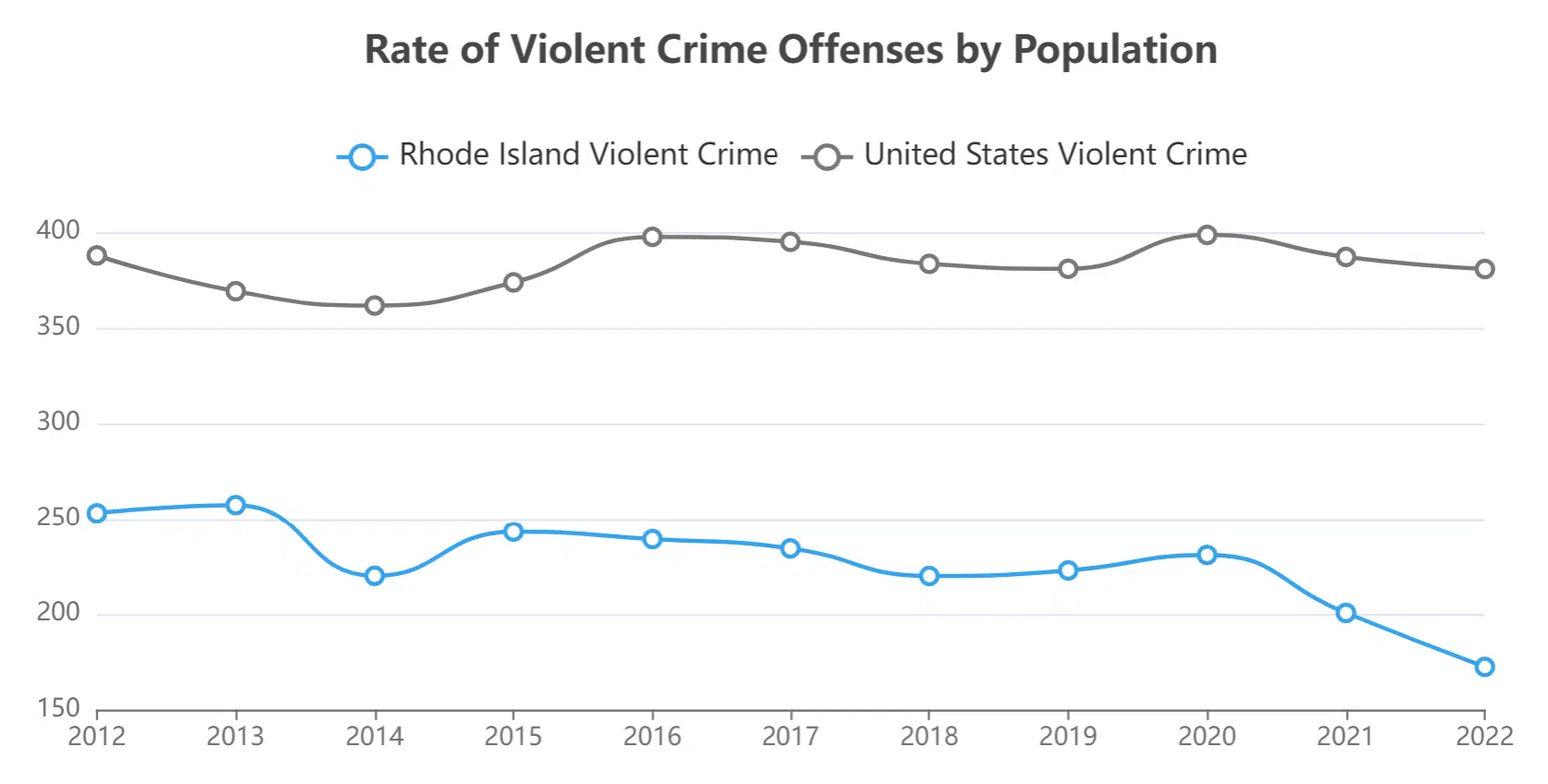
Crime trends in Rhode Island reflect the national picture. 

Monday, October 23, 2023

Sheldon Whitehouse proposes Supreme Court term limits with 'long shot' bill

Throwing a "Hail Mary" against corruption on the Court

Alex Henderson

Although Democrats have won the popular vote in seven of the United States' last eight presidential elections, only one-third of the U.S. Supreme Court consists of Democratic appointees. Six of the nine justices were appointed by GOP presidents, including former President Donald Trump's three appointees: Justice Brett Kavanaugh, Justice Amy Coney Barrett and Justice Neil Gorsuch.

The High Court's 6-3 Republican majority has frustrated Democrats by doing everything from overturning Roe v. Wade after 49 years to outlawing the use of affirmative action in college admissions. Democrats, in response, have made a variety of proposals, which include increasing the number of justices or "packing" the Court and imposing Supreme Court term limits.

Sen. Sheldon Whitehouse (D-Rhode Island), Bloomberg News' Suzanne Monyak reports, is pushing a bill that, if passed, would require term limits for new Supreme Court appointees. But the operative word is "if."

How "Both-sidesiam" works

For more cartoons by Tom Tomorrow, CLICK HERE.