Rites, and wrongs, of fall
Manjot Kaur Sidhu, University of Maine

It is a tidy habit rooted in aesthetics, but ecologically, clearing away fallen leaves strips the very foundation of local ecosystems. Far from dead debris requiring disposal, this fallen foliage forms a dynamic layer and a biological interface that drives nutrient cycling and is essential for soil health and the environment, including biodiversity.
As a researcher of plant growth in yards and gardens, I would recommend leaving leaves on the ground. There, they can provide essential winter habitat for native pollinators – even in places that don’t have freezing temperatures. And they act as a nutrient-dense, natural mulch for the soil.
Here is the science behind why the first step of fall yard care could simply be doing less – along with practical ways to keep your yard looking neat while nourishing the ecosystem underneath.
A winter sanctuary for native pollinators
To understand why leaf litter matters, it helps to look closely at what happens beneath the surface as temperatures drop. While honeybees pass the winter in sheltered hives, the vast majority of North America’s native pollinators do not.
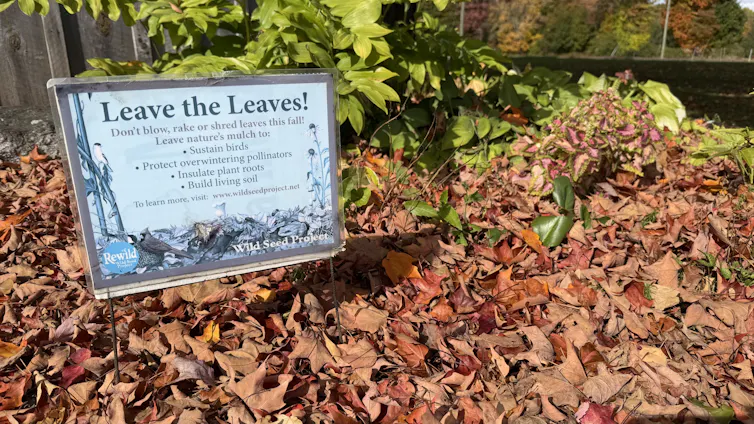 |
| Leaves on the ground are part of the natural cycle of nutrients. Manjot Sidhu, CC BY-SA |
Up to 70% of native bee species, including many insects’ cocoons and larvae, nest in the ground. Fertilized queen bumblebees burrow just a few inches into the soil or hide under dense leaf mulch to survive the freezing months ahead, to lay eggs in the following spring.
Raking, bagging and blowing leaves away destroys this crucial winter nursery.
Many other insects depend on the shelter of fallen foliage: