Menu Bar

Home           Calendar           Topics          Just Charlestown          About Us

Sunday, April 27, 2025

Attorney General Neronha sues Trump Administration over threat to withhold $116 million in funding for R.I. K-12 Schools

Trump has given states an impossible choice between two contradictory mandates

RIFuture.news

Rhode Island Attorney General Peter Neronha joined a coalition of 19 attorneys general in filing a lawsuit challenging the United States Department of Education’s threat to withhold federal funding from state and local agencies that refuse to abandon lawful programs and policies that promote equal access to education in K-12 classrooms across the nation.

On April 3, 2025, the Department of Education informed state and local agencies that they must accept the Trump Administration’s new and legally incoherent interpretation of Title VI of the Civil Rights Act of 1964 with respect to diversity, equity, and inclusion efforts — or else risk immediate and catastrophic loss of federal education funds. 

Like many other states, Rhode Island refused to certify its compliance with these new requirements, explaining that there is no lawful or practical way to do so given the Department’s vague, contradictory, and unsupported interpretation of Title VI. In filing today’s lawsuit, Attorney General Neronha and the coalition seek to bar the Department from withholding funding based on these unlawful conditions.

Is Brown Rice Really Healthier?

Depends on age

By Jack Harrison, Michigan State University

Brown rice, often seen as the healthier choice, contains higher arsenic levels than white rice for U.S. consumers. This poses a particular health risk for children under 5, as arsenic is toxic and can cause serious health issues. While U.S.-grown rice has lower arsenic levels than imported rice, there is still concern for those consuming rice from outside the country.

Whether you’re picking up rice at the grocery store or ordering it as a side at a restaurant, you might choose brown rice over white rice for its higher nutrient and fiber content. Many people associate brown rice with healthier eating, but the reality is more complex.

Recent research from Michigan State University, published in the journal Risk Analysis, found that brown rice contains higher levels of arsenic, including inorganic arsenic, compared to white rice in U.S. populations.

While these levels don’t pose significant health risks for most adults, there may be concerns for infants and children under five, who eat more relative to their body weight and may be more vulnerable to potential exposure.

Anti-semitic attacks continue to increase in New England

52 in Rhode Island alone

Anti-Defamation League (ADL)

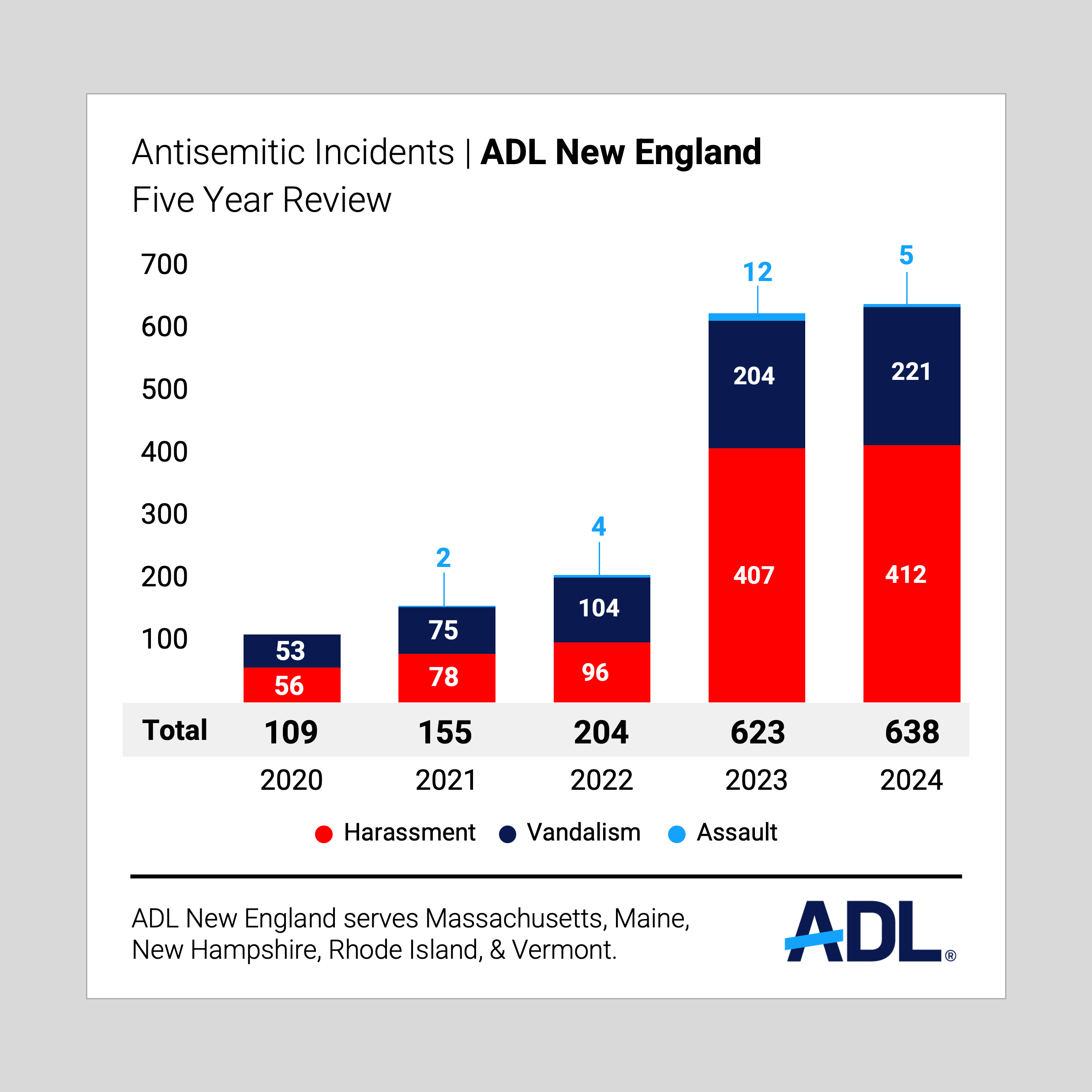
ADL’s Annual Audit of Antisemitic Incidents recorded a total of 638 incidents of assault, harassment, and vandalism in 2024 within the New England Region (covering Maine, Massachusetts, New Hampshire, Rhode Island, and Vermont). This is the fifth year in a row that antisemitic incidents increased and broke the previous all-time high in 2023. 2024 saw a 213 percent increase in incidents in New England from 2022 and a 485 percent increase since 2020.

“The persistent increase in antisemitic incidents over the past five years is a stark reminder that antisemitism continues to impact our communities,” said Samantha Joseph, ADL New England’s Regional Director. “Particularly concerning is the continued proliferation of extremist incidents and the rise of attacks against Orthodox Jews. The alarming manifestations of antisemitism in 2024 instill fear and are reminders that much work remains to be done.”

Saturday, April 26, 2025

Trump deports three children who are US citizens

One of the kids is suffering from a rare form of metastatic cancer and was deported without medication or the ability to consult with their treating physicians

ACLU of Louisiana

On April 25, in the early hours of the morning, the New Orleans Immigration and Customs Enforcement (ICE) Field Office deported at least two families, including two mothers and their minor children – three of whom are U.S. citizen children aged 2, 4, and 7. One of the mothers is currently pregnant. 

The families, who had lived in the United States for years and had deep ties to their communities, were deported from the U.S. under deeply troubling circumstances that raise serious due process concerns.

ICE detained the first family on Tuesday, April 22, and the second family on Thursday, April 24. In both cases, ICE held the families incommunicado, refusing or failing to respond to multiple attempts by attorneys and family members to contact them. In one instance, a mother was granted less than one minute on the phone before the call was abruptly terminated when her spouse tried to provide legal counsel’s phone number.

As a result, the families were completely isolated during critical moments when decisions were being made about the welfare of their minor children. This included decisions with serious implications for the health, safety, and legal rights of the children involved–without any opportunity to coordinate with caretakers or consult with legal representatives.

These actions stand in direct violation of ICE’s own written and informal directives, which mandate coordination for the care of minor children with willing caretakers–regardless of immigration status–when deportations are being carried out.

Dumb and Dumber

MAGA "stars"

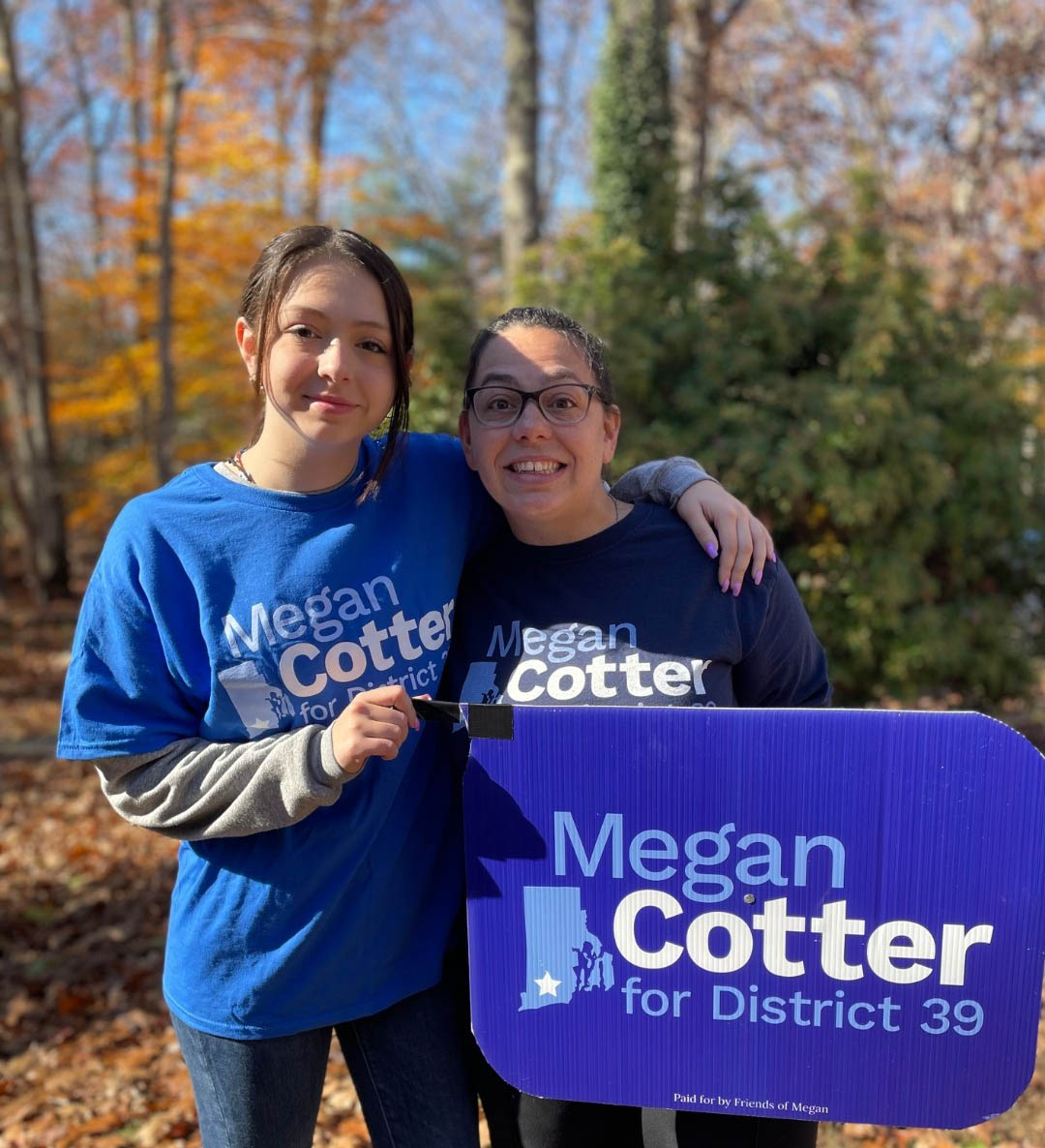
Another great Megan Cotter bill passes the House

House OKs bill to promote strong school policies for mental and behavioral health support, safety

Megan (R) with daughter Emily
The House of Representatives today passed legislation sponsored by Rep. Megan L. Cotter aimed at helping schools create and implement effective mental and behavioral health and safety policies to support students.

The legislation (2025-H 5165A) would require every school committee in the state to establish a Student Safety and Behavioral Health Committee (SSBHC) charged with ensuring that the district has a comprehensive policy to provide mental health support to students in need and to address student behaviors to minimize disruptions.

“We are deep in a children’s mental health crisis, and schools are on its front line and deeply affected by it. Each district needs effective policies in place to respond appropriately, effectively and compassionately to kids in need for the sake of each child and for sake of the learning environment as a whole,” said Representative Cotter (D-Dist. 39, Exeter, Richmond, Hopkinton). 

Aquaculture training course attracts those seeking ocean farming knowledge and skills

Clamming 101

Neil Nachbar 

Instructors Rob Hudson and Azure Cygler drew upon their experience
of working in the aquaculture industry when teaching the aquaculture
 training course. (Photos courtesy of Rhode Island Sea Grant)
The University of Rhode Island Coastal Resources Center’s new spring course tailored to those with basic ocean farming knowledge wanting to learn about the business practices of aquaculture drew interest from around the globe.

The inaugural 12-week course, “Beyond the Basics for Businesses and Practitioners,” was free for participants thanks to grant funding awarded to Rhode Island Sea Grant.

Located at URI’s Graduate School of Oceanography, Rhode Island Sea Grant supports research, outreach, environmental literacy, and workforce development programs that foster the resilience of local and regional communities and marine environments.

Elon Musk's next target?

Our DNA is at risk of hacking, warn scientists

University of Portsmouth

Next-generation DNA sequencing (NGS) -- the same technology which is powering the development of tailor-made medicines, cancer diagnostics, infectious disease tracking, and gene research -- could become a prime target for hackers.

A study, published in IEEE Access, highlights growing concerns over how this powerful sequencing tool -- if left unsecured -- could be exploited for data breaches, privacy violations, and even future biothreats.

Led by Dr Nasreen Anjum from the University of Portsmouth's School of Computing, it is the first comprehensive research study of cyber-biosecurity threats across the entire NGS workflow.

NGS is a cornerstone of modern biotechnology, enabling rapid and cost-effective DNA and RNA sequencing that supports important advances in cancer research, drug development, agricultural innovation and forensic science.

The sequencing process within NGS workflow involves a series of complex, interdependent steps -- from sample preparation and sequencing to data analysis and interpretation -- each involving highly specialized instruments, technologies, software, and connected systems.

While the steps are essential for generating accurate results, they also open up multiple points of vulnerability. As many DNA datasets are openly accessible online, the study warns it is possible for cybercriminals to misuse the information for surveillance, manipulation, or malicious experimentation.

Friday, April 25, 2025

The Un-insurability Crisis Is Upon Us

Trump may not believe in climate change, but the insurance industry does

By Andrew Hoffman, Rupert Read, originally published by Resilience.org

This map shows all census tracts within the U.S. categorized into one of five classifications related to climate risk.

What does a 
post-1.5°C world mean for the insurance sector, their customers, investors, and the economy as a whole? This question has suddenly hit the news, as insurers begin to withdraw from some prominent places, and insurance insiders begin to break cover, as reported by the New York Times, just last week: https://www.nytimes.com/2025/04/10/climate/climate-change-economic-effects.html.

New research by the Climate Majority Project, working with a set of insurance insiders working safely within the veil of anonymity, looks at this question and set out three possible scenarios. The one towards which we are currently headed is dire, unless new policies and strategies are instituted that rethink and rework the risk landscape.

Insurance is the canary in the climate coal mine

The insurance sector is dealing with the realities of a climate-changed world with higher payouts from more extreme weather events and more assets in harm’s way by raising premiums and reducing coverage to manage losses. As this continues, with an increasing number of regions becoming ‘ uninsurable‘, Federal Reserve Chair Jerome Powell has warned that insurance companies pull out “of coastal areas [and] areas where there are a lot of fires” the loss of available insurance means that “there are going to be regions of the country where you can’t get a mortgage” in “10 or 15 years.” 

This would be devastating to individual homeowners and to the economy at large as property values drop and governments take in less tax revenue for schools, police and other basic services. Günther Thallinger, Chairman of the Investment Board of multi-national insurance company Allianz SE warns that this represents “a systemic risk that threatens the very foundation of the financial sector.”

In its 12th national report, “Property Prices in Peril,” First Street — the analytics firm behind the climate risk rating attached to leading real estate listings – estimates the impacts of climate damage could reduce unadjusted U.S. real estate values by $1.47 trillion over the next 30 years.

EDITOR'S NOTE: Cathy and I were notified in January by our long-time insurer that because of climate risks, they would no longer cover us. We live within 1.5 miles of the coast. It took three months and a much higher premium to secure a new carrier. This problem is real, is happening in Charlestown and it's happening now. - Will Collette

"Fair and balanced"


Bah, MAGA

URI forester says forests are part of the solution to climate change

Rhode Island woodlands offer test sites for researchers and foresters looking to future

Kristen Curry

A forestry extension specialist at the University of Rhode Island, Christopher Riely works with faculty and students across campus, and off-campus partners, to help improve Rhode Island’s forests and the wildlife they support. A certified forester, Riely is also involved with research and practice in the emerging field of climate-adaptive forest management, taking place in Rhode Island, just five miles away from campus.

At URI, Riely frequently works with students in the University’s College of the Environment and Life Sciences, often accompanying students to the 1800-acre Hillsdale Preserve to study Rhode Island’s other main ecosystem: its woods.

Rhode Island is still more than half woodland.

URI faculty and staff are working with students and Rhode Island DEM in the emerging field of climate-adaptive forest management, just miles from campus. Oak trees are a particular focus of study.

Previously managed as a gentlemen’s hunting preserve for a Wall Street banker, the site was deeded to the state for scientific forest management and is now managed by the Rhode Island Department of Environmental Management (DEM) in research partnership with URI. It’s a place full of history and beauty, but also damage and warning, including scores of dead trees.

Nurturing now, thriving later: The lasting power of affectionate mothering

Hard to beat a mother's love

American Psychological Association

Affectionate mothering in childhood may have a lasting impact on important personality traits, potentially influencing life outcomes such as educational achievement, economic success, and health and well-being, according to research published by the American Psychological Association. 

The findings suggest that positive maternal parenting could foster important traits such as openness, conscientiousness and agreeableness.

"Personality traits are strong predictors of important life outcomes, from academic and career success to health and well-being," said Jasmin Wertz, PhD, lead author of the study and a professor of psychology at the University of Edinburgh. "Our findings suggest that fostering positive parenting environments in early childhood could have a small but significant and lasting impact on the development of these crucial personality traits."

Former federal judge looks at the ‘relentless bad behavior’ of the Trump administration in court

‘I never issued a criminal contempt citation in 19 ½ years on the bench’

John E. Jones III, Dickinson College

Legal battles between the Trump administration and advocates for deportees flown to prison in El Salvador have turned into conflicts between the government and the judges overseeing those cases. One federal judge, James Boasberg, accused Trump administration lawyers of the “willful disregard” of his order in March to halt those flights, saying there was “probable cause” to hold officials in criminal contempt. Another federal judge, Paula Xinis, strongly chastised government lawyers for their failure to follow her order – affirmed by the U.S. Supreme Court – to “facilitate” the return of a man, Kilmar Abrego Garcia, wrongly deported to El Salvador. Xinis cited the government’s “repeated refusal to provide even the most basic information as to any steps they have taken.”

All this happened as administration officials made public statements disparaging the judges. Trump aide Stephen Miller described Xinis as a “Marxist judge” who “now thinks she’s president of El Salvador.” President Donald Trump had earlier called Boasberg a “Radical Left Lunatic Judge” in a social media post and demanded his impeachment.

Politics editor Naomi Schalit interviewed Dickinson College President John E. Jones III about this extraordinary conflict. Jones is a former trial lawyer, former federal judge, and a one-time GOP candidate for the U.S. House.

Right now, we’re seeing two judges have a tough time with attorneys from the government. What governs behavior in the courtroom?

For all the time that I was on the bench, and certainly before that, it was a pretty awe-inspiring thing to go into federal court. The federal court was the big leagues; you just didn’t mess around with federal judges. It was a good way to get your head handed to you, not because judges have hair triggers, but simply because there is a certain decorum that obtains in federal court, a gravity about the proceedings. It’s deference to the court and working within the boundaries of professional ethics. It’s being respectful when the court asks you a question. It involves never criticizing that judge in a personal way outside the courtroom, no matter how much you may disagree with the judge.

I’m struck by the discourteousness of the government attorneys. They’re treating life-appointed district judges like they’re just impediments to what they want to do. It is something that has not ever happened, I think, in the annals of federal jurisprudence.