"I'm furious because it is not an accident that more
kids die from guns in this country than anywhere else on the planet."
STEVE
AHLQUIST
I'll be interviewing as many candidates as I can ahead of
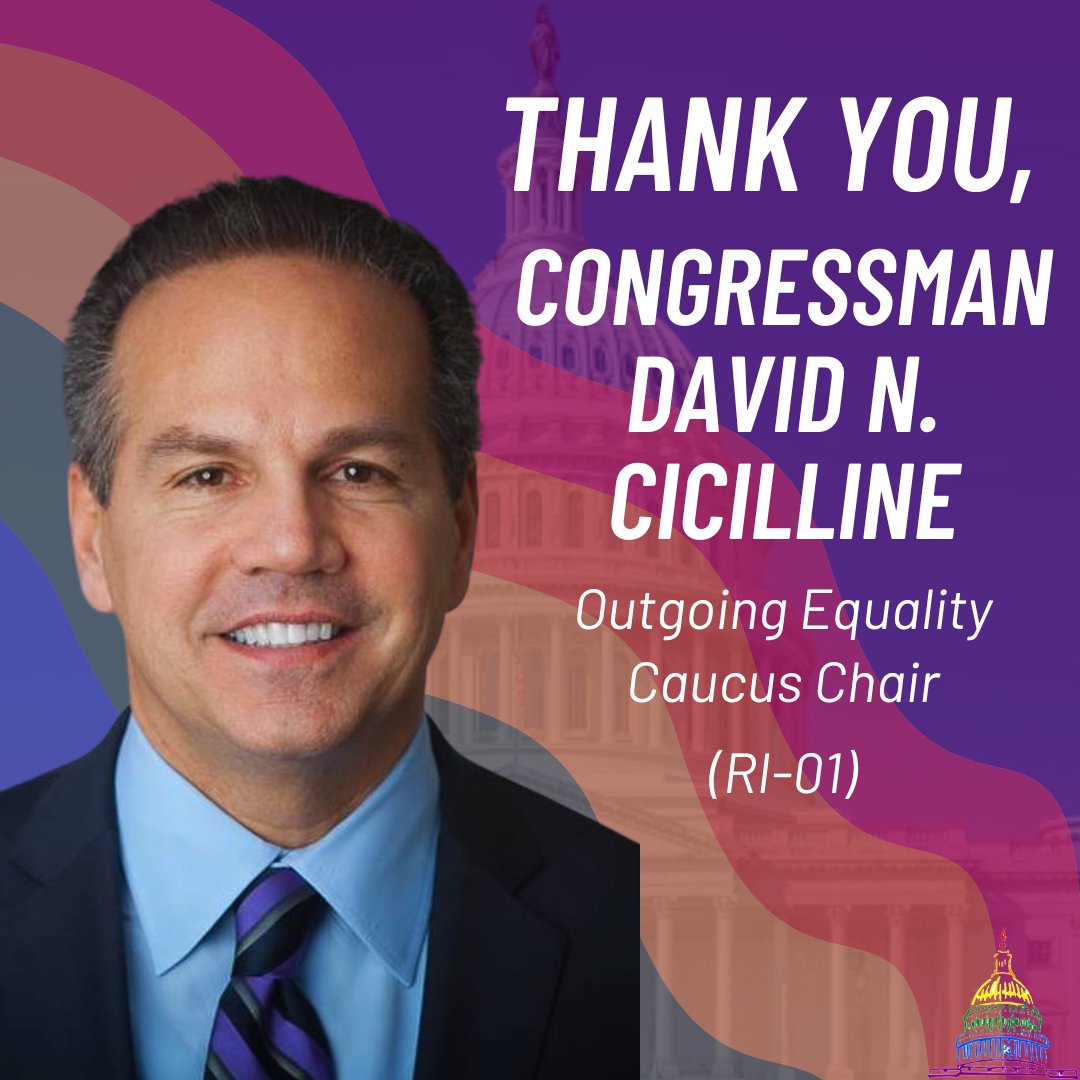
the special election to fill the House seat vacated by David Cicilline. My
third interview is with former State Representative
Aaron Regunberg.
Regunberg is a husband, father, lawyer, and former State Representative who
served Providence’s House District 4 from 2015 to 2019.
We conducted the interview in person, outside the Rochambeau Library in Providence.
See my other Congressional District One interviews here:
Walter Berbrick
Sandra Cano
Aaron Regunberg
Steve Ahlquist: First question. Why you and why this
job?
Aaron Regunberg: I'm running because I think we need
more progressive organizers in Congress who understand that the problems we’re
facing right now are not accidents. My wife, Katie, and I have a two-year-old
son Asa, and being a dad is amazing, but like a lot of parents, I worry about
the future. Will our kids be safe at school from guns and mass shootings? Will
they have clean air to breathe or will they grow up in a smokey climate crisis
future? Will they be able to afford housing and healthcare in college? Will
they have a functioning democracy?
When I'm up at night tossing and turning, worrying about
these dangers, it is not just fear that I feel. I'm furious because it is not
an accident that more kids die from guns in this country than anywhere else on
the planet. It is not an accident that our climate is spiraling out of control.
It's not an accident that so many working people are struggling, right now,
while corporate profits are literally hitting record highs. The fossil fuel
industry, gun companies, corporate CEOs, and their Republican allies are
creating and feeding all of these crises because they're making billions and
billions of dollars off of them. If we're going to solve these existential
threats, we need to understand where the threat is coming from and we need to
address it. What gives me hope, as scared and angry as all that made me sound,
is that I believe we can come together and take on those entrenched interests,
and win.
The reason I know that's possible is that I've seen it
here in Rhode Island. I've been working with folks to win real, concrete,
progressive policy change, including in a lot of cases when many people didn't
think it was possible. When I was first elected to the General Assembly many
people told me we would never pass paid sick days. There were too many
corporate interests and too many conservative lawmakers lined up against it.
But we organized.
That's how I got involved in politics in the first place,
as a community organizer founding the Providence
Student Union, which is an education justice organization here in
Providence. When you're up against those barriers, you organized. We brought
workers, small businesses, and unions together. We knocked on doors in the
Speaker's district and other strategic areas.
I organized my legislative colleagues, both the folks who
often agree with me and a lot of the folks who don't always agree with me, to
find those areas of commonality and move forward. We looked for the leverage
points and we figured out how to get it done so the 40% of Rhode Island workers
who couldn't, could now start caring for a loved one or recover from an
illness, without having to worry about losing their pay.
That's been the approach I've seen win real change. It's
the same way we were able to increase the minimum wage for tipped workers for
the first time in 20 years in our state; create new clean energy and community
solar programs; expand harm reduction strategies for folks struggling with addiction;
and begin the fight, which is obviously ongoing, to reform solitary confinement
in our prisons.
I think on so many of the issues that we care about,
we're not going to be able to advance the kind of change that so many people
desperately need by electing one more Democratic vote from a deep blue
congressional district like Rhode Island's first congressional district. This
is the kind of district that can and should be sending folks to Congress
like David Cicilline, who can organize and bring people together and has a
record of winning real progressive policy change. I think that's the work I've
been doing in Rhode Island for many years and it's the kind of work I'd be
honored to continue, alongside folks from across the district, in Washington.
Steve Ahlquist: If you get to Congress, what are the
top two or three things you're thinking about in terms of first steps or
important issues?
Aaron Regunberg: I spend a lot of time thinking
about the kind of world my son is going to grow up in. Right now we are on a
trajectory for that to be a really scary and dangerous world. So climate action
is a huge motivator for me. There are so many important issues but this one has
a very strict and unforgiving timeline. The decisions we make in the next two
to five to ten years are going to set the course of human civilization for the
next 10,000 years. And that's not hyperbole, that's physics. We are not
currently on track to have a livable future.
The good news is that we already have everything we need
to win the clean energy transition. The cheapest way of producing electricity
right now is to point a piece of glass at the sun. These are miraculous times
in a lot of ways. The problem is politics. The problem is political will. The
problem is that the fossil fuel industry, which is one of the most powerful and
profitable industries in the history of humankind, has a stranglehold on our
political system. And they have zero interest in allowing this clean energy
transition because it's against their bottom line. You put a solar panel on
your roof, you don't have to think about it for 25 years, and soon it will be
35 years as the technology's getting better.
With the Inflation Reduction Act (IRA), we took
a massively important step that makes huge investments to scale up our
renewable energy economy. But everything the IRA did was on the demand side, it
didn't do anything on the supply side, which is where the actual emissions come
from. That's what we need to deal with if we're going to secure a livable
future. The reason we did the IRAis that the fossil fuel industry was okay with
that one piece of it, not thrilled, but okay. But the fossil fuel industry is
not okay with us restricting the expanded fossil fuel supply, and that's what
we ultimately need to do.
As someone with a lot of expertise in this area as an
organizer and climate lawyer, as someone who's worked on the climate liability
cases that are trying to hold big oil accountable for their decades of
deception and fraud, I would focus on building the consensus, at least within
the Democratic caucus, that the fossil fuel industry is not our friend on this
issue, they are the obstacle that needs to be overcome.
Another area I've done a lot of legal research on is
shutting down the financial pipeline that allows for the expansion of the
fossil fuel supply. We need to have regulations in our financial and insurance
industry to safeguard our financial system from climate risk, which is what we
saw when a network of subprime mortgages was able to do to tank the global economy.
Think about what correlated climate shocks regularly occurring across the
planet is going to do to our financial system.
Steve Ahlquist: We saw a little of that with
Ukraine.
Aaron Regunberg: Exactly. There's a lot of power
that we have, in legislation already on the books, that would allow us to
regulate the financial industry and stop investments in fossil fuel. There's
huge power and potential there that's disproportionate to the attention it
gets.
Steve Ahlquist: I think it's difficult for people to
understand the financial system at that scale. Very few of us live in the world
of finance. We think of finances as balancing a checkbook and taking care of a
household. We don't think in those larger terms because it's alien to us.
Aaron Regunberg: And yet we're all tied into it.
When we put our money in one of the big banks, they are investing that money in
fossil fuel development projects.
One issue I'm hearing while campaigning in different
communities is the cost of living crisis. That needs to be a top priority. We
talk about inflation as if it's some sort of amorphous, uncontrollable act of
God. It's not. It is the result of policies and decisions by corporations that
are earning historic profits. There are policies and regulations that we can
implement at the state and federal levels to bring down the cost of living.
We can pass laws that stop corporations from price
gouging. We can pass a windfall profits tax on the industries, like oil and gas
and others, that are profiting off of our pain. We can pass the kinds of
antitrust policies that Congressman Cicilline has championed to make sure that
corporations aren't getting so big and consolidated that they can raise prices
however high they want without having to worry about competition. We can pass
price controls on vitally needed goods, including all the prescription drugs
that our tax dollars went toward developing.
A lot of people are feeling it. My wife and I are feeling
the squeeze of paying for groceries, utilities, diapers, and health insurance,
but we need to think concretely about the many things we can do to rebalance
the economy for regular people and against corporations that are profiting like
no one's business.
Related to the cost of living is the housing crisis. Folks
are struggling in every community in Rhode Island. It's important that housing
is top of everyone's list of issues because it's connected to everything else.
I got my start working in our public schools. It is very obvious to anyone who
spent time in Providence Public Schools that housing is an education
justice issue because it's very hard to study and pay attention in class when
your family is housing insecure, you are facing eviction, or you're living out
of your parent's car. It's a domestic violence issue because it turns out one
of the biggest reasons that folks are trapped in dangerous situations is that
they can't afford to find another place to live. I could go on and on. A lot of
focus has been on the things we can do at the state level on housing, and
there's so much there. But ultimately the problem needs federal solutions.
The United States federal government used to be a primary
actor in the housing market. We used to produce thousands of housing units
every year. And in the late seventies, early eighties, we stopped doing
that. Ronald Reagan, and others, said the free market is the best way to
deal with housing. It is now clear that the market is astoundingly bad at
producing low-income or even moderate-income housing. It just doesn't do it. If
we want to have the housing supply needed to support our communities and our
families, we need the federal government to get back into the game. We need to
bring the public sector back in. That's something that I would be working day
in and day out to support. Obviously the lack of available units is a huge
issue, and there are also parts of the problem unrelated to supply. There's
regulation, there's a lack of protection for tenants...
Steve Ahlquist: There are HUD policies
under which you can lose your apartment in a snap. There are policies about
being on probation or formally incarcerated that can make it impossible to
qualify for housing. There's means testing, which isn't the smartest way to
allocate resources because means testing too often ignores circumstances that
are beyond an applicant's control and do not fit easily onto a form. We don't
means test tax breaks for the rich. We means test welfare for people in need.
Aaron Regunberg: We are constantly trying to make
every critical and necessary social safety program as difficult to access as
possible, as punishing to the people who need it as possible, and to challenge
folks' dignity as much as possible.
Steve Ahlquist: It's weaponized bureaucracy.
Aaron Regunberg: And by the way, it's immoral,
doesn't make sense, and it's not even good for the programs. The amount we're
spending on checking folks to make sure they qualify is a waste of resources as
well.
Steve Ahlquist: I worked in retail for a long time,
and as an industry, we would do everything we could to prevent people from
shoplifting. But we also realized that if we worked and allocated resources to
reduce shoplifting to near zero, we'd be spending so much more than what casual
shoplifters actually take. There's a point at which retailers can live with a
2- 3% shoplifting rate and not have armed security guards strolling the store
closely monitoring people while they're shopping. That's a logic that many
businesses have come to while the government is letting the perfect be the
enemy of the good. And I think it's intentional.
Means testing is not an honest attempt to catch scammers.
It's an effort to undermine social programs politicians object to on
ideological grounds. It's like voter fraud. Actual voter fraud is statistically
irrelevant, but because there's a tiny amount of imperfection, the whole voting
system can be branded as corrupt. There are always going to be free riders. The
idea is to figure out if we can limit free riders in a smart way that doesn't
threaten the entire system or overburden us with regulations and policing that
makes it impossible to enjoy the world.
Aaron Regunberg: And can we have some perspective
about who the true free-riders in our system are? It's the factories that are
dumping their pollution into our lakes and rivers because it's cheaper for
them. And the cost is all on us
Steve Ahlquist: We pay for every contaminated,
former industrial Superfund site in Rhode Island every day. We pay today, in
terms of health and economic opportunity, because somebody in the past was
basically shitting on us, and we are still cleaning it up. They made their
profits and then they went away...
Aaron Regunberg: Privatized gain, public risk and
cost.
Steve Ahlquist: I sometimes believe that if we
tagged externalities onto these businesses, there would be no profit in the
world.
Switching gears, I think there are limited things a
Congressperson can do as far as the United States Supreme Court goes.
The Supreme Court has made some pretty astounding decisions in the past couple
of years. I'm going to start with abortion, which I think is an issue that
we've been dealing with pretty well in Rhode Island. Can you talk a little bit
about that and what you think can happen nationally?
Aaron Regunberg: My grandma was executive director
of her local Planned Parenthood in the years before Roe
v. Wade, and she taught me that you can't have freedom without
reproductive freedom and abortion access. She would be turning over in her grave
to know that the fights she and millions of other women and other people led
and engaged in for so many years have come to this, that we're back to fighting
for the most basic right to bodily autonomy.
And we're not back here because Republicans played fair
and made these policy wins through democratic gains. We're here because they
understood the only way they were going to win is through majoritarian
channels, strategies, and structures. They've had this decades-long plan that
they've been ruthlessly effective in carrying out, creating a made-up judicial
philosophy that meets their ends, creating a pipeline of lawyers and judges to
implement their unjustified theories, using gerrymandering and other structures
to take over state legislatures, and using those state legislatures to pass
more and more radical bans and restrictions, ultimately culminating in the
overturning of Roe v. Wade.
To win a world where every person has rights and autonomy
over themselves and their reproductive future, the Democratic Party needs to be
as ruthlessly effective, focused, and single-minded as the Republican Party has
been.
Steve Ahlquist: Is that possible? The Democratic
Party seems more fractured than the Republican Party when it comes to the big
issues.
Aaron Regunberg: Making it possible is a big part of
the work. In the early 1970's there was parity between pro- and anti-choice
members of both parties. There were lots of pro-choice Republicans. Part of
their work and strategy was making it completely unacceptable to be a
successful GOP politician unless you were rabidly anti-abortion. We need to do
the same thing, but the inverse.
You brought this up in the context of the Supreme Court,
and that's a big part of the work that needs to happen on this and other
issues. It's also a good example of where the Democratic Party has failed in
relation to the Republican Party, which has for years understood that the
courts are political and that the courts are where policy is created that
affects millions of people's lives.
Steve Ahlquist: The Republican plan you spoke about
was not a secret. They were openly talking about taking the courts and they
were naked in their ambition to do so. Yet I never saw the Democrats do
anything more than pay lip service to the danger. It was never a rallying cry,
and no one seemed to be taking it seriously until all of a sudden it happened,
and then it happened twice more, and now it's a 6/3 conservative majority that
will be in power for decades.
Aaron Regunberg: It shouldn't have been a surprise. Yet
Democrats continued and continued, and in some cases still continue, to shy
away from the hard-nosed approach and say, "The courts are not neutral and
it's not about neutral principles and rule of law."
I'm a lawyer now, I've clerked in our courts. I have seen
that courts are not neutral. I know that courts are political. The laws that
are adjudicated in courts are obviously not neutral. The structures that govern
how courts function are not neutral. The resources that different actors bring
into court in pursuit of their legal interests are not neutral. Even folks who
want to be neutral, who are sitting at the bench, are bringing their biases and
analyses to the table.
The right just does that explicitly. They say, "We
know the kind of world we want. It's a scary and dangerous world for anyone
who's not a white Christian nationalist. We're going to use these vast levers
of power that exist in the judiciary to create it.” And if they're all doing
that and no one on the Democratic side is responding in turn, we get the sort
of situation we have now. We need to accept as a party that these are
life-and-death struggles and life-and-death decisions. We need to treat them
with that kind of urgency.
It means fighting for real court reform. We're not going
to reinstate the principles of Roe v Wade until we have real court reform like
term limits for Supreme Court members, requiring a supermajority of the court
to overturn democratically passed legislation, requiring ethics among Supreme
Court Justices so that they can't be engaging in literal pay-to-play, old
school style, Buddy Cianci corruption, and it needs to include court expansion.
This is an area where we, as a party, have drawn
precisely the opposite lessons we should have from the last time we reckoned
with this set of issues as a party, which was under FDR. The popular
memory of FDR's court-packing plan is that it was a failure. And we say,
"We don't want to go back down that road." But that is the exact
opposite of the reality. When FDR came in, he passed the first New Deal, the
first set of policies to respond to the Great Depression. And the conservative
Supreme Court struck them down. Instead of doing what Democrats have been doing
recently, just accepting the situation and rolling over, FDR said, "No,
we're going to fight back."
FDR fought back by traveling the country and passing
popular policies and then daring the Supreme Court to overturn them. And when
they did, he went around the country and said, "We did this and who
overturned it? Those guys." He talked very explicitly about this stuff.
Then he pushed for things like court expansion, and while that policy did not
pass, all of that together put enough pressure on the Supreme Court that they
backed down, and the second New Deal, an even more ambitious set of policies
and programs, was allowed to continue without getting struck down.
I think that's the lesson we should be learning from
folks like FDR. I think we're lucky in Rhode Island. We've got a leader in
Senator Sheldon Whitehouse (Democrat, Rhode Island) who has been
ringing the alarm bell on the Supreme Court for some time, often as a lonely
voice in the wilderness. It's good that there's enough attention on this now
that people are starting to take it more seriously. It's getting the kind of
attention and energy that Senator Whitehouse has been pushing for for some
time. We need more folks on the House side who are really championing this
fight and these issues the way that Senator Whitehouse has been on the Senate
side. That was a big motivator for me to get into this race.
Steve Ahlquist: Where do you stand on the United
States' support of Ukraine?
Aaron Regunberg: This is going to be one of the
areas where I think my answer is going to cause some frustration among my good
friends on the left and in some circles of the peace community, which is a
community I consider myself part of. I've always been a strong critic of United
States military intervention and excessive military spending while we are
starving domestic programs that desperately need more support. But the moral
lines in this conflict are clear enough. We have an imperialist petro state
launching a brutal war because of the delusions of a far right-wing
authoritarian. I think that the Ukrainians have shown courage and commitment to
each other and to democracy.
That commitment is a very real motivating factor. I think
they have earned our support. I don't feel like I'm in a better position to say
that I know when negotiation settlements should start and I'm not going to push
for that over the folks who are on the ground, making the sacrifices, and
engaged in this fight in ways that I think are profoundly incomparable to the
many other military engagements and interactions in my lifetime that I've been
opposed to.
Steve Ahlquist: Israel is an important fulcrum in
the Middle East, a long-time American ally that seems to be moving towards the
same kind of right-wing authoritarianism that we've seen all over the world,
including here in America. What are your thoughts on Israel and Palestine?
Aaron Regunberg: As someone with family in Israel
and whose grandfather was a refugee from the Holocaust, this issue is very personal
to me. As a member of Congress, I will do everything in my power to ensure a
peaceful resolution to the Israeli-Palestinian conflict. That to me means a
two-state solution, one that guarantees Palestinians self-determination in an
independent state of their own with equal freedoms and rights that safeguards
Israel's existence as a Jewish and democratic state moving forward. As an
American patriot, I have a duty to oppose policies here that undermine our
fundamental American values. I think that as friends of Israel, we have a
similar responsibility for policies, including many that the current Israeli
government is pursuing, that undermine the shared values that have brought our
two countries together. This conflict has brought about so much pain and
suffering and loss, and as an ally and partners, we need to do everything we
can to usher in a future where there's true safety and peace and human rights
are enshrined.
Steve Ahlquist: What are your thoughts on guns?
Aaron Regunberg: If we can't keep our kids safe, we
can't do anything. There's a constant drumbeat of these senseless tragedies
that are so profoundly painful to everyone and it is barbarism. This is not how
a civilized country operates. These are issues I've cared about for a long
time. During my time at the Providence Student Union, I worked with students
impacted by gun violence. I was walking in a park with Katie and my son, and
there was a shooting at the intersection we were at 30 seconds after we passed
by.
I introduced the high-capacity magazine ban bill every
year that I was in the legislature and co-sponsored all the other big gun
bills. That ban is finally in law, which is amazing to me. Rhode Island is a
place that gives me a lot of hope. When I was first elected those bills weren't
going anywhere. The shift was based on grassroots organizing. Anyone who's
involved in this knows you can judge the balance of power on these issues by
the shirt colors at the State House on gun day.
The day all the gun bills are scheduled to be heard, all
the pro-gun folks show up in their yellow shirts, and the gun violence
prevention folks in their red Mom's Demand Action and orange Coalition Against
Gun Violence shirts. When I was elected, those were pretty scary days. It was a
sea of yellow shirts. There were not that many folks on our side introducing
the high-capacity magazine bill. You put it in a bill like that and you're
facing this army of folks - it's pretty intimidating - yet year-by-year, during
the time I was in the legislature and then beyond, more and more red and orange
shirts were showing up. I was up there this year helping sign folks in. There
were more red and orange shirts than yellow that I saw.
That shift in the number of folks coming out, in the
number of people volunteering, bringing in their friends, and making an
incredible investment of time and energy has led to real concrete wins. These
wins haven't been enough or come fast enough -it's ridiculous that we have to
work so hard. They do it in every other country. Think about Serbia. They had a
shooting and then within the month, they took the guns away.
That's how it should work. As I've been campaigning,
having meet and greets, and talking to folks, I hear a lot on these issues,
verging on hopelessness, because it feels so intractable at the federal level.
I push back and say, "No, we've seen, here in Rhode Island, that if we
build our power in ways that overcome the power of the gun lobby - and it is a
powerful lobby that has billions of dollars and puts that money into their political
operation - we can effect change. There is no room for cynicism or nihilism. We
need to take our organizing to scale nationwide.
Obviously, this year was frustrating. One person stood in
the way of the assault weapons ban, the Senate President. There was a clear
path to pass safe and secure storage and an assault weapons ban. The idea that
one person is able to block legislation that will save lives is unconscionable.
Steve Ahlquist: Let's talk criminal justice reform,
whatever that might mean to you.
Aaron Regunberg: My wife is a public defender. She
is in the trenches every day and I support her and hear from her every day
about the ways in which our systems are broken. The people that she represents
are overwhelmingly people suffering from substance use disorder, trauma,
racism, poverty, or violence. We have a system where instead of supporting
these folks and giving them the resources they need to live healthy, safe, and
secure lives, we starve them of resources, we prosecute them, and then we throw
them in prison where we spend more money than we've ever spent on them in their
lives up till that point - more money than we'vespent to help them get an
education or a good-paying, family-supporting job; or deal with the trauma that
they've experienced, or deal with the substance use or mental health challenges
that they've experienced.
We spend all that money compounding their problems
because almost no one comes out of prison healthier and better able to deal
with the challenges in their lives. There are prison systems that do that. The
way they approach corrections in countries in Scandinavia is actually
corrective. Correction is not a joke in some places. They provide the
wraparound services needed to help people with mental health problems and substance
use disorder issues they have. You can't deal with those things without
wraparound services that support them while they're in the system and support
them when they leave.
There's so much we can be doing to move away from a
system that is punitive, expensive to taxpayers, and makes our problems worse
in most cases; and towards a system that is helping people and making our
communities safer.
Obviously, we have a federal prison system and there are
federal policies that impact that issue, but the vast majority of folks who are
incarcerated or interacting with the criminal justice system are dealing with
state governments. That kind of structural shift doesn't happen without federal
guidance, direction, and resources, so I think there's a critical role for the
next congressperson to be fighting for that.
Steve Ahlquist: I want to talk about trans rights
because that's been an issue both here in Rhode Island and nationally. I see
attacks on trans students as white supremacist attacks on a vulnerable population as
happened in Nazi Germany.
Aaron Regunberg: I think you hit the nail on the
head as far as where this is coming from. I talked before about the need to
understand the causes of our problems. The crises we are facing are not
accidents. This is a good example of that. We talked about how the right is ripping
us off and raking in cash for the corporate overlords. In order to do that they
are trying to distract us. They are trying to put the blame for the pain that
so many working families are feeling onto queer and trans folks. They're trying
to sow division and hate among regular people so we're distracted. We don't
notice who's really undermining our future and taking away our fundamental
rights. And as you said, we know where that leads.
My grandfather was a refugee from the Holocaust. He
taught me exactly where those strategies of hate and division can lead and are
designed to lead. We need to have the same kind of urgency and approach to
standing up for our queer and trans neighbors and fight back against the
anti-trans bills and policies that have passed in Republican state legislatures
over the last several years. The cruelty of these policies is stunning. I think
this phrase has been used a lot but it's spot on: The cruelty is the point.
This is a crisis. We need to treat it as something that
cannot wait. We can't deal with this next year. This is a crisis and people are
feeling endangered. They're feeling unsafe. Even in places like Rhode Island,
where we in a lot of ways do a great job of embracing love, diversity, and
acceptance, people are feeling under attack and endangered because of what's
happening. David Cicilline has been a champion on these issues and whoever is
elected to this seat needs to continue that advocacy.
This is one of those issues where it is not just about
how you vote, whether you push the red or the green button.
Representative Jamie Raskin (Democrat, Maryland) was in town and did
an event for our campaign last week and he said that voting is the easiest part
of the job. The hard part is how you use the levers, the tools of the office,
and the platform that it provides to organize and elevate issues. I think David
Cicilline's done a good job in this area. He's not just a good vote, but a
leader, an advocate, a powerful speaker, and an organizer. That is the kind of
representation that I want to be bringing.
Steve Ahlquist: Taxing the rich. What are your
thoughts on the tax structure in general and how taxes work and who should be
paying what and how much?
Aaron Regunberg: In 2010 I was organizing canvases
here in Speaker Gordon Fox's district against the tax cuts for the rich.
This has been an issue I've cared about for many years. I helped organize and
lead the effort that blocked a lowering of the estate tax in Rhode Island
during my time in the legislature. Our tax system is not broken. It is designed
to work for the folks at the very top, who have the power and resources to rig
the rules and write the tax code to benefit themselves. When I was in the
legislature, I introduced, at the state level, legislation to increase the income
tax on Rhode Island's wealthiest earners. I introduced legislation to close the
carried interest loophole through a state-level compact, working across state
lines. Our budget is a mapping of our morality and priorities and right now
that map very clearly says rich people matter and that they being able to amass
the maximum amount of resources is more important than regular people having
the basic services they need to survive and thrive. We are not going to have
the kind of country our families deserve until we change that.
Steve Ahlquist: What about healthcare?
Aaron Regunberg: I think I can fairly say I'm the
only candidate in this race with a record of fighting for universal
healthcare, Medicare for All. Every year that I was in the legislature, I
introduced a state-level single-payer bill. Our healthcare system is barbaric,
and from a hard-nosed, pragmatic, fiscal conservative perspective, is a
disaster.
We spend more than any other country on the planet on
healthcare, and our outcomes are not just worse, they are unjust. The gap in
life expectancy between high-income and low-income Americans has been growing
and growing. I think right now it's around 10 years. There's no clearer
embodiment of inequality than that. Some people get over a decade more to live
on this planet based on how much wealth they have.
Steve Ahlquist: And they live well. Not only are
they living longer, they're living better.
Aaron Regunberg: We desperately need an improved
Medicare for All system. I'm not naive. I know how legislatures work. I know
what it takes to actually win concrete change over entrenched interests and the
health insurance industry and the big pharma industry. There are few more
powerful and entrenched interests than that. I'm not under any illusions that
I'm going to be elected and we're going to sweep in and pass Medicare for all
immediately, but I do think there is a realistic non-pipe dream path toward
creating a Medicare for All system.
The most realistic path is fighting to lower the Medicare
eligibility age, first to age 55, then to 50, and then to 40, continually
building the constituency of folks to fight for it. That's not easy, but when
Democrats win back majorities, there's no reason that beginning our path to a
Medicare for All system is politically impossible. But we need folks who are
going to fight for it. It's one thing to say, "I support Medicare for All.
It's another thing to have been working on these issues and fighting for these
issues for years. Folks who care about this issue can feel confident that it's
something I'm going to prioritize and fight for because it's something I've
been doing now for almost 15 years.
Steve Ahlquist: Last question: Why should people
vote for you? What's your pitch?
Aaron Regunberg: My pitch is based on all the issues
we care about and that we've been talking about today - whether it's taking on
the fossil fuel industry to win real climate action; taking on the gun industry
to prevent these senseless tragedies; taking on the health insurance and
pharmaceutical industry to protect our families; defending our queer and trans
neighbors; standing up for working people and the labor movement; or standing
up for reproductive rights and abortion access - we're not going to be able to
achieve the kind of change that we need, in many cases urgently need, just by
electing one more democratic vote. Even a solid democratic vote.
The first congressional district is a deep blue district.
It is the kind of district that can elect leaders like David Cicilline, folks
who can organize, bring people together, and have a record of winning real
progressive policy change. That's the work I've been doing here in Rhode Island
for years and I think that record of being able to win change and make a
difference for everyday Rhode Islanders is something that I would be honored to
continue to do in Washington.
Steve Ahlquist is a reader-supported publication. To
receive new posts and support my work, consider becoming a free or paid
subscriber.