Menu Bar

Home           Calendar           Topics          Just Charlestown          About Us
Showing posts with label William DiLibero. Show all posts

Wednesday, October 9, 2024

How the Charlestown Citizens Alliance used fake enemies and bogus emergencies to gain and keep power

Fear and loathing in Charlestown politics

By Will Collette

Just substitute "CCA" for "GOP" and
you get the gist
One of the most despicable things a politician can do is to use lies to create fear and panic among the people to win their votes. 

Donald Trump has used that technique for years, but this year, has brought it to new heights, as the residents of Springfield, OH can testify. 

Long before Trump, the Charlestown Citizens Alliance (CCA) has used that technique, starting in 2008 by portraying Charlestown’s resident curmudgeon Jim Mageau as the devil incarnate. 

While Jim was a terrible Town Council President, his wacky behavior made him an ineffective threat to anyone other than himself. But as a "threat," Mageau helped catapult the CCA into power.

Since that initial success at seizing power through fear and loathing, the CCA has come up with some enemy – real or imagined – to stay in power. They create one or more villains and then claim that only they can defend the town. The CCA is as phony as Trump and Vance claiming Haitians are coming to eat your pets.

The CCA's list of threats and enemies is long

The Charlestown Citizens Alliance threat list includes:

The Narragansett Indian Tribe for their long-abandoned plan for an Indian casino. The CCA hired attorney Joe Larisa, called a "racist by tribal leaders" specifically to harass the Tribe and block any effort the tribe makes to improve the lives of its people.

“People from Providence” who will swarm in with all their kids if we build any family housing and overrun the Chariho schools. Another example of the CCA's use of racist code words.

Developers and Democrats – the CCA has worked hard to create the myth that they are one and the same even though it's demonstrably false.

Wind power, spurred by Larry LeBlanc’s proposed Whalerock wind power project, became one of the CCA’s most successful phony campaigns. Ironically, in 2011, the CCA leader Tom Gentz was a staunch supporter of wind power, even making a presentation to the Council about how good wind energy is. Of course, that was before anti-wind NIMBYs started to contribute heavily to the CCA. Charlestown now has an effective town ban on ANY wind-to-energy device, even small residential units.

AMTRAK made another good boogeyman when a half-baked, improbable idea surfaced to run new track through northern Charlestown, scaring the shit out of half the town. CCA leader and Charlestown’s Planning Commissar Ruth Platner has been trying to revive the Charlestown Choo-choo hoax since the furor died down. Her 2021 headline for a story that attempted to revive the Amtrak boogeyman read They’re Back: Northeast Corridor Commission Sets Out Plan To Implement NEC Future.

Lights. In 2012, the CCA went nuts when a town staffer explored funding for temporary lights to facilitate autumn kids' football practice. This innocent inquiry mushroomed into a full-blown crisis - The Battle for Ninigret Park. The CCA confabulated this lighting inquiry into a direct threat that the Interior Department would take back Ninigret Park because the lights during autumn twilight would disturb the birds and bunnies in the Wildlife Refuge. It was all bullshit - the Interior's regional director Elyse LaForest had to come in to debunk the CCA lies - but it cost then Town Administrator Bill Delibero his job.

The Narragansett Indian Tribe became a CCA target again when one official made an ill- advised and broadly rejected deal to sell water to a nonexistent power plant in Burrillville.

Frank Glista was trashed for selling open, undeveloped land to the state Water Resources Board to preserve water resources. The CCA normally worships permanently protected open space, but not when the land comes from Frank.

Tons of asphalt were laid for "Faith's Folly" despite the CCA's
hatred for asphalt. Faith sold this project, telling the
Town Council it would cost less than $7,000.
The final bill was at $266,927.
Asphalt is a hated substance except when used in a scandalous patronage deal for CCA founding member Faith LaBossiere to build “Faith’s Folly,” an over-priced, under-used bike track in Ninigret Park.

Progressive Charlestown and me in particular made the CCA enemies’ list early on for writing articles like this. I’m fine with that.

The CCA also hates Deb Carney despite her years of effective leadership on the Council and the Chariho School Committee.

You can add a lot of others to the list. For example, CCA Town Council President Tom “Uncle Fluffy” Gentz frequently mocked and belittled Janice Falcone when she would rise to support a measure the CCA didn’t like.

The CCA viciously attacked Janice when she attempted to get the town to buy the historic General Stanton Inn that Janice and her beloved late husband Sonny labored to keep in tiptop condition. The CCA fought hard to block a town referendum to buy the Inn as an anchor for the Cross Mills historic district even though the CCA was otherwise willing to pay any price to preserve the “historic village district.”

* NOTE the contradictions. The CCA wants to do whatever it takes for the Cross Mills Historic Village but killed the plan to buy and preserve the General Stanton Inn. The CCA is willing to pay any price to add more protected open space but attacked Frank Glista for trying to do just that with his land sale to the state Water Resources Board. The CCA hates asphalt but is willing to lay down tons of it for "Faith's Folly." Go figure.

They viciously attacked my colleague Steve Hoff, a retired CPA, for doing the research to expose the CCA’s fiscal irresponsibility, especially the “$3 million Oopsie.”

In their big 3-page flyer, the CCA sums up their position, stating “What is at risk in this election?” Note they use the negative instead of “what is our plan for improving people’s lives” or some other positive theme. At risk, according to the CCA are “low taxes,” “dark skies” and “clean water.”

First, the town tax rate has dropped since the CCA was booted from control in 2022. They left behind a tax rate of $8.17 per thousand. Under the CRU's first year, the tax rate dropped to $5.74. It’s currently $5.78

They claim there’s a $39.5 million plan for “commercial development” in Ninigret. There isn’t.

They claim this imaginary threat will thwart “the Ninigret Wildlife Refuge and our children’s ability to learn about the universe.” This is a total crock of horse manure, as stupid as the "Battle for Ninigret Park" described above.

The CCA flyer also raises the specter of the need for “a sewage treatment plant and miles of sewer lines that would cost at least $1 billion.” Yup, that’s the claim. They say this will happen unless there is a “delicate balance” between well-planned residential development and what the land can support.

Here’s the key question: WHO is proposing otherwise? Who? If the CCA is going to create a boogeyman, at least give it a name.

Early on in the CCA’s history, one of their resident geniuses, Mike Chambers, liked to brag about the CCA's effectiveness at. They used Hitler’s Propaganda Minister Joseph Goebbels’ formula: “Repeat a lie often enough and it becomes the truth

Creating fear and hate through lies kept the CCA in office for over a decade. They have also gotten very good at covering up their lies by blocking access to public records that would unveil their deception. CLICK HERE for an example.

In 2022, Charlestown voters saw through the CCA’s blue smoke and mirrors and voted them out of office. The CCA wants to take back power using the same old Goebbels’ formula. Don’t let them.

Saturday, January 21, 2023

Monday showdown with Charlestown Town Administrator

Seems the only question is the terms for his departure.

By Will Collette 

At Monday’s second January meeting, the new Town Council will go into executive session to: 

“Discuss, Take Possible Action, And/Or Vote Pursuant to the Relevant Requirements of R.I. Gen. Laws § 42-46-5 (A) Subsection (1) to Review, Discuss, Consider and Possible Vote to Accept Terms, Conditions, and Separation Compensation to be Determined by the Town Council of a Possible Resignation by the Town Administrator, Provided that Such Person Shall Have Been Notified in Advance in Writing and Advised that Said Person May Require that the Discussion be Held at an Open Meeting. Discussion And/Or Potential Action, Announcement And/Or Vote(S) from Executive Session And/Or Open Session Concerning Terms, Conditions and Separation Compensation to be Determined by the Town Council of a Possible Resignation by the Town Administrator [Mark Stankiewicz].” 
Stankiewicz was hired on February 12, 2013, after his predecessor Bill DiLibero was fired largely for resisting the Charlestown Citizens Alliance’s (CCA) erratic decisions on Ninigret Park. Stankiewicz was expected to usher in a new era of calm. 

Instead, Stankiewicz became a CCA partisan, telling me to my face that “I work for the CCA.” Now while it is true that under our Town Charter, the town administrator serves at the pleasure of the Town Council, I would have expected our top town executive to put the people of Charlestown ahead of his political bosses. 

Stankiewicz's house in Stoughton
But Stankiewicz never fully committed to Charlestown. Two years after he was hired here, he moved from Plymouth, MA, site of his job before coming to Charlestown, to a new house he bought in Stoughton, MA. 

That’s a one-way 72-mile, hour and a half commute. But hey, the CCA Council majority gave him a big travel allowance because truly loyal servants don’t come cheap. 

Even during Charlestown’s most recent “crisis,” Ruth Platner’s revival of the Great Charlestown Choo-Choo Hoax,” Stankiewicz’s commitment to the job was borderline insubordinate. Platner presented a bogus, fact-free claim that somehow Amtrak was going to revive a dead-and-buried plan to run new track through northern Charlestown. 

The CCA Council majority, led by ex-Charlestown resident Bonnita Van Slyke, panicked and came within a whisker of declaring martial law. They voted to give Stankiewicz unlimited and undefined powers to do whatever it takes to stop the nonexistent Amtrak threat.  

Stankiewicz graciously accepted the new power – which he probably still holds since it was never rescinded – but told the Council that if they wanted all that work done, they would either have to do it themselves or hire a bunch of contractors. 

In recent years, Stankiewicz became increasingly hostile, rude, or unresponsive to individuals, groups and even elected town officials who were not aligned with the CCA. He spends more time looking for ways to deny requests for public information than in providing service to the public. 

This is especially the case when it comes to records behind politically embarrassing issues, such as the CCA’s shady land deals and financial mismanagement.  We’ve discussed the $3 million “oopsie” and the town management failure to use the correct number of workdays to calculate payroll, leading to apparent overpayments. 

BFFs Platner and Van Slyke
The CCA has had their two leading intellectuals, Bonnita Van Slyke and Mikey Chambers, serve as Stankiewicz’s leading public defenders. CCA-sponsored Councilor Susan Cooper was an actual public defender during her career in Iowa. She's the only CCA member of the Town Council. 

Even though Van Slyke sold her waterfront estate in Charlestown for $2 million (asking price was close to $3 million), she is still sending in letters to the Westerly Sun as Bonnie Van Slyke, Charlestown. 

Maybe she’s living on Ruth Platner and Cliff Vanover’s compound to maintain her Charlestown residency – she was seen at a recent Council meeting wearing what looks like Ruth Platner’s clothes. Or maybe she's tenting in Burlingame. 

Anyway, they argue that respondents to a town opinion survey answered generic questions saying they love Charlestown and its low tax rate. Therefore, ipso facto and reductio ad absurdum, Stankiewicz must be doing a terrific, flawless job.  

Sure, the tax rate is low but only because (a) property assessments are very high and (b) the town provides very few public services, so residents have to pay for them separately, including a separate tax levy for fire protection. 

As a recent study by the conservative RI Public Expenditure Council shows, many of Charlestown’s municipal costs are ridiculously high – especially administrative costs – and are awful compared to our neighbors. 

This damning report and the earlier examples of fiscal ineptitude belong on the heads of Stankiewicz and the CCA-controlled Town Council and Budget Commission. And by the way, Susan Cooper was Town Council Liaison to the Budget Commission, allegedly providing oversight and guidance. 

Here’s a summary of the RIPEC study I published last month. 

Charlestown has the Highest per capita administrative cost in the state

By Will Collette

December 28, 2022 

Our newly sworn-in, non-CCA Town Council majority has made a close review of Charlestown’s finances and fiscal management its top priority. 

They may be aided in that effort by a new report released by the conservative RI Public Expenditure Council that compares the cost of municipal government in very sharp detail. While I dislike RIPEC’s right-wing slant and animus toward labor unions, I do trust their ability to collect and present the data. 

Their report is loaded with useful charts and graphs that allow you to compare the 39 Rhode Island cities and towns across a wide range of categories and cost components. 

During the CCA’s long reign over Charlestown, their constant refrain was to talk about how low Charlestown’s tax rate is. It is that, but only because the bloated values of waterfront property owned by non-residents give us a very large tax base. That large tax base has paid for the CCA’s spendthrift habits. 

RIPEC data shows Charlestown’s taxpayers pay $1,818 each for non-education municipal services, well above the state per capita cost average of $1,593. The lowest per capita cost is $623 in Exeter, perhaps due to their unwillingness to pay for police or fire departments. The highest per capita is Newport at $2,762. [Figure 4, pg. 13] 

RIPEC explains why Charlestown, Newport and other communities have such high costs in a footnote on page 14: 

Those municipalities are: New Shoreham, Little Compton, Jamestown, Narragansett, Charlestown, Newport, and Westerly. Several of the state’s municipalities with the greatest property wealth may have greater per capita spending because they attract a number of non-full-time residents and/or visitors who are not counted in the U.S. Census but who nevertheless contribute to demand for local government services. Subsections on police and fire below contain a more detailed discussion of quantifying demand for local services. U.S. Census Bureau, 2020 Census Residence Criteria and Residence Situations.

This fact has long been evident and was the reasoning behind a 2011 push by Charlestown Democrats for a homestead property tax credit to offset the impact of the cost of services to non-residents. The CCA mobilized what I called the “Riot of the Rich” to attack and destroy the Democrats’ proposal. 

But I think it’s time to rethink that decision. Note that Newport will be the latest of our peer communities to institute a tax credit for year-round residents with applications available on January 1. North Kingstown adopted a homestead credit last year and Narragansett a couple of years before that. 

Other data in the RIPEC report made me twitch. I can’t explain the reasons why a number of Charlestown cost items are so high, other than to rely on RIPEC’s belief, above, that our high number of summer people cause them. 

Take, for example, Charlestown’s cost for town administration. Our administration cost is $566 per resident, compared to the state municipal average of $223 and that of Cumberland, the lowest, at $106 per capita. That makes Charlestown the highest municipal spender per capita among Rhode Island cities and towns. 

We rank first in two of the largest categories within administration: compensation at $202 per capita and operations at $255 per capita. Overall, there’s a big spread between Charlestown’s administrative costs and all other cities and towns that exposes issues that should be rigorously reviewed. [Figure 21, pg. 35, below]

Maybe the higher cost is due to the amount of Charlestown staff time devoted to blacking out records requested by citizens under the state’s Access to Public Records Act.

Charlestown's administrative costs are at the bottom of the chart meaning the highest in the state

Charlestown is ranked in second place for the highest per capita spending on parks, recreation, and natural resources at $115 per capita, edged out by Jamestown's $122. The state’s municipal average is $47. The stingiest is Richmond at only $2 per capita. [Figure 28, pg. 45] 

Obviously, the CCA’s frenzied purchases of vacant land for open space accounts for our high relative cost. And that’s without factoring in how each purchase subtracts the property tax the former owners were paying. 

Our per capita spending on public works is fifth highest in the state at $366. Our neighbor South Kingstown is the lowest in the state at $90 per capita. The state average is $193. 

This seems to be another cost item greatly affected by our summer people. The infrastructure that serves them during the summer must be maintained year-round.  

However, that doesn’t explain the extreme disparity between our costs and South Kingstown’s since they also have lots of summer people. 

Charlestown’s public works budget doesn’t include water, sewers and in many cases, road maintenance within many subdivisions where homeowner associations are responsible for those costs. By contrast, South Kingstown does provide these services but at a much lower per capita cost burden. 

Police protection costs Charlestown $429 per capita, the 7th highest in the state. We also pay the 4th highest police salaries in the state. Including benefits, the Charlestown police per capita average is $89,945. Westerly and Newport pay slightly more. The lowest in the state is Foster at $61,587. Block Island pays the highest at $132,933. 

For calls for service handled by each officer, Charlestown ranks 4th at 811.7 per officer. Newport is the highest at 1,129.7 per officer. [Figure 11, pg. 23] 

We don’t figure into RIPEC’s analysis of fire-fighting costs since we don’t have a professional fire department. That’s a major factor in our CCA-heralded low tax rate. 

I have no issues with the town’s rank-and-file staff nor with their unions. I’m OK with our high police costs since RIPEC’s data also shows they work hard for their money. 

I do believe RIPEC’s data flags some issues that deserve the new Council majority’s attention to ensure we are getting value for our tax dollars. Our high costs for administration, public works, plus our spending spree to buy more open space deserve close attention. 

While I appreciate our low tax rate, it seems obvious from the RIPEC data that this rate could and probably should be a lot lowerWe’ve raised this issue before in articles on the CCA’s $3 million “oopsie” and the town’s failure to use the correct number of work days per year to calculate the town’s payroll. 

Finally, I believe RIPEC has unintentionally strengthened the case for Charlestown to enact a Homestead property tax credit given the disproportionate impact of absentee property owners on municipal costs. As the new Council reviews the issue of fair taxation, a Charlestown Homestead credit should be on the table.

Wednesday, August 18, 2021

Something Stanks in Charlestown

Town Council meeting swirls around Town Administrator

By Will Collette

Beware any interloper threatening Charlestown.
Mark "The Punisher" Stankiewicz is on the job
.
Charlestown’s form of government vests the Town Council with nearly all power while granting very little to the Town Administrator, called a “town manager” in most towns. That power balance just changed radically on August 10. Read on.

When current Town Administrator Mark Stankiewicz was hired on February 12, 2013 after his predecessor Bill DiLibero was fired largely for resisting the Charlestown Citizens Alliance’s (CCA) erratic decisions on Ninigret Park, Stankiewicz was expected to usher in a new era of calm.

Stankiewicz left his position as Plymouth, MA’s Town Manager to become Administrator in Charlestown. Before Plymouth, Stankiewicz was terminated – to his credit - by the Stoughton MA Town Council for firing corrupt cops and testifying against government corruption.

I used to meet with him for coffee and shoot the shit. He was obviously scoping me out, and I was doing the same on him. He seemed like a pretty straight guy but our association tapered off after he told me unequivocally that he saw himself working for whoever controlled the town, and that was the CCA. I figured that after Stoughton and Plymouth, he had decided to just get along and roll into retirement.

Stankiewicz bought this home in Stoughton, MA two years after
he was hired as Charlestown Town Administrator
Stankiewicz has never actually committed to Charlestown other than to negotiate a high salary ($128,845) and perks. In 2015, two years after his hiring, he moved, but not to Charlestown. 

Instead, he bought a new house in, of all places, Stoughton (👉). Not only was Stoughton the town that booted him out for doing his duty, it’s also a brutal 70+ mile one-way commute. But hey, he negotiated a $10,020 “travel stipend” from Charlestown.

Since his hiring, Stankiewicz has been a good and faithful servant of the CCA.

For their benefit, he has clamped down on the release of public information (👇) and went along with the CCA’s “pay to play” policy. If you want to get something from town government, you have to pay. An example: having to make “suggested” donations to CCA-favored organizations in return for permits.

This is how Stankiewicz typically responds to open records requests
At the August 10 Charlestown Town Council meeting, it seemed like every agenda item led to a discussion about Stankiewicz.

For example, the CCA Council majority tried to expunge Council President Deb Carney's negative evaluation of Stankiewicz from the April 12 Council minutes and only include positive things about Stankiewicz.

Carney had read her evaluation of Stankiewicz into the record to ensure it actually made it into the minutes. The full text of Deb’s evaluation of Stankiewicz appears at the end of this article.

CCA signal-caller Bonnie Van Slyke (CCA-Arnolda) pushed for a vote to expunge Carney’s critique of Stankiewicz but instead, Deb moved that the Council ask state Attorney General Peter Neronha for an opinion on whether it was legal under Rhode Island’s open government laws to censor the public records of an open meeting. That motion passed 4 to 1.

So-called independent CCA rookie members Cody Clarkin and Susan Cooper voted to ask for the AG’s opinion, but I predict they will seek to change their votes and offer a motion to reconsider. They have done this before when they failed to follow the CCA party line.

However, the CCA majority then defeated by 2 to 3 a motion by Carney to get a legal opinion on the CCA’s practice of using their majority to block agenda items from minority members if they didn’t conform to the CCA’s self-interest.

To be clear, ever since the CCA seized control of Charlestown over a decade ago, the results of Council meetings are pre-determined at the CCA’s secret meetings. YOU can’t attend those meetings. You can’t even find out where or when they are held. But those meetings are where ALL Charlestown decisions get made.

The mystery train

CLICK HERE for the original. This is apparently what has triggered the CCA into sounding the alarm. Note that the green line is the EXISTING track, NOT a proposed new track.

Next, the Council tried to grab at the nebulous issue that somehow AMTRAK might revive the Old Saybrook-Kenyon bypass that was resoundingly defeated in 2017. The bypass was a bad plan that would have cut a swath through northern Charlestown for tracks for high-speed rail. 

It was an easy win since Donald Trump didn’t care about trains unless they were powered by coal and Congress gave the project no funding. So in 2017, the Old Saybrook-Kenyon bypass was officially dropped in a legally binding Record of Decision. No matter what the CCA says, there is no evidence that it has been revived.

As I wrote HERE, those fears have been stoked by CCA leader and town Planning Commissar Ruth Platner who apparently misread a couple of blog postings from a Connecticut website and proclaimed – without evidence – that “THEY’RE BACK,” arisen from the dead.

I understand local residents being defensive about their property and nervous and upset about even the slightest hint that someone might take it away from them.

But Platner has them stirred up for no reason, perhaps to compensate for FAILING to pay attention to the bypass issue when it first arose in 2016. Only after Connecticut resistance had mustered did Charlestown finally engage in that winning fight.

Council President Deb Carney tried to allay public fear by reporting that she had personally talked to William Flynn, AMTRAK’s CEO, about the bypass. She said Flynn told her the most likely new route for a high-speed rail connection from New Haven to Providence would be along the I-95 corridor.

Nonetheless, the CCA is now claiming that the recently published ConnectNEC 2035 to improve rail service throughout the northeast corridor by 2035 somehow threatens Charlestown.

Part of the plan is a proposed “New Haven to Providence Capacity Planning Study. Study of investment options to improve capacity and service performance between New Haven, CT and Providence, RI.”

All transportation agencies regularly and often study capacity and ways to improve it. They would be deservedly lambasted if they failed to do so.

But in the CCA’s endless, paranoid quest for villains, this reference was all they needed to conclude “[t]hrough this study the Old Saybrook to Kenyon Bypass was put back on the table.” 

These are the CCA’s words, not AMTRAK, not the Federal Rail Administration, not the Northeast Corridor Commission. The CCA has no evidence that the dead and buried bypass has come back to life.

At the Council meeting, Planning Commissar Ruth Platner gave a long and largely incoherent speech to try to stir up more fear and called for re-mobilizing “the coalition” that defeated the bypass in 2017. She did not explain how you reassemble a coalition when there is no evidence of an actual threat, but Bonnie Van Slyke had some ideas.

Several residents whose homes and properties were in the path of the defeated bypass proposal spoke passionately and angrily about this supposed new threat. They wanted a total mobilization of money, people and resources to fight a threat that may not actually exist.

What we need is a Dictator?

This is Bonnie Van Slyke's original resolution which she wanted to fold into Deb Carney's broader motion. I'm not sure the content was improved by Van Slyke giving it "further thought."

Councilor Bonne Van Slyke (CCA-Arnolda) pre-filed an extraordinary proposal (👆) to give Town Administrator Mark Stankiewicz absolute power to "take whatever action" needed to “protect the town.

There is no definition or limit to Stankiewicz’s powers. Could he declare martial law? Could he set up road blocks or booby traps? Could he impose censorship? Could he order the arrest of anyone (like me) who thinks this "threat" is not real? Could he suspend all town bodies and rule by fiat? Could he cut off the internet? Could he direct DPW to blow up track? Could he draft residents into an armed militia (actually, state law prohibits that, expressly forbidding towns from raising, arming or funding their own militias)? 

There was a long debate over a resolution by Council President Carney that started out with directing Stankiewicz to write some letters to seek information and re-affirm Charlestown’s opposition to the dead bypass. As a result of that debate, a number of amendments were Christmas-treed to Deb’s resolution.

Among them was some yet-to-be-seen version of Van Slyke’s motion to give Stankiewicz dictatorial powers. Also added (I think) were motions acknowledging that this “fight” would take a lot of staff time, town taxpayer money, travel and meetings to thwart this threat, whether or not it actually exists.

Stankiewicz wants to hire consultants and told the Council members that they had to free up a lot of their time to go to meetings, implicitly saying that he wasn’t going to do it. I wonder if this directive to the Council was Stankiewicz's first use of his newly granted dictatorial powers?

We will spare no cost and endure any sacrifice to defeat this threat, whatever it is. Except don’t expect Stankiewicz to put in any extra time.

Somehow the Christmas-tree resolution got passed unanimously. We’ll have to wait a while to see exactly what the resolution says and how it will ultimately be recorded in the minutes.

Quite amazing.

Nothing’s too good for Stankiewicz

This jumbled series of decisions teed up the final drama of the evening over the seemingly mundane question of setting the time for future agenda planning meetings.

CCA rookie Cody Clarkin introduced the agenda item to move the meeting start time to 3 PM from its usual 6 PM, which is fine for him since he doesn’t have a day job.

Van Slyke strenuously pushed the issue admitting it is for the convenience of Mark Stankiewicz who is just spending too many evenings in Charlestown when he could be home stoking the barbie in Stoughton.

Deb Carney even more strenuously objected, noting that as the manager of a small retail business, she’d have to close the store three hours early, losing needed income. This for the convenience of our highly paid Town Administrator who, by the way, also receives a handsome travel allowance to compensate him for his commutes to and from Stoughton.

It was an ugly fight. As I watched and listened, I wondered to myself what would have happened if Bill DiLibero had tried this shit.

Ultimately, Deb and Grace Klinger (who also has a retail job and would lose income) lost the vote to the CCA majority, who voted to change the time to 4:30 instead of 3:00.  How generous.  Now Deb only has to close 1 1/2 hours early.

Maybe the Council should compensate Deb and Grace for lost income – they can take it out of Stankiewicz’s travel allowance.

Just for your information, Bonnie Van Slyke is the senior CCA member on the Town Council. The other two are serving their first terms. One is former Eagle Scout Cody Clarkin and the other is recent transplant Susan Cooper. Both promised in the campaign to be independent and beholden only to the people of Charlestown and not just the CCA.

Both of them, especially Clarkin, have been total stooges for the CCA, even reversing their votes at later meetings when they mistakenly failed to vote the CCA line. Watch for them to try to reverse their votes on the motion to get an Attorney General’s opinion before sanitizing the meeting minutes.

Finally, please read on to see the full text of Council President Deb Carney's evaluation of Stankiewicz.

Thursday, May 28, 2020

Deputy Dan Slattery returns to do a drive-by on the Charlestown budget

Former CCA leader decides to try to sway Charlestown voters
By Will Collette

Progressive Charlestown: Did Dan Slattery keep his 2010 campaign ...Before getting into the surprise Letter to the Editor by former town councilor and Charlestown Citizens Alliance leader Dan Slattery, I urge you: VOTE!

You have until the close of the polls on Monday, June 1 to vote on Charlestown’s proposed $16+ million town budget. I hope most of you have put your ballot in the mail so it arrives in Monday's mail at Town Hall. 

If you still have your ballot, you have two added ways to make it count. First, drop it off at the white drop-box outside and next to the main entrance to Town Hall. Second, you can go in person to the one open polling place – Charlestown Elementary School, 8 AM to 8 PM. Be sure to wear your mask.

And, I hope, you will vote NO to a very bad budget (CLICK HERE for my reasons for calling it that).

Now, let’s talk about Deputy Dan’s re-appearance in Charlestown politics.

Deputy Dan used to be a Charlestown Town Council member under the CCA Party’s banner. He served as vice-chair under Tom Gentz and did not run for re-election in 2014. He later moved out of Charlestown and he writes his May 27 Letter to the Westerly Sun Editor from North Kingstown.

Slattery mainly sticks to CCA Party boilerplate arguments for the proposed budget except for his opening paragraph where he asserts:
“As a former Charlestown Town Councilor and eight-year member of the town’s Budget Commission, I always made decisions and voted based on the facts. I believe any vote on financial matters or public policy should reflect what is best for the entire town and not special-interest groups. Don’t be misled by misinformation campaigns that paint this as a bad budget and offer alternatives that would adversely affect the town’s quality of life, such as a 15,000-seat concert venue in Ninigret Park.”
Wow. There’s a lot to unpack in this one paragraph. I think three Slattery claims deserve priority treatment: 

(1) how Slattery's actions were always acted based on the facts; 
(2) how budget decisions should be made without regard for special interest groups and 
(3) his amazing claim that somebody wants to use the budget surplus to build a 15,000 seat concert venue in Ninigret Park - where he got that, I don't know.

In his time in Charlestown, Deputy Dan was a non-stop fountain of Grade A horseshit, coming up with one whopper after another. He ALWAYS could be counted on to back special interest (i.e. CCA) schemes, many of them described in THIS article.

Finally, I think Deputy Dan’s fantastic notion about the 15,000 seat concert venue may be the way he remembers the Battle for Ninigret Park. That brutal and bloody battle started when Slattery confabulated a draft proposal by then Parks & Recreation Director Jay Primiano to get DEM recreation money for lights to allow kids to have a few extra hours of football practice time during the fall.

That idea never came to be but, in Slattery’s mind and by the power of mass hallucination in the minds of CCA followers this proposal somehow became a “football stadium” with tiers of bleachers and who knows what else. (That imaginary stadium may have morphed into Dan's imaginary concert venue.)

But wait, there’s MORE! 

According to Dan, the idea of this imaginary stadium was so abhorrent to the US Fish and Wildlife Service, custodians of the National Wildlife Refuge adjacent to Ninigret Park, that the Interior Department was on the verge of exercising its “right” to take Ninigret Park back from the town. This, because Deputy Dan had DOCUMENTS showing that Charlestown didn’t actually own Ninigret Park. (He was wrong - CLICK HERE.)

We actually had to bring in Elyse LaForest, regional head of the National Parks Service’s Federal Lands to Parks Program to calm people down and assure them that Charlestown DOES own Ninigret Park and the Interior Department had no intention of taking the Park back. And as the time to put up or shut came, Deputy Dan really didn’t have the documents he said he had.

That may have been the worst of Deputy Dan’s wild excursions with the truth, but there are others that are noteworthy.

Slattery, Charlestown’s Top Cop

Slattery frequently touted his federal law enforcement
credentials.
For example, there was the time he accused Frank Glista of dishonesty when Frank built a donation box that was set out at Ninigret Park events by Friends of Ninigret Park to raise small amounts for the benefit of the Park. 

At a town council meeting, Slattery waved a folder that supposedly held evidence to back up his claim of Frank's malfeasance.

So I filed an open records law request to SEE those documents. After a lengthy give-and-take with the Attorney General’s Office, Slattery admitted he was running a personal investigation without town authority

He never disclosed what was in that folder claiming it was his private property. I declined to appeal, even though the AG's office encouraged me to do so because at this point, Slattery's half-baked, unauthorized witch hunt had been exposed.

Slattery versus Alien Invaders

Slattery set off another wild goose chase because he had heard people were somehow encroaching on town properties. Allegedly, some gardeners had plots that spilled over into town-owned space. 

So Slattery got the Council to commission a broad search and inventory of all town properties – including some tiny parcels such as the spots along the road where we have storm water cisterns.

These were dubbed Charlestown’s Phantom Properties.

No evidence was found of Deputy Dan’s alleged encroachment. 

Nonetheless, Slattery wanted to fence or rope off these newly unveiled phantom properties and have them signposted against alien incursions. 

That idea died when other Council members did a little arithmetic and realized this would cost many thousands of dollars to deal with a largely imaginary problem.

Slattery versus the Water Board

Slattery launched another one of his crusades when he found out that his perennial enemy Frank Glista was negotiating with the Rhode Island Water Resources Board to sell undeveloped property he owned to be set aside by the Water Board to meet future water needs.

Slattery again confabulated the facts to claim this was a scheme to pump out Charlestown’s water and send it elsewhere. Plus, he claimed, the state Water Resources Board had no right to conduct any business in Charlestown without the Town’s expressed approval. This new "Slattery Doctrine" was supposed to apply to ALL state and federal agencies whose "agents" set foot in Charlestown.

He gave the state Water Resource Board director a 2-hour grilling, accusing him of every short of kidnapping the Lindbergh baby. His behavior was so awful that even Tom Gentz was moved to publicly apologize.

In fact, Frank Glista had every right as a private land owner to sell his land to whomever he wished. The state Water Board, as well as dozens of other state and federal agencies can and do conduct activities consistent with their mission within Charlestown’s boarders without the Council’s permission. 

And finally, if anyone but Frank Glista had decided to convert a nice big parcel of land into open space to protect water resources, the CCA Party would be jumping for joy.

RHOTAP

Truth be told, I miss Deputy Dan
I could go on with lots more Deputy Dan stories – we wrote 401 articles referencing Slattery. The earlier ones go into lots of juicy detail. But I will stop with one of my favorite Deputy Dan schemes. 

Dishonorable mention goes to Deputy Dan's "Australian Ballot" scheme - read about it HERE.

In 2012, when many families were still hurting from the Great Recession, Charlestown Democrats proposed a Homestead Tax Credit to give tax relief to full-time residents. 

The CCA Party stomped the idea to death because this would have caused modest tax hikes for rich absentee land owners who provide most of the CCA Party’s campaign revenue.

But the CCA Party knew it needed to do something to show it cared for cash-strapped Charlestown families, so they gave the job to Deputy Dan, their go-to guy.

He came up with the “Resident Home Owner Tax Assistance Program,” RHOTAP for short.

Under Slattery’s RHOTAP, a "truly needy" resident could petition a new 5-member citizen tribunal for tax relief by writing an essay about why you were truly needy, not at fault for your reduced circumstances and how tax relief would allow you to keep your home. 

If you oversold your need, leading the tribunal to believe you were too far in debt to be saved, you were S.O.L.

You had to give the tribunal all your financial records AND a signed authorization permitting the tribunal to rummage around in any records they wanted to examine.

Finally, you could be required to come before the tribunal to tell your story in person – presumably in public, given the state Open Meetings Law. I guess the model Slattery used was the old quiz show “Queen for a Day.”

This insane idea was referred to Town Solicitor Peter Ruggiero for "review" and was never heard from again. Until now.

Monday, August 28, 2017

Hurricane Harvey and You

We are not untouched by weather catastrophe
By Will Collette

This is a White House photo showing an emergency meeting on Hurricane Harvey being chaired by VP Mike Pence while Donald Trump sits all alone in Camp David. No aides. No notes, but happily no cell phone for his itchy little Twitter fingers.
As we watch any disaster unfurl on television, there is a natural tendency to think, if not say, “I’m glad that’s not us.” I’m sure most Texas Republican members of Congress thought that way when we were getting hammered by Hurricane Sandy, and certainly when they voted against federal relief for Sandy’s widespread destruction.

I doubt anyone will vote against Harvey relief. I’d like to think we’re not that small-minded. In fact, you can bet that people across New England and the rest of the Northeast are trying to figure out how to help.

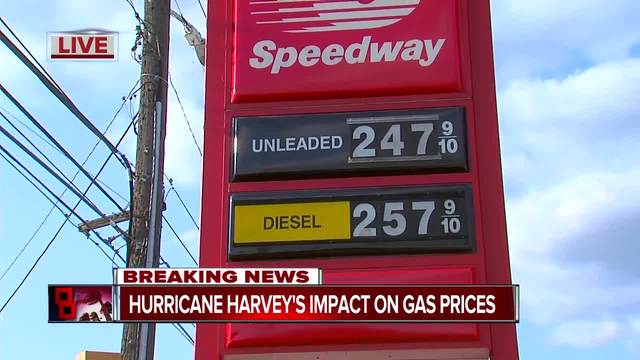
Image result for Harvey & gas pricesMajor disasters are not strictly localized events. We should see immediate effects at the gas pump, as the price per gallon goes up from 5 cents to a quarter. These increases should be temporary, but who knows for sure. Epic floods could knock out Houston area production for much longer than expected.

The damage and the loss of production may have even broader impacts on the national economy.

Charity scams

Major disasters are great opportunities. No, I'm not just referring to Donald Trump using Harvey as cover for disgraceful acts like pardoning racist former Sheriff Joe Arpaio or issuing the official order banning transgender people from service in the military.

You may start to get calls asking you to donate for Harvey disaster relief. If you get a cold call asking you to donate, DON’T! After disasters like this, there will be even more fake charities running phone bank boiler rooms to steal money from people with big hearts.

The American Red Cross always raises lots of money after disasters, but later, we often find out they did not spend the money for the purpose it was given. They are still being called to account for money they raised for Sandy relief.

My Louisiana friends said the Red Cross did little to help after Katrina, even though they got the lion’s share of the money. They credited the Salvation Army and local churches and non-profits with doing the best job.

Good Charities