Menu Bar

Home           Calendar           Topics          Just Charlestown          About Us

Friday, March 26, 2021

They've got a Q loose

Many QAnon followers report having mental health diagnoses

Sophia Moskalenko, Georgia State University

Here's a new Q-Anon cause for alarm: the
  giant tanker stuck in the Suez Canal is actually a ship owned by
Hillary Clinton and used for smuggling children being
trafficked for sex. The message above is one Q follower's analysis. 
QAnon is often viewed as a group associated with conspiracy, terrorism and radical action, such as the Jan. 6 Capitol insurrection. But radical extremism and terror may not be the real concern from this group.

QAnon followers, who may number in the millions, appear to believe a baseless and debunked conspiracy theory claiming that a satanic cabal of pedophiles and cannibals controls world governments and the media. 

They also subscribe to many other outlandish and improbable ideas, such as that the Earth is flat, that the coronavirus is a biological weapon used to gain control over the world’s population, that Bill Gates is somehow trying to use coronavirus vaccinations to implant microchips into people and more.

As a social psychologist, I normally study terrorists. During research for “Pastels and Pedophiles: Inside the Mind of QAnon,” a forthcoming book I co-authored with security scholar Mia Bloom, I noticed that QAnon followers are different from the radicals I usually study in one key way: They are far more likely to have serious mental illnesses.

Thursday, March 25, 2021

How to deal with armed private militia in Rhode Island

We have the means but do we have the courage?

By Will Collette

Oath Keepers in formation, marching into the Capitol on
January 6. (U.S. District Court for the District of Columbia)
The Trump mob’s January 6 attempt to overthrow the election and murder members of Congress increased public attention to a problem that began near the birth of our Republic and has been a recurring problem ever since: armed private militias.

As more members of the Oath Keepers and the 3-percenter Militia are arrested and charged in what is looking more and more like organized sedition, let us not forget that we have local politicians who have aided and abetted these radical insurrectionists.

Rep. Justin Price (R-Richmond, etc.) was actually at the January 6 coup attempt, though he claims he never went inside the Capitol (and blames Antifa). 

Rep. Blake “Flip” Filippi (R-Charlestown, etc.) has actually represented the Oath Keepers and has spoken at their rallies. 

Sen. Elaine Morgan (R-Hopkinton, etc.) convinced Hopkinton’s Town Council to adopt a resolution that proclaims their refusal to enforce any law they deem in violation of the Second Amendment.

Their active and rhetorical support for armed private militias is a violation of their oaths of office and a threat to our democracy.

(L-R) Our local Three Stooges: Justin Price, Flip Filippi and Elaine Morgan

The United States grew out of our Revolution against British rule, a war started by colonial militias and  finished by the Continental Army and the Navy and Army of France. 

The men who formed our Republic understood the need to defend it, but were fearful of creating a large standing army. Thus, they conceived the Second Amendment of the Constitution to ensure they could call up an armed citizens’ militia for national defense.

Here’s how they phrased it in the Second Amendment to the Constitution:

“A well regulated Militia, being necessary to the security of a free State, the right of the people to keep and bear Arms, shall not be infringed.”

By the time of the Civil War, state militias were well established and were among the very first troops to be thrown into the meat grinder, Northern and Southern militia boys alike. Former Governor Ambrose Burnside marched our state militia, 1st Rhode Island Volunteer Infantry Regiment, into the slaughter.

After their defeat in the Civil War, the South’s use of private militias intensified. The best known example was the Ku Klux Klan (KKK) whose armed bands terrorized freed slaves. They lynched and butchered thousands.

Every single state in the union – even Texas – adopted laws to deal with the problems caused by armed private militias, essentially banning them by requiring all military groups to operate only under civil authority.

CLICK HERE for a state-by-state analysis of these laws from the Georgetown University School of Law.

Here’s how it is stated in the Rhode Island Constitution:


Like other states, our Constitution demands that all military groups such as the National Guard must operate under the direct control of the state.

Rhode Island not only addressed the problem of private militias in the state Constitution. It also enacted several specific laws banning militia activity.

RIGL §30-12-7 bans paramilitary groups operating without the governor’s consent, forbids such groups from parading in public with firearms and bars municipalities from funding or equipping a private militia.

RIGL §30-12-9 bans private individuals from wearing military-style uniforms unless they are legally authorized (e.g. veterans).

RIGL §11-55-2 bans militia training, especially with firearms or explosives.


Rhode Island and all the other states had good reason to ban private armed militias as armed insurrections across the political spectrum. Extreme disputes can lead to extreme violence, whether it’s the Civil War struggle over slavery or Rhode Island’s 1841-2 Dorr War over the right to vote.

In 2013, Flip Filippi travelled to Massachusetts to represent the Oath Keepers in their demand for permission to hold an armed paramilitary ceremony right on the Lexington Battle Common.

Illegal 2013 rally by Oath Keepers and III Percenters in
Lexington, MA. Photo: Lexington Patch
The Lexington Board of Selectmen pulled the Oath Keepers’ permit in the wake of the Boston Marathon Bombing when the whole state, especially eastern Massachusetts, was in a state of emergency in fear of more terrorist attacks.

Lexington's police force had been detailed to aid in the search for the terrorists.

Despite Flip’s eloquent arguments that his yahoo clients had been granted a permit a month before the Boston bombings and subsequent state of emergency, the Middlesex District Court upheld the town’s decision to yank the permit.

So true to their oath of respect for law and order, the Oath Keepers held their rally anyway. 

Local media reported that a large contingent of local police had to be pulled away from the still ongoing manhunt for the Tsarnaev brothers to maintain some order at the illegal Oath Keeper rally.

Fast forward to today and these same militant far-right radicals continue to believe they are above the law. January 6 showed how they are willing to take arms against their own government and to kill or beat senseless those police officers they claim to love and respect.

January 6 could have been worse. Federal investigators have uncovered messages between Oath Keeper and other militia leaders about whether it was time to introduce their guns into the battle for the Capitol. 

There was this exchange between an Oath Keeper and a III Percenter about making sure there was “someone standing by at a dock ramp (one near the Pentagon for sure) we could have our Quick Response Team with the heavy weapons standing by, quickly load them and ferry them across the river to our waiting arms.”

Ironically, these wild-eyed radicals had enough respect for the strict gun control laws in the District of Columbia to keep their weapons out of sight, in their vehicles, or as in the case of the above exchange, in gun-friendly Virginia. I guess they didn’t want to get busted by DC Police before they were ready to go for their guns for real.

Neither the Second Amendment nor any state’s laws permit private militias to take up arms against this country. It doesn’t matter how pissed they are that their former guy lost the 2020 election.

We are seeing a sharp rise in hate crimes, even in Rhode Island where the Anti-Defamation League reports a 400% increase in the number of racist and anti-Semitic instances. We don’t know where, when or how the groups behind the January 6 insurrection will strike again.

Fortunately, we have solid laws on the books to address the threat of armed private militias. They need to be enforced.

Our local politicians – Filippi, Price and Morgan – need to denounce them, disassociate themselves or resign from office.

As the shootings in Atlanta and Boulder show, we all face the daily threat of mass shootings from lone wolves who can walk into a business, a grocery store, a school, church or any gathering of people and kill everyone they see. 

We have a large array of very good legislative proposals before the RI General Assembly. If nothing else, we need to ban the sale and ownership of assault rifles.

These bills need to pass.

The Second Amendment is not absolute and we do have the right to define the terms for its use as we do any of the other amendments in the Bill of Rights. The public good demands it.

As many of our greatest leaders, from Abraham Lincoln to the Justices of the Supreme Court have said, “the Constitution is not a suicide pact.” Even Donald Trump said it in his own special way: "Our constitution is great, but it doesn't necessarily give us the right to commit suicide, okay?"

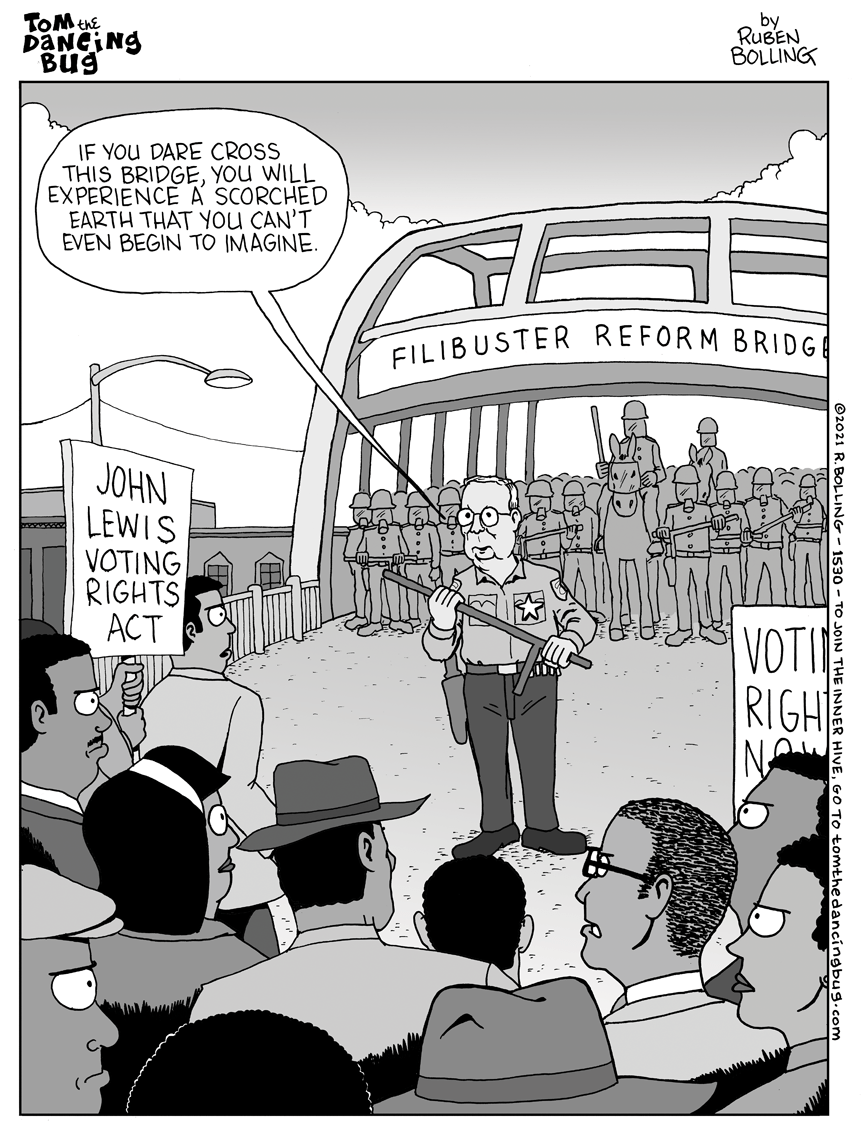
Mitch at the bridge

For more cartoons by Ruben Bolling, CLICK HERE.


"Let me explain it to you"


Ready to croak

Winterized Frogs About to Thaw Out and Get to Work

By TODD McLEISH/ecoRI News contributor

Wood frogs produce a natural antifreeze that allows them to almost freeze completely solid in winter. (Grace Kelly/ecoRI News)

The onset of the coronavirus pandemic a year ago coincided with the annual migration of frogs and salamanders to their breeding ponds, a trek that often results in mass mortalities as they cross roads trying to reach their preferred waterbody. The lockdown during the early stages of the pandemic last year gave a significant reprieve to amphibian populations, reducing roadway mortalities by as much as half, according to a New England researcher.

But this year, with traffic back to near normal levels, frogs and salamanders aren’t likely to fare as well. And wood frogs will likely be at the top of the list of roadkill victims.

In southern New England, wood frogs are one of the first signs of spring, according to herpetologist Mike Cavaliere, the Audubon Society of Rhode Island’s stewardship specialist. They are the first species to emerge from their winter hibernation, typically in mid to late March. And as soon as they awaken, he said, they hop to their breeding pools to seek a mate on the first night it rains.

News you probably don't want to hear

Vaccines alone may not be enough to end pandemic

Georgetown University Medical Center


Even as vaccines are becoming more readily available in the U.S., protecting against the asymptomatic and pre-symptomatic spread of the virus (SARS-CoV-2) that causes COVID-19 is key to ending the pandemic, say two Georgetown infectious disease experts.

In their Perspective, "SARS-CoV-2 Transmission Without Symptoms" published March 18 in the journal Science, Angela L. Rasmussen, PhD, and Saskia V. Popescu, PhD, MA, faculty affiliates of the Center for Global Health Science and Security at Georgetown University Medical Center, make the case that symptomless transmission silently drives viral spread and is key to ending the pandemic.

Wednesday, March 24, 2021

36% of unpaid federal income taxes are owed by the top 1%

Richest 1% don't Report 21% of their income

By Jake Johnson, staff writer for Common Dreams

A new analysis by IRS researchers and academics published Monday morning estimates that the richest 1% of U.S. households don't report around 21% of their income, often using complex tax avoidance strategies that allow them to outmaneuver the federal government's increasingly rare audits of the wealthy.

Led by two IRS researchers as well as Daniel Reck of the London School of Economics and Emmanuel Saez of the University of California, Berkeley, the new paper (pdf) finds that 6 percentage points of the richest households' unreported income "correspond to undetected sophisticated evasion" such as offshoring, pass-through businesses, and other avoidance tactics.

"From a policy perspective, our results highlight that there is substantial evasion at the top which requires administrative resources to detect and deter," the authors write. "We estimate that 36% of federal income taxes unpaid are owed by the top 1% and that collecting all unpaid federal income tax from this group would increase federal revenues by about $175 billion annually."

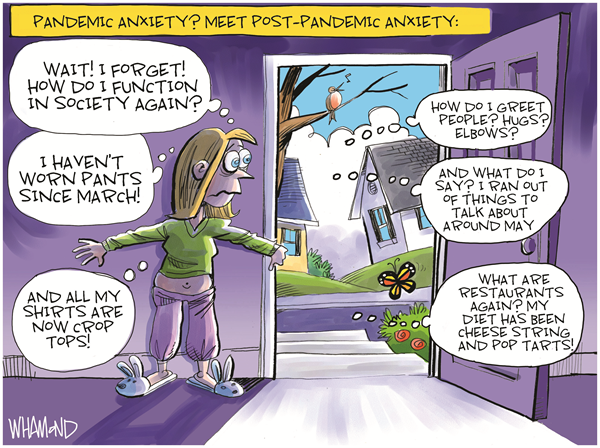
Post-Pandemic disorder


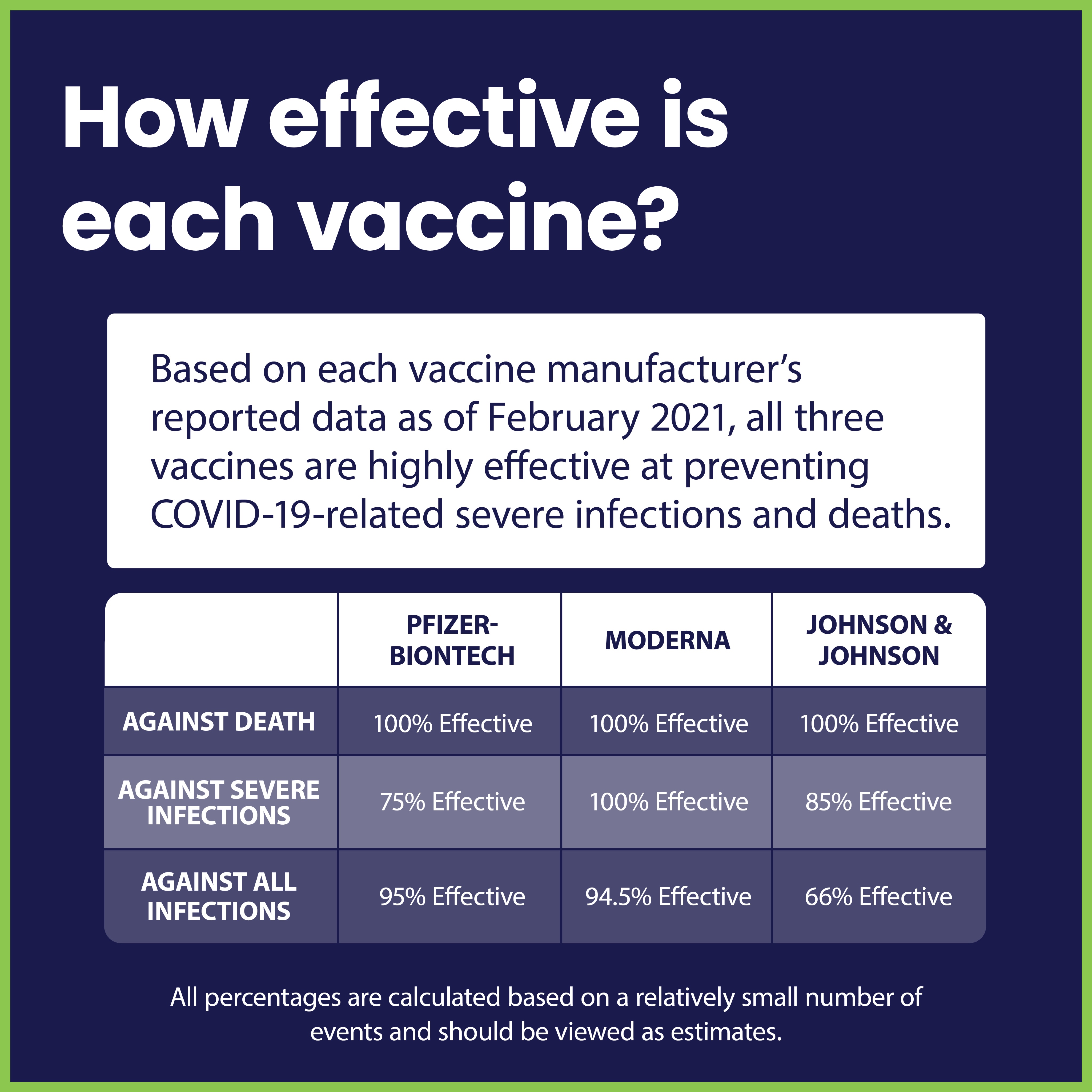
COVID vaccines, by the numbers


You CAN be a jerk forever

Opinions and attitudes can last when they are based on emotion

Association for Psychological Science

Depending on the topic, people's attitudes can change from moment to moment or last a lifetime. The factors that make one opinion long-lasting and another ephemeral, however, are not always clear.

Past studies have demonstrated that opinions based on hard facts and data can remain constant over time, but new research published in the journal Psychological Science reveals that attitudes based on feelings and emotions can also stand the test of time. 

This research has implications for both predicting whose attitudes are fixed versus fleeting and how to nudge people to form more long-lasting opinions.

Picking up a book for fun positively affects verbal abilities

Reading books is good for you

Concordia University

Try this thriller by Mitchell Zimmerman,
a frequent Progressive Charlestown
columnist
Bring on Twilight. Lee Child's Jack Reacher? Yes, please. More of James Patterson's Alex Cross while we're at it. And let's finish off with revisiting the million-plus words of the Harry Potter saga.

No one will confuse the above book series with high literature. But a new study published in the journal Reading and Writing shows that the more people read any kind of fiction -- even mass market stuff sniffily derided as pulp -- the better their language skills are likely to be.

The piece was written by Sandra Martin-Chang, professor of education in the Faculty of Arts and Science, and PhD student Stephanie Kozak. They found that people who enjoyed reading fiction for leisure and who identified as a reader scored higher on language tests, whereas those who read to access specific information scored more poorly on the same tests. Kyle Levesque of Dalhousie University, Navona Calarco of Toronto's Centre for Addiction and Mental Health, and Raymond Mar of York University also co-authored the paper.

As leisure reading declines as a pastime for younger adults especially, Martin-Chang says emphasizing the fun aspect of it can draw them back to novels while at the same time boost their verbal abilities.

"It's always very positive and heartening to give people permission to delve into the series that they like," Martin-Chang notes. "I liken it to research that says chocolate is good for you: the guilty pleasure of reading fiction is associated with positive cognitive benefits and verbal outcomes."

COVID circulated undetected months before first cases diagnosed in Wuhan, China

Study dates emergence to as early as October 2019; Simulations suggest in most cases zoonotic viruses die out naturally before causing a pandemic

University of California - San Diego

Using molecular dating tools and epidemiological simulations, researchers at University of California San Diego School of Medicine, with colleagues at the University of Arizona and Illumina, Inc., estimate that the SARS-CoV-2 virus was likely circulating undetected for at most two months before the first human cases of COVID-19 were described in Wuhan, China in late-December 2019.

Writing in the March 18, 2021 online issue of Science, they also note that their simulations suggest that the mutating virus dies out naturally more than three-quarters of the time without causing an epidemic.

"Our study was designed to answer the question of how long could SARS-CoV-2 have circulated in China before it was discovered," said senior author Joel O. Wertheim, PhD, associate professor in the Division of Infectious Diseases and Global Public Health at UC San Diego School of Medicine.

"To answer this question, we combined three important pieces of information: a detailed understanding of how SARS-CoV-2 spread in Wuhan before the lockdown, the genetic diversity of the virus in China and reports of the earliest cases of COVID-19 in China. By combining these disparate lines of evidence, we were able to put an upper limit of mid-October 2019 for when SARS-CoV-2 started circulating in Hubei province."

Cases of COVID-19 were first reported in late-December 2019 in Wuhan, located in the Hubei province of central China. The virus quickly spread beyond Hubei. Chinese authorities cordoned off the region and implemented mitigation measures nationwide. By April 2020, local transmission of the virus was under control but, by then, COVID-19 was pandemic with more than 100 countries reporting cases.

Tuesday, March 23, 2021

Do we REALLY want to end the pandemic?

US could save tens of thousands of lives and tens of billions of dollars with 3 weeks of strict COVID-19 measures

Anna Scherbina, Brandeis University

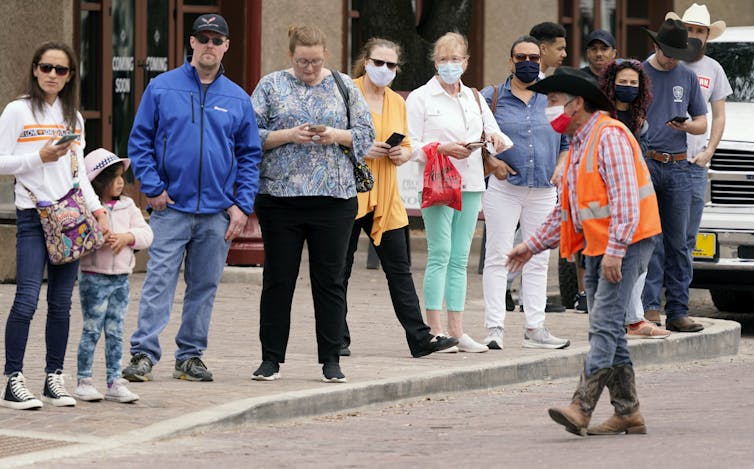
Texas recently eased all coronavirus restrictions, including mask-wearing. 
AP Photo/LM Otero
President Joe Biden commemorated the COVID-19 pandemic’s one-year anniversary by giving Americans an ambitious goal: Return to a semblance of normalcy by the Fourth of July.

“But to get there we can’t let our guard down,” he added.

Unfortunately, many states already have. Falling numbers of new coronavirus cases and accelerating vaccination rates have prompted Texas and a growing number of other states to ease more restrictions or drop them altogether. 

Their governors argue the economic costs are just too high and the measures no longer necessary.

Federal health officials, meanwhile, are advising states to hold off on reopening too soon and urging Americans to continue to mask up and take other precautions in public – even if they’re fully vaccinated. 

About 1,500 people in the U.S. are still dying every day.

The states easing COVID-19 restrictions seem to be valuing the gains from doing so over the lives of the citizens who may die as a result.

Fortunately, my field of finance offers a way to assess whether this is the right approach or whether the states are making a mistake: conduct a cost-benefit analysis.

They've got nothing


State releases finished forest plan

State Forest Action Plan Will Guide Forest Management Priorities Over the Next Decade

The Department of Environmental Management (DEM) announces that the US Department of Agriculture (USDA) has approved the state's plan to guide forest management priorities over the next decade. 

The Rhode Island 2020 State Forest Action Plan (SFAP) describes forest resources, identifies challenges and threats to forestland and its management, and establishes goals for investing resources where they can be most effective to achieve conservation goals.

"Conserving and protecting forest resources is part of DEM's core mission and supports quality of life in the Ocean State," said DEM Director Janet Coit. 

"Rhode Island's forests blanket over 50 percent of the state. From providing us with food to eat, paper for the books we read, and materials from which we build our homes and other products, our forests have tremendous environmental, economic, and cultural benefits."

The 2020 SFAP ensures the continuation of critical federal funding for the Division of Forest Environment's forest management programs. 

The Division works across the state with property owners and rural and urban communities on a wide range of forestry topics including forest heath, forest fire prevention, community and urban forest management, and private forest land management to maximize the positive benefits that trees and forests bring to all Rhode Islanders. 

In the 2020 Forest Action Plan, the national priorities to conserve, protect and enhance conserving these forest landscapes, both private and public, are essential to protect landscape functionality, habitat and environmental benefits.

Rhode Island's 386,373 acres of forest protect drinking water, improve air quality, mitigate climate change, provide opportunities for outdoor recreation, promote health, harbor wildlife, and create economic value. Seventy percent of Rhode Islanders get their drinking water from reservoirs protected by forests. 

Although DEM's Divisions of Forest Environment and Fish and Wildlife manage more than 57,000 acres of state-owned forests, forest land is predominantly held in private ownership. An estimated 38,000 families and individuals own 68 percent of Rhode Island's forest land.

Our forests face threats on multiple fronts: development leading to the loss and fragmentation, ease of spread of invasive plants and pests/diseases, loss of habitat, loss of economic and environmental benefits, and wildfire risk. Protecting RI's forest from these threats is a top priority of DEM's Division of Forest Environment's 2020 SFAP. 

The 2020 revision of the SFAP includes an assessment of the condition of trees and forests within state boundaries, regardless of ownership, along with strategies that address national forest conservation and protection goals. Rhode Island's SFAP, first completed in 2010, must be updated every 10 years as required by the 2008 Farm Bill. The plan is available online at http://www.dem.ri.gov/forestry.

For more information on DEM programs and initiatives, visit http://www.dem.ri.gov/. Follow us on Facebook at www.facebook.com/RhodeIslandDEM or on Twitter (@RhodeIslandDEM) for timely updates.

Related links

Rhode Island 2020 State Forest Action Plan (SFAP)