 |
| For more cartoons by Tom Tomorrow, CLICK HERE. |
Saturday, March 26, 2022

More Than Just Pretty Faces
NativePlants Gaining Popularity
By Cynthia Drummond / ecoRI News contributor

Butterfly
weed is, as the name implies, a food source for native butterflies. (Cynthia
Drummond photos)
Astory
in a recent issue of a national gardening magazine extolled the benefits of
“naturalistic garden design,” a less constrained landscape that features native
plants grouped in ecologically compatible communities.
The
reader was encouraged to look for inspiration in the local ecosystem and to
“suspend fussiness” to develop a wilder, more resilient garden that is in tune
with the surrounding natural landscape.
Magazine
articles about native plants indicate their growing acceptance as garden
plants, but because they have co-evolved over thousands of years with native
insect and bird species, these plants play a much more critical role.
David
Gregg, director of the Rhode Island Natural History Survey, described native
plants as central components in the evolution of the Rhode Island ecosystem.
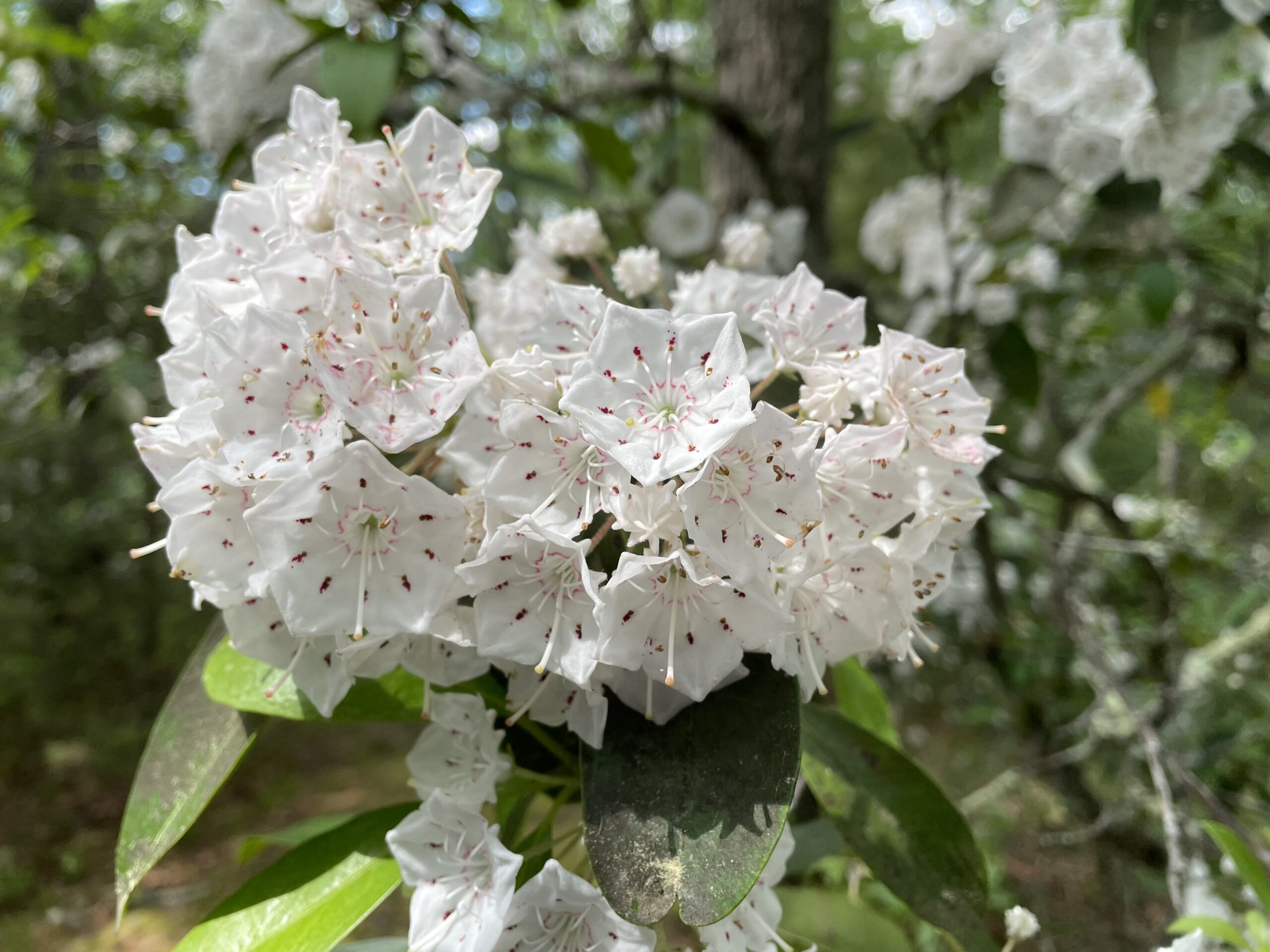 |
| Mountain laurel is one of Rhode Island’s most abundant native shrubs. |


'Healthspan' increasing even for people with common chronic conditions
Disability-free years mostly increased for men and women, but decreased for people with cognitive impairment
PLOS

There have been advances in healthcare over recent decades that mean many people with chronic health conditions are living longer. In the new study, researchers wanted to determine whether this extension to life involves an increase in years with or without disability. The team analyzed data from two large population-based studies of people aged 65 or over in England.
The studies, the
Cognitive Function and Aging Studies (CFAS I and II) involved baseline
interviews with 7,635 people in 1991-1993 and with 7,762 people in 2008-2011,
with two years of follow-up in each case.
Please don't hurt my internet!
A large solar storm could knock out the power grid and the internet
David Wallace, Mississippi State University
 |
| Typical amounts of solar particles hitting the earth’s magnetosphere can be beautiful, but too much could be catastrophic. Svein-Magne Tunli - tunliweb.no/Wikimedia, CC BY-NC-SA |
During the evenings, the aurora borealis, more commonly known as the northern lights, could be seen as far south as Colombia. Typically, these lights are only visible at higher latitudes, in northern Canada, Scandinavia and Siberia.
What the world experienced that day, now known as the Carrington Event, was a massive geomagnetic storm. These storms occur when a large bubble of superheated gas called plasma is ejected from the surface of the sun and hits the Earth. This bubble is known as a coronal mass ejection.
The plasma of a coronal mass ejection consists of a cloud of protons and electrons, which are electrically charged particles. When these particles reach the Earth, they interact with the magnetic field that surrounds the planet.
This interaction causes the magnetic field to distort and weaken, which in turn leads to the strange behavior of the aurora borealis and other natural phenomena. As an electrical engineer who specializes in the power grid, I study how geomagnetic storms also threaten to cause power and internet outages and how to protect against that.
Friday, March 25, 2022
After A Decade — and more than $4 Billion — Watchdog Group says: “Time to Quit Subsidizing Amazon”
#EndAmazonSubsidies
Greg LeRoy at goodjobs@goodjobsfirst.org

Amazon opened its “economic development” (read: tax break) office within its public policy department in March 2012, and the company has averaged about 20 incentive awards per year ever since. All told, governments in the U.S. have given Amazon more than $4.1 billion.
“Ten years is enough,” said Greg LeRoy, executive director of Good Jobs First. “Politicians who continue to subsidize Amazon company are wasting public money, fueling monopolism, and undermining local economies.”


Have you ever been licked by a honeybee?
Honeybee Tongue Hairs are Stiff and Hydrophobic
By Science
News Staff / Source
Wei et al. found that honeybee tongue hairs’ hydrophobicity can prevent the hairs from being adhered to the soft tongue surface, which could significantly enhance the deformability of the tongue when honeybees feed at various surfaces and promote their adaptability to different environments. Image credit: Jiangkun Wei.
The
honeybee tongue, foraging liquid food in nature, has a unique segmented surface
covered with dense hairs. Since honeybees are capable of using their tongue to
adapt to possibly the broadest range of feeding environments to exploit every possible
source of liquids, the surface properties of the tongue, especially the
covering hairs, would likely represent an evolutionary optimization.

A new study by researchers from China and Germany shows that honeybee tongue hairs are stiff and hydrophobic, the latter of which is highly unexpected as the structure is designed for liquid capturing.
A
honeybee can feast on flower nectar, sap, fruit juice or salt water.
The
bee tongue consists of a series of ring-like segments, each bristling with 16
to 20 hairs.
It
must be able to interact with a broad spectrum of surfaces, such as narrow
flower openings, coarse tree bark, irregularly shaped rotten fruit and damp
soil.
The
bee’s success in exploiting these very different resources depends on the
surface properties and deformability of its tongue.
Scientists
had previously studied the structure and motion of the hairs, but their surface
properties and relationship to overall flexibility hadn’t received the same
scrutiny.
In
the new study, Sun Yat-Sen University researcher Jianing Wu and colleagues used
various forms of microscopy, along with high-speed videography and
computational modeling, to study honeybee tongue hairs.
These
techniques showed that the individual hairs are stiff and hydrophobic, unlike
the ring segments, which are soft and hydrophilic.
This
difference prevents the hairs from sticking to and stiffening the tongue once
it starts bending, so it can bend further to get into crevices and reach food.
The
stiffness of the hairs also enhances their durability, enabling the bee to use
its tongue millions of times during its lifetime.
“Our
findings could inspire the design of sophisticated new materials, such as
flexible microstructured fiber systems to capture and transport viscous
liquids,” the authors said.
The study appears in the journal ACS Applied Materials & Interfaces.
Jiangkun Wei et al. Enhanced Flexibility of the
Segmented Honey Bee Tongue with Hydrophobic Tongue Hairs. ACS Appl.
Mater. Interfaces, published online March 8, 2022; doi:
10.1021/acsami.2c00431
The ‘equal-opportunity jerk’ defense
Rudeness can obfuscate gender bias
Association for Psychological Science

If you're an "equal-opportunity jerk," does that mean you can't also be sexist? New research shows that many people think so -- and consider men to be gender blind when they're rude, condescending, and berating to women and men equally.
To
highlight the common view that men aren't deemed sexist when they're rude to
both men and women, researchers asked subjects to share their perceptions of
tweets from former President Donald Trump lambasting men and women, fictitious
stories of managers' treatment of male and female employees, and surveys of
sexist behavior.
According
to the study, being a jerk to men creates "an illusion of impartiality,
giving sexist perpetrators plausible deniability." This can lead people to
falsely conclude that gender bias doesn't underlie rude behavior, making them
less likely to recognize sexism.
Exposure to phthalates -- the 'everywhere chemical' -- may increase children's cancer risk
Another reason to try to get phthalates out of our homes
University of Vermont

Phthalates are chemical additives used to enhance the durability or consistency of plastics and a wide range of consumer products. Humans are routinely exposed to these compounds when they leach out of the products and into the environment.
They are also used as inactive ingredients in some medications, especially
those that require extended or delayed drug release to work properly, for
example, some anti-inflammatory drugs and antibiotics.
The
study, published in the Journal of the National Cancer Institute,
suggests that exposure to medication-associated phthalates may contribute to
the development of some childhood cancers, and that minimizing exposure to
phthalates may help prevent some childhood cancers in the future.
Thursday, March 24, 2022
Underestimating the power of crazy
Putin and Trump have convinced me I was wrong about the 21st century
By Robert Reich

I assumed:
Nationalism is disappearing. I expected globalization would blur borders, create
economic interdependence among nations and regions, and extend a modern
consumer and artistic culture worldwide.
I was wrong. Both Putin and Trump
have exploited xenophobic nationalism to build their power. (Putin’s aggression
has also ignited an inspiring patriotism in Ukraine.)
Nations can no longer control what
their citizens know. I assumed that emerging
digital technologies, including the Internet, would make it impossible to
control worldwide flows of information and knowledge. Tyrants could no longer
keep their people in the dark or hoodwink them with propaganda.
Wrong again. Trump filled the media
with lies, as has Putin. Putin has also cut off Russian citizens from the truth
about what’s occurring in Ukraine.
Advanced nations will no longer war
over geographic territory. I
thought that in the “new economy” land was becoming less valuable than
technological knowhow and innovation. Competition among nations would therefore
be over the development of cutting-edge inventions.
I was only partly right. While
skills and innovation are critical, land still provides access to critical raw
materials and buffers against potential foreign aggressors.



Yale Professor Becca Levy discusses ‘Ageism and You: Why It Matters,’ April 6
2022 URI Thewlis Lecture tackles the impact of ageism on health and longevity, creating a more age-just society
 |
| Yale Professor Becca R. Levy will discuss “Ageism and You: Why It Matters,” April 6, as the 2022 presenter of the Malford Thewlis Lecture on Gerontology and Geriatrics. (Yale University photo) |
While
here in America, we are living longer, aging healthier and are more active into
our later years than ever before, the aging of our population has implications
for nearly all sectors of society. How we view ourselves and others as we age
has a significant impact on our well-being. The stereotypes, prejudice and
discrimination associated with aging can, in fact, steal as many as seven years
from our lives.
On Wednesday, April 6 at 7 p.m., the
University of Rhode Island will host Becca R. Levy, noted professor of public
health and psychology at Yale University and a leading expert on the psychology
of successful aging, as the presenter of the 2022 Malford Thewlis
Lecture on Gerontology and Geriatrics. The event will be held
virtually.
An
Aging Nation: By 2035, adults age 65+ are expected outnumber children age 18
and under for the first time in U.S. history.
Levy
is credited with creating a field of study focused on how positive and negative
age stereotypes, assimilated from the culture, can have beneficial and/or
adverse effects on the health of individuals as they age. “Ageism and You: Why
It Matters,” will summarize scientific evidence and illustrate how many health
problems associated with aging are influenced by ageist beliefs. Levy will
share techniques for improving one’s own aging process and confronting
structural ageism to create a more age-just society.
Subscribe to:
Posts (Atom)