Menu Bar

Home           Calendar           Topics          Just Charlestown          About Us

Friday, August 25, 2023

What is the current etiquette about tipping?

Here’s how you can avoid feeling flustered or ripped off

Nathan B. Warren, BI Norwegian Business School and Sara Hanson, University of Richmond

Digital payment methods may automatically prompt you
to leave a gratuity. AP Photo/Nam Y. Huh
Tipping has gotten more complicated – and awkward – in North America.

The ever-growing list of situations in which you might be invited to tip includes buying a smoothie, paying an electrician, getting a beer from a flight attendant and making a political donation.

Should you always tip when someone suggests it? If yes, how do you calculate the right amount? And if you don’t, are you being stingy?

As marketing professors who specialize in customer interactions, we’re researching how digital payment technologies have changed how and when customers tip. Our research suggests that asking for tips before service and suggesting tip amounts that are too high can frustrate customers and be bad for business.

What’s new

U.S. customers historically tipped people they assumed were earning most of their income via tips, such as restaurant servers earning less than the minimum wage. [In Rhode Island, the minimum wage is only $3.89 an hour compared to the $12.25 minimum wage for non-tipped workers. - W. Collette].

Republicans reveal latest Joe Biden scandal

He petted a dog

by Hunter for Daily Kos

US President Joe Biden greets a rescue dog wearing protective boots as he meets with first responders during an operational briefing on response and recovery efforts following wildfires in Lahaina, Hawaii. AFP via Getty Images.

The crack team of researchers at the Republican National Committee have come up with another blockbuster story: President Likes Dogs.

Oh, that'll do the trick. Quick, Republicans, find more images of President Joe Biden acknowledging dogs. That'll put your seditionist document hoarder back in the White House for sure!

Ahem. For the record—and we are going to go slow here so as to not confuse RNC head Ronna née Romney McDaniel and her minions—there are established social norms governing what should happen when in the presence of a dog that everybody follows, aside from true sociopaths.

When a dog presents itself to you, you acknowledge the dog. 

This must be an extremely confusing moment for top Republicans because their former and current Dear Leader figure, Donald Seditionist Rapist Golfboy Trump, famously hates dogs. That means all other Republicans now must themselves hate dogs too since it is an opinion Trump holds. 

If I recall correctly, "we now hate dogs" was going to be added to the 2020 Republican Party platform before the party decided to just cobble something together declaring itself to believe whatever Donald believes in a more all-encompassing, less specific way.

But among non-sociopaths, the general procedure when a dog walks up to you and acknowledges your existence is that you then look at the dog. You follow this up by complimenting the dog. Assuming there is no official legal reason you should not pet the dog, you then pet the dog, but only if the dog appears to want such attention. 

Thursday, August 24, 2023

Trump isn't too big to jail

Applying a different standard to a powerful person reflects only contempt for the rule of law.

By Mitchell Zimmerman 

The day after Donald Trump was arraigned for his alleged effort to steal the 2020 election, he posted a naked threat: “IF YOU GO AFTER ME, I’M COMING AFTER YOU!”

That followed his federal indictment. After he was indicted in Georgia, Trump openly warned a witness not to testify. “I am reading reports that failed former Lt. Governor of Georgia, Jeff Duncan, will be testifying before the Fulton County Grand Jury,” Trump posted. “He shouldn’t.”

As Trump well knows, when he inflames his MAGA disciples, violence commonly follows. 

Now a woman has been arrested for threatening to kill the judge overseeing Trump’s federal election interference case. And the Georgia grand jurors who voted to charge Trump have had their addresses published on an extremist website. Supporters labeled the jurors’ collected addresses a “hit list” and suggested “long range rifles” might be useful. 

Obviously, jurors in any of Trump’s trials risk retaliation should they decide the evidence proves him guilty.

Judges explicitly warned Trump not to intimidate witnesses or “prejudice potential jurors.” Which raises an uncomfortable question: Why isn’t he in jail already?

Federal judges take witness tampering seriously — they revoked bail for alleged cryptocurrency crook Sam Bankman-Fried for interfering with witness testimony. That’s simply the rule of law. If you violate the orders under which you’re released pending trial, you go to jail. 

Yet Trump remains at liberty, seemingly determined to move the question of his criminal liability from a court of law into the court of public opinion — and get a chance to pardon himself if elected.

This spring, before the first charges against Trump were filed in New York, the former president threatened “potential death and destruction” if he was charged. Judges might well be worried about widespread violence from Trump supporters if he’s actually jailed. Moreover, some conservative commentators seem to regard the notion of locking up a former president as unthinkable.

Yes, things have come to a sorry pass when a president is charged with brazenly violating the law and threatens anyone who’d prosecute him. But if a man entrusted with the power of the presidency commits crimes against the Constitution and our democracy, that’s more reason to insist he be subject to law, not less.

A former top federal prosecutor opined that sending Trump to prison if he were convicted posed “enormous and unprecedented logistical issues.” “Probation, fines, community service, and home confinement are all alternatives,” claimed the former prosecutor.

These alternatives aren’t serious. If convicted, Trump must suffer punishment like anyone else.

Probation is typically reserved for the repentant, and Trump expresses no repentance. For a billionaire who lives in a luxury golf resort, fines or home confinement are a slap on the wrist. (Letting Trump continue charging Secret Service members up to $1,185 per room per night to protect him at Mar-a-Lago would only punish taxpayers.)

And what would community service even consist of?

In truth, the Secret Service can protect Trump more cheaply if he resides in Leavenworth penitentiary with other nonviolent felons. A former Secret Service agent confirmed that protecting Trump in prison poses no great challenge: “If you want to go to prison, you want to go to [a] federal prison,” he said. “They already have their security set up… It’s already safe.” 

Anyone else convicted of Trump’s crimes would plainly go to prison for years. And anyone else openly threatening witnesses would quickly see their bail revoked. Applying a different standard to a powerful person reflects only contempt for the rule of law.

Mitchell Zimmerman is an attorney, longtime social activist, and author of the anti-racism thriller Mississippi Reckoning. This op-ed was distributed by OtherWords.org.

The only option left


GOP debate wrap-up


Phony speech can slip by b.s. detectors

Humans unable to detect over a quarter of deepfake speech samples

University College London

The study, published in PLOS ONE, is the first to assess human ability to detect artificially generated speech in a language other than English.

Deepfakes are synthetic media intended to resemble a real person's voice or appearance. They fall under the category of generative artificial intelligence (AI), a type of machine learning (ML) that trains an algorithm to learn the patterns and characteristics of a dataset, such as video or audio of a real person, so that it can reproduce original sound or imagery.

While early deepfake speech algorithms may have required thousands of samples of a person's voice to be able to generate original audio, the latest pre-trained algorithms can recreate a person's voice using just a three-second clip of them speaking. Open-source algorithms are freely available and while some expertise would be beneficial, it would be feasible for an individual to train them within a few days.

Tech firm Apple recently announced software for iPhone and iPad that allows a user to create a copy of their voice using 15 minutes of recordings.

Gut microbes are the community within you that you can’t live without

How eating well can cultivate your microbial and social self


Communal meals are a social glue that binds people together. 
Klaus Vedfelt/DigitalVision via Getty Images
The age-old adage “you are what you eat” holds profound truth. Nearly every molecule in your body is absorbed from what you eat and drink. 

Your food choices are directly linked to your physical, emotional and social health. And scientists are learning that your gut health and the microbial communities within you have a significant role to play in orchestrating these processes.

The gut microbiome takes the components of food that you cannot digest, like fiber and phytonutrients, and transforms them into signals that regulate how hungry you are, how strong your immune system is, and even how you’re thinking and feeling. It’s as though the communities in your gut microbiome are an orchestra for your health, and you conduct their symphony through food.

I am a gastroenterologist who has spent over 20 years studying how food affects the gut microbiome and overall health. The research is increasingly clear: A gut-friendly approach to nutrition is important for happy and healthy communities both inside and out of your body.

Why Dunkin’ and Lego rebrands succeeded

But Elon Musk's "X" missed the mark

Matthew Pittman, University of Tennessee

Twitter has swapped the
fluffy bird that used to symbolize the social media platform for a spindly black X. Ditching the company’s well-known logo and changing its name to a letter often associated with danger, death and the unknown is only the latest user-aggravating step CEO Elon Musk has taken since he bought Twitter in October 2022 for US$44 billion.

But it’s the most visually jarring one.

The reaction has mainly been a mix of ambivalence, ridicule and scorn. For the most part, longtime Twitter users are unhappy at what they perceived as another unnecessary change that’s eroding their enthusiasm for the social media platform. It’s hard to find anybody praising the change so far, except perhaps some of Elon Musk’s most devoted fans. Twitter co-founder Jack Dorsey signaled that he was finding the uproar overblown.

I’m paying close attention to this corporate pivot because I’m a scholar of design who researches social media and brand campaigns. Logos and brand names change all the time and rarely cause this much commotion. But because these changes go deeper than most, I believe the risks of damage to the company are greater.

Wednesday, August 23, 2023

Trump’s actions have already disqualified him from the presidency

Georgia indictment and post-Civil War history make it clear

Joseph Ferguson, Loyola University Chicago and Thomas A. Durkin, Loyola University Chicago

Donald Trump may be barred from holding public office
due to a constitutional amendment disqualifying those
who have taken part in ‘insurrection or rebellion.’  
File photo: AFP
After three indictments of former President Donald Trump, the fourth one in Georgia came not as a surprise but as a powerful exposition of the scope of Trump’s efforts to remain in power despite losing the 2020 presidential election.

New conservative legal scholarship spells out how and why those actions – which were observed by the public over many months – disqualify Trump from serving in the presidency ever again. And our read of the Georgia indictment, as longtime lawyers ourselves, shows why and how that disqualification can be put into effect.

The key to all of this is the 14th Amendment to the Constitution, which states that “No person shall … hold any office, under the United States … who, having previously taken an oath … to support the Constitution of the United States, shall have engaged in insurrection or rebellion against the same, or given aid or comfort to the enemies thereof.” Trump took that oath at his inauguration on Jan. 20, 2017.

Both Trump’s Georgia indictment, and his federal indictment in Washington, D.C., cite largely public information – and some newly unearthed material – to spell out exactly how he engaged in efforts to rebel against the Constitution, and sought and gave aid and comfort to others who also did so.

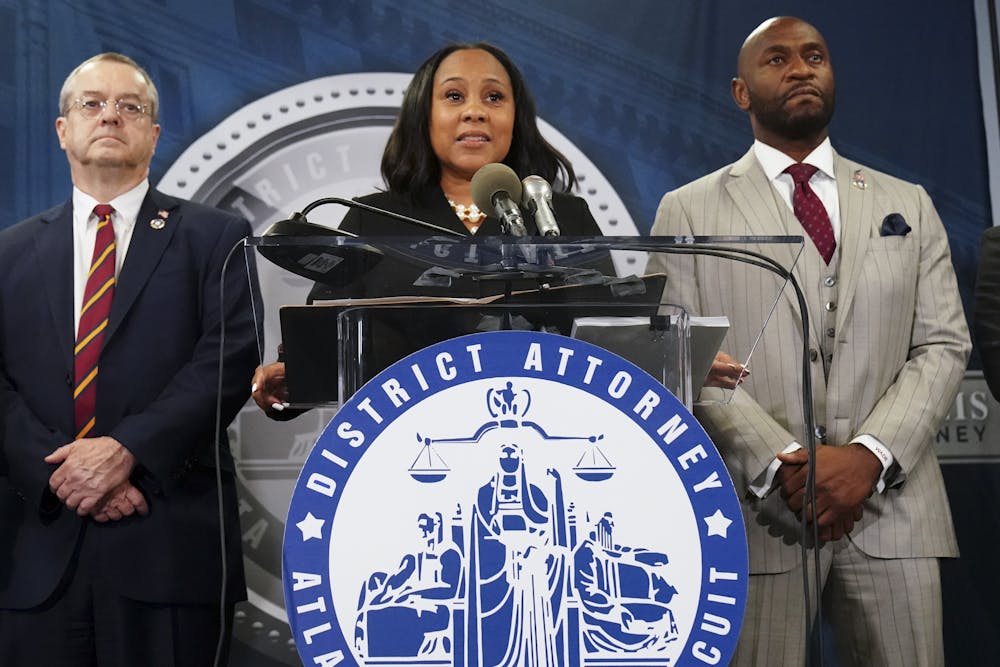
A woman in a dark jacket standing at a lectern that bears a seal that says 'District Attorney' across the top.
Fulton County District Attorney Fani Willis, center,
during a news conference, Aug. 14, 2023, in Atlanta,
after the release of her indictment of former President
Donald Trump and 18 others.
 AP Photo/John Bazemore
Legal scholars William Baude and Michael Stokes Paulsen, conservatives themselves and members of the conservative Federalist Society, have recently published a paper declaring that under the 14th Amendment, Trump’s actions render him ineligible to hold office.

We believe the Georgia indictment provides even more detail than the earlier federal one about how Trump’s actions have already disqualified him from office, and shows a way to keep him off the ballot in 2024.

Woof!


Mug-shot of the "brains" behind Trump's coup attempt


Treating allergies without needles

Virtual Clinics Move In on Allergy Drops

By Esther Landhuis

For as long as he can remember, Ken Pressey has had severe allergies to cats. They would trigger hives, runny nose, and watery eyes. Still, like many of the tens of millions of people in the United States who suffer from allergies, Pressey for years did not bother getting treated, or even diagnosed. When cats came near, he just avoided them. 

But that tactic has gotten tougher. During the pandemic, Pressey started dating a woman he’s now engaged to marry — and she has two cats. Being with the cats “was absolute chaos,” said the 30-year-old, who lives in Seattle. “I started having asthma attacks.”

Pressey’s primary care physician suggested allergy shots. This century-old approach, a form of immunotherapy, works by exposing the body to small, increasing doses of the culprit substance. Unlike over-the-counter pills and nasal sprays, which only relieve symptoms, shots address the root cause: They help the body build long-term tolerance to the allergens. 

The treatment is not a cure, but experts say it can bring relief in around 85 percent of patients who try it. And it’s not just a matter of curbing some sneezing. Beyond springtime sniffles, allergies make it hard to concentrate, leading to missed work and school. They can also disrupt sleep, trigger asthma, and contribute to mood disorders.

The procedure for alleviating this misery with allergy shots requires time and diligence. Typically, patients need injections once or twice a week for the first three to six months, then monthly jabs for three to five years. Each office visit also requires a half hour of monitoring after the shot in case of serious reactions, such as wheezing or throat swelling, which are rare but need immediate attention if they occur.

With these scheduling demands, allergy shots were a no-go for Pressey, an engineer with the United States Merchant Marines who often works overseas for months at a time. "I would not be able to keep up," he said. While looking into alternatives, he recalled a conversation about allergy treatments while stationed in Europe several years earlier, when he heard a coworker say, “We do allergy drops. We don’t do shots. Why would you want to get stabbed by a needle?”

His colleague was referring to a form of sublingual immunotherapy, or SLIT, which builds immune tolerance to allergens administered daily under the tongue. The drops are formulated using the same liquid extracts in skin-based allergy tests, and research suggests the approach works — and is safe for patients to do at home.

SLIT drops are a mainstay in Europe, Canada, and Latin America. In the United States, although some medical providers offer the drops off-label, prescribing the treatment remains limited for complex reasons related to regulatory purview and clinic revenue.

That means accessing SLIT drops can be tricky, even for highly motivated patients. “I did quite a bit of extensive reading,” Pressey said. The hardest part, he added, was finding a SLIT provider. Although he managed to connect with several doctors who offer the drops, their clinics were far away. 

Does an apple a day really keep the doctor away?

A nutritionist explains the science behind ‘functional’ foods

Janet Colson, Middle Tennessee State University

While apples aren’t considered a superfood, they are
considered a functional food.
 Caterina Oltean/500px Prime via Getty Images
We’ve all heard that an apple a day keeps the doctor away, but how true is that?

Apples are not high in vitamin A, nor are they beneficial for vision like carrots. They are not a great source of vitamin C and therefore don’t fight off colds as oranges do.

However, apples contain various bioactive substances – natural chemicals that occur in small amounts in foods and that have biological effects in the body. These chemicals are not classified as nutrients like vitamins. Because apples contain many health-promoting bioactive substances, the fruit is considered a “functional” food.

For years, I have taught university classes on nutrients such as vitamins, minerals, carbs, proteins and fats. But recently I developed a course specifically on functional foods. The class explores the various bioactive substances in food and how some may even function like a medicine.

Functional foods defined

Functional foods are not the same as superfoods. “Superfood” is a buzzword marketers use to promote foods like kale, spinach and blueberries. Labeling them as “super” appeals to the public and increases sales. 

But superfood is generally meant to imply a food that has superior nutritional value and that is high in nutrients that are beneficial for health. For example, salmon and tuna are considered superfoods because the omega-3 fats they contain have been linked to heart health.

Superfood advertisements claim that eating the food will improve some aspect of health. The problem is that most of those claims are not based on scientific research, like the criteria for functional foods are.

In addition to the nutrients that our bodies need for growth and development, functional foods contain a variety of bioactive substances, each with a unique function in the body. The bioactive substances can be found naturally in foods or added during processing.

Cleanup won't be cheap

“Polluter pays” debate heats up over toxic PFAS chemical cleanup plan

CAREY GILLAM

As US regulators work to tackle the toxic threat posed by a class of widely used chemicals known as PFAS, debate is heating up over who could – and should – get hit with the cleanup costs.

Over the last several weeks, federal officials have received an onslaught of conflicting calls for action regarding a proposal to designate certain types of per- and polyfluoroalkyl substances (PFAS) as “hazardous substances” under the nation’s so-called “Superfund” law. 

The designation would provide a pathway for the remediation of dangerously contaminated sites around the United States, including assigning liability for the hazardous waste cleanup.

The Environmental Protection Agency (EPA) is specifically proposing that PFOA and PFOS and seven other types of PFAS be designated for action under the Superfund law, known formally as the Comprehensive Environmental Response, Compensation, and Liability Act (CERCLA).

The public comment period on the EPA’s proposal ended Friday, drawing fevered pleas from individuals, industries and agencies across the country. 

It is the issue of potential liability for PFAS contamination under CERCLA that is sparking fierce debate, as an array of parties, including water providers, landfill operators and even farmers, say they worry they could be saddled with millions of dollars in costs to try to rid their operations of widespread PFAS contamination that they had no hand in creating. They want the EPA and members of Congress to carve out exemptions to protect them.

PFAS are ubiquitous in the environment, used in popular consumer goods as well industrial processes and firefighting foams. A 2022 analysis found detectable levels of PFAS in about 83% of US waterways. They are frequently described as “forever chemicals” because they don’t naturally break down over time. PFAS contamination persists not only in the environment, but also in the bodies of people and animals.