Menu Bar

Home           Calendar           Topics          Just Charlestown          About Us
Showing posts with label organized crime. Show all posts

Wednesday, September 16, 2026

Trump Americanizes Putin-style corruption

Trump's thuggery will lead us to a very dark place

Sabrina Haake

Proving that a lying clock tells the truth twice a day, JD Vance recently quipped that politics have shifted so much that “if Watergate happened tomorrow, it would be like a 12-hour news story.” Vance was unwittingly acknowledging his own handiwork as he and his intellectually stunted boss flex Steve Bannon’s flood the zone strategy: throw crap on the wall, throw it often and fast, until the American public is too overwhelmed to pay attention.

It’s working. Eighteen months into this nightmare regime, as one corrupt move follows the next, Americans are turning away. One study found that 65% of Americans across political affiliation and age groups are consuming less news due to information overload and fatigue. It’s exactly what a corrupt administration wants.

Thanks for reading The Haake Take! Subscribe for free to receive new posts and support my work.

As Trump awards billions in no-bid federal contracts to his political donors, from the no bid multi-million dollar Lincoln Memorial Reflecting Pool debacle, to hundreds of millions to build a ballroom, to multi-billion dollar no bid contracts to rape and pillage our national parks, his political donors are reaping unprecedented windfall rewards.

His sons aren’t doing too poorly either. After Republicans blew a gasket over Hunter Biden serving on a corporate board, the Trump boys have cashed in big time with an Air Force contract to buy interceptor drones from Don Jr. and Eric (who have no experience in the drones business), Don Jr.’s ownership stake in a mining project that just secured $1.6 billion in government backing (ditto), and a $620 million Pentagon loan for Don Jr.’s venture capital firm. Trump’s crypto scams have caused investors to lose up to $3.8 billion while the Trumps pocketed up to $2.3 billion across the same crypto projects. Now Trump wants to personally profit from “selling” early internet access to his social media posts, which will facilitate large scale insider trading.

Meanwhile, as wealthy individuals spend millions to secure presidential pardons, and Trump’s $1.8 billion slush fund for his supporters refuses to die, the Department of the Treasury just announced that it is destroying its anti-corruption database, the federal registry of shell-company ownership. It plans to destroy all the data it has already collected, to prevent future FBIs, future DOJs, and future local police departments from ever seeing the incriminating data. A true crime novelist couldn’t write this stuff as fast as it’s happening.

Friday, August 7, 2026

Trump wants to run scientific research like his family business.

The new "science golden age" looks suspiciously like a grift

Lisa Needham

The Trump regime is trying to usher in a “Golden Age in Science” where scientific research is run like a Trump family business, artificial intelligence is all that matters, profit is everything, and expertise is for chumps.

Or at least that’s the vision emerging from a new 123-page “Report to the President” from Michael Kratsios, the Director of the White House Office of Science and Technology Policy.

In a normal administration, you could probably skip over learning about a science policy document — but this is no normal administration, and this is no normal science policy document. Instead, it’s Trump’s attempt to end the actual golden age of science that was kicked off in 1945 with the publication of '“The Endless Frontier” by Vannevar Bush.

Bush, at President Franklin Delano Roosevelt’s request, laid out a vision of federal support for science that centered on funding universities to do basic research, saying that as long as those institutions were “vigorous and healthy and their scientists are free to pursue the truth wherever it may lead, there will be a flow of new scientific knowledge to those who can apply it to practical problems in Government, in industry, or elsewhere.”

Kratsios’s report is supposed to be the successor to Bush’s, and even apes the format, but this isn’t really a document about science policy. It’s one about ending science research as we know it in favor of shoveling cash at big tech companies.

While it might be temping to wave this away as an aspirational policy document, Trump has already begun to shift billions in research funds to AI projects and has taken a hatchet to science funding across the board. He’s teed up the shift Kratsios proposes here, and since neither Congress nor the Supreme Court seem inclined to stop him from doing whatever he wants with taxpayer money, it isn’t doomering or hyperbole to say we are staring down the barrel of a world where the only “science” the government intends to support is for-profit tech and defense advancements.

Saturday, June 6, 2026

Senate passes Sen. Gu bill to modernize identity theft protection laws

Victoria's bill to protect consumers advances and, hopefully will pass before General Assembly adjourns

The Senate voted to approve legislation from Sen. Victoria Gu that aims to modernize cybersecurity laws to better protect the personally identifiable information of Rhode Islanders.

“In the wake of the RIBridges cyberattack, it’s important to set clear expectations that state agencies, municipalities and companies should be meeting current best practices of an industry-recognized cybersecurity framework, such as NIST Cybersecurity Framework, to protect the personally identifiable information of Rhode Islanders,” said Senator Gu (D-Dist. 38, Westerly, Charlestown, South Kingstown) who chairs the Senate Committee on Artificial Intelligence and Emerging Technologies. “Our current laws governing the protection of this information need updating to match the reality of our increasingly digital world and its threats.”

The December 2024 breach of RIBridges, Rhode Island’s online portal for social services, affected around 650,000 people in total, releasing Social Security numbers, employment details, financial data and other personal information to the dark web. Senator Gu and Representative Carson saw this as a clear sign that Rhode Island needed to update its cybersecurity standards.

The bill (2026-S 2638Aaa) now goes the House, where Lauren H. Carson (D-Dist. 75, Newport) has introduced similar legislation (2026-H 7509).

Thursday, May 21, 2026

Facial recognition data is a key to your identity – if stolen, you can’t just change the locks

Who benefits?

Jonathan S. Weissman, Rochester Institute of Technology

A woman strolls into a grocery store, thinking about grabbing some apples. Before she even reaches the produce aisle, a security camera has scanned her face. Whether the system is checking for shoplifters or simply logging her arrival, her face has joined a digital ledger, a trace she can’t easily erase. Retailers, banks, airports, stadiums and office buildings are doing the same.

But what if the woman’s facial information is stolen or misused? If a cybercriminal steals her password, she can change it. If they acquire her credit card number, she can cancel the card. But she can’t reset or revoke the appearance of her cheekbones.

Facial recognition systems don’t keep actual images. They convert a face into a mathematical template that maps the positions and proportions of the face’s features. When another camera scans a person later, the system checks their live face against these templates to confirm an identity.

In my work as a cybersecurity professor at Rochester Institute of Technology, I have found that even though templates are more secure than photos – which anyone online can capture and manipulate – templates, too, can be stolen. Once that happens, these digital keys create a lifelong vulnerability. If a facial recognition database is breached, the “locks” that a template opens – accessing a bank app, getting through security at an airport, entering an office building – can’t be reset. A person’s face is permanent, and so is the threat.

The threat isn’t theoretical. Biometric data has been stolen in data breaches. In 2024, biometric data from a facial recognition system used at bars and clubs in Australia was hacked. And in 2019, biometric data from a pilot facial recognition system set up by U.S. Customs and Border Protection was breached in an attack on a subcontractor’s network. It’s not clear whether anyone’s stolen biometric data has been exploited, however.

Saturday, May 2, 2026

Rhode Island can’t wait for Washington to fund hospital cybersecurity

We must act now

By Ava Fosberg, Rhode Island Current

Treating cybersecurity in hospitals as optional is like driving without a seatbelt. Hospitals might get away with it for a while, but when something goes wrong, the consequences hit hard. Cyberattacks delay care, disrupt services, and put patients directly at risk. 

Rhode Island has already seen how quickly a digital failure can spiral into a full-scale crisis. The state cannot afford to wait for federal action as these threats continue to grow.

In December 2024, hackers used stolen login credentials to breach the RIBridges system. The attack exposed sensitive personal data tied to nearly 650,000 Rhode Islanders. 

Residents lost access to critical services like Medicaid and SNAP. Families struggled to get benefits, verify eligibility, and access necessary care. What started as a cybersecurity issue quickly became a public health and economic crisis.

In January, the Beacon Mutual Insurance Group of Rhode Island confirmed a ransomware attack on its network. Investigators continue to determine the full scope, but early reports suggest that the attack exposed personal information belonging to hundreds of Rhode Islanders. These incidents show a clear pattern of growing vulnerability.

At the same time, threats continue to expand globally. Iran-linked cyber activity now targets U.S. hospitals and health care organizations as part of the broader international conflict in the Middle East. For Rhode Island hospitals, the growing threat of a cyberattack raises the stakes and makes the need for stronger cybersecurity an urgent priority.

Friday, April 3, 2026

Senator Gu posts new bill to protect you from identity theft

Sen. Gu, Rep. Carson bill would modernize identity theft protection laws

Legislation from Sen. Victoria Gu and Lauren H. Carson aims to modernize cybersecurity laws to better protect the personally identifiable information of Rhode Islanders.

“In the wake of the RIBridges cyberattack, it’s important to set clear expectations that state agencies, municipalities and companies should be meeting current best practices of an industry-recognized cybersecurity framework, such as NIST Cybersecurity Framework, to protect the personally identifiable information of Rhode Islanders,” said Senator Gu (D-Dist. 38, Westerly, Charlestown, South Kingstown) who chairs the Senate Committee on Artificial Intelligence and Emerging Technologies. “Our current laws governing the protection of this information need updating to match the reality of our increasingly digital world and its threats.”

The December 2024 breach of RIBridges, Rhode Island’s online portal for social services, affected around 650,000 people in total, releasing Social Security numbers, employment details, financial data and other personal information to the dark web. Senator Gu and Representative Carson saw this as a clear sign that Rhode Island needed to update its cybersecurity standards.

Thursday, April 2, 2026

Wow! Trump’s Justice Department Dropped 23,000 Criminal Cases in Shift to Immigration

To pander to Trump's obsession with immigrants, thousands of real criminals go free

  • ICE Detention Statistics: As of early 2026, about 73.6% of people in ICE detention had no criminal convictions.
  • Conviction Types: Among those detained, only about 5% have convictions for violent crimes, while the majority of those with convictions have nonviolent, minor offenses like traffic violations.

In the first days after Pam Bondi was appointed attorney general last year, the Department of Justice began shutting down pending criminal cases at a record pace.

The cases included an investigation into a Virginia nursing home with a recent record of patient abuse; probes of fraud involving several New Jersey labor unions, including one opened after a top official of a national union was accused of embezzlement; and an investigation into a cryptocurrency company suspected of cheating investors.

In total, the DOJ quietly closed more than 23,000 criminal cases in the first six months of President Donald Trump’s administration, abandoning hundreds of investigations into terrorism, white-collar crime, drugs and other offenses as it shifted resources to pursue immigration cases, according to an analysis by ProPublica.

The bulk of these cases, which were closed without prosecution and known as declinations, had been referred to the DOJ by law enforcement agencies under prior administrations that believed a federal crime may have been committed. The DOJ routinely declines to prosecute cases for any number of reasons, including insufficient evidence or because a case is not a priority for enforcement.

But the number of declinations under Bondi marks a striking departure not only from the Biden administration but also the first Trump term, according to the ProPublica analysis, which examined two decades of DOJ data, including the first six months of Trump’s second term. ProPublica determined the increase is not the result of inheriting a larger caseload or more referrals from law enforcement.

In February 2025 alone, which included the first weeks of Bondi’s tenure, nearly 11,000 cases were declined, the most in a month since at least 2004. The previous high was just over 6,500 cases in September 2019, during Trump’s first administration.

Some of the cases shut down were the result of yearslong investigations by federal agencies such as the FBI and the Drug Enforcement Administration. For complex cases, the DOJ can take years before deciding whether to bring charges.

The shift comes as the DOJ has undergone an extraordinary overhaul under the Trump administration, with entire units shuttered, directives to abandon pursuit of certain crimes and thousands of lawyers quitting or, in some cases, being forced out of the agency.

In doing so, the DOJ is retreating from its mission to impartially uphold the rule of law, keep the country safe and protect civil rights, according to interviews with a dozen prosecutors and an open letter from nearly 300 DOJ employees who have left the department under Trump. The Trump DOJ, the employees wrote, is “taking a sledgehammer” to long-standing work to “protect communities and the rule of law.”

The change in priorities was outlined in a series of memos sent to attorneys early last year. Trump’s DOJ has said it is “turning a new page on white-collar and corporate enforcement” and emphasizing the pursuit of drug cartels, illegal immigrants and institutions that promote “divisive DEI policies.” Trump, in an address last March at the department, said the changes were necessary after a “surrender to violent criminals” during the past administration and would result in a restoration of “fair, equal and impartial justice under the constitutional rule of law.”

The department prosecuted 32,000 new immigration cases in the first six months of the administration, which was nearly triple the number under the Biden administration and a 15% increase from the first Trump term. It has pursued fewer prosecutions of nearly every other type of crime — from drug offenses to corruption — than new administrations in their first six months dating back to 2009.

Friday, November 7, 2025

Trump’s anti-Venezuela actions lack strategy, justifiable targets and legal authorization

Even if they have proof - which they have not shared - it is still murder to kill people in international waters absent a declaration of war 

Jeffrey Fields, USC Dornsife College of Letters, Arts and Sciences

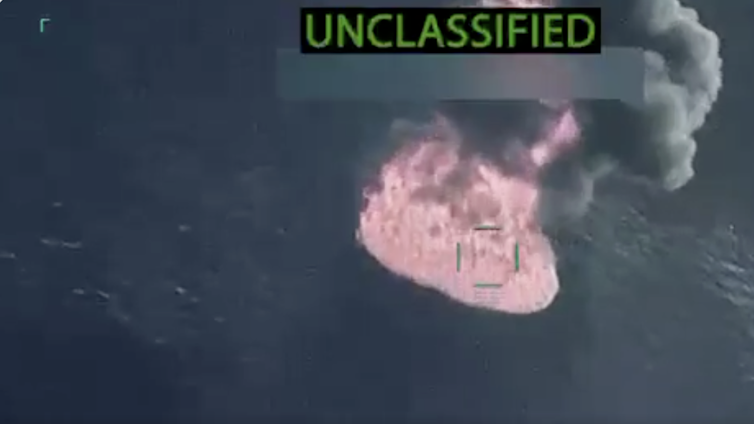
The image accompanying Secretary of Defense
Pete Hegseth’s Oct. 28, 2025, social media announcement
that the U.S. had destroyed four vessels in the
Pacific allegedly smuggling narcotics. 
Pete Hegseth X account
“I think we’re just going to kill people that are bringing drugs into our country. OK? We’re going to kill them. You know, they’re going to be, like, dead,” Donald Trump said in late October 2025 of U.S. military strikes on boats in the Caribbean Sea north of Venezuela.

The Trump administration asserted without providing any evidence that the boats were carrying illegal drugs. Fourteen boats that the administration alleged were being operated by drug traffickers have been struck, killing 43 people.

On Oct. 24, the administration began a substantial military buildup in the region. The Pentagon moved the aircraft carrier USS Gerald R. Ford and some of its strike group, along with several other naval ships, to the Caribbean and moved F-35 fighter jets to Puerto Rico. This is the largest U.S. naval deployment in the Caribbean Sea since the Cuban missile crisis in 1962.

According to the White House, the naval buildup and strikes on boats in international waters are part of counternarcotics operations. The vessels targeted allegedly belonged to Venezuelan drug smugglers, though the administration has produced no evidence that there were drugs on the boats, or what type. Trump has named fentanyl as one of them.

At times the president and some of his advisers have referred to the operators and occupants of the boats as “narco-terrorists.” But they have offered no explanation why the people would be considered terrorists.

The president and his advisers’ own words have also indicated that the larger intentions of the administration could be to topple the government of Nicolás Maduro in Venezuela.

But as a former political-military analyst and former senior adviser at the Department of Defense, I find it hard to discern a coherent strategy or objective.

A map showing the deployment of US Navy ships in the Caribbean, north of Venezuela.
The U.S. deployed its largest warship, the USS Gerald R. Ford, to the Caribbean, north of Venezuela, following multiple strikes on vessels allegedly involved in drug trafficking. Omar Zaghloul/Anadolu via Getty Images

Saturday, October 4, 2025

Quick Read Simple, actionable steps anyone can take to prevent personal and financial information from falling into the wrong hands.

How to Avoid Email and Text Scams

Gaurav Mittal

In today’s world, protecting your personal information feels like an uphill battle. With the rise of sophisticated email and text scams, it’s no wonder that many of us are worried about our private messages—whether they are sensitive emails, medical records, or bank statements—falling into the wrong hands. 

Although the number of fraud reports in 2024 was little changed from the previous year, more people lost a lot more money to fraud. 

Among the one in three who reported fraud, the overall loss amounted to $12.5 billion (up $2.5 billion from 2023), according to the Federal Trade Commission (FTC). More than $3 billion of this was lost to scams that started online, particularly on social media. By comparison, approximately $1.9 billion was lost to more “traditional” contact methods, like calls, texts, or emails. However, people lost more money per person (a median of $1,500) when scammers on the phone contacted them,

Of those who reported losing money, 79 percent—who sustained a total of $2 billion in losses—were lured into making bank transfers or direct payments in the false belief that they would profit from an investment. The median loss in these cases exceeded $9,000. Cryptocurrency investments were second among the successful scams (leading to an overall loss of $1.9 billion in 2024). 

Fake employment offers were another source of loss between 2020 and 2024; reports of such scams nearly tripled, and losses in that period grew from $90 million to $501 million. Victims tended to be younger (those aged between 20 and 29 reported losing money more often than did those over 70), but older adults continued to lose more money to scammers than did any other age group.

But here’s the good news: you don’t have to be a tech expert to guard your privacy. Simple changes to the way you send and receive messages can make a huge difference in protecting your information.

Friday, September 26, 2025

Governed by the Mob

Trump's Expanding Mafia State

Steven Beschloss

This post on its own is an impeachable offense wherein Trump,
in writing, directs the Attorney General to prosecute his enemies
Over the last week, I’ve been reflecting
 on the threat by Federal Communications Commission chair, Brendan Carr, that led Disney/ABC to indefinitely suspend late-night comedian Jimmy Kimmel. “We can do this the easy way or we can do it the hard way,” Carr said during a podcast, elaborating that the broadcaster’s license could be in jeopardy if it didn’t get rid of Kimmel. With this, Carr set in motion a dangerous assault on free speech and a brazen display of government censorship.

This is not how a public servant speaks. This is how a Trump henchman—you might say one of his gangster operation’s captains—talks when he feels unfettered by the law or a sense of shame. 

Underscoring his belief in his power to persecute individuals and media companies who disagree with his boss, Carr told CNBC after Kimmel lost his job that he was not done—that he was strengthened by “the permission structure that President Trump’s election has provided.”

Unsurprisingly, Trump has praised Carr as “a tough guy.” It’s just the kind of flattery that his old lawyer Roy Cohn would have used to describe his notorious mafia clients, a list that included John Gotti, Anthony “Fat Tony” Salerno of the Genovese crime family, Carmine Galante of the Bonanno crime family, and Paul Castellano, head of the Gambino crime family who sold concrete to Trump for Trump Tower.

Is it any surprise that the underboss of the Gambino family, Salvatore "Sammy the Bull" Gravano, served up this indirect endorsement of Trump not long after he got out of prison in 2017? 

America “doesn't need a bookworm as president, it needs a mob boss,” said Gravano, a former hitman who confessed to his involvement in 19 murders. In this second term, Trump isn’t even pretending to be anything else.

What would it look like if we were facing a mafia state with a mob boss in charge? A demand for total loyalty; the use of fear, intimidation and violent threats to get what he wants; the exploitation of cracks in the law to expand his power and wealth; the transformation of an independent Justice Department into an arm of his criminal operation; the extreme abuse of his public position to enrich himself and his cronies; and, of course, the aggressive plan to pursue retribution against his perceived enemies, no matter how powerful they are, to weaken their threat to him.

In such a scenario, there’s little room for the public’s interests. Worse, these corrupt and criminal pursuits ensure that the interests of most Americans are aggressively undermined, making everyday survival harder and crueler. This abandonment of a president’s responsibility to govern should mobilize we the people to demand change.

In the last few days, we’ve seen several new examples of the already obvious criminality of Trump’s mafia state. 

After all, the boss has been busy for months extorting former allies with his tariff operation; his Gestapo-style ICE operation that has involved masked men kidnapping people off the streets and shipping them off to foreign prisons without due process; and he and his sycophants have been busy threatening colleges and universities, law firms and businesses. 

Did you notice no one in his mob batted an eye when Apple’s Tim Cook came to the Oval Office with a 24-karat gold tribute and later joined a group of cowardly tech billionaires who pledged—protection racket-style—hundreds of billions in new AI investments?

Six weeks before the 2024 election, so-called “border czar” Tom Homan was caught on camera by the FBI in Texas taking a bag of $50,000 in cash with a promise to assist border security companies seeking to land government contracts. Once Trump got back into power, his Justice Department operatives didn’t just bury this bribery case involving federal undercover agents, they condemned it as a politicized “deep state” investigation.

If Trump knew about Homan’s activities, we can presume he didn’t care less: This is the guy he wanted to hand enormous power to oversee his mass deportation operation, ostensibly to root out criminals.

Tuesday, September 9, 2025

US obliteration of Caribbean boat was a clear violation of international ‘right to life’ laws – no matter who was on board

Trump claims the US has the right to destroy boats and kill passengers on the high seas if he suspects they are doing something bad

Mary Ellen O'Connell, University of Notre Dame

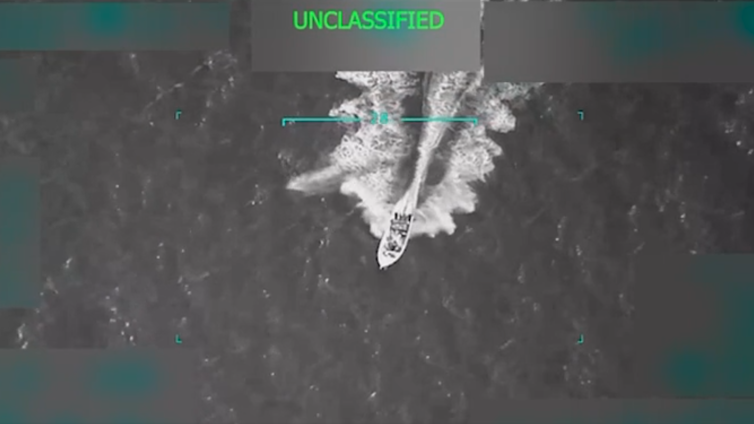
The moment before an alleged drug boat was hit in a
targeted U.S. strike. @realDonaldTrump/Truth Social
The U.S. government is justifying its lethal destruction of a boat suspected of transporting illegal drugs in the Caribbean as an attack on “narco-terrorists.”

But as an expert on international law, I know that line of argument goes nowhere. 

Even if, as the U.S. claims, the 11 people killed in the Sept. 2, 2025, U.S. Naval strike were members of the Tren de Aragua gang, it would make no difference under the laws that govern the use of force by state actors.

Nor does the fact that protests from other nations in the region are unlikely, due in large part to Washington’s diplomatic and economic power – and Donald Trump’s willingness to wield it.

Protest is not what proves the law. Unlawful killing is unlawful regardless of who does it, why, or the reaction to it. And in regard to the U.S. strike on the alleged Venezuelan drug boat, the deaths were unlawful.

Domestic U.S. legal issues aside – and concerns have been raised on those grounds, too – the killings in the Caribbean violated the human right to life, an ancient principle codified today in leading human rights treaties.

Killing in war and peacetime

The International Covenant on Civil and Political Rights is one such treaty to which the United States is a party. Article 6 of the covenant holds: “Every human being has the inherent right to life. This right shall be protected by law. No one shall be arbitrarily deprived of his life.”

Through rulings of human rights and other courts, it has been well established that determining when a killing has been arbitrary depends on whether the killing occurred in the context of peace or armed conflict.

Peace is the norm. And in times of peace, government agents are only permitted to use lethal force to save a life immediately. The United Nations’ Basic Principles on the Use of Force and Firearms by Law Enforcement Officials reinforce this peacetime right-to-life standard, noting “intentional lethal use of firearms may only be made when strictly unavoidable in order to protect life.”

The principle is also supported by the fact the U.S. has bilateral treaties regarding cooperation in drug interdiction. The Coast Guard has a series of successful Maritime Law Enforcement Agreements – known as Shiprider Agreements – with nations in the Caribbean and elsewhere. They commit U.S. authorities to respecting fundamental due process rights of criminal suspects. Such rights obviously do not include summary execution at sea.

Bypassing these bilateral and international treaties to dramatically blow up a ship not only violates law, but it will, I believe, further undermine trust and confidence in these or any other agreements the U.S. makes.

Tuesday, July 15, 2025

Elect a felon, expect crime

The conman in chief remakes the government in his own image.

Paul Waldman

In almost every way imaginable, Donald Trump’s second term is a purer expression of his personality and preferences than his first term was. 

Not only is he far less constrained — by the courts, by the law, by Congress, or by aides who might suffer an unfortunate attack of conscience — he has created a system in which his desires and predilections are translated into policy far more smoothly than before.

So it should not be surprising that a man who built a career on scams, cons, grifts, and swindles has fundamentally reoriented the US government’s approach to corruption. 

It isn’t just that Trump has ramped up his own personal self-dealing (though he most certainly has), or that his administration is tolerant of conflicts of interest in other officials (though it is). Just as important, Trump is enacting a sweeping set of policy changes that will make it more likely that Americans will themselves be the victims of all kinds of scams.

This is less a single strategy than the accumulation of many policy decisions pushing in the same direction: to make America a place where citizens can no longer expect that the government will be there to protect them when they’re being taken advantage of.

There are few better examples than the demise of the Consumer Financial Protection Bureau (CFPB), one of the key progressive achievements of recent years. Arising out of the 2008 financial crash, it was based on a simple premise: Americans ought to be protected from financial scams and exploitation. 

And it was extraordinarily successful: According to the Bureau’s data (which for some reason the Trump administration hasn’t gotten around to removing from the web), its actions have returned over $21 billion to consumers and imposed billions in fines on wrongdoers. 

Just as important, it sent a message to anyone contemplating financial exploitation of consumers that there is an agency that will aggressively investigate illegal activity, and there will be consequences for those who break the law.

So when Trump took office, he sought to shut the CFPB down. Office of Management and Budget Director Russell Vought, the dark lord of the effort to dismantle the government, told its employees to stay home and “stand down from performing any work task.” 

Under its new management, the agency then began dropping lawsuits it had brought against banks, mortgage companies, car dealers, and others it had found were defrauding or mistreating customers. The administration is hoping to fire 1,500 of the agency’s 1,700 employees (that move has been temporarily halted by a judge).

Doing their part, congressional Republicans sought to eliminate the agency entirely in their budget bill. Fortunately, that provision was struck down by the parliamentarian as being inconsistent with the rules of budget reconciliation. Nevertheless, the CFPB has all but ceased to function, which means that the kind of financial abuse it was established to prevent will likely go unpunished.

You’re on your own

The administration is taking a similar approach in area after area, sending a clear message to consumers that you’re on your own, and a message to those who exploit them that they’re free to do pretty much whatever they like.

Trump’s attempts to fire Democrat-appointed members of independent commissions have been described mostly as an effort to consolidate power, which is true, but those moves also mean removing restraints on scams and abuse. 

In other words, he is dismantling the government’s ability to rectify exploitation based on power imbalances. If he succeeds, the Consumer Product Safety Commission will do far less to protect consumers, the National Labor Relations Board will cease protecting workers, and the Merit Systems Protection Board will no longer protect government employees.

If the Department of Education is dismantled, it will no longer police the for-profit colleges that saddled millions with crushing debt and useless degrees (or no degrees at all). With long-awaited reforms at the Internal Revenue Service being quickly reversed — the administration is planning to cut its workforce in half — tax cheats know that they stand a good chance of getting away with their crimes. 

At times it almost seems as though administration officials are searching frantically for anything the federal government does that might be useful or helpful to regular people, and quashing it. They’re even eliminating the Energy Star program, which does nothing but inform consumers about which appliances are energy efficient, saving them tens of billions of dollars in utility costs every year.

There may be no area with more reckless dismantling going on than finance, where the system of regulation and law enforcement now reflects Trump’s personal views. He himself was repeatedly investigated by the federal government for various financial misdeeds, and he obviously believes that finance is and ought to be an arena where rules are for suckers and succeeding at the con game just means you’re smart.

To understand how and why, Trump’s reversal on the crypto industry is the key piece of context. In years past he had described crypto as “a scam,” but at some point he had a realization: If crypto is a scam, the scammer-in-chief surely ought to be in on it. 

The then-unprecedented corruption of Trump’s first term pales in comparison to what his family is now doing, building a crypto empire — stablecoins, meme coins, bitcoin mining — with ample opportunities for criminals, foreign governments, or anyone else who might want something from the president to put money right in his pocket.

And since crypto is becoming so central to his own wealth, Trump very much wants to ensure that the industry is regulated as little as possible, if at all. To that end, his Justice Department disbanded its National Cryptocurrency Enforcement Team and told prosecutors to stop investigating certain kinds of crypto crimes. 

Under the leadership of Paul Atkins, the crypto advocate Trump made chair of the Securities and Exchange Commission, the agency has dropped a dozen pending enforcement actions against crypto firms for various kinds of alleged violations, including some involving major donors to Trump. 

Few were happier about the policy about-face than Justin Sun, the Chinese-born crypto billionaire who was charged by the SEC in 2023 with various forms of fraud. After Sun bought $75 million in crypto tokens from World Liberty Financial, a firm controlled by the Trump family, the SEC halted the investigation and asked a judge to set the case aside.

As the Wall Street Journal recently reported, enforcement of laws against all kinds of white-collar crime is atrophying and “in some cases, the administration is effectively redefining what business conduct constitutes a crime.”

It’s only getting started

It can be a shock to remind oneself that we’re still less than six months into Trump’s term, so when it comes to changing the government’s position on scams and cons, he may just be getting started. Though most people probably weren’t aware of it, the Biden administration amassed an impressive record of regulation aimed at preventing consumers from being misled and manipulated — all of which could be vulnerable to the current administration’s regulatory rollback.

For example, the FTC under Biden created a “click-to-cancel” rule, which requires companies to make it no more difficult to cancel a subscription or a service than it is to sign up in the first place; if you’ve ever tried to cancel a gym membership, you know why this was necessary. 

But the Trump administration has delayed implementation of the rule, and it’s unclear as of yet whether they’ll try to kill it entirely. Will they reverse the regulation cracking down on junk fees in hotels and concert tickets, or the one banning fake online reviews? They certainly might.

Why, one might ask, would Donald Trump want Americans to live in Scamville? The answer is that it’s the place that made him, where he thrived by preying on those with less money and power than he had. 

When he sees that America has a law that bans our companies from paying bribes overseas, he recoils in disgust and tells the Justice Department to stop enforcing it; after all, that’s just how things work. It’s a dog-eat-dog world out there.

Corruption and scams are not the same thing, but they are close cousins. They add a note of tension and uncertainty to life — the knowledge that rules are not necessarily followed, fair treatment is not the default, and we’re more vulnerable than we ought to be. All of which is fine with Trump and the administration he leads. 

America ought to be a place where everyone is expected to act with integrity and the government protects people from abuse and exploitation. But in the phrase the Trump administration uses so often, that would be “not consistent with the president’s priorities.”

🫵 Subscribe to Public Notice 🫵

Sunday, July 6, 2025

How Foreign Scammers Use U.S. Banks to Fleece Americans

They call it "pig-butchering" where YOU are the pig

By Cezary Podkul for ProPublica

Reporting Highlights

  • Struggling Gatekeepers: In the face of some $44 billion a year in pig-butchering scams conducted by Asian crime syndicates, U.S. banks have failed to prevent mass scale money laundering.
  • Black Market Bank Accounts: Chinese-language Telegram channels offer to rent U.S. bank accounts to pig-butchering scammers, who use the accounts to move victims’ cash into crypto.
  • One Address, 176 Clients: Bank of America allowed hundreds of unverified customers to open accounts, prosecutors alleged, including 176 who claimed the same small home as their address.

These highlights were written by the reporters and editors who worked on this story.

Brian Maloney Jr. was flummoxed when he was served with a lawsuit against his family’s business, Middlesex Truck and Coach, in January. Maloney and his father, also named Brian, run the operation, located in Boston, which boasts that it can repair anything “from two axles to ten.” A burly man in his mid-50s who wears short-sleeved polo shirts emblazoned with the company name, Maloney Jr. has been around his dad’s shop since he was 8. The garage briefly surfaced in the media in 2012 when then-presidential candidate Mitt Romney made a campaign stop there and the Boston Herald featured Maloney Sr. talking about how he had built the business from nothing in a neighborhood he described as having been a “war zone.”

Now Middlesex was being sued by a New Jersey man who claimed he had been defrauded of $133,565 in a cryptocurrency scheme. The suit claimed Middlesex “controlled and maintained” a bank account at Chase that had been used to collect the fraudulent payment. The purported victim wanted his money back.

None of this made any sense to Maloney Jr. His company did not have an account at Chase, and he barely knew what crypto was. “For God’s sake, we fix trucks and still have AOL,” he would later say.

It was only after Maloney went to Chase to investigate that he was able to piece together at least part of the explanation. It turned out that Chase had allowed an unknown individual, who applied online with no identification, to open an account under Middlesex’s name, according to information Chase provided to Maloney. The account was then used to solicit hundreds of thousands of dollars from fraud victims, including the $133,565 from the man who was now trying to reclaim his funds.

Middlesex’s experience, as bizarre as it seems, is part of a global problem that plagues the banking industry. The account falsely opened in Middlesex’s name, and many others like it, are way stations in a sophisticated multistep money laundering process that transports cash from U.S. scam victims to crime syndicate bosses in Asia.

There’s been an explosion in international online fraud in recent years. Particularly widespread are “pig-butchering” schemes, as ProPublica reported in 2022. 

The macabre name derives from the process of methodically “fattening” victims by getting them to contribute more and more money to an investment scheme that seems to be succeeding, before eventually “butchering” them by taking all their deposits. Often operated by Chinese gangs out of prison-like compounds in Cambodia, Laos and Myanmar, pig-butchering in that region has reached a staggering $44 billion per year, according to a report by the United States Institute of Peace, and it likely involves millions of victims worldwide. The report called the Southeast Asian scam syndicates the “most powerful criminal network of the modern era.”

Thursday, June 12, 2025

A felon in the White House is making crime legal

Who could have foreseen putting a convicted felon in the White House would turn out like this?

David R. Lurie

After the Supreme Court declared Donald Trump largely immune from prosecution for turning the office of the presidency into a criminal enterprise, and the nation’s voters then chose to reinstall the freshly convicted felon in the White House, who could have predicted he would use his office to punish the law abiding and protect the corrupt?

In fact, both the scale and audaciousness of Trump’s corruption, and of his regime’s assault on the criminal justice system, was eminently predictable.

As House Speaker Mike Johnson recently pointed out, Trump’s corruption is “out in the open.” The same is true of his use of criminal justice system and other levers of government as weapons against his ever-growing list of enemies.

But even the most cynical have been surprised by the Trumpist effort to portray the provision of healthcare to children, veterans, and the elderly as “waste” and “fraud,” as well as Trump’s effort to render those who follow the laws into criminals.

The most vulnerable among us, including immigrants and the sick, are currently among Trump’s primary victims. But the entire nation will soon pay a heavy price for his systematic assault on the rule of law in service of his bottomless desire for corrupt wealth and self-aggrandizement.

Retroactive criminalization

During the campaign, Trump and his cronies declared they would deport the allegedly massive numbers of “criminal aliens.” When Trump came into office, however, he faced a problem: The vast majority of undocumented immigrants are law abiding.

Trumpists, however, came up with an answer: Create fake crimes and thereby turn the law abiding into criminals.

Trump announced the US is “under invasion” by a foreign power in order to invoke the rarely used Alien Enemies Act and justify the summary deportation of supposed gang members to foreign prisons, this despite a US intelligence report concluding there is no such invasion. Then, when courts caught the administration deporting migrants who are not gang members, or in violation of existing immigration laws, Trumpists have prevaricated and outright lied, transforming their purported law enforcement initiative into a fraud.

The administration has also attacked judges and elected officials who have the temerity to question their illegal conduct.

Alina Habba (the parking garage lawyer Trump installed as New Jersey’s acting US attorney) ordered the arrest of Ras Baraka, the Mayor of Newark, on bogus charges arising from his participation in a protest at a private DHS jail, leading to what a federal magistrate judge called an “embarrassing retraction.” After that gambit failed, Habba brought equally flimsy charges against a member of Congress who accompanied Baraka at the protest, asserting that she “assaulted” armed ICE thugs.

Similarly, last month in New York City, an ICE gangster terrorized and handcuffed a crying staffer of Rep. Jerry Nadler after armed agents invaded his office without a warrant.

Trumpists have resorted to inventing new offenses so as to transform law-abiding immigrants into criminals. For example, Trump has declared slivers of land along the border to be “military zones” for the sole purpose of charging migrants with trespassing. The administration has also declared that undocumented immigrants have an obligation to “register” with the government so they can be indicted for failing to do so. They’re jailing immigrants who legally entered the United States under a Biden-era asylum law by retroactively declaring the program to be “illegal.”

Most tellingly, and insidiously, ICE agents desperate to meet the increasing quotas the White House has set for deporting “illegals” have taken to targeting the most vulnerable immigrants: Those intent on following the law and engaging in productive work.

Monday, May 26, 2025

The Trump Coalition Wants to End Democracy as We Know It

Breakdown of four groups who want a few billionaires and certain religious zealots to consolidate their political power.

Peter Montague for Common Dreams

The Trump coalition includes four groups of people:

  1. The MAGA (“make America great again”) base, mostly rural white men and women;
  2. A group of Silicon Valley billionaires known as the PayPal Mafia;
  3. A separate political movement called “religious nationalists”; and
  4. The Trump crime family itself.

All four groups share one basic aim: to degrade our one-person-one-vote election system so a few billionaires and certain religious zealots can consolidate their political power to eliminate free and fair elections to become even more controlling and richer than they already are.

Here are brief descriptions of the four groups.

1: The MAGA Base: Who Are They?

The hardcore, mostly rural MAGA base can be understood as an echo of the Confederacy. Philosophically, many of them are the same people who tried to destroy the United States to preserve slavery via the Civil War (1861-1865). In their view, the basic ideas that inspired the founding of the U.S. (1776-1788) are wrong: All humans are not created equal and should not have equal rights under law. In 2022, MAGA believers included about 15% of the U.S. adult population, or about 39 million out of 258 million adults.

DISCLOSURE: Peter is a valued old friend. We collaborated often when I was organizing director at the organization now known as the Center for Health and Environmental Justice especially on issues that involving fighting corporate crime.

Wednesday, May 21, 2025

Aaron Regunberg: Have the courage to stand strong against Trump’s mafia-style threats

Trump Is Trying to Spook States out of Suing Big Oil—Why They Shouldn’t Back Down

Aaron Regunberg for Common Dreams

As U.S. President Donald Trump continues to threaten any institutions that could check his administration’s ongoing drive toward authoritarianism, there’s been a stark contrast in responses to his mob boss-style attacks. Some targets—like Harvard, which vowed to fight Trump’s assault on universities, or the law firm Perkins Coie, which recently scored a judicial win holding Trump’s actions against the firm unconstitutional—have seen their stature in their respective fields skyrocket. 

Others—like Columbia University or the law firm Paul Weiss, which both immediately folded at the first sign of aggression from Trump—have been publicly, and perhaps permanently, tarred as feckless cowards.

This contrast between courage and gutlessness appeared once again earlier this month in response to Trump’s latest dictatorial salvo: an all-out assault on behalf of the fossil fuel industry against state and local efforts to hold Big Oil companies accountable for deceiving the public about climate change.

Right now, 1 in 4 Americans live in a jurisdiction that is fighting to put Big Oil companies on trial for their climate lies and make them pay for the catastrophic damage they knew decades ago that their products would cause. 

The fossil fuel industry concedes that it faces “massive monetary liability” in these cases and has been growing more and more desperate to stop plaintiff communities from having their day in court. In the last few years Big Oil has asked the Supreme Court to block these cases on five separate occasions. Recently, industry front groups tied to Leonard Leo ran a pressure campaign pushing the court to take up the issue.