Proximity to nuclear power plants associated with increased cancer mortality
By Harvard T.H. Chan School of Public Health
Edited by Sadie Harley, reviewed
by Robert Egan
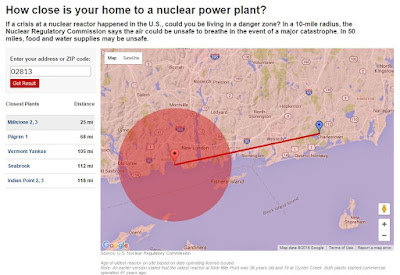
U.S. counties located closer to operational nuclear power plants (NPPs) have higher rates of cancer mortality than those located farther away, according to a new study led by Harvard T.H. Chan School of Public Health.
The study is the first of the 21st century to analyze proximity to NPPs
and cancer mortality across all NPPs and every U.S. county. The researchers
emphasized that the findings are not enough to establish causality but do
highlight the need for further research into nuclear power's health impacts.
The research is published in Nature Communications.
Numerous studies on the potential link between NPPs and
cancer have been conducted around the world, with conflicting results. In the
U.S., these studies have been rare and limited in their scope, focused on a
single NPP and its surrounding community.
To expand the evidence base, the researchers conducted a national assessment of NPPs and cancer mortality between 2000 and 2018 using "continuous proximity." They used advanced statistical modeling that captured the cumulative impact of all nearby NPPs, rather than just one.
The locations and dates of operation of U.S. NPPs—as well as some nearby in Canada—were obtained from the U.S. Energy Information Administration, and county-level data on cancer mortality were obtained from the Centers for Disease Control and Prevention.
The researchers controlled for potential confounders in each county, including educational attainment, median household income, racial composition, average temperature and relative humidity, smoking prevalence, BMI, and proximity to the nearest hospital.
The study found that U.S. counties located closer to nuclear
power plants experienced higher cancer mortality rates, even after accounting
for socioeconomic, environmental, and health care factors.
The researchers estimated that over the course of the study
period, roughly 115,000 cancer deaths across the U.S. (or about 6,400 deaths
per year) were attributable to proximity to NPPs. The association was strongest
among older adults.
"Our study suggests that living near a NPP may carry a measurable cancer risk—one that lessens with distance," said senior author Petros Koutrakis, Akira Yamaguchi Professor of Environmental Health and Human Habitation.
"We recommend that more studies be done that address
the issue of NPPs and health impacts, particularly at a time when nuclear power
is being promoted as a clean solution to climate change."
The researchers noted that the results are consistent with
the results of a similar study they conducted in Massachusetts, which
identified elevated cancer incidence among populations living closer to NPPs.
They also noted some limitations to the study, including
that it did not incorporate direct radiation measurements and instead assumed
equal impact by all NPPs.
Publication details
National Analysis of Cancer Mortality and Proximity to
Nuclear Power Plants in the United States, Nature Communications (2026). DOI:
10.1038/s41467-026-69285-4
Journal information: Nature Communications

