Not surprising to see life got tougher for children in Rhode Island

The breakfast was emceed by Paige Parks, Ed.M., Executive Director of Rhode Island KIDS COUNT, and the data was presented by Stephanie Geller, Ed.M., Deputy Director.
The following is taken from the Executive Summary
provided by RI KIDS COUNT:
The Factbook is intended to provide data for community leaders, legislators, and policymakers to inform their planning, policymaking, and action, but this year, much of the data has been “harder to obtain, no longer available, or missing key information on disparities by race, ethnicity, or the experiences of LGBTQ+ youth.” The lack of data is mostly due to failures of the federal government, including:
- The
U.S. Department of Agriculture has announced that it will no longer
produce its annual Household
Food Security Report, ending over 30 years of data collection on
this topic.
- Data
on pregnancy risks and maternal and infant mortality are also under
threat, and a 2025
Executive Order has halted efforts to include information on
sexual orientation and gender identity in national surveys.
- Data
on childhood immunizations from the National Immunization
Survey were delayed this year and were not available in time
for publication.
- There
is no October 2025 unemployment rate data available due to the government
shutdown.
- Problems
like food insecurity, maternal mortality, and high suicide rates among
LGBTQ+ youth will not go away just because the data is not there, but not
having the data will make it harder to improve child well-being and solve
these problems together.
Newport is now a core city:
This year, Newport has been added to the list of core
cities, joining Central Falls, Pawtucket, Providence, and Woonsocket. Newport’s
inclusion in the core cities reflects a shift in where child poverty is
concentrated, as its child poverty rate has been similar to or higher than
Pawtucket’s in recent years. From 2020 to 2024, Newport had the second-highest
rate of childhood poverty in Rhode Island, with 32% of children living in
poverty. Only Central Falls (33%) had a higher child poverty rate. While estimates
for Newport (and Central Falls) have a larger margin of error due to their
smaller populations, the data points to important changes in the distribution
of economic hardship across the state.
Expanded section on immigrant children and youth:
“The Rhode Island 2026 Factbook is a love letter to Rhode
Island’s immigrant children,” said Paige Parks.
- About
one in eight residents is foreign-born, and most speak English and are
naturalized citizens. From 2020 to 2024, more than 160,000 Rhode Islanders
were born in another country. As of 2023, nearly one-third (30%) of
children in Rhode Island and more than half (58%) of Hispanic children
lived in an immigrant family. In Rhode Island, from 2012 to 2025, the
number of public school students identified as immigrants has more than
tripled (from 1,893 to 6,105).
- Immigration
enforcement action and anti-immigrant rhetoric are affecting children’s
access to health care. Families and children are delaying or avoiding
seeking health care due to the presence of immigration enforcement
officers at health clinics, centers, and hospitals.
- Immigration
enforcement hurts student attendance, school enrollment rates, mental
health, and student achievement, particularly for Students of Color. In
Rhode Island, increased immigration enforcement has been associated with
lower attendance rates among multilingual students.
Rhode Island continues to experience declining birth rates,
with the second-lowest fertility rate in the country. Fewer births have
implications for long-term population trends, school enrollment, and the
state’s future workforce.
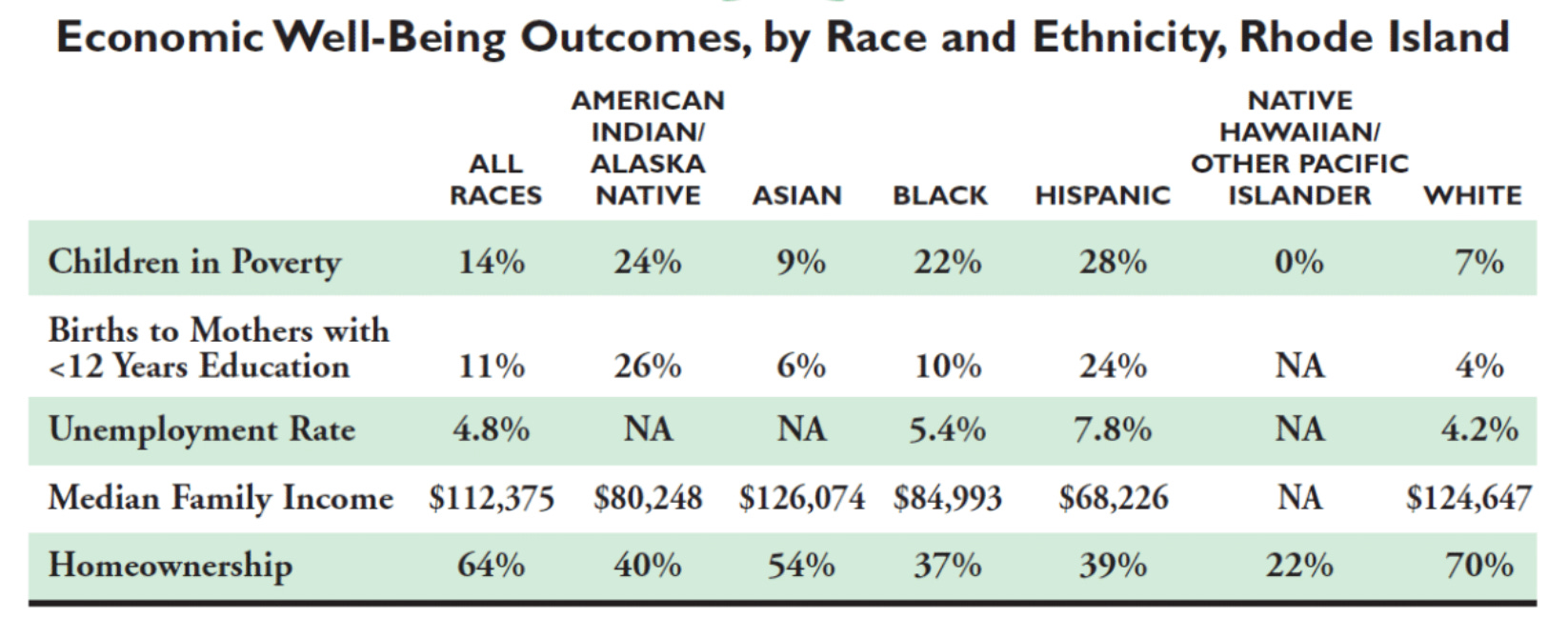
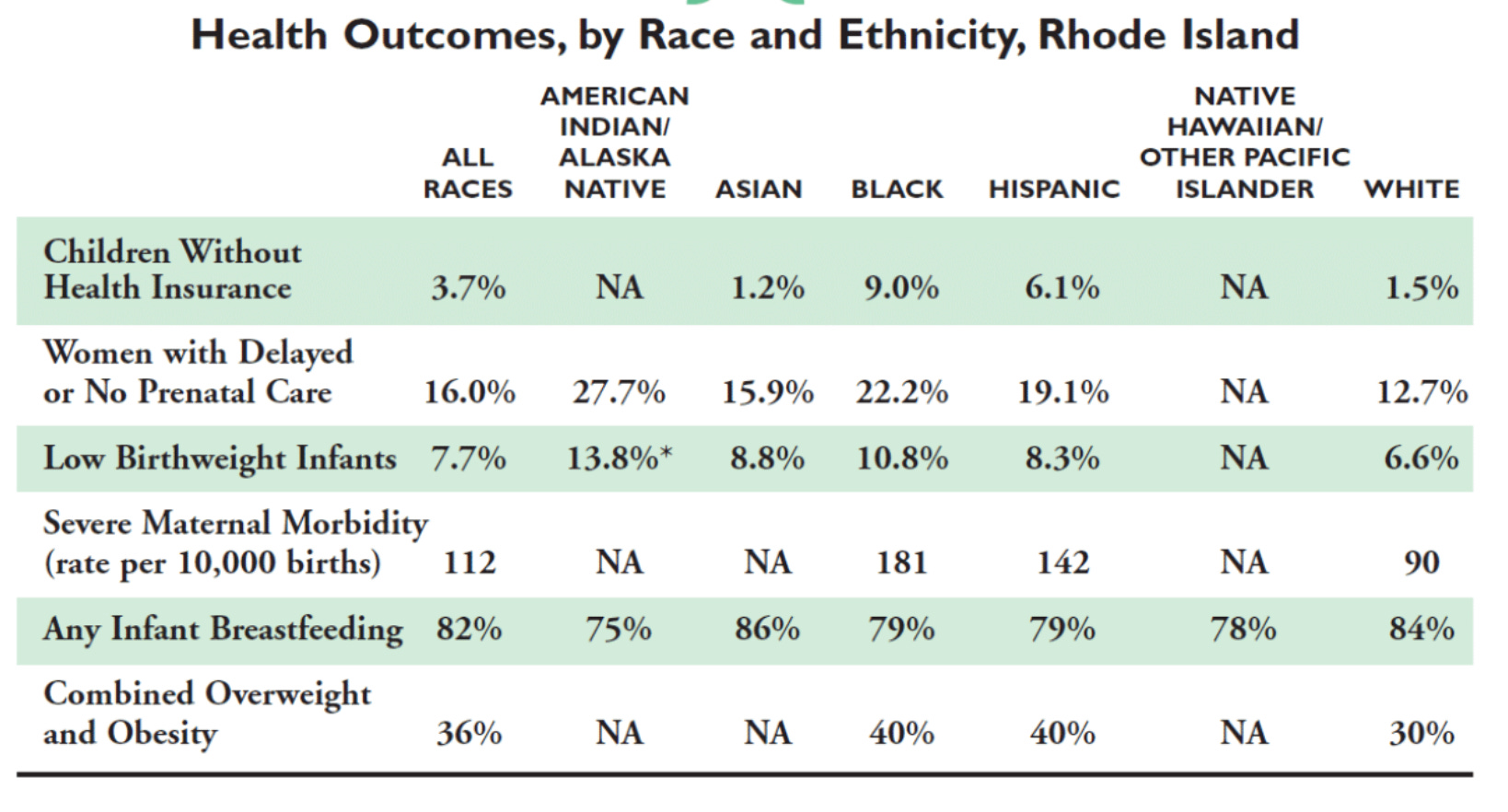
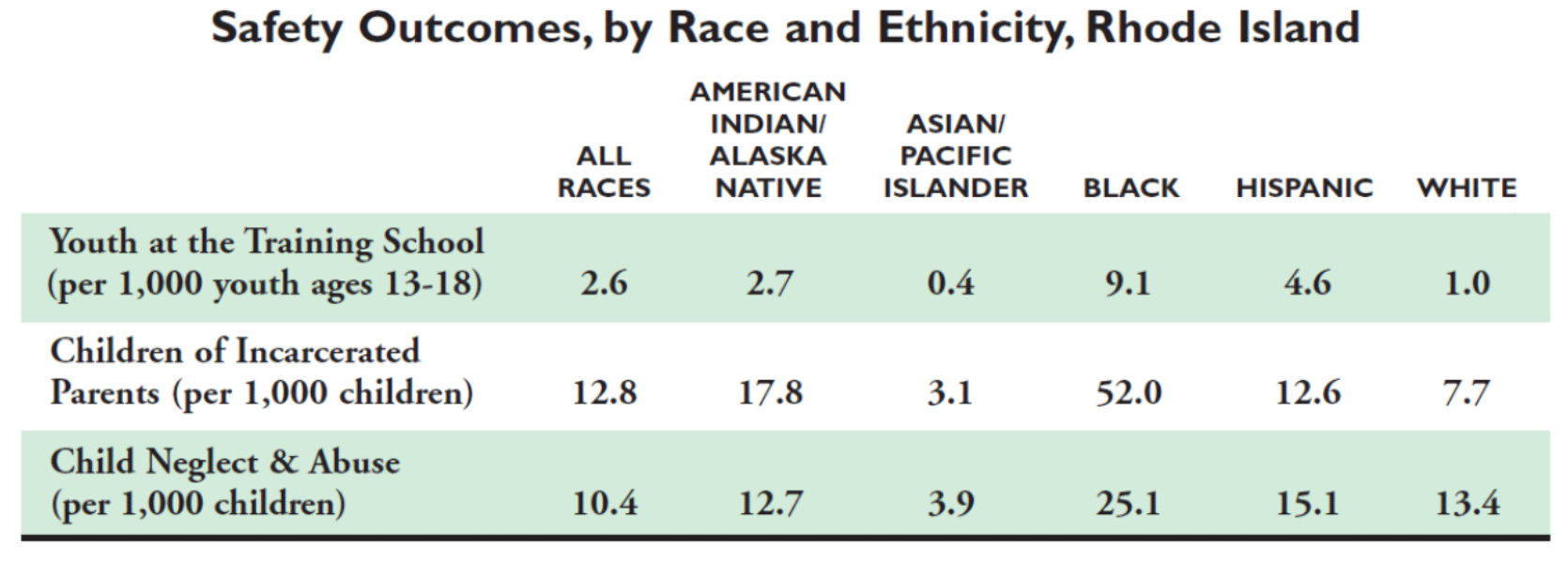
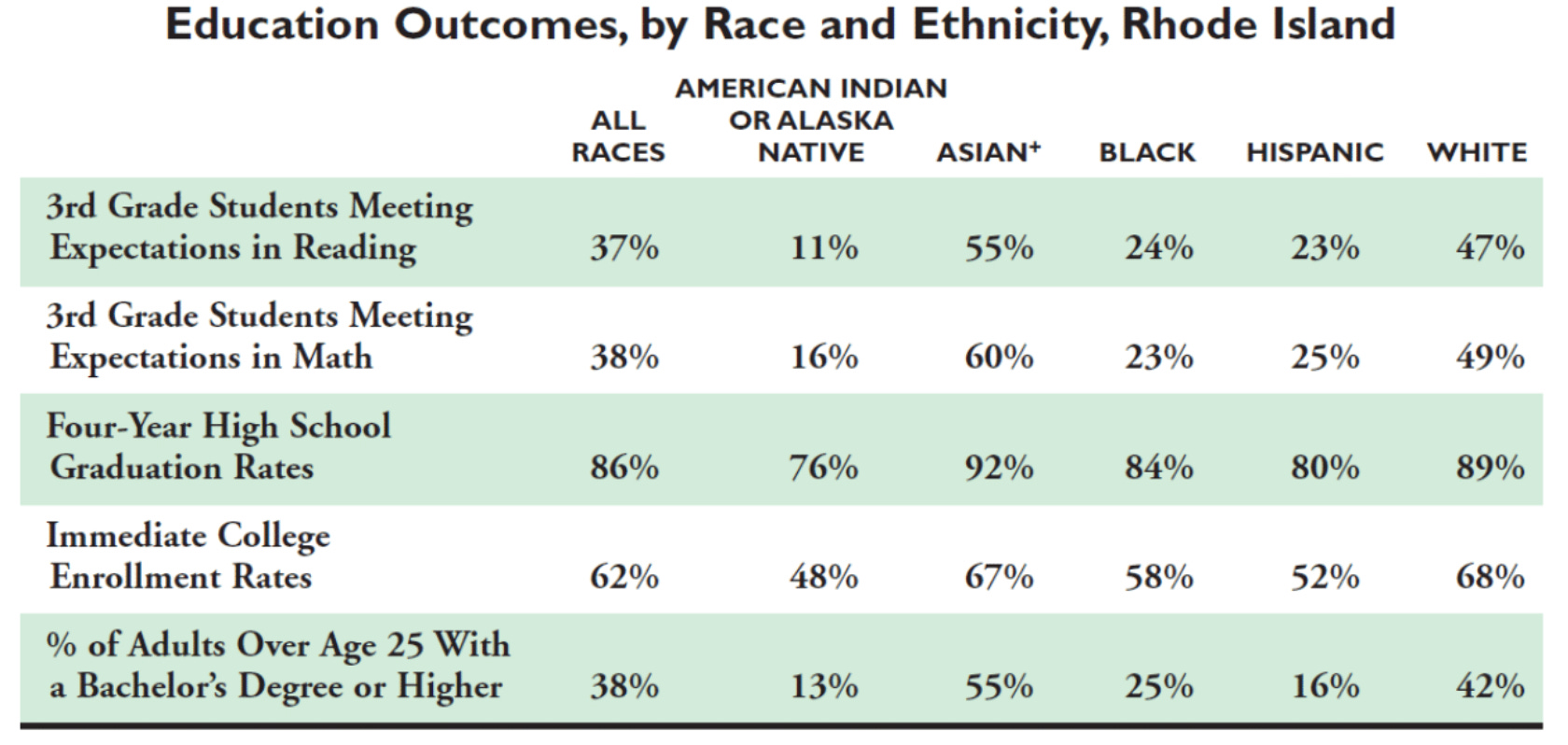
Racial and Ethnic Disparities Persist:
At the same time, racial and ethnic disparities remain a
defining feature of child well-being in Rhode Island. Disparities are evident
across health, economic, and community indicators, reinforcing the need for
policies that address structural inequities and ensure all children and
families have access to opportunity. Disparities are evident in areas
including:
- Health
insurance coverage, with 9.0% of Black children uninsured compared to 3.7%
statewide
- Neighborhood
poverty, where Hispanic children are significantly more likely to live in
high-poverty areas
- Maternal
and child health outcomes, housing conditions, and involvement in public
systems
These disparities highlight the need for continued focus on
policies and investments that promote equity and address systemic barriers. The
charts below show racial and ethnic disparities by comparing key indicators
Economic Well-Being
Economic conditions for families have become more
challenging, with rising costs and uneven access to safety net supports.
- Child
poverty increased to 16.3% in 2024 and is concentrated in the five core
cities of Central Falls, Newport, Pawtucket, Providence, and Woonsocket.
- In
2024, 16.3% of children in Rhode Island lived in poverty, up from 13.3% in
2023 and 11.7% in 2022, and higher than the national rate of 15.5%.
- Between
2020 and 2024, 69% of Rhode Island’s children living in poverty lived in
just five cities—Central Falls, Newport, Pawtucket, Providence, and
Woonsocket.
- In
Rhode Island between 2020 and 2024, Hispanic children were about 18 times
more likely to live in high-poverty neighborhoods than non-Hispanic white
children.
- Housing
affordability remains a significant challenge, with rents up 20% since
2015, even after adjusting for inflation, and homeownership out of reach
for many families.
- Rhode
Island’s FY 2025 budget included approval for a $120 million
bond. The bond was the largest housing bond in the state’s history. Rhode
Island voters overwhelmingly approved the bond.
- Child
and youth homelessness has increased, with 1,994 students identified as
homeless during the 2024–2025 school year.
- The
number of students identified as homeless in Rhode Island has increased
by 36% (533 students) from the 2021-2022 school year.
Safety net supports have weakened in key areas:
- Rhode
Island spends a relatively small share of TANF funds
on direct cash assistance. In 2023, Rhode Island spent 9% of TANF funds on
cash assistance, below the national average.
- The
number of children receiving SNAP benefits
has declined by 31% over the past decade.
Recent federal policy changes are expected to further
impact family stability in the future:
- Changes
to SNAP will reduce benefits for some families and increase administrative
requirements
- All
information is embargoed until Monday, May 4, 2026•Federal policy changes
affecting SNAP and Medicaid are projected to leave 40% of families worse
off by 2033.
This year introduces a new focus on Family Tax Credits:
- This
year’s Factbook introduces a new indicator on Family Tax Credits,
highlighting their role in supporting family income and reducing poverty.
- In
2025, 68,800 Rhode Island filers claimed the federal Earned Income Tax
Credit, bringing $181.9 million into the state.
- The
Governor’s FY 2027 proposed budget includes Rhode Island’s first permanent,
refundable Child Tax Credit. If enacted, eligible families would
receive $325 per child, providing additional support to low-and
moderate-income households.
Health
Rhode Island has made measurable progress in several
areas of child and maternal health, while challenges remain.
Areas of improvement include:
- Decreases
in infant mortality and preterm births.
- Reductions
in psychiatric boarding and fewer “stuck” children in hospital settings.
- Increases
in breastfeeding rates.
- Declines
in rates of neonatal abstinence syndrome (NAS).
However, several concerns persist:
- The
rate of children without health insurance has increased
- We
anticipate more uninsured Rhode Islanders as federal tax credits expire
and Medicaid is cut. While the Medicaid cuts were not aimed at children,
parents losing their insurance will result in children losing their
insurance, even if they are still eligible for Medicaid.
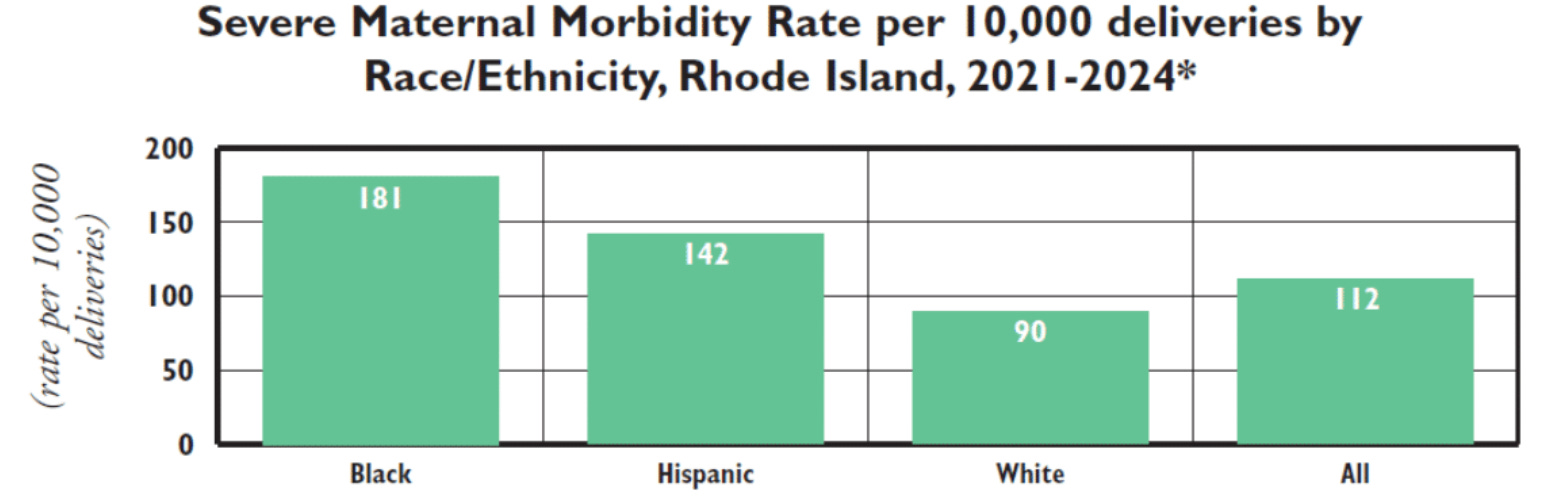
- Disparities
in maternal health outcomes remain significant.
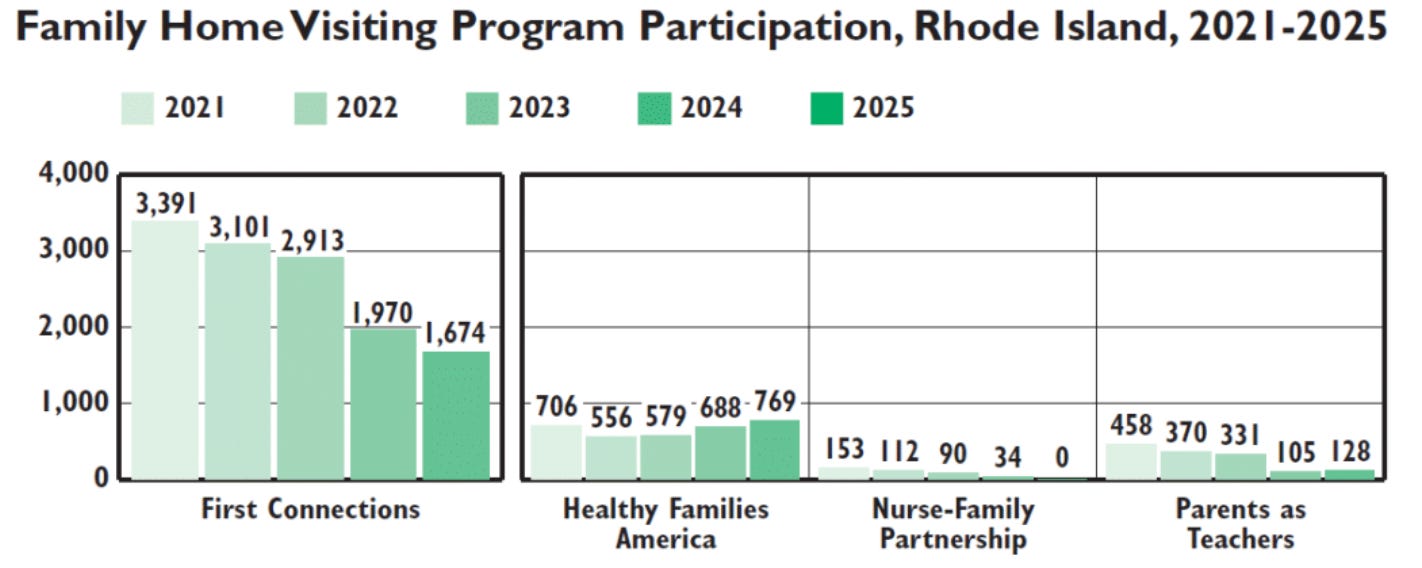
- Home
visiting services have decreased, including the closure of the Nurse-Family Partnership program:
Environmental and housing-related risks also continue:
- Rhode
Island has the highest percentage of low-income children living in older
housing in the U.S.
- Lead
exposure rates are declining slowly, but remain higher in core cities
- Asthma-related
emergency visits increased for younger children
In addition, data limitations affected several indicators
this year, including delayed immunization data and changes in how some measures
are defined.
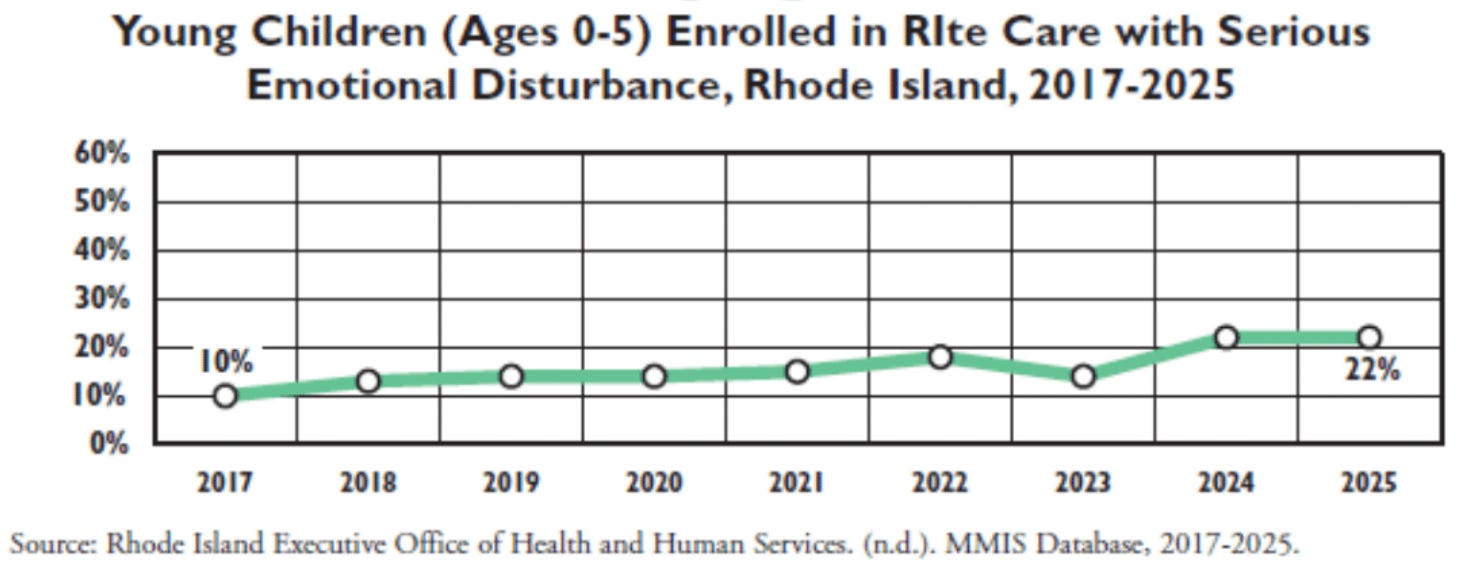
Mental health conditions can be diagnosed even in young children.
- 22%
of children under age five who are enrolled in RIte Care have a diagnosis
of Serious Emotional Disturbance.
- Youth
homelessness has increased.
- The
number of unaccompanied homeless youth identified by school personnel
more than doubled from the 2023-2024 school year to the 2024-2025 school
year.
- More
youth are involved in the justice system, including increases in youth at
the Training School and more cases transferred to adult court.
- The
average age of youth at the Training School in 2025 was 16 years; however,
7% of youth who passed through the Training School at any point in 2025
were under 14 years old. Internationally, the United Nations has advised
countries to establish a minimum age of criminal responsibility of at
least 14.
- Youth
Referred to Family Court: In Rhode Island, youth interact with
the adult correctional system in two ways—when they are “waived” to adult
court at the request of the Rhode Island Attorney General or when they
are “certified,” resulting in sentencing beyond age 19 and transfer from
the Training School to the Adult Correctional Institutions upon reaching
age 19. In 2025, 20 motions to waive jurisdiction to try juveniles as
adults and 20 certification motions were filed. This is the largest
number of motions to waive jurisdiction since 2018, and the first time in
seven years that the number of motions to waive jurisdiction has been
more than nine.
- More
children in out-of-home placement are being placed out of state, with 68
children in out-of-state placements compared to 59 the previous year.
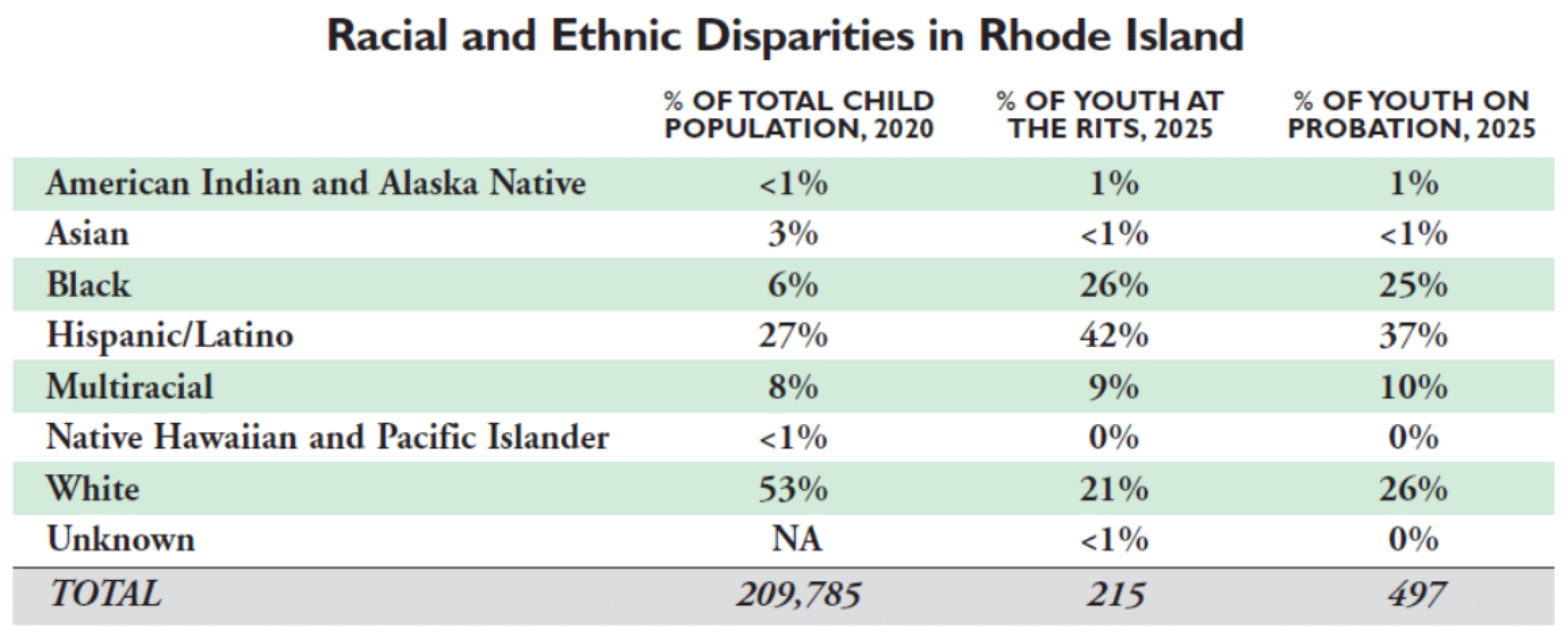
Disparities persist within the justice system, with
differences in how youth experience arrest, referral, and placement across
communities.
Education
Rhode Island has seen progress in access to some early
childhood services, alongside ongoing workforce and access challenges.
Similarly, some K-12 outcomes have improved, especially chronic absence.
Areas of improvement include:
- Reduced
wait times for Early Intervention services, following recent rate
increases
- Increased
participation in school meals in districts offering universal meals
- Declines
in chronic absence.Since the 2023-2024 school year, chronic early absence
has decreased from 20% to 18%, middle school chronic absence from 25% to
22%, and high school chronic absence from 31% to 29%, indicating continued
progress.
At the same time, several challenges remain:
- Child
care wages remain low, contributing to workforce instability. In Rhode
Island in 2024, the average hourly wage for a child care educator was
$16.74, down from 2023, and among the lowest average hourly wages of all
occupations in the state.
- Enrollment
in RI Pre-K declined after more than a decade of sustained growth.
- Rhode
Island has the largest income-based gap in after-school participation in
the country.
Student demographics are also changing:
- The
number of Multilingual Learners has more than doubled over the past
decade, requiring continued investment in language supports and inclusive
education practices.
Children Participating in School Meals
- School
meal participation among children in schools offering universal school
meals is up compared to last year.
- However,
federal H.R. 1, signed into law in July 2025, introduced “structural
changes” to SNAP and Medicaid eligibility, which may reduce the number of
families receiving benefits. With fewer children in families receiving
SNAP benefits, the percentage of students identified as low-income may
fall below the 25% threshold, resulting in more children experiencing food
insecurity, both at home and at school.
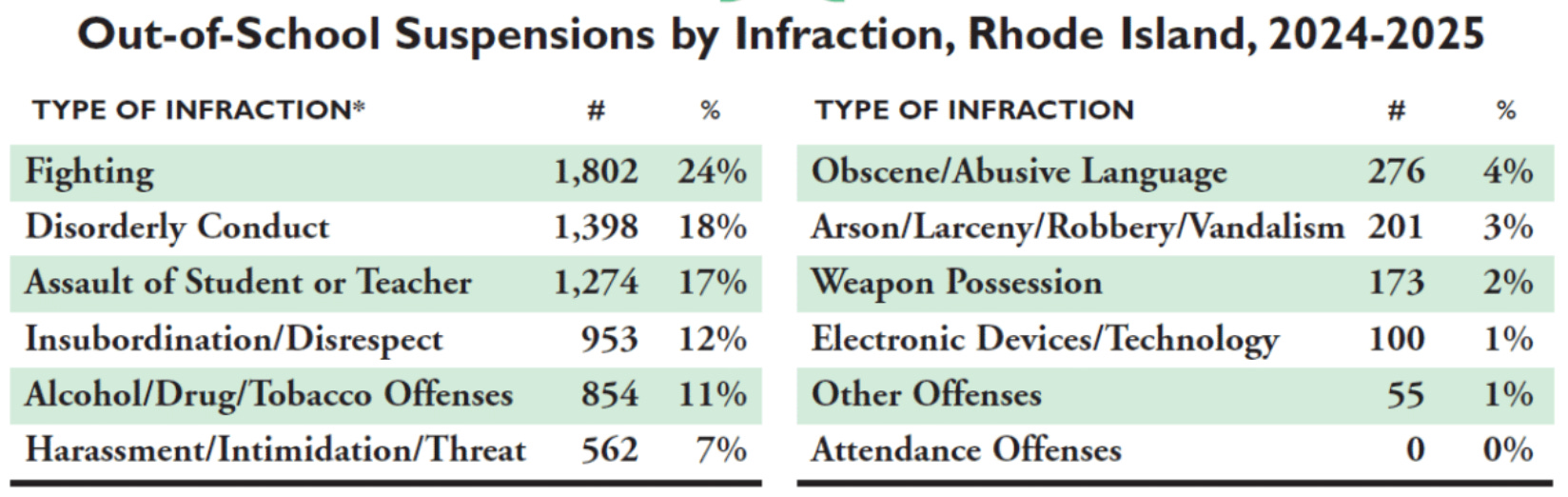
Declines in suspensions, but concerns remain:
- During
the 2024-2025 school year, the number of out-of-school suspensions (7,648)
was 23% lower than in the previous school year (9,208). However, more than
half (4,018 or 53%) of out-of-school suspensions were for non-violent
offenses.
- Suspension
usually does not deter students from misbehaving and may instead reinforce
negative behavior patterns. Suspended students are more likely to
experience academic failure, youth justice involvement, disengagement from
school, isolation from teachers and peers, and school dropout.
SteveAhlquist.news is a reader-supported publication. To receive new posts and support my work, consider becoming a free or paid subscriber.

