Menu Bar

Home           Calendar           Topics          Just Charlestown          About Us
Showing posts with label Carcieri. Show all posts

Sunday, December 7, 2025

Rhode Island municipalities “Doing more with less” is a slogan, not a plan

No municipality can realistically make that happen every single year, for all time.

Tom Sgouros in SteveAhlquist.news

We often hear about the property tax cap in Rhode Island. I mentioned it in an article about revaluations last month. The cap limits property tax increases to 4% per year. But it’s not a limit on increases in your tax bill, as it used to be, but a limit on increases in the total amount collected in property taxes, which is a little weird.

In the 1980s and 1990s, there was a movement in the plains and mountain states out west to establish a Taxpayer Bill of Rights (TABOR). The idea was that property taxes should go up no faster than inflation plus population growth. Colorado passed a version of TABOR through a state referendum in 1992. 

After a decade of experience -- watching the devastation these tax limits caused to public schools, libraries, police forces, and pretty much all other local services -- the bill was partially repealed in 2005, again by referendum. After Colorado, despite billionaire-funded campaigns in around a dozen states. No other state has passed TABOR.

Except in Rhode Island, where, in 2006, under the leadership of Senate President Teresa Paiva-Weed and Governor Donald Carcieri, the state enacted a tax cap that was actually more restrictive than TABOR. 

The new law lowered the limit on increases and changed it to apply to the amount collected, rather than the tax rate. The number is written into law, so a city or town can increase its tax revenue by no more than 4% in years with zero inflation and in years with 4% inflation. And if the town grows by 5%, too bad, the limit is still 4%. If new construction increases the property tax base, it’s too bad; the limit is still 4%, and any increase in tax revenue above that must go toward lowering the tax rate rather than improving services.

This, of course, is crazy and a recipe for long-term municipal fiscal disaster, as cities and towns accumulate responsibilities and grow their populations while their overall budgets are strictly limited. 

Tuesday, July 30, 2024

Rhode Island Republicans wonder what will make their party "great"

Maybe stop running rightwing nuts like Elaine Morgan and Justin Price? 

By Nancy Lavin, Rhode Island Current

Days after Donald Trump’s conviction in the New York hush-money trial, Steve Frias finally broke his silence.

The Rhode Island Republican National Committeeman told party leaders he would not seek reelection to the post he’d held for 12 years, denouncing Trump and his supporters for alleging the trial and verdict were politically motivated. 

“I kept procrastinating, hoping something would change, thinking ‘maybe I am wrong here,’” said Frias, an attorney who lives in Cranston.

But he knew it was the right thing to do based on the relief he felt the minute he stepped away. He longer had to feign allegiance to the presumptive nominee at the state party convention in late June, or the Republican National Convention in July.

Yet many Rhode Island Republicans tiptoe around the topic of Trump. They may be fearful of stepping out of line with the national party. More importantly, they may want to avoid alienating the 47% of Rhode Island voters who are unaffiliated.

Insurrectionist Justin Price wants to beat
 Megan Cotter to win back his seat
No Republican has won a federal or general office seat in the state in over a decade. And now, their marginal presence in the 113-seat Rhode Island Legislature could diminish even further, with three of the 14 Republican incumbents not seeking reelection in November and fewer than 30 Republican challengers for Democratic-held, or open seats.

While national politics isn’t entirely to blame, the shifting ideology of the national Republican party certainly hasn’t helped Rhode Island Republicans, said Wendy Schiller, a political science professor and interim director for the Thomas J. Watson Institute for International and Public Affairs at Brown University.

“The national Republican party is really out of step with what Rhode Islanders want and what they believe,” Schiller said in a recent interview. “It presents a real challenge for local candidates when your national party is saying it wants to cut Medicaid, doesn’t believe in climate change, doesn’t support infrastructure spending — all things Rhode Island desperately needs.”

Not to mention, the lack of cash and resources the Rhode Island GOP has to offer to candidates already facing an uphill battle simply because of voter demographics. 

Saturday, November 5, 2022

CCA revives institutional racism in Charlestown

Re-hires Indian fighter Joe Larisa as ProJo draws attention to slavery on local plantations

By Will Collette

This article originally ran on Feb. 28 when - thanks to CCA Council member Susan Cooper who seeks re-election - Charlestown continued its policy of institutional racism against our Tribal neighbors. Cooper originally voted against re-hiring Larisa but was taken to the woodshed for not following CCA's racial policy. What happened next is in this article....

Violating normal rules of procedure, as well as rules of decency, the ruling Charlestown Citizens Alliance (CCA Party) forced a third vote by the Town Council to re-hire, notorious attorney Joseph Larisa (left) as Charlestown Special Counsel for Indian Affairs, winning a 3-2 party line vote.

Larisa’s contract renewal for an annual payment of $24,000 a year plus expenses to monitor the behavior of our neighbors, the Narragansett Indian Tribe, was rejected by the Council in December.

But in January, CCA Councilor Susan Cooper, who had apparently been told that her December vote to reject Larisa’s contract renewal was not in keeping with her duty to obey all CCA Party directives, moved in January to reconsider Larisa’s re-hiring but failed on a 2-2 tie vote.

The third time was the charm when, at its regular February meeting, the Council took up the measure again. This time, the CCA Party Council majority prevailed and Injun Joe was re-hired at his old salary of $2,000 a month plus expenses to read news clips and the internet. If he has to do any real lawyering, he can charge Charlestown an additional $130 an hour.

It’s hard to decide where to begin to examine the substance and symbolism of this despicable action, a continuation of our town’s deep-seated problem of institutional racism (detailed HERE).

Following history’s direct line

Great Swamp Massacre monument
Since Larisa is but one episode in Charlestown’s long war with the Narragansett Indian Tribe, let’s start with history. In that, we are aided by an interesting article by G. Wayne Miller of the Projo, who wrote a February 26 article, “Two prominent R.I. families, Champlins and Stantons, had slave labor in 1700s Charlestown.”

Miller was aided in writing the article by the Charlestown Historical Society. The article details an often-forgotten detail of Charlestown’s history – Charlestown and its leading families built their prosperity on the backs of slaves.

While Miller focuses on the use of enslaved Africans, other historians describe the use of Narragansett Indian slaves, tribal members who survived the Great Swamp Massacre in 1675 and later during the King Phillips War. In 1755, one out of three residents of “Narragansett County,” of which Charlestown was part, were slaves.

Charlestown landowners also systematically took tribal lands as their own especially after the 1880 General Assembly declaration that the Tribe no longer existed. By 1882, Charlestown landowners had stolen all but two acres of the Tribe’s land.

Genocide?

Some believe, as I do, that these actions constituted genocide under the definition used by the United Nations and the International Criminal Court:

“The International Court of Justice defines the crime of genocide as "acts committed with intent to destroy, in whole or in part, a national, ethnical, racial or religious group.’”

History shows that between 1675 and 1882, the Narragansetts were slaughtered, enslaved, dispersed and displaced, had their land stolen and then declared nonexistent as a Tribe. By any reasonable reading of international law on genocide, this was it.

The war continues today

The Tribe never accepted this and a century later, the Narragansetts organized to fight back, filing suit in 1975 for the return of their land. 

In 1978, a compromise was reached when Congress passed the Settlement Act that restored 3,200 acres of the Tribe’s land with conditions that limited their sovereign use of that land.

In 1983, the Tribe won official recognition from the federal government. Far from settling affairs between the Tribe and the rest of Charlestown, it simply created new venues for conflict.

In 1992 and 1995, the Tribe proposed either a bingo hall or a casino as a way to bring income into the Tribe. Both plans were beaten down by objections and lawsuits from the town.

Unfinished cottages: elderly affordable housing or
Narragansett casino. You be the judge
.
In 1991, the Tribe alarmed Charlestown’s elite by buying 31 acres to use for affordable housing for the Tribe’s low-income elderly. 

The Tribe did not ask for Charlestown’s permission, triggering lawsuits to block what some Charlestown leaders felt was a way to sneak a casino into town, despite how totally impractical the site was for a casino.

As photos of the site show, the unfinished cottages could have held at least three slot machines or one roulette wheel each, at least in the fevered minds of some Charlestown leaders.

The Tribe petitioned the US Interior Department to take those 31 acres under trust, thus removing that land from state and local jurisdiction. In 1998, the Interior Department announced that it was granting the Tribe’s petition.

Carcieri

That brought Governor Donald Carcieri into the fight. 

Carcieri had little sympathy for the Tribe as he demonstrated when he ordered the infamous 2003 Smoke Shop raid – a melee between Tribal members and State Police. See photo, left.

The State filed suit to block the Interior Department from taking those 31 acres into trust.

Eventually, the case led to the Supreme Court’s 2009 Carcieri v. Salazar decision signed by Justice Clarence Thomas. 

The Court majority ruled the Interior Department could not take those 31 acres into Trust because the Narragansetts (as well as 500 other Indian tribes across the US) had no rights under the 1934 Indian Reorganization Act (IRA) that establishes the relationship between Indian nations and the federal government.

Why, you might ask? The Court ruled that Congress was not clear whether the IRA applied to tribes recognized after the law was enacted in 1934, notwithstanding the 14th Amendment’s guarantee of equal justice under law.

Charlestown leaders – i.e. the CCA Party – worry Congress might enact a “Carcieri Fix” that clarifies Congress’s intent to treat all Native American tribes equally. That would up-end Charlestown’s domination over the Narragansetts and end the second class status of tribes recognized after 1934. 

Click HERE for a clear explanation of what the Carcieri Fix means from the House Committee on Natural Resources.

Why Charlestown should fire Joe Larisa (again)

One hour of work on retainer, one hour at $130.
Net hourly rate: $1,090
Larisa takes credit for the Carcieri decision but in fact, he was not hired by Charlestown until 2003, five years after the Governor filed the case. 

Larisa’s main duty as Charlestown’s Indian Affairs lawyer has been to watch and wait for any action that might change the effect of the Carcieri Supreme Court ruling.

In the CCA pitch to re-hire Larisa, the CCA councilors stressed how important it is to have an experienced Indian fighter like Larisa on hand to fight any change to the Carcieri status quo even though that case was not his. 

CCA councilors Cody Clarkin, Susan Cooper and Bonnie Van Slyke argued that Larisa’s experience is both unique in the state and invaluable.

Except that’s not true. Larisa wasn’t even hired when Charlestown waged the lawsuit that morphed into Carcieri v. Salazar. 

Plus, according to Council President Deb Carney, Larisa’s knowledge is not unique: Claire Richards who was on the case is still at the Attorney General’s Office. If the Carcieri case is re-litigated, it won’t be Larisa doing it, but the state.

Also, there’s a reason why no other town has a professional Indian fighter on its payroll: Charlestown is the only town that is in a state of perpetual war with the Narragansetts.

This brings us to the merits of employing Larisa. Is he, as Councilor Cody Clarkin claims “worth it?”

In his letter requesting re-appointment, Larisa claims his victories not just include Carcieri v. Salazar (not his case), but also the Smoke Shop case (not his case). He claims the central role in addressing two police brutality civil rights cases brought by tribal leaders.

Speck leaves court after guilty plea to drug dealing
He omits any mention of his central role in the 2014-15 fiasco over the false arrest of two young members of the Tribe by the later discredited former Charlestown Police officer Evan Speck. Speck was convicted of drug offenses.

Read the unrefuted details of the case in this court filing HERE.

Larisa used the misdemeanor trial in Charlestown v. Gonsalves and Barber as a grandstand for his belief that the Narragansett Indian Tribe has no sovereign authority, a theory that was thoroughly rejected by Judge Joseph Houlihan in his ruling against the Town.

Larisa does not address charges by Tribal elders who have called him racist. I can’t see into Larisa’s heart to determine if he has racist intent, but I can look at his actions to see clear racist effect. But to the CCA Party, Larisa is a heroic figure standing up for the Town’s supremacy over the Tribe.

CCA Councilors Susan Cooper and Bonnie Van Slyke argue we need to have Larisa under retainer so he won’t represent interests contrary to Charlestown’s. But he already does!

There is consensus in Charlestown against a Charlestown casino, but no consensus to block the Tribe from making any economic progress. 

Nonetheless, as Charlestown’s official Indian fighter, Larisa worked to block the Tribe from getting into other gaming interests elsewhere, including fighting the statewide referendum on the Tribe’s proposal for a casino in West Warwick, and the Tribe’s attempts to buy into Twin Rivers and the new Tiverton casino.

If all we want is to block a casino here, it would have been in our interests to help the Tribe find opportunities that don’t adversely affect Charlestown. But instead, Larisa has worked to block every such effort by the Tribe. From this, I conclude the CCA’s real agenda is to use Larisa to block the Tribe from gaining any economic power to make them easier to dominate.

Scout’s Honor

On February 5, I sent Councilor Cody Clarkin (left) a detailed account of the reasons why he should vote “no” to re-hiring Larisa. I had hoped his history of service to the town when he was an Eagle Scout would mean he shared the Scouts’ strong stand against institutional racism.

I was wrong. At 6:40 PM, February 8, 20 minutes before the start of the Council meeting where he voted the CCA line to re-hire Larisa, Clarkin sent me this e-mail:

Hi Mr. Collette,

I wanted to thank you for all of the articles and stories regarding Joe Larisa. As a lifelong resident, I have been aware of most of the big happenings in town over the past fifteen years but I cannot express my thanks enough that there are people like you that care about all of the happenings. The ones that go under the radar or aren’t big enough to garner the wider attention, still deserve to be understand [SIC] and recorded.

I have taken your comments under consideration over the weekend and today while I thought about this item. I do believe Charlestown is better served with an Indian Affairs lawyer at this time. Going through Larisa’s bills there are big items, like the Invergy [SIC] or Railroad fight, that included large bills. Without the retainer, those bills could go up drastically.

In the coming months if there is a time that you are available to meet over Zoom or a phone call it would be great to get to meet you and open a dialogue on other issues the town is facing or will face. Let me know if you are interested and if you are when would work best for you.

Best, Cody Clarkin

Clarkin is correct in noting the large number of hours Larisa claimed for the Invenergy and AMTRAK fights. However, as I have detailed in earlier articles, Larisa had no useful role to play in either campaign.

In the Invenergy fight, his intervention only served to wipe out the good will built between Tribal members and the town through collaboration to protect Charlestown drinking water. 

If anything, Invenergy and AMTRAK are two examples of Larisa padding his bills and his C.V.

Through the CCA Party’s abuse of its power, we have had a major setback in the fight against institutional racism.

Rather than acknowledge our long, shameful history with the Tribe and follow the example of the Chariho School District that set up a special taskforce to examine institutional racism in the school system, Charlestown has made a murky regression.

I agree with Council President Carney’s closing words on this subject: “It’s time to rethink our relationship to our Narragansett friends.”

Sunday, May 22, 2022

Charlestown Chunks #2

Potpourris of area news bits

By Will Collette 

COVID variants bring fifth spike to Rhode Island 

By Matt Davies
Most of Rhode Island, including Charlestown, is undergoing another big surge in COVID cases, mostly from the omicron BA.2.12.1 variant which is highly contagious and can penetrate anti-body protections from either vaccinations or previous infections. 

It can kill or hospitalize like the other versions of COVID, although you greatly improve your survival odds by being fully vaccinated. 

Our local transmission level is now considered “High.” The state rate of transmission has climbed past 500 infections per 100,000 in population. 

In Charlestown, according to figures published earlier this week in the Boston Globe, our transmission rate is fourteenth highest in the state at 476 per 100,000. 

GoLocal reports: Since April 7, statewide hospitalizations have increased from 49 to 103; the Transmission Rate has increased from 107 per 100,000 over a 7-day period to 515. 

The real numbers are probably a lot higher since our cowardly Gov. Dan McKee has pretty much dismantled state testing and most households have home testing kits whose results are rarely reported to the state. 

Let’s break that down in practical terms. On Sunday May 29, Charlestown will host a revival of the town’s Memorial Day Parade with none other than Charlestown’s leading MAGA-nut Jim Mageau as Grand Marshal. 

Past parades have drawn close to 7,000 marchers and spectators. It’s unlikely anyone will be masked or will observe social distancing along the parade route, leaving plenty of time and opportunity to spread the new, super-contagious COVID variant. 

Our transmission rate will probably rise to at least 500 per 100K by next Sunday. So out of 7,000 or so participants in Charlestown’s parade, around 35 people are likely to bring BA.2.12.1 COVID home with them where it will spread to family and friends. At least a couple of them may be hospitalized. Hopefully, no one will die. Yeah, have a nice holiday super-spreader event y’all. 

This may not matter to Jim Mageau but I think this is significant as Rhode Island is clearly into a new surge, according to former RI Health Director Dr. Michael Fine: 

It’s back. I didn’t think we’d see another surge before the fall, but Covid-19 is back in Rhode Island.  Our testing numbers are up; hospitalizations have doubled; some test sites in Central Falls are running 25 percent positive, and some schools in Central Falls have lost so many staff to illness that they are talking about whether they need to close for five to ten days. I hate this.  I don’t know what my colleagues in public health in Rhode Island are free to say, so I’m saying it. It’s here. 

When Dr. Fine implies his former RIDOH colleagues are censored in what they are allowed to say, he knows what he’s talking about. 

Remember that last January, Fine’s successor, Dr. Nicole Alexander-Scott resigned amid credible reports of clashes she had with accidental Governor Dan McKee. McKee was eager to shift away from fighting COVID to “helping” his beloved small businesses by opening up the floodgates to the disease. 

Last week, Health Department executive Julian Dirx (MPH) publicly resigned from his position as one of the leaders in the fight against COVID, citing political interference from the McKee administration. 

In a Tweet, Dirx charged:

“McKee treats health department staff like extensions of his campaign. He’d have community vaccination events set up as self-promotions. He’d pass out home test kits like candy at municipal events with his Trump Democrat Mayor friends Polisena and Lombardi,” 

The McKee response is that everything is fine and his administration is doing everything right. Read it HERE. Sounds like the CCA. 

Except we’re not fine. Illnesses are already spiking and we’re still one week away from summer’s official Memorial Day kick-off, after which anything goes. Over a million Americans have died of COVID. Let's not foolishly add to that total.

Mark your ballots 

You should have your mail-in ballot for Charlestown’s financial referendum. The only thing on the ballot is the town’s $15 million. It’s due on June 6. I am voting NO - read my reasons HERE. My main reason is I will not vote for a town budget that supports institutional racism, personified by town lawyer Joe Larisa whose job is to spy on and fight any initiatives put for forward by the Tribe. And speaking of institutional racism…. 

Carcieri Fix petition
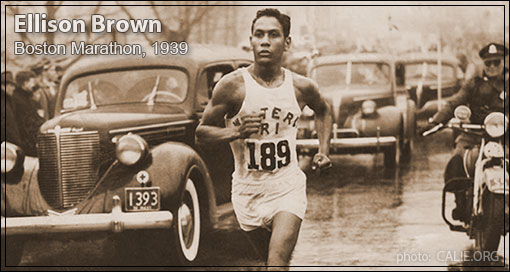
Brian Lightfoot Brown wrote about his famous great-uncle HERE.
Brian Lightfoot Brown, a member of the Narragansett tribe, has set up a petition on Change.org to seek passage of HR 4352 that would reverse the infamous 2009 Carcieri v. Salazar Supreme Court decision and restore rights taken from more than 500 Indian tribes including the Narragansetts. 

The case that led to this unjust decision started here in Charlestown when the town sued to block the Tribe from building affordable housing for its elders. When the case finally reached the Supremes, the late and unlamented Justice Antonin Scalia collaborated with Clarence Thomas on a decision that claimed that Congress was unclear whether ALL Native American tribes should enjoy equal justice under the 1934 Indian Reorganization law. 

HR4352 makes the intent of Congress clear that all tribes enjoy equal protection regardless of what year the federal government decided to “recognize” them. 

Brian Lightfoot Brown’s great uncle was one, perhaps the only, Charlestown sports legend, long distance runner Ellison “Tarzan” Brown. CLICK HERE to sign the petition. 

Charlestown’s American Rescue Plan funding 

The Town Council is holding a special meeting to discuss and gather input on the use of American Rescue Plan Federal Funds on May 23 at 7pm at Town Hall. To join the meeting virtually, visit: https://charlestownri.gov/streamtownmeeting 

Apparently, we’re going to be treated to presentations by our very expensive consultants (including Trumplican candidate for Congress, Second District, Allan Fung). Charlestown hired him on an open-ended contract at $250/hour to give the town advice on using funding that every single Republican in Congress voted against. 

What the consultants say won’t matter much. The town Budget Commission has already taken $423,000 from the $2.3 million ARPA pot for the budget that’s up for the June 6 vote. The Charlestown Citizens Alliance (CCA), Charlestown’s rulers for over a decade, generally don’t listen to consultants unless they say what the CCA wants to hear. 

Town Jobs 

These current openings have been posted by the Town: 

Senior Community Center Kitchen Manager: Work involves management of the kitchen at the Senior Community Center, including the receiving delivery of meals from the caterer, preparation, and distribution of meals for the Meals-On-Wheels program, and the in-house lunch service. The position is Monday-Friday 8:30am-1:30pm, 25 hours, $18/hour, partial benefits. 

Seasonal Worker at the Collection Center: Help the public understand the layout, assist with recycling, and provide Town-wide grounds and facility maintenance, and other duties as required. 32 hours per week, including a Saturday shift. 

Animal Shelter Assistant: Duties will include the handling, cleaning, feeding, and caring for domestic animals at the newly constructed Charlestown Animal Shelter. The Shelter Assistant position consists of a nineteen (19) hour work week to include Fri., Sat., Sun., Mon., and holidays. Rate of pay is $16.00 to $18.00 per/hr. based on skill level. 

Seasonal Summer Employment: There are several positions open, such as summer assistants, beach managers, lifeguards, beach attendants, and camps directors and counselors. 

For a full listing of jobs and to apply, visit: https://charlestownri.gov/townjobs 

Rhode Island Pension fund performance among the nation’s best

RI State Treasurer and Allan Fung’s likely Democratic opponent for Congress, Second District, announced first quarter results for the state pension fund. 

Rhode Island's fund outperformed 98% of the funds in the country, So far this year, we are earning 5% on investment while the average state fund is losing 2.3%. Read more detail here: investments.treasury.ri.gov. 

Senate passes Sosnowski bill to change how the CRMC director is appointed 

Sue Sosnowski’s bill, 2021-S 2217, would give the Governor, not the Coastal Resource Management Council members, the authority to appoint the CRMC director. The Governor’s choice would have to be ratified by the state Senate. 

The CRMC would be promoted to being a cabinet-level agency like DEM. Sue is a long-time member of the state Senate representing South Kingstown and Block Island.

WPWA annual meeting in Westerly next Thursday 

The Wood-Pawcatuck Watershed Association will hold its annual meeting on Thursday, May 26, 6 PM at Malted Barley at 42 High Street in Westerly.  Click Here for their Annual Report. 

A new parking lot with ample space is located just past the intersection of
Canal St. and Railroad Ave.—the walk is about 2 blocks.

Tuesday, April 12, 2022

Latest Camp Davis court case goes against the Tribe

Institutional racism wins another round in Charlestown

By Will Collette

Broadside for the Sale of the Narraganett Indian Reservation, 1882.
Courtesy of Tomaquag Museum
The Narragansett Indian Tribe has been taking a beating from Charlestown’s European immigrant settlers since at least 1675 when colonial forces tried to wipe out the whole tribe at the Great Swamp Massacre.

After the slaughter, it was slavery for some survivors, other hid and someremaining other members of the tribe had their land stolen. 

In 1880, the General Assembly declared the Tribe no longer existed and in 1882, we took all the remaining tribal land except for one acre.

In 1978, the Tribe's lawsuit to recover their land resulted in a settlement that restored 1800 acres to the Tribe. There was a catch: nothing could be done on that specific land without local permission.

In 1983, the federal government formally recognized the Narragansetts as a sovereign nation, but the term “sovereign” depended on who has the power to interpret it, as the following chain of events shows.

The town blocked the Tribe's plan for a casino in 1992 and a bingo hall in 1995. State Troopers and Charlestown Police fought a pitched battle with tribal members in the infamous 2003 Smoke Shop Raid.

In 2006, voters rejected a state referendum on the Tribe’s effort to partner with Harrah’s to build a casino in West Warwick where the town was eager for the jobs it would create. A West Warwick casino would also have ended any further fear of a Charlestown casino.

The Carcieri case started with the Town's fight to prevent this planned
senior housing project from being completed. The town thought the
Tribe planned to build a casino here. See if you can spot slot machines
The Tribe wanted to build affordable housing for its low-income elderly population on new land they purchased outside the settlement area in 1991. 

The Tribe attempted to use its rights under the Indian Reorganization Act of 1934 to put that land under trust with the US Interior Department and thus outside state and local jurisdiction.

That led to years of litigation ending up before the US Supreme Court which issued its 2009 Carcieri V. Salazar decision. In a nutshell, the decision denied coverage under the Indian Reorganization Act to all 500-plus tribes across the US who won federal recognition after 1934. Of course, that included the Narragansetts.

Charlestown, former Gov. Don Carcieri and the Charlestown Citizens Alliance (CCA) celebrated that decision as a major win for white people who sought to have the final say over what Native Americans do, even on their own land.

Fact sheet produced by the House Natural Resources Committee
Congress may at some point pass what’s called the “Carcieri Fix,” a law that clarifies its intention that the Indian Reorganization Act applies to all Indian nations consistent with the motto “Equal Justice Under Law” that is carved over the front portal of the Supreme Court.

But in the meantime, the Tribe  keeps fighting for its sovereign rights. 

On March 15, the Tribe lost another case this time before the US District Court for the District of Columbia.

The Tribe had sued the US Transportation Department and the state to honor a pledge and legal obligation to turn over land as compensation for the destruction of historical archeological sites under the I-95 reconstruction project in Providence.

The Tribe was due to receive this compensation under the provisions of the National Historic Preservation Act.

In 2013, the RI Department of Transportation bought the old Camp Davis property for $1,650,000 intending it to be given to the Tribe along with other historic properties connected to the Tribe, costing a total of $8 million. 

The transfer seemed to be going smoothly until the CCA-led Charlestown Town Council got up in arms. 

Charlestown deployed the town’s Indian fighting Special Counsel Joe Larisa who convinced the state that the Tribe should be required to renounce any claim of sovereignty over the use of the property even though the land was NOT part of the original 1978 Settlement deal. The state agreed. 

That would mean the Tribe could only use the land for purposes approved by the state and Charlestown.

Larisa never misses a chance to attack the Tribe's sovereign rights as this
  YouTube video screed shows (screenshot from EcoRI video). In this event,
Larisa is speaking against Invenergy's proposal to use tribal water for
its now-defeated gas plant in Burrillville. By this point in the fight,
the project was already beaten, so Larisa's snide remarks (note how he mocks
a previous speaker) were totally gratuitous.
This demand was a deal-breaker for the Tribe who insisted that only the original settlement lands were subject to such a condition of use.

For nearly a decade now, the Tribe has been trying to get the land it was promised as compensation under the law without having to give up its sovereign rights. 

So far, that hasn’t worked, although this latest court setback was largely on procedural grounds, leaving open the door to further legal challenges.

Charlestown’s perpetual state of war with the Narragansett Indian Tribe is the heart of this issue. It’s been almost 350 years since the Great Swamp Massacre. The casus belli is Charlestown’s intention to maintain its dominion over the Tribe come what may. Some would call it racism – I certainly do and so do tribal leaders.

We are the only town in Rhode Island with an anti-Indian specialist on retainer as a Special Counsel. The CCA says that’s because we’re the only town with an Indian nation on its lands. But the towns hosting Foxwoods and Mohegan Suns casinos have no equivalent to Injun Joe Larisa on their payrolls.

The CCA fought like hell, even violating Roberts Rules of  Order by taking three votes, to keep Joe Larisa on the payroll. 

Even former Eagle Scout Cody Clarkin voiced his strong support for Larisa despite the Boy Scouts'  strong denounciation of  institutional racism.

Larisa has dug in deep on the Camp Davis controversy, seeing it as a terrible threat to white supremacy in Charlestown. As he told WRNI reporter Alex Nunes:

“If the tribe gets land in federal trust, unrestricted, it'd be ‘Indian country…And when you have ‘Indian country,’ the land is largely exempt from state laws, state civil laws, state criminal laws, and town ordinances. It means they can largely do what they want, just like a sovereign nation within our borders.”

In this respect, Larisa’s anti-Indian views closely resembles those of the state of Oklahoma’s arguments against the 2020 US Supreme Court decision in McGirt v. Oklahoma.

In that ruling, the Court ruled that state and local governments must respect federally recognized Indian nations’ sovereign rights, This ruling did not apply to those tribes, like the Narragansetts, who were screwed by the Carcieri decision.

In the two years since McGirt, Oklahoma has asked the Supremes to reconsider the McGirt decision more than 30 times and has been denied each time. 

Larisa should consider moving to Oklahoma where he can litigate against Native Americans all he wants. He'd probably make more than the $25,000 a year Charlestown pays him.

From time to time, the CCA has tried to paper over its racism through token gestures, such as last weekend's walk through the Frances Carter Preserve as a tribute to famed runner Ellison "Tarzan" Brown. 

Of course he deserves it, and so do his children, especially the late Sis Brown, tribal organizer. I had the privilege of working with Sis in the 1970s. 

If the CCA really wanted to honor Tarzan Brown, they would support firing Joe Larisa and begin working WITH, not against, the Tribe.

Instead, Charlestown has waged a shameful war against the Narragansett Indian Tribe for the past 345 years. During that time, we’ve seen crimes against humanity, slavery and fraud on a massive scale. Enough. Let’s stop pretending this is about zoning and face down institutional racism. And stop it.