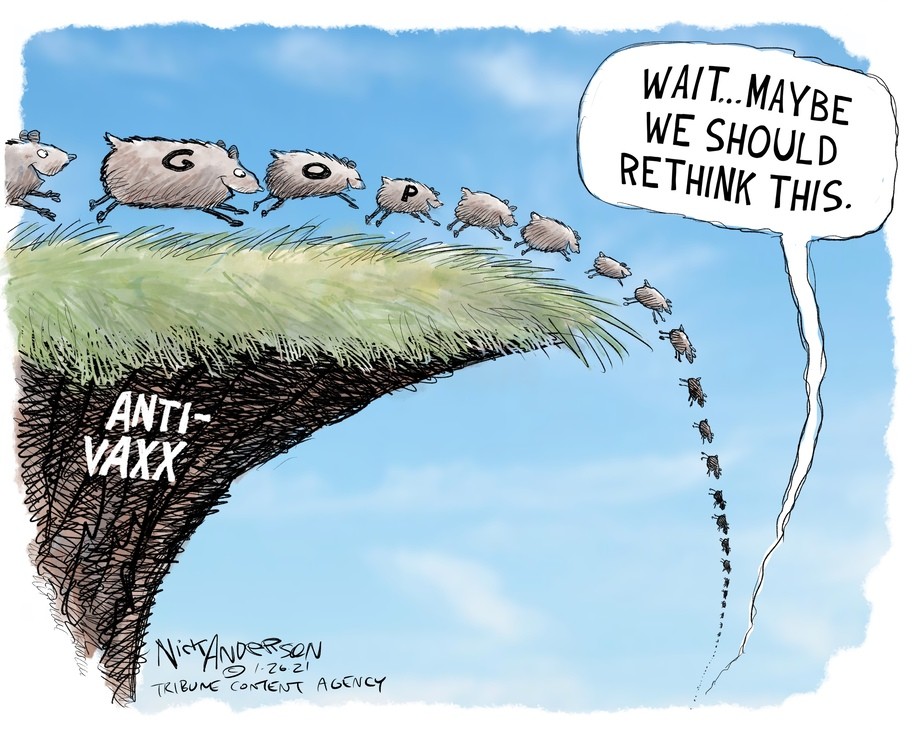
 |
| By Nick Anderson |
Thursday, August 5, 2021

Buzzed?
Bumblebees Work Better after Caffeine Intake, New Study Shows

Feeding bumblebees caffeine helps them better remember the smell of a specific flower with nectar inside. Image credit: Arnold et al., doi: 10.1016/j.cub.2021.06.068.
Caffeine is a widely occurring plant defense chemical that occurs in the nectar of some plants, e.g., coffee and citrus, where it may influence pollinator behavior to enhance pollination.
New laboratory tests show that buff-tailed bumblebees (Bombus terrestris) locate new food sources emitting a learned floral odor more consistently if they have been fed caffeine.
“When
you give bees caffeine, they don’t do anything like fly in loops, but do seem
to be more motivated and more efficient,” said Dr. Sarah Arnold,
a researcher at the Natural Resources Institute at the University of Greenwich.
“We
wanted to see if providing caffeine would help their brains create a positive
association between a certain flower odor and a sugar reward.”
Scientists
already know that caffeine plays a role in converting bees into faithful
customers of caffeinated flowers.


'Good cholesterol' may protect liver
HDL from the intestine may prevent liver inflammation
Washington University School of Medicine

New
research from Washington University School of Medicine in St. Louis suggests
that one type of high-density lipoprotein (HDL) has a previously unknown role
in protecting the liver from injury. This HDL protects the liver by blocking
inflammatory signals produced by common gut bacteria.
The study is
published July 23 in the journal Science.
HDL is mostly
known for mopping up cholesterol in the body and delivering it to the liver for
disposal. But in the new study, the researchers identified a special type of
HDL called HDL3 that, when produced by the intestine, blocks gut bacterial
signals that cause liver inflammation. If not blocked, these bacterial signals
travel from the intestine to the liver, where they activate immune cells that
trigger an inflammatory state, which leads to liver damage.
What if there was no internet?
Fight for control threatens to destabilize and fragment the internet
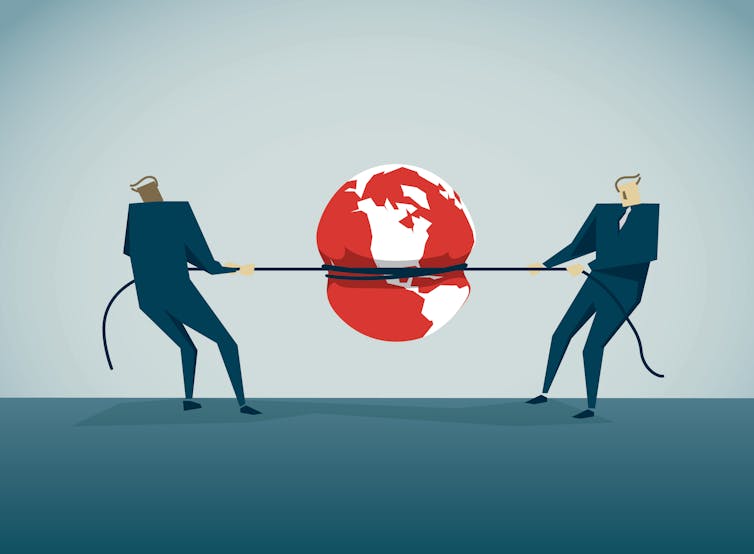 |
| International power plays are a threat to a stable, open internet. erhui1979/DigitalVision Vectors via Getty Images |
You try to use your credit card, but it doesn’t work. In fact, no one’s credit card works. You try to go to some news sites to find out why, but you can’t access any of those, either. Neither can anyone else. Panic-buying ensues. People empty ATMs of cash.
This kind of catastrophic pan-internet meltdown is more likely than most people realize.
I direct the Internet Atlas Project at the University of California, Berkeley. Our goal is to shine a light on long-term risks to the internet. We produce indicators of weak points and bottlenecks that threaten the internet’s stability.
For example, where are points of fragility in the global connectivity of cables? Physical cables under the sea deliver 95% of the internet’s voice and data traffic. But some countries, like Tonga, connect to only one other country, making them vulnerable to cable-clipping attacks.
Another example is content delivery networks, which websites use to make their content readily available to large numbers of internet users. An outage at the content delivery network Fastly on June 8, 2021, briefly severed access to the websites of Amazon, CNN, PayPal, Reddit, Spotify, The New York Times and the U.K. government.
Wednesday, August 4, 2021
Fight the forces of darkness
Covid is Resurging. So is Trumpian Politics.
By Robert Reich
Despair is worse after a brief period of hope. I don’t know about you, but I
was elated earlier this spring when it seemed as if Trump and COVID were gone,
and Biden seemed surprisingly able to get the nation rapidly back on
track. 
By Scott Stantis, Chicago Tribune
Now much is
sliding backwards. It’s not Biden’s fault; it’s Trump’s ongoing legacy.
The new Delta
strain of the virus requires, according to the CDC, that we go back to wearing
masks inside in public places where the virus is surging, even if we’re fully
inoculated.
This would be
nothing more than a small disappointment and inconvenience were it not for
Republicans using it as another opportunity to politicize public health.
House Minority
Leader Kevin McCarthy responded to the new CDC recommendation with the kind of
unhinged hyperbole Trumpers have perfected. “The threat of bringing masks back
is not a decision based on science, but a decision conjured up by liberal
government officials who want to continue to live in a perpetual pandemic
state,” he said.
Republican
politicizing of public health will get worse if the Delta variant continues to
surge. At some point vaccines will have to be mandated because being inoculated
is not solely a matter of personal choice. Herd immunity is a common good. If
infections mount, that common good can only be achieved if nearly everyone is
vaccinated.
But those eager
to exploit the virus’s resurgence – the know-nothings, Trump wannabe’s, vilely
ambitious political upstarts, Tucker Carlsons and similarly cynical
entertainers – are already howling about “personal freedom” threatened by
“socialism.”


A new pest is on the way
The invasive spotted lanternfly is spreading across the eastern US – here’s what you need to know about this voracious pest
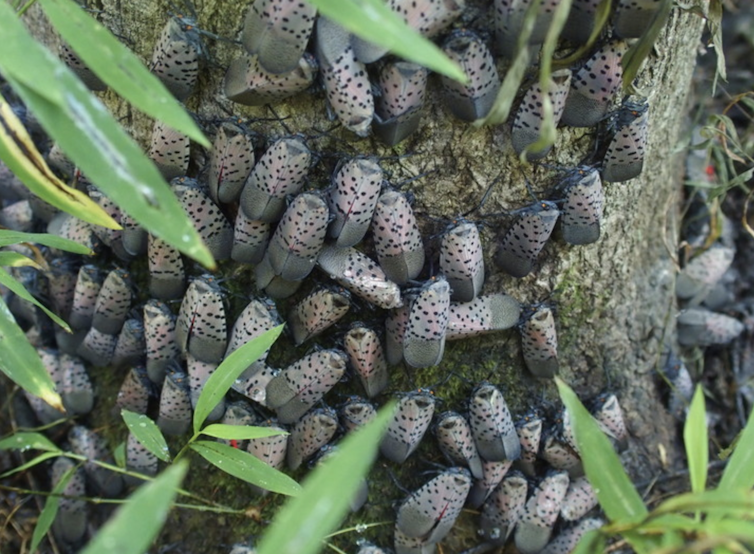 |
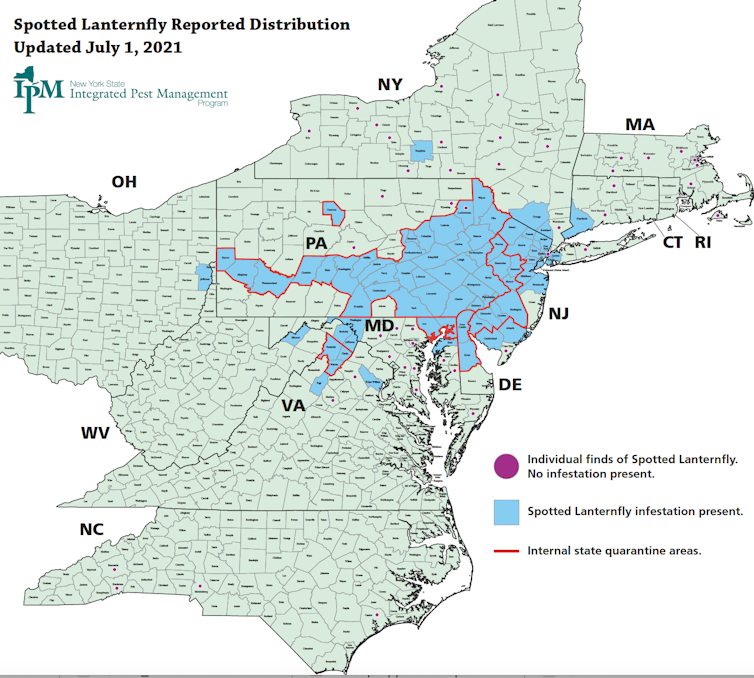
| In seven years, the lanternfly has spread from Berks County, northwest of Philadelphia, to large areas of Pennsylvania and New Jersey, and both south and north. Penn State/E. Swackhamer |
The spotted lanternfly was first detected in Pennsylvania in 2014 and has since spread to 26 counties in that state and at least six other eastern states. It’s moving into southern New England, Ohio and Indiana.
This approximately 1-inch-long species from Asia has attractive polka-dotted front wings but can infest and kill trees and plants. We recently caught up with Professor Frank Hale, an entomologist who is tracking this species.
The Conversation: How did the spotted lanternfly get to the U.S., and how quickly is it spreading?
Frank Hale: It is native to India, China and Vietnam and probably arrived in a cut stone shipment in 2012. The first sighting was in 2014 in Berks County, Pennsylvania, on a tree of heaven — a common invasive tree brought to North America from China in the late 1700s.
By July 2021 the lanternfly had spread to about half of Pennsylvania, large areas of New Jersey, parts of New York state, Maryland, Delaware and Virginia. It also had been found in western Connecticut, eastern Ohio, and now Indiana. To give an idea of how fast these lanternflies spread, they were introduced into South Korea in 2004 and spread throughout that entire country – which is approximately the size of Pennsylvania – in only three years.
What is the HIPAA Privacy Rule?
It applies ONLY to health care providers and insurers. It DOES not make it illegal for someone to ask you if you've been vaxxed, Flip
Margaret Riley, University of Virginia
 |
| HIPAA allows you to control disclosure of certain types of personal health information. Heath Korvola/DigitalVision via Getty Images |
When people talk about HIPAA, they typically refer to the Privacy Rule provision established in 2003, which is just one part of a broader law initially passed by Congress in 1996.
The Privacy Rule came into force after tennis star Arthur Ashe’s HIV status was publicly revealed and country music star Tammy Wynette’s health records were sold to tabloids. People were starting to worry about genetic privacy. And Congress recognized that the internet would make it easier for health care privacy breaches to occur.
Why you can't get stuff: Our supply chain mess
The COVID-19 pandemic has revealed that global supply chains are a huge house of cards
Glenn McGillivray, Western University
 |
| The container ship Ever Given stuck in the Suez Canal in Egypt, viewed from the International Space Station. NASA JSC ISS |
These range from issues pertaining exclusively to pandemic readiness (like our domestic capacity to produce personal protective equipment, ventilators, sanitizer and vaccines) to matters that are considerably less esoteric, like the ability of global supply chains to operate regardless of the various stresses put upon them.
The latter goes far beyond the toilet paper supply issue experienced early in the pandemic. It expands to include a whole range of products like lumber and other building materials, tools, foodstuffs, seeds, furniture, cleaning supplies, aluminum cans, jars, pools and pool equipment, chemicals, bicycles, camping gear, household appliances and replacement parts of all kinds.
In many cases supply chains have been simultaneously squeezed on both ends — supply and demand.
Production and distribution disruptions
While unscheduled closures of manufacturing and distribution facilities, bottlenecks at borders and sick workers have caused choke points in supply lines, people being cooped up in their homes for months on end have driven up demand for a host of products.
There has also been a simultaneous shortage of labour, particularly in the licensed trades.
Throw in other disruptors, like the massive winter storm in Texas in February, the six-day blockage of the Suez Canal due to the grounded ship Ever Given in March and the six-day closure of the Colonial gasoline pipeline in the United States after a cyberattack in early May.
Also include the fact that shipping containers are being lost in record amounts for various reasons, with more than 3,000 going overboard in 2020 and the 2021 number already hitting 1,000 by the end of April.
The pandemic has shown us that global supply chains are a huge house of cards: fragile enough on a good day, but prone to come tumbling down when there’s an unexpected breeze.
This has been particularly apparent with the manufacturing of computer chips.
Tuesday, August 3, 2021
Over 40,000 Rhode Island families in danger of eviction
McKee administration is sitting on almost $200 million in rent assistance
By
Will Collette
 |
| RentReliefRI has almost $200 million available |
However, the US Supreme Court responded to a lawsuit by Republicans, ruling that the CDC could no longer renew the foreclosure/eviction moratorium without specific Congressional authorization.
That authorization didn’t happen due to obstruction by Mitch
McConnell and his band of Republican Senate nihilists.
As
President Joe Biden reminded Americans, this crisis doesn’t have to be as bad as it
sounds because there is LOTS of unspent federal rental assistance money sitting
in state treasuries that hasn’t been spent.
Rhode
Island received $200 million in rental assistance for both tenants and
landlords, but has only spent around $8 million. This is not
a unique Rhode Island problem, but that doesn’t excuse the lapse in putting
this much needed money into play.
As
US
Rep. David Cicilline explained, “That money is
available, both for people that can’t pay their rent and for landlords who are
expecting rent and haven’t received it. There really is no reason to evict
anyone.”
Though RentReliefRI can't seem to get much money out to desperate tenants, they have been able to create a lovely data dashboard, as you can see here:

Note that so far, the program has paid out $7.6 million to landlords and only $186,406 to tenants - that's almost 98% to landlords.
Almost
366,000 Rhode Islanders live in rental units, More than 12% - around 45,000 –
are behind on their rent and could face eviction.
That’s
the immediate crisis and with almost $200 million sitting and waiting to be
used, we have an almost immediate solution – if Dan McKee will kick some ass to
make it happen.
Lest
we forget, the Rhode Island economy could also greatly benefit from the direct injection
of another $200 million in immediate aid.
If you know someone who is having trouble paying for their rent or utilities or a landlord struggling with unpaid rent, have them go to RentReliefRI and fill out an application.
They can also call the RentRelief Call Center at 1-855-608-8756, Monday through Friday from
8:30 AM to 5:30 PM. They’re open Saturday from 8 AM to 1 PM.
Need
application assistance or legal services?
Click here for
a listing of partner agencies offering those services.
Then
we should focus our attention on the more long term cause of this crisis and
that’s the lack of affordable housing. Very few municipalities in Rhode Island
have met state mandated goals for having enough affordable housing to meet the
needs of the people.
As the map below shows, Charlestown
is one of the worst. For a long time and to this very day, Charlestown resists
affordable housing as an affront to its “rural character,” an undefined term
that when used by the ruling Charlestown Citizens Alliance (CCA Party), is just
another form of Jim Crow.


What is your dog thinking?
Making connections in canine cognition
Brown University

What
is my dog even looking at? Why are they barking? Can they tell when I’m upset?
And how does my dog always seem to know when I’m about to go on vacation?
At
times to their dismay, most dog owners can only wonder about the answers to
these questions. But Sarah Zylberfuden is spending her summer investigating
them — and given the importance of dogs in everything from search-and-rescue
operations to assisting individuals with disabilities, finding answers could be
significant.
As
a rising Brown University senior concentrating in cognitive neuroscience and
literary arts, Zylberfuden is researching the learning and reasoning abilities of
man’s best friend in the laboratory of Assistant Professor of Cognitive,
Linguistic and Psychological Sciences Daphna Buchsbaum.
Subscribe to:
Posts (Atom)