Menu Bar

Home           Calendar           Topics          Just Charlestown          About Us

Monday, January 3, 2022

What Makes mRNA Vaccines So Effective Against Severe COVID-19?

Shots trigger exceptional antibody response by activating key helper immune cells.

By WASHINGTON UNIVERSITY SCHOOL OF MEDICINE 

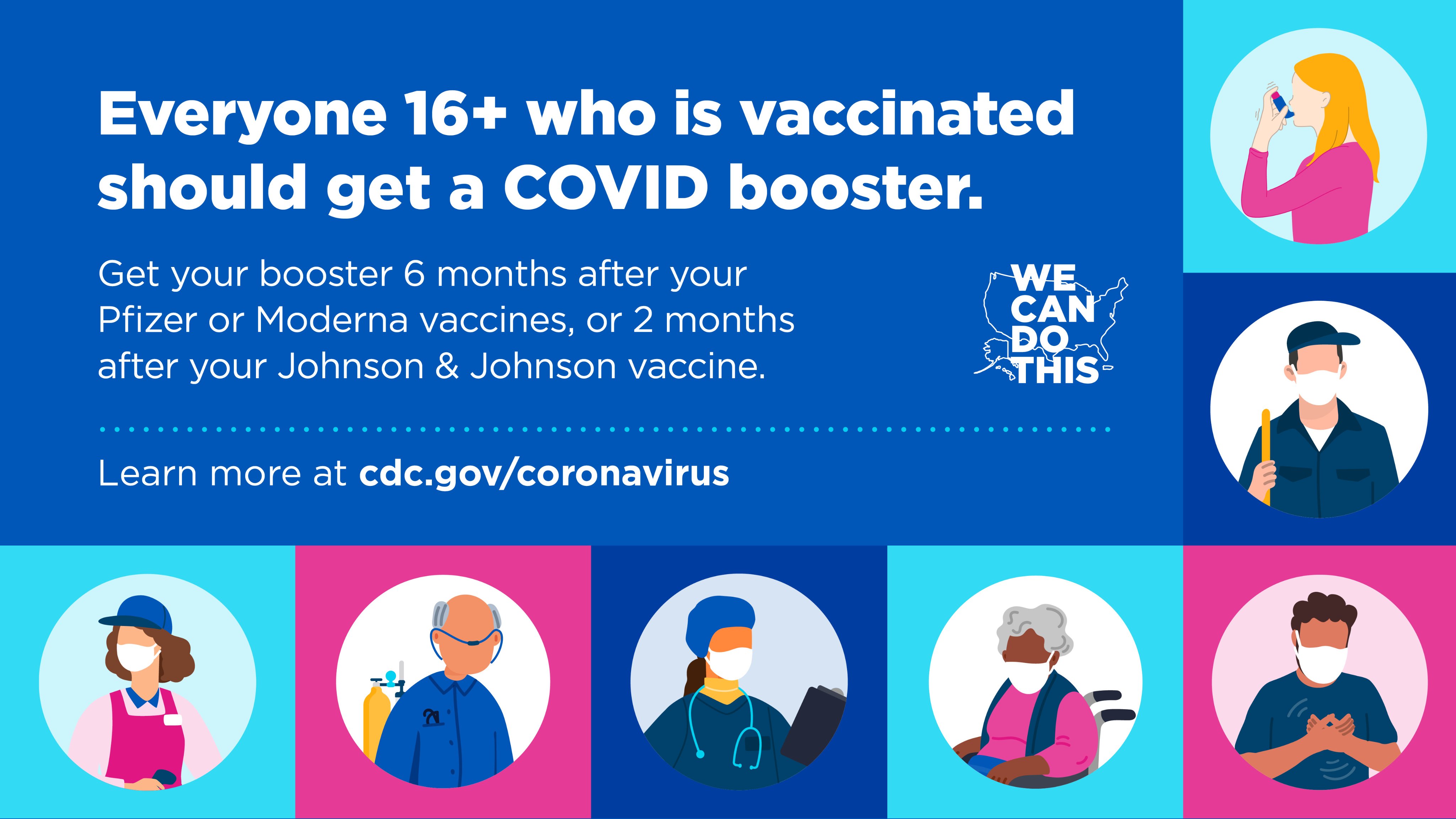
The first two vaccines created with mRNA vaccine technology — the Pfizer/BioNTech and Moderna COVID-19 vaccines — are arguably two of the most effective COVID vaccines developed to date. In clinical trials, both were more than 90% effective at preventing symptomatic infection, easily surpassing the 50% threshold the Food and Drug Administration had set for COVID-19 vaccines to be considered for emergency use authorization.

While breakthrough infections have increased with the emergence of the delta and omicron variants, the vaccines remain quite effective at preventing hospitalizations and deaths. The success of the new technology has led scientists to try to figure out why mRNA vaccines are so effective and whether the protection they provide is likely to endure as new variants arise.

A new study from researchers at Washington University School of Medicine in St. Louis and St. Jude Children’s Research Hospital shines light on the quality of the immune response triggered by mRNA vaccines. 

The study shows that the Pfizer vaccine strongly and persistently activates a kind of helper immune cell that assists antibody-producing cells in creating large amounts of increasingly powerful antibodies, and also drives the development of some kinds of immune memory. 

Do Omega-3 Fish Oil Supplements Help Prevent Depression?

New research findings help clarify mixed results from previous studies.

By MASSACHUSETTS GENERAL HOSPITAL 

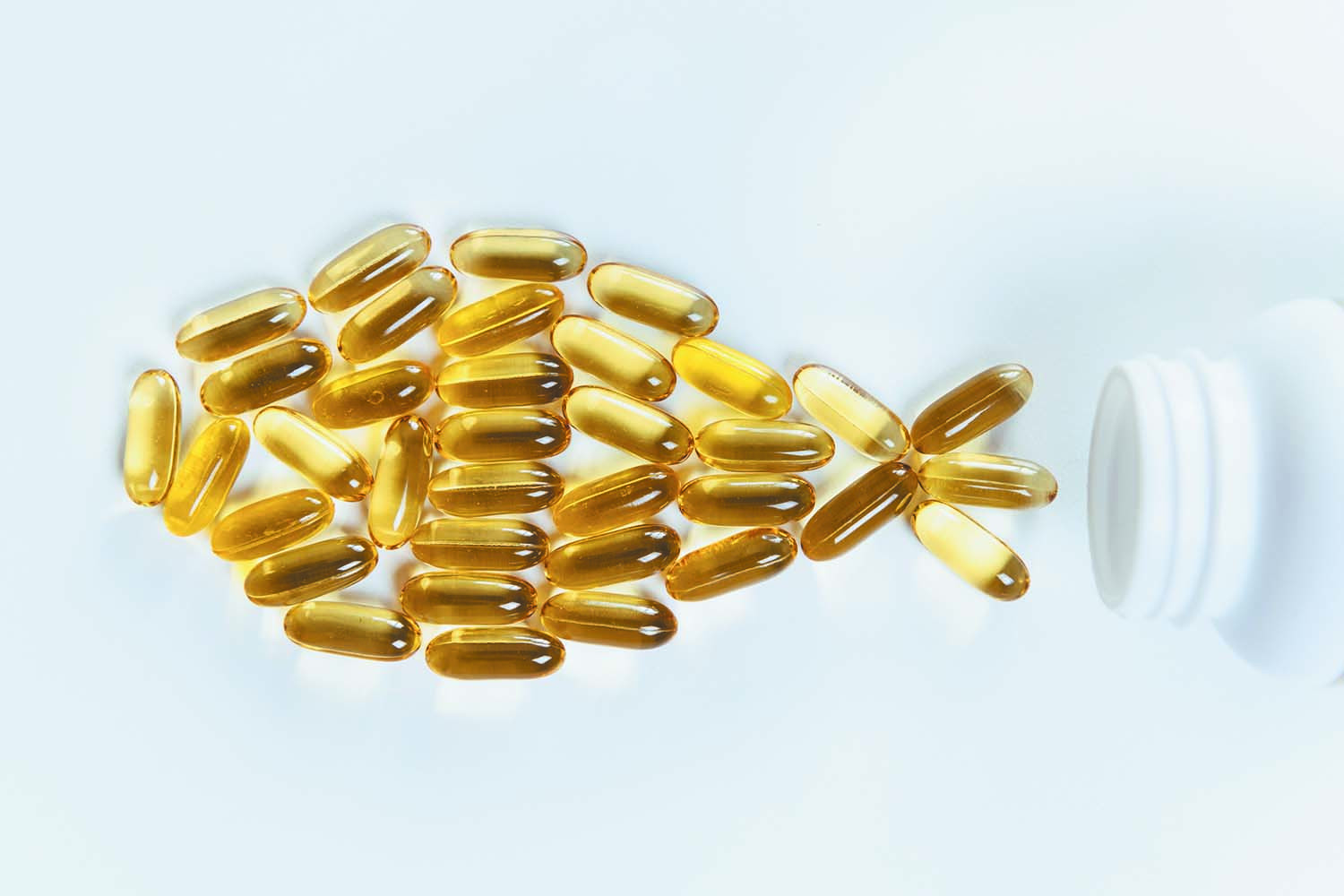
Results from the largest clinical trial of its kind do not support the use of fish oil supplements—a source of omega-3 fatty acid—to help prevent depression. 

The findings are published in JAMA by a team led by investigators at Massachusetts General Hospital (MGH) and Brigham and Women’s Hospital (BWH).

Experts have recommended omega-3 supplements for reducing the recurrence of depression in some high-risk patients, but there are no guidelines related to the use of these supplements for preventing depression in the general population. Also, studies on this topic have generated mixed results.

To provide clarity, the Vitamin D and Omega-3 Trial-Depression Endpoint Prevention (VITAL-DEP) was designed to test the potential of daily vitamin D and/or omega-3 supplements for preventing depression. A total of 18,353 adults aged 50 years or older without depression at the start of the trial were randomized to receive vitamin D and/or omega-3 supplements or matching placebos for a median of 5.3 years.

Ban on Most Surprise Medical Bills Takes Effect

 Wouldn’t be needed if we had sing-payer system

KENNY STANCIL for Common Dreams

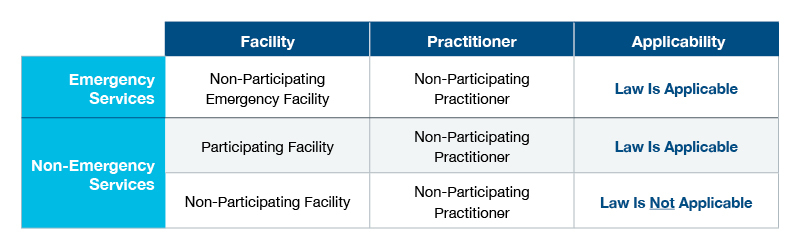
While welcoming a federal ban on most surprise medical bills that went into effect on Saturday, Medicare for All advocates made clear that the new law, which crucially excludes ground ambulances, is only necessary because the United States lacks the superior alternative taken for granted in every other wealthy nation: a single-payer healthcare system.

Thanks to the No Surprises Act, a bipartisan piece of legislation passed during the Trump administration and "fine-tuned" by the Biden administration, millions of people in the U.S. will be protected from unexpected and costly bills that private-equity-owned providers foist upon patients who inadvertently receive out-of-network care during medical emergencies, the New York Times reported.

"Even with insurance, emergency medical care can still be expensive, and patients with high deductible plans could still face large medical bills," the Times noted. "But the law will eliminate the risk that an out-of-network doctor or hospital will send an extra bill. Currently, those bills add up to billions in costs for consumers each year."

Journalist James Conner, founder and editor of the Flathead Memo, tweeted earlier this week that "this law would not be needed if we ha[d] an everyone covered for everything, zero copay, federal single-payer healthcare system paid for by fair taxes."

Sunday, January 2, 2022

America's shame

The Real Meaning of January 6

By Robert Reich

January 6 will be remembered as one of the most shameful days in American history. On that date in 2021, the United States Capitol was attacked by thousands of armed loyalists to Donald Trump, some intent on killing members of Congress. Roughly 140 officers were injured in the attack. Five people died that day.

But even now, almost a year later, Americans remain confused and divided about the significance of what occurred. 

Let me offer four basic truths:

1. Trump incited the attack on the Capitol.

For weeks before the attack, Trump had been urging his supporters to come to Washington for a “Save America March” on January 6, when Congress was to ceremonially count the electoral votes of Joe Biden’s win. Without any basis in fact or law (60 federal courts as well as the Departments of Justice and Homeland Security concluded that there was no evidence of substantial fraud), Trump repeatedly asserted he had won the 2020 election and Biden had lost it.

“Big protest in D.C. on January 6th. Be there, will be wild!” Trump tweeted on December 19. Then on December 26: “See you in Washington, DC, on January 6th. Don’t miss it. Information to follow.” On December 30: “JANUARY SIXTH, SEE YOU IN DC!” On January 1: “The BIG Protest Rally in Washington, D.C. will take place at 11:00 A.M. on January 6th. Locational details to follow. StopTheSteal!”

At a rally just before the violence, Trump repeated his falsehoods about how the election was stolen. “We will never give up,” he said. “We will never concede. It will never happen. You don’t concede when there’s theft involved. Our country has had enough. We will not take it anymore.”

He told the crowd that Republicans are constantly fighting like a boxer with his hands tied behind his back, respectful of everyone — “including bad people.”

But, he said, “we’re going to have to fight much harder…. We’re going to walk down to the Capitol, and we’re going to cheer on our brave senators and congressmen and women, and we’re probably not going to be cheering so much for some of them, because you’ll never take back our country with weakness. You have to show strength, and you have to be strong…. We fight like hell. And if you don’t fight like hell, you’re not going to have a country anymore.“

He then told the crowd that “different rules” applied to them. “When you catch somebody in a fraud, you are allowed to go by very different rules. So I hope Mike [Pence] has the courage to do what he has to do, and I hope he doesn’t listen to the RINOs [Republicans in Name Only] and the stupid people that he’s listening to.”

Then he dispatched the crowd to the Capitol as the electoral count was about to start. The attack on the Capitol came immediately after.

Wishes and horses


"Show me who your friends are and I'll tell you what you are"


Book Review: Coming to Grips With the Plastic Crisis

We know it's a problem but we struggle to find practical solutions to this self-made mess

By Anja Krieger

The mahi-mahi the crew hauled in looked spectacular, its bright, shining body of yellow and green, dotted with radiant blue speckles and topped with a long dorsal fin from head to tail. Its fate was the ship’s oven, where the fish — common in Hawaiian waters — would be grilled to feed a hungry team of sailors.

In the mahi-mahi’s stomach, the sailors found a flying fish, which in turn had eaten small spheres that looked like fish eggs. Squeezing them out of its body, the crew discovered this was stuff of a much more synthetic nature: plastic. Not exactly a tasty addition to the menu.

In her first book, “Thicker Than Water: The Quest for Solutions to the Plastic Crisis,” environmental journalist Erica Cirino uses this anecdote to reveal just how deeply plastic has worked its way into the food chain. 

She tracks the story of plastic pollution — from the creation of synthetic polymers in the 19th century and the discovery of their polluting side effects in the 1970s, to today’s plastic crisis, covering the entire life cycle of the material, from extraction and production to use and disposal.

It’s still a matter of ongoing research how much plastics end up in our waterways, but estimates show that it’s in the range of millions of tons per year. It’s not only fish that bear the burden of our trash, we now know. More than 900 marine species ingest ocean plastic or get entangled with it, including whales, seals, turtles, and fish. Research shows that even small creatures like corals, plankton, and microbes interact with the remnants of our throwaway society. 

Some calculate that 90 percent of seabirds swallow plastic at some point during their lifetime. And that’s just the oceans. The ecosystems of rivers, lakes, the air, and the soil are polluted with visible trash as well as microplastics — and possibly even nanoplastics, which are in the same size-range as viruses.

In the course of her investigation, Cirino presents a wealth of facts and figures, knowns and unknowns, and takes a critical, comprehensive look at possible solutions, from clean-up and bioplastics to recycling and politics. She gives a detailed account of how science tries to understand the issue. 

But she also situates the plastic problem in a larger context, demonstrating the environmental injustices that plastics inflict on communities and countries that are in the vicinity of production plants, or receive the pollution and the cheap trash richer countries want to get rid of — injustices with a long history.

Where does the special scent of thyme and oregano come from?

From my dish of pasta?

Martin-Luther-Universität Halle-Wittenberg

Thyme and oregano are not only popular herbs for cooking, but also valuable medicinal plants. 

Their essential oils contain thymol and carvacrol which impart the typical flavors and are medically important. A team from Martin Luther University Halle-Wittenberg (MLU) and Purdue University in the USA has now fully identified how the plants produce these two substances. 

The results could simplify the breeding process and improve the pharmaceutical value of thyme and oregano. The study appears in the journal Proceedings of the National Academy of Sciences.

Thymol, which is mainly extracted from thyme, has secretolytic, antibacterial and antispasmodic properties. 

The plant is therefore often used in tea for colds, cough syrups and as an herbal remedy for bronchitis. In contrast, oregano contains particularly high levels of carvacrol, which has similar properties. Its smell is often associated with pizza sauce and other Mediterranean dishes. Both substances are chemically closely related and are produced by thyme and oregano in multi-stage processes. 

How to motivate anti-vaxxers to get the shots

Business professor finds hope may be a powerful motivator in reducing COVID-19 vaccine hesitancy

By Tony LaRoche

Fueled by the recently identified Omicron variant, COVID-19 surges are being seen around the U.S., and one of the reasons cited are low vaccination rates. 

While more than 51 million cases of COVID-19 have been reported in the U.S. and over 800,000 people have died since January 2020, people’s reluctance to get vaccinated has remained a cause for concern.

University of Rhode Island Assistant Professor of Marketing Mehdi Hossain has been studying the psychological factors that cause vaccine hesitancy and how a person’s reluctance can be reduced through effective framing of social marketing communications.

Conducted in January and February of 2021, as the first vaccines were being rolled out on a large scale in the U.S., Hossain’s study found people’s suspicion of vaccines efficacy has been a deep cause of their reluctance – and that the most effective messaging to allay their fears would highlight hope for the future.

EDITOR'S NOTE: Lots of research and polling has been done on the anti-vaxxer phenomenon. Why does roughly 15% of the public refuse to get a safe, effective and free vaccine that can save their lives? Why do they instead turn to phony news and snake oil cures like ivermectin, bleach, silver solutions, etc. instead of real medicine? The data profiles the typical anti-vaxxer as distrustful of medicine, science and government, Republican, young and under-educated. If Professor Hossain thinks he can sell such people hope that will overcome their suspicions (and ignorance), lot's of luck.   - Will Collette

Saturday, January 1, 2022

Innovative approach to restricting sale of “Ghost Guns”

Magaziner presses Mastercard to restrict sales of untraceable firearms known as “ghost guns”


Rhode Island General Treasurer Seth Magaziner today announced that he filed a shareholder proposal with Mastercard (NYSE: MA) which presses the board to act on the company’s involvement with the sale and purchase of firearm kits, components, and/or accessories used to assemble undetectable and untraceable firearms known as “ghost guns.”

The shareholder proposal was co-filed by Connecticut Treasurer Shawn Wooden, Mercy Investment Services, Congrégation des Soeurs des Saints Noms de Jésus et de Marie, Congregation of the Sisters of St. Joseph of Peace, The Domestic and Foreign Missionary Society of The Episcopal Church, and Northwest Women Religious Investment Trust.   

Treasurer Magaziner frequently uses the influence of the state's $10.3 billion pension fund to compel companies to adopt more responsible corporate practices on climate change, workers' rights, corporate diversity, and other key issues.   

Investors have previously engaged with Mastercard over the company’s role in facilitating the purchase of untraceable ghost guns. Mastercard has, to date, declined to adopt policies that would limit the number of untraceable weapons that are purchased using its cards or electronic payment services.  

A Trumplican 2022 calendar

By Michael Ramirez


Get it!


COVID Kidney Damage

Coronavirus SARS-CoV-2 Infects the Kidneys and Contributes to Tissue Scarring

By  

Kidney sections from healthy control (left) and COVID-19 patient (right). Scar tissue is blue. Credit: Jitske Jansen and Bart Smeets, Radboudumc

The Coronavirus SARS-CoV-2 infects the kidneys and contributes to tissue scarring, as shown by researchers from the RWTH Uniklinik Aachen, Germany, and Radboudumc, The Netherlands. The developed scar tissue in the infected kidneys may suggest a possible impact on kidney outcomes in the long term.

The fact that the Coronavirus can result in severe damage in the human body is known, and also that kidneys can get infected. But what exactly happens in the kidney as a result of the infection, remains elusive until now. 

In this study, published in Cell Stem Cell, researchers investigated the kidney tissue of COVID-19 patients admitted to the Intensive Care Unit. They found scarring of the tissue as compared to Intensive Care patients with a non-COVID-19 lung infection and a control group.

Next, the researchers questioned what exactly the cause was of the kidney damage. Could this be a direct effect of the virus, independent of systemic inflammation? To investigate this, the researchers cultured mini kidneys in the lab, called organoids. 

The kidney organoids are developed from stem cells and contain many different kidney cells, except immune cells. The kidney organoids were infected with SARS-CoV-2 and the researchers investigated the direct effect of the virus on the kidney cells, independent of potential secondary effects caused by immune cells or other systemic effects. 

No more annual flu shot?

New target for universal influenza vaccine

Scripps Research Institute

E. OTWELL

Scientists at Scripps Research, University of Chicago and Icahn School of Medicine at Mount Sinai have identified a new Achilles' heel of influenza virus, making progress in the quest for a universal flu vaccine. 

Antibodies against a long-ignored section of the virus, which the team dubbed the anchor, have the potential to recognize a broad variety of flu strains, even as the virus mutates from year to year, they reported Dec. 23, 2021 in the journal Nature.

"It's always very exciting to discover a new site of vulnerability on a virus because it paves the way for rational vaccine design," says co-senior author Andrew Ward, PhD, professor of Integrative Structural and Computational Biology at Scripps Research. "It also demonstrates that despite all the years and effort of influenza vaccine research there are still new things to discover."

Great union win in Portsmouth

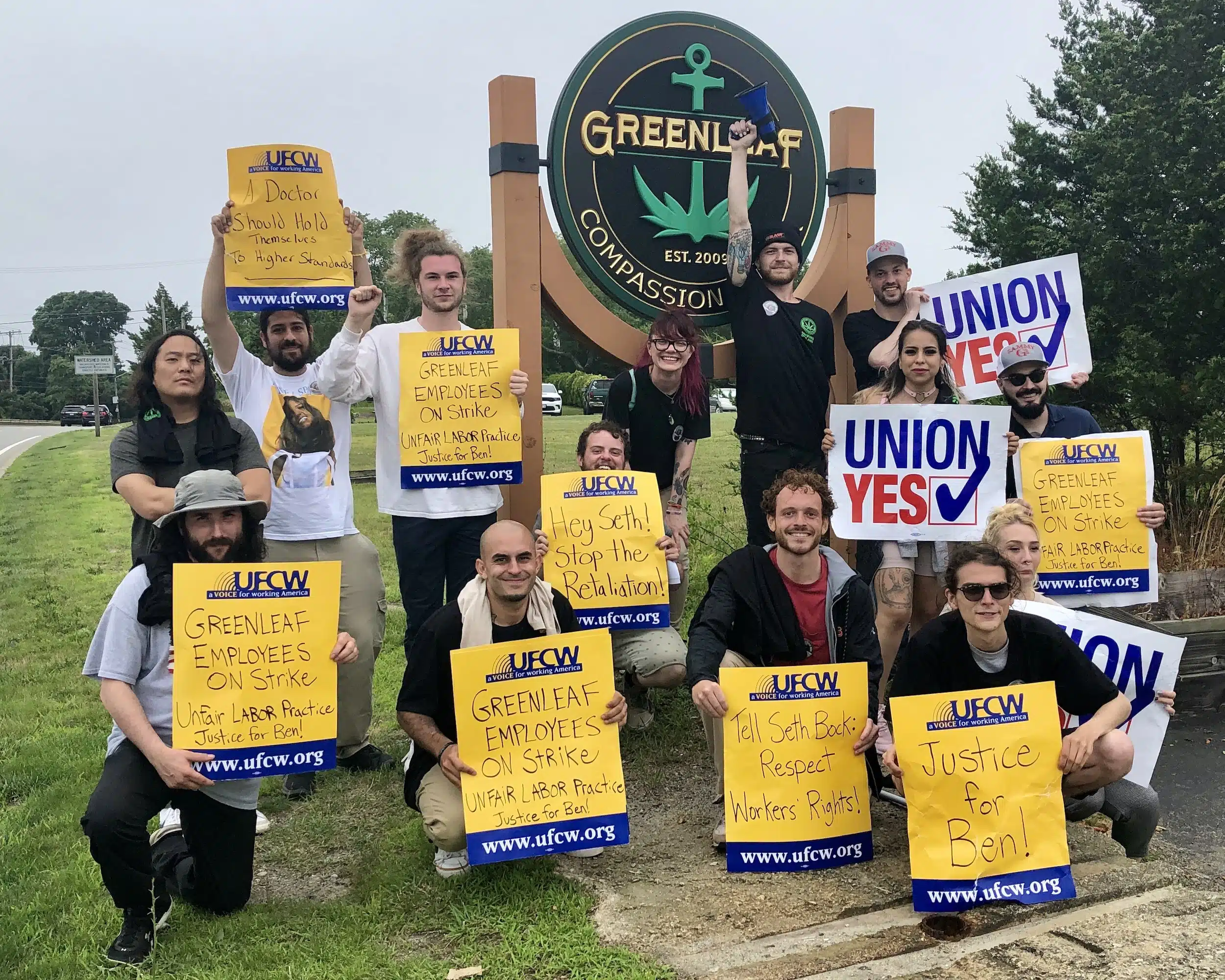
Greenleaf bosses fold, meet union demands in Portsmouth

By Steve Ahlquist in UpRiseRI


In an unqualified victory or labor rights, United Food and Commercial Workers (UFCW) Local Union 328, representing 11,000 Rhode Island and Massachusetts workers, today announced a victory for Greenleaf Compassionate Care Center employees in Portsmouth, Rhode Island after the National Labor Relations Board (NLRB) completed their investigation.

UFCW Local 328 had filed charges with the NLRB against Greenleaf Compassionate Care Center for violating workers’ rights, including the termination of employee and bargaining committee member Ben Telford, the elimination of employee discounts during a 6-week period, the elimination of the Friday lunch program, and transfer of bargaining unit work to a new classification. Additional charges included interrogation, surveillance and disparagement of employees for their union activity. After an investigation, the NLRB issued complaints on each of these charges against Greenleaf.

Just a day before the trial was set to take place, Greenleaf offered to settle on every complaint.

The agreed to settlement includes:

  • Back pay for employees during a six-week period the company did not extend their employee discount to eligible union voters;
  • Back pay for employees affected by the company’s elimination of the Friday lunch program for the past 25 weeks;
  • The immediate reinstatement of the Friday lunch program;
  • The offer of reinstatement to employee Ben Telford, who was illegally terminated by the company in June, with compensation of full back pay for wages, interest and additional compensation;
  • The immediate restoration and protection of bargaining unit work for keyholders; and,
  • A signed commitment by the company to not interfere with employees’ rights under Section 7 of the National Labor Relations Act, to not disparage, surveil, discipline or discharge workers for their union activity, to not create new positions to avoid collective-bargaining obligations, to not transfer work to managers or other employees because of their union activity, and a commitment to bargain in good faith with UFCW Local 328.