Menu Bar

Home           Calendar           Topics          Just Charlestown          About Us

Tuesday, April 5, 2022

The last time a Supreme Court Justice was forced to resign offers lesson for how to deal with Justice Thomas

Democrats Must Demand Justice Thomas Resign...and His Wife is Prosecuted

By Thom Hartmann for the Independent Media Institute

Associate Supreme Court Justice Clarence Thomas sits with his wife and conservative activist Virginia Thomas while he waits to speak at the Heritage Foundation on October 21, 2021 in Washington, DC. (Photo: Drew Angerer/Getty Images)

In 1969, Richard Nixon and congressional Republicans took down the Supreme Court’s most liberal member, Abe Fortas, threatening to send his wife to prison. There’s a lesson here for today’s Democrats and Clarence Thomas.

By Mike Luckovich

Today’s Democrats are calling on Clarence Thomas to recuse himself from decisions involving Trump’s conspiracy to overthrow our government. 

They should be calling on him to resign and his wife to be prosecuted.

It appears that Ginny Thomas, the wife of Supreme Court Associate Justice Clarence Thomas, participated in a plot to overthrow the government of the United States. Which is astonishing in and of itself.

But then her husband was the sole vote on the Court to help that same seditious conspiracy:

When Donald Trump sued to block President Joe Biden from passing presidential papers to the January 6th Committee, the only vote on the Court to support Trump’s efforts to hide his crime was that of Clarence Thomas. 

Which raises the question: what will Congress and the Justice Department do about these crimes? 

Carolyn Agger, Justice Fortas' spouse. Her portrait hangs at Yale where
she earned her law degre
e
Fifty-four years ago, Republicans went nuts over an “ethics scandal” involving a Democratic-appointed member of the Court, and their effort produced so much pressure that he resigned. 

Will Democrats similarly force a Thomas resignation, giving Biden another SCOTUS nominee? 

Is that possibility the reason why Lindsey Graham just “hinted” that if the Senate flips Republican in this fall’s 2022 election the GOP will block all Biden appointees to the Court up to and through the 2024 election?

To understand the possibilities, it’s essential to know the precedent, how Republicans pulled it off back in 1968/69: 

Supreme Court Justice Abe Fortas didn’t resign until President Richard Nixon’s campaign manager and Attorney General, John Mitchell, threatened to bring felony corruption charges against Fortas’ wife.  

But I get ahead of myself. It’s a truly amazing story that most people alive today know nothing about. It started with “dirty movies” being shown in the US Capitol.

Bombs away


Who's got the most


People underestimate others' desire for constructive feedback

Just do it, research suggests

American Psychological Association

This is how NOT to give constructive feedback
People consistently underestimate others' desire for constructive feedback and therefore don't provide it, even when it could improve another person's performance on a task, according to research published by the American Psychological Association.

"People often have opportunities to provide others with constructive feedback that could be immediately helpful, whether that's letting someone know of a typo in their presentation before a client presentation, or telling a job candidate about a stained shirt before an interview," said lead author Nicole Abi-Esber, a doctoral candidate at Harvard Business School. 

"Overall, our research found that people consistently underestimate others' desire for feedback, which can have harmful results for would-be feedback recipients."

Constructive feedback is instrumental for aiding learning and performance, and research has shown that people commonly report wanting this type of feedback, according to the researchers. However, despite wanting constructive feedback themselves, people often avoid giving it to others. 

Soaring crude prices make the cost of pretty much everything else go up too

We almost literally eat oil

Veronika DolarSUNY Old Westbury

Hopefully, we aren’t actually what we eat.
 ozgurdonmaz/iStock via Getty Images
The price of oil has been spiking in recent weeks in response to concerns that the war in Ukraine will significantly reduce supply. But what happens in oil markets never stays in oil markets.

The price of U.S. crude oil jumped to a 13-year high of US$130 of on March 6, 2022. It has come down but has been trading above $110 since March 17. That’s over 60% higher than it was in mid-December, before fears of a Russian invasion began to mount.

Of course, this has pushed up the cost of gasoline, which hit an average of $4.32 per gallon in the U.S. on March 14. But it’s less well understood how rising energy prices leak into the prices consumers pay for toys, electronics, food and almost every other product you could think of.

Energy is becoming one of the main causes of inflation, by which I mean a sustained, generalized increase in the prices of goods and services in an economy. The latest data shows prices are rising at an annualized pace of 7.9%, the highest in 40 years.

In my economics classes, I like to joke to my students that we eat petroleum. Students have a hard time imagining drinking crude oil or gasoline, but in fact it’s both figuratively and almost literally true – and I’m not even referring to how humans ingest about a credit card’s worth of oil-based plastic every week.

Let me explain.

Reseachers Find the Largest Risk Factors for COVID-19 Infection

Race, marital status, age, and other health issues play a major role.

By PENNINGTON BIOMEDICAL RESEARCH CENTER 

Black residents of Baton Rouge and New Orleans faced twice the risk of SARS-CoV-2 infection as white residents, a study shows.

Ochsner Health and Pennington Biomedical Research Center analyzed 4,752 records from two large prevalence studies in both cities. The New Orleans data were collected in May 2020, the Baton Rouge data in July 2020.

“We found that communities that experience a lot of deprivation – high household crowding, lower income, disparities in education, etc. – are at higher risk for COVID,” said Amy Feehan, Ph.D., a clinical research scientist at Ochsner and the lead author of the study.  “But individual factors, such as race, marital status, age and other health issues, account for a lot of that risk.”

The study shows that in Baton Rouge the odds of infection were higher for:

  • People between 18 and 37 years old compared to people 38 and over.
  • Black adults and single adults compared to white adults and married adults.
  • People in health care, public-facing jobs, or other jobs compared to office workers. 

The study shows that in New Orleans the odds of infection were higher for:

  • Black adults and single adults compared to white adults and married adults. Infection risk for single adults was about 50 percent higher than for married adults.
  • Households with multiple residents compared to people who lived alone
  • People with no other health issues compared to those with two or more medical conditions.

Monday, April 4, 2022

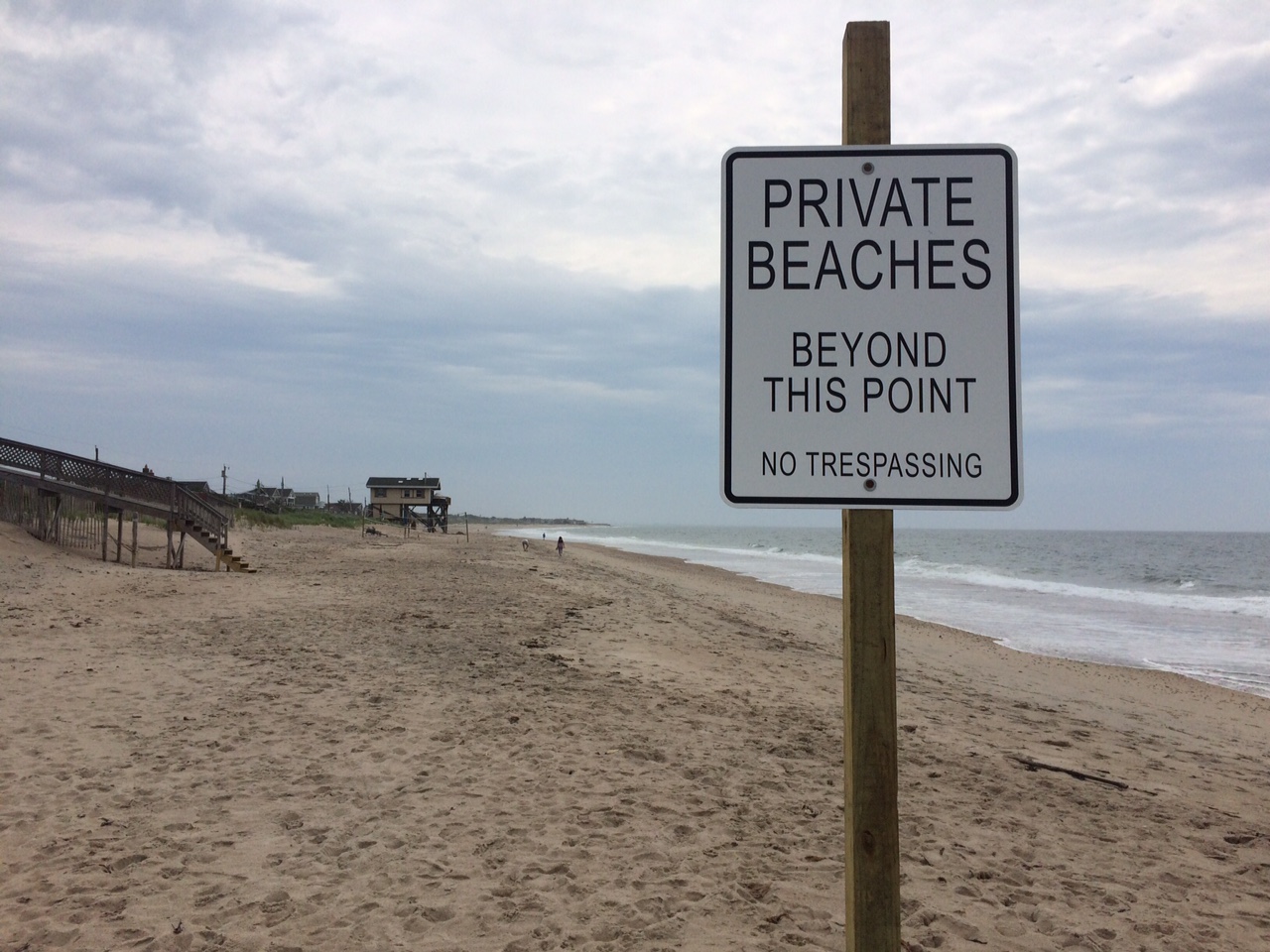
Our Shoreline Rights are under attack.

Anonymous shoreline owners trying to kill bill affirming your constititutional rights

By Scott Keeley 

Photo courtesy of Scott Keeley
A form of this article originally appeared in the Westerly Sun.

Please contact your state representative in support of H8055 and your rights to the Rhode Island Shore. 

The Shoreline Access Study Commission was made up of representatives from both sides of the issue, studied both sides of the issue over the past year, and has come up with a fair compromise in the bill H8055.

The Rhode Island Constitution gives citizens the right to the privileges of the shore. A few of those privileges are listed in the constitution after the phrase “including but not limited to…” 

A new bill, H8055, protects our rights to our shoreline. The bill does not expand our rights.

It only clarifies that we indeed have rights under the Rhode Island Constitution and designates a location where those rights exist by clarifying the definition of the term “Shore.”

But Rhode Island residents beware! 

The bill is under threat by privately secured legal groups hired by anonymous shoreline-property owners. 

You may hear that the property owners are concerned for the safety of the public and that they would be liable if someone were hurt on what they like to call “their beach.” 

You may also hear them say that Rhode Island taxpayers will have to compensate them for “their beach” if the state lets people use the shore. 

You may also hear that if a beach chair is placed on the shore, a keg party will soon follow. 

These arguments are meritless. 

Shoreline property owners are not liable for public safety as we exercise our constitutional rights. 

The Rhode Island Constitution addresses the takings clause, and they will not win in court. So, your tax dollars are safe.  

Forbidding Rhode Island residents to sit on the shore will lead directly to private beaches statewide. 

Contact your state representative now and ask for her or his support for H8055

The House Judiciary Committee is expected to hold a hearing on the bill on Tuesday, April 5 at 4:30 PM. You can send the Committee an e-mail at HouseJudiciary@rilegislature.gov.

You can watch the hearing at https://www.rilegislature.gov/CapTV/Pages/default.aspx.

FYI


Get out and vote tomorrow on the Chariho school budget


email header.GIF


Fellow Residents of Charlestown, 

Please get out and vote on the Chariho school budget. 

Polls are open from 8 am – 8 pm On Tuesday, April 5, at the Charlestown Town Hall, 4540 South County Trail. 

Information from Chariho about the budget and referendum can be viewed here.

A long resource of Frequently Asked Questions is available here. 

Remember, your vote counts! 


Respectfully,

Jodi Frank,

Charlestown Residents United


Charlestown Residents United

P.O. Box 412

Charlestown, RI 02813


“Vicious Cycle” Discovered Between Excessive Daytime Napping and Alzheimer’s Dementia

WAKE UP!

By BRIGHAM AND WOMEN'S HOSPITAL 

In a study of older adults, longer, more frequent daytime napping in a specific year predicted worse cognitive performance in the following year, and vice versa.

Daytime napping is common among older adults. The longitudinal relationship between daytime napping and cognitive aging, however, is unknown. A new cohort study by investigators from Brigham and Women’s Hospital found a bidirectional link between the two: excessive daytime napping predicted an increased future risk of Alzheimer’s dementia, and a diagnosis of Alzheimer’s dementia sped up the increase in daytime napping during aging. 

The team’s results are published in Alzheimer’s & Dementia: The Journal of the Alzheimer’s Association.

Different SARS-CoV-2 virus variants may generate different Long COVID symptoms

Long COVID plagues many survivors

By EUROPEAN SOCIETY OF CLINICAL MICROBIOLOGY AND INFECTIOUS DISEASES 

Italian study of long-COVID patients suggests those infected with the Alpha variant experienced different neurological and emotional symptoms compared to those who contracted the original form of SARS-CoV-2.

New research to be presented at this year’s European Congress of Clinical Microbiology & Infectious Diseases (ECCMID) in Lisbon, Portugal (April 23-26, 2022), suggests that the symptoms connected to long COVID could be different in people who are infected with different variants. 

The study is by Dr. Michele Spinicci and colleagues from the University of Florence and Careggi University Hospital in Italy.

Estimates suggest that over half of survivors of SARS-CoV-2 infection experience post-acute sequelae of COVID-19 (PASC), more commonly known as ‘long COVID’. The condition can affect anyone—old and young, otherwise healthy, and those with underlying conditions. 

It has been seen in people who were hospitalized with COVID-19 and those with mild symptoms. But despite an increasing body of literature, long COVID remains poorly understood.

In this study, researchers did a retrospective observational study of 428 patients—254 (59%) men and 174 (41%) women—treated at the Careggi University Hospital’s post-COVID outpatient service between June 2020 and June 2021, when the original form of SARS-CoV-2 and the Alpha variant were circulating in the population. 

Charlestown is not immune

Local governments are attractive targets for hackers and are ill-prepared

Richard FornoUniversity of Maryland, Baltimore County

Hackers can disrupt local government services, like this library in
Willmar, Texas. The town suffered a cyberattack in August 2019. 
AP Photo/Tony Gutierrez
President Joe Biden on March 21, 2022, warned that Russian cyberattacks on U.S. targets are likely, though the government has not identified a specific threat. 

Biden urged the private sector: “Harden your cyber defenses immediately.”

It is a costly fact of modern life that organizations from pipelines and shipping companies to hospitals and any number of private companies are vulnerable to cyberattacks, and the threat of cyberattacks from Russia and other nations makes a bad situation worse. Individuals, too, are at risk from the current threat.

Local governments, like schools and hospitals, are particularly enticing “soft targets” – organizations that lack the resources to defend themselves against routine cyberattacks, let alone a lengthy cyber conflict. For those attacking such targets, the goal is not necessarily financial reward but disrupting society at the local level.

From issuing business licenses and building permits and collecting taxes to providing emergency services, clean water and waste disposal, the services provided by local governments entail an intimate and ongoing daily relationship with citizens and businesses alike. Disrupting their operations disrupts the heart of U.S. society by shaking confidence in local government and potentially endangering citizens.

Sunday, April 3, 2022

She’s Supposed to Protect Americans From Toxic Chemicals.

First, She Just Has to Fix Trump’s Mess and Decades of Neglect.

By Lydia DePillis, ProPublica

A few days after the inauguration of President Joe Biden, Michal Freedhoff settled into her cramped home office in a suburb of Washington, D.C., to get to work as the nation’s new top chemical regulator.

It was a key role, charged with protecting Americans from toxic substances used in agriculture and manufacturing. But going back decades, the office had gained a reputation for being captured by the companies it regulated. 

Under the Trump administration, the Office of Chemical Safety and Pollution Prevention, like many federal agencies, had taken a hard turn away from science. Important new rules, years in the making, had been delayed or diluted.

In Freedhoff, Biden had found a public servant steeped in the risks of chemicals and what it takes to police them. Testaments to her drive surround her desk. On one wall hangs a framed front page of The Washington Post from the day that automakers struck a deal she helped broker with California on vehicle emissions standards; on another is an original copy of a 2016 law that gave the Environmental Protection Agency sweeping new authority to protect people from toxic substances. Seven senators had signed it, thanking her personally.

Freedhoff has long kept up a frenetic pace. The mother of four would stay out late for work events and then send emails at 4 a.m. before heading out on a pre-dawn bike ride. And she knew her new job would require a massive cleanup effort, working with a traumatized staff to rework decisions the Trump administration had pushed through based on skewed science. She was guaranteed just four years, and she had a list of critical to-dos that ranged from finally banning asbestos to fixing the process for authorizing new chemicals. A clock was ticking.

When Freedhoff dug in, what she found was often just … weird. Like a pile of simple, low-level tasks that had ended up on her desk: two hundred perfunctory notices that hadn’t been sent to the federal register, the daily log of official government actions. Fifteen months worth of new chemical rules that had been approved but not publicly announced. They weren’t controversial. It’s just that nobody but the office head had been allowed to click a button.

Gradually, Freedhoff, a hyperlogical fast talker who occasionally flashes a big smile when something amuses her, realized that her predecessor under then-President Donald Trump simply hadn’t delegated routine duties — a symptom of the distrust within the office between career employees and political appointees.

These masses are asses

Art via artofmarkbryan.com


Not dangerous