Menu Bar

Home           Calendar           Topics          Just Charlestown          About Us

Friday, August 18, 2023

How cats took over

Cats first finagled their way into human hearts and homes thousands of years ago – here’s how

Jonathan Losos, Arts & Sciences at Washington University in St. Louis

Photo by Will Collette
A few years ago, I had the opportunity to go on safari in southern Africa. One of the greatest thrills was going out at night looking for predators on the prowl: lions, leopards, hyenas.

As we drove through the darkness, though, our spotlight occasionally lit up a smaller hunter – a slender, tawny feline, faintly spotted or striped. The glare would catch the small cat for a moment before it darted back into the shadows.

Based on its size and appearance, I initially presumed it was someone’s pet inexplicably out in the bush. But further scrutiny revealed distinctive features: legs slightly longer than those of most domestic cats, and a striking black-tipped tail.

long-legged, striped cat peeks out of scrubby greens
An African wildcat doesn’t look so different from a
domestic cat. 
 pum_eva/iStock via Getty Images Plus
Still, if you saw one from your kitchen window, your first thought would be “Look at that beautiful cat in the backyard,” not “How’d that African wildcat get to New Jersey?”

As an evolutionary biologist, I’ve spent my career studying how species adapt to their environment. My research has been reptile-focused, investigating the workings of natural selection on lizards.

Yet, I’ve always loved and been fascinated by felines, ever since we adopted a shelter cat when I was 5 years old. And the more I’ve thought about those African wildcats, the more I’ve marveled at their evolutionary success. 

The species’ claim to fame is simple: The African wildcat is the ancestor of our beloved household pets. And despite changing very little, their descendants have become among the world’s two most popular companion animals. (Numbers are fuzzy, but the global population of cats and dogs approaches a billion for each.)

Clearly, the few evolutionary changes the domestic cat has made have been the right ones to wangle their way into people’s hearts and homes. How did they do it? I explored this question in my book “The Cat’s Meow: How Cats Evolved from the Savanna to Your Sofa.”

Nanoparticle research aims to treat chronic liver disease, help prevent common cancer

Searching for the cure

Patrick Luce 

URI College of Pharmacy Associate Professor Jyothi Menon
Nearly 30 percent of the cases of hepatocellular carcinoma, the fastest-growing cause of cancer-related death in the world, have been attributed to chronic alcohol liver disease. 

Heavy alcohol consumption leads to fatty liver, hepatitis and eventually cirrhosis, which increases the risk for cancer development. 

Despite the prevalence of the condition, treatments against alcohol liver disease and associated fibrosis have proven largely unsuccessful due to the poor pharmacokinetics, toxicity and the difficulty of targeting therapies to specific liver cells.

University of Rhode Island College of Pharmacy Associate Professor Jyothi Menon is working to overcome these barriers to treatment using nanoparticles that can specifically target liver cells responsible for hepatic fibrosis, enhance the penetration of drugs into the fibrotic liver tissue, deliver needed medications, and facilitate the timed release of the therapeutics. 

Her efforts are supported by a grant from the National Institutes of Health’s National Cancer Institute and the Biden Cancer Moonshot, a program launched by the White House last year “to support early-career researchers and help build a cancer research workforce that better represents the diversity of America.”

Are we alone in the universe?

Four essential reads on potential contact with aliens

Mary Magnuson, The Conversation

UFOs usually have non-extraterrestrial origins, but many
have urged the government to be more transparent about UFO data. 
Westend61/Westend61 via Getty Images
The House subcommittee on National Security, the Border, and Foreign Affairs met in July 2023 to discuss affairs so foreign that they may not even be of this world. 

During the meeting, several military officers testified that unidentified anomalous phenomena – the government’s name for UFOs – pose a threat to national security.

Their testimony may have raised eyebrows in the chamber, but there’s still no public physical evidence of extraterrestrial life. In fact, most UFO sightings have earthly explanations, from tricks of the light to weather balloons.

Whether or not these testimonials hold any grains of truth, some scholars argue that simply by listening for signs of extraterrestrials, we’re already engaging in the first phase of contact with alien life.

These four articles from our archives dive into what went down during the subcommittee hearing, why perceived UFO sightings usually have human explanations, and how humanity can learn from history when it comes to engaging with extraterrestrials.

Thursday, August 17, 2023

Donald Trump’s right − he is getting special treatment

And it's far better than most other criminal defendants

Christopher Robertson, Boston University and Russell M. Gold, University of Alabama

Former President Donald Trump often complains that he is being treated unfairly by the prosecutors charging him with crimes.

Trump is now the subject of three federal and state criminal cases – and it is true that he is being treated unlike other criminal defendants.

The prosecutors are treating Trump a lot better than the average criminal defendant.

We are law scholars who have defended clients in criminal and civil cases, and we wish that our clients received the advantages that prosecutors are giving Trump.

Early warnings

Trump’s unique treatment began before he was even charged with any crime. First, he had ample warning of the investigations because he got letters from the Justice Department saying he was a target of each investigation. These letters were sent to Trump a few weeks before his two federal indictments in June and July 2023.

Especially in white-collar cases, criminal defendants sometimes receive target letters that warn them of an impending indictment and sometimes give them the chance to testify.

But target letters generally lack detail and are far from the norm across all criminal cases. Target letters are not legally required. The Justice Department spells out various reasons why its prosecutors do not need to send them, including risks of a defendant destroying evidence or endangering witnesses.

Here comes Trump's "irrefutable evidence" of his innocence


Welcome news


DEM teams up with national researchers to protect forests against climate change

Cutting out deadwood, planting new, resilient trees

By Nancy Lavin, Rhode Island Current

DEM is working to preserve a 45-acre parcel of state
forestland in Richmond, pictured in the orange oval.
(Courtesy RIDEM)
The Rhode Island Department of Environmental Management is teaming up with a national group of scientists and foresters to help preserve and protect state forests against climate change.

The partnership between DEM and the Adaptive Silviculture for Climate Change network will help “future-proof” a 45-acres swath of forest in Richmond, according to a statement from DEM. 

“This project aims to find out how different forest types will respond to future climate,” DEM Division of Agriculture and Forest Environment (DAFE) Supervising Forester Will Walker said in a statement. 

Ivermectin, rightwing COVID drug of choice, may be useful against tick-borne diseases

A small study showed that feeding deer a type of ivermectin reduced the number of ticks drinking their blood.

 MARYN MCKENNA 

IT TURNS OUT THAT eating ivermectin is good for something after all. If you’re a deer, that is. And if the goal is to kill the ticks that are biting you — ticks that carry diseases that threaten humans.

The antiparasitic drug, which is mostly used on animals, gained a raucous following during the Covid pandemic after an early search for drugs that could be repurposed to fight it spotted some antiviral activity in a lab assay.

But multiple randomized trials could never reproduce the effect in infected people — including a study published in February that followed more than 1,200 U.S. Covid patients for months. After overwhelming politically driven enthusiasm, ivermectin dwindled to a niche interest.

Now, a team of scientists working within the Connecticut state government has found a new application for something ivermectin was always good at: killing parasites that live in or on animals. 

In a small study, they found that feeding deer corn dosed with an ivermectin derivative builds up enough drug in their blood that ticks biting them will (probably) die.

This will be good news, if the finding holds up while the researchers expand the study into more, and larger, sites. 

EPA approved fuel ingredient even though it could cause cancer in almost every person exposed over a lifetime

Wrong in so many ways

By Sharon Lerner for ProPublica

The Environmental Protection Agency approved a component of boat fuel made from discarded plastic that the agency’s own risk formula determined was so hazardous, everyone exposed to the substance continually over a lifetime would be expected to develop cancer. 

Current and former EPA scientists said that threat level is unheard of. It is a million times higher than what the agency usually considers acceptable for new chemicals and six times worse than the risk of lung cancer from a lifetime of smoking.

Federal law requires the EPA to conduct safety reviews before allowing new chemical products onto the market. If the agency finds that a substance causes unreasonable risk to health or the environment, the EPA is not allowed to approve it without first finding ways to reduce that risk.

But the agency did not do that in this case. Instead, the EPA decided its scientists were overstating the risks and gave Chevron the go-ahead to make the new boat fuel ingredient at its refinery in Pascagoula, Mississippi. Though the substance can poison air and contaminate water, EPA officials mandated no remedies other than requiring workers to wear gloves, records show.

ProPublica and the Guardian in February reported on the risks of other new plastic-based Chevron fuels that were also approved under an EPA program that the agency had touted as a “climate-friendly” way to boost alternatives to petroleum-based fuels. 

That story was based on an EPA consent order, a legally binding document the agency issues to address risks to health or the environment. In the Chevron consent order, the highest noted risk came from a jet fuel that was expected to create air pollution so toxic that 1 out of 4 people exposed to it over a lifetime could get cancer.

In February, ProPublica and the Guardian asked the EPA for its scientists’ risk assessment, which underpinned the consent order. The agency declined to provide it, so ProPublica requested it under the Freedom of Information Act. The 203-page risk assessment revealed that, for the boat fuel ingredient, there was a far higher risk that was not in the consent order. 

EPA scientists included figures that made it possible for ProPublica to calculate the lifetime cancer risk from breathing air pollution that comes from a boat engine burning the fuel. That calculation, which was confirmed by the EPA, came out to 1.3 in 1, meaning every person exposed to it over the course of a full lifetime would be expected to get cancer.

Wednesday, August 16, 2023

After Chariho's narrow escape from a right-wing takeover, focus on 2024

How communities can protect school boards from 'extremist' takeovers

Brandon Gage

Future school committee member?
School board elections are part of the bedrock of local democracy. In Ohio, Washington Monthly's David Pepper explains, community grassroots efforts have thwarted attempted takeovers by right-wing culture warriors, and Pepper believes that the Buckeye State can serve as a model for districts throughout the whole country.

"Two conservative board members faced reelection in November 2022, and a third Republican-held seat was open. (Board of Education elections are officially nonpartisan, but the major parties generally endorse candidates.) Eleven of the 19 members are elected, with the others gubernatorial appointees," Pepper writes. 

"First elected in 2018, Jenny Kilgore had spent much of the prior two years fighting to rescind a resolution against racism that the school board had passed following the 2020 murder of George Floyd. She participated in protests against teaching critical race theory in schools (even though it's not taught in Ohio public schools). 

Tim Miller, appointed by Republican Governor Mike DeWine in 2021 to fill a vacancy in an elected seat, also voted to rescind the anti-racism resolution. These and other actions turned the once-quiet school board into a vicious political battleground."

Pepper recalls that "three candidates—two former teachers themselves—ran for those seats promising to end the culture wars," noting that they "faced difficult odds of being elected in 2022, a year that was mostly a smashing success for Ohio Republicans. DeWine won reelection in a landslide. 

He has failed the test


Pass the ketchup


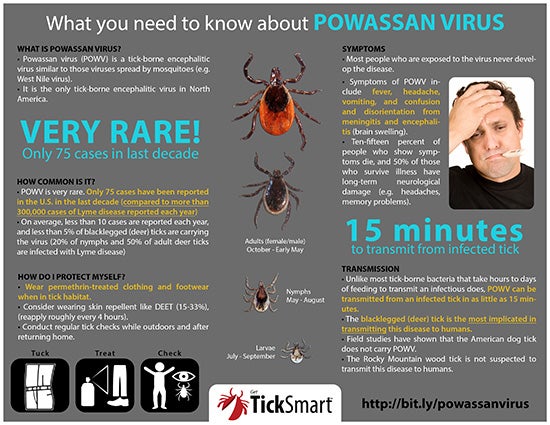
Ticks claim first Rhode Island fatality of the year

RIDOH Reports Case of Rare Tick-Borne Disease Powassan

The Rhode Island Department of Health (RIDOH) is reporting a confirmed case of the tick-borne Powassan virus disease (Powassan) detected in a Rhode Island resident who later died after contracting the disease.

Laboratory testing was conducted by the Centers for Disease Control and Prevention (CDC), which confirmed the finding earlier this month. The case involved a female over the over the age of 80 from Washington County, who developed neurological symptoms and died in mid-July.

Powassan is a tick-borne disease that is found mostly in the Northeast and the Great Lakes region of the U.S. and in eastern Canada. Over 239 cases of Powassan have been reported in the United States in the past 10 years (2013-2022).

Powassan cases are rare, but the reported number of cases has increased in recent years. Between 2013 and 2022, there were 93 cases of Powassan reported in New England: 49 cases in Massachusetts, 18 cases in Connecticut, 16 cases in Maine, five cases in New Hampshire, and five cases in Rhode Island.

Initial symptoms of Powassan include fever, headache, vomiting, and generalized weakness. The disease usually progresses to meningoencephalitis, which may include meningeal signs, altered mental status, seizures, aphasia (difficulty understanding or speaking), paresis (muscular weakness or paralysis), movement disorders, or cranial nerve palsies. People with severe Powassan disease often need to be hospitalized. There is no vaccine or treatment for Powassan, so preventing exposure to ticks is the best strategy to avoid this disease.

New Weight Loss Drugs Carry High Price Tags and Lots of Questions for Seniors

Losing weight comes with a weighty price tag


Corlee Morris has dieted throughout her adult life.

After her weight began climbing in high school, she spent years losing 50 or 100 pounds then gaining it back. Morris, 78, was at her heaviest in her mid-40s, standing 5 feet 10½ inches and weighing 310 pounds. The Pittsburgh resident has had diabetes for more than 40 years.

Managing her weight was a losing battle until Morris’ doctor prescribed a Type 2 diabetes medication, Ozempic, four months ago. It’s one in a new category of medications changing how ordinary people as well as medical experts think about obesity, a condition that affects nearly 4 in 10 people 60 and older.

The drugs include Ozempic’s sister medication, Wegovy, a weight loss drug with identical ingredients, which the FDA approved in 2021, and Mounjaro, approved as a diabetes treatment in 2022. (Ozempic was approved for diabetes in 2017.) Several other drugs are in development.

The medications reduce feelings of hunger, generate a sensation of fullness, and have been shown to help people lose an average of 15% or more of their weight.

We're in hot water

NOAA Releases Updated 2023 Atlantic Hurricane Season Outlook

NOAA


Due to current ocean and atmospheric conditions, such as record-warm sea surface temperatures, NOAA’s Climate Prediction Center—a division of the National Weather Service—has increased their prediction for the ongoing 2023 Atlantic hurricane season to an “above normal” level of activity from a “near normal” level with their most recent update. 

The outlook now includes a 70% chance of 14-21 named storms, of which 6-11 could become hurricanes, and 2-5 could become major hurricanes. The updated outlook also states that current conditions are likely to counterbalance the usually limiting atmospheric conditions associated with the ongoing El Niño event. 

Although cyclone formation can occur any time of the year, the Atlantic Hurricane Season officially runs from June 1 through November 30, when most tropical cyclones tend to form in the Atlantic. 

The 2023 Atlantic hurricane season began surprisingly early on January 16, when the National Hurricane Center issued a special tropical weather outlook for a low-pressure system north of Bermuda. This system became an unnamed subtropical storm southeast of Nantucket, Massachusetts, which made landfall on January 17 near Louisbourg, Nova Scotia before dissipating over eastern Quebec the next day. 

Then, on the first official day of hurricane season, a tropical depression formed off the west coast of Florida, over the Gulf of Mexico on June 1. This strengthened into Tropical Storm Arlene the following day, bringing several inches of rainfall across South Florida before dissipating north of Cuba.