Menu Bar

Home           Calendar           Topics          Just Charlestown          About Us

Friday, June 26, 2020

Change coming in RI candidates' signature requirements

ACLU announces a win in court to allow for on-line signatures
By Will Collette

ImageIn normal years, this is the time when candidates for local office get ready to collect enough signatures on their nomination papers to qualify for local office.

That has usually meant going door-to-door, setting up a table outside of Rippy's or the Mini-Super, or holding a signing ceremony in a convenient central location.

However, that requires a lot of face-to-face and hand-to-hand contact which has become a serious public health danger in this coronavirus pandemic.

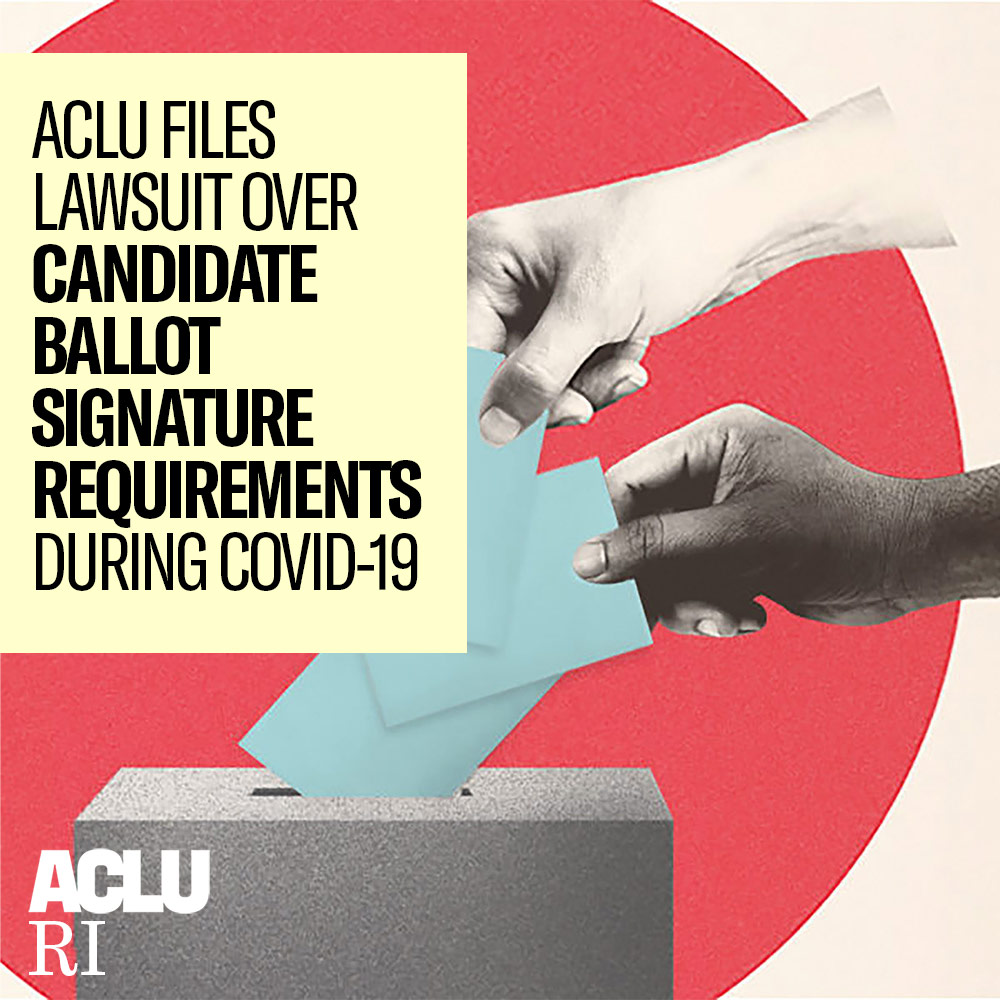
Last week, the RI ACLU files a lawsuit to make the process of getting signatures on nomination papers less dangerous.

Today, the ACLU announced a ruling that is a positive step forward.

There are not many details available. The RI Board of Elections will have to quickly come up with a method to comply with the judge's order.

Here is the RI ACLU Tweet announcing the court ruling:


How well are Rhode Islanders doing at social distancing?

New analysis from URI professor examines stay at home trends
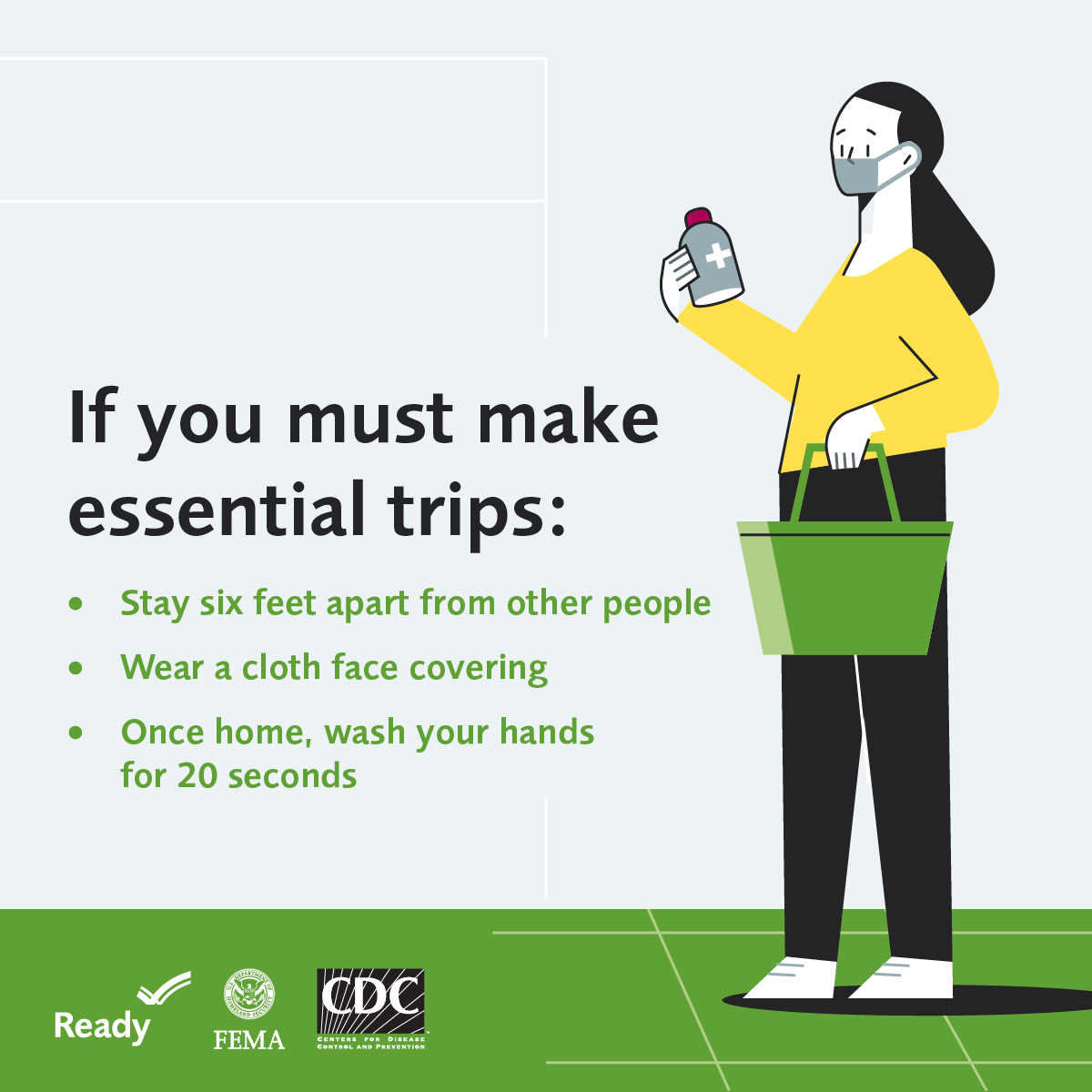
Woman buying kit items with a mask onA new analysis by a University of Rhode Island professor finds that Gov. Gina Raimondo’s stay-at-home order, in combination with the state of emergency declaration, increased news flow and other safety precautions were effective in keeping a large number of Rhode Islanders home during the height of the pandemic locally.

Michael DiNardi, assistant professor of economics, analyzed aggregated anonymous mobile device GPS location data from SafeGraph, Inc., and Google Community Mobility Reports to measure how much time Rhode Islanders were spending at home.

“There were a lot of researchers looking at how stay-at-home policies and other measures across the country were working to keep people at home and as a measure of social distancing,” said DiNardi, who wrote the analysis as part of the University’s Social Science Institute for Research, Education, and Policy spotlight on COVID-19. 


Inside the Trump Administration’s Decision to Leave the World Health Organization

CartoonsRight before President Donald Trump unveiled punitive measures against China on May 29, he inserted a surprise into his prepared text.

“We will be today terminating our relationship with the World Health Organization,” he announced during a press conference in the Rose Garden.

Most of the president’s top aides — and even some of his Cabinet secretaries — were blindsided.

Just 11 days earlier, Trump had sent an ultimatum threatening to withdraw from the WHO if reforms were not enacted in 30 days. Some senior officials hoped that he was bluffing or would change his mind about a decision that could hobble efforts to fight dangerous diseases.

Trump’s foreign policy choices are at the center of a forthcoming book by former national security adviser John Bolton, who argues that many of the president’s erratic actions are aimed at boosting his re-election chances.

But while Bolton’s book focuses on revelations about Trump’s past dealings with Turkey, Ukraine and China’s leader Xi Jinping, officials interviewed by ProPublica said the less explored WHO decision may have a more lasting impact.

ProPublica has interviewed senior officials at five federal agencies to understand the repercussions and the behind-the-scenes efforts to contain the damage of a decision in which they had little input.

In the weeks after Trump’s Rose Garden declaration, the White House gave little direction on what to do next. Officials who deal with the WHO knew that withdrawal is a cumbersome process requiring a year’s notice, a multiagency review and payment of unpaid dues.


Thursday, June 25, 2020

Trump, the Postal Service and Seniors

Save the post office from Trump

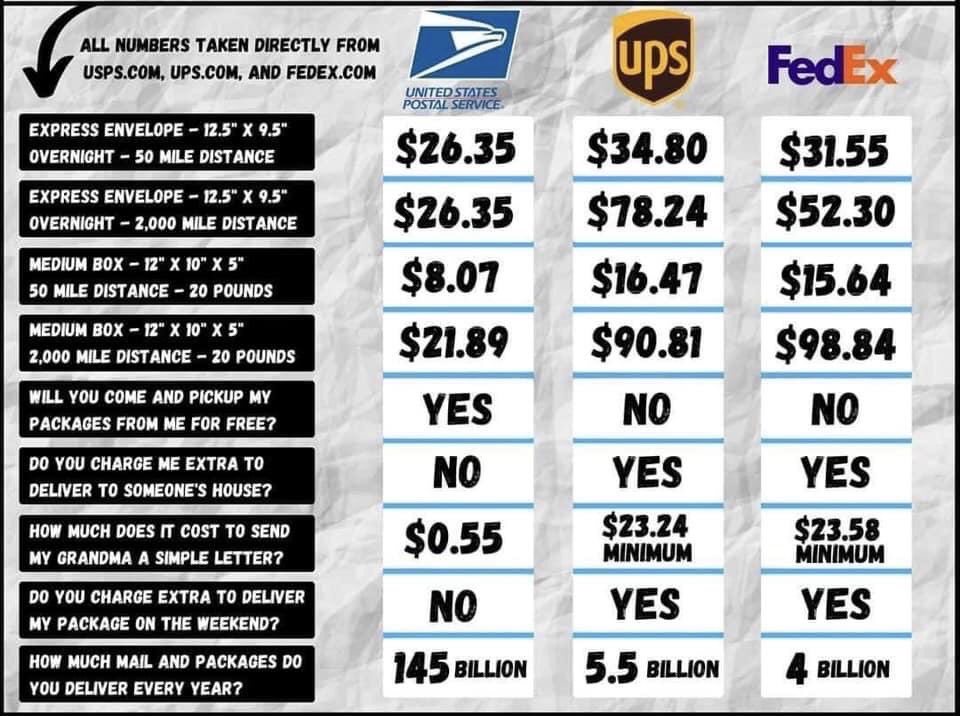
ImageFor more than two centuries, the nation’s postal service has bonded Americans scattered across a vast continent.  

To most of us, the U.S. mail is an essential institution.  For American seniors, it is nothing less than a lifeline. 

Today’s older Americans rely on the postal service for mail-order prescription medications, paying bills, casting ballots in our nation’s elections, and keeping in touch with loved ones. 

The Coronavirus pandemic has only intensified seniors’ dependence on the United States Postal Service (USPS).

How unfortunate, then, that President Trump—who claims to be a champion for seniors—shows open disdain for the postal service. 

It’s no secret that USPS is in serious financial peril. Among other challenges, the postal service needs better cost control measures and is required by law to pre-fund 75 years of health care premiums for retired employees— which no other U.S. employer is compelled to do. 


PD Editorial: Postal Service needs our help more than ever

With its costs rising and revenue diminished (a situation aggravated by the COVID crisis), some projections suggest USPS could become insolvent as early as September if it doesn’t get a sizable emergency cash infusion from the federal government.

Instead of helping, President Trump has rubbed salt in the wound by calling the postal service “a joke,” opposing emergency funding, and installing a Republican donor with no relevant experience as Postmaster General.  

Meanwhile, Congress has made a limited effort to prop up USPS. The CARES Coronavirus relief act included a $10 billion loan for the postal service.  The latest House-passed relief bill, the HEROES Act, includes $25 billion in emergency funding, but the postal service says it needs $75 billion to remain solvent.  

Unfortunately, some on Capitol Hill are hesitant to approve any new money – and the President is openly hostile to the idea. 


Big COVID-19 medical breakthrough


For more cartoons by Ruben Bolling, CLICK HERE.

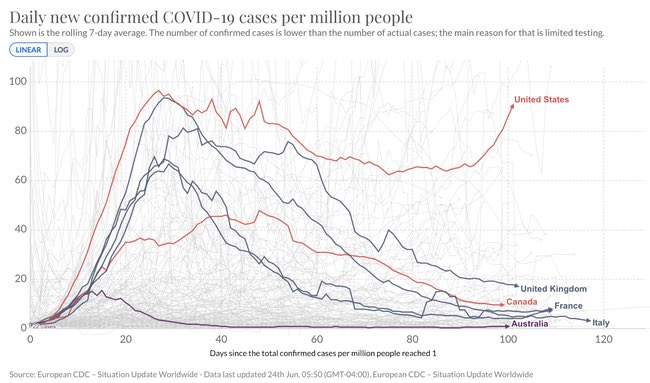
US COVID-19 cases continue to spike while the rest of the world beats back the pandemic

Image

Wind turbines can protect us from brown-outs

New system uses wind turbines to defend the 
University of Birmingham

Windmill Molino GIF by CRDI. Ajuntament de GironaA 'smart' system that controls the storage and release of energy from wind turbines will reduce the risk of power cuts and support the increase of wind energy use world-wide, say researchers at the University of Birmingham.

The system uses the variable speed of the rotors in wind turbine systems to more closely regulate the supply of power to the grid. 

This means that when electricity demand is high, stored kinetic energy in the turbines can be used intelligently to keep the grid stable. University of Birmingham Enterprise has applied for a patent to protect the system.

Regulating the supply of electricity to keep pace with demand is a continual challenge. Sudden outage of power generation, such as when a generator gets damaged, can cause a 'frequency dip', which can lead to power cuts. The UK's large power stations currently manage these dips by pushing out more electricity.

However, as more wind turbines are integrated into the system, it becomes more difficult to balance supply and demand and keep the system stable, as frequency dips in national power grid occur more quickly and more severely than before when wind generation became such a significant element of electricity generation.


Elevated fire risk today

Lack of rain, dry air, high temps and southwesterly breezes pose a hazard
By Will Collette

man on fire GIFThe National Weather Service has put out a special warning for most of southern New England, including all of South County, about the high risk of fire.

As a common sense measure, you should not ignite any open fires today. And for those idiots with no common sense, using near commercial grade fireworks in these types of conditions is a really bad idea.

We need rain not just for our gardens but for health and safety in our wooded areas.

Here is the NWS statement:
Special Weather Statement
National Weather Service Boston/Norton MA
955 AM EDT Thu Jun 25 2020
No photo description available.
>024-026-RIZ001>008-252200-Western Franklin MA-Eastern Franklin MA-Northern Worcester MA-Central Middlesex MA-Western Essex MA-Eastern Essex MA-Western Hampshire MA-Western Hampden MA-Eastern Hampshire MA-Eastern Hampden MA-Southern Worcester MA-Western Norfolk MA-Southeast Middlesex MA-Suffolk MA-Eastern Norfolk MA-Northern Bristol MA-Western Plymouth MA-Eastern Plymouth MA-Southern Bristol MA-Southern Plymouth MA-Barnstable MA-Dukes MA-Nantucket MA-Northern Middlesex MA-Northwest Providence RI-
Southeast Providence RI-Western Kent RI-Eastern Kent RI-Bristol RI-Washington RI-Newport RI-Block Island RI-Including the cities of Charlemont, Greenfield, Orange, Barre, Fitchburg, Framingham, Lowell, Lawrence, Gloucester, Chesterfield, Blandford, Amherst, Northampton, Springfield, Milford, Worcester, Foxborough, Norwood, Cambridge, Boston, Quincy, Taunton, Brockton, Plymouth, Fall River, New Bedford, Mattapoisett, Chatham, Falmouth, Provincetown, Vineyard Haven, Nantucket, Ayer, Foster, Smithfield, Providence, Coventry, West Greenwich, East Greenwich, Warwick, West Warwick, Bristol, Narragansett, Westerly, Newport, and New Shoreham

955 AM EDT Thu Jun 25 2020

...Elevated Risk for Fire Spread Potential This Afternoon...

Massachusetts and Rhode Island fire weather officials have advised of an elevated risk for fire pread for this afternoon.

Officials are mainly concerned with southwest winds gusting to 20 mph and already-dry surface fuels, including grasses.

High temperatures this afternoon will reach the 80s in most places. Minimum relative humidity this afternoon will be 30 to 40 percent, except 45 to 55 percent along the coast.
Coming soon: the plague and the tempest

Hurricane season combined with COVID-19 pandemic could create perfect storm
University of Central Florida

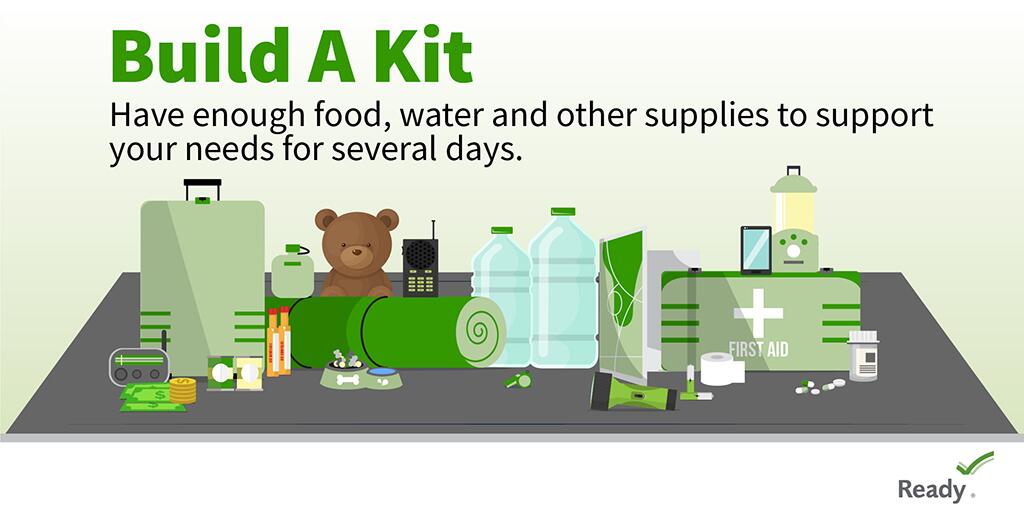
Prepare un botiquĂ­nWhen extreme climate conditions interact with stressors to social systems, such as the COVID-19 pandemic, the consequences could be severe unless experts from diverse backgrounds work together to develop comprehensive solutions to combat their negative impacts.

That's the recommendation of a new article in Nature Climate Change published and co-authored by a University of Central Florida researcher.

Thomas Wahl, an assistant professor in UCF's Department of Civil, Environmental and Construction Engineering and a member of UCF's National Center for Integrated Coastal Research, is one of 14 experts with diverse backgrounds who authored the article.


Unmasking the mask profiteers

Former Trump staffer with no experience landed a $3 million federal contract for medical masks he couldn’t deliver.
Image may contain: text that says 'Public Citizen @Public_Citizen A Goldman Sachs exec runs Treasury A private equity kingpin runs Commerce A pharma exec runs HHS A coal lobbyist runs the EPA An oil lobbyist runs the DOI A Raytheon lobbyist runs DOD A Verizon lawyer runs FCC And you wonder why stimulus funds become corporate handouts.'Everyone should wear a protective medical mask — but some ought to be in ski masks, like those favored by bank robbers and muggers.
Take Zach Fuentes, a former deputy chief of staff for Donald Trump.

He resigned from the White House in January, looking for some sort of lucrative entrepreneurial future. 

Then, the pandemic hit, and as Trump’s incompetent government quickly caused it to spread, Fuentes thought: Aha, opportunity!

By April, he had set up a corporate façade for hustling contracts to provide medical supplies to government agencies. 

Only 11 days after he opened for business — bingo! — the former Trump aide won a $3 million deal from the Department of Health to ship respirator masks to Navajo Nation hospitals that were being overrun by hundreds of COVID-19 cases.


Wednesday, June 24, 2020

VIDEO: A field guide to Trump's dangerous rhetoric

The six strategies behind Trump's hate speech 
Jennifer Mercieca, Texas A&M University


President-elect Trump at a post-election rally in Mobile,
Alabama, Dec. 17, 2016. Mark Wallheiser/Getty
All leaders are demagogues. You may not realize this, because we’ve come to associate the word “demagogue” with only dangerous populist leaders. But in Greek, the word just means “leader of the people” (dÄ“mos “the people” + agĹŤgos “leading”).

Some demagogues are good, and some are dangerous. 

The fundamental difference between leaders who are good demagogues and leaders who are dangerous demagogues is found in the answer to this simple question: Are they accountable for their words and actions?

Obviously, an unaccountable leader is dangerous in any political community.

Donald Trump is a demagogue – he’s a heroic demagogue to his followers, and he’s a dangerous demagogue to everyone else.

I’ve been analyzing Trump’s rhetoric since 2015 and, despite how it may appear to some critics, Trump is a rhetorical genius. I describe why in my new book, “Demagogue For President: The Rhetorical Genius of Donald Trump.”

He’s a genius at using rhetoric like a dangerous demagogue does, to prevent the country from holding him accountable.


Trump campaigned as an unaccountable leader. He promised that he would fight for his followers and wouldn’t be accountable to established leaders in his party, the media, fact-checkers, political correctness or common standards of decency.

Trump has used six rhetorical strategies repeatedly since 2015. Three ingratiate Trump with his followers, and three alienate Trump and his followers from everyone else. The effect is to unify his followers against everyone else and to make Trump the fulcrum for all political discussion and debate.

All of the strategies are used to set the nation’s agenda, distract the nation’s attention and frame how we understand reality.

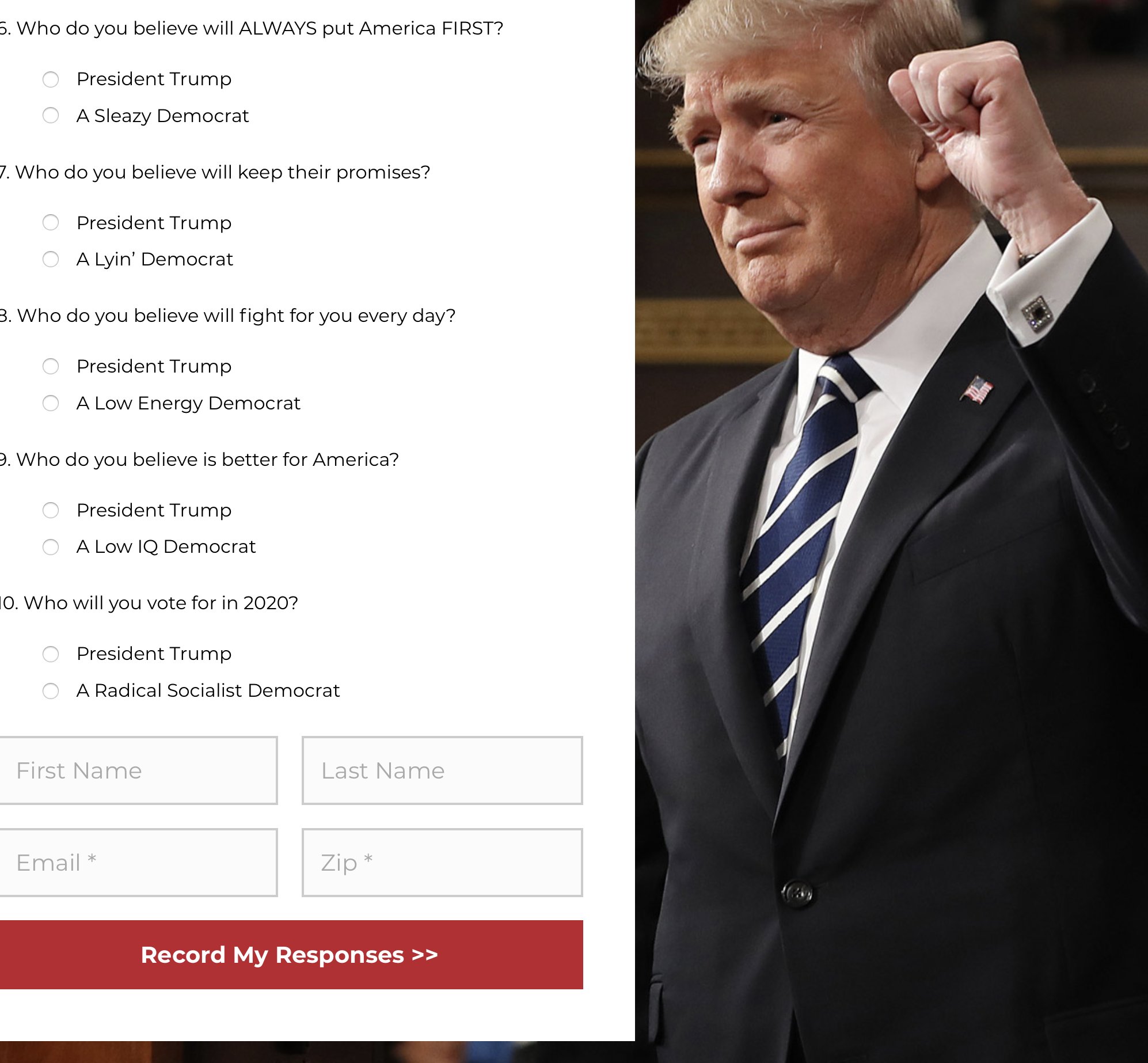
Perfect example of a "push" poll

Wikipedia definition: A push poll is an interactive marketing technique, most commonly employed during political campaigning, in which an individual or organization attempts to manipulate or alter prospective voters' views under the guise of conducting an opinion poll. ... Push polls are generally viewed as a form of negative campaigning.

Image
Image

VIDEO: Hold Trump accountable

To watch this video on YouTube: https://www.youtube.com/watch?v=9dHiYv_aPZ8

Who are these 14%?

Study shows Americans Haven't Been This Sad Overall Since Nixon; only 14% say they are “very happy”

depressed black and white GIFThree months into the coronavirus pandemic, which has now killed more than 116,000 Americans, people across the United States are reporting lower levels of happiness than at any point since the 1970s—nearly 50 years ago.

According to the Covid Response Tracking Survey, conducted late last month by NORC at the University of Chicago, just 14% of Americans report that they are "very happy."

The researchers compared their findings to those of the General Social Survey, taken every other year since 1972, and found that at least 29% of respondents to that poll have always reported feeling "very happy" with their lives.

Just two years ago, when the last General Social Survey was taken, 31% of Americans said they were "very happy." 


Hard to hold

BPA exposure and hormone changes are a dangerous combo for aging men
    
peeing season 1 GIF by PatriotIt's an uncomfortable, often embarrassing problem—having to pee a lot, but not getting relief when you go.

For older men, this problem is increasingly common and can go beyond the awkward and cause real damage to the bladders or kidneys. In extreme cases it can be fatal.

New research out this month may have uncovered a dangerous combination of chemical exposure and hormone changes later in life as a culprit in obstructive voiding disorder, which refers to "urgency [and] increased frequency of urination, low urine flow pressure, and incomplete bladder emptying, which can lead to acute kidney injury," the authors wrote in the study published this month in the International Journal of Molecular SciencesInternational Journal of Molecular Sciences.

As men age they develop benign prostatic hyperplasia, which is enlargement of the prostate. 

Nearly all men, if they live long enough, will develop it and "if left unchecked they will have urinary retention" problems, William Ricke, professor, researcher and Director of the University of Wisconsin O'Brien Center of Research Excellence in Benign Urology and co-author of the new study, told EHN.

"Acute urinary retention if left unchecked by a urologist, urine can back up into kidneys and, in mouse models, those kidneys start to look like another bladder," Ricke said. "You don't have kidneys, you die."

In the new study of lab mice, Ricke and colleagues have linked the combination of exposure to the ubiquitous chemical bisphenol-A (BPA) around the time of birth and elevated estrogen levels as an adult to urinary disorders, kidney problems and enlarged prostates and bladders.