Menu Bar

Home           Calendar           Topics          Just Charlestown          About Us
Showing posts with label baby animals. Show all posts

Thursday, May 28, 2026

Leave the babies alone!

Respect Wildlife - Don't Touch!

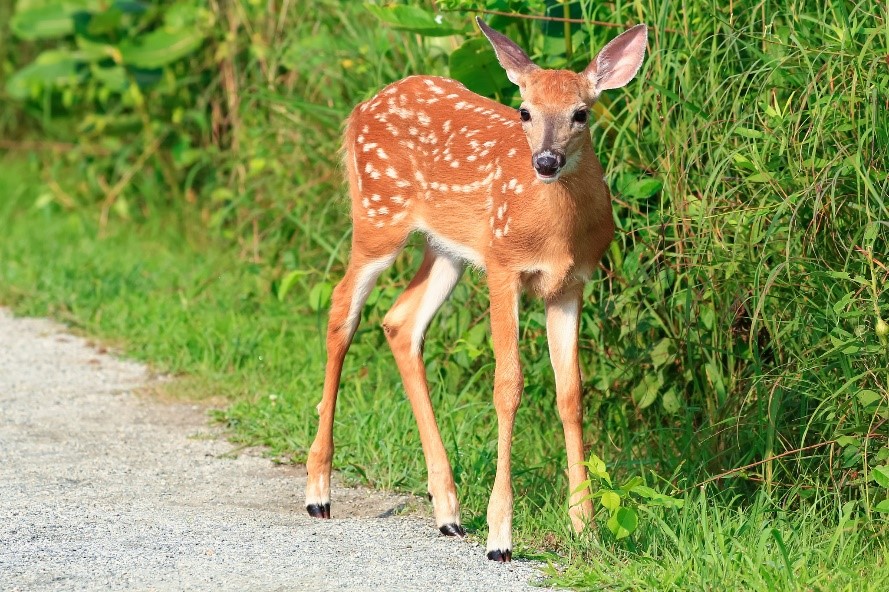
The Rhode Island Department of Environmental Management (DEM) asks the public to give baby wildlife some space, especially fawns – the tiny spotted deer that are often mistakenly thought to be “abandoned” when they’re right where Mom left them. 

As tempting as it may be to “rescue” a lone fawn, touching or moving it is putting its survival at risk. 

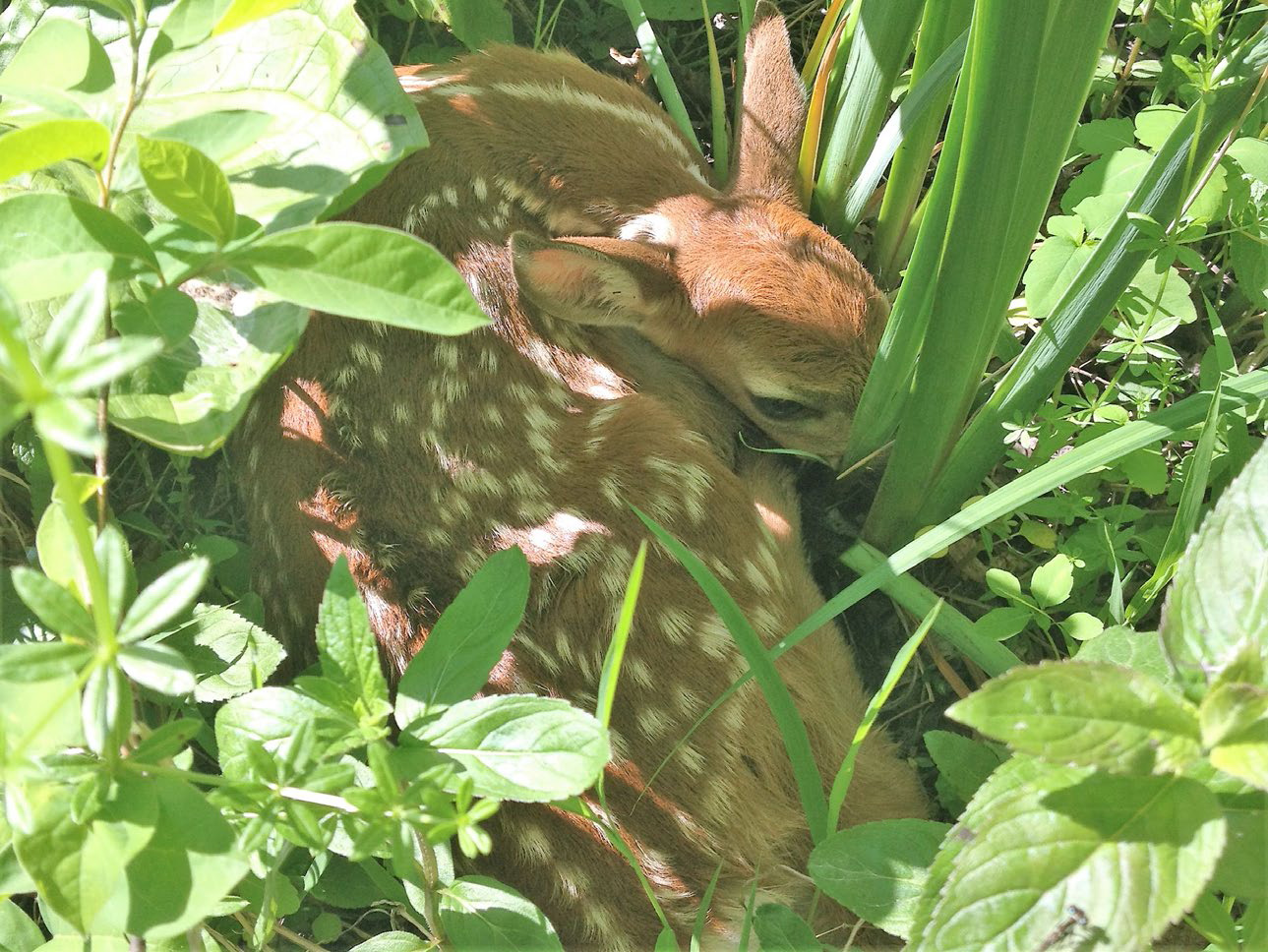
“In nature, it’s normal for a fawn to be hidden in grass or brush for the first week after birth, as it can’t yet follow its mother,” said Dylan Ferreira, a wildlife biologist in DEM's Division of Fish and Wildlife (DFW). “Sometimes well-intentioned people wrongly assume that a fawn is abandoned and take it home and try to rescue it, but the mother is usually nearby and returns to feed it. If you see a fawn alone, please leave it alone – it does not need help and should not be handled.”

Saturday, April 4, 2026

OMG! Baby bunnies!

Wild, captive, to wild: Working to help save New England’s only native rabbit

Kristen Curry

URI faculty and students are working to help save New England’s only native rabbit; their work follows efforts started at the University by faculty emeriti Thomas Husband in the Department of Natural Resources Science. (Rabbit Photos/Courtesy Roger Williams Park Zoo)

The elusive native New England cottontail rabbit is the subject of lore and literature. But over the last century, their numbers declined precipitously in our region due to development, landscape change, and the introduction of an invasive rabbit.

Now researchers at the University of Rhode Island are using a two-pronged approach to improve the New England cottontail’s prospects, combining genetic and behavioral approaches at two very different sites: busy Roger Williams Park Zoo in Providence and the aptly named Patience Island, off of Warwick.

Breeding programs coupled with translocation form an increasingly important method for conserving imperiled species; the approach has been used in the United States to help conserve pygmy and Riparian brush rabbits, but U.S. islands have rarely been used to produce animals for translocation.

T.J. McGreevy, Jr. in URI’s Department of Natural Resources Science is hoping that islands will help preserve the New England cottontail here.

McGreevey recently finished his 14th season of field trapping the New England cottontail on Patience Island; now his state wildlife biologist collaborators will release the rabbits in New Hampshire and Maine this spring. Each winter they move approximately 30 rabbits off island to the mainland; last winter it was 41.

He’s working with URI colleague Justin Richard; they hope their combined efforts will give the native rabbit a better future, preserving its numbers here for centuries to come.

Tuesday, May 20, 2025

If you see Bambi, don't touch

Keep Your Paws Off Wildlife

Don't touch the bunnies either
The Rhode Island Department of Environmental Management (DEM) again urges the public not to interfere with baby wild animals, especially fawns, which are often mistakenly thought to be abandoned. 

Fawns lying quietly in grass are not orphaned and should be left alone, because moving or handling them may separate them from their mother and jeopardize their life.

“In nature, it’s normal for a fawn to be hidden in grass or brush for the first week after birth, as it can’t yet follow its mother,” said Dylan Ferreira, a wildlife biologist in DEM's Division of Fish and Wildlife (DFW). 

“Sometimes well-intentioned people wrongly assume that a fawn is abandoned and take it home and try to rescue it, but the mother is usually nearby and returns to feed it. If you see a fawn alone, please leave it alone – it does not need help and should not be handled.”  

“DEM stresses that wildlife is beautiful but should always be enjoyed from afar,” said RI State Veterinarian Dr. Scott Marshall. 

“Never approach wild animals and certainly never touch them.Handling mammals is always a potential rabies exposure. Once people handle or have contact with these animals, public health officials are compelled to test the animal for rabies, which requires that the animal be humanely dispatched because testing requires brain tissue.”  

While some may be tempted to feed deer, feeding wildlife is illegal in Rhode Island and harmful. It can cause digestive problems, spread disease, attract more wildlife than the area can support, and lead to conflicts with humans.  

Saturday, May 18, 2024

Don't Remove Fawns And Other Baby Animals From The Wild

Leave baby animals alone!

The Rhode Island Department of Environmental Management (DEM) is again cautioning the public not to assume that finding a baby animal means it needs to be rescued. A fawn (baby deer) lying on the ground hidden in grass or brush should not be considered abandoned – it should be left alone by people and pets because moving or handling it may permanently separate it from its mother and jeopardize its life.

White-tailed deer give birth to fawns in May and June. Each year, DEM receives many calls about fawns mistaken to have been abandoned by their mother. This is almost never the case.

“In nature, a doe gives birth and for the next five to seven days, the fawn is incapable of following the doe, so it is natural for the fawn to lie in a curled ‘freeze’ position on the ground hidden in grass or sparse brush,” said Dylan Ferreira, a wildlife biologist in DEM's Division of Fish and Wildlife (DFW). 

Wednesday, July 5, 2023

By ‘helping’ wild animals, you could end their freedom or even their lives

When and how to help

Julian AveryPenn State

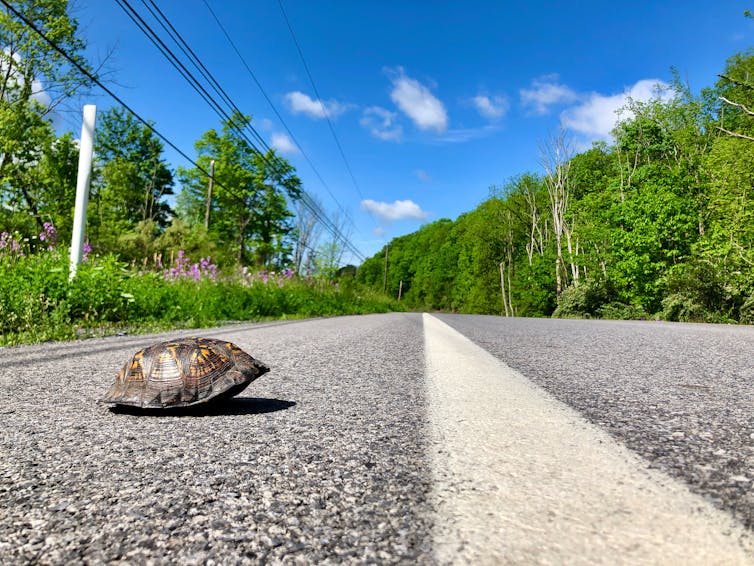
An eastern box turtle crossing a rural Pennsylvania road. 
Julian AveryCC BY-ND
For anyone who enjoys nature, summer is a fascinating time to be outside. Animals are on the move: Turtles are nesting, baby birds are testing their wings, snakes are foraging and young mammals are emerging.

In central Pennsylvania, where I live, last year’s hatchling painted turtles have overwintered in their nests and emerged looking like tiny helpless snacks for raccoons and ravens. 

I’ve already rescued a baby killdeer – a shorebird that nests in parking lots – that ran off the road and got stuck in a grate. And I’ve watched an eastern chipmunk prey on a nest of towhee chicks.

I moved the killdeer to safety because it had fallen into what we call an “ecological trap.” Humans create these traps when we degrade habitat that looks suitable to animals. For killdeer, parking pads and roofs give off all the vibes of a great nesting site – except for the drains – and they have less natural habitat available these days.

But I didn’t intervene with the towhees. Their exposed nest site may have been a bad parental decision, or perhaps the chicks’ begging called too much attention. 

Either way, natural selection helped ensure that these birds and their genes were unlikely to survive. Ultimately, that may be better for the population and species than if I had intervened.

As a wildlife biologist, I know that relocating animals can be bad from a scientific perspective. It also can easily harm the creature you want to help.

Based on my experience as a scientist and university teacher, I’ve developed guidelines for when to get involved in the lives of animals I encounter outside. 

When I do intervene, it is after carefully considering the potential reasons for the animal’s situation, the species’ population status and the potential harm my actions might inflict upon the whole population – not just on one adorable creature.

Friday, June 2, 2023

Leave baby animals alone!

DEM Urges the Public Not to Remove Fawns and Other Baby Animals from the Wild

The Rhode Island Department of Environmental Management (DEM) is again cautioning the public not to assume that finding a baby animal means it needs to be rescued. 

A fawn (baby deer) lying on the ground hidden in grass or brush should not be considered abandoned – it should be left alone by people and pets because moving or handling it may permanently separate it from its mother and jeopardize its life.

White-tailed deer give birth to fawns in May and June. Each year, DEM receives many calls about fawns mistaken to have been abandoned by their mother. This is almost never the case.

Tuesday, May 31, 2022

Leave the baby animals alone

DEM says don't touch or remove fawns and other baby animals from the wild

The Rhode Island Department of Environmental Management (DEM) is cautioning the public not to assume that finding a baby animal means it needs to be rescued during the late spring and summer, as this is fawning season. 

A fawn (baby deer) lying on the ground hidden in grass or brush should not be considered abandoned – it should be left alone by people and pets because moving or handling it may permanently separate it from its mother and jeopardize its life.

White-tailed deer give birth to fawns in May and June. Each year, DEM receives many calls about fawns mistaken to have been abandoned by their mother. This is almost never the case.

Thursday, September 2, 2021

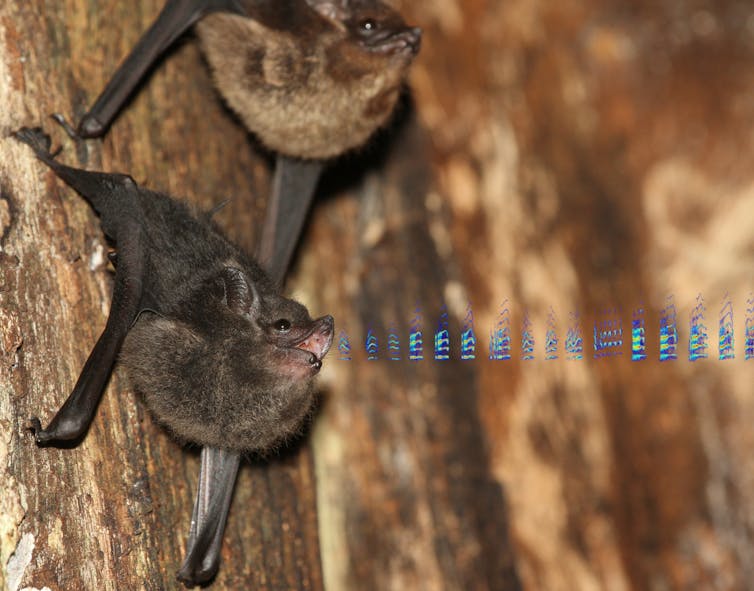
Bat speak?

Bat pups babble and bat moms use baby talk, hinting at the evolution of human language


A babbling pup produces distinct syllables, visualized in this composite image. Michael Stifter and Ahana FernandezCC BY-ND

“Mamama,” “dadada,” “bababa” – parents usually welcome with enthusiasm the sounds of a baby’s babble. Babbling is the first milestone when learning to speak. All typically developing infants babble, no matter which language they’re learning.

Speech, the oral output of language, requires precise control over the lips, tongue and jaw to produce one of the basic speech subunits: the syllable, like “ba,” “da,” “ma.” Babbling is characterized by universal features – for example, repetition of syllables and use of rhythm. It lets an infant practice and playfully learn how to control their vocal apparatus to correctly produce the desired syllables.

More than anything else, language defines human nature. But its evolutionary origins have puzzled scientists for decades. Investigating the biological foundations of language across species – as I do in bats – is a promising way to gain insights into key features of human language.

I’m a behavioral biologist who has spent many months of 10-hour days sitting in front of bat colonies in Panama and Costa Rica recording the animals’ vocalizations. My colleagues and I have found striking parallels between the babbling produced by these bat pups and that by human infants. Identifying a mammal that shares similar brain structure with human beings and is also capable of vocal imitation may help us understand the cognitive and neuromolecular foundations of vocal learning.

Wednesday, June 2, 2021

Leave the baby animals alone!

DEM Urges Public Not to Remove Fawns and Other Baby Animals From the Wild

Press Release 7/2/2019 – Wildlife Watch: Fawns - City of Alamosa

The Rhode Island Department of Environmental Management (DEM) is advising the public not to assume that finding a baby animal means it needs to be rescued. For example, a fawn lying on the ground hidden in grass or brush should not be considered abandoned; it should be left alone.

White-tailed deer give birth to fawns in May and June. Each year, DEM receives many calls from residents who are concerned that fawns have been abandoned by their mother.

"This is almost never the case and most of these fawns are not abandoned," said Dylan Ferreira, a wildlife biologist in DEM's Division of Fish & Wildlife. 

"In nature, the mother deer gives birth and for the next five to seven days, the fawn is incapable of following the mother, so it is natural for the fawn to lie in a curled 'freeze' position on the ground hidden in grass or sparse brush. Sometimes, however, well-intentioned people will assume the fawn is abandoned and take it home to 'save' it from predators or domestic animals."


Monday, May 3, 2021

Spotting Baby Critters In Your Neighborhood?

DEM Hosting Virtual Educational Program on May 6 on Young Wildlife and How to Respond

Spring has sprung, and for many wildlife species in Rhode Island, that means it's time to raise their young. 

In May and June, sightings of deer fawns, fox kits, songbird chicks, bunnies, and baby squirrels become more common and generate concerned calls from the public to the Department of Environmental Management's (DEM) Division of Fish and Wildlife.

Often, young animals that appear abandoned or in danger are perfectly fine, and merely need to be left alone and given space. 

However, there are some instances where animals do need additional help from humans and potential veterinary attention.

A virtual program set for Thursday, May 6 from 4:30 p.m. to 5:30 p.m. will provide participants with the knowledge to determine when an intervention is necessary to help young wildlife, as well as best practices to maintain human and wildlife safety and health. DEM Wildlife Outreach staff will be joined by staff from the Wildlife Rehabilitators Association of Rhode Island (WRARI) to share information and answer questions.

Wednesday, February 17, 2021

How about bunny Viagra?

URI researchers hope to reveal why rare cottontails don’t breed like rabbits

Todd McLeish

New England cottontails are seen in this image taken from a video used in URI research investigating the breeding behaviors of the captive animals. (Photo courtesy of Justin Richard)

While viewing hundreds of hours of infrared video footage of captive New England cottontails at Roger Williams Park Zoo, University of Rhode Island senior Hannah Petit watched for signs of breeding behavior.

The rare rabbits, which are being bred in captivity so their offspring can be released into the wild, are not nearly as prolific as their reputation would suggest. After dozens of pairings between male cottontails and the zoo’s 15 females during one round of breeding attempts in 2019, just three became pregnant.

“We’re trying to see if we can find out why not all pairs are breeding,” said Petit, an animal science major from Pawtucket.

“They spend a lot of time in close proximity to each other, but we’re not seeing many mating attempts. The low pregnancy rate doesn’t seem to be due to an issue with fertility or maintaining their pregnancy; it seems like they’re not even trying to mate.”

Petit and a team of seven other URI students have spent the last year reviewing more than 300 hours of video and coding the behaviors the rabbit pairs exhibit for any signs that may indicate why the breeding rate is so low.

“You would expect them to breed like rabbits, but they don’t,” said Justin Richard, URI assistant professor of animal science and the leader of the project.

Monday, November 9, 2020

Mystic prepares for the holidays

Mystic Aquarium logo


Tickets   |   Membership   |   Donate   |   COVID Updates


IT'S A BOY!


african penguin chick


October 10 was a big day for us and our special (not so) little chick, Purple/Pink! We teamed up with our friends at Deviant Donuts for a sweet gender reveal, and it took place on African Penguin Awareness Day. See the tasty reveal here. 🍩🐧


MYSTIC AQUARIUM LIVE


Kids Corner Sea Jellies


Join us each week, Monday through Friday, for fun, informational and educational videos on Facebook and YouTube. And, it’s all happening LIVE! Check out our calendar of events plus be sure to Like our Facebook page and Subscribe to our YouTube channel to receive alerts.


👁🗨 WHAT DO YOU WANT TO SEE NEXT?

Our Facebook and YouTube lives continue! Complete the quick questionnaire below to tell us what you'd like to see LIVE.


GIFTING MADE EASY


whale with gift


Put a bow on all of your holiday gift needs by shopping our gift guide which was specially curated with you in mind!


YOUR GO GREEN CHALLENGE:


️ Recycle your fall pumpkins! Save the seeds to cook and eat or harvest them for next year's garden. Then add the pumpkin to your compost, donate to a local farm or simply cut into small pieces and scatter outside for wildlife to snack on.


Amazon Smile logo

#DYK that the Mystic Aquarium community has unlocked hundreds of dollars in donations from AmazonSmile! When you shop using smile.amazon on your computer or enable AmazonSmile on your Amazon app, a donation is made at no cost to you.


BY EXECUTIVE ORDER OF THE CONNECTICUT GOVERNOR


Guests are now required to present a doctor’s note to be eligible for the facial covering medical exemption.

Click here for complete COVID safety guidelines in place at Mystic Aquarium.


facebook twitter instagram youtube pinterest


Mystic Aquarium is a 501(c)(3) nonprofit organization with a mission to inspire people to care for and protect our ocean planet through conservation, education and research.

MYSTIC AQUARIUM
55 Coogan Boulevard | Mystic, CT 06355 | MysticAquarium.org | 860.572.5955