Menu Bar

Home           Calendar           Topics          Just Charlestown          About Us
Showing posts with label exercise. Show all posts

Saturday, September 19, 2026

Taking the stairs could protect your heart and help you live longer

Unless you have a heart attack

University of East Anglia

Simply choosing the stairs could have surprisingly big benefits for your heart and longevity. A large analysis involving more than 480,000 people found that regular stair climbers were 39% less likely to die from cardiovascular disease and 24% less likely to die from any cause than people who rarely took the stairs. They also had lower risks of heart attack, stroke, and heart failure.

New research from the University of East Anglia and the Norfolk and Norwich University Hospital suggests that something as simple as choosing the stairs could contribute to a longer life.

The large study found that people who regularly climbed stairs had a substantially lower risk of dying from cardiovascular disease. Frequent stair climbers were 39% less likely to die from heart-related causes and 24% less likely to die from any cause compared with people who climbed stairs less often.

Regular stair climbing was also associated with a lower likelihood of developing serious cardiovascular conditions, including heart attack, stroke, and heart failure.

Prof Vassilios Vassiliou, from UEA's Norwich Medical School, said: "Cardiovascular disease is the leading cause of death worldwide -- with cases nearly doubling between 1990 and 2019. But it is largely preventable through a healthy lifestyle -- including regular physical activity, a heart-healthy diet, not smoking, maintaining a healthy weight, and managing blood pressure, cholesterol, and diabetes.

"Taking the stairs is a practical and often overlooked way to build physical activity into daily life.

"We wanted to better understand how this everyday activity could have life-saving potential."

Thursday, September 10, 2026

Can you slow the aging process?

Study reveals which interventions might help

By Karen Guzman, Yale University

Edited by Sadie Harley, reviewed by Robert Egan

When Raghav Sehgal arrived at Yale as a graduate student several years ago, he wanted to explore the use of powerful computer science tools in cancer research. With an engineering background and a computational biology startup already under his belt, he was well prepared.

But as Sehgal began his Ph.D. studies, his thesis adviser at the Yale School of Medicine posed a larger question: If you want to solve cancer or any age-related disease, such as cardiovascular disease, why not solve aging itself?

"That put me on a different path," said Sehgal, an associate research scientist in psychiatry with specialties in computational biology and bioinformatics. "As researchers, we have a long way to go in understanding the aging process and whether the steps we take to manage it really work."

Today, Sehgal's research focuses on the biological systems that drive human aging and how to best measure aging, as well as why aging gives rise to diseases like cancer, diabetes and dementia. And while his research might not necessarily solve aging, he does explore whether the aging process can be reversed through interventions.

Testing which interventions truly register

In a new paper, Sehgal's research team took a significant step toward determining which existing anti-aging measures have quantifiable impacts. Using a new class of DNA-based blood tests, they found that lifestyle interventions and certain drug treatments appear to slow the aging process, while over-the-counter supplements don't have much effect.

Wednesday, August 19, 2026

Head Start could soon be overhauled.

Here’s exactly what would change.

Chabeli Carrazana, Economy and Child Care Reporter

This story was originally reported by Chabeli Carrazana of The 19th. Meet Chabeli and read more of their reporting on gender, politics and policy.

The Trump administration is pushing a total overhaul of Head Start that could fundamentally reshape the 60-year-old program that has provided childcare and key support for America’s lowest-income families. 

A new proposed rule released last week put more than 1,400 regulatory provisions that govern how Head Start is implemented on the chopping block. Across the country, 1,600 Head Start grant recipients provide quality care for disadvantaged children, as well as support for families by connecting them to health insurance, job training, developmental screenings, specialist referrals and postpartum support. 

This latest proposal is aimed at cutting red tape and allowing more flexibility in the programs, the administration said. 

“There's 1,600 providers across the country facing different conditions, and our proposed rule will reduce their paperwork. It will streamline duplicative statutory requirements and give them flexibility for things like personnel and workforce decisions, as well as licensing relief,” said Alex Adams, the assistant secretary at the Administration for Children and Families (ACF), on a call with reporters. 

But Head Start providers and experts say the proposal may actually make it harder for programs to operate and transform Head Start to look more like commercial childcare than an anti-poverty program. 

“Families lose the assurance that Head Start means the same thing everywhere, and taxpayers lose a clear measure of impact that Head Start funding should have,” said Celena Roldan Sarillo, the president of Start Early, a nonprofit that advocates for quality early learning. 

Secretary of Health and Human Services Robert F. Kennedy Jr. said on a call with reporters to announce the changes that “it is important to protect” Head Start, which is administered by HHS and was created in part by Kennedy’s uncle Sargent Shriver during the Lyndon B. Johnson administration. Kennedy wants to see more nutrition and physical activity requirements added to Head Start, and agrees the new rules could streamline it and open seats for more children. 

That messaging, however, is misleading, said Yvette Sanchez Fuentes, the senior vice president at Start Early. 

“At first glance, these proposed changes might not seem so terrible, but as you dig deeper into it, what we will find is that there really are a lot of changes that will impact what is the heart of Head Start,” Sanchez Fuentes said, adding that the performance standards are not just red tape, “they really are the foundation for how we ensure that programs across the country are supporting children, families and communities in the way that they want best.”

Here is a breakdown of what the administration is proposing to change for Head Start.

Friday, July 24, 2026

Colorectal Cancer Is Rising Fast in Younger Adults, Reversing Decades of Progress

Prevention and screening needed at earlier age

By American Cancer Society

For much of the past century, colorectal cancer was considered a disease of older age. But that picture is changing rapidly. Nearly half of all new colorectal cancer diagnoses in the United States now occur in adults younger than 65, a dramatic increase from just over one-quarter in the mid-1990s, and the disease has become the leading cause of cancer death in adults under 50.

A new American Cancer Society (ACS) report shows that this generational shift is accelerating. While colorectal cancer rates continue to decline among older Americans, they are climbing in adults younger than 65, particularly those under 50, suggesting that the decades-long success against one of the nation’s deadliest cancers is becoming increasingly concentrated in older generations.

The trend is being driven largely by cancers arising in the distal colon, the final section of the colon, and the rectum. As a result, rectal cancer now accounts for nearly one-third of all colorectal cancer diagnoses, up from about one-quarter two decades ago. The findings were published in CA: A Cancer Journal for Clinicians.

Sunday, July 19, 2026

Attention couch potatoes

Hours of uninterrupted sitting could be more dangerous than you think.

By PLOS

A large study found that every additional hour spent in prolonged, uninterrupted sedentary periods each day was associated with a 9% higher risk of dying from cancer. The findings suggest that how people accumulate sedentary time may matter alongside the total amount.

The study, published July 2 in the open-access journal PLOS Medicine, was led by Frederick Ho of the University of Glasgow in the UK and colleagues.

Sedentary behavior includes sitting, reclining, or lying down while awake. It can happen almost anywhere, including at a desk, in a car, or while watching television. Previous research has connected high levels of sedentary time with poorer health, but most guidelines do not distinguish between sitting continuously and sitting for the same amount of time with regular movement breaks.

Thursday, May 7, 2026

A probe into ‘forever chemicals’ in activewear lays bare fashion’s greenwashing problem

Pay attention to what you wear

Caroline Swee Lin Tan, RMIT University and Saniyat Islam, RMIT University

Have you ever paid more for a product because a brand told you it was good for you and the planet? Many activewear shoppers do exactly this, trusting that the “healthy” image on the label matches what is actually in the fabric. That trust is now being questioned.

The Texas Attorney General’s office has launched a formal investigation into the activewear brand Lululemon. The question: does its activewear contain PFAS, a group of toxic “forever chemicals”?

This sits uncomfortably with a brand built on wellness. Lululemon has denied the claims. It says it phased out PFAS in 2023 and that these chemicals had only ever been used in a small number of water-repellent items. No wrongdoing has been found.

But the case highlights a wider problem: a gap between what fashion brands promise and what is actually in their products.

An industry-wide habit

PFAS (per- and polyfluoroalkyl substances) are synthetic chemicals used to make fabrics resistant to water, stains and sweat. They have also been used in nonstick cookware and some food packaging.

They earned the name “forever chemicals” because they do not break down easily in the environment or our bodies. Instead, they accumulate over time.

This is not a single-brand issue; it is a widespread one. Their use runs across much of the fashion industry.

The issue first came to wide attention in 2011, when Greenpeace’s “Dirty Laundry” investigation named several global giants for links to dumping perfluorinated chemicals (PFCs), now broadly classified as PFAS, into Chinese waterways.

Monday, January 12, 2026

Do marathons damage your heart?

Decade-long study finally settles the debate

David C. Gaze, University of Westminster

A marathon pushes the human body close to its limits. Legs tire, lungs burn and the heart works hard for hours on end. For years, that strain has raised an uncomfortable question: does running 26 miles actually damage the heart?

The strongest reassurance comes from a new ten-year study of 152 recreational marathon runners, published in the journal Jama Cardiology. Researchers checked the runners’ hearts before and after races, then tracked their heart health over the next decade.

They found that although the heart’s right ventricle – the chamber that pumps blood to the lungs – showed a short-term drop in pumping ability straight after races, it recovered within days. Crucially, over the ten-year follow-up period, there was no sign of lasting damage to heart function in these runners.

This finding is important because earlier studies had raised worries that long-distance exercise might damage the heart. Much of that concern came from blood tests taken after endurance events.

After a marathon, many runners show higher levels of a substance called troponin in their blood. Troponin is released when heart muscle cells are put under strain.

Doctors normally use troponin levels to help diagnose a heart attack. So seeing these levels rise after a race can look worrying and sometimes make it harder to tell whether someone is having a genuine medical emergency.

Wednesday, June 4, 2025

New research study reveals sedentary behavior is an independent risk factor for Alzheimer’s disease

Get up!

Vanderbilt University Medical Center

Over 6 million Americans are impacted by Alzheimer’s disease, and researchers from Vanderbilt University Medical Center and the University of Pittsburgh  are discovering how lifestyle habits can impact the likelihood of developing the disease. 

According to a new research study published in Alzheimer's & Dementia: The Journal of the Alzheimer's Association, researchers found that increased sedentary behavior, time spent sitting or lying down, in aging adults was associated with worse cognition and brain shrinkage in areas related to risk for developing Alzheimer’s disease. 

The research study was led by Marissa Gogniat, PhD, assistant professor of Neurology at Pitt and former postdoctoral fellow at the Vanderbilt Memory and Alzheimer’s Center, and co-authored by Angela Jefferson, PhD, professor of Neurology and founding director of the Vanderbilt Memory and Alzheimer’s Center at VUMC. 

The team of researchers examined the relationship between sedentary behavior and neurodegeneration among 404 adults age 50 and older. Study participants wore a watch that measured their activity continuously over the span of a week. Their sedentary time was then related to their cognitive performance and brain scans captured over a seven-year follow-up period. 

Participants who spent more time sedentary were more likely to experience cognitive decline and neurodegenerative changes regardless of how much they exercised. These conclusions were stronger in participants who carried the APOE-e4 allele, a genetic risk factor for Alzheimer’s disease, suggesting that reducing sedentary time may be especially important for older adults who are at increased genetic risk for Alzheimer’s disease. 

Wednesday, December 18, 2024

Knee problems tend to flare up as you age – an orthopedic specialist explains available treatment options

You and your aching knees

Angie BrownQuinnipiac University

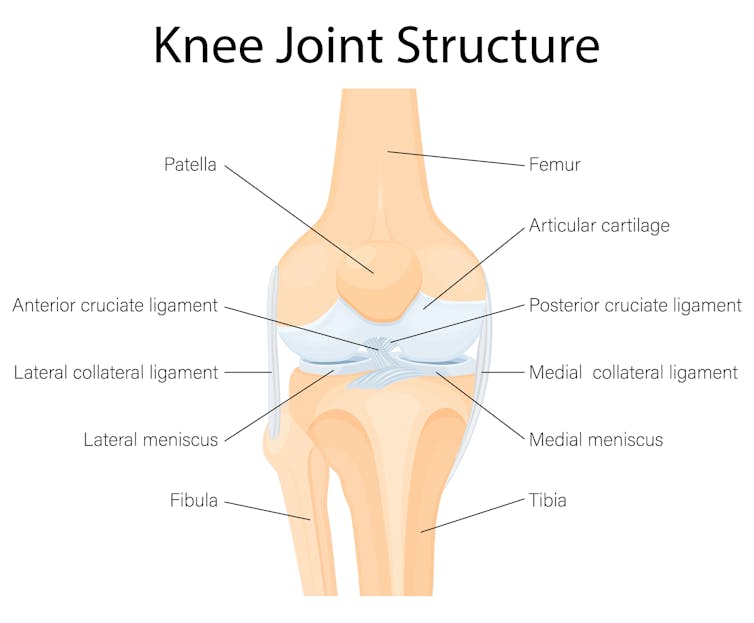
diagram of a healthy knee
A healthy knee. 
Inna Kharlamova/iStock/Getty Images Plus via Getty Images
Knee injuries are common in athletes, accounting for 41% of all athletic injuries. But knee injuries aren’t limited to competitive athletes. 

In our everyday lives, an accident or a quick movement in the wrong direction can injure the knee and require medical treatment. 

A quarter of the adult population worldwide experiences knee pain each year

As a physical therapist and board-certified orthopedic specialist, I help patients of all ages with knee injuries and degenerative conditions.

Your knees have a huge impact on your mobility and overall quality of life, so it’s important to prevent knee problems whenever possible and address pain in these joints with appropriate treatments.

Sunday, July 7, 2024

Walking brings huge benefits for low back pain

Walk against pain

Macquarie University

Adults with a history of low back pain went nearly twice as long without a recurrence of their back pain if they walked regularly, a world-first study has found.

About 800 million people worldwide have low back pain, and it is a leading cause of disability and reduced quality of life.

Repeated episodes of low back pain are also very common, with seven in 10 people who recover from an episode going on to have a recurrence within a year.

Current best practice for back pain management and prevention suggests the combination of exercise and education. However, some forms of exercise are not accessible or affordable to many people due to their high cost, complexity, and need for supervision.

A clinical trial by Macquarie University's Spinal Pain Research Group has looked at whether walking could be an effective, cost-effective and accessible intervention.

The trial followed 701 adults who had recently recovered from an episode of low back pain, randomly allocating participants to either an individualised walking program and six physiotherapist-guided education sessions over six months, or to a control group.

Researchers followed the participants for between one and three years, depending on when they joined, and the results have now been published in the latest edition of The Lancet.

Saturday, July 6, 2024

Study’s findings help to explain how exercise benefits heart health.

Exercise silences stress in the brain

By MASSACHUSETTS GENERAL HOSPITAL 

Results from a new study indicate that physical activity may help protect against cardiovascular disease in part by reducing stress-related brain activity

This effect in the brain may help to explain why study participants with depression (a stress-related condition) experienced the greatest cardiovascular benefits from physical activity.

New research indicates that physical activity lowers cardiovascular disease risk in part by reducing stress-related signaling in the brain.

In the study, which was led by investigators at Massachusetts General Hospital (MGH), a founding member of the Mass General Brigham healthcare system and published in the Journal of the American College of Cardiology, people with stress-related conditions such as depression experienced the most cardiovascular benefits from physical activity.

Thursday, June 20, 2024

Extreme heat can be dangerous for runners, cyclists and anyone spending time outdoors: 6 tips for staying safe

Watch out, Faith!

Susan YearginUniversity of South Carolina

"Faith's Folly" in Ninigret Park. Photo by Will Collette
When summer starts with a stifling heat wave, as many places are seeing in 2024, it can pose risks for just about anyone who spends time outside, whether they’re runners, people who walk or cycle to work, outdoor workers or kids playing sports.

Susan Yeargin, an expert on heat-related illnesses, explains what everyone should think about before spending time outside in a heat wave and how to keep yourself and vulnerable family members and friends safe.

What risks do people facing running, walking or working outside when it’s hot out?

The time of day matters if you’re going for a run, or if you’re walking or cycling to work during a heat wave. Early risers or evening runners face less of a risk – the Sun isn’t as hot and the air temperature is lower.

But if your normal routine is to go for a run midmorning or over lunch, you probably want to rethink exercising in the heat.

Pretty much everywhere in the U.S., the hottest part of the day is between 10 a.m. and 6 p.m. The body will gain heat from both the air temperature and solar radiation. The ground also heats up, so you’ll feel more heat rising up from the asphalt or grass.

Add humidity to the mix and that will also affect your body’s ability to dissipate heat through sweat.

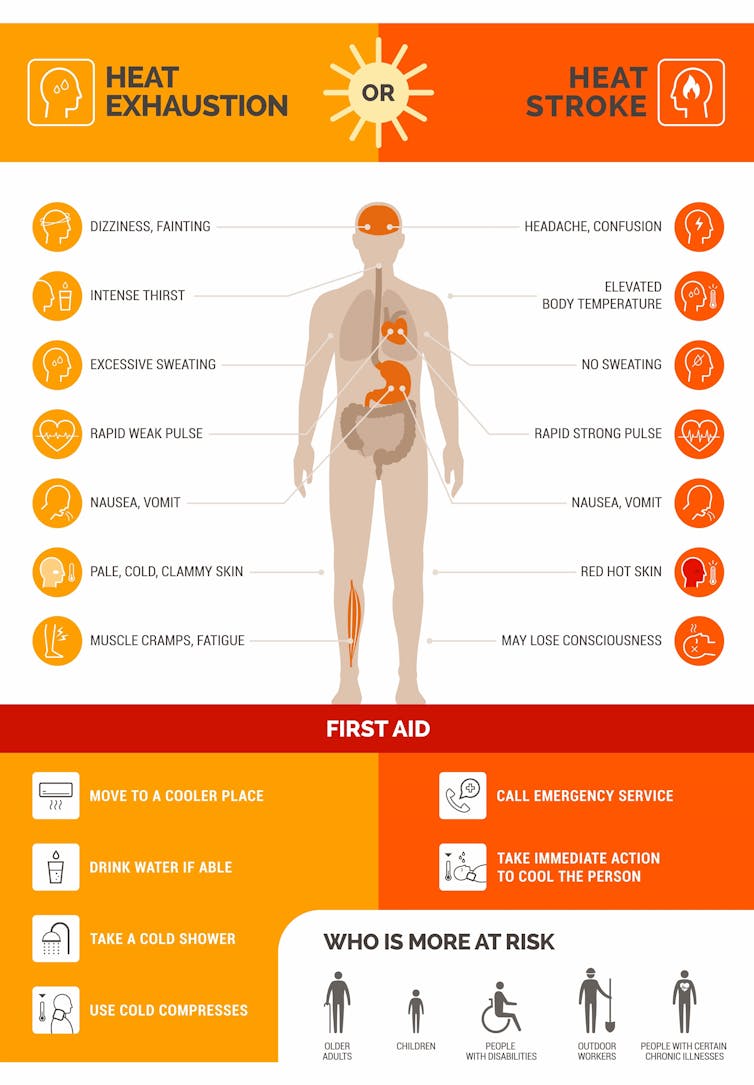
Symptoms of heat exhaustion and heat stroke
Signs of heat illness and what to do. Elenabs via Getty Images

Monday, May 13, 2024

Why You Shouldn’t Wear Makeup While Exercising

Guys, too

By WILEY 

Wrong!
A new study published in the Journal of Cosmetic Dermatology explores how wearing cosmetic foundation during aerobic exercise impacts skin and pores.

The study included 43 healthy college students (20 males and 23 females). Foundation cream was applied to participants on half of the face in two different areas (forehead and upper cheek). The other half of the face served as control.

Moisture increased after exercise in both the non-makeup and makeup zones; however, there was a greater increase in moisture in the makeup zones. This may be a result of makeup preventing moisture from evaporating from the skin. The elasticity of the skin increased after exercise, but to a greater extent in the makeup zones than in non-makeup zones.

The size of pores increased in skin without makeup after exercise, but not significantly in skin with makeup. This may indicate that wearing makeup may block pores. Oil levels increased in the non-makeup zones and decreased in the makeup zones, suggesting that it may be difficult to maintain proper oil levels on the skin when wearing makeup.

Sunday, May 12, 2024

Walk Your Way to a Longer Life

NIH Study Reveals Simple Tricks

By NATIONAL HEART, LUNG AND BLOOD INSTITUTE 

John Cleese is 84. This could be why
According to a study supported by the National Institutes of Health and published in the journal Circulation, adults at risk for heart disease who were given daily reminders and incentives to increase activity boosted their daily steps by over 1,500 after one year. 

Furthermore, many participants continued to maintain this new level of activity six months later.

The findings were simultaneously presented as late-breaking research at the American College of Cardiology’s Annual Session.

The improvements, which also resulted in an extra 40 minutes of moderate exercise each week, correlated with a 6% reduced risk of premature death and a 10% reduced risk of cardiovascular-related deaths, compared to data from prior studies. 

The Department of Health and Human Services recommends that most adults should get at least 150 minutes of moderate aerobic exercise per week, such as brisk walking, or 75 minutes of vigorous exercise, like fast cycling, or a combination of the two, paired with twice-weekly strength sessions.

Thursday, April 18, 2024

Does the time of day you move your body make a difference to your health?

Physical activity in the evening linked to greater health benefits for people with obesity

University of Sydney

Undertaking the majority of daily physical activity in the evening is linked to the greatest health benefits for people living with obesity, according to researchers from the University of Sydney, Australia who followed the trajectory of 30,000 people over almost 8 years.

Using wearable device data to categorize participant's physical activity by morning, afternoon or evening, the researchers uncovered that those who did the majority of their aerobic moderate to vigorous physical activity- the kind that raises our heartrate and gets us out of breath- between 6pm and midnight had the lowest risk of premature death and death from cardiovascular disease.

The frequency with which people undertook moderate to vigorous physical activity (MVPA) in the evening, measured in short bouts up to or exceeding three minutes, also appeared to be more important than their total amount of physical activity daily.

Tuesday, April 9, 2024

10-Year Study Unlocks the Secret to Overcoming Insomnia

The Science of Sleep

By BMJ 

Regular exercise is associated with better overall health, and several studies have suggested that physical activity promotes better quality sleep and may improve symptoms of chronic insomnia, note the researchers.

But it’s not entirely clear how much gender, age, weight (BMI), overall fitness, general health, and exercise type contribute to this association, they add.

To explore this further, the researchers assessed the frequency, duration, and intensity of weekly physical activity and symptoms of insomnia, nightly sleep clocked up, and daytime sleepiness among middle-aged adults from 21 centers in nine European countries.

Saturday, March 23, 2024

How much stress is too much?

Stress can make you sick

Lawson R. WulsinUniversity of Cincinnati

Toxic stress increases the risks for obesity, diabetes,
depression and other illnesses. 
Klaus Vedfelt/Digital Vision via Getty Images
COVID-19 taught most people that the line between tolerable and toxic stress – defined as persistent demands that lead to disease – varies widely. But some people will age faster and die younger from toxic stressors than others.

So how much stress is too much, and what can you do about it?

I’m a psychiatrist specializing in psychosomatic medicine, which is the study and treatment of people who have physical and mental illnesses. My research is focused on people who have psychological conditions and medical illnesses as well as those whose stress exacerbates their health issues.

I’ve spent my career studying mind-body questions and training physicians to treat mental illness in primary care settings. My forthcoming book is titled “Toxic Stress: How Stress is Killing Us and What We Can Do About It.”

A 2023 study of stress and aging over the life span – one of the first studies to confirm this piece of common wisdom – found that four measures of stress all speed up the pace of biological aging in midlife. It also found that persistent high stress ages people in a comparable way to the effects of smoking and low socioeconomic status, two well-established risk factors for accelerated aging.

Wednesday, January 10, 2024

Focus on right now, not the distant future

Stay motivated and on track to your long-term health goals

Kaitlin WoolleyCornell University and Paul StillmanSan Diego State University

The fresh flavors taste good now – a here-and-now reward
that’s more motivating than potentially avoiding health
problems in the future. kajakiki/E+ via Getty Images
It’s a familiar start-of-the-year scene. You’ve committed to a healthier lifestyle and are determined that this time is going to be different. Your refrigerator is stocked with fruits and veggies, you’ve tossed out processed foods, and your workout routine is written in pen in your daily planner.

Yet, as you head out one morning, the tantalizing aroma of fresh doughnuts wafts through the air. How can you resist the call of this sugary treat and stick with your healthy choices?

Conventional wisdom, grounded in years of research, suggests that the best way to resist unhealthy choices is to think about the long-term consequences. For example, you could consider how the added sugar from eating too many doughnuts can lead to diabetes and obesity. Thinking about these long-term consequences, the argument goes, should help you avoid indulging right now and better stick to your goals.

However, in our combined 25 years of experience investigating people’s self-control behavior and motivation, we have learned that, in the heat of the moment, people often overlook distant outcomes, diminishing the effectiveness of strategies focused on the long term.

In response, we propose three approaches, backed by recent research, to help you stick to healthier habits.

Sunday, November 26, 2023

Any activity is better for your heart than sitting -- even sleeping

Do something!

University College London

The study, supported by the British Heart Foundation (BHF) and published in the European Heart Journal, is the first to assess how different movement patterns throughout the 24-hour day are linked to heart health. It is the first evidence to emerge from the international Prospective Physical Activity, Sitting and Sleep (ProPASS) consortium.

Cardiovascular disease, which refers to all diseases of the heart and circulation, is the number one cause of mortality globally. 

In 2021, it was responsible for one in three deaths (20.5m), with coronary heart disease alone the single biggest killer. Since 1997, the number of people living with cardiovascular disease across the world has doubled and is projected to rise further.