Menu Bar

Home           Calendar           Topics          Just Charlestown          About Us
Showing posts with label disability. Show all posts

Wednesday, August 19, 2026

Head Start could soon be overhauled.

Here’s exactly what would change.

Chabeli Carrazana, Economy and Child Care Reporter

This story was originally reported by Chabeli Carrazana of The 19th. Meet Chabeli and read more of their reporting on gender, politics and policy.

The Trump administration is pushing a total overhaul of Head Start that could fundamentally reshape the 60-year-old program that has provided childcare and key support for America’s lowest-income families. 

A new proposed rule released last week put more than 1,400 regulatory provisions that govern how Head Start is implemented on the chopping block. Across the country, 1,600 Head Start grant recipients provide quality care for disadvantaged children, as well as support for families by connecting them to health insurance, job training, developmental screenings, specialist referrals and postpartum support. 

This latest proposal is aimed at cutting red tape and allowing more flexibility in the programs, the administration said. 

“There's 1,600 providers across the country facing different conditions, and our proposed rule will reduce their paperwork. It will streamline duplicative statutory requirements and give them flexibility for things like personnel and workforce decisions, as well as licensing relief,” said Alex Adams, the assistant secretary at the Administration for Children and Families (ACF), on a call with reporters. 

But Head Start providers and experts say the proposal may actually make it harder for programs to operate and transform Head Start to look more like commercial childcare than an anti-poverty program. 

“Families lose the assurance that Head Start means the same thing everywhere, and taxpayers lose a clear measure of impact that Head Start funding should have,” said Celena Roldan Sarillo, the president of Start Early, a nonprofit that advocates for quality early learning. 

Secretary of Health and Human Services Robert F. Kennedy Jr. said on a call with reporters to announce the changes that “it is important to protect” Head Start, which is administered by HHS and was created in part by Kennedy’s uncle Sargent Shriver during the Lyndon B. Johnson administration. Kennedy wants to see more nutrition and physical activity requirements added to Head Start, and agrees the new rules could streamline it and open seats for more children. 

That messaging, however, is misleading, said Yvette Sanchez Fuentes, the senior vice president at Start Early. 

“At first glance, these proposed changes might not seem so terrible, but as you dig deeper into it, what we will find is that there really are a lot of changes that will impact what is the heart of Head Start,” Sanchez Fuentes said, adding that the performance standards are not just red tape, “they really are the foundation for how we ensure that programs across the country are supporting children, families and communities in the way that they want best.”

Here is a breakdown of what the administration is proposing to change for Head Start.

Saturday, August 1, 2026

Trump to HIV and Cancer Patients: Get Back to Work

Priorities

By David Dayen

This piece is part of our Trump’s Beautiful Disaster series about the consequences of the mammoth budget law, one year later. You can see all stories in this series here.

Yesterday was the 61st anniversary of the signing of Medicare and Medicaid, a promise by the government to at least care for the oldest and most vulnerable people in our society. Today is the deadline for public comment on a rule that could force severely ill patients with cancer, HIV, and other ailments to get out of their hospital beds and go to work if they want the government to keep that promise.

The new rule, which was spurred by cuts to Medicaid in the One Big Beautiful Bill Act (OBBBA) but was not required in the text, adds a layer of bureaucracy for “medically frail” individuals who got a statutory exemption from the law’s new work requirements for health coverage. 

Medical frailty has long been a concept in Medicaid, giving patients suffering from serious conditions the ability to access coverage. But the administration’s interim final rule published last month said that not only would individuals have to exhibit one of the medically frail conditions, but their condition would have to “significantly impair” their ability to work.

“That’s not an existing standard, and there’s no data source for that information,” said Jennifer Wagner with the Center on Budget and Policy Priorities (CBPP). This means that states, which are partners in Medicaid, will have to establish an entire regime for verifying “significant impairment” on the fly, and justify it to a federal government that is quick to say that anything resembling expansion of assistance to the poor is actually fraud. “There’s language in the [rule] that says ‘we will hold states accountable’ if they don’t follow this unclear definition precisely,” Wagner said.

So people with serious medical maladies—osteosarcoma patients suffering severe bone weakness, for instance—will have to jump through very undefined bureaucratic hoops to “prove” they cannot work 80 hours a month, with the risk of a coverage loss if that’s denied. Even a temporary coverage gap could be serious. “They will die, they will become sick,” said Carl Schmid, executive director of the HIV+Hepatitis Policy Institute in Washington. “That’s why we pushed so hard for the exemption, because we know the ramifications of people losing access to health care.”

Schmid cited estimates that 145,000 Americans living with HIV could be affected by the change. About 40 percent of all Americans with HIV rely on Medicaid, according to Schmid.

Friday, October 24, 2025

Trump’s attempt to gut special education office has some conservative parents on edge

Let this sink in: special education for disabled children is a "Democrat program" according to Trump

This story was originally reported by Sara Luterman of The 19th. Meet Sara and read more of her reporting on gender, politics and policy.

80+ years ago, Dr. Seuss could see Trump and
 his America First push coming
The Trump administration’s decision to lay off most employees within the U.S. Department of Education’s special education office was described by the president this week as part of cuts to “Democrat programs that we were opposed to.” This was news to many conservative parents of disabled children, as well as disability policy experts. 

More than 7.3 million children in all 50 states rely on special education services, which are partially funded and enforced by the federal government.

“Special education is a nonpartisan program. Special education services are provided to any student with a disability, regardless of political party,” said Maria Town, executive director of the nonpartisan American Association of People with Disabilities. 

A federal district court judge in Northern California on Wednesday granted an emergency order to temporarily pause the mass layoffs that occurred throughout the federal government. 

If the gutting of the Office of Special Education and Rehabilitative Services, or OSERS, proceeds, Town and other disability advocates said there is no way the Department of Education can continue to fulfill its responsibilities to enforce the Individuals with Disabilities Education Act. The act — known by its acronym, IDEA —  guarantees students with disabilities the same right to public education as students without disabilities. 

Town pointed out that during the first term of President Donald Trump, a Republican, the office determined that Texas, a Republican-led state, had illegally placed a cap on the number of students who could receive special education services in each district. Texas lawmakers lifted the cap in 2017, after receiving pressure from the Department of Education. 

Sunday, August 31, 2025

Trump’s Department of Labor Continues Its Onslaught against Workers

Flurry of rule roll-backs hurt workers

By Century Foundation staff Julie Su, Senior Fellow; Rachel West, Senior Fellow and Andrew Stettner, Director of Economy and Jobs


The Trump administration is doubling down on the president and his Department of Labor’s (DOL) deep hostility toward workers. 

Over the past six months, Donald Trump, his inaptly named Department of Government Efficiency (whose efforts to cut the federal budget by $2 trillion was a colossal failure and which reversed itself on many occasions, actions that cost more than they saved), his union-busting cronies, and his Department of Labor leadership have actively—and in many cases illegally—cut funds for programs that support workers, worker organizing, worker safety, and job training. 

Trump’s DOL has reversed commitments to states to build an effective unemployment insurance system; undercut its own ability to fight wage theft, international worker exploitation, and discrimination; and actively dismantled the department from the inside by slashing 20 percent of its staff.

Just before the July 4 holiday—as the nation was focused on Republicans’ efforts to pass the largest-ever cuts to Medicaid and food assistance—Trump’s DOL issued a new barrage of attacks on workers, promising to turn a blind eye to stolen wages, safety violations, and corporate overreach. 

In total, the DOL announced sixty-four regulatory actions, the vast majority of which would reverse critical standards that ensure workers get a just day’s pay and come home healthy and safe (see Table 1 and Appendix). 

These actions would put the lives of workers across the economy at risk, deprive millions more of minimum wage and overtime protections, and sanction discrimination against workers of color, women, and workers with disabilities. 

At a time of rising prices, increased economic anxiety, and heightened dangers from climate change, the DOL should be doubling down on its mandate to protect and empower workers. Instead, the Trump administration is making workers more vulnerable to abuse and less safe on the job.

This factsheet highlights just some of the key deregulatory actions that will harm workers, identifying those that are particularly important to push back on through notice and comment procedures where available.

Monday, April 7, 2025

Basic Human Needs Are Not Fair Game for Billionaire Tax Cuts

Providence schoolteacher describes her dream of financial independence

By Marisa Pesce 

Tens of millions of Americans rely on the public assistance programs — like Medicaid, SNAP, housing aid, and more — that Republican leaders are now threatening to gut.

I’m one of them.

My dream is to regain the financial independence I once enjoyed before life and systemic obstacles got in the way. I come from a family with a history of mental illness and domestic abuse, and I’ve suffered through mental health challenges myself.

I’ve always worked hard. After high school, I earned a college degree and found the calling of being a teacher. I earned and paid for my Master’s degree while teaching full time as a high school math teacher. I still struggled with challenges, but life was good. The system had worked. I had a home and was financially independent.

Then, I was the victim of a major, life changing domestic violence event, and my life started to unwind. I had to relocate to another state where I didn’t have a place to call home, my benefits were less, and my mental illness was exacerbated by the isolation and trauma.

Despite the challenges I faced, I was able to find some needed assistance for food and mental health care as I got on my feet.

Also known as “food stamps,” the Supplemental Nutrition Assistance Program (SNAP) was a godsend for helping me put food on the table. Throughout my life both Medicaid and Medicare have helped with mental health treatment, and the Supplemental Security Disability Income (SSDI) program helped keep me out of poverty.

Sunday, April 6, 2025

Valverde, Tanzi introduce legislation to extend childhood early intervention coverage alongside families and advocates

Allows services to continue without disruption 

Sen. Bridget Valverde and Rep. Teresa A. Tanzi were joined by advocates and parents with RIPIN Thursday to call for the passage of legislation to extend the period of eligibility for early intervention programs for infants and children with disabilities.

“Early childhood is such a critical period of development, and children who need developmental services can lose ground when those services are interrupted,” said Senator Valverde (D-Dist. 35, North Kingstown, East Greenwich, South Kingstown). “Rhode Island’s hard cutoff of early intervention on the child’s third birthday can leave children with service gaps that can last months, which is antithetical to the goal of addressing their needs early so they can thrive in life, in school and beyond. Allowing flexibility with their transition to preschool will go a long way toward ensuring their service needs are met without interruption, particularly since many preschool programs align with the school year.”

Early Intervention (EI) is a program that provides home-based services to help families support the growth and development of children who are delayed in their development or have a diagnosed condition known to cause developmental delay. At the age of three children lose eligibility and are supposed to transition to preschool special education programs if they still require developmental assistance.

“Early intervention programs have proven extraordinarily successful both nationally and here in Rhode Island, allowing children with developmental delays and disabilities to thrive along with their peers,” said Representative Tanzi (D-Dist. 34, South Kingstown, Narragansett). “But the mismatch between when the eligibility period for these programs ends and preschool special education begins in the fall means that we are unnecessarily interrupting services to children who need them simply because of when their birthday falls during the year. Giving families the flexibility to extend services until the fall will end this injustice and ensure that these programs continue their good work uninterrupted.”

Senator Valverde and Representative Tanzi are sponsors of the Early Intervention Continuity and Access Act (2025-S 0247, 2025-H 5462), which would charge the Executive Office of Health and Human Services (EOHHS) to develop a plan to allow children to remain in their EI programs until the September 1 following their third birthday, in order to avoid a gap in support between their birthday and when the child’s school year begins.

Saturday, April 5, 2025

Rep. Tina Spears bill would help to quickly find missing disabled people

“PURPLE alert” legislation for missing individuals with disabilities 

Rep. Tina L. Spears has introduced legislation to establish a “PURPLE alert” system to help quickly find missing adults with serious disabilities that put their own health and safety at risk. Sen. Todd M. Patalano will shortly introduce companion legislation in the Senate.

“As recent events have shown, this is a missing piece in our statewide system of care for the health and safety of adults with disabilities,” said Representative Spears (D-Dist. 36, Charlestown, New Shoreham, South Kingstown, Westerly), who serves as the executive director of the Community Provider Network of Rhode Island, which represents providers who support people with disabilities. 

“This legislation would bring together law enforcement, disability advocates, media outlets and state agencies in a collaborative effort to build a system that works similarly to the alert programs that we already have to get out the word to our communities when a person goes missing whose disability and the circumstances of their disappearance place them in danger.”

Last month, a nonverbal autistic woman went missing for several days in Cranston before being found alive in the back of a parked vehicle.  

Sunday, March 23, 2025

Home Improvements Can Help People Age Independently. But Medicare Seldom Picks Up the Bill.

Access is cost-effective for Medicare when it helps people stay in their homes


Chikao Tsubaki had been having a terrible time.

In his mid-80s, he had a stroke. Then lymphoma. Then prostate cancer. He was fatigued, isolated, not all that steady on his feet.

Then Tsubaki took part in an innovative care initiative that, over four months, sent an occupational therapist, a nurse, and a handy worker to his home to help figure out what he needed to stay safe. 

In addition to grab bars and rails, the handy worker built a bookshelf so neither Tsubaki nor the books he cherished would topple over when he reached for them.

Reading “is kind of the back door for my cognitive health — my brain exercise,” said Tsubaki, a longtime community college teacher. Now 87, he lives independently and walks a mile and a half almost every day.

The program that helped Tsubaki remain independent, called Community Aging in Place: Advancing Better Living for Elders, or CAPABLE, has been around for 15 years and is offered in about 65 places across 26 states. It helps people 60 and up, and some younger people with disabilities or limitations, who want to remain at home but have trouble with activities like bathing, dressing, or moving around safely. Several published studies have found the program saves money and prevents falls, which the Centers for Disease Control and Prevention says contribute to the deaths of 41,000 older Americans and cost Medicare about $50 billion each year.

EDITOR'S NOTE: in Rhode Island, we have the Ocean State Center for Independent Living (OSCIL) that can help. CLICK HERE.   - W. Collette

Wednesday, March 12, 2025

5 reasons veterans are especially hard-hit by federal cuts

How King Donald plans to screw veterans

Jamie Rowen, UMass Amherst

The Department of Veterans Affairs is planning to cut 83,000 jobs, slashing employment by over 17% at the federal agency that provides health care for millions of veterans, according to an internal memo obtained by The Associated Press on March 5, 2025.

The department known as the VA manages and directly provides comprehensive services for veterans. Those services include health care, short- and long-term housing options, life insurance, pensions, education stipends, and assistance in jails and courts. The VA also engages in pathbreaking public health research. One-quarter of the VA’s 482,000 employees are veterans.

For the past month, the Trump administration has been cutting federal spending, causing numerous hardships for government employees, the agencies they work for and the people they serve.

But veterans are among those hardest hit, and the impact goes well beyond job loss.

My research on veterans in the criminal legal system illustrates the stark challenges that service members already face as they integrate back into civilian life.

Trump’s budget cuts will make this process only harder. Here are five reasons why.

Sunday, December 15, 2024

Mocking the Disabled Is Cruel and Immoral — Especially When Trump Does It

This is so wrong

By Eric S. Jackson

For most people, verbal communication is a seamless, unthinking act.

But for individuals with communication disorders — such as stuttering, aphasia, or other speech and language impairments — speech is anything but automatic. They must not only consider what they say but also how they say it, knowing their manner of speaking might elicit judgment, dismissal, or ridicule.

And soon they’ll have to worry about that ridicule coming from the White House again.

President-elect Trump has repeatedly mocked people with disabilities, including his infamous imitation of a reporter with a congenital movement disorder and President Joe Biden’s stuttering, often to eruptions of laughter from his supporters. Trump also allegedly told his nephew to let his son with developmental disabilities die.

When the most powerful leader in the world engages in this behavior, it sends a chilling message: Some people are less deserving of respect simply because of their disabilities or how they express themselves.

Saturday, June 29, 2024

Donald Trump ia a Profound Threat to Social Security, Medicare, and Seniors

How do we know? He's already told us—over and over and over again.

NANCY J. ALTMAN in Common Dreams

Donald Trump was the worst president for seniors in the history of the nation. That is not hyperbole. Alarmingly, if elected again, he will be even worse—and, worryingly, more effective.

When Trump ran for president in 2016, he claimed he would be the one Republican not to cut our earned benefits but, when he actually became president, every single one of his budgets proposed deep cuts to Social Security and Medicare, as well as Medicaid.

When Trump couldn’t get the cuts enacted, he employed the old tactic of “starve the beast.” Figuring tax cuts are easier to enact than benefit cuts, he cut income taxes which help to fund Medicare and Medicaid, and sought to defund Social Security, which has its own dedicated revenue source.

To advance his goal of undermining Social Security, Donald Trump grabbed the questionable power to go after its dedicated revenue unilaterally—something without precedent. Because Trump was limited to executive action, he was able to only defer the revenue, but he made clear that he would not just defer the revenue, but eliminate it, if he were re-elected. Insufficient dedicated revenue leads to automatic cuts. Conveniently, automatic cuts means there is no one to clearly be held accountable.

Trump’s goals to undermine these programs, so vital to seniors, have not changed. Trump continues to claim he won’t cut benefits despite his record to the contrary, but tells the truth from time to time. Moreover, he is reportedly considering, once again, defunding Social Security, if he has the chance. Trump also plans to continue to give his billionaire friends massive tax giveaways.

Friday, May 31, 2024

Global life expectancy to increase by nearly 5 years by 2050 despite geopolitical, metabolic, and environmental threats

Hopefully, they'll be good years

Institute for Health Metrics and Evaluation

The latest findings from the Global Burden of Disease Study (GBD) 2021, published today in The Lancet, forecast that global life expectancy will increase by 4.9 years in males and 4.2 years in females between 2022 and 2050.

Increases are expected to be largest in countries where life expectancy is lower, contributing to a convergence of increased life expectancy across geographies. The trend is largely driven by public health measures that have prevented and improved survival rates from cardiovascular diseases, COVID-19, and a range of communicable, maternal, neonatal, and nutritional diseases (CMNNs).

This study indicates that the ongoing shift in disease burden to non-communicable diseases (NCDs) -- like cardiovascular diseases, cancer, chronic obstructive pulmonary disease, and diabetes -- and exposure to NCD-associated risk factors -- such as obesity, high blood pressure, non-optimal diet, and smoking -- will have the greatest impact on disease burden of the next generation.

Monday, May 20, 2024

Explaining "Hate" to kids

Why do people hate people?

Kristine Hoover, Gonzaga University and Yolanda Gallardo, Gonzaga University

Why do people hate people? – Daisy, age 9, Lake Oswego, Oregon

Have you ever said “I hate you” to someone? What about using the “h-word” in casual conversation, like “I hate broccoli”? What are you really feeling when you say that you hate something or someone?

The Merriam-Webster dictionary describes the word “hate” as an “intense hostility and aversion usually deriving from fear, anger, or sense of injury.” All over the world, researchers like us are studying hate from disciplines like education, history, law, leadership, psychology, sociology and many others.

If you had a scary experience with thunderstorms, you might say that you hate thunderstorms. Maybe you have gotten very angry at something that happened at a particular place, so now you say you hate going there. Maybe someone said something hurtful to you, so you say you hate that person.

Understanding hate as an emotional response can help you recognize your feelings about something or someone and be curious about where those feelings are coming from. This awareness will give you time to gather more information and imagine the other person’s perspective.

So what is hate and why do people hate? There are many answers to these questions.

Tuesday, December 26, 2023

The wheelchair repair system is broken

For example, why should a wheelchair-bound person need an insurance pre-authorization to get their chair fixed?

By Jim Langevin, Rhode Island Current

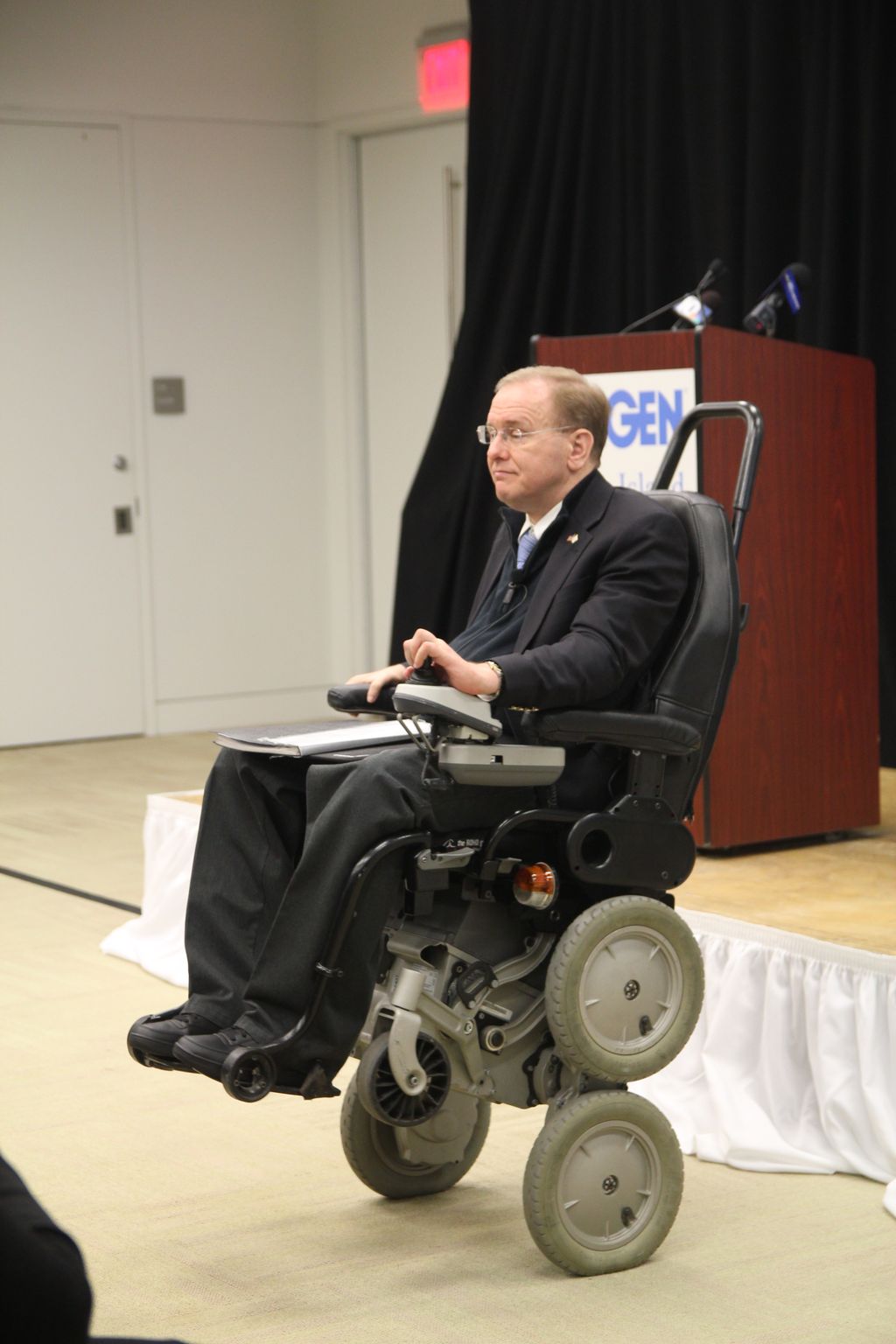
I have been a power wheelchair user for over 40 years. My chair is custom configured to my specific needs, and I rely on it for my mobility and independence.

It helps me do my job effectively, to socialize with colleagues, friends, and family, and to live more actively in my community. When my wheelchair needs repairs I want it, no, I need it, repaired as soon as possible.

Many of the organizations involved in the process of providing repairs on complex power wheelchairs have been under fire by consumers for long wait times and insufficient customer service when it comes to repairs on their wheelchairs. 

As I have dug into this issue, I have come to learn of the tremendous complexity and bureaucracy built into the system and the need for reform of this broken process to allow repairs on complex power wheelchairs to happen more quickly.

First, we must eliminate the burdensome administrative requirements in place delaying wheelchair repair, such as insurance prior authorization, duplicative documentation, and other unnecessary hurdles. 

Tuesday, October 3, 2023

Gabe Amo and his GOP opponent in CD-1 race file financial disclosures

One CD1 candidate has credit card debt; the other collects a six-figure pension

By Nancy Lavin, Rhode Island Current

Republican Congressional hopeful Gerry Leonard is receiving nearly $150,000 a year between his military pension and disability pay, while Democratic rival Gabe Amo lost his six-figure salary when he quit his White House job in April – and has up to $15,000 in credit card debt.

That’s according to financial statements each candidate filed with the U.S. House of Representatives earlier this year.

Federal law requires that members of the U.S. House of Representatives and candidates who raise or spend more than $5,000 on their campaigns share some details of their personal finances by submitting public, written financial disclosures to the House clerk. The 2023 documents — due by May 15 or once they raise or spend $5,000 — include financial statements up to the filing period and cover all of calendar year 2022.

Sunday, September 24, 2023

Nazis and evangelicals - a long-standing relationship

Legacy of shame

Meghan Garrity, George Mason University and Melissa Jo Wilde, University of Pennsylvania

Thousands of people attend a pro-Nazi rally at Madison
Square Garden in New York in May 1934, with
counterprotestors outside. 
Anthony Potter Collection/Hulton Archive via Getty Images
Each September marks the anniversary of Nazi Germany’s Nuremberg Laws, whose passage in 1935 stripped Jews of their German citizenship and banned “race-mixing” between Jews and other Germans.

Eighty-eight years later, the United States is facing rising antisemitism and white supremacist ideology – including two neo-Nazi demonstrations in Florida in September 2023 alone.

The Nuremberg Laws were a critical juncture on the Third Reich’s path toward bringing about “the full-scale creation of a racist state … on the road to the Holocaust,” according to legal historian James Whitman. Yet across the Atlantic, many Americans were unconcerned, and even admiring – including some religious leaders.

As a political scientist and a sociologist, we wanted to examine what Americans thought about Hitler and the National Socialist Party before the U.S. entered World War II – and see what lessons those findings might hold for our country today. Our recent research, which focused on religious publications, suggests that Americans’ support for Nazi Germany is best explained by belief in white supremacy.