Menu Bar

Home           Calendar           Topics          Just Charlestown          About Us

Friday, March 6, 2015

Old McPontiff Had a Farm

Francis is living up to his growing reputation as the "People's Pope."
Papal Farm at Castel Gandolfo
Papal Farm at Castel Gandolfo/Catholic News Service
Old songs occasionally need to be refreshed with updated verses.

Here’s one: “Old McPope, he had a farm /E-I-E-I-O/ and on that farm he had a cow…a donkey… chickens…ostriches…and rabbits…/E-I-E-I-O!”

Who knew that the Pope had a farm?

Well, he does. Fifteen miles outside of Rome, Castel Gandolfo is a 135-acre plot of Paradise on Earth. It features Roman ruins, breathtaking views of the Tyrrhenian Sea, and (of course) a castle.

Since the 1500s, this place has been a summer vacation home for popes. In the 1930s, the Vatican added some bucolic functionality by planting crops and bringing in some farm animals.

And now, Pope Francis, who chose the patron saint of animals as his papal name, has opened the farm to the masses, welcoming us to witness the productive bounty and beauty of nature.


Self-perpetuating problems

Basic personality changes linked to unemployment, study finds
American Psychological Association (APA), Science Daily

Unemployment can change peoples' core personalities, making some less conscientious, agreeable and open, which may make it difficult for them to find new jobs, according to research published by the American Psychological Association.

"The results challenge the idea that our personalities are 'fixed' and show that the effects of external factors such as unemployment can have large impacts on our basic personality," said Christopher J. Boyce, PhD, of the University of Stirling in the United Kingdom. 

"This indicates that unemployment has wider psychological implications than previously thought."


Thursday, March 5, 2015

VIDEO: Winter woes

Fulminations on our frozen tundra
By Will Collette

Another day, another snow storm.

As we prepare the daily chore of digging out from yet another of the endless stream of storms that have hit us since January 19, a number of thoughts come to mind. Like the need to be careful, the costs we are incurring and how it ties in with our attitudes and policies toward taxes and climate change.

Among the consequences of our historic winter is that the unforeseen demands of plowing, shoveling, pickaxing ice, clearing decks and roofs, making sure the birds are fed, etc. is the crimp it has put in my ability to write and research. I’m sure that’s just fine with the CCA Party and others, such as our nomadic state Rep Flip Filippi. But I do feel some sense of failed responsibility to Progressive Charlestown readers.

I’m also concerned that we don’t get so numb or blasé about the weather that we fail to be careful. There’s a keen risk of heart attack among those vulnerable and injury from falls. I already took one hard spill. I suggest taking a look at the storm advice we ran a few weeks ago in Progressive Charlestown (click here).


Seriously

VIDEO: I WANT this. NOW.


...But I think I'd want to have a shield in the back to keep the snow and stuff from hitting me in the face. Otherwise, yee-haw, ride 'em snow guys!


Bad news for New England – all-electric cars lose efficiency in cold climates

The best-and worst-places to drive your electric car
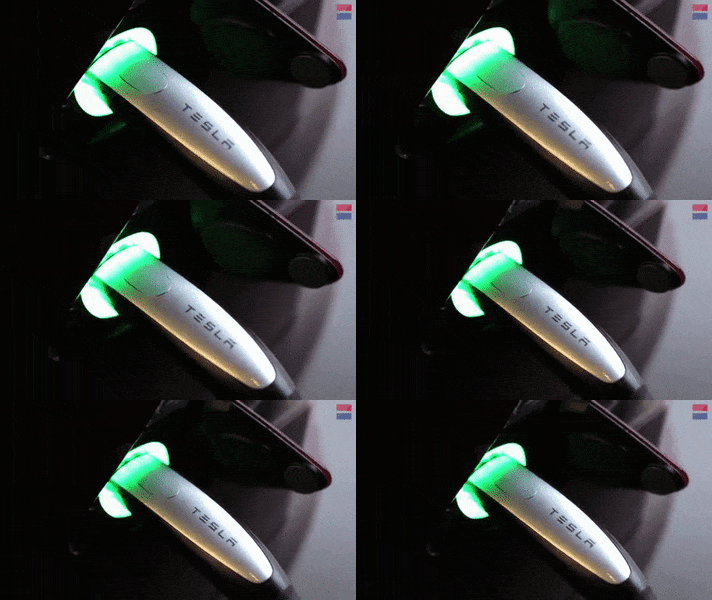
Car Tesla animated GIFNsikan Akpan, Science/AAAS 

For those tired of winter, you’re not alone. Electric cars hate the cold, too. Researchers have conducted the first investigation into how electric vehicles fare in different U.S. climates. The verdict: Electric car buyers in the chilly Midwest and sizzling Southwest get less bang for their buck, where poor energy efficiency and coal power plants unite to turn electric vehicles into bigger polluters.

Scientists at Carnegie Mellon University (CMU) in Pittsburgh, Pennsylvania, began their research by pulling public data from FleetCarma, a company that tracks vehicle performance among car fleets operated by governments and businesses. 


Yet another benefit of coffee drinking

Can coffee reduce your risk of MS?
American Academy of Neurology
 animated GIFDrinking coffee may be associated with a lower risk of developing multiple sclerosis (MS), according to a study that will be presented at the American Academy of Neurology's 67th Annual Meeting in Washington, DC, April 18 to 25, 2015.

"Caffeine intake has been associated with a reduced risk of Parkinson's and Alzheimer's diseases, and our study shows that coffee intake may also protect against MS, supporting the idea that the drug may have protective effects for the brain," said study author Ellen Mowry, MD, MCR, with Johns Hopkins University School of Medicine in Baltimore and a member of the American Academy of Neurology.

For the study, researchers looked at a Swedish study of 1,629 people with MS and 2,807 healthy people, and a U.S. study of 1,159 people with MS and 1,172 healthy people. 

The studies characterized coffee consumption among persons with MS one and five years before MS symptoms began (as well as 10 years before MS symptoms began in the Swedish study) and compared it to coffee consumption of people who did not have MS at similar time periods. 

The study also accounted for other factors such as age, sex, smoking, body mass index, and sun exposure habits.

Stupid isn’t always political

Both Liberals, Conservatives Can Have Science Bias
Ohio State University, Science Daily

New research suggests that liberals, as well as conservatives, can be biased against science that doesn't align with their political views.

The study found that people from both the left and right expressed less trust in science when they were presented with facts that challenged specific politicized issues.

For conservatives, climate change and evolution were the issues that led them to lose some trust in science. For liberals, it was hydraulic fracturing (fracking) and nuclear power.

The results challenge recent books and articles that claim conservatives alone have difficulty dealing with scientific fact.

"Liberals are also capable of processing scientific information in a biased manner," said Erik Nisbet, co-author of the study and associate professor of communication and political science at The Ohio State University.

"They aren't inherently superior to conservatives."

The researchers caution that the results shouldn't be interpreted to create a false balance in which each side could be seen as equally wrong on all issues.


Wednesday, March 4, 2015

“I’m not unemployed…I’m a consultant”

GM is worth around $60 billion, and has over 200,000employees. Its front-line workers earn from $19 to $28.50 an hour, with benefits.  

Uber is estimated to be worth some $40 billion, and has 850 employees. Uber also has over 163,000 drivers (as of December – the number is expected to double by June), who average $17 an hour in Los Angeles and Washington, D.C., and $23 an hourin San Francisco and New York. 

But Uber doesn’t count these drivers as employees. Uber says they’re “independent contractors.” 

What difference does it make?


VIDEO: Looking scientifically at the Anti-Vax movement

Osprey watch program in Charlestown on Sunday

By ecoRI News staff
Feathers Nature animated GIFIn 2014, 66 volunteers monitored 199 known osprey nest sites across Rhode Island. 

Rhode Island’s population of ospreys, as well as the rest of the country’s, declined significantly after World War II because of the heavy use of the pesticide DDT. In 1997, hopes of better managing its osprey population, the Rhode Island Department of Environmental Management (DEM) began monitoring the state’s population of fish-eating raptors to document their recovery and breeding success.

In 2010, the Audubon Society of Rhode Island took over management of the program. The latest osprey monitoring report shows that in 2014 a total of 186 young ospreys successfully fledged — developed feather and wing muscles for flight — compared to eight in 1977. DDT was banned in 1972.

The Rhode Island Osprey Monitoring Program relies entirely on volunteers to monitor nearly 200 known nest sites around the state.

The Lobbyists at Your Dinner Party

Every purveyor of food and drink wants the government to advise Americans to consume more of what they produce.
the office animated GIF

Remember the old food pyramid?

Until “MyPlate” replaced it a few years ago, the U.S. government’s official dietary advice for Americans fit neatly into that triangle.

The government recently moved toward updating those standards again. And the result isn’t nearly as digestible. In classic bureaucratic form, the Department of Health and Human Services cooked up a 571-page draft report for Americans to comment on.

The actual updated dietary guidelines will come later. Here’s what we know about the draft so far: The meat and soda industries hate it.

Unfortunately for all of us, the government’s dietary advice is subject to pressure from lobbying. As you might guess, every purveyor of food and drink wants the feds to advise Americans to consume more of what they produce — or at least not less of it.


Bunny maniacs!

DEA Agent Predicts Dope-Crazed Rabbits If Utah Passes Marijuana Bill

The State of Utah is considering a bill legalizing the use of edible forms of marijuana certain debilitating medical conditions.

However, a DEA agent testified before a hearing of a Utah State Senate committee last week that if the state passed the bill the state’s wildlife may “cultivate a taste”for marijuana and lose their fear of humans.

The Washington Post reports that Matt Fairbanks, Special Agent for the Drug Enforcement Administration, spoke of his time with the DEA spent eliminating back-country marijuana grow operations in the Utah mountains:


Tuesday, March 3, 2015

VIDEO: The sixty-year pitch.

Third of three parts. Part 1: Last Tango for nuclear?; Part 2: Atomic Balm.

Indian Point Nuclear Power Plant, Tony Fischer/flickr
The nuclear power industry has often been its own worst enemy through its marketing.

At the height of the Cold War in 1953, President Eisenhower rolled out the “Atoms for Peace” campaign, envisioning everything from electrical generation to harnessing atomic bombs to dredging harbors and damming rivers. 

The following year, Atomic Energy Commission Chair Lewis Strauss upped the ante, envisioning a day when “our children will enjoy in their homes electrical energy too cheap to meter.”

Strauss was placing his bets on nuclear fusion, which, sixty years later, is still on the drawing board. And the meters are still ticking away.

Eager to invest in nukes, utilities took their cue from the AEC Chairman. The Atomic Industrial Forum, the first nuclear power trade association, led the way in messages equating nuclear power with easy living and patriotism. Utilities ran ad campaigns that promised cheap nuclear energy.


America at War: With Bill O’Reilly

A blowhard on the front lines

By Brian McFadden

Click here to see some of the many harrowing adventures in combat experienced by Bill O'Reilly.