Mainz researchers discover new mechanism associated with the
worldwide decline of bee populations
JOHANNES GUTENBERG UNIVERSITAET MAINZ
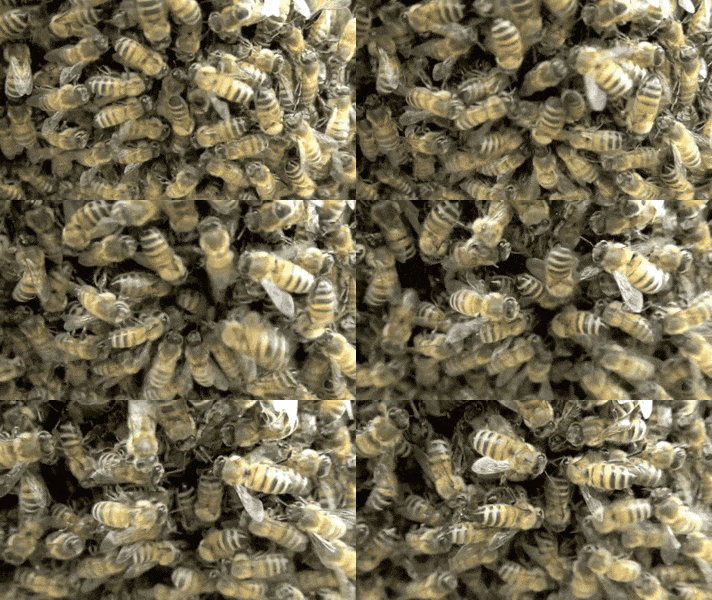 One possible cause of the alarming bee mortality we are
witnessing is the use of the very active systemic insecticides called
neonicotinoids.
One possible cause of the alarming bee mortality we are
witnessing is the use of the very active systemic insecticides called
neonicotinoids. A previously unknown and harmful effect of neonicotinoids has been identified by researchers at the Mainz University Medical Center and Goethe University Frankfurt. They discovered that neonicotinoids in low and field-relevant concentrations reduce the concentration of acetylcholine in the royal jelly/larval food secreted by nurse bees.
This signaling molecule is relevant for the development of the honeybee larvae. At higher doses, neonicotinoids also damage the so-called microchannels of the royal jelly gland in which acetylcholine is produced. The results of this research have been recently published in the eminent scientific journal PloS ONE.
"As early as 2013, the European Food Safety Authority
published a report concluding that the neonicotinoid class of insecticides
represented a risk to bees," said Professor Ignatz Wessler of the
Institute of Pathology at the University Medical Center of Johannes Gutenberg
University Mainz (JGU).