Menu Bar

Home           Calendar           Topics          Just Charlestown          About Us

Wednesday, January 3, 2018

Put away the whips

Is punishment as effective as we think?
Hokkaido University

Related imagePunishment might not be an effective means to get members of society to cooperate for the common good, according to a social dilemma experiment.

A game to study human behavior has shown punishment is an ineffective means for promoting cooperation among players. The result has implications for understanding how cooperation has evolved to have a formative role in human societies.

Human societies maintain their stability by forming cooperative partnerships. But, cooperation often comes at a cost. 

For example, a person taking time to raise the alarm in order to alert other members of a group to impending danger could be losing valuable time to save oneself. It is unclear why natural selection favors cooperativeness among individuals who are inherently selfish.

In theoretical studies, punishment is often seen as a means to coerce people into being more cooperative. To examine such theory, a team of international researchers led by Marko Jusup of Hokkaido University in Japan and Zhen Wang of Northwestern Polytechnical University in China has conducted a "social dilemma experiment." 


Follow the money

Some Doctors Still Billing Medicare for the Most Complicated, Expensive Office Visits
Thousands of times a year, Medicare patients file into Dr. Mark Roberts’ family practice clinic in rural Evergreen, Alabama, for standard office visits.

And almost every time they did in 2015, Roberts billed Medicare for the most complex, and most expensive, type of office visit — one that typically takes 40 minutes and for which Medicare reimbursed him an average of $94. He billed for 4,765 such high-level visits that year, according to federal data, more than any other doctor in the country. And for that, he collected nearly $450,000 from Medicare.

Roberts’ billing pattern was highly unusual compared to his peers. All told, family medicine doctors in Alabama billed for such visits only 5 percent of the time. Roberts did so 95 percent of the time. Even some doctors who had sicker patients billed for top-level visits less often, Medicare data show. Several messages left at Roberts’ office were not returned.

For years, internal government watchdogs have been warning the federal Medicare program that some doctors were overcharging for office visits. And for years, federal health officials have been promising to focus on the problem.

But a new ProPublica analysis shows very little has changed since we first wrote about the issue in 2014. ProPublica found that 1,825 health professionals, including Roberts, billed Medicare for the most expensive type of office visits for established patients at least 90 percent of the time in 2015. That was almost the same as the 1,807 that we found based on 2012 data. Some physicians that were billing Medicare this way in 2012 still were in 2015, we found.

Look up how your doctor bills for services in the Medicare program: Treatment Tracker
We've updated our database of Medicare’s payments to individual doctors and other health professionals serving the 49 million seniors and disabled in its Part B program.


Year of broken promises

Related imageAlmost one year in, it’s time for another update for Trump voters on his election promises:

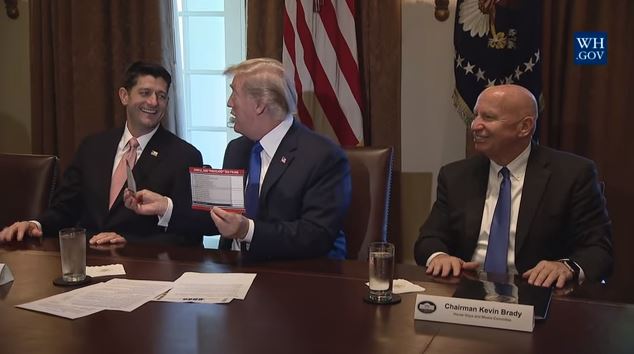
1. He told you he’d cut your taxes, and that the super-rich like him would pay more. You bought it. But his new tax law does the opposite. By 2027, according several nonpartisan analyses, the richest 1 percent will have got 83 percent of the tax cut and the richest 0.1 percent, 60 percent of it. As Trump told his wealthy friends at Mar-a-Lago just days after the tax bill became law, “You all just got a lot richer.”

2. He promised to close “special interest loopholes that have been so good for Wall Street investors but unfair to American workers,” especially the notorious “carried interest” loophole for private-equity, hedge fund, and real estate partners. You bought it. But the new tax law keeps the “carried interest” loophole.

3. He told you he’d repeal Obamacare and replace it with something “beautiful.” You bought it. But he didn’t repeal and he didn’t replace. (Just as well: His plan would have knocked at least 23 million off health insurance, including many of you.) Instead, he’s doing what he can to cut it back and replace it with nothing. The new tax law will result in 13 million people losing health coverage, according to the Congressional Budget Office.

4. He told you he’d invest $1 trillion in our nation’ crumbling infrastructure. You bought it. But after his giant tax cut for corporations and millionaires, there’s no money left for infrastructure.

5. He said he’d clean the Washington swamp. You bought it. But he’s brought into his administration more billionaires, CEOs, and Wall Street moguls than in any administration in history, to make laws that will enrich their businesses, and he’s filled departments and agencies with former lobbyists, lawyers and consultants who are crafting new policies for the same industries they recently worked for.


Tuesday, January 2, 2018

Charlestown Senator Elaine Morgan goes on a censorship jihad

Fact-challenged legislator protests video on Trump and race shown to a Chariho class
By Will Collette


To watch this video on YouTube: https://www.youtube.com/watch?v=gyiH3YcvRH0. You can also use the link below to watch it on Vimeo.

It seems that state Senator Elaine Morgan, a Republican whose district includes the northern half of Charlestown, never misses a chance to jump on a controversy and then show how little she actually knows.

A two-minute video produced by Atlantic Magazine was shown to a Chariho 8th grade class in the context of studying the neo-Nazi march and violence in Charlottesville, VA last August. 

You can watch the Vimeo version of the video '‘It’s Impossible to Imagine Trump Without the Force of Whiteness’ shown to students for yourself

The video is an extract derived from Ta-Nehisi Coates in Atlantic Magazine (CLICK HERE for the article). Coates is an author, journalist and educator with the credentials to have an informed opinion on race and politics.

Morgan made the following claims in a letter to the Chariho School Committee:
“It has come to my attention that [a teacher] as part of preparing her students to study the Holocaust, has the students studying prejudice. In addition to wondering what studying the Holocaust has to do with the study of English, I was incensed to learn that she showed the students a video called ‘Trump and the Power of Whiteness.’ If the title alone of the video is not appalling enough, the subject matter is even more so.”

VIDEO: The worst car ever made


To watch this incredible video on YouTube: https://www.youtube.com/watch?v=Y16ObVRvgOE

Trump's record-setting year

Pic of the Moment

Dog of the week

Meet Maddy
Animal Rescue Rhode Island

Miss Maddy loves her toys and tennis balls and invites other dogs to play using them as a lure.

Just a very sweet girl who sits for treats and knows how to come when called.

Eggs, sausage and beer

Breakfast and Beer
Related imageLet's talk about two daily essentials: Breakfast and, of course, beer.

Mass marketers of breakfast cereals have been in a downward sales spiral for about a decade, so they're getting back to their roots (sort of).

Few folks know that some of the oldest and biggest brands of today's artificially flavored, neon-colored, empty-calorie cereals started out as health foods, often springing from religious or utopian movements.

For instance, Ralston Purina's Wheat Chex cereal was first packaged in 1937 under the name of Shredded Ralston, specially formulated for followers of Ralstonism.

What was that? A strict, bizarre, racist cult with a demonic mission: To make America a nation of Caucasian purity.

Webster Edgerly, the unhinged founder of Ralstonism, proposed an efficient means for achieving his pure-white dream world: Castrate all males of "impure" lineages at birth.


One day out of four

Trump Has Spent More Than Three Months This Year at His Properties

Image may contain: 6 people, people smiling, textEleven months into his term, President Donald Trump has spent nearly a third of his time in office at properties owned by his real estate empire, according to a new report.

The Wall Street Journal  found  that the president has spent more than 100 days at one of his properties, including more than a month each at his golf course in New Jersey and at Mar-a-Lago in Florida.

While Trump frequently criticized President Barack Obama for taking golf outings, and pledged on the campaign trail that he "would not be a president that takes time off," he took to calling Mar-a-Lago the "Winter White House" almost immediately after entering office.

Trump's frequent travel has drawn criticism not only for the questions it raises about his use of taxpayer money and his level of interest in the work of running the government, but also for the benefits afforded to his business when he visits his properties.

The president gave control of his business to his two eldest sons when he entered office, but did not  divest his assets.


Monday, January 1, 2018

Wishful Thinking In The White House

There’s Nothing in the New ‘Tinkerbell’ Tax Law Forcing Companies to Bring Back Jobs from Overseas
By Terry H. Schwadron, New York Editor

Image result for ‘Tinkerbell’ Tax LawDespite promises of “America First” and claims that the new tax law will draw companies who moved overseas back to this country with their wealth and jobs, there is some evidence that the exodus of jobs may continue.

Actually, there is nothing in the tax law, other than the new rates themselves, that compels companies with holdings overseas to move back. 

And, despite a couple of announcements of companies with plans to do so, there are others moving ahead despite calls from Trump. A Washington Post analysis last week suggested that the tax plan actually may spur more companies to move overseas.


Guess science isn't such a big deal after all

td171229.gif
For more cartoons by Ruben Bolling, CLICK HERE.

As we begin the election year...

Image may contain: text

Guys, this is our problem

Callous and unemotional traits show in brain structure of boys only
University of Basel

donald trump GIFCallous-unemotional traits have been linked to deficits in development of the conscience and of empathy. Children and adolescents react less to negative stimuli; they often prefer risky activities and show less caution or fear. 

In recent years, researchers and doctors have given these personality traits increased attention, since they have been associated with the development of more serious and persistent antisocial behavior.

However, until now, most research in this area has focused on studying callous-unemotional traits in populations with a psychiatric diagnosis, especially conduct disorder. 


“Paper or plastic?”

In Mussels Across the Globe, Evidence of the Spread ofPlastic Pollution

katwalla coffee morning coffee break macrons GIFScientists have discovered tiny bits of plastic in mussels in oceans across the globe, from supposedly pristine Arctic waters near Norway to the coasts of China, Chile, Canada, Britain, and Belgium, Reuters reported

The findings from several recent surveys are the latest evidence that plastic pollution isn’t just ending up in marine environments, but also in the food we eat. 

“Microplastics have been found in mussels everywhere scientists have looked,” said Amy Lusher, a scientist at the Norwegian Institute for Water Research (NIVA).

In a study released earlier this month, Lusher and her colleagues at NIVA reported finding plastics in more than 76 percent of blue mussels sampled at various points along the Norwegian coast. 

Each mollusk contained on average 1.8 pieces of microplastic — fragments measuring smaller than 5 millimeters long.

In September, scientists reported that sea salt, which is used by many consumers, also is contaminated with small quantities of microplastics.


Over half of Republicans believe colleges HURT the country

Why do Republicans hate higher education?
Republican resentment of higher education is everywhere. It is in the voters, in the politicians and in the presidency.

Higher education is in strange form these days. Research has shown, again and again, that college degrees have a high return on investment — this, in part, explains the considerable hike in college tuition prices. 

Those with a degree will, on average, take home significantly more than those without one. 

Despite this, the dominant political party in the US seems leery to support any expansion in college accessibility.

The recently-passed tax reforms indicated precisely this — provisions for taxing graduate students’ tuition waivers as income, taxes on charitable donations for students and the organizations and institutions that encourage charitable giving. 

Basically, anything allowing students of lesser means access to higher education and graduate work. It’s important to remember that attacks on access to education are not something new for the GOP.