Menu Bar

Home           Calendar           Topics          Just Charlestown          About Us

Wednesday, November 3, 2021

McKee takes his obsession with small business to a higher level

Free money to businesses that are short of workers

By Will Collette

Accidental Governor Dan McKee announced that starting tomorrow morning (Friday) at 7 AM and continuing until Friday, November 12, the state will give $5,000 grants to RI businesses with fewer than 200 employees if they are having trouble hiring enough workers.

McKee, who has made small business, loosely defined, even more revered than his beloved charter schools, has not missed an opportunity to shower gifts on them. He's done this since taking over the governorship after Gina Raimondo went to Washington to straighten out the national economy the way she did for Rhode Island.

Grant recipients are not required to pay back the money. Nor are they required to file any reports, though “employers must keep records of their activities in the event of an audit.” As if.

The money can be used for several vague purposes, such as paying “sign-on” bonuses, rewards to workers who recruit other workers or any “recruitment efforts” the employer sees fit.

Here's how the state's website puts it:

National chain businesses (e.g. McDonalds, IHOP, Dollar Store, Bank of America) are not eligible UNLESS it's through “independently owned and operated” franchises even if they are part of a regional/national franchise. Many chain businesses are franchises that claim they are independent when it is patently obvious they are not.

There is no requirement for businesses to do things to attract new workers like, oh I dunno, pay better wages, offer benefits, have reasonable work schedules, offer safer and healthier working conditions.

There is no provision in this grant program for using the money to provide these kinds of practical measures.

But that’s OK with Dan and, besides, do you REALLY think he’s going to order any audits? McKee is more likely to give each small business owner a personal foot massage than order an audit.

If you don’t believe me, go to the Back to Business Grant Program webpage. Be sure to read the “frequently asked questions.”

They plan to give away up to $4.5 million. The money is part of the federal American Rescue program.

It's not just fast food that can make you sick, it's also the packaging

Fast food burgers, fries, and pizza may leave you full of phthalates

Huanjia Zhang for the Environmental Health News

As Americans devour a fast-food burger in the car or gobble up a chicken burrito in front of the TV, some may bite into phthalates, according to a new study in the Journal of Exposure Science and Environmental Epidemiology.

This is the first study to directly measure the amount of phthalates present in common fast foods in the U.S. and adds to mounting evidence linking phthalate exposure to fast food consumption.

A group of synthetic chemicals widely used to make plastic more flexible, phthalates are as ubiquitous in modern life as their host plastic products, ranging from toys to personal care products to food packages.

Easily absorbed by human bodies, phthalates have been shown in human and animal studies to disrupt our endocrine system by heisting hormone receptors—such as the estrogen receptors or the retinoic acid X receptors—and turning on and off the switches for gene expressions. 

The chemicals have been linked to a wide range of health impacts, including birth and reproduction problems, impaired brain development, diabetes, and cancer.

URI researchers weigh in on recurrent Tornado Alley debate

Using overpasses as shelter from tornado?

American Institute of Physics

Meteorologists and emergency workers continue to contest the popular thinking that waiting out a tornado under an overpass is safe. 

According to the National Weather Service, doing so could actually increase the risk of death, in part because the wind from a tornado is thought to accelerate as it flows under the overpass, in what's known as the wind tunnel effect.

However, few experimental studies show exactly how this acceleration takes place or if it takes place at all. In Physics of Fluids, by AIP Publishing, researchers from the University of Rhode Island found no evidence of such acceleration.

"In our research, there is no one finding that would suggest one should or should not use an overpass for protection from a tornado as a last-resort shelter area," co-author D.M.L. Meyer said.

Tuesday, November 2, 2021

“The problem with the vaccine mandate is not that it takes away a non-existent right, but that it was necessary in the first place”

Fed up with those who refuse vaccination

By Kenneth M. Robbins, Charlestown

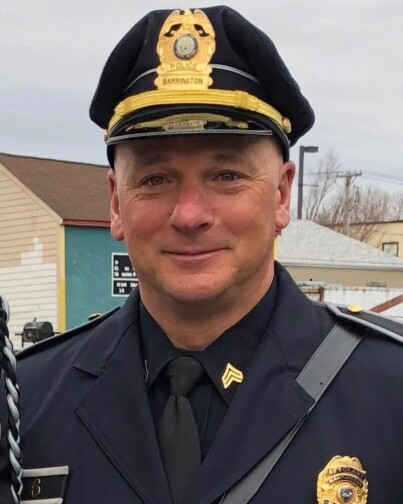
Sgt. Gino Caputo of Barrington who died in September after
a 5-week struggle with COVID. He was unvaccinated.
This article was originally run as a letter to the editor in the Westerly Sun on October 28. It is reprinted here with permission of the author. It includes links to actual proof of each claim he makes. 

Top of Form

Bottom of Form

On Sunday, The Sun published a front-page article entitled “Vax mandates create conflict with defiant workers.” This article, along with all the other reporting on COVID vaccine refusers, makes me more than sad; it makes me frustrated and angry.

It is time for the large majority of Americans who understand the issue of COVID and the vaccine to stand up and be heard. We are tired of having to alter so many aspects of our lives, such as travel and family get-togethers, because of the minority of Americans who refuse to do what it takes to stop this deadly pandemic.

Josh Chevalier is quoted as “fighting for [his] constitutional rights.” Actually, there is no such constitutional right or any other law that supports what he claims to be fighting for. What about my right not to be endangered by the Chevaliers of the world?

Even the Christian Scientists and the Jehovah's Witnesses allow members
to get vaccinated
Nick Rolovich claimed a “religious exemption.” Yet every major religious group, including Catholics, encourage vaccination (so much for the fetal cell argument).

Melissa Alfiera-Collins resigned as a nurse because “even vaccinated people can spread disease.” She claims to “love [her] patients” yet is willing to expose them to a significantly increased risk of a deadly disease, as well as her children, parents, friends, and others. No vaccine is 100% perfect but the alternative is incalculably worse and much more likely with her unvaccinated status. So much for love.

COVID vaccine is one of the safest and most effective vaccines ever developed. After many millions of doses given around the world, the medical/scientific evidence of this is irrefutable. And even if a vaccinated person gets a rare breakthrough infection, it is almost always milder and rarely fatal. Further, the chance of getting an infection approaches zero if everyone is vaccinated.

As to COVID, I am told that more than 700 unvaccinated policemen nationwide have died. I am not aware of any vaccinated policeman who has died but even if a few have, isn’t the 700 to 1 or 2 odds persuasive? So much for protecting the people they serve. 

Correction: the number of police officers killed by COVID is tallied at 476 by the Officer Down Memorial, but that count is incomplete. For example, they don't list Sgt. Gino Caputo of Barrington (photo above) as a COVID casualty. Nonetheless, all sources confirm that COVID has been the single greatest killer of police officers by far. five times more than those officers who were shot.

The problem with the vaccine mandate is not that it takes away a non-existent right, but that it was necessary in the first place. We all live in a community and society. As such, almost everything we do is governed by a law, rule, or code of conduct.

The policemen who argue they have some right not to get a shot still will ticket drivers who exercise their right to run a red traffic light or speed. Those who resent their employers’ mandates don’t demand their right to work only the hours they want and get paid whatever they want.

A dissenting voice on vaccine mandates is Charlestown's state
Rep. Blake "Flip" Filippi. He also refuses to disclose whether he
has been vaccinated.
It’s time for those of us who are vaccinated to push back. We should not patronize businesses that don’t require their employees and customers be vaccinated. We should not visit with unvaccinated neighbors and friends. 

The unvaccinated should remain isolated from all other people, especially those who do not know your unvaccinated status. And when they or their loved ones get COVID (and that will likely happen), do not take medical resources, including hospital care, that could be used by those who are vaccinated and need that care.

The two faces of Steve


Contrast and compare


"That's going to make you go blind!"

Screen time linked to risk of myopia in young people

Anglia Ruskin University

A new study published in one of the world's leading medical journals has revealed a link between screen time and higher risk and severity of myopia, or short-sightedness, in children and young adults.

The open-access research, published this week in The Lancet Digital Health, was undertaken by researchers and eye health experts from Singapore, Australia, China and the UK, including Professor Rupert Bourne from Anglia Ruskin University (ARU). 

The authors examined more than 3,000 studies investigating smart device exposure and myopia in children and young adults aged between 3 months old and 33 years old.

After analysing and statistically combining the available studies, the authors revealed that high levels of smart device screen time, such as looking at a mobile phone, is associated with around a 30% higher risk of myopia and, when combined with excessive computer use, that risk rose to around 80%.

The research comes as millions of children around the world have spent substantial time using remote learning methods following the closure of schools due to the COVID-19 pandemic.

Climate change is affecting the taste of coffee

A collaborative study looks at how changing climate conditions might be affecting the taste, aroma, and overall quality of coffee

By Lisa LaPoint

Whether you prefer notes of berry and citrus or chocolate and nuts, dark roast or light, a good cup of coffee can be a simple pleasure. 

You probably would notice if some of your morning brew’s brightness disappeared, or if the familiar fruity aroma dulled a little. Changes like these might not stem from when the beans were roasted or ground, but from growing conditions.   

Coffee is grown on more than 27 million acres across 12.5 million largely smallholder farms in more than 50 countries. Many coffee-producing regions are increasingly experiencing changing climate conditions, whose impact on coffee’s taste, aroma, and even dietary quality is as much a concern as yields and sustainability. 

A new research review says that coffee quality is vulnerable to shifts in environmental factors associated with climate change. The review, led by researchers from the Friedman School of Nutrition Science and Policy at Tufts and Montana State University, also finds that some current adaptation strategies to combat these effects provide hope for positive outcomes.  

Why we're getting less fall color this year

Climate change is muting fall colors, but it’s just the latest way that humans have altered US forests

Marc Abrams, Penn State

Fall foliage season is a calendar highlight in states from Maine south to Georgia and west to the Rocky Mountains. It’s especially important in the Northeast, where fall colors attract an estimated US$8 billion in tourism revenues to New England every year.

As a forestry scientist, I’m often asked how climate change is affecting fall foliage displays. What’s clearest so far is that color changes are occurring later in the season. 

And the persistence of very warm, wet weather in 2021 is reducing color displays in the Northeast and mid-Atlantic. But climate change isn’t the only factor at work, and in some areas, human decisions about forest management are the biggest influences.

Monday, November 1, 2021

The Muddy Genesis of the CCSPAA

Decade-Old Charlestown Citizens/Sachem Passage Alliance Association Emerges From The Mud Hole

By Robert Yarnall 

In small towns, it is easy for small decisions and big mistakes, local squabbles and petty rivalries to become the business of everyone. This is the story of how one neighborhood’s disputes can have a major effect on everyone, residents and town employees alike. 

Part 1 The Worm Turns

On the evening of September 16, at the 2021 Annual Meeting of the Sachem Passage Association, newly appointed SPA “Resource  for Finance and Real Estate” and current Charlestown Citizens Alliance (CCA) Steering Committee member Joseph Quadrato rose from his seat in Saint Andrew Lutheran Church to update the status of a proposed SPA property sale to the Town of Charlestown. 

The topic under discussion was a vacant lot owned by the SPA and acquired over twenty years ago at no cost from Doug Randall, owner of Randall Realty. It is accessible only by Oyster Drive, a rutted gravel road adjacent to the east side of the abandoned Bestway convenience store on Route 1. 

The SPA wanted to sell the vacant lot they had obtained at no cost to the town for $426,000, a stark contrast to the fair market valuation of $61,900 on file at the Charlestown Tax Assessor’s office. 

In attendance were 31 SPA members, I among them, representing about 20% of the 100 properties comprising the neighborhood.

Most notable among us was Charlestown Town Councilor Susan Cooper, a retired attorney who served on the SPA Board of Directors until she resigned to run as a CCA-endorsed candidate in the 2020 election. Ms. Cooper had also served on the Charlestown Zoning Board with Mr. Quadrato. She, and I assume everyone else, had no idea what was about to surface. 

Mr. Quadrato began his presentation. 

"Now, I have two contacts at Town Hall. They have told me that one individual, who I will not name, is not cooperating with us...”

Mr. Quadrato went on to describe his bewilderment as to how anyone could not recognize the reliability and validity of the appraisal developed by Gerald Fournier of Andolfo Appraisal Associates of Providence. The SPA appraisal listed a fair market value of $426,000 for the Oyster Drive property our association had acquired at no cost in September of 2000. 

What Mr. Quadrato had conveniently omitted during his presentation was that Mr. Fournier had attached the following disclaimer to his appraisal, indicating that the $426,000 fair market value was based on a “Hypothetical Condition” leading to the “Extraordinary Assumption” that the lot was buildable:

If you want to read the ENTIRE appraisal for yourself, just click HERE.

 
Meanwhile, back at Town Hall, on June 10, 2020, a full 463 days before Mr. Quadrato’s September 16, 2021 update to his neighborhood association, Charlestown Tax Assessor Ken Swain had sent this email to Town Planner Jane Weidman, detailing the basis for his appraisal of $61,900:

I raised my hand to challenge Mr. Quadrato’s pronouncement and was accorded the floor by outgoing President Paul Fraiche.  I stated that Mr. Quadrato’s reference to “...one individual, who I will not name...” was tax assessor Ken Swain. Neither Mr. Quadrato nor anyone else contested my assertion. 

I explained that the SPA and the Town of Charlestown had agreed to seek an independent third party appraisal. Tax assessor Ken Swain had assigned a value of $61,900 to the SPA’s Oyster Drive property. The third party appraisal, developed by Newport Appraisal Group, came in at $75,000.

Subsequently, the town council decided to take “no action” on the SPA’s proposal. You can read Progressive Charlestown’s extensive overview of this episode, along with supporting documentation, here. 

Another important research tool is the Providence Public Library Journal archive (CLICK HERE) since there was a time when the Projo actually maintained a South County Bureau You need to get a Library Card.

Sitting two rows in front of me were Joseph Quadrato and John Kaptinski. Mr. Kaptinski, a long time SPA member and arguably the driving force behind the acquisition of the Oyster Drive property, has been an uncompromising advocate of developing the vacant lot as both a real estate and life style asset for current and future generations of Sachem Passage Association property owners. 

At each counterpoint in my presentation, Messrs. Quadrato and Kaptinski slowly shook their heads back and forth in unison, punctuating their disagreement of my assessment. 

Our discord opened the proverbial can of worms. Several members related varied concerns they had with respect to any proposed sale of our property, let alone a sale to the Town of Charlestown.

In the midst of new voices coming into the debate, it became clear that a lot had happened under the surface. Select former and current SPA board members had private conversations with town staff and SPA attorney Nick Gorham, but had excluded current SPA President Paul Raiche. He had to shoehorn his reaction into the debate – “This is the first time I have heard any of this.” 

It was an uncomfortable and disconcerting moment for both Mr. Raiche and every other person in attendance. Several more such moments followed soon thereafter, each one eliciting a background rebuke from  the outgoing President: “This is the first time I have heard of any of this...” 

It was a crystal clear revelation that indicated just how muddy the waters had become at our Oyster Drive vacant lot that the SPA acquired at no cost a lucky 21 years ago. 

So there it is. And so here we are - a good time to pause and let the sediment settle until next time, when that can of worms can be sorted and tagged prior to being returned to their rightful home in a mud hole.

And let's add Blake "Flip" Filippi who is likely to run for Governor in RI


Hey, kids! Work for free!

Congressman Langevin Seeking Spring Interns


Congressman Jim Langevin (D-RI) is accepting applications for interns in his Rhode Island and Washington offices for the upcoming spring semester. 

The program will run from January through May 2022 and is open to civic-minded college students. 

A qualified candidate will be well-organized, responsible, and have good oral and written communication skills, as well as at least 10 hours of availability per week. College credit is available. Rhode Island ties are preferred but not required. 

Charlestown gets help from URI to protect water resources

5-year project will look to improve septic management and protect the watershed

By Todd McLeish

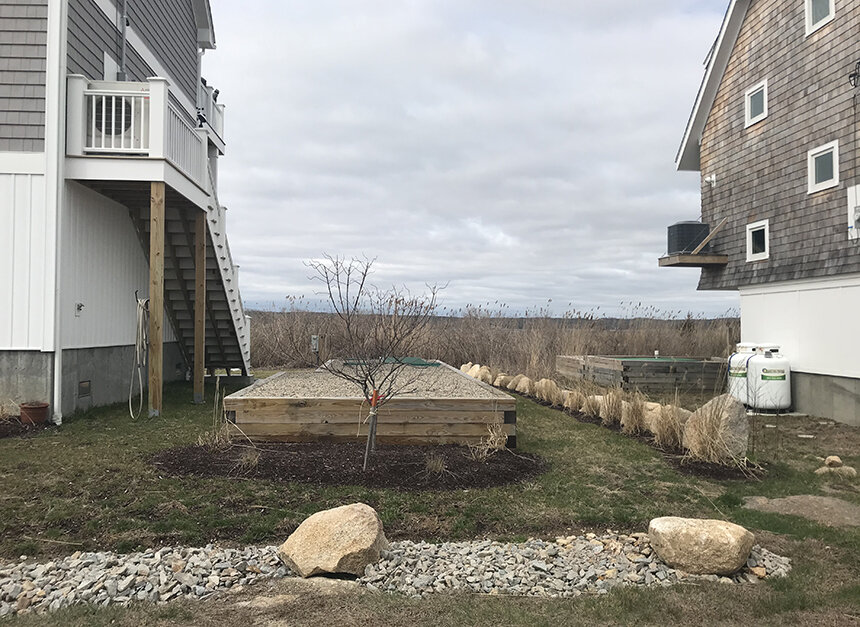
One of the alternative wastewater systems being studied in Charlestown.
Photo by Cynthia Drummond in her ecoRI article
The town of Charlestown is collaborating with University of Rhode Island wastewater management experts in a pilot project to develop a comprehensive approach to reducing the amount of nitrogen from septic systems that enters the groundwater and finds its way into drinking water and the nearby salt ponds.

The collaborators were awarded a $750,000 five-year grant from the U.S. Environmental Protection Agency’s Southeast New England Program to install, test and monitor a new nitrogen-reducing septic technology, install stormwater mitigation measures, develop a community education and engagement plan, and prepare a summary document that will enable other communities to follow suit.

“The town of Charlestown has been very proactive in its wastewater management and watershed management, and this grant builds on the successful approaches that they’ve tried in the past,” said Alissa Cox, director of the New England Onsite Wastewater Training Program at URI, who will lead the project with Charlestown’s Onsite Wastewater Management Program Director Matthew Dowling.

Keep washing your hands

Yes, we should be keeping the healthier hand-washing habits we developed at the start of the pandemic


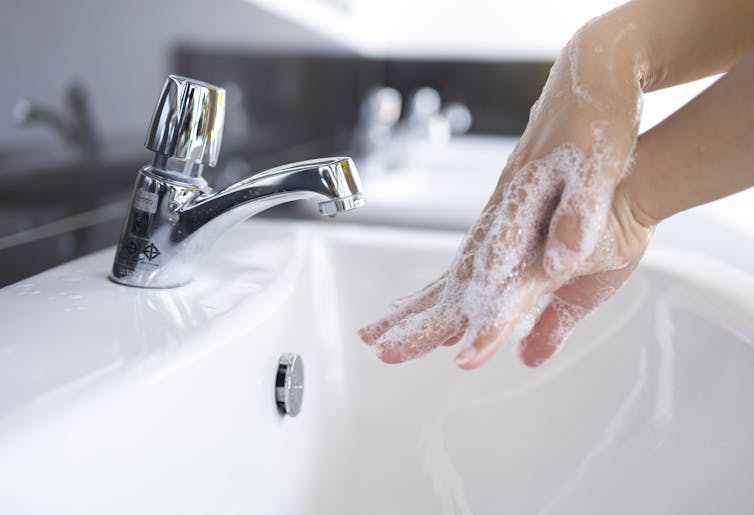
Washing your hands is an easy and effective way to reduce the
spread of illness. Krisanapong Detraphiphat/Moment via Getty Images
People were washing their hands so much early in the pandemic that sensitive skin and soap shortages were common problems in 2020.

All this focus on hand-washing was for good reason. The science uniformly demonstrates that frequent hand-washing reduces the risk of a variety of illnesses. It is low-hanging fruit in terms of an easy, healthy habit to practice.

However, people today aren’t washing their hands as often as at the beginning of the pandemic, and many are wondering: Should I still be washing my hands more often because of the coronavirus? 

The short answer is yes. That is because you probably weren’t washing your hands nearly as often as you should have been before the pandemic.

I am an epidemiologist and mom of three boys, one girl, two cats and one dog. Between sports and a busy household, there are a lot of opportunities for germs to spread in our house, coronavirus or no coronavirus.

Scientists Search for Cause of Mysterious Covid-Related Inflammation in Children

Why do these kids get so sick?


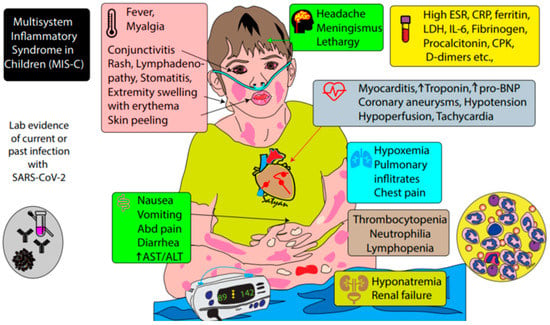
https://www.mdpi.com/2227-9067/7/7/69

Like most other kids with covid, Dante and Michael DeMaino seemed to have no serious symptoms.

Infected in mid-February, both lost their senses of taste and smell. Dante, 9, had a low-grade fever for a day or so. Michael, 13, had a “tickle in his throat,” said their mother, Michele DeMaino, of Danvers, Massachusetts.

At a follow-up appointment, “the pediatrician checked their hearts, their lungs, and everything sounded perfect,” DeMaino said.

Then, in late March, Dante developed another fever. After examining him, Dante’s doctor said his illness was likely “nothing to worry about” but told DeMaino to take him to the emergency room if his fever climbed above 104.

Two days later, Dante remained feverish, with a headache, and began throwing up. His mother took him to the ER, where his fever spiked to 104.5. In the hospital, Dante’s eyes became puffy, his eyelids turned red, his hands began to swell and a bright red rash spread across his body.

Hospital staffers diagnosed Dante with multisystem inflammatory syndrome in children, or MIS-C, a rare but life-threatening complication of covid-19 in which a hyperactive immune system attacks a child’s body. Symptoms — fever, stomach pain, vomiting, diarrhea, bloodshot eyes, rash and dizziness — typically appear two to six weeks after what is usually a mild or even asymptomatic infection.

More than 5,200 of the 6.2 million U.S. children diagnosed with covid have developed MIS-C. About 80% of MIS-C patients are treated in intensive care units, 20% require mechanical ventilation, and 46 have died.