Menu Bar

Home           Calendar           Topics          Just Charlestown          About Us

Friday, November 5, 2021

New class war over teeth?

If Congress Adds Dental Coverage to Medicare, Should All Seniors Get It?


George Washington's actual teeth
William Stork needs a tooth out. That’s what the 71-year-old retired truck driver’s dentist told him during a recent checkup.

That kind of extraction requires an oral surgeon, which could cost him around $1,000 because, like most seniors, Stork does not have dental insurance, and Medicare won’t cover his dental bills. 

Between Social Security and his pension from the Teamsters union, Stork said, he lives comfortably in Cedar Hill, Missouri, about 30 miles southwest of St. Louis. But that cost is significant enough that he’s decided to wait until the tooth absolutely must come out.

Stork’s predicament is at the heart of a long-simmering rift within the dental profession that has reemerged as a battle over how to add dental coverage to Medicare, the public insurance program for people 65 and older — if a benefit can pass at all.

Health equity advocates see President Joe Biden’s Build Back Better agenda as a once-in-a-generation opportunity to provide dental coverage to those on Medicare, nearly half of whom did not visit a dentist in 2018, well before the pandemic paused dental appointments for many. The rates were even higher for Black (68%), Hispanic (61%) and low-income (73%) seniors.

The coverage was left out of a new framework announced by President Joe Biden on Thursday, but proponents still hope they can get the coverage in a final agreement. Complicating their push is a debate over how many of the nation’s more than 60 million Medicare beneficiaries should receive it.

Champions for covering everyone on Medicare find themselves up against an unlikely adversary: the American Dental Association, which is backing an alternative plan to give dental benefits only to low-income Medicare recipients.

Medicare has excluded dental (and vision and hearing) coverage since its inception in 1965. That exclusion was by design: The dental profession has long fought to keep itself separate from the traditional medical system.

Yeah.


This was not part of the plan


Same shit, different name

Critics of Facebook Say Name Change Can't Hide Company's Harm

In Hebrew, "Meta" means "Dead"

BRETT WILKINS for Common Dreams

Facebook CEO Mark Zuckerberg announced the company's renaming to Meta during the Facebook Connect virtual and augmented reality conference on October 28, 2021. (Photo: Meta)

Tech ethicists and branding
 professionals said consumers should not be hoodwinked by Facebook's name change, which numerous observers compared to earlier efforts by tobacco and fossil fuel companies to distract attention from their societal harms.

Facebook co-founder and CEO Mark Zuckerberg announced the Meta rechristening during Facebook Connect, the company's annual virtual and augmented reality conference, explaining that "we are a company that builds technology to connect people and the metaverse is the next frontier, just like social networking was when we got started."

"Some of you might be wondering why we're doing this right now," he added. "The answer is that I believe that we're put on this Earth to create. I believe that technology can make our lives better."


"Changing their name doesn't change reality: Facebook is destroying our democracy and is the world's leading peddler of disinformation and hate," the watchdog group Real Facebook Oversight Board said in a statement. "Their meaningless name change should not distract from the investigation, regulation, and real, independent oversight needed to hold Facebook accountable."

Teaching robots to think like us: what could go wrong?

Brain cells, electrical impulses steer robot though maze

American Institute of Physics

Can intelligence be taught to robots? Advances in physical reservoir computing, a technology that makes sense of brain signals, could contribute to creating artificial intelligence machines that think like us.

In Applied Physics Letters, from AIP Publishing, researchers from the University of Tokyo outline how a robot could be taught to navigate through a maze by electrically stimulating a culture of brain nerve cells connected to the machine.

These nerve cells, or neurons, were grown from living cells and acted as the physical reservoir for the computer to construct coherent signals.

The signals are regarded as homeostatic signals, telling the robot the internal environment was being maintained within a certain range and acting as a baseline as it moved freely through the maze.

Whenever the robot veered in the wrong direction or faced the wrong way, the neurons in the cell culture were disturbed by an electric impulse. Throughout trials, the robot was continually fed the homeostatic signals interrupted by the disturbance signals until it had successfully solved the maze task.

Big Pharma cash to pols to keep drug prices high

Pharma Campaign Cash Delivered to Key Lawmakers With Surgical Precision

RI Senator Reed only member of RI delegation to take big bucks from Big Pharma


The Biden administration and Congress are embroiled in high-stakes haggling over what urgent priorities will make it into the ever-shrinking social spending bill. But for the pharmaceutical industry there is one agenda: Heading off Medicare drug price negotiation, which it considers an existential threat to its business model.

The siren call to contain rising drug costs helped catapult Democrats to power, and the idea is popular among voters regardless of their politics. Yet granting Medicare broad authority to intervene in setting prices has nonetheless divided the party.

And so, as it normally does, the drug industry gave generously to members of Congress, according to new data from KHN’s Pharma Cash to Congress database. Contributions covering the first half of this year show that some of its biggest donations were delivered with surgical-strike precision to sympathetic or moderate Democratic lawmakers the industry needs to remain in its corner.

Campaign donations to members of Congress — which must be reported to the Federal Election Commission — are the tip of the iceberg, signaling far greater activity in influence peddling that includes spending millions on lobbying activities and advertising campaigns.

Unusually, in the first half of this year Republicans and Democrats in Congress were virtually neck and neck in pulling in drug industry money, according to a KHN analysis of campaign contributions. In prior years, Republicans dominated giving from that sector, often by huge margins.

Thursday, November 4, 2021

'Too Bad We Can't Tax Egos'

Elon Musk Blasted for Attack on Billionaire Tax

JULIA CONLEY for Common Dreams

SpaceX and Tesla founder Elon Musk drew outrage Thursday after publicly complaining that his vast wealth would be further taxed under a new proposal by Sen. Ron Wyden, aimed at raising revenue to pay for social supports under the Build Back Better Act. 

As Democrats continued debating what would be included in the plan—which the majority of party members want to provide paid family leave to workers, far-reaching climate action and green jobs, Medicare reforms to allow the federal government to negotiate drug prices, and other provisions—Musk tweeted about Wyden's proposal. 

"Eventually, they run out of other people's money and then they come for you," he said earlier this week, adding on Wednesday evening that "spending is the real problem" contributing to the national debt, rather than the failure of corporations and the richest Americans to pay a fair tax rate. 

Musk's comments caught the attention of economic justice advocates including Patriotic Millionaires—the coalition of wealthy Americans who believe they should be taxed at a much higher rate to help narrow the wealth gap—which noted the Tesla founder himself relied on "other people's money" to build his empire. 

"Elon Musk was born with an emerald spoon in his mouth, and when he needed more money for his various schemes, he turned to U.S. taxpayers for billions of dollars of subsidies and direct handouts," said Erica Payne, president and founder of Patriotic Millionaires. 

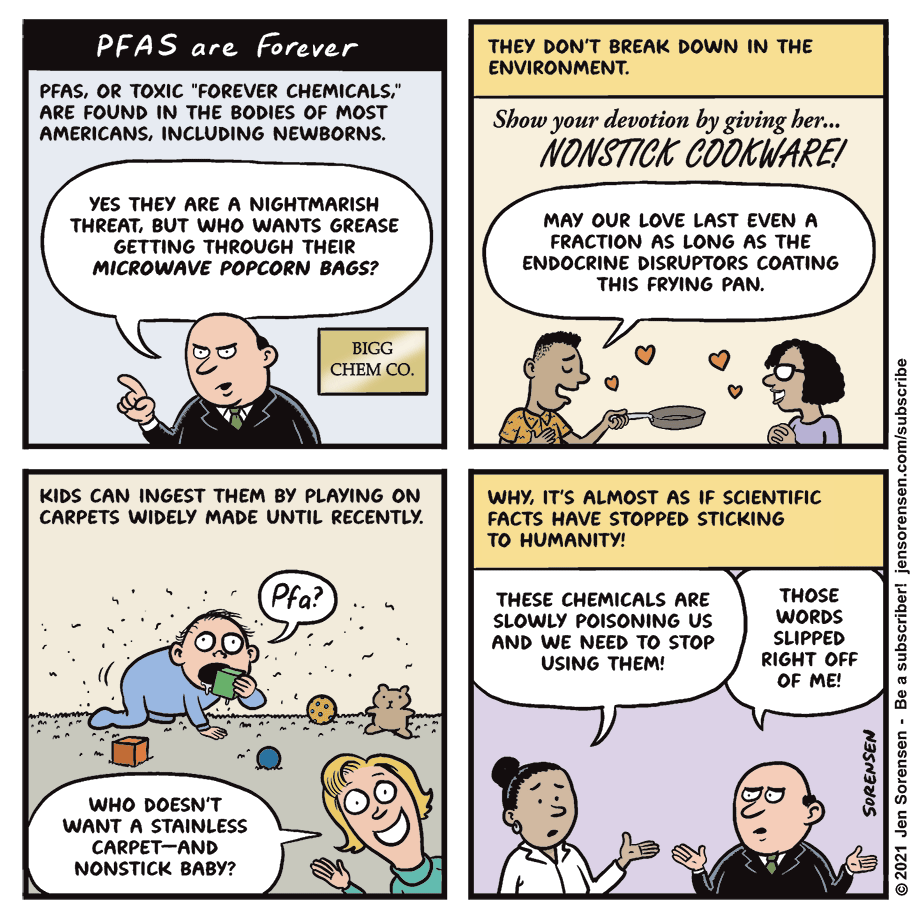
PFAs are forever

For more cartoons by Jen Sorenson, CLICK HERE


Can I get it?


CNN anchor Abby Phillip to deliver annual Amanpour Lecture on Nov. 10

Veteran journalist will focus on honesty in political journalism

By Tony LaRoche

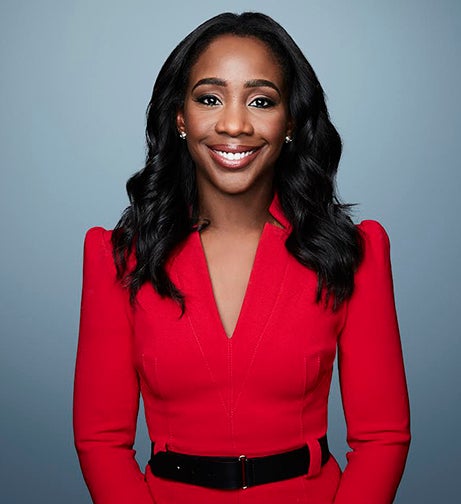
Abby Phillip
CNN anchor and senior political correspondent Abby Phillip, a veteran journalist who has covered three presidential administrations, will deliver the University of Rhode Island’s 14th annual Christiane Amanpour Lecture on Wednesday, Nov. 10, at 5 p.m.

Phillip’s virtual talk, “Honesty and Authenticity in Political Journalism,” will explore how journalism moves beyond “objectivity” to understand the responsibility political journalists have to their audience and communities. 

The annual Amanpour Lecture is sponsored by URI’s Harrington School of Communication and Media, the College of Arts and Sciences, and the Department of Journalism. To receive a link to view the live-streamed lecture and question-and-answer session, please register at the lecture website. The event is free and open to the public.

VIDEO: DEM wants you to clean green

Launches new education effort to steer Rhode Islanders away from toxic or polluting cleaning products


The Department of Environmental Management (DEM) is announcing today a program of online resources including a training module in four languages aimed at limiting the harmful effects of chemicals in everyday cleaning products on human health and the environment. 

The Green Cleaning Pollution Prevention Program focuses on steering households and businesses away from cleaners and disinfectants containing volatile organic compounds (VOCs) and other hazardous chemicals and toward greener, safer alternatives.

Along with the Rhode Island Committee on Occupational Safety and Health and the Northeast Waste Management Officials Association, DEM created a simple and effective training program offering instruction on safe disinfection and chemical safety. It was administered across 14 training sessions from March to September for both English and Spanish-speaking audiences. 

Class war at the beach

Public Concerned About Ocean State’s Vanishing Shoreline Access

By ROB SMITH/ecoRI News staff

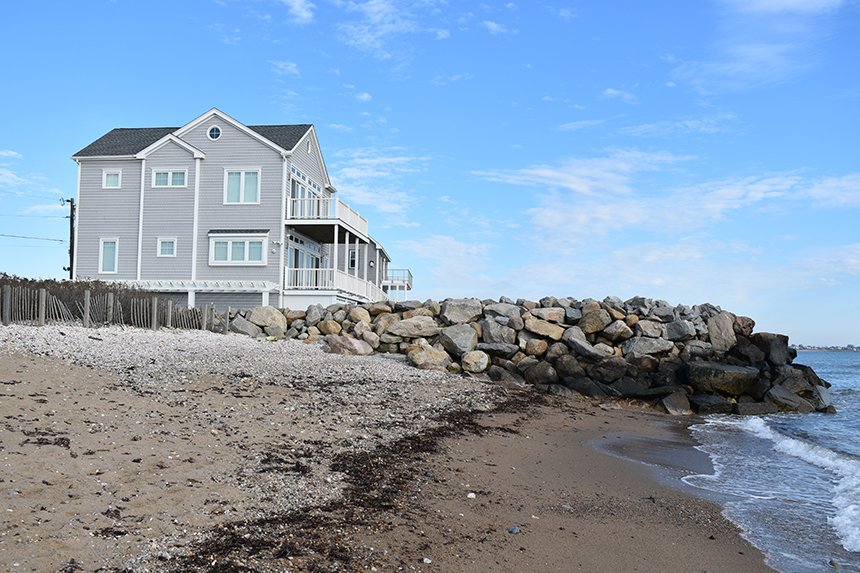
Homeowners, like this one in South Kingstown, R.I., have been known to make it difficult for the public to gain shoreline access in front of their properties, despite the constitutional right to do so. (Frank Carini/ecoRI News)

Rhode Islanders got their first crack at public comment at a recent meeting of the House commission to study shoreline access. Beachgoers and shoreline advocates shared their experiences of being arrested for trespassing, navigating Barrington’s arbitrary no-parking laws, and finding increased restriction to the coast by private landowners.

The 12-member commission was created by legislation passed in the spring and introduced by now-chair Rep. Terri Cortviend, D-Portsmouth. Shoreline access is enshrined in the Rhode Island constitution, and limited by legal precedent to the mean high tide line, or mean high water (MHW). Advocates say limiting access to the MHW denies people their rights; landowners claim anything else encroaches on their property rights.

Barrington resident and shoreline advocate Ken Block described how his town government severely restricts access to the shore. The wealthy East Bay town, said Block, has blanketed all roads leading to six separate public rights of way to the shore with “no parking” signs. 

According to data provided by the town, all but six parking tickets issued between 2019 and June 2021 were issued on streets with a public right of way. The remaining 352 tickets were written in response to a resident calling to complain.

EDITOR'S NOTE: On Nov 2, the Boston Globe reported on the entrance of the RI ACLU into beach access litigation brought against Sarah McKenna of Pawtucket by Charlestown beach property owner James Marsh of Avon, CT. Marsh charges Ms. McKenna with trespass and libel for sunbathing in a spot she thought was below the mean high tide line. Marsh also claims Ms. McKenna libeled him by her description of their confrontation posted on a Facebook (Meta?) site. 

The libel claim and the demand that Ms. McKenna remove all posts related to the dispute brought the ACLU in to defend Ms. McKenna using Rhode Island's anti-SLAPP law. SLAPPs are "strategic lawsuits against public participation." They used to be common but now are less so after many states. like Rhode Island, passed laws protecting free speech.      -Will Collette

Wednesday, November 3, 2021

Rhode Island’s Top 100 tax deadbeats

Millions owed by scofflaws

By Will Collette

The Rhode Island treasury is making a new push to get major tax deadbeats to pay up what they owe the state. This is a national problem, not just a Rhode Island one. 

During the Trump years, the rich got an invisible "tax cut" when Republicans engineered huge cuts to IRS's tax enforcement programs.

That has allowed many wealthy Americans to not only get the benefit of legislated tax cuts and breaks but also the under-the-counter benefit of being able to cheat with only a low risk of getting caught.

The state has published this list before, but one change seems to have taken place - it looks to me like many of the tax cheats have moved out of state.

Take, for example, the Reillys of West Palm Beach who are #1 on the list, owing more than $2 million. They used to be the Reillys of Portsmouth where their young son Daniel ran and won a seat in the RI House of Representatives, the youngest ever. And a Republican, of course. 

Number 2 on the list Giovanni Feroce, was CEO of the now bankrupt jewelry maker Alex and Ani. He ran for Governor in the 2018 Republican primary, but his tax record didn't help. He came in third of three candidates. At least he has stuck around.

Boxing champion Vinnie Pazienza has also stuck around despite owing the state over $416,000. Paz has just about always had money problems even when he had money.

I have highlighted our South County tax deadbeats, although I am sure there are others hailing from South County who are now living elsewhere.

Nobody actually likes paying taxes, but as revered US Supreme Court Justice Oliver Wendell Holmes put it, "Taxes are what we pay for a civilized society."  

Here's the list:

Why are Americans acting like this?

By Ann Telnaes, Washington Post


But no beer

By Bill Day, Florida Politics