Menu Bar

Home           Calendar           Topics          Just Charlestown          About Us

Sunday, July 3, 2022

Is your barbeque going to kill you?

BBQ Cooking: Does Grilling Cause Cancer?

By SCITECHDAILY.COM 


What are the health ramifications, especially related to cancer, of BBQ grilling meat over an open flame?

Barbecue is sometimes promoted as a healthier style of cooking. When compared to cooking methods like frying which have long been considered extremely unhealthy, grilling appears to be less fatty. 

Along with reducing fat intake, barbecue may limit exposure to dangerous compounds created when cooking oil is heated. 

Usually, barbecuing takes place outdoors, which means it won’t normally affect indoor air quality. Even with all those benefits, there are some serious concerns about cooking foods — especially meat — over an open flame. The main concern is cancer.

How Barbecue Might Increase Cancer Risk

When meat is heated over an open flame, there is the potential for two sets of carcinogenic compounds to form. Creatine is an organic acid in meat prized by bodybuilders and that may have various health benefits and one major downside. 

The downside is that it turns into cancer-causing heterocyclic amines (HCAs) when heated. The other carcinogenic compound shows up when the fat from cooking meat drips down onto hot coals. The burning fat rises as polycyclic aromatic hydrocarbons (PAHs) in the smoke and sticks to the meat.

At this point, it is important to note that neither of the above chemicals has been proven to cause cancer in humans. They have caused cancer in lab animals at higher doses than humans are likely to consume. There is also an association between grilled meat intake and a precursor of colon cancer known as colorectal adenoma.

How to Lower the Cancer Risk of Barbecued Meat

The first step that some experts suggest is to avoid charcoal as a cooking fuel given the risk of PAHs being created. Given that there is no proof of charcoal being more likely to cause cancer than any other cooking fuel, grill cooks may want to try one of two other suggested methods for lowering cancer risk:

Maternal mortality jumped during COVID-19 pandemic

Analysis shows that Black and Hispanic mothers bore the greatest burden

University of Maryland

The COVID-19 pandemic and its impacts have taken a disproportionate toll on American mothers who were pregnant or just gave birth. 

Maternal mortality (i.e., deaths during pregnancy or in the early postpartum period) increased by 18% in 2020, according to data from the National Center for Health Statistics, exceeding the ~16% increase in overall US mortality in 2020. 

Yet according to a new analysis from the University of Maryland and Boston University, the maternal death rate after the start of the COVID-19 pandemic was even higher, and disproportionately impacted Black and non-white Hispanic mothers.

A research letter published in JAMA Network Open by Marie Thoma in the UMD School of Public Health and Eugene Declercq in the BU School of Public Health compared maternal mortality data from 2018-March 2020, when the pandemic began, to April-December 2020. Overall, they found large increases in maternal death (33%) and late maternal deaths (41%) after March 2020 compared with before the pandemic, and conspicuous increases among Black and Hispanic mothers.

Saturday, July 2, 2022

4 Myths About Raising the Minimum Wage

Most of what you've been told about the minimum wage is untrue

By Robert Reich

https://www.youtube.com/watch?v=_mcHGGcZGFo

The federal minimum wage of $7.25 an hour has not been raised since 2009. That’s the longest period without an increase since the minimum wage was enacted, meaning today’s minimum wage is actually worth far less than it was in 2009.

This is an insult to American workers, and bad for our economy. It’s far past time to raise the minimum wage to at least $15 an hour. 

Today’s minimum wage is a starvation wage. A full-time minimum wage worker cannot afford a two-bedroom rental in any city, county, or state in the entire country. Meanwhile, billionaires like Jeff Bezos can afford a D.C. mansion with 25 bathrooms and 5 living rooms — just one of his many mansions.

Now, the current minimum wage isn’t so low because these workers are “worth” less than they were years ago; quite the opposite. If the minimum wage had kept pace with workers’ productivity increases since 1968, it would be over $22 an hour today.

Even so, conservatives are out to scare you about raising the wage. Let’s debunk each of their talking points.

Gun nuts love the Supremes


Traffic alert


DEM denounces Supreme Court decision on climate change

DEM Statement Regarding US Supreme Court's West Virginia v. EPA Decision


By Pat Bagley
Rhode Island Department of Environmental Management Director Terry Gray issued the following statement in reaction to the West Virginia v. EPA decision issued today by the U.S. Supreme Court:

"The U.S. government has the duty and moral obligation to cut climate pollution, but by siding with the coal industry and its allies and blocking the EPA from setting effective power plant emissions standards, the Supreme Court has dealt a major blow to the federal government's authority and ability to cut this pollution. 

"The EPA is DEM's strongest partner on a host of environmental protection laws and programs including clean air. The Clean Air Act is an extremely good investment, saving as many as 230,000 lives and delivering more than $30 in benefits for every $1 in cost. 

"There is little question that the court's decision in West Virginia v. EPA will harm Americans' health. Power plants are this country's No. 1 source of deadly air pollution, contributing to tens of thousands of deaths and hundreds of thousands of illnesses every year. 

Sure hope this is RIGOROUSLY enforced


What we know about PFAS in our food

Amid inadequate testing and a lack of regulation, we’re all eating “forever chemicals.”

Elizabeth Gribkoff for the Environmental Health News

photo credit: Rosalind Chang/Unsplash

After a much-publicized study this year found high levels of a toxic chemical class in food wrappings, many of us are eyeing that pizza or to-go salad in a new light.

Experts warn, though, that we shouldn’t just be concerned about exposure from packaged food. The compounds, PFAS, short for per- and polyfluoroalkyl substances, appear to be widespread in our food supply . PFAS have contaminated dairy and beef farms in Maine and Michigan, and recent testing from the consumer wellness site Mamavation found evidence of the compounds in organic pasta sauces, canola oils and nut butters.

But little is known about how much PFAS Americans are eating. In contrast to drinking water, which is extensively studied, “we have only anecdotal evidence for understanding (other) PFAS exposure sources for the U.S. general population,” Elsie Sunderland, a professor of environmental chemistry at Harvard University, testified to the federal House Committee on Science, Space and Technology at the end of 2021.

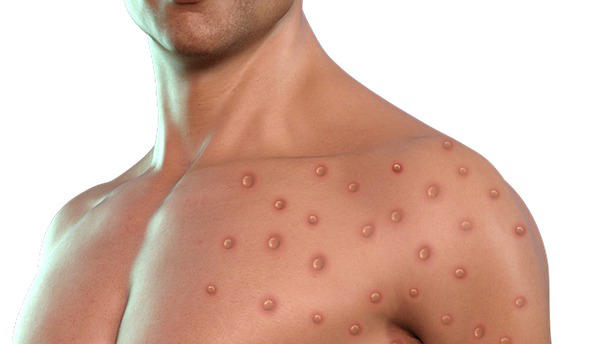
What You Need to Know About Monkeypox

The risk is low - for now. Same was said of COVID


Credit: Pixabay
The World Health Organization said June 25 that monkeypox wasn’t yet a public health emergency of international concern. More than 4,500 cases have been reported worldwide, with more than 300 in the U.S. And with public health officials unable to follow all chains of transmission, they’re likely undercounting cases. Everyone should be aware of its symptoms, how it spreads, and the risks of it getting worse.

Q: Should I be worried about monkeypox?

The American public is currently at low risk for monkeypox. It is spreading among men who have sex with men, but it is only a matter of time before it spreads to others. As of June 27, the European Centre for Disease Prevention and Control had reported 10 cases among women. Monkeypox is generally a mild disease but can be serious or even deadly for people who are immunocompromised, pregnant women, a fetus or newborn, women who are breastfeeding, young children, and people with severe skin diseases such as eczema.

But monkeypox could become endemic in the U.S. and around the world if it continues to spread unchecked.

Q: How does monkeypox spread?

Monkeypox is a viral infection, a close cousin of smallpox. But it causes a much milder disease.

It is transmitted through close contact, including sex, kissing, and massage — any kind of contact of the penis, vagina, anus, mouth, throat, or even skin. In the current outbreak, monkeypox has primarily been transmitted sexually.

Friday, July 1, 2022

Republicans Won't Stop at Roe

Court gives the green light to invade everyone's privacy

ROBERT REICH at RobertReich.org

Bans on abortion, birth control, and same-sex marriage are at stake in November's elections.

Overturning Roe v. Wade is extreme, but what's just as alarming is the logic Justice Samuel Alito used to justify it, which puts a whole range of other rights on the chopping block, too. 


We enjoy many rights that are protected by the Constitution but not explicitly mentioned in it. One of these is the right to privacy. The Supreme Court has repeatedly ruled that the 14th Amendment's due process clause protects individuals' privacy against government interference.

In 1965, in Griswold v. Connecticut, the Supreme Court used privacy to make it illegal for states to ban birth control. In 1973, in Roe v. Wade, the Court used privacy to decide that women have broad rights to determine whether to end their pregnancies. In 2003, in Lawrence v. Texas, the Court protected LGBTQ Americans from arrest and prosecution for engaging in consensual sex in the privacy of their own bedrooms. In 2015 in Obergefell v. Hodges, the Court legalized gay marriage. 

These landmark court cases all rest on the principle that the Constitution protects the liberty of an individual to make decisions about certain private matters without government interference. 

But in his leaked opinion, Justice Samuel Alito argues that since the Constitution contains neither an explicit right to an abortion nor an explicit right to privacy, Roe v. Wade was wrongly decided and must be overturned. 

Alito's logic threatens all the other court cases that were decided based on the inferred right to privacy. That could give government a say over the most intimate decisions someone ever makes. Alito explicitly writes that his opinion overturning Roe v Wade "concerns the constitutional right to abortion and no other right." Should we believe him?  

Logic?


How to protest safely


Dangerous Viruses Can Survive in Fresh Water by Clinging to Plastic Waste

Viral hitchhikers need to be stopped

Yale E360 DIGEST

Plastic waste in an inland water body.
Image by piqsels via 
Creative Commons Zero – CC0
Viruses are able to survive in fresh water by clinging to microscopic pieces of plastic, posing a potential threat to public health, according to a new study.

Researchers found that rotavirus, which causes diarrhea, can remain infectious for up to three days when bound to microplastics. The findings suggest that gastrointestinal viruses found in sewage could enter waterways by attaching to tiny bits of plastic waste.

“Even if a wastewater treatment plant is doing everything it can to clean sewage waste, the water discharged still has microplastics in it, which are then transported down the river, into the estuary, and end up on the beach,” said Richard Quilliam, a professor of environment and health at Stirling University in Scotland and coauthor of the study. 

“We weren’t sure how well viruses could survive by ‘hitch-hiking’ on plastic in the environment, but they do survive, and they do remain infectious.”

Females itch less than males

Not exactly a shocking finding

Kyoto University

Among the many reasons men may have for envying women -- at least when it comes to bad skin inflammation -- human females have a significantly lower incidence of severe psoriasis. However, the underlying reason for the sex differences has remained unclear.

Now a team of researchers has found that the female hormone estradiol suppresses psoriasis, and the protective role of the hormone has provided a basis for its therapeutic potential.

General Assembly Finishes Session with Numerous Environmental Wins

The very good and the somewhat disappointing end of this year's session

By Rob Smith / ecoRI News staff


State lawmakers wrapped up the 2022 General Assembly session last week, in what proved to be a particularly fruitful year for environmental legislation. Over the past few months legislators quietly passed a number of long-standing environmental priorities that before this year died an annual death from “held for further study” by one committee or another.

House Speaker Joseph Shekarchi, D-Warwick, called the session “the best year ever regarding environmental legislation,” citing the passage of the 100% renewable energy standard, an increase in offshore wind procurement, per- and polyfluoroalkyl substances (PFAs) legislation, and a ban on retail plastic bags.

This session was a far cry from the lonely wasteland of the Speaker Nicholas Mattiello years, when it was typical to see almost no environmental legislation pass. Aside from new leadership in the House, the Legislature also had a $900 million surplus, plus even more in federal COVID dollars, to play with, making it an easy year for all involved.

Here is some of what passed this year