
Saturday, September 23, 2023

Teresa Tanzi feted for her work
Rep.
Tanzi honored for her advocacy for mental health
Local mental and behavioral health advocates and leaders gathered
recently to honor Rep. Teresa A. Tanzi for her passionate and determined advocacy for support for
mental and behavioral health resources for Rhode Islanders.
Rep. Teresa A. Tanzi, center, with Mental Health
Association of Rhode Island Executive Director
Laurie-Marie Pisciotta, left, and Sandra Victorino,
chair of the Mental Health Association of
Rhode Island and director of workforce development,
diversity inclusion & community relations at
Care New England.
This legislative session,
Representative Tanzi (D-Dist. 34, South Kingstown, Narragansett) championed the
passage of a resolution (2023-H 6524) asking the Rhode
Island Office of the Health Insurance Commissioner to examine, publicly report
data on, and make recommendations for addressing the critical inadequacy
of access to behavioral health services in Rhode Island’s commercial
health insurance networks. The report is due by March 1, 2024.
Representative Tanzi also
sponsored legislation (2023 H-5657) this session to raise commercial health insurers’
reimbursement rates. In advocating for these two bills, she helped to raise
awareness among her General Assembly colleagues of the behavioral and mental
health care crisis in Rhode Island.


The complex chemistry behind America’s spirit
How bourbon gets its distinctive taste and color
 |
| Most bourbon is made in Kentucky. Catherine Falls Commercial/Moment via Getty Images |
But for a whiskey to be called a bourbon, it has to adhere to very specific rules. For one, it needs to be made in the U.S. or a U.S. territory – although almost all is made in Kentucky.
The other rules have more to do with the steps to make it – how much corn is in the grain mixture, the aging process and the alcohol proof.
I’m a bourbon researcher and chemistry professor who teaches classes on fermentation, and I’m a bourbon connoisseur myself. The complex science behind this aromatic beverage reveals why there are so many distinct bourbons, despite the strict rules around its manufacture.
When swimming holes go bad
No Splashing: Swimmers Banned from Popular Pond to Make Way for Boats
By Frank Carini /
ecoRI News columnist
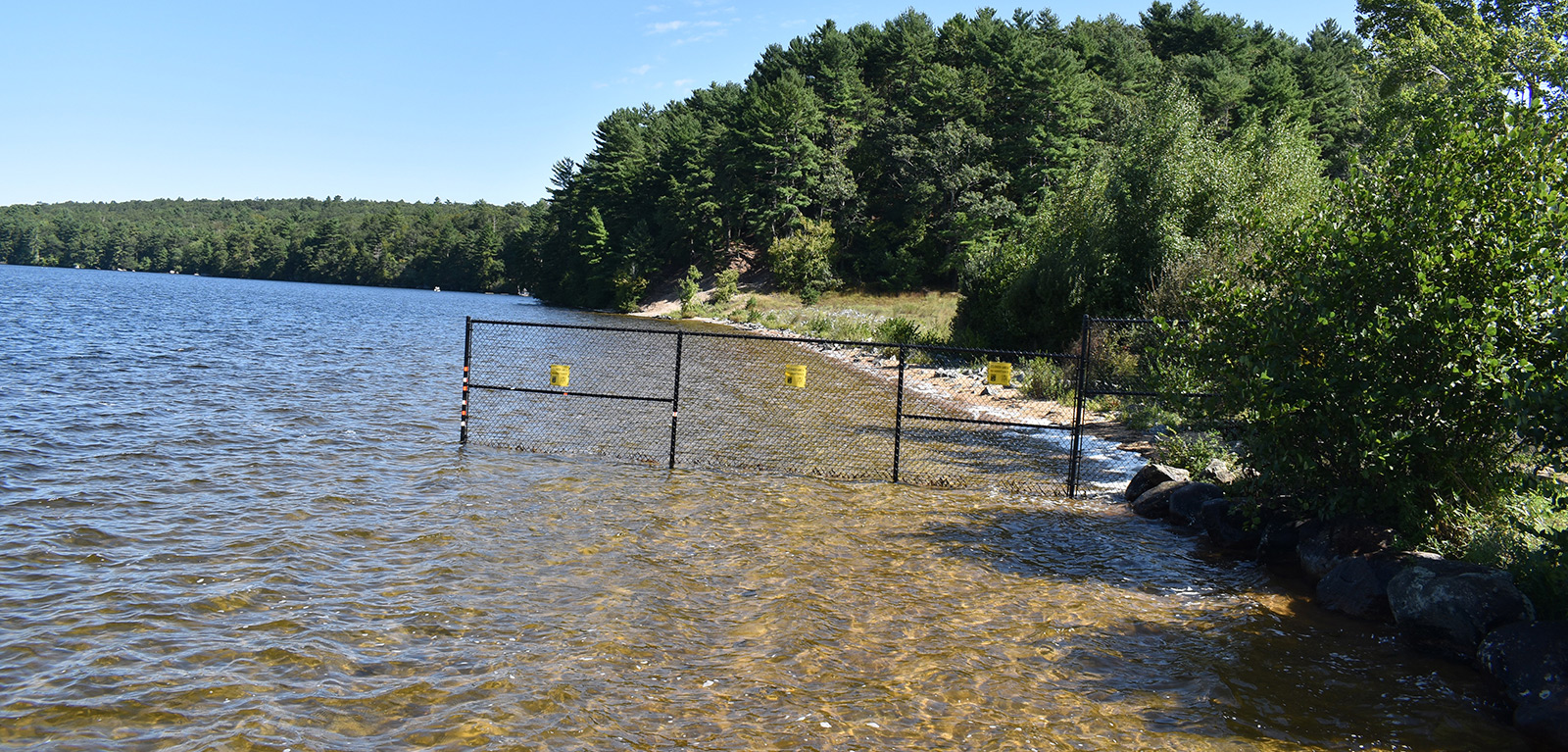 |
| Beach Pond in Exeter was once a popular swimming hole, but is now reserved for boaters and anglers. (Frank Carini/ecoRI News) |
Unlike many other Rhode Island waterbodies, a local pond off Route 165 wasn’t contaminated this summer by fecal matter or toxic algae. The former swimming beach was closed in 2008 for other human-caused reasons.
With a week left in Summer 2023, freshwater
and saltwater beaches around the state have been closed for a combined 288 days, the highest
number of closures recorded since 2006.
Beaches are closed by order of the state
Department of Health when they test positive for elevated levels of enterococci
bacteria, which live in the intestinal tracts of warm-blooded animals,
including humans, and indicate possible water contamination by fecal waste.
Last month the departments of health and
environmental management advised people to avoid contact with Fishing Cove in
Coventry, Coomer Lake in Glocester, and Roger Williams Park Ponds in Providence
because of blue-green algae blooms. They aren’t the only waterbodies to have
been sickened this year by pea soup gone bad.
Beach Pond, which spans both sides of Ten Rod
Road in western Rhode Island, has been closed to swimming for 15 years.
The 430-acre pond that
straddles the border between Connecticut and Rhode Island wasn’t closed because
of poop in the water or by cyanobacteria, though.
The pond, up to 60 feet deep in places, is
on the state’s list of impaired waters because
of the presence of non-native aquatic plants (variable milfoil and inflated
bladderwort), but it is perfectly safe for swimming. But an army of “No
Swimming” signs tells a different story.
Friday, September 22, 2023
The GOP Crushed America's Historical Vision
Can they Be Stopped?
By
Thom Hartmann,

For
most of American history, the story we told ourselves about America was that we
were a good and decent people who were striving to achieve a government that
drew its legitimacy from “the consent of the governed” and championed the
values of the Enlightenment.
Clearly
we didn’t always live up to those standards: from slavery to the Native
American genocide to our support for foreign dictators and overthrow of
democratic republics, we’ve come from a pretty grim start and made a lot of
terrible mistakes.
But
always, at the core of the American ideal, was that goal, that ideal, that we
are dedicated to expanding human freedom and possibility for all. As President
Lincoln told the nation at Gettysburg on November 19, 1863:
“Four score and seven years ago our fathers brought forth on this continent a new nation, conceived in liberty and dedicated to the proposition that all men are created equal. … It is rather for us to be here dedicated to the great task remaining before us … that we here highly resolve that these dead shall not have died in vain, that this nation under God shall have a new birth of freedom, and that government of the people, by the people, for the people shall not perish from the earth.”
Nearly
every generation of the 16 since this nation’s founding has seen forward
progress toward the ideals that our Founders, and Lincoln, FDR, JFK, and other
American leaders have declared.
Until
now.
Today,
the Republican Party is openly rejecting this historic view of America’s
destiny, the ideal of ever-greater inclusion, of support and compassion for our
fellow human beings, of our willingness to work and even fight to support
democracy both at home and around the world.

Not surprising: Rhode Islanders increasingly like mail ballots, early voting
Forget waiting in line to vote. Early voting, mail ballots on rise in R.I.
by Nancy Lavin, Rhode Island Current
.webp)
These days, not so much.
Nearly a third of the voters who participated in the Sept. 5. special congressional primaries cast ballots by mail or early, in-person voting, rather on the day of the primary itself, according to official results certified by the Rhode Island Board of Elections. And election administrators anticipate that number will swell in future election years as voters adjust to the expanded array of options.
“One reason you are seeing an uptick is because people are getting to experience it, and talking about it,” said Rhode Island Secretary of State Gregg Amore. “When these things were first implemented, I don’t think people realized it was available. I expect it to become a lot more popular in the next few election cycles.”
Early, in-person voting especially. The 2023 special primaries marked the third election cycle in which residents could show up for designated, in-person voting hours starting 20 days before the actual election day.
Originally termed “emergency in-person voting” under a 2020 law passed in the height of the COVID-19 pandemic, the option was enshrined and expanded ahead of the 2022 election cycle under a comprehensive voting reform bill known as the Let RI Vote Act.
The law also let voters request a mail-in ballot without having to give a reason, and offered the option to apply for a mail ballot electronically, the latter of which was implemented for the first time this year.
Proponents tout these expansions as ways to improve voter turnout and access while easing the pressure on election administrators on Election Day itself.
But getting voters to embrace those changes remains a work in progress.
Distrust of mail-in ballots continues, thanks in part to misinformation spread during the 2020 presidential election.
Special hazards
Certain common chemicals associated with higher odds of cancer in women

Using data collected by the Centers for Disease Control
and Prevention (CDC), a team of academic researchers found evidence that women
diagnosed with some “hormonally-driven” cancers had exposures to certain per- and polyfluoroalkyl
substances (PFAS), which are used in thousands of household and
industrial products, including in stain- and heat-resistant items.
They found similar links between women diagnosed with
cancer and high exposures to phenols, which are commonly used in food
packaging, dyes and personal care products.
The study, published late Sunday in the Journal
of Exposure Science and Environmental Epidemiology, did not find
similar associations between the chemicals and cancer diagnoses in men.
Not much will happen without teeth
New scientific integrity policy lacking teeth, critics warn

The draft issued
by the US Department of Health and Human Services (HHS) is the first to come
from a key federal agency in answer to a call by
President Joe Biden for federal agencies to strengthen policies meant to
protect the integrity of their research. HHS is expected to release its final
policy by February 2024.
The HHS oversees government entities that play
critical roles in evaluating harmful chemicals, tracking and analyzing data on
important public health threats, and conducting research into human health and
disease, including the Centers for Disease Control and Prevention, the Food and
Drug Administration, and the Agency for Toxic Substances and Disease Registry.
The HHS works to “enhance the health and
well-being of all Americans depends on the development and use of accurate,
complete, and timely scientific and technical information,” HHS states in the
draft policy.
But according to a letter sent to HHS this month by 11 advocacy organizations, the draft policy would do little to stem what has become a systemic problem in key federal agencies whose work is supposed to protect the public but too often is swayed by political and/or corporate interests.
“Under this proposed policy, every aspect
of enforcing scientific integrity principles would remain a captive of the
political process inside the agencies,” Jeff Ruch, the Pacific director of
Public Employees for Environmental Responsibility (PEER), said in a press
release.
Among the other signatories are the Center
for Reproductive Rights and the Union of Concerned Scientists.
Thursday, September 21, 2023
Why humans can’t trust AI
You don’t know how it works, what it’s going to do or whether it’ll serve your interests
 |
| Do you trust AI systems, like this driverless taxi, to behave the way you expect them to? AP Photo/Terry Chea |
These alien minds are artificial intelligence systems, the ghost in the machine that you encounter daily.
But AI systems have a significant limitation: Many of their inner workings are impenetrable, making them fundamentally unexplainable and unpredictable. Furthermore, constructing AI systems that behave in ways that people expect is a significant challenge.
If you fundamentally don’t understand something as unpredictable as AI, how can you trust it?


Where are the quahogs?
New commission plans to get to the bottom of that
by Christopher Shea, Rhode Island Current
A new joint legislative study commission looking into the reasons for the decline of Narragansett Bay’s quahog population is scheduled to hold its first meeting on Tuesday.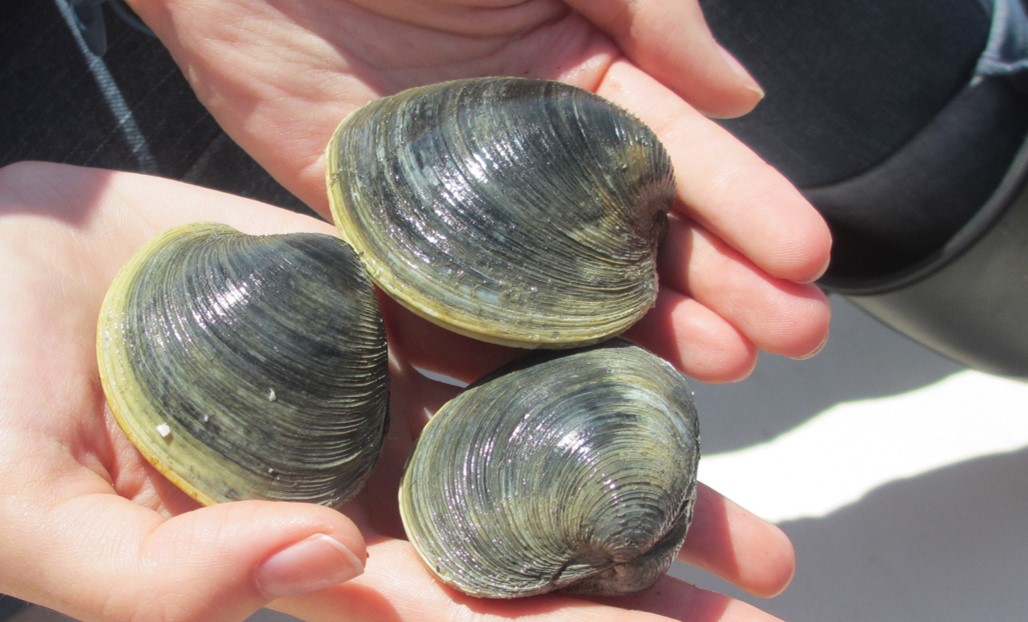
Credit: NOAA Fisheries/Julie Rose
In 2022, more than 17.7 million quahogs were harvested from the bay and the rest of the state’s coastal waters, according to an annual report from the Rhode Island Department of Environmental Management (DEM) — a 9% increase from the year prior.
Subscribe to:
Posts (Atom)