Menu Bar

Home           Calendar           Topics          Just Charlestown          About Us

Wednesday, December 13, 2023

Corporations want to save junk fees

Can you squeeze blood from a turnip? 

By Jim Hightower 

According to an old saying, “You can’t squeeze blood from a turnip.” True. But that raises this question: Who would even try squeezing blood from a turnip?

Well, metaphorically speaking, if “blood” means profit, and “turnips” are customers, airlines are eager to apply the squeeze. As are banks, credit card outfits, cable TV and Internet hucksters, car rental companies, and concert promoters.

And can anyone decipher their insurance policies?

I’m not talking about fair profit, but junk fees, hidden charges, undisclosed add-ons, and other “gotchas” that brand-name giants sneak into the fine print of their price tags. It’s pure corporate larceny, adding up to a stunning level of unearned profit for the perpetrators.

Airlines picked our pockets for nearly $7 billion last year in baggage fees alone. Credit card dealers plucked $14 billion from us in punitive late fees. The overall corporate haul from this secretive squeeze on consumers now tops $64 billion a year.

Sticks and stones

PFAS may disrupt bone development in children and young adults, study finds

SHANNON KELLEHER

Exposure to a widespread, toxic chemical called PFOS may interfere with bone development in children and young adults, potentially putting them at higher risk for osteoporosis and other bone problems later in life, according to a new study that focused mainly on Hispanic individuals from southern California.

Perfluorooctane sulfonic acid (PFOS), a widespread type of per- and polyfluoroalkyl substances (PFAS), was associated with lower bone mineral density in a group of 328 overweight Hispanic children and in a group of 158 young adults of mixed ethnicity. 

The study, published Dec. 6 in the journal Environmental Research, was unique in that it tracked associations between bone density and PFAS blood serum levels over time.

New England stone walls lie at the intersection of history, archaeology, ecology and geoscience, and deserve a science of their own

Iconic remnant of our history

Robert M. Thorson, University of Connecticut

Young buck crossing the stone fence in my backyard
 (Photo by Will Collette)
The abandoned fieldstone walls of New England are every bit as iconic to the region as lobster pots, town greens, sap buckets and fall foliage. They seem to be everywhere – a latticework of dry, lichen-crusted stone ridges separating a patchwork of otherwise moist soils.

Stone walls can be found here and there in other states, but only in New England are they nearly ubiquitous. That’s due to a regionally unique combination of hard crystalline bedrock, glacial soils and farms with patchworks of small land parcels.

Nearly all were built by European settlers and their draft animals, who scuttled glacial stones from agricultural fields and pastures outward to fence lines and boundaries, then tossed or stacked them as lines. Though the oldest walls date to 1607, most were built in the agrarian century between the American Revolution and the cultural shift toward cities and industry after the Civil War.

The mass of stone that farmers moved in that century staggers the mind – an estimated 240,000 miles (400,000 kilometers) of barricades, most stacked thigh-high and similarly wide. That’s long enough to wrap our planet 10 times at the equator, or to reach the Moon on its closest approach to Earth.

Natural scientists have been working to quantify this phenomenon, which is larger in volume than the Great Wall of China, Hadrian’s Wall in Britain and the Egyptian pyramids at Giza combined. This work began in 1870 and generated the U.S. government’s 1872 Census of Fences. Today, scientists are using a technique called LiDAR, or light detection and ranging, to measure and map stone walls across New England.

Being a geologist, I’m interested in walls as landforms that are distinctive to the region, created during the lead-up to the Anthropocene epoch – a time when human agency dominates all others. 

I’ve written about the history of stone walls and how to interpret them in the field, and developed the Stone Wall Initiative to draw public attention to their importance in New England. Now, I’m working with students and colleagues to develop a formal interdisciplinary science of stone walls that will help researchers understand and preserve them.

Tuesday, December 12, 2023

Hail to the (former) Chief

The new normal

Shannon Wheeler 

Texas shows us where Trump 2.0 would take us

Do Video Doorbells Really Help to Deter Crime?

Data doesn't support doorbell cameras deterrent effect or that they help with capture and conviction of criminals

By Rod McCullom

On a Monday afternoon in late June, two women were outside on the 500 block of Gridley Avenue in Akron, Ohio, when they were shot. Moments earlier, three young men pulled up in a silver Ford Taurus, exited the vehicle, and opened fire before driving away, according to local media accounts. 

More than 40 shell casings were recovered, reports say, with bullets striking several vehicles and homes. One of the victims, a 65-year-old woman, said she was shot in the shoulder while sitting on her porch. “I’ve lived here for 41 years and I can’t even sit on my porch anymore,” she told 19 News in Cleveland.

The next day, there was another shooting just over a mile away, also involving multiple young men in a vehicle. In both cases, the incidents were recorded by Ring video doorbells and the footage was shared with the police department and local television news stations.

There have been no arrests so far. The Akron Police Department, however, says it is always looking for opportunities to use video doorbells — which are motion activated devices that record both movement and audio — along with other technologies, to help solve cases like these.

Coincidentally, the week of the June shootings, the Akron City Council announced a pilot program to give away 460 video doorbells from Ring — owned by Amazon — to residents in targeted neighborhoods with high crime rates in an effort to reduce or deter crime. Those residents who participate must agree to turn over any recorded video to police if asked.

About 6,800 Akron residents were eligible for the doorbells as of June, according to The Akron Beacon Journal. Some of them live in or around so-called hot spots, which are highly trafficked places where crimes occur more frequently. Hot spots can account for up to 50 percent of reported crime in some cities even though they are only a small footprint of the total area.

Nearly a month after the Akron program was revealed, the northwestern Louisiana city of Shreveport announced a similar program offering free Ring cameras to residents or homeowners.

Akron and Shreveport are joining a growing number of cities where authorities buy Ring video doorbells and offer them to residents free or offer a rebate. In 2019, more than 400 police departments partnered with Ring. 

As of the end of November, that number is more than 2,600 police departments, along with almost 600 fire departments and more than 70 local government agencies.

The partnerships enable residents to share video — and police to request their videos — with a simple click on the Neighbors by Ring application for smartphones and tablets. This essentially creates a virtual neighborhood watch. 

“Criminals and thieves take note: our team is working tirelessly to stop you and make safer neighborhoods for our families to live in,” Ring’s founder and chief inventor, Jamie Siminoff, wrote in a 2019 post on the company’s website.

The problem is that there is very little published data on the effectiveness of Ring — or similar, less popular video doorbell cameras, such as Google Nest, Skybell, ADT, or Vivint — as a crime prevention or deterrent tool, several researchers told Undark. 

And, according to datasets that helped researchers at MIT Media Lab create what they say is the first nationwide map of Ring users and usage patterns, the cameras may have little to no impact on crime in Los Angeles, a city with a relatively high concentration of the devices.

Accepting when we might be wrong

Intellectual humility is a key ingredient for scientific progress

Michael Dickson, University of South Carolina

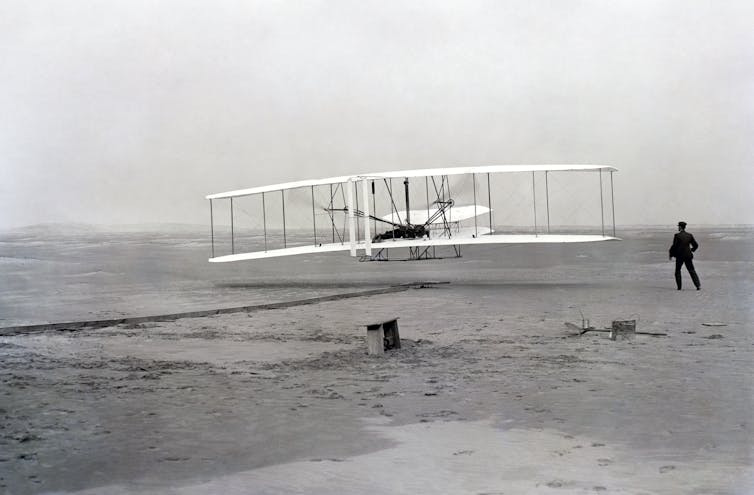
Would technologies like the airplane ever get off the
ground without people balancing commitment to their
vision with openness to new ideas?
 HUM Images/Universal Images Group via Getty Images
The virtue of intellectual humility is getting a lot of attention. It’s heralded as a part of wisdom, an aid to self-improvement and a catalyst for more productive political dialogue. 

While researchers define intellectual humility in various ways, the core of the idea is “recognizing that one’s beliefs and opinions might be incorrect.”

But achieving intellectual humility is hard. Overconfidence is a persistent problem, faced by many, and does not appear to be improved by education or expertise. Even scientific pioneers can sometimes lack this valuable trait.

black and white photo of man with white beard
William Thomson, known as Lord Kelvin,
poses in 1902 with his compass.
 
Universal History Archive/Getty Images

Take the example of one of the greatest scientists of the 19th century, Lord Kelvin, who was not immune to overconfidence. 

In a 1902 interview “on scientific matters now prominently before the public mind,” he was asked about the future of air travel: “(W)e have no hope of solving the problem of aerial navigation in any way?”

Lord Kelvin replied firmly: “No; I do not think there is any hope. Neither the balloon, nor the aeroplane, nor the gliding machine will be a practical success.” The Wright brothers’ first successful flight was a little over a year later.

Scientific overconfidence is not confined to matters of technology. A few years earlier, Kelvin’s eminent colleague, A. A. Michelson, the first American to win a Nobel Prize in science, expressed a similarly striking view about the fundamental laws of physics: “It seems probable that most of the grand underlying principles have now been firmly established.”

Over the next few decades – in no small part due to Michelson’s own work – fundamental physical theory underwent its most dramatic changes since the times of Newton, with the development of the theory of relativity and quantum mechanics “radically and irreversibly” altering our view of the physical universe.

But is this sort of overconfidence a problem? Maybe it actually helps the progress of science? I suggest that intellectual humility is a better, more progressive stance for science.

Most of the world’s countries receive failing grade in global ‘human rights report card’

URI research team drew on a vast quantitative dataset to grade human rights practices in every country around the world.

Kevin Stacey

A new report that grades all the countries of the world on their respect for human rights paints a grim picture of human rights practices in the 21st century.

Produced by the Global RIghts Project (GRIP), a research team based in the University of Rhode Island’s Center for Nonviolence and Peace Studies, the report draws on a vast
quantitative human rights dataset to grade each country’s human rights practices on a 100-point scale. 

The report found that 60% of the world’s countries get an ‘F’ (a score of 0-59) for their human rights practices, while only about 20% of countries receive a grade of ‘A’ or ‘B’ (a score of 80-100). The global median score was 50.

“We show that most countries of the world are failing to protect their citizens’ most basic rights,” said Skip Mark, an assistant professor of political science at URI and director of the Center for Nonviolence and Peace Studies. 

“We think these findings make it clear that there’s a lot of work to do in terms of ensuring that all people have a chance to live a life of dignity and respect. We hope objective measures of human rights practices in this report will be a resource for policymakers, nongovernmental organizations, researchers, and anyone else interested in improving human rights around the world.”

GRIP grades are based on the extent to which countries respect a suite of 25 individual human rights. Those rights include physical integrity rights such as freedom from torture or political imprisonment, empowerment rights such as freedom of speech and assembly, worker rights such as the right to unionize and freedom from child labor, and justice rights such as the right to a fair trial.

Monday, December 11, 2023

Once the role model for socially-responsible investment, TIAA needs to change

TIAA Must End Toxic and Immoral Fossil Fuel Investments

DON LIEBER, IRIS MARIE BLOOM, CAROLINE LEVINE, AMY GRAY in Common Dreams

Health ministers and global leaders at the COP28 Climate Summit in Dubai held sessions on the dire impacts to global health and disparities caused by climate chaos and fossil fuels, and the urgent need to phase out fossil fuels as global health imperative.

Yet the Teachers Insurance and Annuity Association of America (TIAA) invests a shockingly high proportion of its assets under management in fossil fuels. As teachers, health professionals, and plan participants, we are horrified by this and demand that TIAA end these toxic and immoral investments.

Health experts have long been alarmed by coal’s deadly impact on human health worldwide; a new report details that it is even deadlier than previously thought: Production alone killed 460,000 people in the U.S. in the past 20 years. Thousands are still dying each year, directly from coal production.

TIAA is a major investor in coal. TIAA is the world’s largest coal bond investor in the biggest coal producer on Earth, Adani; overall, it’s the fourth largest investor in coal bonds on the planet.

TIAA holds a staggering $78 billion in oil and gas investments. This includes direct holdings in the world’s largest and dirtiest fossil fuel producers like ExxonMobil and TotalEnergies. TIAA is the second largest investor in fossil fuel bonds on the planet.

Preponderance of evidence

By Bill Bramhall

Courage under fire, right?


Gonna need a new bird book

Why dozens of North American bird species are getting new names: 

Jared Del Rosso, University of Denver

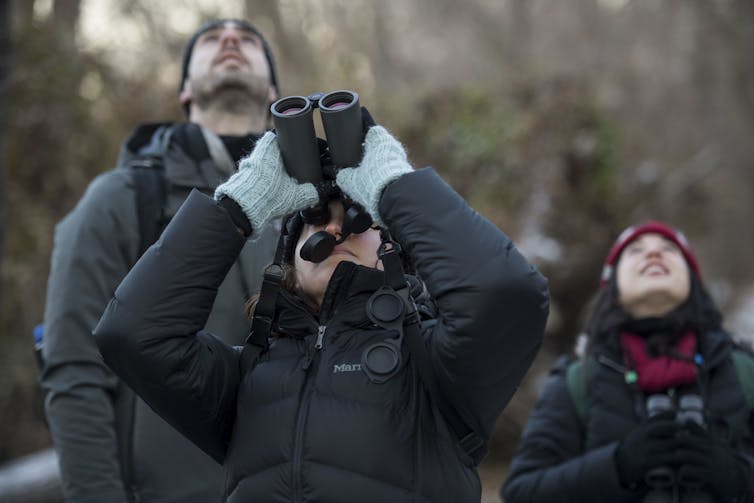
Birders participate in the Christmas Bird Count on
Theodore Roosevelt Island in Washington, D.C., Dec. 16, 2017. 
Carolyn Van Houten/The Washington Post via Getty Images
This winter, tens of thousands of birders will survey winter bird populations for the National Audubon Society’s Christmas Bird Count, part of an international bird census, powered by volunteers, that has taken place every year since 1900.

For many birders, participating in the count is a much-anticipated annual tradition. Tallying birds and compiling results with others connects birders to local, regional and even national birding communities. 

Comparing this year’s results with previous tallies links birders to past generations. And scientists use the data to assess whether bird populations are thriving or declining.

But a change is coming. On Nov. 1, 2023, the American Ornithological Society announced that it will rename 152 bird species that have names honoring historical figures.

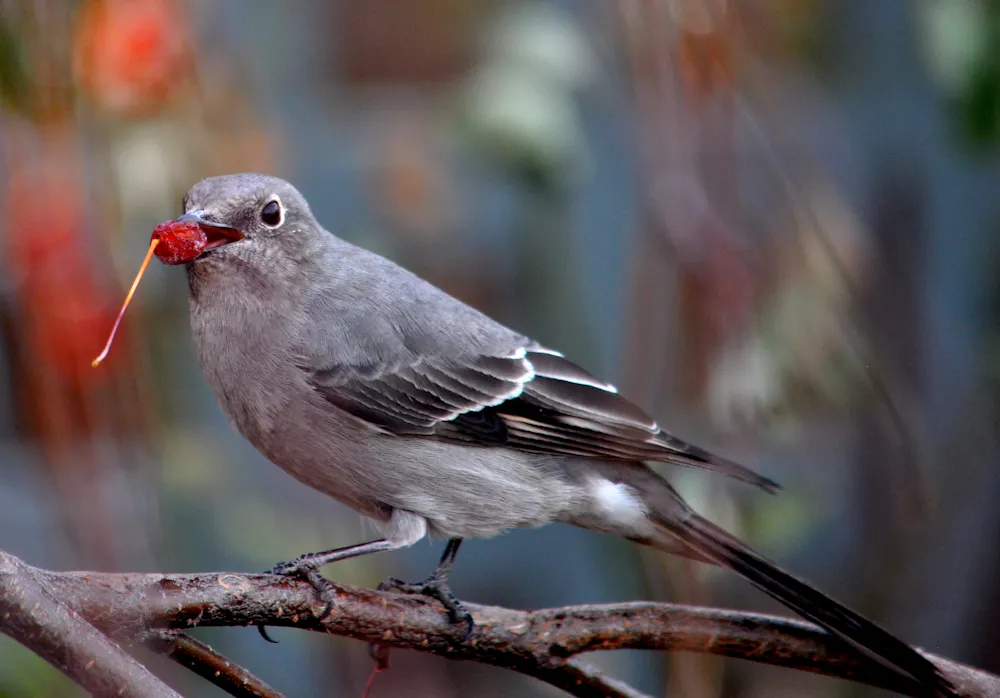
A gray-blue bird with black markings perches on a branch, eating a berry.
A Townsend’s Solitaire, one of the species to be renamed.
 Jared Del Rosso, CC BY-ND

Soon, Christmas bird counters will no longer find Cooper’s hawks hunting songbirds. They won’t scan marshes for Wilson’s snipes. And here in Colorado’s Front Range, where I’ll participate in a local count, we’ll no longer encounter one of my favorite winter visitors, Townsend’s solitaires.

New names will take the place of these eponymous ones. With those new names will come new ways of understanding these birds and their histories.

Desperate Families Search for Affordable Home Care

Finding an aide to help an older person stay at home safely takes work

 through Kaiser Health News

It’s a good day when Frank Lee, a retired chef, can slip out to the hardware store, fairly confident that his wife, Robin, is in the hands of reliable help. He spends nearly every hour of every day anxiously overseeing her care at their home on the Isle of Palms, a barrier island near Charleston, South Carolina.

Robin Lee, 67, has had dementia for about a decade, but the couple was able to take overseas trips and enjoy their marriage of some 40 years until three years ago, when she grew more agitated, prone to sudden outbursts, and could no longer explain what she needed or wanted. He struggled to care for her largely on his own.

“As Mom’s condition got more difficult to navigate, he was just handling it,” said Jesse Lee, the youngest of the couple’s three adult children. “It was getting harder and harder. Something had to change, or they would both perish.”

Frank Lee’s search for trustworthy home health aides — an experience that millions of American families face — has often been exhausting and infuriating, but he has persisted. He didn’t entirely trust the care his wife would get in an assisted living facility. 

Last August, when a respite program paid for her brief stay in one so Frank, 69, could take a trip to the mountains, she fell and fractured her sacrum, the bone that connects the spine to the pelvis.

How to cope with holiday stress

The holidays and your brain

Seena Mathew, University of Mary Hardin-Baylor 

When stress and tension are starting to mount, taking
short breaks and deep breaths can help clear your mind.
 AaronAmat/iStock / Getty Images Plus
Just as the shift to shorter days and colder weather can bring with it mood swings and other emotional challenges, the holiday season can also bring about somewhat predictable changes in mood and behavior.

Around this time of year, many of us experience more stress, anxiety and frustration than usual. These stressors have been linked to higher levels of heart failure and alcohol poisoning and an increase in deaths from stroke.

Learning how to recognize what brings about stress and what parts of the brain are actively involved can help with managing the stress response.

As a neuroscientist, I am often curious about the dynamic connection between behavior and the brain. I’ve learned that, biologically speaking, there are ways to manage your responses to holiday stressors through awareness of why they happen.