The General Assembly today approved
legislation from Rep. Tina Spears and Sen. Victoria Gu to mandate the creation
and maintenance of a statewide coastal resiliency plan, the Act on Coasts. The
plan will assess community vulnerabilities, recommend mitigation strategies
along ocean and riverine coasts, and recommend financing strategies to
implement these resiliency strategies.
“Rising sea levels aren’t just coming – they
are already here,” said Representative Spears (D-Dist. 36 Charlestown, New
Shoreham, South Kingstown, Westerly). “The question is what we plan to do in
response. This bill will ensure that the state climate resiliency plan accounts
for mitigation and resiliency efforts along all our coasts and waterways.”
The 2021 Act on Climate already mandates a
statewide climate change resiliency plan. This legislation adds a dedicated
coastal resiliency plan to that mandate and ensures that it be reviewed and
updated at least every two years, as coastal conditions in Rhode Island change
and mitigation strategies evolve.
“In the past year we’ve seen repeated and
severe flooding and erosion along our coasts and rivers statewide. We have to
do more to adapt so that we don’t lose the places we love in South County,”
said Senator Gu (D-Dist. 38, Westerly, Charlestown, South Kingstown). “While
work is already underway across the state to mitigate these adverse effects, we
need to integrate all the federal, municipal, and state efforts into a
comprehensive and actionable plan.”
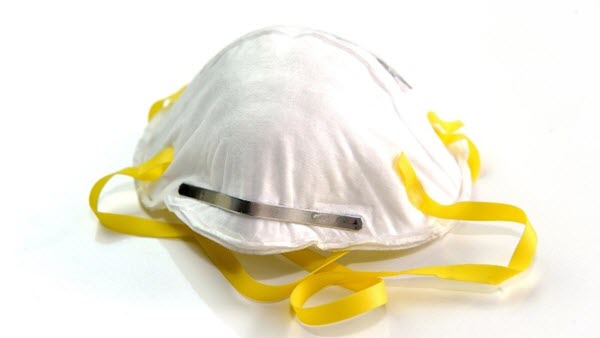
Any common face mask provides significant protection
against the virus that causes COVID-19, but N95 masks are most effective at
slashing the amount emitted by infected people, according to a University of
Maryland-led study released Wednesday.
So-called “duckbill” N95 masks scored highest in the
study, which measured the exhaled breath of participants who were tested both
masked and unmasked to measure comparative outputs of SARS-CoV-2. The
inexpensive masks, which have two head straps and a horizontal seam, captured
98% of exhaled virus, according to the study published in eBioMedicine.
The researchers also found that—in what might come as a
surprise to many—cloth masks outperformed the specific brand of KN95 mask that
was tested. Surgical masks brought up the rear in performance out of the four
types, but even they blocked 70% of the virus, the tests showed. (To reflect
the general public's use of masks, study volunteers were not fit-tested for
their masks or trained how to properly wear them.)
The General Assembly approved
legislation sponsored by Sen. Pamela J. Lauria and Rep. Carol Hagan McEntee to
help sexual assault victims access the state fund that assists victims of
violent crime with the costs they’ve faced as a result.
The legislation (2024-S 2767A, 2024-H 7449A),
which now goes to the governor, would enable victims of sexual assault to
submit a medical forensic exam performed within 15 days of the assault by a
licensed health care provider in lieu of a police report in order to establish
eligibility for funds from the Crime Victim Compensation Program.
The program
reimburses victims for expenses resulting from crimes, such as medical and
counseling costs, cleaning, relocation, loss of earnings, funeral expenses and
more.
Under your feet lies the world’s biggest reservoir. Groundwater makes up a whopping 97% of all usable freshwater.
Where is it? In the voids between grains and cracks within rocks. We see it when it rises to the surface in springs, in caves, or when we pump it up for use.
While groundwater is often hidden, it underpins ecosystems around the world and is a vital resource for people.
You might think groundwater would be protected from climate change, given it’s underground. But this is no longer the case. As the atmosphere continues to heat up, more and more heat is penetrating underground.
There is already considerable evidence that the subsurface is warming. The heat shows up in temperature measurements taken in boreholes around the world.
Our team of international scientists have combined our knowledge to model how groundwater will heat up in the future. Under a realistic middle of the road greenhouse gas emission scenario, with a projected mean global atmospheric temperature rise of 2.7°C, groundwater will warm by an average of 2.1°C by 2100, compared to 2000.
This warming varies by region and is delayed by decades compared to the surface, because it takes time to heat up the underground mass. Our results can be accessed by everyone globally.
U.S. Senate Republicans blocked consideration of the Right to Contraception Act,
a move that Democratic leaders and rights advocates pointed to as further
evidence that the GOP is hellbent on further degrading reproductive freedom.
"It's appalling. Shameful.
Inexcusable. Grossly out of touch. Today Republicans in the U.S. Senate refused
to take the simple step of enshrining our right to contraception into federal
law when they voted down the Right to Contraception Act," declared Kristin
Rowe-Finkbeiner, executive director and CEO of MomsRising. "When Senate
Republicans turned their backs on it today, they turned their backs on
America's moms."
Reproductive Freedom for All president and
CEO Mini Timmaraju said that "if
you still need more proof that Republicans are coming for birth control, here
it is. Their refusal to protect this popular and fundamental right tells us
everything we need to know—and voters won't forget it this November."
Reproductive freedom has been a key issue
at all levels of U.S. politics leading up to the general election, when voters
will determine who controls Congress and the White House. Democratic President
Joe Biden, who supports reproductive rights, is running for reelection and is
set to face former Republican President Donald Trump.
They’re no substitute for real pensions but remember Voltaire
By Gerald E. Scorse, Progressive Charlestown guest columnist
Nearly half a century ago, on Labor
Day 1974, President Gerald Ford signed the Employee Retirement
Income Security Act (ERISA). The bill created Individual Retirement Accounts (IRAs) and
essentially paved the way for 401(k)s, 403(b)s, and a host of imitations.
Retirement experts have been
beating up on the accounts ever since. Two fresh examples aim specifically at
401(k)s, easily the most
common of
the type.
One was an in-depth article asking
a serious question, “Was the 401(k) a Mistake?” The
answer, equally serious, was an emphatic “yes”. By coincidence, the second
critique also asked a serious question and delivered a “yes” answer: “Should Your 401(k) Be Eliminated
to Save Social Security Benefits?”
The
primary fault of 401(k)s and all comparable accounts—undeniable fifty years ago
and undeniable today—is that they simply can’t compare to pensions. Employers
put up the money for pensions, investing it on behalf of their workers. The
workers collect when they retire, getting fixed monthly amounts (and often
cost-of-living increases as well) for the rest of their lives.
At
some point those workers will also be drawing Social Security, so they’ll be
savoring financial double-dips for all of their later years.
Retirement
plans are almost the exact opposite of pensions. Workers put up their own money
(though employers, especially in more recent years, have kicked in something as
well). There are no guaranteed monthly returns down the road. There’s
actually no guaranteed anything: the value of the accounts goes up one day and
down the next, and where it ends nobody knows.
No
wonder, then, that retirement experts have never been fans of IRAs, 401(k)s and
the like. And yet, and yet: maybe the picture isn’t quite as bleak as it’s long
been painted.
After a two-year stalemate, Rhode Island lawmakers appear poised to pass legislation making it easier for property owners to build accessory dwelling units, or ADUs.
Amended companion bills advanced by the Senate Committee on Housing and Municipal Government late Tuesday are nearly identical to the original proposal championed by House Speaker K. Joseph Shekarchi, and already given the greenlight by the Rhode Island House in February.
The Senate panel’s 5-2 vote returns the revised legislation to the full House of Representatives, and sends it to the full Senate for the first time. Floor votes in each chamber are expected on the final day of session on Thursday, June 13, though there may also be amendments made on the floor, as Sen. Roger Picard, a Woonsocket Democrat and committee chairman, told fellow lawmakers Tuesday.
Picard and Sen. Gordon Rogers, a Foster Republican, voted against advancing the amended legislation to the floor.
The only change from the original House bill: clarifying that the “by right” allowances to build ADUs in certain circumstances — including for family members with disabilities or for units built within an existing home rather than as add-ons or standalone structures — are limited to one unit per lot.
“That was the intent of the bill all along,” Rep. June Speakman, a Warren Democrat and bill sponsor, said in an interview on Tuesday. “The idea was not that you would build a backyard full of them.”
State law already allows ADUs, either within or detached from a single family home. But vast and varied local zoning and building requirements have stifled their spread.
The House legislation, Shekarchi’s top legislative priority for two years running, aims to cut through the municipal red tape by preventing cities and towns from adding extra conditions around frontage and setbacks or infrastructure requirements beyond what is required by state law.
Yet town planners and local officials have railed against a perceived loss of local control. Last year, the Rhode Island Senate punted a decision amid municipal outcry.
In March, Sen. Victoria Gu, a Westerly Democrat, offered a compromise version that appeared to appease even the harshest local critics. Unlike the House version, Gu’s bill gives extra powers to cities and towns to set owner occupancy and minimum lease length requirements for ADUs.
The American Planning Association’s Rhode Island chapter (APA RI) threw its weight behind Gu’s legislation, having helped to draft the bill text itself. But none of those protections were incorporated into the legislation advanced by the Senate committee.
Meanwhile, the compromise bill is still languishing in the same committee without a scheduled vote, much to the chagrin of local planners.
Jane Weidman 👉, Charlestown town planner and legislative subcommittee chair for the Rhode Island chapter of the American Planning Association, praised the compromise ADU bill introduced by Sen. Victoria Gu of Westerly as ‘an excellent example of how legislation should be crafted.’ But the extra powers the bill gives to cities are absent from the legislation advanced by the Senate Committee on Housing and Municipal Government. (Janine L. Weisman/Rhode Island Current)
“It is quite unfortunate that a collaborative effort of many months with countless hours spent by many different advocates, often with competing positions, who came together for a strong ADU bill that will correct the shortcomings of the existing law, give communities the safeguards they specifically requested, and build in the flexibility to encourage communities to develop ADUs beyond those permitted by right, is not being considered,” Jane Weidman, Charlestown town planner and APA RI legislative subcommittee chair, wrote in a Monday email to lawmakers and shared with Rhode Island Current.
“The Senate bill spearheaded by Senator Gu is an excellent example of how legislation should be crafted. It was an open and inclusive process, and the bill is so much better for it.”
EDITOR'S NOTE: Actually, instead of being "an open and inclusive process," Gu's legislation was written by the planning lobby group to advance the interests of the Charlestown Citizens Alliance (CCA). The CCA believes that Charlestown should be able to reject state laws on land use to suit its own undefined definition of "rural character." CCA founder and town Planning Commissar Ruth Platner has long opposed any practical approach to accessory dwelling units. - Will Collette
A new study highlights the effects of high cumulative BMI
on brain health across various age groups.
A recent study published in Health Data Science, a Science Partner Journal,
highlights the substantial impact of high cumulative body mass index (BMI) on
brain health. Conducted by Associate Professor Han Lv from Beijing Friendship
Hospital, Capital Medical University, the research indicates that a high BMI
correlates with reduced brain volume, increased white matter lesions, and
compromised microstructural integrity.
The study analyzed data from a 16-year
population-based cohort to investigate the effects of cumulative BMI on
neuroimaging features in adults aged 25 to 83 years. Researchers discovered
that high BMI was linked to smaller brain volume and larger volumes of white
matter hyperintensity (WMH), particularly in adults younger than 45 years and
those older than 60 years.
High BMI is causally associated with
smaller brain volume, larger volume of white matter lesions, and abnormal
microstructural integrity. Credit: Lv, Han; Beijing Friendship Hospital,
Capital Medical University
There’s a tape that both the defense and the prosecution played in summations in former President Donald Trump’s criminal trial. In it, you can hear the chaos of Trump’s office at Trump Tower in September of 2016: Trump seems to be having multiple conversations almost simultaneously. He talks to an unidentified person on the phone.
He discusses polls with Michael Cohen, his executive vice-president at the time. Trump and Cohen talk about a diversity initiative and stopping the media from unsealing the records of Trump’s first divorce. His executive assistant pops in with word of a call from a developer. Trump calls for a Coke.
And then, very clearly, you can hear Cohen saying, “I need to open up a company for the transfer of all of that info regarding our friend, David, you know, so that — I’m going to do that right away. I’ve actually come up and I’ve spoken … I’ve spoken to Allen Weisselberg” — then the Trump Organization’s chief financial officer — “about how to set the whole thing up.”
Trump interrupts and says, “So, what do we got to pay for this, 150?” Then he says, “Cash?”
“No, no, no, no no,” Cohen says. “I got it.”
On the most literal level, the tape showed Trump discussing the logistics of paying off a woman who said she had an affair with him. This was key evidence for the jury’s ultimate finding that he had intended to alter the outcome of the 2016 election by making unlawful hush money payments.