Menu Bar

Home           Calendar           Topics          Just Charlestown          About Us

Tuesday, August 5, 2025

Trump washes his hands of responsibility for deaths he caused

From Texas to Covid, Trump has a long history of refusing to take responsibility and shifting blame on to political rivals.

Dean BakerCenter for Economic and Policy Research

Donald Trump may not be very good at running things, but when it comes to shifting blame, he is truly world class. As the magnitude of the disaster in Texas becomes clearer, the one thing we can be certain of is that Trump will accept none of the responsibility.

He will insist that his decision to have mass layoffs at the Federal Emergency Management Administration (FEMA) and National Weather Service (NWS) had nothing to do with the state’s lack of preparedness for the storm and the inadequate response. 

At this point it is not clear whether the layoffs at the agencies played a role in the warnings given or the speed of the response to the floods.

Top of Form

Bottom of Form

The Texas offices were clearly understaffed. However, we don’t know whether that impeded their operations in important ways.

He routinely makes absurd and ridiculous statements which would be treated as a major scandal if they came from the mouth of any other politician, but instead are dismissed with an “Oh, that’s Trump” from the media.

We do know that global warming makes events like the Texas floods both more common and more extreme. For that reason, we certainly can blame Trump’s efforts to promote global warming with increased subsidies for fossil fuels and ending support for electric vehicles and clean energy. We can anticipate many more weather disasters in the years head thanks to Trump’s policies.

Weather and natural disasters are far from the only area where Trump refuses to take responsibility for his actions. The economy shrank at a 0.5% annual rate in the first quarter. This was after it grew 2.4% in the fourth quarter of 2024 and 2.8% for the full year.

Nearly every forecaster expected the economy to keep growing at a healthy pace through 2025. However, Trump’s tariff threats, budget cuts, and layoffs at the federal level managed to quickly end the economy’s growth streak and push it into negative territory in the first quarter he was in office.

Naturally Trump responded to the bad news on growth by blaming former President Joe Biden for giving him an “economic disaster.” In reality land, Trump was handed the best economy of any president in more than half a century, with low unemployment falling inflation, rising real wages, and a unprecedented boom in factory construction.

Probably the all time classic for Trump denying responsibility was his response to the pandemic. He made it clear that he wasn’t especially concerned about how many people got sick or died from Covid-19, he was only concerned that he not be given the blame.

Cats know

Same for me, please

The environmental toll of artificial intelligence

Trump AI plan would “ramp up exploitation” of people and the environment, advocates warn

Shannon Kelleher 

The Trump administration this week released a plan to fast-track the growth of artificial intelligence (AI) in the US, delighting tech groups while alarming environmental advocates who point to the industry’s toxic emissions, high water usage and heavy reliance on fossil fuels.

The “AI action plan,” released July 23 by the White House, calls for the development of new AI data centers – huge facilities that house AI computing infrastructure – to be waived from typical assessment requirements under the National Environmental Policy Act, which determine a project’s environmental impact.

The plan also proposes expediting environmental permitting for such data centers by streamlining or reducing regulations under the Clean Air Act, the Clean Water Act and other environmental laws, and calls on agencies to make federal lands available for constructing data centers and their power generation infrastructure.

In accordance with the Trump Administration’s AI plan, the US Department of Energy today announced four sites across the country selected to invite private sector partners to develop AI data centers and energy generation projects – a “bold step” that will “accelerate the next Manhattan Project,” said Energy Secretary Chris Wright in a statement.

You’re Not Lazy – But Your Diet Might Be Making You Fat

Duke scientists analyzed global data and found that obesity isn’t rising because we’ve stopped moving — it’s because we’re eating more.

By Margo Lakin, Duke University

A new study from Duke University’s Pontzer Lab, part of the Department of Evolutionary Anthropology at Trinity College of Arts & Sciences, explores how economic growth relates to obesity, daily calorie burn, and lifestyle changes around the world.

Many experts have long believed that rising obesity rates are tied to people being less physically active as societies become more industrialized. But the research tells a different story. According to the findings, people living in wealthier countries actually burn as much or even more energy each day.

Published in PNAS, the study points to increased calorie consumption—not inactivity—as the leading factor behind climbing obesity rates. The researchers suggest that what people eat, rather than how little they move, is the more significant contributor to the global obesity problem.

Why do MAGA faithful support Trump if his ‘big beautiful bill’ will likely hurt many of them?

This is why Trump said "I love the uneducated"

Alex Hinton, Rutgers University - Newark

Donald Trump signed the wide-ranging One Big Beautiful Bill Act into law on July 4, 2025. It focuses on cutting taxes, mainly for households that earn US$217,000 or more each year, as well as increasing funding for military and border security and revamping social programs.

Republicans tout it as providing “an economic lifeline for working families” and “laying a key cornerstone of America’s new golden age.”

Democrat lawmakers argue that, in reality, Trump’s act “steals from the poor to give to the ultra-rich.”

The act is estimated to increase the country’s debt by more than US$3 trillion over 10 years, while knocking more than 10 million people off Medicaid.

About 41.4 million adults in the U.S. receive Medicaid. And 49% of Medicaid recipients who voted in the 2024 election backed Trump.

While 94% of Democrats and Democratic-leaning independents said in a May 2025 survey that they are worried Medicaid cuts will lead to more adults and children losing their health insurance, 44% of Republicans and Republican-leaning independents expressed concern about this, according to the KFF Health Tracking Poll.

Why, then, do Trump’s Make America Great Again supporters – especially those who will be hit hard by cuts to food assistance programs and health care, including hospitals – continue to support him even as he enacts policies that some think go against their interests? Indeed, over 78% of Republicans or Republican-leaning voters say they support the measure Trump signed.

As an anthropologist who studies MAGA and American political culture, I understand that many of the MAGA faithful believe that Trump is a once-in-a-lifetime leader who is catapulting the U.S. into a new golden age.

Sure, their reasoning goes, bumps in the road are expected. But they think that most of the criticism of Trump and this latest bill is ultimately fake news spread by radical leftists who have what some call Trump Derangement Syndrome, meaning anti-Trump hysteria.

Monday, August 4, 2025

Trump Executive Order on homelessness is cruel, but not too far out of line with the policies of Governor McKee and Mayor Smiley

With more people likely to become homeless, making homelessness a crime is the wrong thing to do

Steve Ahlquist


“We are outraged by the Trump Administration’s executive order to criminalize homelessness—a policy that is not only offensive and in direct violation of the U.S. Supreme Court’s Olmstead decision, the basic tenets of the Americans with Disabilities Act of 1990, the Rehabilitation Act of 1973, and the Rhode Island Homeless Bill of Rights, but a cruel affront to human rights and dignity,” said the Rhode Island Coalition to End Homelessness.

Donald Trump issued a needlessly cruel Executive Order entitled “Ending Crime and Disorder on America’s Streets” on July 24. “Endemic vagrancy, disorderly behavior, sudden confrontations, and violent attacks have made our cities unsafe,” says the order, without evidence. The order prioritizes federal funds to municipalities that enforce bans on public camping and require sobriety before receiving services, reversing the “housing first” strategy that has proven effective in combating homelessness, poverty, and substance use.

"He stole my young girls!"

Public is invited to Narragansett tribe's powwow, August 9-10

Day Two

Can we count on accurate hurricane forecasts under Trump?

Hurricane forecasters are losing 3 key satellites ahead of peak storm season

Chris Vagasky, University of Wisconsin-Madison

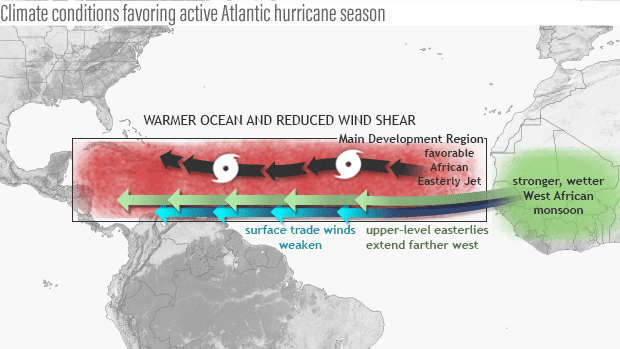
About 600 miles off the west coast of Africa, large clusters of thunderstorms begin organizing into tropical storms every hurricane season. They aren’t yet in range of Hurricane Hunter flights, so forecasters at the National Hurricane Center rely on weather satellites to peer down on these storms and beam back information about their location, structure and intensity.

The satellite data helps meteorologists create weather forecasts that keep planes and ships safe and prepare countries for a potential hurricane landfall.

Now, meteorologists are about to lose access to three of those satellites.

On June 25, 2025, the Trump administration issued a service change notice announcing that the Defense Meteorological Satellite Program, DMSP, and the Navy’s Fleet Numerical Meteorology and Oceanography Center would terminate data collection, processing and distribution of all DMSP data no later than June 30. The data termination was postponed until July 31 following a request from the head of NASA’s Earth Science Division.

How hurricanes form. NOAA

I am a meteorologist who studies lightning in hurricanes and helps train other meteorologists to monitor and forecast tropical cyclones. Here is how meteorologists use the DMSP data and why they are concerned about it going dark.

No link between aluminum-adjuvanted childhood vaccines, conditions such as autism

Another Bobby Junior fake theory shot down

Mary Van Beusekom, MS

A 24-year study of more than 1.2 million Danish children adds to the already considerable evidence finding no tie between exposure to aluminum-adjuvanted childhood vaccines and autoimmune, atopic or allergic, or neurodevelopmental conditions such as autism.

The study, published today in the Annals of Internal Medicine, comes less than a month after US Health and Human Services (HHS) Secretary Robert F. Kennedy Jr. reportedly asked a government vaccines advisory group to scrutinize dozens of aluminum-containing vaccines that have been in use for nearly 100 years.

Aluminum-based adjuvants are often used in inactivated vaccines, including childhood vaccines against diphtheria, tetanus, and pertussis (Tdap), Haemophilus influenzae type b (Hib), pneumococcal conjugate vaccine (PCV), and hepatitis A and B to boost immune responses, the study authors noted.

"Although immunization with aluminum-adsorbed vaccines in children has been used worldwide for many decades and is generally considered safe, concerns about potential harms continue to resurface," they wrote.

Trump Voters Wanted Relief From Medical Bills.

Surprise! For Millions, the Bills Are About To Get Bigger.


Donald Trump rode to reelection last fall on voter concerns about prices. But as his administration pares back federal rules and programs designed to protect patients from the high cost of health care, Trump risks pushing more Americans into debt, further straining family budgets already stressed by medical bills.

Millions of people are expected to lose health insurance in the coming years as a result of the tax cut legislation Trump signed this month, leaving them with fewer protections from large bills if they get sick or suffer an accident.

At the same time, significant increases in health plan premiums on state insurance marketplaces next year will likely push more Americans to either drop coverage or switch to higher-deductible plans that will require them to pay more out-of-pocket before their insurance kicks in.

Smaller changes to federal rules are poised to bump up patients’ bills, as well. New federal guidelines for covid-19 vaccines, for example, will allow health insurers to stop covering the shots for millions, so if patients want the protection, some may have to pay out-of-pocket.

The new tax cut legislation will also raise the cost of certain doctor visits, requiring copays of up to $35 for some Medicaid enrollees.

And for those who do end up in debt, there will be fewer protections. This month, the Trump administration secured permission from a federal court to roll back regulations that would have removed medical debt from consumer credit reports.

That puts Americans who cannot pay their medical bills at risk of lower credit scores, hindering their ability to get a loan or forcing them to pay higher interest rates.

Sunday, August 3, 2025

RFK Jr’s Vaccine Policies Undermine Coverage — and Trust

Robbing us of our best defense against infectious disease

By Joshua Cohen

In June, the Department of Health and Human Services Secretary, Robert F. Kennedy Jr., ousted all 17 members of a panel that makes vaccine recommendations to the U.S. government. “A clean sweep is necessary to reestablish public confidence in vaccine science,” said Kennedy, who accused the panel members of, among other things, having conflicts of interest due to ties with pharmaceutical companies.

Many vaccine experts were dismayed. Members of the panel, known as the Advisory Committee on Immunization Practices, or ACIP, must follow strict rules regarding conflicts. Further, some of Kennedy’s hand-picked replacements have made false claims about vaccine safety and efficacy. One panel member, for example, stated that the Covid mRNA shots — credited with saving millions of lives — instead caused “unprecedented” harm.

This change in the composition of the panel, which advises the Centers for Disease Control and Prevention, could have a direct impact on insurance coverage, said Charlotte Moser, a former ACIP member who co-directs the Vaccine Education Center at Children's Hospital of Philadelphia. ACIP recommendations are linked to specific legislation, she wrote in an email to Undark. 

The Affordable Care Act, for example, requires that nearly all insurers cover the ACIP-recommended vaccines, and the Vaccines for Children Program, created by Congress in the 1993 in the wake of a measles epidemic, provides these vaccines free of charge for children who are uninsured or whose families may be unable to afford them.

Beyond the ACIP, Kennedy unilaterally announced that the CDC's recommendation to routinely vaccinate healthy children and pregnant women against Covid-19 would end (a move that has since been called into question). Kennedy’s announcement coincided with a major policy shift at the Food and Drug Administration, which in May stopped recommending Covid-19 boosters for healthy people under 65, citing uncertain benefits from the shots. All of this could have significant implications for how Americans receive and pay for vaccines.

This includes people like me: I'm 60 and relatively healthy. Without the FDA recommendation, insurers may no longer cover products for groups deemed low-risk, so I may have to pay the full price, around $240 or more, when I get vaccinated this fall. If more changes are ahead, the cost to individuals could quickly add up. According to the CDC, the out-of-pocket cost for a pediatric hepatitis B vaccine can run you $28, while a measles, mumps, and rubella jab is around $95. Meningococcal shots are between roughly $166 and $237, and human papilloma virus immunization tops $300.

Justin Price's chemtrails

To clarify...