Here’s How it Really Works.
 IN THE MIDST of
the Covid-19 epidemic, contact tracing is downright buzzy, and not always in a
good way.
IN THE MIDST of
the Covid-19 epidemic, contact tracing is downright buzzy, and not always in a
good way.
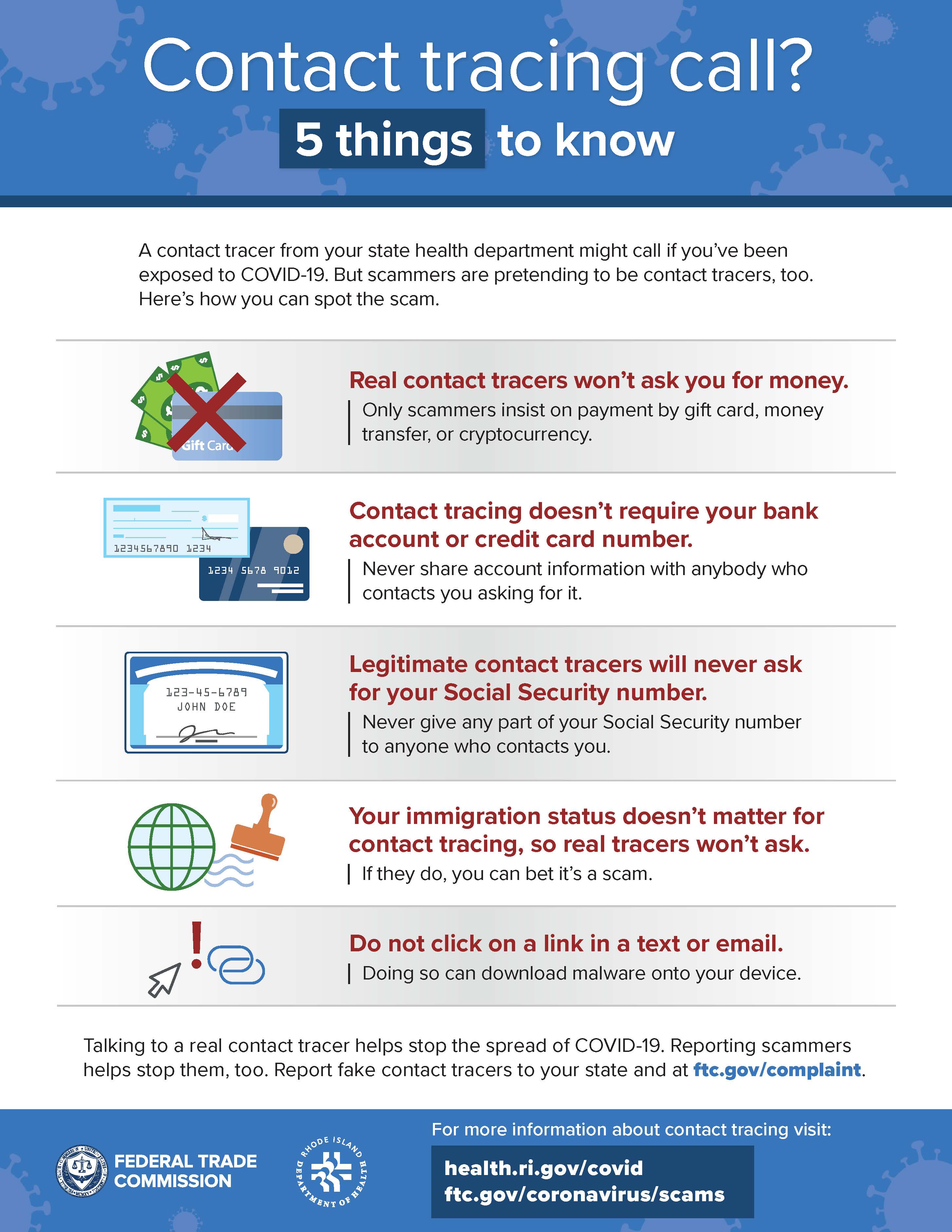
Contact tracing is the public health practice of informing
people when they’ve been exposed to a contagious disease.
As it has become more
widely employed across the country, it has also become mired in modern
political polarization and conspiracy theories.
Misinformation abounds, from tales that people who talk to
contact tracers will be sent to nonexistent “FEMA camps” — a rumor so prevalent
that health officials in Washington state had to put out a statement in May debunking it — to
elaborate theories that the efforts are somehow part of a plot by global elites, such as the Clinton
Foundation, Bill Gates or George Soros.
At the very least, such misinformation could hinder efforts to
contain the virus, and at worst has sparked threats against tracers, say some
observers, including the Institute for Strategic Dialogue (ISD), a
London-based organization that studies polarization.
The dynamic, ISD notes in a June report, “is being generated
both by individual social media users and by key influencers in conspiratorial
communities” and plays on fears that Big Brother is watching us.
According to that report, social media posts, mainly videos,
have been associated with “widespread sharing of petitions and other efforts to
galvanise political action against contact tracing.”
The videos, steeped in
disinformation and conspiracy think — whether alleging tracers’ ties to the
deep state or casting them as part of a Democratic effort to interfere in the
2020 election — “are receiving more than 300,000 views each on YouTube and are
being shared tens of thousands of times across public Facebook pages and
groups.”
Of course, the real story behind tracing is nothing like these
colorful conspiracy theories. It’s an age-old infection control strategy, and
it’s a bit tedious, actually.
“We’ve been doing it in public health for decades,” said Marcus
Plescia, chief medical officer for the Association of State and Territorial
Health Officials.
 |
Staff Sergeant Shawntoria Miles, a medic with the Oklahoma Air
National Guard, calls an individual as part of contact tracing operations
in Guymon, Oklahoma in May 2020.
Visual: Sergeant Kasey M. Phipps / Oklahoma Air National Guard |
Part old-fashioned shoe-leather detective work, part social
work, the goal is to interrupt the spread of the illness by reaching out to
people who test positive — and people they have been in close contact with —
and provide needed support for them to isolate. It has to be done quickly, and
it takes a lot of people. Recent case count surges in some parts of the country
are making the task more difficult.
So let’s take a look at what it is and isn’t.
 Healthcare providers
have faced significant challenges during the pandemic, but it was still
surprising to see that sector show up as the largest recipient of assistance
under the Paycheck Protection Program.
Healthcare providers
have faced significant challenges during the pandemic, but it was still
surprising to see that sector show up as the largest recipient of assistance
under the Paycheck Protection Program.