
Thursday, November 25, 2021
You can read this tomorrow
Best way to avoid procrastination
University of Otago

New research from the University of
Otago has found that if you want someone to help you out with something, it is
best not to set a deadline at all. But if you do set a deadline, make it short.
Professor Stephen Knowles, from the
Otago Business School, Department of Economics, and his co-authors tested the
effect of deadline length on task completion for their research published
in Economic Inquiry.
Participants were invited to
complete an online survey in which a donation goes to charity. They were given
either one week, one month, or no deadline to respond.


Talking turkey!
How the Thanksgiving bird got its name (and then lent it to film flops)
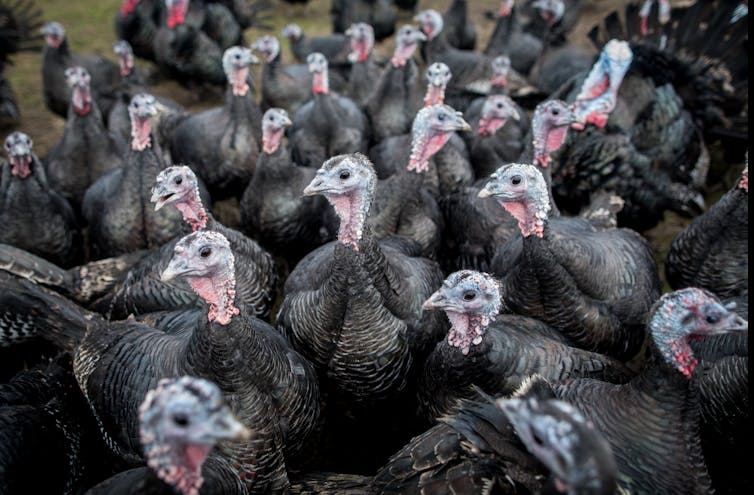 |
| Not everyone is a fan of Turkey Day. E4C via Getty Images |
And just as turkey is a versatile meat – think of those leftover options! – so too is the word “turkey,” which can refer to everything from the bird itself to a populous Eurasian country to movie flops.
As a scholar who studies word origins, I love “talking turkey” – not only how the bird came to be named, but also how the word has evolved over time. But let’s start with what has become the centerpiece of most Thanksgiving Day dinners.
The North American turkey – the kind that many families will be carving up this Thanksgiving – was being domesticated in Mexico some 2,000 years ago.
Europeans glimpsed their first turkeys around 1500, when Spanish explorers arrived in the Americas and brought them back to the mother country. By the 1520s, turkeys were being bred in Spain, and soon the delicacy was appearing on rich people’s tables across Europe.
10 Tips To Test and Tweak Your Mask
Remember last year’s disappearing flu season – thank masks for that
By UNIVERSITY OF COLORADO AT BOULDER

As the pandemic continues in 2021, we must remain vigilant against more contagious variants of the virus that have reached Colorado. Even with the rollout of vaccines in the spring, we are in a race to beat this virus and must continue to prevent its transmission as best as we can.
Research by CU Boulder experts and scientists across the world
have now clearly shown that aerosols are the main route of transmission for
SARS-COV-2, as outbreaks continue to happen in crowded, poorly ventilated
spaces. These invisible airborne particles are so small that they float like
smoke in the air, yet they are still large enough for the virus to hitch a
ride. This allows the virus to travel more than 6 feet and remain contagious
for up to two hours in the air.
Aerosols are different than larger droplets which fall quickly to
the ground after you speak, cough or sneeze, although they are sometimes both
referred to as “respiratory particles.”
How can you tell if your mask is actually working to trap aerosols
as well as these larger droplets? And how can you spruce it up if it’s not? We’ve got
you covered.
Wednesday, November 24, 2021
If it's too late, what do we do?
Profound Climate Change May Be Inevitable, but Society Can Go On

The news reports from the United Nations Climate Change Conference in Glasgow this month followed a predictable pattern. World leaders took to the stage one after the other, each of them issuing dire warnings about imminent climate disaster and concluding with urgent calls to action: It’s not too late…but we must act now!
This message feels tired, its urgency attenuated from decades of repetition. “Now” was once the 1970s, with the birth of the modern environmental movement; “now” was the Kyoto Protocol and its carbon-reduction commitments of the 1990s; “now” was Paris 2015.
Now, some believe, is now too late: The tipping point has come. We’re at the apex of the curve, on the verge of an unstoppable cascade that will irreversibly alter the systems governing the natural world. It’s too late. And if we, as a society, copped to that fact, we’d all benefit immensely.
This is the argument of Deep Adaptation, a movement launched in 2018 by Jem Bendell, a professor of sustainability leadership at the University of Cumbria in the United Kingdom. The movement situates the conversation about society’s future in a new realm, one in which catastrophic climate change is taken as a given.
Bendell says the world will become an unfamiliar place: Everything we’ve known about the dynamics driving our lives will be overturned by climate-induced disruption, leading to societal collapse. Only when we accept this inevitability can we prepare for the coming catastrophe “in ways that may reduce harm, especially by reducing conflict and trauma,” writes Bendell.
Deep Adaptation has attracted a worldwide following: The founding document was downloaded more than a half million times, according to Bendell, and forums have solidified a base of participants, from students to psychologists to scholars.

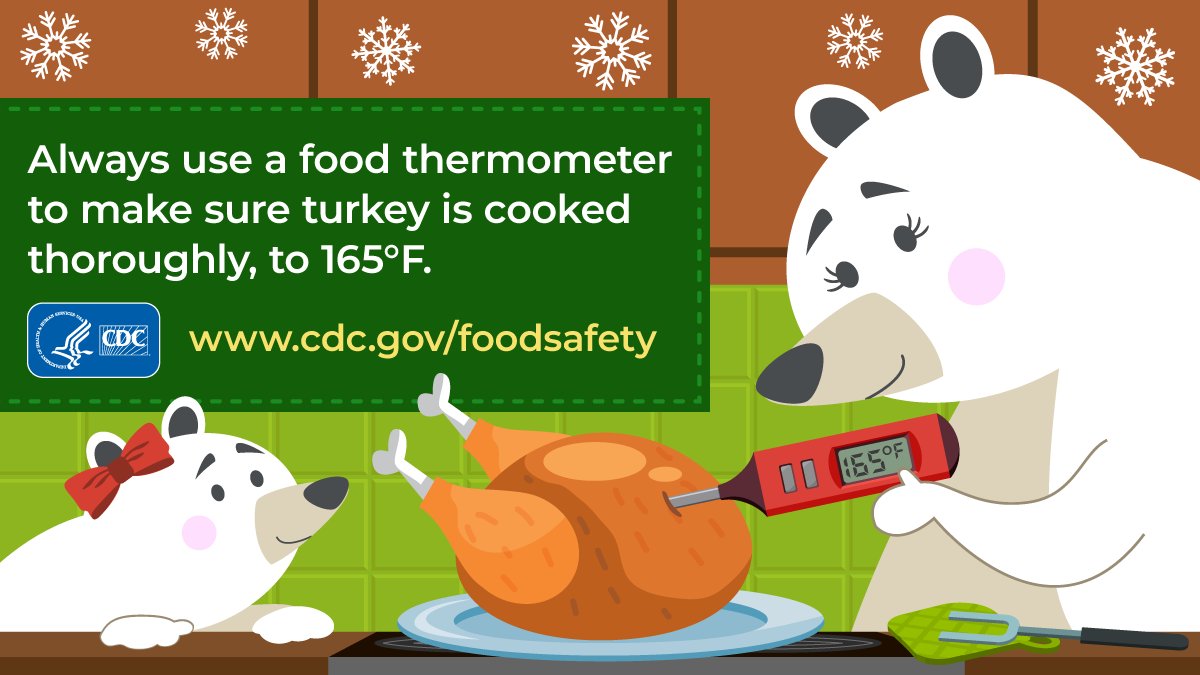
Be safe this Thanksgiving
Protect Yourself From Salmonella This Thanksgiving
by Karim Doumar for ProPublica
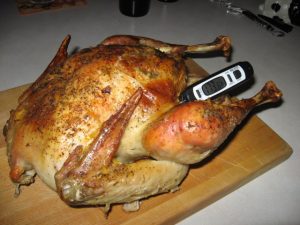
I know that’s daunting, but something to be thankful for this year is the ProPublica reporters who spent the past several months uncovering that the outbreak never abated and looking into how fragmented food safety rules left the U.S. Department of Agriculture, the Centers for Disease Control and Prevention and the Food and Drug Administration ill-equipped to stop it. I know I am.
I don’t bring up salmonella to scare you (most of the ProPublica reporters who ate poultry before working on this story still eat poultry) but to prepare you. While the food regulatory system has failed to stop the rise of infantis, a salmonella strain that doctors find difficult to treat, there are a lot of steps you can take to protect yourself.
For what it’s worth, salmonella tends to be found way more frequently in chicken than whole turkey, and the tips below apply to both birds (as well as just about any other) you wish to eat.
Addictive and unhealthy
Foods high in added fats and refined carbs are like cigarettes
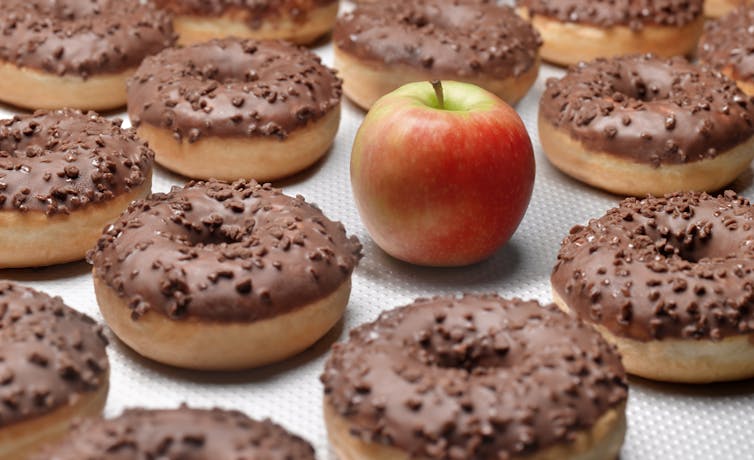 |
| You might like both, but guess which has addictive properties. Peter Dazeley/The Image Bank via Getty Images |
For many, the desire to change what they eat is triggered by concerns about potentially life-threatening health conditions, like diabetes and heart disease. The impact of diet on health is not a small problem.
In fact, a recent multidisciplinary commission of 37 leading scientists from around the globe identified unhealthy diets as a greater risk to human health than unsafe sex and alcohol, drug and tobacco use combined.
Many people know that most ultra-processed foods are not healthy. But the goal of cutting down on them can be so challenging that the majority of these attempts fail. Why?
In my Food and Addiction Science and Treatment Lab at the University of Michigan, my colleagues and I are investigating one largely overlooked factor: These ultra-processed foods may be addictive, sharing more in common with tobacco products than with whole foods like apples or beans.
Vaccine against Lyme Disease?
A lab-stage mRNA vaccine targeting ticks may offer protection against Lyme and other tick-borne diseases
Andaleeb Sajid, National Institutes of Health
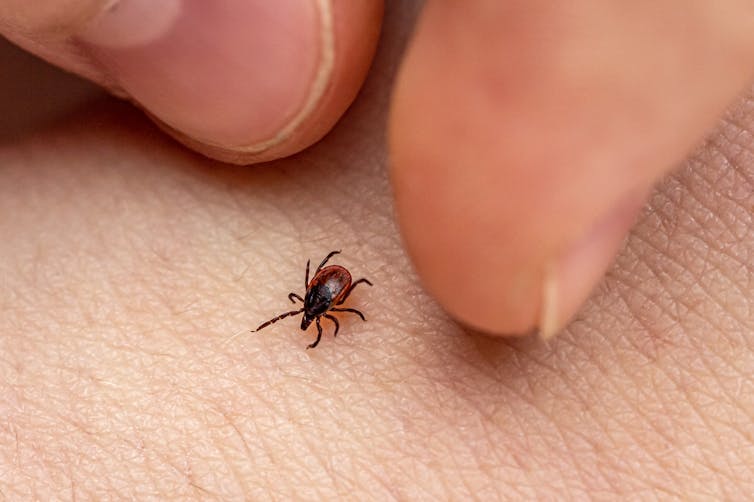 |
| As the rate of tick-borne diseases rises, vaccines that stop ticks in their tracks could be an essential preventive tool. rbkomar/Moment via Getty Images |
A new laboratory-stage mRNA vaccine that teaches the immune system to recognize the saliva from tick bites could prevent these bugs from feeding on and transmitting tick-borne diseases to people, according to a recent study my colleagues and I conducted in the Fikrig Lab at the Yale School of Medicine.
Some animals repeatedly exposed to tick bites are eventually able to develop resistance to tick feeding, where the ticks either detach soon after biting or cause skin redness that alerts the host to remove them.
Scientists have observed this tick immunity in several animals that don’t typically serve as hosts to ticks, including guinea pigs, rabbits and cows.
In laboratory settings, guinea pigs bitten 2-3 times by ticks are able to develop robust immunity against them. While there have not been any formal studies on tick immunity in humans, people who have been repeatedly exposed to ticks can get itchy skin after getting bitten, a symptom that may be associated with tick immunity.
Our lab was curious if we could induce tick immunity without tick bites. So we developed an mRNA vaccine called 19ISP that teaches cells to recognize 19 selected proteins present in the spit that Ixodes scapularis, also known as the deer or black-legged tick, leaves on the skin during a bite.
Instead of targeting proteins on the invading pathogen – like the spikes on the outside of the coronavirus – our vaccine targets proteins naturally found in the tick’s saliva.
We found that guinea pigs vaccinated with 19ISP developed skin redness after they were bitten, indicating that their immune system was activated and recruited inflammatory cells to the site to fight off infection.
Tuesday, November 23, 2021
Just follow the money
Texts Show Kimberly Guilfoyle Bragged About Raising Millions for Rally That Fueled Capitol Riot
By Joaquin Sapien and Joshua Kaplan for ProPublica

In a series of text messages sent on Jan. 4 to Katrina Pierson, the White House liaison to the event, Guilfoyle detailed her fundraising efforts and supported a push to get far-right speakers on the stage alongside Trump for the rally, which sought to overturn the election of President Joe Biden.
Guilfoyle’s texts, reviewed by ProPublica, represent the strongest indication yet that members of the Trump family circle were directly involved in the financing and organization of the rally. The attack on the Capitol that followed it left five dead and scores injured.
A House select committee investigating the events of Jan. 6 has subpoenaed more than 30 Trump allies for testimony and documents, including Pierson and Caroline Wren, a former deputy to Guilfoyle. But Guilfoyle herself has so far not received any official scrutiny from Congress.
Guilfoyle’s attorney, Joe Tacopina, denied that Guilfoyle had anything to do with fundraising or approving speakers. He said the text from Guilfoyle “did not relate to the Save America rally” on Jan. 6 and the “content of the message itself” was “inaccurate” and “taken out of context.” He did not respond to additional questions asking about the accuracy and context of the message.
Reached by phone, Pierson declined to comment.

Invention lets people pay for purchases with a high-five
Innovative fabric enables digital communication between wearers, nearby devices
University of California - Irvine
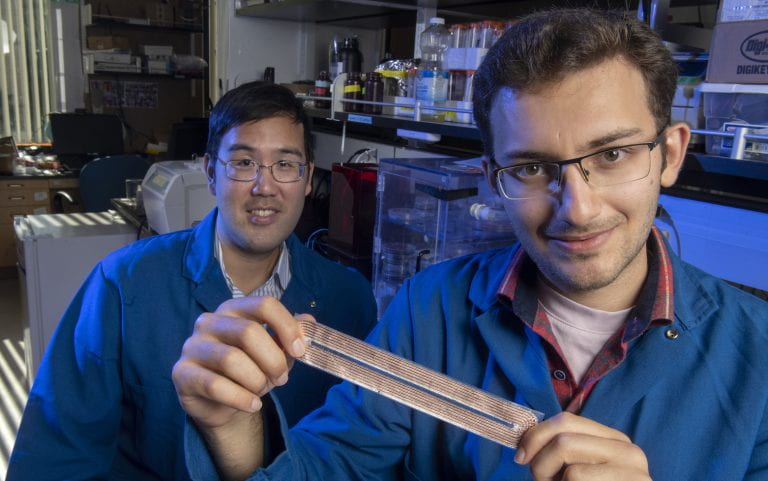 |
Assistant Professor Electrical Engineering and Computer Science Peter Tseng and Amir Hossein Haji Aghajani Memar Doctoral Student photo: Steve Zylius/UCI |
These are just two applications made
possible by a new "body area network"-enabling fabric invented by
engineers at the University of California, Irvine.
In
a paper published recently in Nature Electronics, researchers in
UCI's Henry Samueli School of Engineering detail how they integrated advanced
metamaterials into flexible textiles to create a system capable of battery-free
communication between articles of clothing and nearby devices.
Space Station cruises over Charlestown tonight for six minutes under ideal conditions
At 5:10 PM, look just above the horizon in the west
By Will Collette

One of my favorite things to see are the passages of the International Space Station (ISS) flying town reasonably often to make
it easy but not so often to make it trite. The ISS is perhaps one of the most prominent, enduring international efforts. Plus I still think it's cool to.
At exactly 5:10 PM, the ISS will pop into sight 10 degrees above the west northwest horizon. It will silently rise to a maximum height of 48 degrees over the horizon and then will just vanish at 12 degrees about the horizon in the northeast.
The National Weather Service forecasts clear sky but a temp of only 25 degrees.
Six minutes. That's just shy of the maximum length of an overflight. Not all overflights go horizon-to-horizon like this since they are dependent on reflected sunlight to show themselves to us on the ground.
Here is the exact notice I received this morning from NASA:
Time: Tue Nov 23 5:10 PM, Visible: 6 min, Max Height: 48°, Appears: 10° above WSW, Disappears: 12° above NE
You can enroll for free membership in NASA's listserve for emails on overflights of the International Space Station. You can sign up to get those e-mails here.
Subscribe to:
Posts (Atom)