Menu Bar

Home           Calendar           Topics          Just Charlestown          About Us

Wednesday, April 26, 2023

Watch out for dangerous combinations of over-the-counter cold medicine and prescription drugs

Two pharmacoepidemiology experts explain the risks


Over-the-counter medications, even though they sell by
the millions, are not risk-free.
 dragana991/iStock via Getty Images Plus
When colds, flus and allergies hit, many people automatically turn to over-the-counter medications to push through and treat their symptoms. These include decongestants, painkillers, cough or allergy medicines and combinations thereof. Nearly 70% of adults in the U.S. use over-the-counter medications as a first-line response for treating cold and flu symptoms.

Although these medications are easily accessible and widely used, it might come as a surprise to many people to learn that they are not risk-free.

We are a pharmacoepidemiologist and pharmacist team and we investigate adherence to medications and potential harms of medications associated with drug-drug interactions. Pharmacoepidemiology is the study of medication use and treatment outcomes among large populations in real-world settings.

A 2021 study showed that from 2017 to 2019 in the U.S., approximately 6.1 of every 1,000 people visited emergency rooms because of harms from medications. Of these emergency room visits, 38.6% led to hospitalization. More of these cases occurred in patients 65 and older than in younger populations.

Another study estimated that every year, 26,735 people went to the emergency room for adverse events related to over-the-counter cold and cough medications. And more than 60% used the medications for reasons other than the medication’s intended use.

Why the Dominion-Fox News Settlement Is Rubbish

Dominion may have protected its trademark, but it hasn’t protected American democracy.

ROBERT REICH in Robertreich.Substack.Com

Fox News and Dominion Voting Systems have agreed to settle Dominion’s defamation lawsuit for $787.5 million. (Dominion had sued for $1.6 billion over allegations that Fox defamed the voting company by knowingly or recklessly airing false claims tying voting machines to a conspiracy to undermine the 2020 presidential election.)

A lawyer for Dominion celebrated the agreement, saying, “Money is accountability.”

Rubbish. The Fox Corporation has an estimated value around $17 billion. The settlement amounts to a cost of doing business for Fox.

The settlement also means that Fox’s major figures — including Rupert Murdoch, the chairman of Fox Corporation, and Fox hosts Tucker Carlson, Sean Hannity, Laura Ingraham, and Maria Bartiromo — won’t have to testify.

What about an apology from Fox? From these Fox hosts? A confession of complicity in Trump’s big lie? A promise to stop lying in the future?

Tuesday, April 25, 2023

New URI study finds open space acquisition mostly benefits rich, white land owners

Study co-author: “There’s a lot of economic inequality in the U.S. and we show that, unfortunately, conservation is adding to that"

Kevin Stacey

More than half of Charlestown is open space
Land conservation projects do more than preserve open space and natural ecosystems. They can also boost property values for homeowners living nearby. But a new study finds that those financial benefits are unequally distributed among demographic groups in the U.S.

The study, by researchers from the University of Rhode Island and University of Illinois Urbana-Champaign, found that new housing wealth associated with land conservation goes disproportionately to people who are wealthy and white. 

In the state of Massachusetts, for example, white households in the top wealth quartile received 43% of the roughly $63 million housing wealth generated by new conservation from 1998 to 2016. 

That’s 140% more than would be expected under an equal demographic distribution, the researchers found. The trends found in Massachusetts hold generally over the rest of the U.S., the study showed.

“There’s a lot of economic inequality in the U.S. and we show that, unfortunately, conservation is adding to that,” said Corey Lang, a professor of environmental and natural resource economics at URI and a study coauthor. 

“That’s not to say that conservation is bad, or that we shouldn’t do it. Our primary purpose with this study was to document these disparities, and hopefully spark some debate about it.”

The findings are published in the Proceedings for the National Academy of Sciences.

The U.S. Forest Service estimates that about 6,000 acres of open space in the U.S. are cleared for development each day. But across the nation, organizations like municipal land trusts are working to set aside land, protecting it from future development in perpetuity. Over the past 35 years, over $80 billion in conservation funding have been approved by municipal referenda across the U.S., the researcher say.

Those conservation efforts produce amenities that are attractive to homeowners. Conserved land provides peace and quiet, beautiful views, and recreation opportunities that are guaranteed for the foreseeable future. The value of those amenities is reflected in higher property values for people living in the vicinity.

“Economists have studied this for a long time as a means of understanding how people value land conservation efforts, which can be fed into a cost-benefit analysis to see if new conservation efforts are justified,” Lang said. “We take a different approach in that we look at which homeowners are more likely to receive that bump in equity.”

To do that, the researchers looked at detailed conservation records and anonymized demographic data for homeowners in Massachusetts. The team used an econometric model to estimate the extent to which land conserved between 1998 to 2016 added to the value of properties within a quarter mile of conservation areas. They found that each acre of conserved land increases the value of nearby homes by 0.018%. 

That means that a median-priced Massachusetts home located near 10 acres of conserved land gets a bump in value of around $659. That translates into roughly $62 million in conservation-related property wealth gains over the study period.

Looking at the demographic breakdown of the homeowners who received that new wealth, the researchers found that 91% went to white homeowners, and 40% went to households in the highest wealth quartile. Roughly 43% went to households that were both white and in the highest wealth category—140% more than would be expected under an equal demographic distribution. 

In stark contrast, Black and Hispanic households in the lowest wealth quartile received only 6% of the benefits that would be expected under an equal distribution.

The results aren’t necessarily attributable to any active or implicit discrimination on the part of conservation groups, the researchers say. The results can be shaped, for example, by several factors that yield patterns in where people live—with Black, Hispanic, and Asian households being less likely to own homes near conservation areas. 

Those patterns can emerge from racial and ethnic patterns of urban versus rural living in the state, and a paucity of conservable land in urban areas. There are also longstanding racial gaps in overall home ownership.

Though the highly detailed data available for Massachusetts simply isn’t available for the rest of the U.S., the team performed an additional study to see if the Massachusetts trends likely hold across the country. 

They found that of the $9.8 billion in property wealth generated by conservation from 2001 to 2009 nationwide, 89% went to white households, 9% to Black and Hispanic households and 2% to Asian households.

“Economists have done a lot to document disparities in exposure to pollution, but we know much less about equity in the distribution of the benefits from investments in valuable nature conservation,” said Amy Ando, a study coauthor who is a professor of environmental and natural resource economics at UIUC and University Fellow at the non-profit Resources for the Future

“These findings make clear there can be large environmental justice issues in who gains from the environmental goods we provide and protect, and may serve as a call for more research identifying other such inequities.”

Taken together, the researchers say, the results show that land conservation plays a role in maintaining wealth disparities across the U.S. 

While the researchers say they firmly advocate for land conservation efforts to continue, they don’t advocate any particular policy interventions to address the resulting inequity. 

They hope that the findings will broaden the conversation about land preservation to include issues related to distributional concerns.

“I think more can be done to bring different groups to the table when decisions are made,” Lang said. “Making sure there’s a diversity of voices involved in these decisions is at least a start in addressing the problem that we’ve been able to document in this study.”

The research was supported by the U.S. Department of Agriculture National Institute of Food and Agriculture (2018-67024-27695).

Painful for some, blessed relief for everyone else


Oui!


The surprising science behind long-distance bird migration

Birds kick off their non-stop intercontinental flights with a protein boost

University of Massachusetts Amherst

A team of scientists led by researchers at the University of Massachusetts Amherst has recently made a surprising discovery, with the help of a wind tunnel and a flock of birds. 

Songbirds, many of which make twice-yearly, non-stop flights of more than 1,000 miles to get from breeding range to wintering range, fuel themselves by burning lots of fat and a surprising amount of the protein making up lean body mass, including muscle, early in the flight. 

This flips the conventional wisdom on its head, which had assumed that migrating birds only ramped up protein consumption at the very end of their journeys, because they would need to use every ounce of muscle for wing-flapping, not fuel. The results appeared recently in the Proceedings of the National Academy of Sciences.

Harry Belafonte has died at age 96

More than a singer but a life-long campaigner for civil and human rights

His signature song:


Could it be magic?

Barry Manilow among donors in CD1 special election

by Nancy Lavin, Rhode Island Current

Left: Barry Manilow, shown in 2022 at the Clive Davis Gallery Ribbon Cutting at New York University in New York City. (Photo by Dia Dipasupil/Getty Images) Right: Nick Autiello, candidate for Rhode Island’s 1st Congressional District . (Photo courtesy of Nick Autiello for Congress)

Mixed in among the familiar business moguls and political leaders who have donated to candidates in the Rhode Island 1st Congressional District race, one name stands out: Barry Manilow.

The 79-year-old soft rock superstar known for ’70s hits like “Copacabana” and “Mandy” donated $3,300 to Nicholas Autiello’s campaign, according to first-quarter fundraising reports filed with the Federal Election Commission. Candidates who raised or spent more than $5,000 in the first quarter of the year had to submit reports by April 15. 

Autiello, a former top aide to then-Gov. Gina Raimondo, has been personal friends with Manilow and his husband Garry Kief for many years, according to an emailed statement from Autiello’s campaign. 

“Nick is humbled that LGBTQ leaders across the country see him as a compelling successor to David, especially at a time when the LGBTQ community is under increased attacks from the far right,” the email stated.

Both Manilow and Autiello are gay.

While Autiello’s campaign got a boost of star power, neither he, nor his competitors, are flush with cash. The top fundraiser, Lt. Gov. Sabina Matos, barely cleared the six-digit mark, while none of the candidates spent more than a couple thousand dollars, mostly on credit card processing fees. 

Monday, April 24, 2023

Too much Viagra?

Why Republican lawmakers are obsessed about sex: Three reasons

ROBERT REICH

The Republican Party, once a proud proponent of limited government, has become a font of government intrusion into the most intimate aspects of personal and family life. 

Last Friday, a judge who previously worked for a conservative Republican legal organization and was then nominated to the bench by Trump and pushed through the Senate by Mitch McConnell, invalidated the FDA’s approval of a 23-year-old abortion pill (mifepristone) used in over half of pregnancy terminations in the United States.

Meanwhile, in the wake of the Dobbs case (in which Republican appointees on the Supreme Court reversed Roe v. Wade), Republican states are criminalizing abortion. Some are criminalizing the act of helping women obtain an abortion in another state. 

Texas gives private citizens the right to sue anyone who helps someone get an abortion. Idaho just passed an “abortion trafficking” law that would make helping a minor leave Idaho to get an abortion without parental consent punishable by five years in prison. Tennessee Republicans have made it illegal to mail medical abortion pills. 

In the last Congress, 167 House Republicans co-sponsored the Life at Conception Act, conferring full personhood rights on fertilized eggs. 

See through their eyes

For more cartoons by Tom Tomorrow, CLICK HERE.


Tucker Carlson's last lie at Fox


Two flaws in how the U.S. EPA wants to assess hazardous chemical groups

The agency excludes animals and deprioritizes co-exposures. We can do better.

Patrick Masseo in the Environmental Health News

Calls for rail reform after the East Palestine train derailment overlook a more fundamental policy issue: The need for stronger regulations on the hazardous materials that infuse our products and saturate our lives.

More than 80,000 chemicals are registered for commercial use with the U.S. government. Tens of thousands of these have never been assessed for public health risk or impact. Worse, there is nearly no knowledge or measure of how the millions of potential chemical group co-exposures endanger our human health and fellow living species.

The U.S. Environmental Protection Agency is taking slow, irregular and flawed steps to assess risk. The latest steps, building on a 2003 framework, are up for public comment – yet to date the announcement has drawn 497 views on the Federal Register website and just 10 comments, four of which were posted April 20 by the same person representing four different chemical consortiums asking for a deadline extension.

The public comment period is scheduled to close Friday, April 28, and I urge you to make your voice heard.

This is one reason why Charlestown needs a "Bad Actor" ordinance

Labor Department fines Dollar Tree $770,000 for unsafe conditions at its Rhode Island Stores

By Will Collette

Charlestown, under the Charlestown Citizens Alliance (CCA), went through long and expensive litigation to stop a Dollar Store from being opened on Route 1A, in our so-called Traditional Village District. 

Because Charlestown lacks a "Bad Actor" ordinance that requires applicants for permits and licenses to meet certain common-sense requirements such as a record free of business crime, environmental, health and safety, wage theft, we were stuck with a losing legal battle. 

The one defense we had, such as it was, was to refuse a permit to the Dollar store by calling it a "department store," which is not a permitted use in the Village District. And that did not go over well in court

On July 31, 2017, RI Superior Court Judge Bennett Gallo ruled against the town zoning board, calling the town decision to classify the Dollar store as a “department store” as “clearly erroneous” and that it “amounted to an abuse of discretion.”

The only reason we don't have a Dollar store on Old Post Road is because Dollar decided to pull the plug.

We could have saved a lot of taxpayer money if we only had a "Bad Actor" ordinance, as I have argued before during our various quarry fights. I hope our new Town Council leadership will take a good look at the concept and adopt a version that meets Charlestown's needs.

Today's announced OSHA penalty is not by any stretch the company's first such violation. A simple Google search can tell you that. 

Here is the official Labor Department news release

DEPARTMENT OF LABOR CITES DOLLAR TREE INC. FOR OBSTRUCTING EXITS, UNSAFELY STORING MATERIALS AT RHODE ISLAND STORES IN PROVIDENCE, PAWTUCKET


National discount retailer faces $770K in penalties after latest inspections


PROVIDENCE, RI – Dollar Tree Stores Inc.’s failure to provide safe work conditions at two Rhode Island stores – violations of U.S. Department of Labor Occupational Safety and Health Administration standards – exposed employees to serious risks and injuries.

The discount retail giant faces a total of $770,136 in proposed penalties for hazards related to obstructed exits, unsafe storage of materials, fire and other hazards at its East Providence and Pawtucket locations.

OSHA inspectors responded to complaints about unsafe conditions at the two stores and found employees exposed to these hazards:

·       Blocked exits: Large piles of materials blocked access to emergency exits. Inspectors found access to an emergency exit completely blocked at the Pawtucket store.

·       Unsafe storage of materials: Boxed merchandise stacked up to 7 feet high at both locations.

·       Fire extinguishers: Storage room materials completely blocked access to fire extinguishers at the Pawtucket store.

·       Compressed gas storage: Inspectors found helium compressed gas cylinders stored and labeled improperly in East Providence. The cylinders also lacked caps for valve protection.

OSHA cited the East Providence store for three repeat violations, with $319,220 in proposed fines, and the Pawtucket location for four repeat violations, with $450,916 in proposed fines. View the citations for the East Providence and Pawtucket stores.

OSHA cited Dollar Tree previously for similar hazards at locations in Georgia, Idaho, Illinois, Massachusetts, Nebraska, New Jersey, New York, Rhode Island, Texas and Wisconsin.

“Providing employees with clearly recognized and legally required safeguards, such as unimpeded exit access, properly stored materials and readily available fire extinguishers, must be a priority for any employer and should not be ignored,” explained OSHA Area Director Robert Sestito in Providence, Rhode Island.

Since 2017, federal and state OSHA programs identified more than 300 violations in more than 500 inspections at Dollar Tree and Family Dollar stores operated by Dollar Tree Inc., based in Chesapeake, Virginia.

One of the nation’s largest retail discount chains, Dollar Tree Inc. operates more than 16,000 Dollar Tree and Family Dollar locations in 48 states and five Canadian provinces. The company also has a nationwide logistics network and has more than 193,000 employees. The publicly traded company reported a gross profit of $7.7 billion in 2021.

Dollar Tree Stores Inc. has 15 business days from receipt of its citations and penalties to comply, request an informal conference with OSHA’s area director or contest the findings before the independent Occupational Safety and Health Review Commission

Why do mass shooters kill?

It’s about more than having a grievance


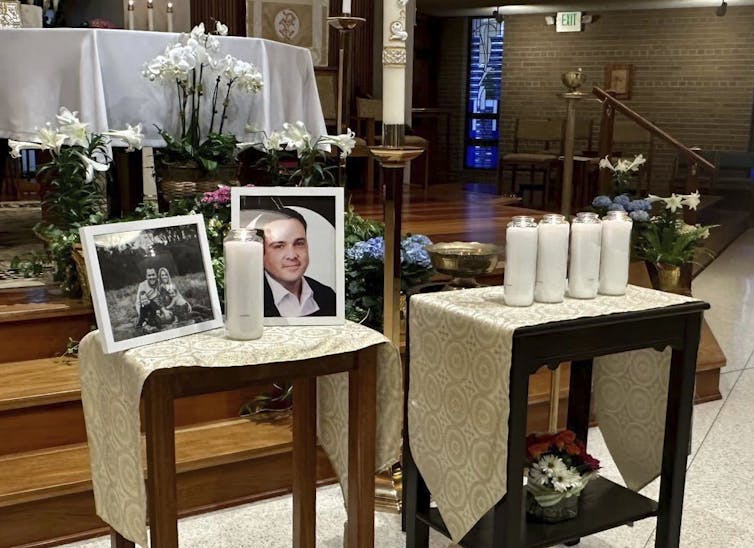
A memorial for Joshua Barrick, killed by a shooter at the
bank where he worked, April 10, 2023, at Holy Trinity Catholic
Church in Louisville, Ky. AP Photo/Claire Galofaro
An acutely troubling aspect of life in contemporary America is the growing proliferation of mass shootings that claim thousands of innocent lives year after painful year and make everyone feel unsafe.

The year 2023 is still young, and already there have been at least 146 mass shooting events in the U.S. on record, including the killing of five people in a Louisville, Kentucky, bank that the shooter livestreamed. 

There were 647 mass shootings in 2022 and 693 in 2021, resulting in 859 and 920 deaths, respectively, with no respite in sight from this ghastly epidemic. Since 2015, over 19,000 people have been shot and wounded or killed in mass shootings.

In the wake of most shootings, the news media and the public reflexively ask: What was the killer’s motive?

As a psychologist who studies violence and extremism, I understand that the question immediately pops to mind because of the bizarre nature of the attacks, the “out-of-the-blue” shock that they produce, and people’s need to comprehend and reach closure on what initially appears to be completely senseless and irrational.

But what would constitute a satisfactory answer to the public’s question?

Media reports typically describe shooters’ motives based on specific individual details of the case, on their “manifestos” or social media postings. These generally list insults, humiliations or rejections – by co-workers, potential romantic partners or schoolmates – that a perpetrator may have suffered. 

Or they may cite alleged threats to the shooter’s group from some imagined enemy such as Jews, people of color, Muslims, Asians or members of the LGBTQ+ community.

Though perhaps informative about a given perpetrator’s way of thinking, I believe these motives are too specific. Each shooter’s life story is unique, yet the growing number of mass shootings suggests a general trend that transcends personal details.

Sunday, April 23, 2023

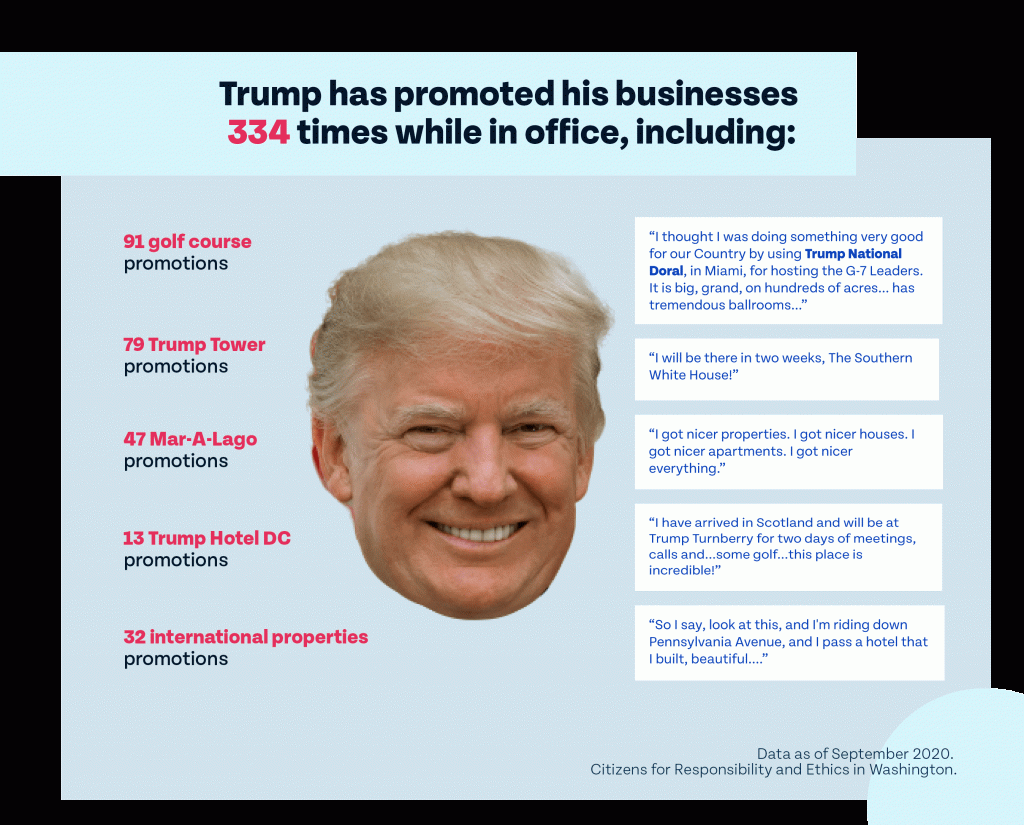
Ethics Watchdog group issues new report comparing Trump and Biden Administrations’ compliance with the law

Biden administration financial disclosures show strong pattern of compliance

Citizens for Responsibility and Ethics (CREW)

Introduction (To read the full report, CLICK HERE).

Stark differences between Biden and Trump administration officials’ financial disclosures highlight a need for reforms of ethics rules. 

A review of senior Biden administration officials’ financial disclosures for 2022 shows a high degree of compliance with divestiture obligations, and even includes examples of cabinet members going beyond required divestitures. 

In contrast, several notable examples from both the Trump White House and Cabinet illustrate how officials were permitted to retain holdings that presented significant concerns about conflicts of interest and appeared to allow them to profit off of their public positions. 

To prevent future abuses, Congress should adopt legislation that bans the president, vice president, cabinet members and all senior White House staff from owning and trading individual stocks and from retaining personal interests in family businesses that could make them susceptible to influence-peddling.