Menu Bar

Home           Calendar           Topics          Just Charlestown          About Us

Saturday, December 30, 2023

AI is already causing us harm

New research warns AI needs to be better understood and managed

By LANCASTER UNIVERSITY 

Artificial Intelligence (AI) and algorithms have the capability and are currently being utilized to exacerbate radicalization, enhance polarization, and disseminate racism and political instability, according to an academic from Lancaster University.

Joe Burton, a professor of International Security at Lancaster University, contends that AI and algorithms are more than mere tools used by national security agencies to thwart malicious online activities. He suggests that they can also fuel polarization, radicalism, and political violence, thereby becoming a threat to national security themselves.

Further to this, he says, securitization processes (presenting technology as an existential threat) have been instrumental in how AI has been designed, used and to the harmful outcomes it has generated.

Friday, December 29, 2023

Amen

Drew Panckeri 


SUNDAY: Charlestown's famous New Year's Eve bonfire!

'Tis the Season to Recycle your Christmas Tree

DEM Collecting 'Trees for Trout' to Improve Wild Trout, Aquatic Habitats

The Rhode Island Department of Environmental Management (DEM) is again partnering with the Rhode Island Chapter of Trout Unlimited (TU) on a habitat restoration program called ‘Trees for Trout’, which collects donated conifer Christmas trees for future projects that improve habitat for wild brook trout and other aquatic organisms. 

The public is invited to drop off their Christmas tree at a collection event after the New Year.


What:                ‘Trees for Trout’ Christmas tree collection

When:               Saturday, Jan. 6, 9 AM-2 PM

Where:              Arcadia Check Station, Wood River Arcadia Management Area, 2224 Ten Rod Rd, Exeter

DEM is only accepting real trees, not fake ones or trees sprayed with fire-retardant chemicals. All decorations and lights, as well as the stand, must be removed before the tree is brought in. Only whole conifers will be accepted, please do not bring tree trimmings.

It's their job.

Senate panel can’t decide best way to reform R.I.’s voting system in primaries

By Nancy Lavin, Rhode Island Current

In a poetic twist, the Rhode Island Senate panel reviewing alternative voting methods to improve Rhode Island primary elections couldn’t choose a single winner.

The seven-member commission concluded its 10-month review without a clear consensus on which – if any – alternative was the best way to reform Rhode Island general office and legislative primaries, according to its final report published Tuesday. 

“If the commission had united around one reform, then it would have facilitated passage of legislation to deal with this problem,” Sen. Sam Zurier, a Providence Democrat and commission chairman, said in an interview on Wednesday. “This is not an easy issue to resolve and there are pros and cons to each of the alternatives.”

Zurier liked the following two of the four options considered for elections when no electoral candidate receives at least 50% of the vote.

A top-two, nonpartisan primary: The top two vote-getters, regardless of party, advance from the primary to a general election, ensuring one candidate wins with a majority of the vote.

Ranked-choice voting: Voters rank candidates in order of preference. If no one reaches 51% of the vote, the candidate with the fewest votes is eliminated from the race, and voters who picked that candidate have their second choices tallied instead. The process repeats until someone wins a majority.

Thursday, December 28, 2023

The AI-Robot Wars

Is Dystopian Science Fiction Becoming a Reality?

TOM VALOVIC for Common Dreams

Have you ever felt like you’re living in a badly produced B science fiction movie? I know I do. When I started writing about the dark side of emerging technologies 30 years ago in Digital Mythologies, I called out some of the “mad science” being done at MIT. 

This included the work of Marvin Minsky and Hans Moravec --- fringe thinking that, at the time, seemed fortunately contained in a fairly narrow segment of the scientific community. I never dreamed that their bizarre and unsettling ideas about merging humans with computers and creating hybrid humans would actually become widely accepted in technology circles or that powerful corporations would engage in making these ideas a reality. 

Alarmingly, this is now happening and it’s deeply disturbing.

It was the poet Allen Ginsberg who said that we’re “living in science fiction”. His statement was deeply prophetic. We’re now in the midst of a Technology Takeover, pointing toward a world of technocratic governance and complete dependency on tech giants and the systems they control. 

The corporations behind it are the most powerful ones on the planet. You know the names: Google, Amazon, Apple, Microsoft, Meta, Tesla/SpaceX and others. Among the individuals behind some of these companies are the four richest and most powerful people on the planet: Elon Musk, Jeff Bezos, Bill Gates, and Mark Zuckerberg. 

In a more generous frame of mind, we might call them the masters of the universe but perhaps a more apt description might be the four horsemen of the apocalypse.

There are a plethora of sanguine articles oozing out of the mainstream press about the “promise of AI.” Many of them follow the same basic template as if scripted from talking points. 

The semantic parsing is something like this: “AI has the potential to radically change our lives for the better but we have to be careful to use it well as it has some potential for negative use.” 

This is the self-same template that has been used for many other high-profile technology advances including the development of nuclear and genetic engineering capabilities.

Let’s be clear about what’s happening here as there’s no room for equivocation. Robots and AI are taking over our culture, our politics, our way of life and our relationships to each other as social beings. 

They’re becoming the front guard for a new and unprecedented technocratic form of governance which represents the apotheosis of Western scientific materialism. Further, these new forms of governance are being carried out by unelected officials operating behind the scenes and in the backrooms of a mediated society well out of public view. 

The reality is that technocratic governance is fundamentally anti-democratic and lays the groundwork for a kind of authoritarianism that many of our experts in political science are unequipped to recognize and explain.

Live long and prosper

For more cartoons by Tom Tomorrow, CLICK HERE

David Ostow

"Now do you believe me?"

Hypochondriacs die earlier than those who worry less about their health

Stephen Hughes, Anglia Ruskin University 

HBRH/Shutterstock
People who worry excessively about their health tend to die earlier than those who don’t, a recent study from Sweden has found. 

It seems strange that hypochondriacs who, by definition, worry yet have nothing wrong with them, should enjoy shorter lifespans than the rest of us. Let’s find out more.

First, a word about terminology. The term “hypochondriac” is fast becoming pejorative. Instead, we medical professionals are encouraged to use the term illness anxiety disorder (IAD). So, to avoid triggering our more sensitive readership, we ought to use this term.

We can define IAD as a mental health condition characterized by excessive worry about health, often with an unfounded belief that a serious medical condition is present. It may be associated with frequent visits to a doctor, or it may involve avoiding them altogether on the grounds that a real and quite possibly fatal condition might be diagnosed.

The latter variant strikes me as quite rational. A hospital is a dangerous place and you can die in a place like that.

IAD can be quite debilitating. A person with the condition will spend a lot of time worrying and visiting clinics and hospitals. It is costly to health systems because of time and diagnostic resources used and is quite stigmatizing.

Busy healthcare professionals would much rather spend time treating people with “real conditions” and can often be quite dismissive. So can the public.

Pope Francis makes a call for peace

Pope Decries Arms Industry Profits for Pulling 'Puppet Strings of War'

JON QUEALLY for Common Dreams

Pope Francis condemned the global arms industry for its role in the ongoing slaughter in the Gaza Strip and called for peace worldwide during his Christmas blessing from Vatican City on Monday, mourning the children killed and displaced by war, which he called the "little Jesuses of today," in occupied Palestine and elsewhere.

Citing conflicts across the globe in his annual Urbi et Orbi ("To the City and World") message, the Pope told his Catholic followers that war is "an aimless voyage, a defeat without victors, an inexcusable folly" and that "saying 'no' to war means saying 'no' to weaponry" provided to humanity by the global arms industry.

"The human heart is weak and impulsive; if we find instruments of death in our hands, sooner or later we will use them," he warned. "And how can we even speak of peace, when arms production, sales, and trade are on the rise?"

Francis compared the global expenditures on weapons—which according to the Stockholm International Peace Research Institute reached upwards of $2.2 trillion last year—with the failure of governments to fund social goods like efforts to fight hunger, homelessness, and poverty.

Wednesday, December 27, 2023

Creator of Godwin's Law Says It's OK—and Necessary—to Compare Trump to Hitler

Green light for Hitler and Donald Trump analogies

JAKE JOHNSON

The creator of Godwin's Law—an adage that says Adolf Hitler comparisons become increasingly likely as Internet arguments drag on—argued in a Washington Post op-ed Thursday that his rule in no way discredits efforts to draw parallels between the Nazi dictator and former President Donald Trump.

"Those of us who hope to preserve our democratic institutions need to underscore the resemblance before we enter the twilight of American democracy," wrote attorney and author Mike Godwin. 

"And that's why Godwin's Law isn't violated—or confirmed—by the Biden reelection campaign's criticism of Trump's increasingly unsubtle messaging. We had the luxury of deriving humor from Hitler and Nazi comparisons when doing so was almost always hyperbole. It's not a luxury we can afford anymore."

On Wednesday, President Joe Biden's 2024 reelection campaign posted to social media a graphic (see above) likening Trump's recent rhetoric—including his statement that immigrants are "poisoning the blood of our country"—to Hitler's and arguing that the similarities are "not a coincidence."

Sounds like the Charlestown Citizens Alliance's 2024 platform

For more cartoons by Ruben Bolling, CLICK HERE


Stop ignoring the issue

The Surprising Connection Between the Environment and Mental Health

Environmental threats CAN make you anxious, and for good reason 

By Gina-Marie Cheeseman

The environment can positively impact mental health. Natural outdoor environments, especially surrounding greenness, were statistically significantly tied to better mental health. People associate better mental health with green spaces. 

One study noted that the natural environment impacts our mental health. But do environmental issues such as global warming cause climate anxiety and negatively impact mental health?

A Silent Threat to Mental Health

Researchers find links between environmental problems and mental health. An Australian study found a link between dryland salinity and depression. That indicates that environmental processes might be the driver behind the degree of mental health issues in Australian populations experiencing ecosystem degradation.

Children are the most vulnerable among us. There is a link between mental health issues in children and air pollution exposure, researchers found. In one study, researchers looked at exposure to air pollution among 284 children in London. 

They assessed symptoms of anxiety, depression, conduct disorder, and attention-deficit hyperactivity disorder at ages 12 and 18. While they found no association between pollution exposure and mental health issues at 12, they did find a link between depression and exposure at 18. 

Another study found an association between psychiatric disorders in children and air pollution exposure. Children are also more affected than adults by natural disasters, and they are more likely to experience trauma-related symptoms.

Researchers looked at 15 years’ worth of data on mental health and environmental degradation. They found that research on mental health and environmental challenges is increasing. The major topics are climate change, chemical pollution, including psychiatric medication in wastewater, and neurobiological effects. 

Research on links between mental health, climate change, pollution, and deforestation is also increasing.

Natural disasters can cause mild stress, insomnia, depression, anxiety, and post-traumatic stress, the American Psychiatry Association notes. The mental health of first responders responding to natural disasters is affected both short and long-term. They are often also victims.

Heat affects health, including heat exhaustion and heat stroke. However, prolonged heat also affects mental health. People who have mental illness do not tolerate heat well, namely because their medications often cause an intolerance to heat. Heatwaves can cause some to increase their use of alcohol to cope with stress. 

One study found that an increase of one to six degrees Celsius could cause an additional 283 to 1,660 suicides in the U.S. Another study found that extreme high temperatures increase negative emotions.

Climate change affects mental health. A paper by the American Psychological Association cited “increased levels of stress and distress” from climate change, such as extreme weather events, as impacting mental health.

The Rise of Climate Anxiety

Searches for the term “climate anxiety” increased by 565 percent in 2021. More and more mental health professionals see the symptoms of climate change anxiety in their patients. 

Sarah Lowe is a clinical psychologist and Associate Professor in the Department of Social and Behavioral Sciences at Yale School of Public Health. Lowe defines climate anxiety as “fundamental distress about climate change and its impacts on the landscape and human existence.”

Climate anxiety manifests as worries about future disasters or the future of the world and humanity. However, it can also lead to physical symptoms that include heart palpitations and shortness of breath–classic anxiety symptoms. Climate anxiety can affect someone’s social relationships and how they function.

A national survey found that 10 percent of participants reported symptoms of anxiety because of climate change. Nearly as many reported experiencing symptoms of depression because of climate change. 

Most participants said they were at least “somewhat worried” about climate change, and 27 percent said they were “very worried.” Eight percent said they are discussing their feelings about climate change with a therapist.   

Gina-Marie Cheesemanhttp://www.justmeans.com/users/gina-marie-cheeseman, Gina-Marie Cheeseman, freelance writer/journalist/copyeditor about.me/gmcheeseman Twitter: @gmcheeseman

High Speed Electric Vehicle Charging Stations Coming to Rhode Island Interstate Corridor

Ashaway rest area is nearest to Charlestown

By Uprise RI Staff

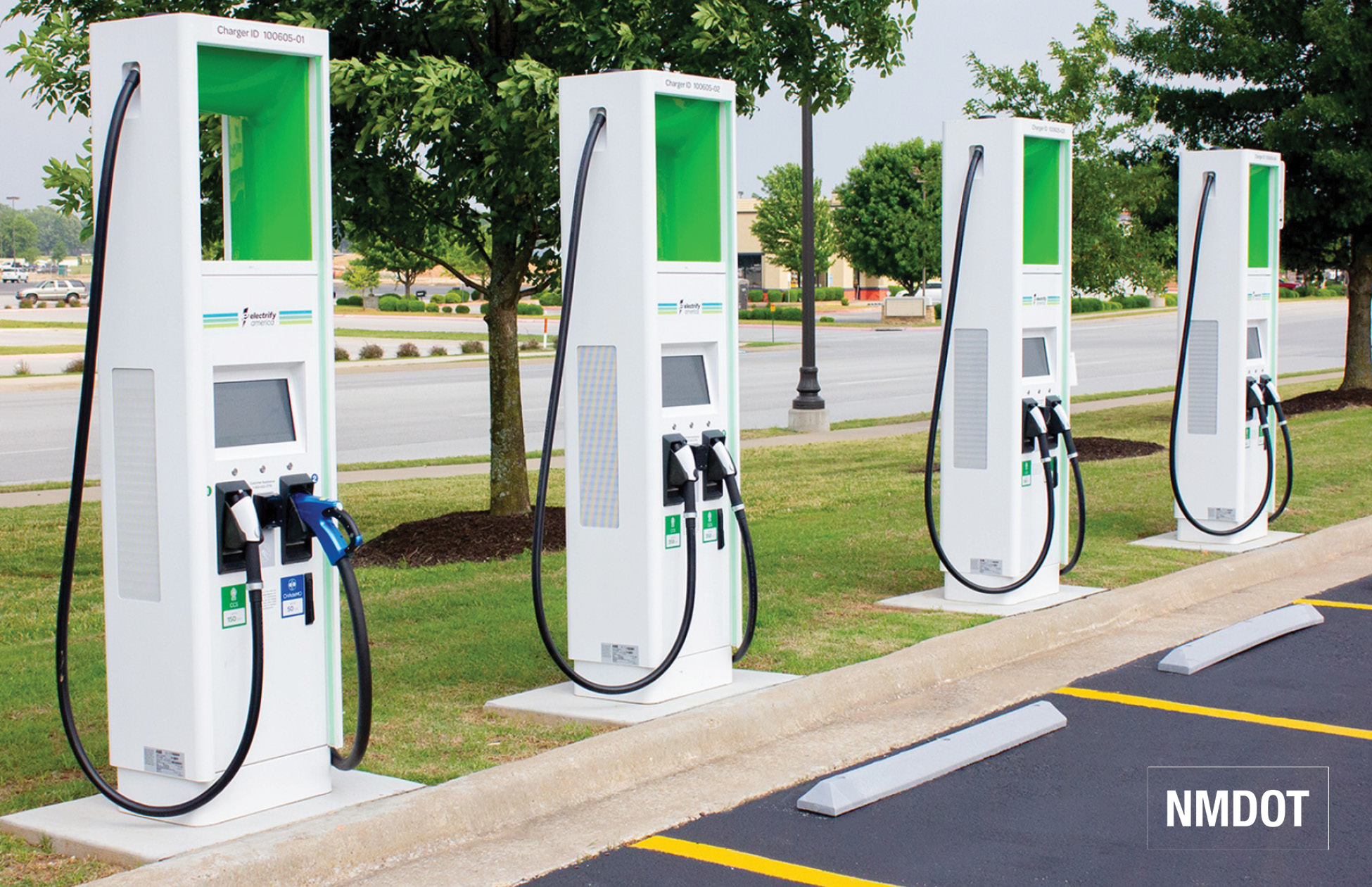
The Rhode Island Office of Energy Resources recently announced the start of construction on the state’s first two electric vehicle (EV) DC Fast Charging stations located along the Interstate 95 corridor. 

The new charging stations will be installed at the Ashaway Park & Ride and the Route 117 Park & Ride in Warwick as part of Phase 1 of Rhode Island’s National Electric Vehicle Infrastructure (NEVI) Program.

The Ashaway and Warwick Park & Ride locations will each house two DC Fast Chargers capable of charging an EV up to 80% in 20-40 minutes. The ultra-fast chargers are considered “future proof”, meaning they can charge new EVs coming to market for years to come. 

With many automakers pledging to go fully electric over the next 10-15 years, Rhode Island officials want to ensure adequate charging infrastructure is available across major travel corridors.