Menu Bar

Home           Calendar           Topics          Just Charlestown          About Us

Wednesday, July 29, 2015

When Children Hurt, Schools Can Help

Nobody should lose out on a good education because of a bad experience.

What happens when children witness violence? It’s more common than you think, and the effects can be devastating.

More than 1 in 4 American children have been exposed to violence, according to a recently published study from the journal Pediatrics.Researchers found that these children endured significant psychological fallout — including depression, anger, and fear.

Many kids who experience trauma act out, and the ones most likely to be punished are students of color and students with disabilities. 

Traumatized children are more likely to be suspended from school, and are far more likely to drop out. Teens who drop out are more likely to later abuse drugs, fall out of the workforce, and end up homeless.

Instead of punishing these kids for something beyond their control, schools should support them and find ways to help them feel safer.


Tuesday, July 28, 2015

Little Bay Faces Big Threats

By FRANK CARINI/ecoRI News staff

The natural resources of the Pawcatuck River and Little Narragansett Bay play a major role in southern New England’s economic success, especially for the boating industry. (Joanna Detz/ecoRI News photos)

ABOARD THE ELIZABETH MORRIS — Little Narragansett Bay is quietly tucked away between its noisier neighbors — Narragansett Bay and Long Island Sound. But this watershed on the Rhode Island-Connecticut border plays a vital role in southern New England’s economy. Boats of all sizes, from yachts to canoes, dot the water, especially on summer weekends. Tourist visit the area to swim, fish, observe wildlife, dine and shop.

The fact that the 317-mile Little Narragansett Bay/Pawcatuck River watershed is stressed and impaired is cause for concern, both economically and environmentally.


Astronomy Picture of the Day

Infrared Trifid 

The Trifid Nebula, also known as Messier 20, is easy to find with a small telescope, a well-known stop in the nebula rich constellation Sagittarius.

But where visible light pictures show the nebula divided into three parts by dark, obscuring dust lanes, this penetrating infrared image reveals filaments of glowing dust clouds and newborn stars.

The spectacular false-color view is courtesy of the Spitzer Space Telescope. Astronomers have used the Spitzer infrared image data to count newborn and embryonic stars which otherwise can lie hidden in the natal dust and gas clouds of this intriguing stellar nursery.

As seen here, the Trifid is about 30 light-years across and lies only 5,500 light-years away.


Moving closer to a universal flu vaccine

American Society for Microbiology
Each year, scientists create an influenza (flu) vaccine that protects against a few specific influenza strains that researchers predict are going to be the most common during that year. 

Now, a new study shows that scientists may be able to create a 'universal' vaccine that can provide broad protection against numerous influenza strains, including those that could cause future pandemics. The study appears inmBio, the online open-access journal of the American Society for Microbiology.


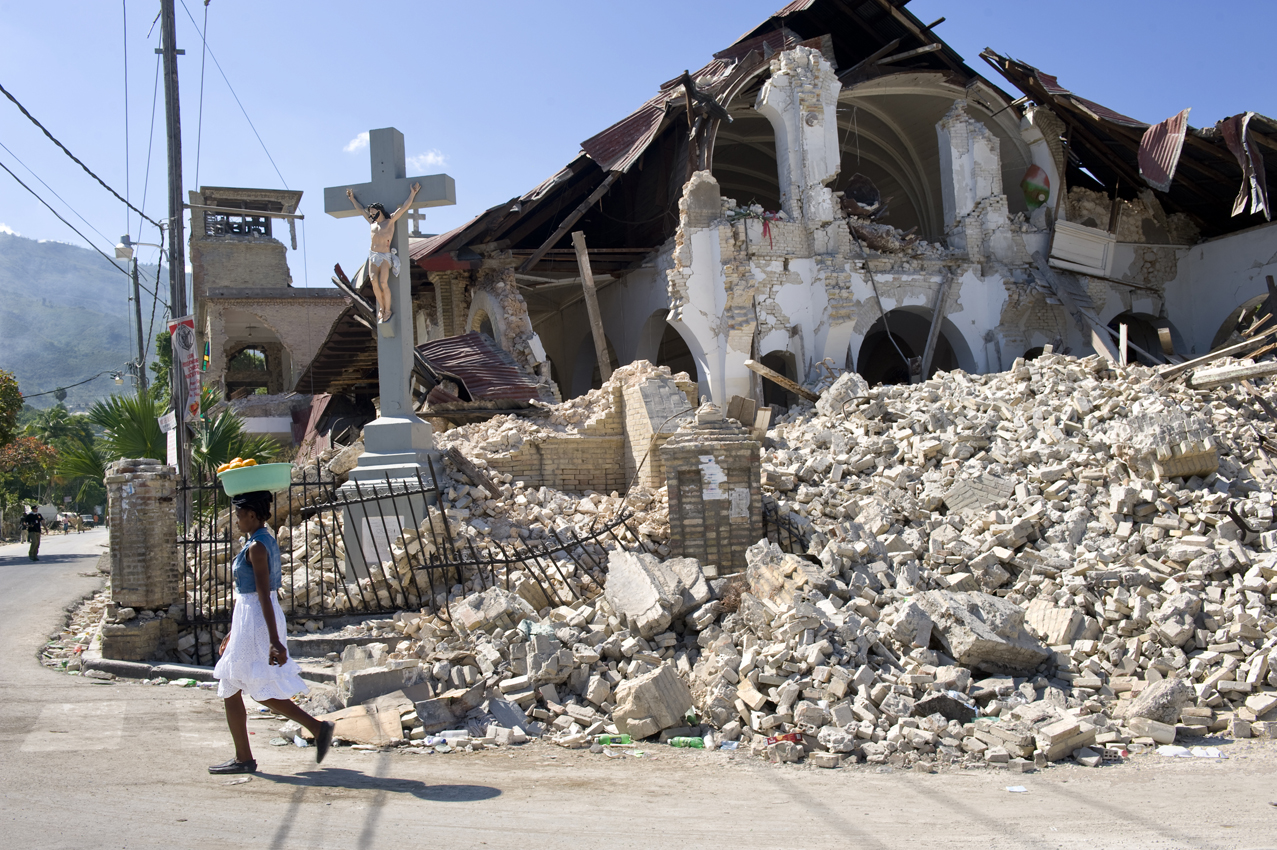
Red Cross doesn't know where the Haiti money went

Confidential Documents: Red Cross Itself May Not Know How Millions Donated for Haiti Were Spent

by Justin Elliott, ProPublica, and Laura Sullivan, NPR, 

The American Red Cross is under pressure this week to answer detailed questions from Congress about the spending of nearly half a billion dollars it raised after the 2010 Haiti earthquake.

But internal documents newly obtained by ProPublica and NPR call into question whether the Red Cross itself has an accurate accounting of how money was spent.

The reports, assessments from 2012 of some of the group's health and water projects, conclude that the charity failed to properly track its own spending, oversee projects, or even know whether or not they were successful. The documents also cast doubt on the accuracy of the Red Cross' public claims about how many Haitians the group has helped.

An internal evaluation of one of the group's water and sanitation projects found there was "no correct process for monitoring project spending."

Another report concluded that the Red Cross' figures on the number of people helped in a hygiene promotion project were "fairly meaningless."

The findings parallel ProPublica and NPR's earlier reporting about the Red Cross' troubled Haiti program. The group has so far not given details of how it spent the almost $500 million in donations for Haiti.


Monday, July 27, 2015

We’re all we’ve got

A new report finds more U.S. children living in poverty than before the Great Recession. According to the report, released Tuesday from the Annie E. Casey Foundation, 22 percent of American children are living in poverty (as of 2013, the latest data available) compared with 18 percent in 2008.

Poverty rates are nearly double among African-Americans and American Indians. Problems are most severe in South and Southwest. Particularly troubling is a large increase in the share of children living in poor communities marked by poor schools and a lack of a safe place to play.

Which brings me to politics, power, and the progressive movement. 


Don't open the door

The progressive comic about religious pathogens.

Astronomy Picture of the Day

Ultraviolet Rings of M31 

A mere 2.5 million light-years away the Andromeda Galaxy, also known as M31, really is just next door as large galaxies go.

So close and spanning some 260,000 light-years, it took 11 different image fields from the Galaxy Evolution Explorer (GALEX) satellite's telescope to produce this gorgeous portrait of the spiral galaxy in ultraviolet light.

While its spiral arms stand out in visible light images of Andromeda, the arms look more like rings in the GALEX ultraviolet view, a view dominated by the energetic light from hot, young, massive stars.

As sites of intense star formation, the rings have been interpreted as evidence Andromeda collided with its smaller neighboring elliptical galaxy M32 more than 200 million years ago. The large Andromeda galaxy and our own Milky Way are the most massive members of the local galaxy group. 

Wednesday event for the kids at Mystic Aquarium

No reservation or pre-registration required. Just go to Mystic Aquarium. CLICK HERE for more information.


Human activities are jeopardizing Earth's natural systems, health of future generations

The Lancet
A new report released by The Rockefeller Foundation-Lancet Commission on Planetary Health, calls for immediate, global action to protect the health of human civilization and the natural systems on which it depends. 

The report, Safeguarding Human Health in the Anthropocene Epoch, provides the first ever comprehensive examination of evidence showing how the health and well-being of future generations is being jeopardised by the unprecedented degradation of the planet's natural resources and ecological systems.

"This Commission aims to put the health of human civilizations, and their special relationship with the larger biosphere, at the centre of concerns for future planetary sustainability. Our civilization may seem strong and resilient, but history tells us that our societies are fragile and vulnerable. We hope to show how we can protect and strengthen all that we hold dear about our world," says Dr Richard Horton, Editor-in-Chief of The Lancetand one of the report authors.


Sunday, July 26, 2015

Hydrogen the cause

URI researchers announce cause of Salty Brine Beach explosion

Hydrogen blast brought down the Hindenburg

PROVIDENCE, R.I. - Governor Gina M. Raimondo and Rhode Island Department of Environmental Management Director Janet Coit today praised scientists from the University of Rhode Island Graduate School of Oceanography (URI GSO) for determining the cause of the July 11 combustion incident at Salty Brine State Beach in Narragansett.

According to Dr. Arthur Spivack, an oceanographer with expertise in geo-chemistry at URI GSO, it is very likely the incident was caused by the combustion of a build-up of hydrogen gas in the beach sand, due to the corrosion of an abandoned copper cable that was previously used by the United States Coast Guard (USCG).


A Pause to Refresh

Progressive Charlestown is taking it easy for a while.

The pace of putting up about 6 articles per day has been a bit extreme.

While we relax and refresh we will be posting articles at a slower rate. Readers who have subscribed to our email service will continue to get notice of new articles (you can still sign up in the right sidebar).

Thanks for your readership.

Sosnowski-Tanzi bill praised

Will Protect the Environment, Put People Back to Work
Image result for Sosnowski & tanziPROVIDENCE, RI - Governor Gina M. Raimondo marked the passage of legislation to protect our water supplies and put people back to work with a ceremonial bill signing at the Save the Bay Center. (H 5668 and S 369)

Many Rhode Island homes have outdated underground wastewater systems. These systems, often cesspools, are inefficient and ineffective and contribute to public health and environmental hazards. This legislation replaces outdated systems at the point of sale and improves neighborhoods and local infrastructure.


Eco-Friendly Ways to Clean Your Home

The Environmental Protection Agency (EPA) reports that indoor levels of pollutants can be 2 to 5 times higher (and occasionally more than 100 times higher) than outdoor pollutants.

Indoor pollution is caused from a wide range of issues, ranging from tobacco products to damp carpet to household cleaning and maintenance products. Many of these frightening indoor pollutants can be eliminated from your household by switching cleaners. Fortunately, there are numerous eco-friendly ways to clean your home inside and out without resorting to harsh chemicals.

Saturday, July 25, 2015

Lighting a Legal Fuse

People from Seattle to Fiji are filing lawsuits over global warming.
Climate action is finally gaining ground in Washington. No, not that Washington.

Following their victory in a Seattle court, eight children are pressing Washington State’s Department of Ecology to crack down on carbon pollution. The agency has until August 7 to reach an agreement with the youths, who sued after the department rejected their petition. Otherwise, the kids will go back to court.

“I hope our voices are heard,” said Aji Piper, a 14-year-old and one of the plaintiffs.

Judge Hollis Hill, for one, is listening. She agreed with the teens and tweens in a first-of-its-kind ruling, citing a “historical lack of political will to respond adequately to the urgent and dire acceleration of global warming.”