To see this directly on YouTube: https://www.youtube.com/watch?v=WKXKzbcYOJk
Monday, November 9, 2015
VIDEO: We've heard it before
To view this video on YouTube: https://www.youtube.com/watch?v=WN_J891Z-uY


Kitty of the Week
Meet Sushi!
Animal Rescue Rhode Island

Hello, I am Sushi, a young female cat with a little swagger
in my step.
I like to play hard to get, but that doesn't mean I am not
ready and willing to find the forever home I desperately need.
If you don't mind a cat that is lively and little goofy,
please look no further. I'm still a little nervous in my cage, especially
when hands are reached in, but that is just merely me being cautious.
Given a day in my new home, I will be a social butterfly
filling your life with joy.
Some might say I am a little sassy, but I like to think of
myself much like good sushi at a restaurant, fresh!
Regardless, I am willing to follow the rules of your home if
you let me be a part of the family.
Just think of all the wonderful memories we can have...
Talking to one another about our day and cuddling on your favorite chair by
night.
Let me wrap this up by saying everyone loves to eat sushi,
so why not love Sushi the cat as well!
So far, not much impact
NYU Langone Medical Center

Some six years out from New York City's attempt to curb the obesity epidemic by mandating calorie counts in chain restaurants, researchers at NYU Langone Medical Center have found that calorie labels, on their own, have not reduced the overall number of calories that consumers of fast food order and presumably eat.
In a report to be published in the November issue of the journalHealth
Affairs, the NYU Langone team describes its analysis of information
gathered from 7,699 fast-food diners in New York City and nearby New Jersey
cities.
The study, in which researchers compared food orders in places
with and without calorie counts, is believed to be the first long-term analysis
of the effects of menu labeling in the United States.
Researchers say it also
offers early evidence of its possible impact as the federal government prepares
to introduce the policy nationwide in December 2016 as part of its Affordable
Care Act.
Can Jeb Bush Even Spell Integrity?
The
former Florida governor cashed in big time from his spin through government.

If you’re a presidential aspirant and you have to tell people
you’re a person of integrity, chances are you’re not.
Those odds get worse if you have to hire someone else to attest
to your honor. How intriguing, then, that Kristy Campbell — a spokeswoman for Jeb Bush’s
presidential campaign — felt moved to tell us that “Jeb’s record” is “one of
integrity.”
This testimonial from a paid flack follows the still-evolving
news story that Bush immediately cashed in on his name and state government
contacts after leaving the Florida governor’s office in 2007.
Sunday, November 8, 2015
IN CASE YOU MISSED IT: Town Council preview for November 9
“Hearing”
on drug rehab center proposal to continue
By
Will Collette
 |
| The Council decision has already been made, but not officially |
If
the Charlestown Town Council had not decided last month to
postpone consideration of the plan to put a prayer-based residential addiction
treatment center into the iconic General Stanton Inn, this months’ Town
Council meeting would take about 15 minutes.
But
because Teen
Challenge, the Pentecostal drug treatment program proposing the new use for
the Inn, decided to come to the October
meeting without legal representation and just “wing it” on their own, the
issue was bumped to Monday’s Council meeting.
Town
Solicitor Peter Ruggiero told the Council at the October meeting that he
recommended postponing the public hearing to consider the project in order to
preserve Teen Challenge’s due process rights, and the Council readily agreed.
However, it was less a matter of concern for Teen Challenge than it was fear of
giving the drug rehab group grounds to go to court.
As
Town Council President Tom Gentz (also a Charlestown Citizens Alliance leader)
put it, “We need to do this right… The
value in doing this right is we don’t have to do it again and again.”
I think everyone in Charlestown understands
exactly what Gentz means – the Teen Challenge proposal is toast.
 |
| "Hell may be hot, Tom, but it's a dry heat." |
That was clear
as soon as the Planning Commission voted unanimously to “advise” the Council to
reject the proposal.
It will be a cold day in Hell when Gentz fails to follow
the lead of the CCA Party’s real leader, Planning Commissar Ruth Platner.
They just want to make sure this doesn’t end up
in protracted litigation like the Whalerock
wind turbine proposal that was finally ended when Charlestown bought the
land for open space, thus ending the project.
I
have suggested that we learn a different lesson from the Whalerock debacle. Let's cut right to the chase.
If the Teen Challenge plan goes down, as I think everyone knows it will, Charlestown needs a Plan B to save the Inn. Charlestown needs the General Stanton Inn to serve as an anchor for Cross' Mills, our historic center of town. The best way to preserve the Inn and make sure it becomes an asset that boosts our history, arts, culture, tourism and local business is for the town to buy it.
If the Teen Challenge plan goes down, as I think everyone knows it will, Charlestown needs a Plan B to save the Inn. Charlestown needs the General Stanton Inn to serve as an anchor for Cross' Mills, our historic center of town. The best way to preserve the Inn and make sure it becomes an asset that boosts our history, arts, culture, tourism and local business is for the town to buy it.
Using the same reasoning we have applied to
dealing with other town priorities such as preserving open space and providing
recreational activity, the voters should be presented with a bond
referendum for historic preservation starting with the General Stanton Inn.
I would really like to hear from anyone who has a
reasoned argument against that approach.
The rest of the Council agenda is so thin that it
will take only minutes to complete. The “public hearing” on the drug rehab
program proposal could take hours.
Here
is the town’s official agenda with their links to supporting documents.

“Vaccine-neutral”
Cell Press
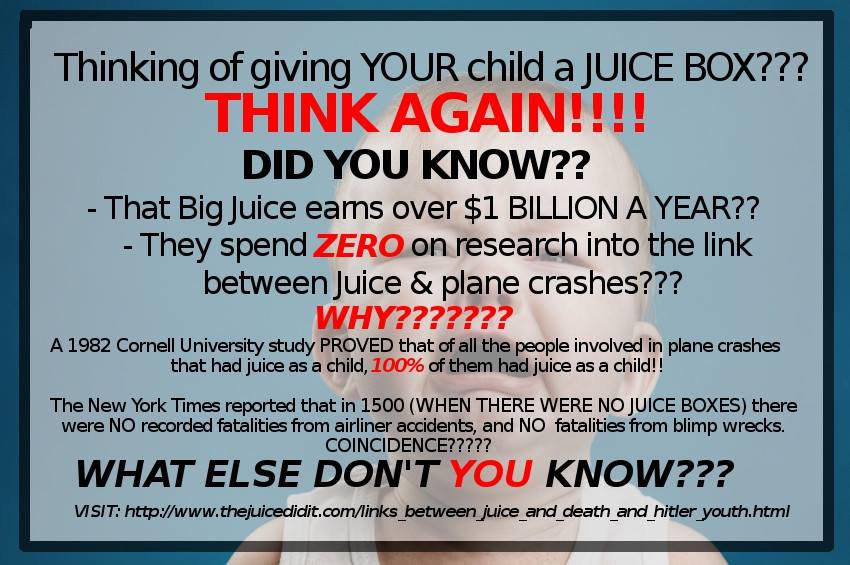
Despite rhetoric that pits "anti-vaxxers" versus "pro-vaxxers," most new parents probably qualify as vaccine-neutral--that is, they passively accept rather than actively demand vaccination.
Unless there is an active threat of polio or whooping cough, they have to remind themselves that injecting their crying infant with disease antigens is a good thing.
Even in these cases, some unease is natural, argue two
psychologists in an Opinion published October 29 in Trends in Cognitive
Sciences. The act itself is counter-intuitive, and it requires trust in
medicine and government that not all of us possess.
With campaigns to enhance
vaccination compliance showing limited, if any, success, the authors consider
what compels someone to vaccinate and the cognitive obstacles that cause
pro-vaccine messaging to be rejected.
Please Don’t Shoot the Moderators
Only
the media can protect the public from the lies of lying politicians.
By
 We were treated to a classic man-bites-dog moment at the latest
Republican presidential debate.
We were treated to a classic man-bites-dog moment at the latest
Republican presidential debate.
There the moderators were, CNBC’s finest, lying in ambush with
their carefully crafted “when did you stop beating your wife” questions at the
ready. But as soon as they tried asking them, the contestants — forgive me,
candidates — counter-attacked.
“How dare you ask me to explain my positions, you biased liberal
media hack” was the general theme. And it worked. The crowd, a conservative
group, roared its approval again and again.
The media is liberal, they say. It’s biased against
conservatives and it makes things up. A God-fearing,
free-enterprise-worshipping American can’t expect a fair shake from them.
Those are the inaccurate messages that went out, and I’m afraid
that a frightening number of people bought it.
Paul Ryan vs. the People
The
GOP's new House speaker says he "trusts the American people," but his
budget takes direct aim at them.
 |
| DonkeyHotey / Flickr |
Paul Ryan paints himself as a champion of “the people” over
“Washington.”
But the “people” the new House speaker defends are corporations.
And the “Washington” he attacks is the one that does deliver for real people.
For the past five years, Ryan has authored the budget passed by
the House of Representatives. His imprint is so great that each document is
commonly known as the “Ryan budget.”
Every year, those budgets reliably propose sharp cuts to social
services alongside steep tax discounts for the rich. His caucus demands these
cuts, Ryan claims, because “we trust the American people.” After
all, he adds, “Who knows better? The people or Washington?”
But when you look beyond these sound-bite politics at the actual
choices Ryan makes in his budget, it’s easy to see whom he really trusts — and
whom he really works for.
How, for example, does cutting $89 billion in Pell grants for college — as his
budget last year did — put more trust in working families who are struggling to
give their children a college education?
Saturday, November 7, 2015
Why We Should Spend More on Education
 Ben
Spielberg is a blogger who is knowledgeable about budgets and economics. In this post,
he refutes the arguments of StudentsFirst leader Dmitri Mehlhorn that how money
is spent matters, but we spend enough now.
Ben
Spielberg is a blogger who is knowledgeable about budgets and economics. In this post,
he refutes the arguments of StudentsFirst leader Dmitri Mehlhorn that how money
is spent matters, but we spend enough now.
Spielberg works at the Center on
Budget and Policy Priorities. He knows whereof he writes. He says Mehlhorn is
wrong, and he backs it up with “The Truth About School Funding.” Read his
article to find and follow the links.
Spielberg
marshals an impressive array of facts and data to show that we are far from
achieving equitable or adequate funding of the neediest schools:
Studies raise questions about impact of statins on flu vaccination in seniors
Infectious Diseases Society of America

A new pair of studies suggests that statins, drugs widely used to reduce cholesterol, may have a detrimental effect on the immune response to influenza vaccine and the vaccine's effectiveness at preventing serious illness in older adults.
Published inThe Journal of Infectious Diseases, the
findings, if confirmed by additional research, may have implications for flu
vaccine recommendations, guidelines for statin use around the time of vaccination,
and future vaccine clinical trials in seniors.
In one of the new studies, researchers analyzed immune response
data from an earlier flu vaccine clinical trial conducted during the 2009-2010
and 2010-2011 flu seasons.
In the new study, funded by Novartis Vaccines, which
also sponsored the original clinical trial, investigators focused on the
potential effect of statin use on patients' initial immune responses after
being immunized against flu. The analysis drew on data for nearly 7,000 adults
over the age 65 in four countries, including the United States.
When Your Teacher Asks If You Want Fries with That
McDonald's
tricks cash-strapped schools into serving up their own students.
 When
it comes to predatory marketing to children, nobody’s lovin’ it like McDonald’s.
When
it comes to predatory marketing to children, nobody’s lovin’ it like McDonald’s.
In
addition to selling unhealthy food, the chain lures kids in with toys and a
playground — and its spokesperson is a clown. But it’s the fast food giant’s
marketing to captive audiences at schools that really takes the cake.
This
came to my attention when I saw photos of “McSchool Night” on Facebook. A woman
I know was boasting that her son had flipped burgers at the event.
What’s
McSchool Night? Also called “McTeacher’s Night,” it’s what the Campaign for a Commercial-Free Childhood calls “a
marketing ploy disguised as a school fundraiser.”
McDonald’s
— like all food marketers — knows that children develop eating habits and brand
loyalties that can last a lifetime. The company wants kids to build warm and
happy memories now so they associate the Golden Arches with nostalgia later on.
The sooner they get into the habit of eating at the chain, the better.
Here’s
how it works at McSchool Nights.
Is GDP Over?
Economists
agree: Sustainable development and reducing inequality matter more than
economic growth.
Crossposted from Inequality.org.
 |
| Picturing Inequality, an OtherWords cartoon by Khalil Bendib |
Organizers of October’s fifth OECD World Forum on Statistics, Knowledge, and Policy could barely contain their sense of satisfaction when the three-day event opened in Guadalajara, Mexico.
Why all the good cheer? Officials at the OECD, the official
economic research agency of the developed world, feel they haven’t just been
organizing gabfests since the first of these triennial forums in 2004.
They believe they’ve been helping change how the world — or at least the global public policy community — thinks about inequality.
They believe they’ve been helping change how the world — or at least the global public policy community — thinks about inequality.
And that belief, prominent independent observers believe,
reflects a healthy dose of reality.
“We now have a broad consensus that more equal societies perform
better,” as Nobel Prize-winning economist Joseph Stiglitz put it in his World
Forum keynote address to the over 1,000 government statisticians, academics,
and civil society analysts on hand in Guadalajara.
The OECD, Stiglitz observed, deserves much of the credit for
this new consensus. The agency’s efforts have helped shift the global
analytical mainstream off a mindless fixation on GDP — an economy’s total
output of goods and services — and onto the importance of developing a
sustainable “prosperity for all.”
Friday, November 6, 2015
Laws don’t work unless they are properly enforced
By FRANK CARINI/ecoRI News staff

If natural resources, like
Little Compton Beach, are what make Rhode Island the Ocean State, why has state
leadership long ignored the importance of environmental protections? (Joanna
Detz/ecoRI News)
During a recent interview for a story about the importance of
wetlands, the interviewee asked a question in the middle of our conversation
that neither of us could answer: Why isn’t Rhode Island leading the way when it
comes to environmental protections?
Sure, the state has a fine collection of successes — the Coastal
Resources Management Council's leadership on the climate-change front, the
Narragansett Bay Commission’s combined sewer overflow project and the new Infrastructure Bank — but the collective
work of the executive and legislative branches during the past four decades has
treated the environment as an afterthought. That indifference has trickled down
to the municipal level.
The state that created the moniker “Ocean State,” in 1972, to
attract tourists and energize the economy should have done more since then to
protect its 400 miles of coastline and unique collection of natural resources.
Rhode Island has passed plenty of laws purportedly created to protect the
environment since that day 43 years ago, but many of them are inadequate and
most aren’t enforced, or are enforced selectively depending on who "knows
a guy."
Subscribe to:
Posts (Atom)