Menu Bar

Home           Calendar           Topics          Just Charlestown          About Us

Sunday, January 3, 2016

Even Jim could learn to care about others

University of Zurich


We can learn to empathize with strangers. Surprisingly positive experiences with people from another group trigger a learning effect in the brain, which increases empathy.

As researchers from the University of Zurich reveal, only a handful of positive learning experiences already suffice for a person to be-come more empathic.

Conflicts between people from different nationalities and cultures often stem from a lack of empathy or compassion for 'the stranger'.


Talking over, time for action

What's Next for the U.S. after the Paris Climate Agreement?
By Richard Eidlin 
Well before the final negotiations of the COP21 climate talks in Paris, business was already making a big difference on the ground. For the first time, superstar entrepreneurs showed up with plans to fund major initiatives. 

Giant companies sent CEOs to showcase their results in reducing carbon in their own operations. And entire industries, such as financial services, agriculture and manufacturing, made new commitments to address climate change.

Attending the talks as a business leader, I could tell that positive pressure from the business sector was going to lead to success. The overwhelming message to government leaders was, "we, the international business community, will support you if you make a strong deal."

But of course talk is cheap -- and easy. Now comes the difficult part: turning the agreement into actions that will actually save the planet.

Flamingos in New England?

Bird habitat changing quickly as climate change proceeds
From University of Wisconsin-Madison

funny animals lol bird flamingo

The climatic conditions needed by 285 species of land birds in the United States have moved rapidly between 1950 and 2011 as a result of climate change, according to a recent paper published in Global Change Biology.

“Our goal was to look at the climate where these birds were observed breeding over this period and determine where that ‘sweet spot’ was moving as the climate changed in this period,” says first author Brooke Bateman, a post-doctoral researcher at the University of Wisconsin–Madison.

Warming temperatures are the fundamental alteration of climate change, and the researchers saw the expected northward expansion of suitable conditions, Bateman says, but also a considerable expansion to the west. 


Saturday, January 2, 2016

“Brasher and larger version of what others in finance and corporate suites do all the time.”


Martin Shkreli, the former hedge-fund manager turned pharmaceutical CEO who was arrested last week, has been described as a sociopath and worse.

In reality, he’s a brasher and larger version of what others in finance and corporate suites do all the time.

Federal prosecutors are charging him with conning wealthy investors.

Lying to investors is illegal, of course, but it’s perfectly normal to use hype to lure rich investors into hedge funds. And the line between the two isn’t always distinct.

Hedge funds are lightly regulated on the assumption that investors are sophisticated and can take care of themselves.

Perhaps prosecutors went after Shkreli because they couldn’t nail him for his escapades as a pharmaceutical executive, which were completely legal – although vile.

Shkreli took over a company with the rights to a 62-year-old drug used to treat toxoplasmosis, a devastating parasitic infection that can cause brain damage in babies and people withAIDS. He then promptly raised its price from $13.50 to $750 a pill.

When the media and politicians went after him, Shkreli was defiant, saying “our shareholders expect us to make as much as money as possible.” He said he wished he had raised the price even higher.


We're doomed

The progressive comic about Donald Trump.

What Charlestown is missing out on

Wind power on the rise in U.S.
From: Jeff Brady, NPR
cinemagraph wind turbine

The U.S. wind power industry is celebrating after reaching a new milestone in November: 70 gigawatts (GW) of generating capacity.

"That's enough to power about 19 million homes," says Michael Goggin, senior director of research at the American Wind Energy Association (AWEA).

There are more than 50,000 wind turbines operating across 40 states and Puerto Rico, according to the AWEA.

Wind power has grown quickly in recent years. It sprinted past the 50 GW and 60 GW milestones in 2012. Growth temporarily stalled as members of Congress let a federal tax credit expire. But now the boom times are back.

The federal budget deal, passed by Congress and signed by President Obama last week, includes a five-year extension of the Renewable Energy Production Tax Credit. That sent solar and wind company stocks soaring.

As a low-carbon source of electricity, wind power also got a boost from the Paris climate change agreement and the Obama administration's Clean Power Plan.

By state, what interests people?

PRIVACY: Farrah Fawcett Was Right

We Have Little Medical PrivacyBy Charles Ornstein for ProPublica
This story was co-published with the Washington Post.

Seven years ago, I sat across from Farrah Fawcett in the living room of her Los Angeles condo. 

In what would be her last media interview before she died in 2009, she described her suspicion that an employee at UCLA Medical Center had shared details of her cancer treatment — and the setbacks along the way — with the National Enquirer.

Whenever she sought treatment there, the tabloids were quick with a story, even if it wasn't right.
"I actually kept saying for months and months and months, ‘This is coming from here,' " Fawcett told me in the summer of 2008. "I was never more sure of anything in my life."

To prove her theory, Fawcett set up a sting: In May 2007, she withheld news of her cancer's return from nearly all of her relatives and friends. Within days, the story was in the Enquirer. "I couldn't believe how fast it came out," Fawcett said.

A UCLA employee was caught and charged with selling information to the tabloid. She pleaded guilty, but died before she was sentenced.


URI chemical engineer developing sensor to detect explosives

Otto Gregory’s findings published in Electrochemical Society Transactions

KINGSTON, R.I., Dogs have been used for decades to sniff out explosives, but now a University of Rhode Island scientist and his team have come up with another way to detect bombs: sensors.

Otto J. Gregory, professor of chemical engineering and co-director of URI’s Sensors and Surface Technology Partnership, has developed a sensor that can detect explosives commonly used by terrorists. One of these explosives is triacetone triperoxide, or TATP.

Triacetone triperoxide has been used by terrorists worldwide, from the 2001 “shoe bomber” Richard Reid to the suicide bombers who attacked residents of Paris in November. The explosive is relatively easy to make with chemicals that can be bought at pharmacies and hardware stores, attracting little attention from authorities. 

Gregory’s work focuses on creating a sensor that continuously detects vapors emitted by the explosive. 


Friday, January 1, 2016

Higher wages are a good thing for us all

By Harry Rix in Rhode Island’s Future
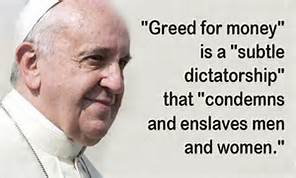
Photo of Pope with statement: "Greed for money" is a "subtle dictatorship: which "condemns and enslaves men and women."
“An unfettered pursuit of money rules. That is the dung of the devil.”

The Pope doesn’t care much for greed.

The wages of 30 million U.S. workers cause so much misery they leave within a year. The Economist states this chaos continues because, “The most obvious incentive—more money—is often the last to be considered.”

Often, the issue is greed.

Retail and fast-food businesses also stiff taxpayers. Walmart pays ‘low, low’ wages to impoverished employees: Forbes reports taxpayer assistance totals about $6.2 billion annually.


Scary Muslim stuff for Jim to worry about

Cartoon Flashback: More things for Islamophobes to worry about
For more cartoons from Jen Sorenson, CLICK HERE

Trump and Putin BFFs

Pic of the Moment

It’s not too early to be thinking about summer jobs

RI residents 16+ encouraged to apply for positions at parks, beaches around the state

water i lifeguard shallow pedantic

PROVIDENCE - The Rhode Island Department of Environmental Management (DEM) is now accepting applications for seasonal employment at state parks, beaches and campgrounds across the state.

Various positions are available and Rhode Island residents, ages 16 and older, are encouraged to apply. Seasonal employment offers an opportunity to gain valuable experience in customer service, office management, environmental research, and more.

Available positions include, but are not limited to, park ranger - levels, I, II and III, beach managers, seasonal laborers, lifeguards, lifeguard captains, recreational area clerks, restroom attendants, student researchers, clerical support aides, technical support interns, policy interns and technical field interns. 

Pay ranges from $9.60 to $14.00 per hour. 

The majority of positions are full time and include weekend and holiday hours. Applicants to park ranger positions at levels II and III must be 18 years of age or older.

In Victory Against Pointless Plastic, Microbead Ban Signed Into Law

While Earth suffers 'death by a thousand cuts,' ban highlights much-needed environmental considerations


Microbeads are too small to be stopped by sewage treatment plants and, once in the waters, attract toxic chemicals and find their way into fish that eat them as if they were food.(Photo: QMI Agency/File)

In a move described as a "micro-sized miracle," President Barack Obama on Monday signedinto law a bill banning the manufacture of beauty products containing miniscule plastic particles, known as microbeads.

Environmental groups have long-sought such a ban and heralded the move as an "important step toward addressing the global crisis of microplastic pollution."

"Our oceans are inundated with microplastics that threaten sea birds, turtles and other marine wildlife. Now we can stop adding to the trillions of pieces already out there," said Blake Kopcho, oceans campaigner with the Center for Biological Diversity. 

"This will eliminate a pointless and harmful source of plastic pollution before it ever has a chance to reach the oceans," Kopcho added.

The Microbead-Free Waters Act, passed by Congress, phases out the manufacture of face wash, toothpaste, and shampoo containing plastic microbeads by July 1, 2017 and the sale of such beauty products by July 1, 2018.


A whole industry devoted to screwing injured workers

‘All of This Because Somebody Got Hurt at Work'
by Michael Grabell in ProPublica

LAS VEGAS — A scantily clad acrobat dangles from the ceiling, performing flips and splits as machines puff smoke and neon lights bathe the dance floor in turquoise and magenta. 

Dancers in lingerie gyrate on poles to the booming techno. Actors dressed as aliens pose for selfies with partygoers. There's an open bar and waiters weave through the crowd passing out chocolate truffles.

It's the closing night of the National Workers' Compensation and Disability Conference & Expo.

The party at Light, a Cirque du Soleil-themed club at the Mandalay Bay Resort and Casino, capped off the workers' comp industry's biggest annual networking event. 

For three days in November, hundreds of vendors wooed insurers and employers with lavish after-hours parties, giveaways of designer handbags, photos with Olympic gymnast Kerri Strug, and free rides in orange Hummer limousines.

A top manager for a major insurance company recalled standing amid the hoopla a few years back when a company CEO turned to her and marveled: "All of this because somebody got hurt at work."

Workers' comp is supposed to be simple. If you're injured on the job, your employer pays your medical bills and part of your wages while you recover.

But over the past two decades, a cottage industry of middlemen has emerged, which some have dubbed the "workers' comp industrial complex." Even private equity firms have bought in, seeing profit opportunities in employers' and insurers' quest to contain spending.