Menu Bar

Home           Calendar           Topics          Just Charlestown          About Us

Tuesday, March 3, 2020

Is a little good is good enough?

Excuses and 'indulgence effects' in consumption
Karlsruher Institut für Technologie (KIT)

Image result for sweatshopsSustainable materials, ecofriendly, and produced under good work conditions -- convincing arguments for most of us. 

But how do consumers weigh compliance or non-compliance with such ethical standards in reality? 

Not as much as they think: Researchers of Karlsruhe Institute of Technology (KIT) used an example from textile industry to demonstrate that customers unconsciously use a single ethical aspect as an excuse for a less moral behavior regarding other aspects of the same product and compared to other people. The impact of these "indulgence effects" and their significance to economy and politics are reported by the team in the journal PLOS ONE.

The number of consumers interested in products complying with their ethical and moral conceptions and affecting neither humans nor the environment is increasing. 

In this sense, companies are often criticized for 'green washing, as Nora Szech, Professor of Political Economy at the Institute of Economics (ECON) of KIT says: "Many companies are quite rightly accused of improving just single ethical aspects instead of acting in an integrated way." 


Short-lived 'soda' tax worked

Sweetened beverage sales decreased by 21% during tax implementation
University of Illinois at Chicago

dr pepper godzilla GIFA study of beverage sales in Cook County, Illinois, shows that for four months in 2017 -- when the county implemented a penny-per-ounce tax on both sugar-sweetened and artificially sweetened drinks -- purchases of the taxed beverages decreased by 21%, even after an adjustment for cross-border shopping.

The findings of the study, which was conducted by researchers at the University of Illinois at Chicago School of Public Health, are published today in the Annals of Internal Medicine.

"This study comprehensively assessed the impact, both intended and unintended, of Cook County's 2017 sweetened beverage tax, and it showed that the tax was an effective method for reducing consumption of many beverages known to contribute to chronic health conditions, like Type II diabetes and obesity," said UIC's Lisa Powell, lead author of the study. 


Trump breaks promise to teachers

Seeks to cancel student loan forgiveness for graduates who work in public service
Image result for trump and student loansBefore sharing my opinions about Trump’s recent proposal to cut student loan forgiveness, let me explain my own situation.

In my 20s, I was fresh out of college with a business degree and worked in software for a few years. 

In my 30s, I went to graduate school for sociology. I’m single and I had no family support. So I took out student loans.

I made the decision to take student loans carefully. It’s a risk, because you might not graduate and then you’ll be left with thousands of dollars to pay back.

There were two mitigating factors that led me to go for it. 


Monday, March 2, 2020

Chronic problem in the environmental movement still hurts

Green New Deal and R.I. Climate Efforts Lack Color
By FRANK CARINI/ecoRI News staff

Bella Noka, a Narragansett Indian Tribe member and a member of the Indigenous Transition steering committee, said society long ago stopped listening to Mother Earth. (Michael Roles)
Bella Noka, a Narragansett Indian Tribe member and a
member of the Indigenous Transition steering committee,
said society long ago stopped listening to Mother Earth.
(Michael Roles)
Four of the six people sitting at a table near the front door of a busy coffee shop politely pointed out the inadequacies of the Green New Deal and the country’s timid efforts to address a centuries-old system that continues to marginalize people of color.

The affable quartet noted that indigenous people like them have been largely shut out of efforts, both locally and nationally, to address the climate crisis and the connected issue of economic inequality.

“The smartest person in the room needs to get out of the room,” said Bella Noka, a Rhode Island resident and Narragansett Indian Tribe member. 

“We need to listen to the child in the corner. We need to listen to everybody.”

The Green New Deal makes a lone mention of indigenous people, but, according to Cristina Cabrera, a member of the Pocasset Wampanoag Tribe of the Pokanoket Nation, few, if any, helped craft the document and few have been asked for their thoughts on the issues it addresses. 

She noted that efforts at the local level to decarbonize don’t include indigenous people.

Cabrera said climate and social policy are being increasingly shaped by corporations and the politicians they help elect, which creates a revolving door of corporate interests in government. 

She noted that corporations enjoy the status of personhood but Mother Earth does not. She said these influences are visible in the Green New Deal.


Attention federal workers: if you want to keep your job....

1476ckCOMICfederalemployment.png
For more cartoons by Ruben Bolling, CLICK HERE.

Trump's "art of the deal"

Image may contain: 1 person, possible text that says 'TRUMP'S SUCCESS STORIES I'm the best businessman in the world because I know how to NEGOTIATE. 1. Bought the Trump Plaza hotel for $400 million. Repossessed by the bank. 2. Bought his yacht for $29 million. Repossessed the bank. 3. Built 4 Casinos at cost $3 billion Filed bankruptcy went of business. Stiffed contractors and employees. 4. Started Trump Airlines. Never made a profit. Planes and Helicopters repossessed by Citibank. 5. Trump Mortgage, Trump Vodka & Trump Steaks. All of business. PONTCOMMTE.PO'

A remedy for harmful algal blooms? Scientist thinks he's found one

"We're going to see cleaner water and we're going to see it at a large scale. It will work"

Image result for Rhode Island algae blooms
Toxic algae blooms happen often in Rhode Island's waters, like the
one shown above (RI DEM photo)
Covering the entire 40 acres of Lake Newport was a thick, green mat of algae. Looking across the lake in Youngstown, Ohio, last September, Peter Moeller, a government researcher, wondered if his experimental treatment could heal the lake by removing the toxin-producing cyanobacteria.

In the sweltering heat, beads of sweat dripped down the faces of Moeller and his team as they positioned four units of nanobubble ozone generators around the lake shore.

Each unit looked like two boxes, roughly three feet long and wide, and was powered by an electric generator. Wearing waders, the crew arranged the tubes stretching from the generators to the lake. 

Soon, white streaks appeared in the water as the ozone-filled bubbles entered and broke down the algae.

After the machines ran for five days straight, the lake was crystal clear and returned to its natural state.


Doggie of the week

Meet Ringo
Animal Rescue RI

Meet Ringo, a 3 year old, large breed dog with beautiful brindle markings.

This handsome guy loves being active!

He is extremely playful, very smart and eager to learn.

He loves his toys, belly scratches and exploring the outdoors.

He is also good with other dogs and wouldn’t mind another four legged companion to share adventures with.


CDC created its own, flawed test for COVID-19 instead of following WHO guidelines

Key Missteps at the CDC Have Set Back Its Ability to Detect the Potential Spread of Coronavirus
By Caroline Chen, Marshall Allen, Lexi Churchill and Isaac Arnsdorf

Image result for CDC coronavirus test kitsAs the highly infectious coronavirus jumped from China to country after country in January and February, the U.S. Centers for Disease Control and Prevention lost valuable weeks that could have been used to track its possible spread in the United States because it insisted upon devising its own test.


The federal agency shunned the World Health Organization test guidelines used by other countries and set out to create a more complicated test of its own that could identify a range of similar viruses. 

But when it was sent to labs across the country in the first week of February, it didn’t work as expected. The CDC test correctly identified COVID-19, the disease caused by the virus. But in all but a handful of state labs, it falsely flagged the presence of the other viruses in harmless samples.

As a result, until Wednesday the CDC and the Food and Drug Administration only allowed those state labs to use the test — a decision with potentially significant consequences. 

The lack of a reliable test prevented local officials from taking a crucial first step in coping with a possible outbreak — “surveillance testing” of hundreds of people in possible hotspots. 

Epidemiologists in other countries have used this sort of testing to track the spread of the disease before large numbers of people turn up at hospitals.


Sunday, March 1, 2020

Bots help Trump spread climate change misinformation

Study Suggests Twitter Bots Have 'Substantial Impact' on Spreading Climate Misinformation


Image result for what is a bot?
Source: https://www.dizzain.com
A new analysis of 6.5 million tweets from the days before and after U.S. President Donald Trump announced his intention to ditch the Paris agreement in June 2017 suggests that automated Twitter bots are substantially contributing to the spread of online misinformation about the climate crisis.

Brown University researchers "found that bots tended to applaud the president for his actions and spread misinformation about the science," according to the Guardian, which first reported on the draft study Friday. 

"Bots are a type of software that can be directed to autonomously tweet, retweet, like, or direct message on Twitter, under the guise of a human-fronted account."

As the Guardian summarized:

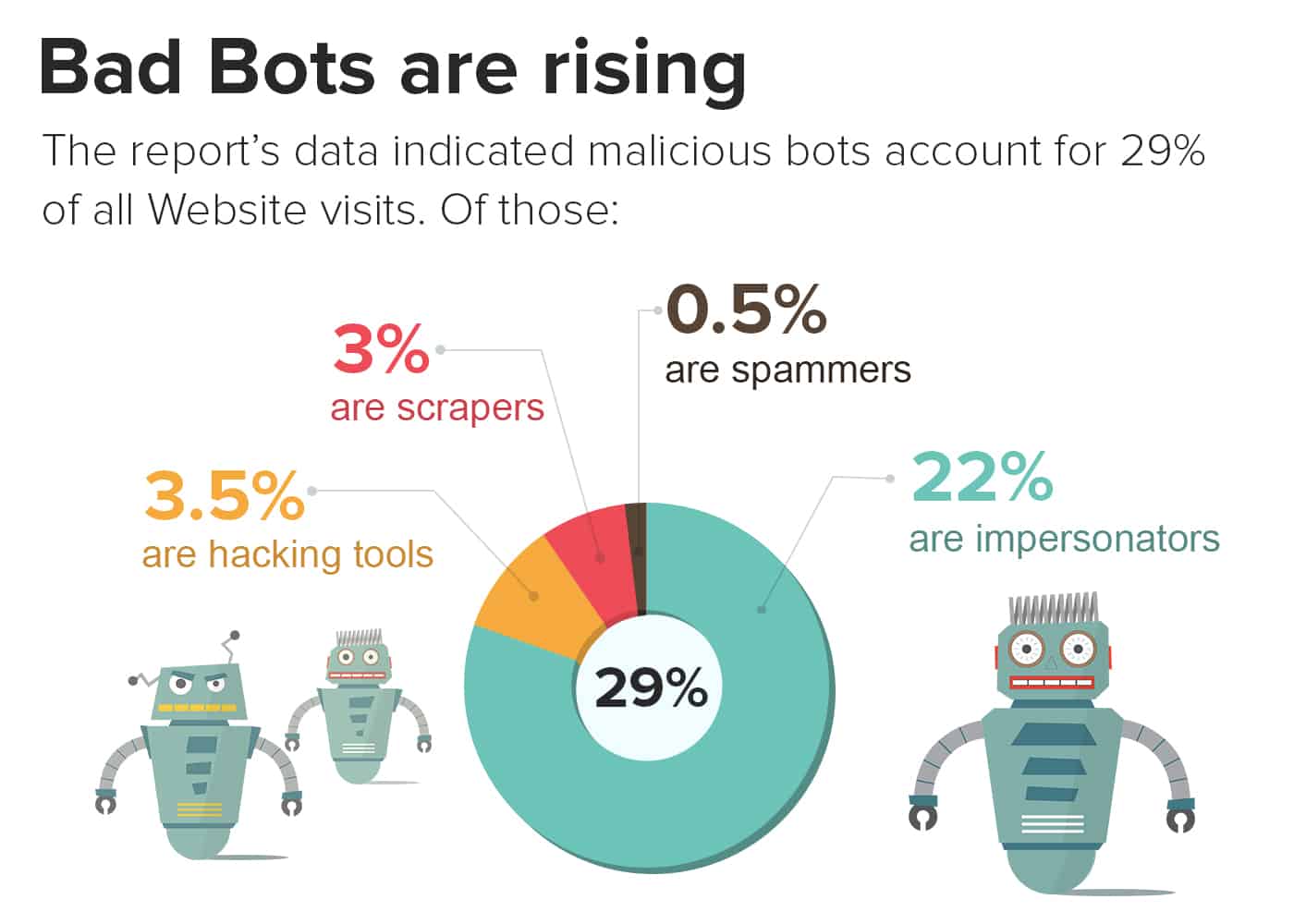
Image result for bots and trumpOn an average day during the period studied, 25% of all tweets about the climate crisis came from bots. This proportion was higher in certain topics—bots were responsible for 38% of tweets about "fake science" and 28% of all tweets about the petroleum giant Exxon.

Conversely, tweets that could be categorized as online activism to support action on the climate crisis featured very few bots, at about 5% prevalence. 

The findings "suggest that bots are not just prevalent, but disproportionately so in topics that were supportive of Trump's announcement or skeptical of climate science and action," the analysis states.

More broadly, the study adds, "these findings suggest a substantial impact of mechanized bots in amplifying denialist messages about climate change, including support for Trump's withdrawal from the Paris agreement."


I'll have one of those


For more cartoons by Matt Bors, CLICK HERE.

Then and now, continued

Local murder mystery

Understanding Long Island Sound’s ‘Dead Zones’ 
Elaina Hancock - UConn Communications

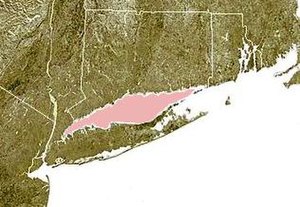
Image result for Long Island Sound’s ‘Dead Zones’For the past 25 years, the Environmental Protection Agency and the Connecticut Department of Energy and Environmental Protection have been diligently collecting water samples each month in Long Island Sound (LIS). 

Recently, the data have been compiled and analyzed, by UConn associate professors of Marine Science Penny Vlahos  and Michael Whitney, and other team members, who have begun the task of digging into the data to better understand the biogeochemistry of the Sound. Part of the analysis, called “Nitrogen Budgets for LIS,” has been published in the journal Estuarine, Coastal and Shelf Science.

Every summer since 1820 or so, LIS has experienced what is called a “dead zone.” In the 1970s and 1980s, the annual appearance of the dead zone saw extensive fish kills which drew public attention and spurred action by state environmental agencies.

Dead zones occur when influxes of excess nutrients such as nitrogen, along with warm, still waters, lead to bursts of growth in algal populations and their subsequent decay, says Vlahos.


Finding the Root to Treat Aging through Dieting

Breaking down the reasons why the Mediterranean diet works
By Angel Mendez

Image result for Mediterranean dietResearchers at the University of Minnesota Medical School believe they discovered a new way in which diet influences aging-related diseases.

“Our healthcare as we age is analogous to a tree, and the way we go about it now, when a branch gets diseased, we go to a doctor, and they trim the branch. Then, we go to another doctor, and they trim another branch,” said Doug Mashek, PhD, a professor in the Departments of Medicine and Biochemistry, Molecular Biology and Biophysics. 

“It’s the roots that we need to be focused on—the common roots of all of these diseases. That’s why we are excited because this pathway has been linked to almost all of them. It’s the roots.”


The most expensive subsidy we give the fossil fuel industry

Air pollution from fossil fuels costs $8 billion per day
Elisheva Mittelman, Yale University’s E360 DIGEST

sad air pollution GIF by Barbara Pozzi
The economic and health costs of air pollution from burning fossil fuels totaled $2.9 trillion in 2018, calculated in the form of work absences, years of life lost, and premature deaths, according to a new report by the Center for Research on Energy and Clean Air (CREA)

The cost represents 3.3 percent of global GDP, or about $8 billion per day.

“Air pollution is a threat to our health and our economies,” Minwoo Son, a clean air campaigner for Greenpeace Southeast Asia, which commissioned the report, said in a statement

“Every year, air pollution from fossil fuels takes millions of lives, increases our risk of stroke, lung cancer, and asthma, and costs us trillions of dollars.”

The study, the first of its kind to quantify the global impacts of air pollution caused by burning fossil fuels, focused on the health impacts of three specific types of pollutants: Nitrogen dioxide, ozone, and fine particulate matter, which has the greater impact, causing about 1.8 billion days of missed work due to disease and $2.2 trillion in air pollution costs every year.