Menu Bar

Home           Calendar           Topics          Just Charlestown          About Us

Friday, July 8, 2022

No beach for you

Boulders Placed in Shoreline Parking Areas Restrict Access

By Rob Smith / ecoRI News staff

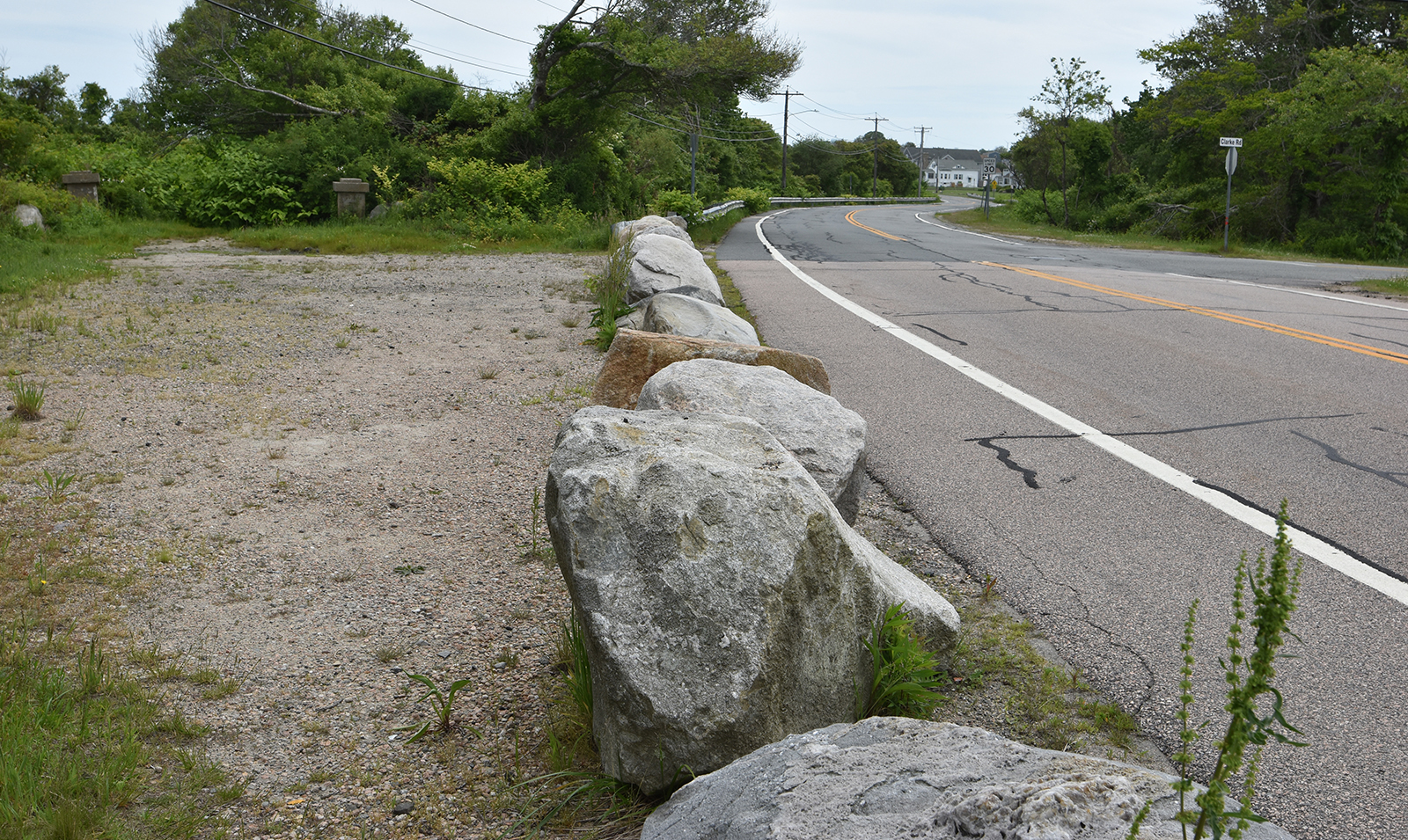
Down Ocean Road from the main entrance to Black Point Trail is a small pullover/parking lot that was used up until the pandemic. Narragansett’s Coastal Access Improvement Committee is working getting the boulders removed.

Some popular fishing and coastal access spots have less parking this summer. Two areas managed by the Rhode Island Department of Environmental Management (DEM) have had their parking reduced since the onset of the pandemic: the Camp Cronin Fishing Area near Point Judith Lighthouse and the Black Point Trail on Ocean Road.

Parking has become a flashpoint for shoreline activists, as municipalities often use parking restrictions as a way to bar passage to various shoreline access points. While the Rhode Island Public Transit Authority, particularly during the summer, does have some routes to beaches and nearby areas in Narragansett, a ride on RIPTA can take up to 30 minutes longer than driving from Kennedy Plaza to Point Judith.

DEM confirmed parking reductions at each site, but only claimed responsibility for one. The state agency cited congestion and crowding issues during the height of the pandemic’s first wave in summer 2020 as a reason for the change.

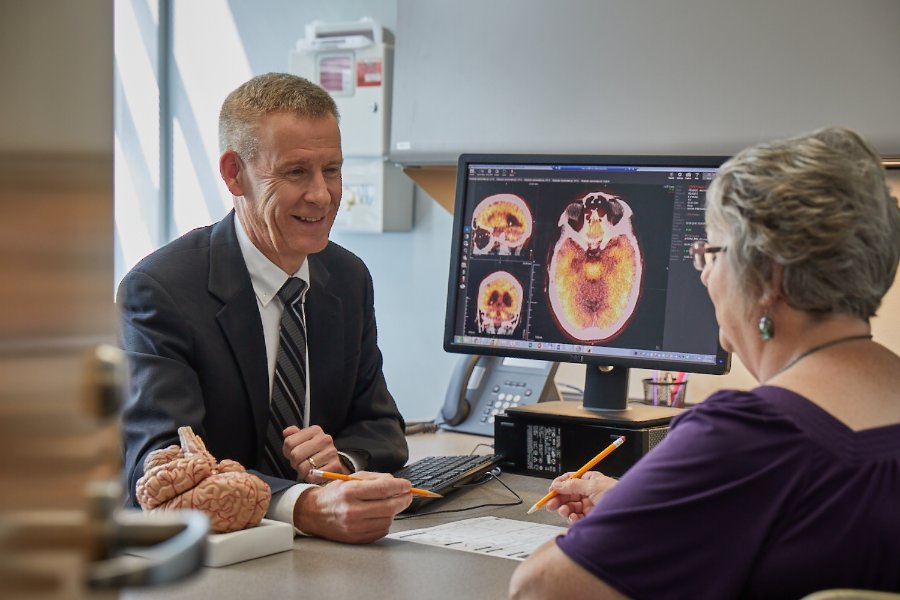
How do painkillers actually kill pain?

From ibuprofen to fentanyl, it’s about meeting the pain where it’s at

Rebecca Seal, University of Pittsburgh Health Sciences and Benedict Alter, University of Pittsburgh Health Sciences

A variety of pain-relieving drugs are available both over the
counter and by prescription. SelectStock/Vetta via Getty Images
Without the ability to feel pain, life is more dangerous. To avoid injury, pain tells us to use a hammer more gently, wait for the soup to cool or put on gloves in a snowball fight. 

Those with rare inherited disorders that leave them without the ability to feel pain are unable to protect themselves from environmental threats, leading to broken bones, damaged skin, infections and ultimately a shorter life span.

In these contexts, pain is much more than a sensation: It is a protective call to action. But pain that is too intense or long-lasting can be debilitating. So how does modern medicine soften the call?

As a neurobiologist and an anesthesiologist who study pain, this is a question we and other researchers have tried to answer. Science’s understanding of how the body senses tissue damage and perceives it as pain has progressed tremendously over the past several years. It has become clear that there are multiple pathways that signal tissue damage to the brain and sound the pain alarm bell.

Interestingly, while the brain uses different pain signaling pathways depending on the type of damage, there is also redundancy to these pathways. Even more intriguing, these neural pathways morph and amplify signals in the case of chronic pain and pain caused by conditions affecting nerves themselves, even though the protective function of pain is no longer needed.

Painkillers work by tackling different parts of these pathways. Not every painkiller works for every type of pain, however. Because of the multitude and redundancy of pain pathways, a perfect painkiller is elusive. But in the meantime, understanding how existing painkillers work helps medical providers and patients use them for the best results.

When you can’t trust the watchdogs

Corrupt Watchdogs

By Phil Mattera for the Dirt Diggers Digest

At first glance it seemed to be a satirical piece from The Onion. The Securities and Exchange Commission issued a press release announcing that Big Four accounting firm Ernst & Young was being fined $100 million for failing to prevent its audit professionals from cheating on ethics exams required to obtain and maintain their CPA licenses.

Not only did EY exercise poor oversight over its employees—it also tried to withhold evidence of the misconduct from agency investigators. This prompted the SEC to impose the largest fine ever against an audit firm.

The SEC’s release quoted Enforcement Division Director Gurbir Grewal as saying “it’s simply outrageous that the very professionals responsible for catching cheating by clients cheated on ethics exams, of all things,” adding: “And it’s equally shocking that Ernst & Young hindered our investigation of this misconduct.”

Yes, it’s shocking, shocking in a Casablanca sort of way to learn that EY management is apparently as corrupt as its auditors. The SEC failed to mention that EY has a long track record of misconduct. Even before this latest case, it has racked up more than $350 million in fines and settlements since 2000, as documented in Violation Tracker.

Thursday, July 7, 2022

Witchcraft

For more cartoons by Tom Tomorrow, CLICK HERE.


Because the CCA doesn't want Charlestown to have bus service


Surprise: McKee does a good thing

Governor McKee signs executive order protecting Rhode Islanders who provide abortion from out-of-state legal liability

By Steve Ahlquist in UpRiseRI

By Bill Bramhall
Rhode Island Governor Daniel McKee  signed an executive order protecting access to reproductive health care in Rhode Island, ensuring that individuals who come to Rhode Island seeking reproductive health services will be safeguarded from legal liability in other states.

“Women should be trusted with their own health care decisions, and here in Rhode Island, we firmly support a right to choose,” said Governor McKee. 

“The executive order I signed today ensures that Rhode Island will continue to stand up for reproductive health care, especially in response to the shameful United States Supreme Court decision overturning Roe v. Wade.”

The executive order codifies most of what reproductive rights advocacy groups, such as The Womxn Project, have asked for. You can access the letter they sent to Governor McKee here.

Brain practices new tasks while people sleep, study finds

Braingate? Yeah, that's what they're calling it.

By Massachusetts General Hospital News and Brown University


Why do people sleep? Scientists have debated this question for millennia, but a new study adds fresh clues for solving this mystery.

The findings, published in the Journal of Neuroscience on Wednesday, June 22, may help explain how humans form memories and learn, and could eventually aid the development of assistive tools for people affected by neurologic disease or injury. The study was conducted by Massachusetts General Hospital in collaboration with colleagues at Brown University, the U.S. Department of Veterans Affairs, and several other institutions.

Scientists studying laboratory animals long ago discovered a phenomenon known as “replay” that occurs during sleep, explained Dr. Daniel Rubin, lead author and a neurologist at the MGH Center for Neurotechnology and Neurorecovery. Replay is theorized to be a strategy the brain uses to remember new information. If a mouse is trained to find its way through a maze, monitoring devices can show that a specific pattern of brain cells, or neurons, will light up as it traverses the correct route.

How to Get Rid of Medical Debt

Or Avoid how It in the First Place


Lori Mangum was 32 when apple-size tumors sprouted on her head. Now — six years and 10 surgeries later — the skin cancer is gone. But her pain lives on, in the form of medical debt.

Even with insurance, Mangum paid $36,000 out-of-pocket, charges that stemmed from the hospital, the surgeon, the anesthesiologist, the pharmacy, and follow-up care. And she still has about $7,000 more to pay.

While she was trying to manage her treatment and medical costs, Mangum remembers thinking, “I should be able to figure this out. I should be able to do this for myself.”

But medical billing and health insurance systems in the U.S. are complex, and many patients have difficulty navigating them.

“It’s incredibly humbling — and sometimes even to the point of humiliating — to feel like you have no idea what to do,” Mangum said.

If you’re worried about incurring debt during a health crisis or are struggling to deal with bills you already have, you’re not alone. Some 100 million people — including 41% of U.S. adults — have health care debt, according to a recent survey by KFF.

But you can inform and protect yourself. KHN and NPR spoke with patients, consumer advocates, and researchers to glean their hard-won insights on how to avoid or manage medical debt.

Wednesday, July 6, 2022

The Supreme Court has Lit Our Planet on Fire

Not with a bang but a whimper.

By Thom Hartmann for the Independent Media Institute

By Matt Davies
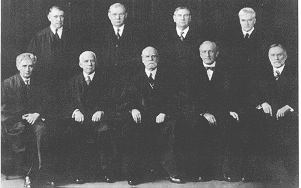
Longtime readers of my work and listeners to my program know that the Supreme Court has seized for itself extraordinary powers that the Framers of the Constitution never intended for it to have. There are summaries here and here, for example.

This is not an opinion unique to me or my book The Hidden History of the Supreme Court and the Betrayal of America: two Harvard Law professors just this week wrote an article for The Atlantic that lays out pretty much the same arguments.

And now Republicans on the Court have used that ill-gotten power — on behalf of the fossil fuel industry — to cripple America’s ability to meet the challenge of climate change. 

It’s a bizarre concept and just a fig-leaf to hide the fossil fuel industry’s desire to end government regulation and kill subsidies of green energy. To get there, they’ve turned regulatory agency rule-making upside-down.

Here’s how environmental law is supposed to work (in super-simplified form):

1.      Congress passes a law that says, for example, that the Environmental Protection Agency should limit the damage that carbon dioxide in the environment causes to the planet. Congress (the Constitution’s Article I branch of government) defines the broad goal of the legislation, but the Executive Branch (Article II) has the responsibility to carry it out.

2.      The EPA, part of that Executive Branch and answering both to the law and the President, then convenes panels of experts. They spend a year or more doing an exhaustive, deep dive into the science, coming up with dozens or even hundreds of suggestions to limit atmospheric CO2, ranging from rules on how much emission cars can expel to drilling and refining processes that may leak CO2 or methane (which degrades into CO2), etc.

3.      The experts’ suggestions are then run past a panel of rule-making bureaucrats and hired-gun rule-making experts for the EPA to decide what the standards should be. They take into consideration the current abilities of industry and the costs versus the benefits of various rules, among other things.

4.      After they’ve come up with those tentative regulations, they submit them for public review and hearings. When that process is done and the rules are approved, they make them into official EPA rules, publish them, enforce them, and the CO2 emissions begin to drop.

This is how it works, a process that simply comports with common sense, as the Supreme Court ruled in 1984. It’s been this way for a century or more.
Gone but not forgotten

Nick Anderson


Meet the CRU candidates and help them get on the ballot


email header.GIF


Fellow Residents of Charlestown,

Our CRU-endorsed candidates for Charlestown elections will be out and about at two locations this weekend, to talk to voters and ask for your signatures on their candidacy papers:

·     at the Charlestown Mini Super (4071 Old Post Road), on Friday, July 8, from noon until 3 pm and

·     at Rippy's Liquor and Marketplace (4158 South County Trail), on Saturday, July 9, from 1 pm until 3 pm.

Please stop by and give your support by adding your signature to their papers. They will be happy to see you and chat!

You can see our list of endorsed candidates here.


With thanks,

Tim Quillen, Chair

Charlestown Residents United


Charlestown Residents United

P.O. Box 412

Charlestown, RI 02813


Another good reason to get an annual flu shot

Flu vaccination linked to 40% reduced risk of Alzheimer's disease

University of Texas Health Science Center at Houston

A team of researchers including Paul E. Schulz, MD, found that flu
vaccination was associated with a reduced risk for Alzheimer's disease
over a four-year period. (Photo by UTHealth Houston)
People who received at least one influenza vaccine were 40% less likely than their non-vaccinated peers to develop Alzheimer's disease over the course of four years, according to a new study from UTHealth Houston.

Research led by first author Avram S. Bukhbinder, MD, a recent alumnus of McGovern Medical School at UTHealth Houston, and senior author Paul. E. Schulz, MD, the Rick McCord Professor in Neurology at McGovern Medical School, compared the risk of Alzheimer's disease incidence between patients with and without prior flu vaccination in a large nationwide sample of U.S. adults aged 65 and older.

An early online version of the paper detailing the findings is available in advance of its publication in the Aug. 2 issue of the Journal of Alzheimer's Disease.

Danger in the waters of Ninigret Pond

Jellyfish found that can put you in the hospital

From Rhode Island DEM:

Watercolor of clinging jellyfish by artist Christina Machinski
from the Narrow River Preservation Society
Please be advised — , a species that can have a powerful sting for those who are sensitive to it — have recently been found in Potter Pond and Ninigret Pond. They are about the size of a dime and marked with an orange-brown cross on transparent bodies. (see pix left).

Wear boots, waders, or wetsuits to protect yourself, or stick to sandy or surfy areas away from vegetation. 


Social Security, Medicare are on rogue court's hit list

The Supreme Court will come for your Social Security. Count on it 

Joan McCarter, Daily Kos Staff

The Supreme Court has upheld the Constitutionality of Social Security
in the past. But the radical Trump court puts ideology above precedent.
Is the radical, Trump-packed U.S. Supreme Court going to be satisfied it has owned the libs once it has done away with contraception, abortion, marriage equality, voting rights, and the federal government’s ability to regulate anything to protect citizens from guns to baby food to air and water? In a word, no. 

Their list of grievances against 20th-century progress isn’t going to stop with our private lives. Not when their twin bugbears of the New Deal and Great Society still stand. Not until they’ve completed the Great Regression. Elected officials haven’t been able to get it done, so the unelected Supreme Court will take on the job.

By Mike Luckovich
Since the Social Security Act was enacted into law on August 14, 1935, Republicans have tried to tear it down. The thought of all that money being safely stored away by the government to help secure dignified and sustainable retirements for regular working people has rankled the Republicans all these decades. Elected officials have tried and failed. 

Case in point: Former President George W. Bush entered his second term in office with a radical “reform” plan to privatize Social Security. “I earned capital in this campaign, political capital, and now I intend to spend it,” he declared after the 2004 election.

He really did try, and the people turned on him. “According to the Gallup organization, public disapproval of President Bush’s handling of Social Security rose by 16 points from 48 to 64% between his State of the Union address and June.” Democrats were united against his proposal and Republicans could see it was toxic, and used Bush’s post-Hurricane Katrina dive in public support to pull the plug. 

Tuesday, July 5, 2022

What a total crock!

Flip talks about why he quit

By Will Collette

I should just be happy that Charlestown state Rep. Blake “Flip” Filippi is leaving and not dwell on the reasons why. However, Flip just came out with his “reasons” and once again, I can’t helped but being sucked into his craziness vortex.

Here’s the lede from Bill Seymour’s article in the current issue of the Independent:

“State Representative Blake Filippi said he will not seek his State House seat again so that he can continue leading the fight against a special committee controlling nearly $50 million for special-interest projects.”

What? So Flip, with no warning to his party, decides just a few days before the election candidate filing deadline that he’s quitting so he can carry on a lawsuit that he is bound to lose like he loses most of his lawsuits about an issue no one but him seems to care about?

Flip claimed:

“My private polling showed that I could easily win” but that “I can’t do the case and run for representative.  I can’t do both…fixing JCLS is fighting a cancer at the highest level of government.”

Further, he says:

“I am left with having to do this myself. The case is coming up and so far I’ve put over $100,000 worth of work into the case.”

He filed his lawsuit two years ago when Nick Mattiello was Speaker of the House.

Sorry, Flip, but this is bullshit. Throughout the eight years we’ve known you, you’ve picked up lawsuits and then either lost or dropped them.

You’ve taken on causes that started out being ever so important but then you got distracted by something shiny and walked away. Like the way you botched the shoreline access bill. Like the way you botched Charlestown’s requested legislation on quarries year after year for the past eight years. Like you have with just about every piece of legislation you ever sponsored.

Steadfastness to ANY cause – other than your own glorification – has never been your strong suit.

If you had said you were leaving the House to marry one of your cows, or to turn Ballard’s into a casino, or to join a militia group in Idaho or to run away with the circus, that would be more credible.

I am convinced the real reason why Blake Filippi abruptly decided to end his legislative career is something a lot more interesting than his desire to follow through on some arcane bit of litigation. Frankly, Flip’s explanation is pretty lame and obviously a distraction.

But the truth will come out.