Menu Bar

Home           Calendar           Topics          Just Charlestown          About Us

Monday, October 3, 2022

The Price of Not Heeding the WARN Act

A law that needs real enforcement

By Phil Mattera for the Dirt Diggers Digest

In 2020 a furniture company called Flexsteel Industries laid off about 300 workers at its plants in Dubuque, Iowa and Starkville, Mississippi. According to a class action lawsuit filed on behalf of the employees, Flexsteel violated federal law by failing to provide either severance pay or 60 days’ notice.

The law in question is the Worker Adjustment and Retraining Notification Act of 1988, better known as the WARN Act. Oddly, the law does not provide for enforcement by the U.S. Department of Labor. Instead, workers must usually take a non-compliant employer to court. They have done so many times and have often won substantial settlements.

WARN Act class action lawsuits are the latest category of private litigation to be added to Violation Tracker. The newly posted update to the database includes more than 100 WARN settlements totaling over $225 million over the past two decades. About half of the settlements were for $1 million or more. That includes the $1.3 million won by the Flexsteel workers.

Overall, the settlements range from $100,000 to $35 million, with the highest amount coming in a 2011 case involving the now-defunct semiconductor company Qimonda. The second largest was $15 million, in a case involving Taylor, Bean & Whitaker Mortgage Corp.

How does what we eat affect our healthspan and longevity?

Study findings emphasize importance of taking a holistic approach to thinking about nutrients

Columbia University's Mailman School of Public Health

NOT this
The answer to a relatively concise question -- how does what we eat affect how we age -- is unavoidably complex, according to a new study at the Butler Columbia Aging Center at Columbia University Mailman School of Public Health. 

While most analyses had been concerned with the effects of a single nutrient on a single outcome, a conventional, unidimensional approach to understanding the effects of diet on health and aging no longer provides us with the full picture: healthy diet needs to be considered based on the balance of ensembles of nutrients, rather than by optimizing a series of nutrients one at a time. 

Until now little was known about how normal variation in dietary patterns in humans affects the aging process. The findings are published online in the journal BMC Biology.

Trump's Supremes are back

Among major cases, is it Constitutional for states to rig elections? Here’s what to expect

Morgan MariettaUMass Lowell

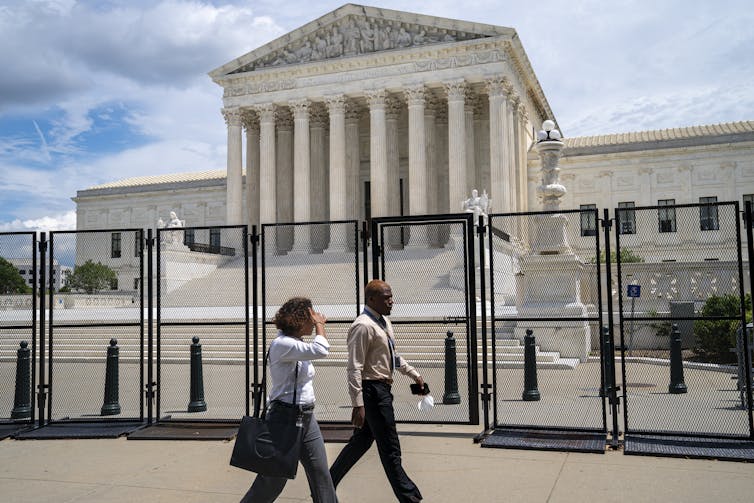
The Supreme Court is set to start its latest term on Oct. 3, 2022.
 Robert Nickelsberg/Getty Images
Following a dramatic year of controversial rulings, the Supreme Court begins hearing new cases on Oct. 3, 2022, with a full agenda.

The court overturned abortion rights and expanded gun rights in June 2022 as the new conservative supermajority began to exert its influence.

Some of the court’s most important upcoming cases focus on the future of affirmative action, equal treatment of LGBTQ people, and the control of election laws. The court will hear the cases in the fall and then likely issue rulings in spring 2023.

As a close observer of the court, I think this term’s rulings will continue to reject the court’s previous liberal decisions and instead reflect a conservative interpretation of the historical meaning of the Constitution. At least three of those upcoming rulings are likely to profoundly influence people’s everyday lives in the United States.

Sunday, October 2, 2022

How Civil Wars start

How America’s Democracy Is “Ripe to Be Exploited

by Eric Umansky for ProPublica

Voters in Sweden this month gave a leading role to a far-right party with neo-Nazi roots. Italy is also on the cusp of putting a party in power that has fascist origins. And of course, in the United States, one party has increasingly embraced election denialism and attempted to undermine the legitimacy of the electoral process.

To try to understand what, exactly, is happening, I talked with Barbara Walter, a political scientist at the University of California San Diego who studies democracies across the world. Her book “How Civil Wars Start” has become a bestseller. Rather than talk about the prospects for political violence, we discussed why many democracies are retrenching and how the U.S. stands alone — and not in a good way.

This conversation has been edited for length and clarity.

Can you walk through the vital signs of democracy that you and other political scientists have been tracking and that are trending the wrong way in the U.S. and elsewhere?

So there are probably five big data sets that measure the quality of democracy and countries around the world. They all measure democracy slightly differently. But every single one of them has shown that democracies around the world are in decline. And not just the fledgling democracies, but sacrosanct liberal democracies in Sweden, the U.K. and the United States.

New normal at your local drugstore

For more cartoons by Jen Sorenson, CLICK HERE


You and your kids should read a banned book this week


Recycling plastics more a problem than a solution

Chemical recycling grows — along with concerns about its environmental impacts

Elizabeth Gribkoff for the Environmental Health News
St. James Parish, located on a stretch of the Mississippi River between Baton Rouge and New Orleans dubbed “Cancer Alley” due to the high concentration of petrochemical plants, is home to the country’s largest producer of polystyrene — the foam commonly found in soft drink and takeout containers.

Now, the owner of that plant wants to build a new facility in the same area that would break down used foam cups and containers into raw materials that can be turned into other kinds of plastic. While there’s limited data on what kinds of emissions this type of facility creates, environmental advocates are concerned that the new plant could represent a new source of carcinogens like dioxin and benzene in the already polluted area.

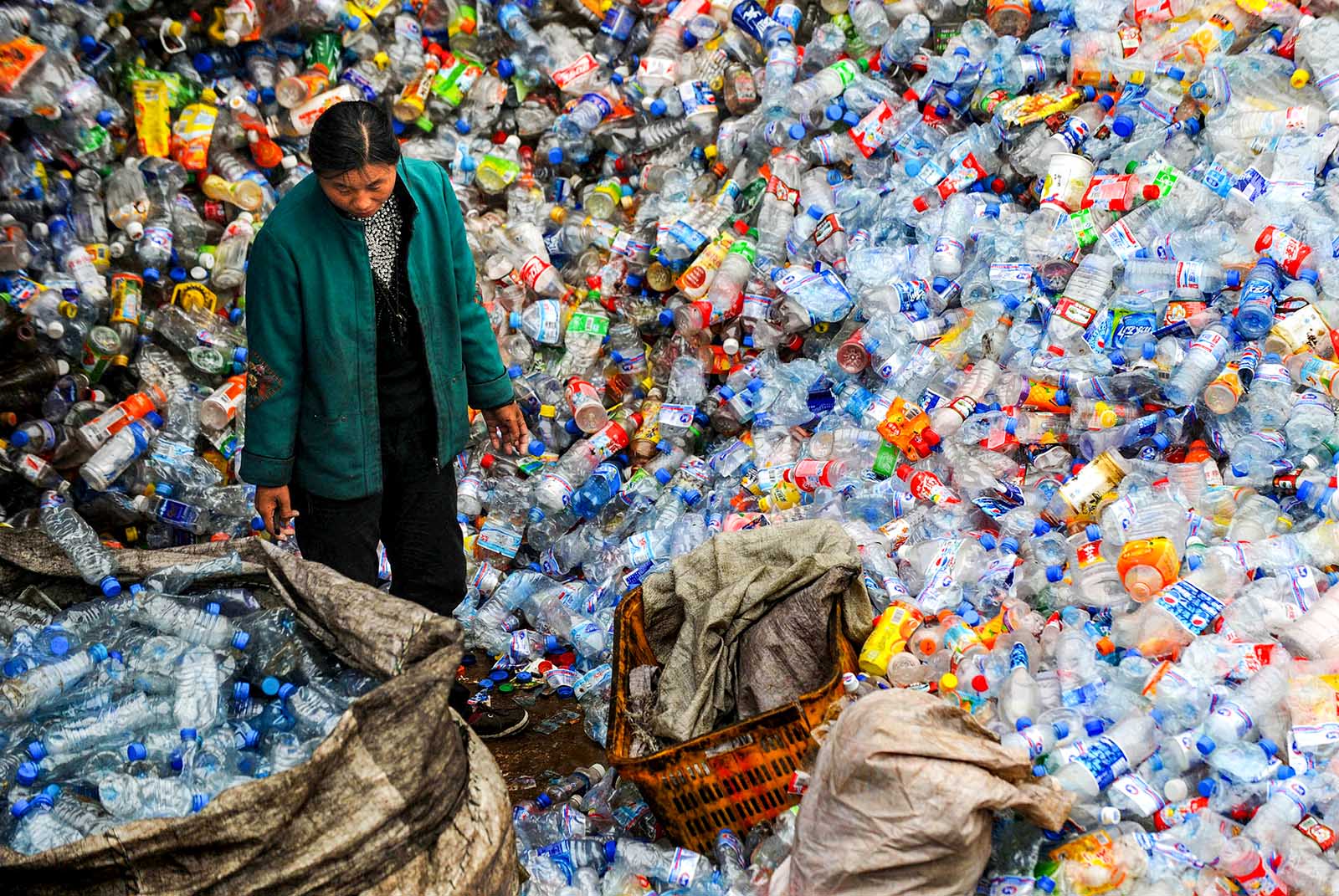
The proposed plant comes as the U.S. federal and state governments and private companies pour billions into “chemical recycling” research, which is touted as a potential solution to anemic plastics recycling rates. Proponents say that, despite mounting restrictions on single-use packaging, plastics aren’t going away anytime soon, and that chemical recycling is needed to keep growing amounts of plastic waste out of landfills and oceans.

But questions abound about whether the plants are economically viable — and how chemical recycling contributes to local air pollution, perpetuating a history of environmental injustices and climate change.

Skeptics argue that chemical recycling is an unproven technology that amounts to little more than the latest PR effort from the plastics industry. The Environmental Protection Agency is deciding whether or not to continue regulating the plants as incinerators, with some lawmakers expressing concerns last month about toxic emissions from these facilities.

“They’re going to be managing toxic chemicals…and they’re going to be putting our communities at risk for either air pollution or something worse,” Jane Patton, a Baton Rouge native and manager of the Center for International Environmental Law’s plastics and petrochemicals campaign, told EHN of the proposed new plant in Louisiana.

The air of St. James Parish, where the new plant will be located, has among the highest pollution levels along the Mississippi River corridor dubbed “Cancer Alley.” A joint investigation in 2019 by ProPublica, The Times-Picayune and The Advocate found that most of the new petrochemical facilities in the parish –including the recycling plant– will be located near the mostly Black 5th District.

With $15 million federal grant, researchers establish new national suicide prevention center

Multi-institution research effort to reduce the national suicide rate.

Brown University

With a $15 million grant from the National Institute of Mental Health, researchers from Brown University, Michigan State University and Henry Ford Health in Detroit are collaborating to reduce the national suicide rate by establishing a multi-institution suicide prevention research center. Suicide is a leading cause of death in the United States, with about one death reported every 11 minutes, according to the U.S. Centers for Disease Control and Prevention.

The researchers say the new center, called the National Center for Health and Justice Integration for Suicide Prevention, is an innovative program that will use contact with justice system entities — such as police, prison and courts — as a novel marker for suicide risk.

The COVID-19 Booster’s Public Relations Problem

How do we convince people to get their shots?

by Robin Fields for ProPublica

With the rollout this month of a new coronavirus booster, U.S. public health leaders once more face the challenge of persuading Americans that they should roll up their sleeves and get another, possibly better, shot targeted at the omicron strain.

This has become tougher with each successive vaccination campaign.

About 68% of the U.S. population has received either two doses of the Pfizer-BioNTech or Moderna vaccines or one dose of Johnson & Johnson, but only one-third has chosen to get a booster. In Canada, much of Europe, Japan and South Korea, people have chosen to get additional doses at far higher rates.

This summer, when COVID-19 vaccines were finally authorized in the U.S. for children under 5, they met with low demand. By mid-August, just under 5% of kids under 5 had received their first shots and only about 1% were fully vaccinated.

When it comes to the newest boosters, so far about 4.4 million peopleabout 1.5% of those eligible — had opted for the shots through Sept. 21, though reporting lags in some states.

This time around, the messaging also needs to overcome the publicly expressed qualms of some notable vaccine experts.

Several have said there’s inadequate proof that the reformulated booster shot will provide better protection than the original or that it’s been rushed out after being tested only on animals, not people. Centers for Disease Control and Prevention Director Rochelle Walensky and other proponents of the new booster have countered that waiting for more evidence would have left the U.S. using a potentially outdated vaccine if, as expected, COVID-19 surges this fall and winter.

Saturday, October 1, 2022

DeSantis and Abbott revive racist stunt

Ron DeSantis and Greg Abbott pull from segregationists’ playbook with their anti-immigration stunts

Greta de JongUniversity of Nevada, Reno

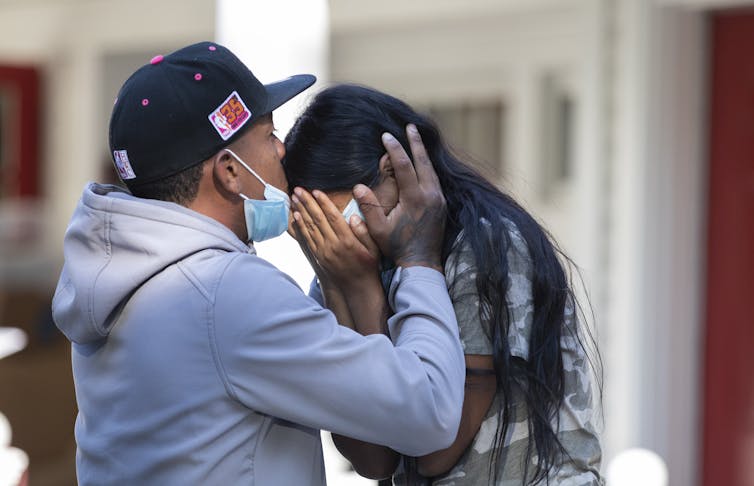
An undocumented immigrant from Venezuela kisses the forehead of
another immigrant on the island of Martha’s Vineyard in Massachusetts. 
Dominic Chavez for The Washington Post via Getty Images
As a historian of racism and white supremacy in the United States, I’ve become accustomed to callous actions like those of Republican governors who organized transportation for Latin American migrants to states run by their political opponents.

Governors Greg Abbott in Texas and Ron DeSantis in Florida are following the playbook of segregationists who provided one-way bus tickets to Northern cities for Black Southerners in the 1960s. 

At that time, the fight for racial equality was attracting national attention and support from many white Americans, inspiring some to join interracial Freedom Rides organized by civil rights groups to challenge segregation on interstate bus lines.

Then, as now, the message Southern racists aimed to send with their “reverse freedom rides” was, “Here, you love them so much, you take care of them.”

But these acts were more than just political stunts designed to embarrass Northern political leaders who sympathized with the civil rights movement. They were part of a broader effort by white supremacists to remove Black Americans from their communities and avoid dealing with the social consequences of centuries of racial discrimination.

Can't have it both ways

By Matt Davies


Bee serious


From Animal Rescue RI in Peacedale....


Meet Medusa

Medusa is a 2-year-old Treeing Walker Coonhound. This sweet, expressive girl loves going on long walks where she can sniff and explore new places. She is a loveable hound who enjoys getting attention from people, playing with her toys, and being with other dogs. She will melt your heart with her playful personality!

Meet Bonnie and Cloudy

Meet two stunning beauties who happen to be bonded sisters! Bonnie is a
6-year-old calico who is super affectionate and will climb in your lap for attention. Her sister Cloudy is a little more reserved but a complete doll! 
These siblings are inseparable and are often snuggled up in one of their pet beds together. They came from a home where they were very much loved, and they are looking for a new home that can offer the same love and attention they desire. Do you have room in your home for these beautiful girls?

If you're interested in adopting Medusa or Bonnie and Cloudy, please click the below link to our online adoption application. 

CLICK HERE TO Start adoption process

Your Liver Will Thank You

8 Myths About Alcohol 

By SCITECHDAILY.COM 

Sometimes ignorance is bliss. But blissful ignorance can bring about unnecessary suffering when it comes to drinking. Time to get your facts straight before you end up on the bathroom floor again.
 

Myth #1 – Eating before drinking keeps you sober

No matter how much you eat — or whether you drink milk or yogurt in an attempt to line your stomach — all of the alcohol you consume will eventually enter your bloodstream, through your mouth (a tiny percentage via the small blood vessels in the mouth and tongue), stomach (around 20%), and small intestine (around 80%).

That said, eating before drinking has its uses. The less that’s in your stomach when you start drinking, the quicker the alcohol will enter your bloodstream, and the quicker you’ll get drunk and find yourself unable to talk coherently or stand up. Having a bite to eat before you down your first drink will delay your embarrassing inebriation and could limit your hangover. Certain foods[1] are better than others (and they don’t include lots of greasy things, which can cause acid reflux and make you feel worse). 

Myth #2 – Beer before liquor, never sicker; liquor before beer, you’re in the clear

The fact is, too much alcohol will make anyone feel sick, and there’s no good evidence that having liquor before beer will make you feel better. That said, some research[2] has been done into this by the universities of Manchester and Lancashire. 

The researchers asked a small group of people — 12 men, nine women — to drink vodka, a mixture of vodka and water, and a mixture of vodka and carbonated water during three separate sessions, and then measured how quickly their bodies absorbed the alcohol. 

They found that alcohol diluted with plain water was absorbed faster than more concentrated shots, but that carbonated water seemed to slow the absorption rate down for the majority of their test subjects. In other words, it should take your body longer to absorb a 12-ounce glass of beer than a shot of liquor.

US and Russia engage in a digital battle for hearts and minds

High stakes propaganda war

Jennifer GrygielSyracuse University

RT, a Russian government-operated media outlet, is
just one of the players in the global information war. 
Sefa Karacan/Anadolu Agency via Getty Images
The battle over Ukraine extends across the world: Information warfare is quickly evolving as key nations seek to influence public opinion and gain political support.

As during the Cold War, Russia and the United States are the two main combatants. Some efforts are clandestine, but plenty of material is broadcast to the public as each country attempts to, in the words of political linguists, “constrain the power and influence of the other … and win ‘hearts and minds’ … around the world.”

Key government-sponsored media outlets in the current battle are Russia Today, often known as RT, and two U.S. government-backed operations, Voice of America and Radio Free Europe/Radio Liberty.

But it can be hard for many people to tell the difference between these outlets and independent news. As a propaganda scholar, I believe citizens of all nations deserve to know how their media have been filtered and when governments are seeking to influence their views.

My colleague Weston Sager and I developed a test for determining whether a particular media outlet is, or is not, a government mouthpiece. We examine key factors such as government control, funding, attribution and its resemblance to news.

At their best, these types of outlets provide official government information – at worst, blatant propaganda. Here’s how the main players in the U.S. and Russia measure up.