
Tuesday, January 3, 2023
Microplastics deposited on the seafloor triple in 20 years
Then we get to eat them
Universitat Autonoma de Barcelona

This is the main conclusion of a
study developed by the Institute of Environmental Science and Technology of the
Universitat Autònoma de Barcelona (ICTA-UAB) and the Department of the Built
Environment of Aalborg University (AAU-BUILD), which provides the first
high-resolution reconstruction of microplastic pollution from sediments
obtained in the northwestern Mediterranean Sea.
Despite
the seafloor being considered the final sink for microplastics floating on the
sea surface, the historical evolution of this pollution source in the sediment
compartment, and particularly the sequestration and burial rate of smaller
microplastics on the ocean floor, is unknown.


Pharma Giants to Hike 350+ US Drug Prices in the New Year
"Why? Because they can. Big Pharma does not care about us."
BRETT WILKINS For Common Dreams
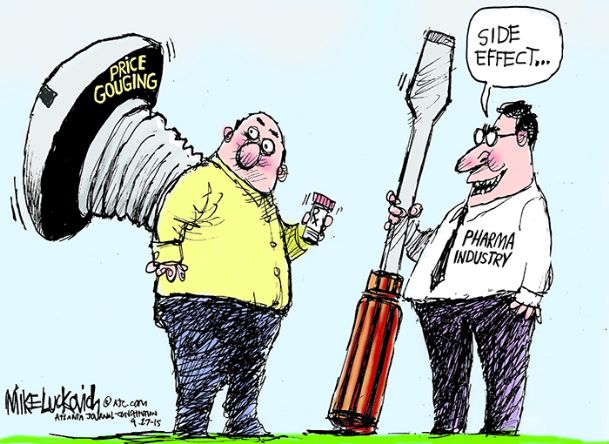
The analysis, conducted by
the healthcare research company 3 Axis Advisors and reported on by Reuters,
said that Big Pharma corporations including Pfizer, AstraZeneca PLC, and Sanofi
SA are set to raise the list prices—which do not include any rebates—on over
350 drugs early in January.
Monday, January 2, 2023
The Far-Right's Romance with Cruelty
For the far right, cruelty is their goal directed against those they hate
:quality(75)/https://static.texastribune.org/media/files/39dbca69623960a76254a89816da736b/04-03-19%20Immigration%20Migrant%20Border%20Photos%20Tribune%20IPA%2019%20TT.jpg)
LEST WE FORGET: After putting immigrant children in cages, it only got worse. (Ivan Pierre Aguirre for The Texas Tribune)
Politics has always been cruel. Political candidates can be
brutal in trying to discredit, or even destroy, their political opponents.
Congressional leaders will at times act harshly when trying to whip party
members into line. And as is true in any profession, there will always be
politicians who mistreat subordinates simply because they are jerks.
But the cruelty of the far right is something different. This is cruelty as the defining characteristic of a movement. To the far right, cruelty is more than a means to achieving a policy goal—it is often the goal itself. Cruelty for cruelty's sake—directed against "the other," a variable collection of liberals, immigrants, and minority groups.
It has become the
substance, even the soul, of today's far right. And it is becoming increasingly difficult to differentiate the far
right from the rest of the political right on this score.
Just look at how much pure cruelty by GOP leaders has been in evidence lately. Ron DeSantis spends public money to transport a handful of undocumented immigrants to politically liberal northern areas of the country. Substantively this accomplishes nothing.

The Unknown Risks of Microplastics in Indoor Air
You may be breathing in 300,000 plastic particles per year
By Matt Simon
The carpet underneath you is probably plastic, as is the coating of a hardwood floor. Curtains, blinds, TVs, coasters, picture frames, cables, cups — all of it’s either wholly plastic or coated in plastic.
Whereas the takeover of packaging was a conspicuous revolution for plastic bags and bottles, the material’s infiltration of every other aspect of our lives has been a quiet coup.
While scientists have been untangling the complex dynamics of microplastics in the atmosphere, others have turned their attention to how the omnipresent plastic products around us are bastardizing our indoor air.
In 2015, researchers sampled the living rooms of two apartments near Paris, each home to two adults and a child, as well as a university office where three people worked. They only sampled air when people were present in the rooms, both at a height of about 4 feet to gather what the subjects are breathing, and a half inch off the ground to determine the deposition rate of dust. The researchers also took samples from vacuum cleaner bags the occupants had used in the two apartments.
Another good reason to get your flu shot
Scientists Uncover a Surprising New Benefit of Flu Vaccination
By UNIVERSITY OF CALGARY
.webp)
The vaccine is typically administered in the form of a shot or nasal spray and is recommended for people of all ages, especially those who are at higher risk of complications from the flu, such as young children, older adults, and individuals with certain underlying medical conditions.
Getting the
flu vaccine can reduce the risk of getting sick with the flu, lessen the severity
of symptoms if you do get sick, and prevent the spread of the virus to others.
A
recent University of Calgary study indicates that the annual flu vaccine lowers
the risk of stroke.
Sunday, January 1, 2023
There Is a Great Replacement Going On
But It's Not What You've Been Told
MIKE LOFGREN for forCommon Dreams

The notion had its beginnings decades ago in the mental swamps of Southern segregationist politicians and continued in various iterations through white supremicist groups.
Trump's
election and the phrase's popularization by professional jackasses like Tucker
Carlson made it into another of the Republican base's innumerable slogans.
The idea is bunk, and is easily understood as one more of the many myths designed to play into right wingers' persecution complex. But it is possible also to understand it as a kind of folk psychological projection of something that is indeed happening in the strongly Republican regions of the country inhabited by what Sarah Palin called "real Americans."
It's
not so much the Great Replacement as the Great Die-off. And Republicans are
both its chief promoters and its main victims.

Surprise! Most "compostable plastic isn't
60% of Home “Compostable” Plastic Doesn’t Fully Decompose, Contaminating Our Soil
By FRONTIERS
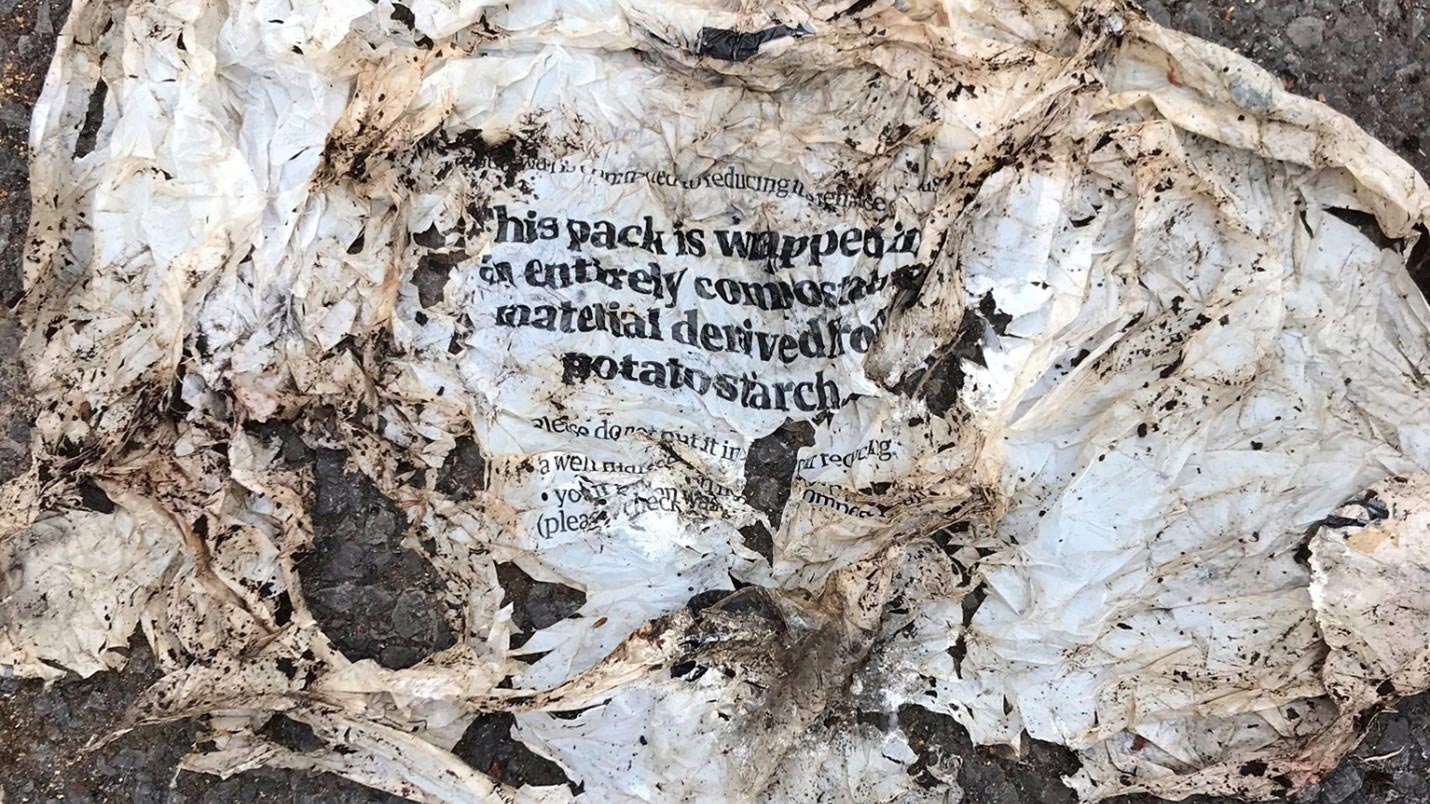 |
| Compostable plastic that has not fully disintegrated in compost bin. Credit: Citizen scientist image from www.bigcompostexperiment.org.uk |
In a UK-wide study, researchers found that 60% of home-compostable plastics do not fully disintegrate in home compost bins, and inevitably end up in our soil. The study also found that citizens are confused about the labels of compostable and biodegradable plastics, leading to incorrect plastic waste disposal. These results highlight the need to revise and redesign this supposedly sustainable plastic waste management system.
Global
plastic pollution remains one of the biggest environmental challenges of our
time. A new OECD report shows that plastic consumption has
quadrupled over the past 30 years. Globally, only 9% of plastic waste is
recycled, while 50% ends up in landfills, 22% evades waste management systems,
and 19% is incinerated.
In
response to this pollution crisis, several countries have set targets to
eliminate all single-use plastics and to make plastic packaging 100%
recyclable, reusable, or compostable by 2025.
Compostable
plastics are becoming more common as the demand for sustainable products grows.
The main applications of compostable plastics include food packaging, bags;
cups and plates, cutlery, and bio-waste bags. But there are some fundamental
problems with these types of plastics. They are largely unregulated and claims
around their environmental benefits are often exaggerated.
Now, in a new study published in Frontiers in Sustainability, researchers at University College London found that consumers are often confused about the meaning of the labels of compostable plastics, and that a large portion of compostable plastics do not fully disintegrate under home composting conditions.

Life as a battlefield
In some U.S. zip codes, young men face more risk of firearm death than those deployed in recent wars
Brown University

Yet the risk is far from even — young men in some U.S. zip codes face disproportionately higher risks of firearm-related injuries and deaths.
To better understand the magnitude of the gun violence crisis
and put it in perspective, researchers at Brown University and the University
of Pennsylvania compared the risk of firearm-related death for young adult men
living in the most violent areas in four major U.S. cities with the risks of
combat death and injury faced by U.S. military personnel who served in
Afghanistan and Iraq during active periods of war.
The results were mixed: The study,
published in JAMA Network Open, found that young men from zip codes with the
most firearm violence in Chicago and Philadelphia faced a notably higher risk
of firearm-related death than U.S. military personnel deployed to wartime
service in Afghanistan and Iraq. But the opposite was true in two other cities:
The most violent areas in New York and Los Angeles were associated with much
less risk for young men than those in the two wars.
In all zip codes studied, risks were overwhelmingly borne by
young men from minority racial and ethnic groups, the study found.
Subscribe to:
Posts (Atom)