Menu Bar

Home           Calendar           Topics          Just Charlestown          About Us
Showing posts with label Census. Show all posts

Friday, October 10, 2025

Trump-GOP Hiding Federal Data So Nobody Will Know the Depth of the Destruction They Are Sowing

"Disappearing data"

Julia Conley for Common Dreams

In recent weeks, efforts by the Trump administration to conceal statistics and data from the public have made headlines—from the US Department of Justice’s decision to delete a 2024 study that showed right-wing extremists are behind the vast majority of ideologically driven killings in the US, contrary to the White House’s repeated claims about violence from the left, to Donald Trump’s firing of a top economist after an unfavorable jobs report that he said was released to hurt him politically.

In a new report, the Center on Budget and Policy Priorities (CBPP) detailed how Trump’s overt politicization of data has combined with funding cuts to make it harder for experts—and the public that’s impacted by the Trump administration’s agenda—to see how those very policies are impacting households across the country.

“Without sufficient funding and freedom from political interference, the federal statistical system as we know it—and our ability to make economic and policy decisions based in reality—are in jeopardy,” said CBPP senior research analyst Victoria Hunter Gibney and vice president for housing and income security Cara Brumfield.

The report warns of “disappearing federal data”—both information that has been surreptitiously yanked from public view and data that the administration has announced will no longer be available, like the US Department of Agriculture annual Household Food Security reports.

As Common Dreams reported last week, the agency called the survey “redundant, costly, politicized, and extraneous” and claimed they have “failed to present anything more than subjective, liberal fodder,” as it said it would stop publishing the data—the federal government’s main source of information on hunger.

The decision followed the Republican Party’s passage of the One Big Beautiful Bill Act (OBBBA), which includes the biggest-ever cuts to the Supplemental Nutrition Assistance Program (SNAP) at a time when more than 47 million Americans—including 1 in 5 children—are facing food insecurity.

In addition to preemptively rejecting research that would have shown the impact of the GOP’s SNAP cuts, the administration has shown no interest in tracking weather disasters via its Billion Dollar Weather and Climate Disasters database, which was discontinued in May; the effects of crime on LGBTQ+ Americans via National Crime Victimization Survey; and even the existence of LGBTQ+ communities via the National Health Interview Survey.

The administration has also stopped the federal government from collecting data by overseeing mass layoffs across the public servant workforce, with the Department of Health and Human Services placing researchers with the Pregnancy Risk Assessment Monitoring System on administrative leave in April—ending the government’s accounting of maternal mortality numbers. HHS also laid off the analysts who worked on federal poverty guidelines that are used to calculate eligibility for parts of Medicaid as well as nutrition and home energy assistance.

In a multitude of ways, the CBPP said, the administration is “suppressing data that would reveal the harmful effects of the Republican megabill’s deep cuts and leaving families’ struggles harder to track.”

Tuesday, September 9, 2025

Trump Is Attacking Our Ability to Find Out What Is Going On in Our Country

If Trump is going to kill off data-collection or worse, cook the books, how can we make good decisions?

Erika Frankel, Institute on Taxation and Economic Policy

Alarms are sounding across the political and ideological spectrums about America’s collapsing federal data structure. But what is the big deal? Why does access to data, specifically from the federal government, matter so much?

At the heart of all work in this space are three questions:

  1. What happened before?
  2. What is happening now?
  3. What might happen?

A society cannot make good decisions without knowing how prior decisions turned out, assessing the current situation, and developing reasonable predictions about possibilities under consideration.

Federal statistical work is how we find out what is going on with the 300 million people and 11 million businesses across the complex network of federal, state, and local systems that make up the world’s largest economy. Issues at that scale are too big for intuition or “common sense.” We need comprehensive information produced by rigorous, capable people who are not afraid to tell us the truth. We should be deeply and profoundly alarmed by the offer of anything less.

Each researcher approaches their work from a different direction with a different area of focus, which results in a wide range of conclusions on a variety of topics. But the common ground is the data.

Reliable, comprehensive, nonpartisan federal datasets like the American Community Survey from the Census Bureau, historical data tables from Internal Revenue Service Statistics of Income, economic reports from the Bureau of Labor Statistics, scoring from the Joint Committee on Taxation, estimates from the Congressional Budget Office, and other quality federal data products provide a stable point of reference to which most agree to calibrate their work, even though there may be different policy perspectives. We know we are all standing on the same ground, and that the ground is reasonably solid.

Until now, these data have been produced by teams of dedicated experts who understand that their job is to collect and report the numbers as accurately as possible. Sometimes the best available methods are imperfect. Sometimes estimates need adjustment based on the latest information. Sometimes the team responsible for a particular report does not have the ideal amount of funding or enough staff. But the reports have always been created in good faith by extremely competent people. The current threats to that are inexcusable.

Erosion of the ability to accurately describe our reality hobbles every aspect of our collective decision-making. The current program of erosion is steady, deliberate, and already well underway.

Thursday, May 15, 2025

A new angle on an old CCA lie

Platner pans progress

By Will Collette

Charlestown Planning Commissar Ruth Platner, leader of the Charlestown Citizens Alliance (CCA), has put out a new version of an old CCA lie, claiming that Charlestown is being treated unfairly because the state will not allow the town to ignore the law.

In Platner’s latest screed against the state for wanting Charlestown allow more homes to be built for average families, she headlines the issue this way: New State Plan, Housing 2030, Mandates Rural Towns Grow At A Faster Rate Than Urban Areas.

She's referring to Housing 2030, Gov. Dan McKee’s attempt to appear proactive about Rhode Island’s affordable housing crisis. His plan has been mainly seen as too little, too late but to Platner, it seems like an existential threat. Why? Because it singles out rural towns, particularly Charlestown, as most in need of new housing, more so than the cities.

Duh. Of course rural towns need to do more because over the past 25+ years, they’ve done less.

In her new CCA blog article, Platner continues to try to manipulate data to make her case that Charlestown is being treated unfairly. This is far from the first time that Platner has followed the adage the “if you torture statistics enough, you can make them say anything.”

In March 2024, she attempted a particularly obnoxious approach using census data to “prove” her thesis that “Charlestown has grown 11 times faster than the state.” Her point was that the state wanted Charlestown to grow even faster and really, enough is enough.

Except Platner cooked the census numbers. Using 50 years of data, she arrived at the 11 times number. But all of Charlestown’s growth was pre-2000. In this century, Charlestown’s growth has flatlined as Platner admitted in the Charlestown Comprehensive Plan:

"The Town of Charlestown experienced rapid population growth in the last decade of the 20th century, moving from 6,478 residents in 1990 to 7,859 in 2000, a change of 1,381 residents or 21.3%. 

Since 2000, however, population growth has declined or been flat, as is shown in the above table (See Plan, page 10-2, Table HC-1) showing an estimated town population of 7,772 in 2015 (a decline of 87 residents or 1.1%). Population projections provided by the RI Office of Statewide Planning show a return to a growth trend, with a population of 9,329 by 2040. 

This represents a 20% increase between 2015 and 2040. However, this level of growth is not likely to be realized given recent trends, the ageing [SIC] of the local populace and expected modest declines in average household size. While the actual numbers are likely to be considerably less, these projections will be utilized in this chapter for estimating housing growth, and the need for low and moderate-income units relating to the state’s 10% threshold…”. 

Since 2000 and certainly since Platner rose to become Planning Commissar, the most powerful politician in Charlestown, the town has devolved into a gated senior citizens’ enclave as Platner and the CCA blocked new housing for working families.

Here's a Charlestown house that just sold to a Connecticut couple.
It was assessed at $1,060,000 and sold for $1,300,000.
(Charlestown Tax Assessor)
Here’s what Platner herself wrote about Charlestown housing under her dominion:

“From 2010 to 2023, 357 new homes were built in Charlestown. However, those 357 new dwellings barely register in the census data as many are consumed for non-resident use. An additional 54 new house lots were approved in 2023 and have not been built yet; the majority are likely to be second homes."

She made an even blunter assessment in a CCA blog article:

“The supply of affluent people willing to pay high prices for homes and short or long-term rentals will consume any increase in housing production.”
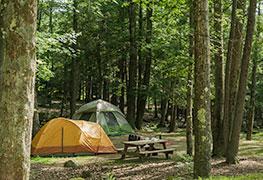
Currently, the best many low and moderate income
buyers can hope for in Charlestown is a campsite
at Burlingame Park (DEM photo)
Even though Charlestown’s overall population may not increase by much, Platner admits town demographics are changing. This is what she wrote in the Comprehensive Plan:

While median age will trend upward and the segment of the population over age 60 will continue to grow, other general population characteristics should remain steady or change in modest form. 

“This trend may suggest a greater need for housing designed for and more suited to elderly occupancy and needs, including elderly rental, single-story accessible designs, smaller unit footprints and limits on bedrooms. Location wise [SIC] such housing should consider issues of service availability, ease of access and walkability. Entry level family housing, both homeownership and rental, will remain a need over the timeframe of this plan."

Those 8,000 of us who make Charlestown our home understand the status quo that Ruth Platner created and desperately seeks to maintain. 

Contrary to Platner's claims, Charlestown experienced massive population growth each and every year. 

EcoRI photo by Frank Carini
During June, July and August, our population jets up to 30,000. We pay for an infrastructure year-round to serve those 30,000. We put up with their trash, bad driving and the inflationary effects their property purchases place on Charlestown real estate.

This morning's Providence Journal carried a deep dig analysis - spread over several articles - of housing sales statewide over the past five years. The first piece is entitled "Out-of-state buyers are purchasing more RI homes. Is that a good thing or bad thing?"

The ProJo confirms that we're not imagining the influx of out of state buyers. They also bluntly note that they buy here because we're cheaper than where they live, plus they can and do out-bid local residents.

They provide more detail in a second piece, "RIers can't compete with out-of-state home buyers. Why building more is the only way out." Their data analysis and conclusions directly contradict the CCA's and Ruth Platner's stance on housing. 

There are two more articles that focus primarily on high-end property, of the type that have been selling for enormous prices in Charlestown and the demographics of the new buyers. These articles are entitled Where are out-of-state home buyers coming from, and what brings them to Rhode Island? and Out-of-state buyers snap up nearly half of RI homes over $1 million. Where they're going. 

Finally they rank Charlestown 4th among RI municipalities for non-resident buyers behind only Block Island, Little Compton and Newport

Another recent sale of a Charlestown property to a Connecticut couple.
This house was assessed at $2,415,400 and was bought at $2,850,000
These five reports back up findings that non-resident buyers are driving up housing prices and forcing potential first-time and low-income buyers out of the market. Legally, they can't be stopped. The Commerce Clause of the Constitution prohibits state and local interference with interstate commerce. And we can't outbid them.

The ProJo's main conclusion is: RIers can't compete with out-of-state home buyers. Why building more is the only way out. This is the point where Ruth Platner's head explodes. The ProJo collection of articles and research eviscerates the arguments she and the CCA have promoted since the millennium. I look forward to her counterpoint to the Providence Journal.

Platner thinks the solution to Charlestown’s problems is to accept the swarms of absentee property owners and summer people while restricting housing for everyone else, young or old. And she’ll continue to search for ways to rationalize that approach.

If you’ve followed Progressive Charlestown’s coverage of the many times Platner and the CCA have made different and contradictory claims, you’ll notice a pattern. When Platner produces an official document that will be fact-checked prior to state or federal approval, or is subject to perjury, she keeps the bullshit to a minimum.

But when she writes (or ghost-writes) campaign material or propaganda for the CCA blog, anything goes.

For me as a political writer, it’s a lot easier to debate a politician’s claims by using their own words. When Ruth the politician makes a claim, often about housing or open space, it’s a simple matter of finding what Ruth wrote when she faced the pain and penalty of perjury because it's usually the opposite.

Two-faced politicians are a plague on our civil society. Charlestown voters made it clear in 2022 and 2024 that they are sick of lies and deception.

Tuesday, January 30, 2024

How real is McKee's promise to raise Rhode Islanders' incomes by $20,000

McKee set a bold goal to raise per capita income but didn't give details

By Nancy Lavin, Rhode Island Current

Photo by Steve Ahlquist
It’s hard to think of anyone in Rhode Island who wouldn’t welcome a $20,000 raise.

Which is exactly why Gov. Dan McKee’s bold goal to increase the average, per-person income by at least $20,000 by the end of the decade grabbed the attention of news outlets, lawmakers and policy analysts. 

Rhode Island’s per-capita income ranks second-lowest among New England states, besting only Maine and just below Vermont, according to quarterly estimates from the U.S. Bureau of Economic Analysis. A $20,000 increase would put Rhode Island nearly on-par with Massachusetts and Connecticut.

But since unveiling his headline-making declaration in the annual State of the State on Jan. 16, McKee’s office has offered zero explanation about what his vision entails, or how it will be achieved.

Instead, the administration promised a plan by early May. The absence of even basic details like whether the increase will account for inflation — or what the earnings estimate being used as a baseline is  — has left some policy analysts skeptical that McKee’s lofty vision will make a difference in residents’ wallets and savings accounts.

Monday, July 3, 2023

3 myths about immigration in America

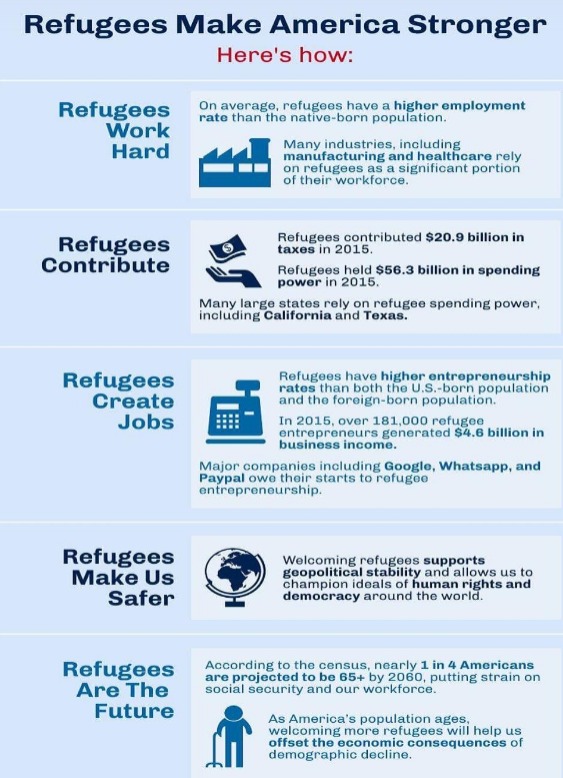
From its founding to today, immigrants have built America

April Nisan IlkmenAdler University

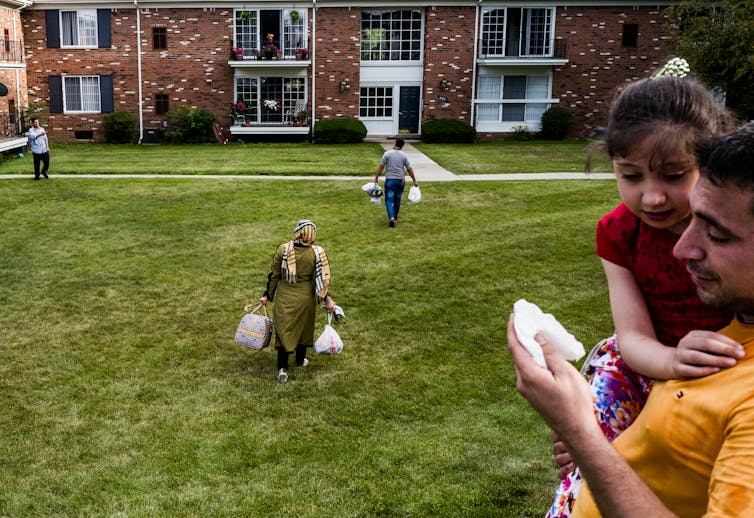
A family of Syrian refugees arrive at their new home in
Bloomfield, Mich., in 2015. Andrew Renneisen/Getty Images
The U.S. is – and long has been – a pluralistic society that contains large immigrant communities.

Yet migration is an actively debated but poorly understood topic, and much of the conventional thinking and political rhetoric about migration are based on myths, rather than facts.

For these reasons, migration policies and strategies for easing acculturation – which refers to the psychological process of assimilating to a new culture – usually end up being ineffective.

I often work with immigrant populations in my job as a family therapist and as an acculturation scholar.

Here are a few of the most common misconceptions I come across in my work.

Wednesday, May 17, 2023

What the new Kids Count annual report says about Charlestown

Under the CCA, kids DIDN'T count

By Will Collette

Kids Count Rhode Island is a non-profit organization largely known for its exhaustive collection of statistics on the status of children in the state. Their new report for 2023 just came out and contains a mind-numbing 200 pages of data.

Charlestown and, in some cases, Chariho school district appear in every table allowing you to measure local conditions against those in other municipalities. I was especially interested in the ways Charlestown differs from its neighbors (Westerly, South Kingstown, Richmond and Hopkinton).

My compliments to Kids Count for compiling data on virtually every subject important to the raising of kids in such detail. It is now up to citizens and public officials to examine that data, draw conclusions and take action.

The data in the report extends from 2010 in some cases to 2022 at the latest. For Charlestown, that exactly coincides with the length of time our town was ruled by the Charlestown Citizens Alliance (CCA) who made it a core priority to block housing for families with children and to reducing the number of children in Charlestown.

CCA leader and town planning commissar Ruth Platner even went so far as to concoct a mathematical formula to prove her contention that children are parasites who drive up taxes while contributing nothing to the community's well-being. Her calculations are no longer featured on the CCA website, but if you look deep, you can find it HERE

Spoiler: her formula is Impact=(T*A-(S*C+M))* H. You’ll have to go to her piece to find out what the components mean. 

Well, the very first table in the Kids Count report shows just how successful Ruth was in curbing the plague of children. Table 1, page 9 shows that Charlestown had 1,506 children in the 2010 Census but only 1,161 in the 2020 Census, a drop of 22.9%. 

Among the 39 Rhode Island cities and towns, only Narragansett had a greater slump in the number of kids at 27.2%. 

The Platner-CCA anti-child policy is also reflected in the low number of births. In 2022, only 51 babies were born. Only six other towns had a lower number of births (Table 2, p.11). 

Most of Charlestown’s children are white (82.4%), followed by Latinx kids (3.8%) and Native Americans (2.5%). Table 6, p. 19. 

Most of these kids (70%) live in two-parent households and another 20% live in single-parent households. The remaining 10% mostly live with grandparents or other relatives. Table 3, p. 13. 

You may be wondering how a municipality goes about excluding families with kids. The answer is to choke off housing through exclusionary zoning practices, and that’s exactly what Platner-CCA did. New affordable housing for families is almost non-existent in Charlestown. 

This is illustrated in the Kids Count data. 

For Charlestown families with incomes defined as “very low,” that means an annual income of $43,550, compared to the $85,571 median income for all families with children. For low-income families, the cost of home ownership in Charlestown consumes 80% of their annual income (Table 8, p. 29). There is no data on rentals since year-round rentals scarcely exist. 

I was surprised at the poverty and income data for Charlestown. 

Even though Charlestown's $85,571 median income for families with children is more than double that of Central Falls, the poorest community in Rhode Island ($36,196), it’s considerably less than our neighbors. Westerly’s median family income is $100,955. Richmond is $116,410. South Kingstown is $117,356. Hopkinton is $123,214. Table 7, p. 27. 

Our childhood poverty rate is higher than our neighbors with 12.9% of Charlestown’s children living below the poverty line ($23,030). Compare that to 8% in Hopkinton, 9.1% in South Kingstown and 11.2% in Westerly. No data for Richmond. Table 11, p. 41. 

Kids Count devoted many pages to data on kids and crime and justice and education. 

I was surprised at Table 31, p. 109 that gave the rate per 1,000 for children subjected to abuse and neglect. Charlestown’s rate is 14.6. Only five communities had higher rates: Pawtucket (14.8), Westerly (15.2), Central Falls (17.8), West Warwick (19.2) and Woonsocket with 28.5. 

I wonder if Charlestown has a lot of unreported cases, given the minimal presence of DCYF in town. 

Charlestown’s great wealth gives it an obvious edge over most Rhode Island cities and towns. Thus, whenever I see sub-par statistics such as childhood poverty, child neglect and abuse and the lack of affordable housing, I get angry that we either leave people out or or keep them from ever getting in. 

In 200 pages and 55 data charts, Kids Count seems to be at great pains not to draw conclusions but I’m not. I do not feel Charlestown should tolerate our rates of childhood poverty, lack of affordable housing and rate of child abuse and neglect. 

I hope our town will study the data and figure out ways to do better for the sake of our future.

Sunday, February 19, 2023

Myth Busted: Falling Birth Rate Not Due to Less Desire To Have Children

The anxieties young people have about the future may be causing them to delay starting a family.

Ohio State University

Eaten by wild puppies?
In recent years, many countries have reported a decline in the birth rate, with some reaching record-low levels. This trend is evident across various regions and demographic groups, and has significant implications for the future of populations and economies.

Despite the worry of some regarding the decline in birth rate in America, a recent study indicates that there is no need to persuade young people to have more children. In reality, the number of children that young Americans intend to have has remained unchanged for several decades.

According to the study, the average number of children desired by women born between 1995 and 1999 was 2.1 when they were aged 20 to 24 years old. This is nearly equivalent to the 2.2 children desired by women born between 1965 and 1969 in the same age range.

Still, the total fertility rate in the United States was 1.71 in 2019, the lowest level since the 1970s.

What’s going on?

Thursday, November 3, 2022

What to do if your vote is challenged on Election Day

If you vote in person, BE PREPARED to defend your right to vote

Karen Figueroa-ClewettUSC Dornsife College of Letters, Arts and Sciences

You need to be prepared so you can vote on Election
Day. AP Photo/Charles Krupa
With the general election drawing close, it’s important to know your rights in case your vote is challenged.

The best way to ensure that your vote is counted is to advocate for yourself. 

I’m a civil rights attorney and lecturer for the University of Southern California’s undergraduate civil rights advocacy initiative, Agents of Change. Here are several straightforward ways to ensure your vote is counted and two practical remedies for you to consider if your vote remains challenged.

A major part of ensuring that you are able to vote is doing the necessary preparation before you even get to the polling place.

Are you registered to vote? Check it out

Before you vote, you need to ensure that you’re registered to vote. You can verify your registration status using this tool. If you live in Rhode Island, CLICK HERE.

If you can’t use an online tool, then call your local election office or a voter help line like the ones listed in the hotline section below.

If you find you’re not registered, you can use this tool from the National Conference of State Legislatures to find your state’s online registration application. If you need to do this in person, then call your local election office for instructions.

At this point, you may have missed your state’s deadline for voter registration. But it may not be too late to register.

Many states allow same-day registration at the polling site. You can find your state’s same-day voter laws detailed here. Ask the poll worker, at the correct polling location, for a same-day registration form; complete the form, and then ask for a “conditional ballot.” A conditional ballot allows election officials to count your vote after verifying your voter eligibility. If you can’t research online, you can call your local election office to find out if you can register on Election Day.

Gather documents to verify your identity

Voter ID laws generally cover in-person voting, not absentee ballots or mailed ballots.

If you live in a state that requires identity verification to vote in person, gather the required documents – which may range from driver’s licenses to bank statements with identifying information – before traveling to the correct polling place. You can find your county election office’s contact information here. This webpage includes a table listing each state’s acceptable ID documents and possible exceptions for some folks. You may also call your local election office to find out what’s required.

Find the correct polling location

Charlestown's voting districts have changed due to the 2020 Census. You should have received a card from the town's Board of Canvassers telling you where you should go.

You can ensure that you’re headed to the right polling place with this tool. Or call your county election office to find your polling place and its hours of operation; you can look up your county’s election office contact information here.

Once you know your polling place and its hours, you can go there and check in. In most cases, you’ll be handed a ballot, shown where to vote and asked to put your ballot in a machine or a box, and then you can go merrily along your way.

But the moment of check-in is where things might go wrong.

Problems at your polling place

Here are potential vote challenges and ways to overcome them.

Possibility #1: Out-of-order polling machines.

If you’re asked to leave because of malfunctioning machines, don’t. Instead, ask for a paper ballot.

Possibility #2: You’re in line and officials announce the polls have closed.

If you’re in line at the polling location before it closes, don’t let them turn you away at closing time if you haven’t voted. You have the legal right to vote under those circumstances, so stay in line and wait to cast your ballot.

Possibility #3: You’re not on the registered voters list.

If you’re told you can’t vote because your name is not on the voter roster, ask the poll site worker to check again and to check what’s called the list of supplemental voters. If they still can’t find your name, ask the poll worker to verify that you’re at the right location.

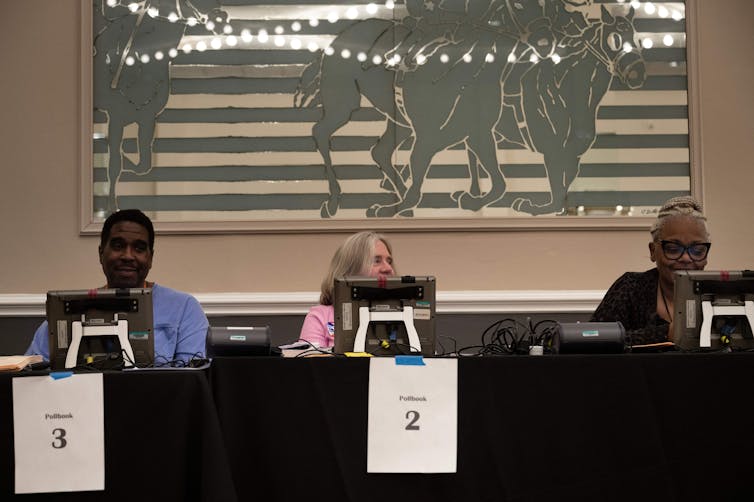
Three people sitting at computer screens at a table with a black tablecloth on it
Poll workers want you to vote. But sometimes there
are problems.
 
Brendan Smialowski/AFP via Getty Images

Possibility #4: Someone claims you shouldn’t be allowed to vote.

If your voting eligibility remains challenged after ensuring you’re at the right polling location, ask to cast a provisional ballot, which is available in every state except Idaho and Minnesota. You can find details about your particular state’s provisional ballot rules here.

Track your provisional ballot here.

Call a hotline

If you are not given a provisional ballot, call an election hotline for help. Here are four hotlines, run by members of the nonpartisan Election Protection coalition, that can help you:

English: 866-OUR-VOTE/866-687-8683, The Lawyers’ Committee for Civil Rights Under Law

Spanish: 888-VE-Y-VOTA/888-839-8682, The National Association of Latino Elected and Appointed Officials Education Fund

Asian Languages: 888-API-VOTE/888-274-8683, Asian and Pacific Islander American Vote

Arabic: 844-YALLA-US/844-925-5287, Arab American Institute

Report voter intimidation

If someone tries to scare you into voting or not voting for a candidate, stand your ground and demand a ballot from the poll site, call a hotline above to report the intimidation, and file a claim with the FBI later by phone at 800-CALL-FBI - 800-225-5324 - or online at tips.fbi.gov.

File a lawsuit

If you are still blocked from voting, consider legal action – but get advice on your exact situation from one of the hotlines, which have free lawyers on hand. It’s a good idea to write down the names of people who prevented you from voting and to ask people who witnessed the incident for their contact information.The Conversation

Karen Figueroa-Clewett, Lecturer, Agents of Change program, Department of Political Science and International Relations, USC Dornsife College of Letters, Arts and Sciences

This article is republished from The Conversation under a Creative Commons license. Read the original article.

Thursday, August 11, 2022

White nationalism is on the rise and attracting violent young white men

It's fueled by virtually unrestricted social media access

Sophie Bjork-JamesVanderbilt University

White nationalist Dylann Roof appears in court on June 19, 2015, after
his arrest in the mass shootings at a Black church in South Carolina.
 
Grace Beahm-Pool/Getty Images)
White nationalists keep showing up in the hearings of the U.S. House committee investigating the Jan. 6, 2021, insurrection.

Evidence is mounting that white nationalist groups who want to establish an all-white state played a significant role in the violent attack on the U.S. Capitol that left five dead and dozens wounded.

Thus far, the hearings “have documented how the Proud Boys helped lead the insurrectionist mob into the U.S. Capitol building in Washington, D.C,” journalist James Risen wrote in the Intercept.

Based on July 12, 2022, testimony from a former Oath Keepers member, the white nationalist group coordinated with the Three Percenters, another group of white nationalists, and the Proud Boys in mobilizing their extremists groups to rally in Washington, D.C., on Jan. 6, as asked by Donald Trump in his Dec. 16, 2020, tweet.

As a cultural anthropologist who has studied these movements for over a decade, I know that membership in these organizations is not limited to the attempted violent overthrow of the government and poses an ongoing threat as seen in massacres carried out by young men radicalized by this movement.

In 2020, for instance, the Department of Homeland Security described domestic violent extremists as “presenting the most persistent and lethal threat” to the people of the United States and the nation’s government.

In March 2021, FBI Director Christopher Wray testified to Congress that the number of arrests of white supremacists and other racially motivated extremists has almost tripled since he took office in 2017.

“Jan. 6 was not an isolated event,” Wray testified before the Senate Judiciary Committee. “The problem of domestic terrorism has been metastasizing across the country for a long time now, and it’s not going away anytime soon.”

The Southern Poverty Law Center, a nonprofit civil rights group, tracked 733 active hate groups across the United States in 2021.

Based on my research, the internet and social media have made the problem of white supremacist hate far worse and more visible; it’s both more accessible and, ultimately, more violent, as seen on Jan. 6 at the U.S. Capitol and the shooting deaths of ten Black people at a Buffalo grocery story, among other examples.

Wednesday, April 13, 2022

Major changes made to Charlestown's electoral map

You might find you now live in a different precinct

By Will Collette

After every US Census, electoral maps change to reflect changes in population. All of Rhode Island's maps have changed ranging from Congressional districts down to municipal precincts to make each political geographical entity roughly equal in population.

Charlestown continues to have four precincts. To the left is the old map done after the 2010 Census. The most conservative of these precincts is Precinct 0503 (yellow), the stronghold of the Charlestown Citizens Alliance. 

The two North of One precincts, 0501 (red) and 0502 (green) tend to vote more progressively, favoring Democrats.

The newly adopted electoral map for Charlestown (right) reflects the changes in population. 

The 2nd Precinct (green) appears largely unchanged. 

The 1st Precinct (red) took some land and people from the 4th Precinct (blue) and gave up a lot of land and people to the 3rd precinct (yellow).

What this means to you is that you might find yourself in a new precinct. That will probably require you to go to a different polling place to vote.

Charlestown does not have single-member districts where there is a town council member specifically elected from your precinct.

De facto, the CCA's senior Council member Bonnie Van Slyke represents her neighborhood of Arnolda first, the CCA's interests second following distantly by the needs of everyone else.

CCA Councilor Denise Rhodes represented her neighborhood in Precinct 1, near the old Copar Quarry first above all else. Rhodes dropped off the Council.

In my opinion, Charlestown should consider a Charter change to move to single-member districts, with a fifth at-large (i.e. town wide) Council seat. This would end the charade played by the CCA that they represent everyone when they have historically favored residents South of One, especially wealthy summer people.

Expect to receive a new voter card from the town Board of Canvassers which will tell you what precinct you are in so that you can figure out where to vote.

Sunday, November 7, 2021

CCA bends truth on how fast Charlestown is growing

Charlestown needs more affordable housing

And fewer over-priced town land purchases

By John Hacunda, Charlestown

CCA's Ruth Platner
Mr. Hacunda's article also ran as a letter to the editor to the Westerly Sun

In a recent letter to the editor (“Charlestown one of R.I.’s fastest- growing towns,” Nov. 1), Planning Commission member Ruth Platner contends that Charlestown is one of the fastest-growing Rhode Island communities, but according to the U.S. Census this is not true. U.S. Census data shows that Charlestown had a population of 7,859 in 2000 and in 2020, the population was 7,997, essentially no growth in 20 years. 

According to town information, Charlestown’s total area is 59.3 square miles with 22.5 square miles (37.9%) being water. Tax assessor data indicates that 59.7% of Charlestown’s land area is either tax “exempt” or undeveloped. 

So approximately 75% of Charlestown total area is open space (45 of Charlestown’s 60 square miles). 

What should be of concern to residents is that taxpayer money is being used to buy open space (not needed) at inflated prices. A recent open-space purchase (66.5-acre Tucker Woods) was orchestrated by Platner. The land was assessed at only $333,600, but $900,000 of taxpayer money was used for the purchase. 

The CCA has controlled Charlestown government for over 10 years and has done little to address affordable housing. While 48 affordable units were added, only eight units address the needs of younger families. In 2005 Charlestown had 28.17% of the enrollment in Chariho, while in 2022 it declined to 24.61%. 

Rhode Island law mandates that each community needs 10% affordable housing, which leaves Charlestown 239 units short. We have working-class people, URI graduates and homebased workers that would benefit from affordable housing. This is crucial to the future economic growth and stability of Rhode Island, as well as to create a balanced, sustainable Charlestown.

Friday, August 13, 2021

Town officials complain about influx of building permits, mostly renovations, but none for affordable housing

Surge in Building Permits has Charlestown Officials Scrambling

By CYNTHIA DRUMMOND/ecoRI News contributor

New beach home construction in the village of Quonochontaug. Charlestown officials say they have been dealing with a swell in building permits that began before the pandemic and has since intensified. (Cynthia Drummond/for ecoRI News)

CHARLESTOWN, R.I. — Asked how much his department’s workload has increased in recent years, the town’s building and zoning official, Joe Warner, laughed.

“It’s got to be tenfold,” he said. “Not just because of us being busier, but just all the additional regulations and things that have come into effect.”

The Planning Commission is also grappling with an increased workload. Commission chairwoman Ruth Platner has described development proposals in the past year as being at a “20-year high,” and in a July 5 blog post, she warned,

“We may reach a level of residential applications that will be impossible for the Planning Department and Planning Commission to review. Impossible or not, state law requires that we review and make decisions within a set number of days.”

Warner’s department has six employees, four full time and two part time. The last three years, he said, have been challenging.

“We’ve been slammed-busy with the construction side of it for the last three years, maybe even three and a half, and even when the pandemic came out, we didn’t slow down, but the nature of the jobs changed,” Warner said. 

“We went from a lot of bigger developments down to tons and tons of deck permits, basement finishes, swimming pools, a lot of homeowner permits for people who were trying to make their home place more livable because they were spending so much time at home.”

U.S. Census Bureau figures show that in 2019 Charlestown’s population was holding steady at 7,826. But the coastal town also has a large number of residences that are second homes owned by people from out of state. Last year there was an influx of those homeowners escaping urban areas and moving to their vacation homes full time, where they believed they would be better protected from COVID-19.

EDITOR'S NOTE: The new 2020 US Census figures show that Charlestown's population grew by 170 people over the past 10 years. That's 2.2%. We still have not surpassed 8,000 with the official population count for Charlestown now sitting at 7,997.  - Will Collette

Sunday, July 4, 2021

Is it possible to fairly re-district?

Redistricting will always end in gerrymanders

By Samuel G. Howard in UpRiseRI

“...Would it not in that case be simpler
for the government
To dissolve the people
And elect another?”
-Bertolt Brecht, “Die Lösung” (The Solution) (1953)

Every ten years, following a Census, we engage in a battle over redistricting.

Redistricting (or reapportionment) is the process through which maps of voters are divided up into sections for the purpose of electing politicians. 

Because this task is typically placed in the hands of legislatures, it is often remarked that if elections are when voters choose their politicians, redistricting is when politicians choose their voters.

At its fundamental heart, this is a battle about fairness. When a group perceives a redistricting process to be unfair, they call it “gerrymandering” – there are more than enough explainers about where the name comes from, so I won’t rehash it here. 

Gerrymandering comes in many forms; there’s racial gerrymandering where racial groups are excluded or included. There’s political gerrymandering, where voters are included or removed based on their voting history. A city can be gerrymandered so it isn’t in the same district as towns it might share county borders with. The term is used across such a wide variety of situations that it’s fairly difficult to define in a way that covers all situations.

Sunday, May 2, 2021

What We Can Learn From The (Inaccurate) Census

Rhode Island keeps both its House seats

By Terry H. Schwadron, DCReport Opinion Editor

Rhode Island's census efforts paid off, saving the seats of
both of our Congressmen
Admittedly, I like data. For me, they are the evidence in the trial.

You get a much better idea of the baseball game in the box score than in the final score.

You get a better understanding of unemployment by looking at the original Bureau of Labor Statistics report than at the overall rate.

And you can move beyond emotion to the facts through sifting through trial evidence.

All of which brings us to the topline U.S. Census reports released Monday. Summaries show that the nation’s population growth has slowed over the last 10 years, and that a few Congressional seats will be shifted. As soon as state legislators can legally do so  more South and West states that have voted Republican in the past but are starting to show purple roots will be favored.

The Census should be a source of learning for us to understand more about who we are.

Besides apportioning power and proportion of federal funds, however, the Census should be a source of learning for us to understand more about who we are. The really interesting demographics that are yet to be released may show a much richer view of change than this topline.

And, like any compilation of records, the fundamental question of data collections like the Census is whether they represent good data – especially since pandemic, a series of natural disasters, immigration limits and border crossings and the growth of estimated population counts all have had a deleterious effect on the accuracy of the decennial count.

Do you think New York State is going to roll over with a loss of a Congressional seat over a reported difference of 89 people in its count during a year in which Census workers did not go house to house? (An assessment of undercounts and overcounts is due in December.)

Naturally, accuracy should matter, since the data inform what policies we adopt as a country. If we are an aging nation, need we tilt more resources toward eldercare, for example?

If we don’t have enough people to sustain economic growth, might we have a different, more liberal view of immigration, legal and not, for another?


Friday, July 24, 2020

Rhode Island to sue Trump over census memo

Constitution requires ALL people to be counted
By Steve Ahlquist for UpRiseRI

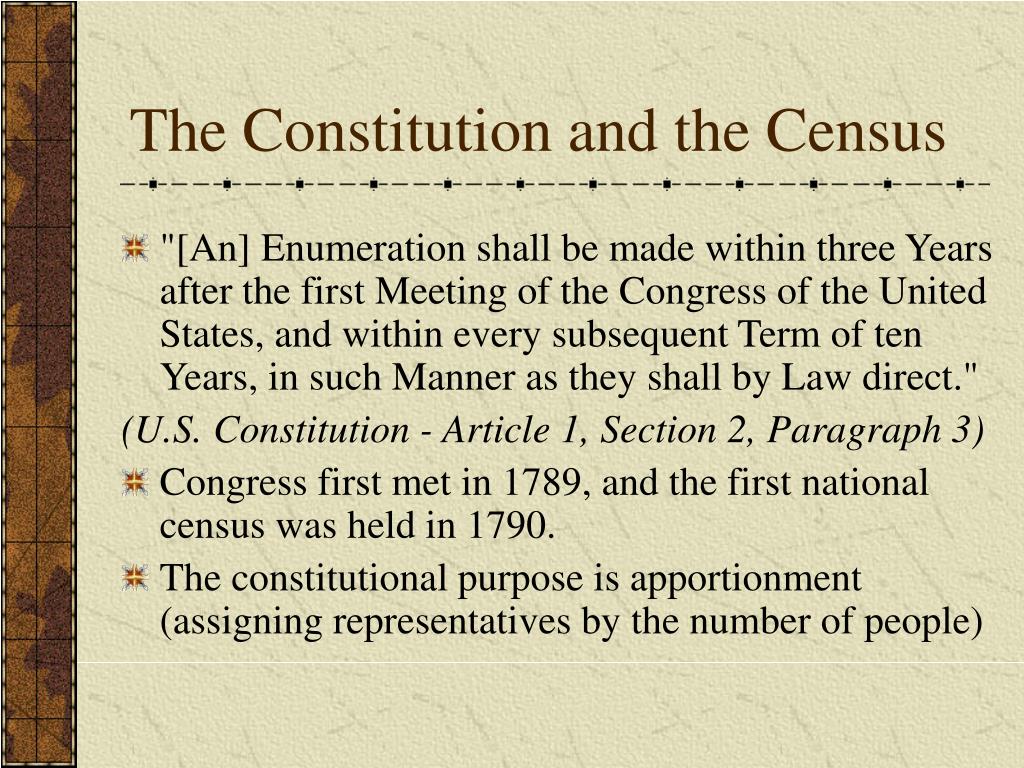
PPT - The Constitution and the Census PowerPoint Presentation, free  download - ID:5712218In response to United States President Donald Trump‘s memorandum that seeks to exclude undocumented immigrants from being counted in in the apportionment of congressional districts, the State of Rhode Island and the cities of Providence and Central Falls will be suing the administration, according to Central Falls Mayor James Diossa, during a July 22 press conference.

“Our City Solicitor, Matt Jerzyk, just informed me that we should expect a lawsuit to come from the State of Rhode Island, Providence and Central Falls, shortly,” said Diossa.