 |
| For more cartoons by Tom Tomorrow, CLICK HERE |
Saturday, August 12, 2023
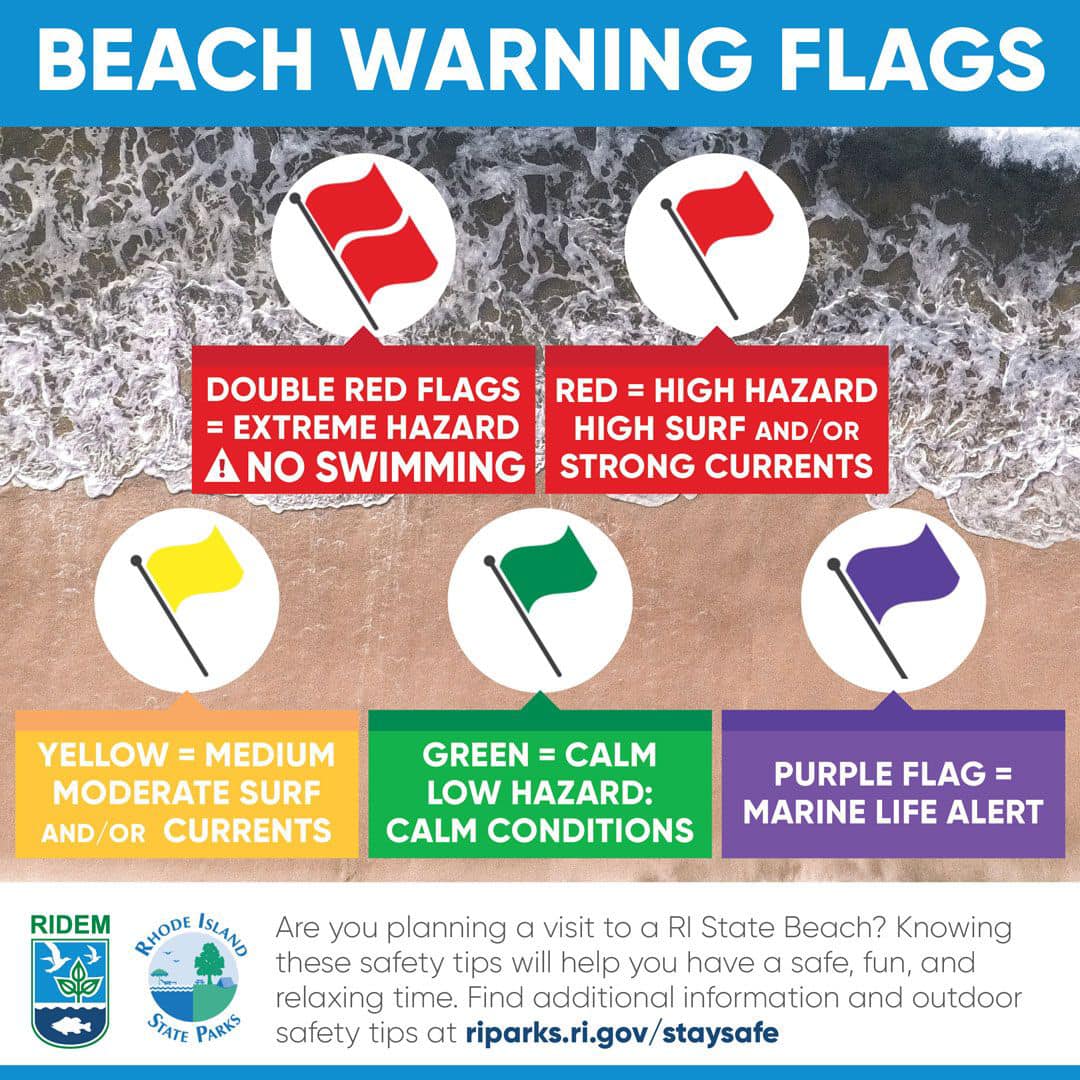
State Announces Summer’s 2nd Finding of West Nile Virus in Westerly again
Cautions Public to Prevent Mosquito Bites
As was the case with the first WNV finding, which DEM announced Aug. 4, the second sample also was collected in Westerly.
Overall, DEM collected 197 samples of mosquitoes from 34 traps set statewide on July 31. All other samples tested negative for WNV and Eastern Equine Encephalitis (EEE).
To date, the Commonwealth of Massachusetts has announced 40 WNV findings and the State of Connecticut has announced 15 findings of WNV. These WNV findings are expected because mosquito-borne diseases become more prevalent in Southern New England as the summer progresses.
WNV has become firmly established throughout North America, in both urban and rural settings. Although WNV has now been detected twice from the same Westerly trap site, state officials stress that at this stage of mosquito season, it is likely present in mosquitoes statewide.
To date, neither Rhode Island, Massachusetts nor Connecticut
have reported any findings of EEE in mosquitoes, humans, or animals.
Although extremely rare in humans, EEE is very serious and has a much higher
human mortality rate than WNV.
WNV is the leading cause of mosquito-borne disease in the continental United States and is much more prevalent than EEE. Cases of WNV occur during mosquito season, which starts in the summer and continues through fall. There are no vaccines to prevent or medications to treat WNV in people.
Fortunately, most people infected with WNV do not feel sick. About one in five people who are infected develop a fever and other symptoms. About one out of 150 infected people develop a serious, sometimes fatal, illness.
DEM and RIDOH
advise Rhode Islanders to reduce their exposure to mosquitoes until the first
hard frost. (A hard frost is when the air and the ground freeze below 32°F for
three hours or below 28°F for two hours.)
The Asian Tiger Mosquito has become prevalent in Rhode Island urban environments, and it has become common again this season. It is notable as a daytime biter encountered in shaded backyards.
It has a striking
black and white pattern evident to the naked eye. It develops from eggs laid in
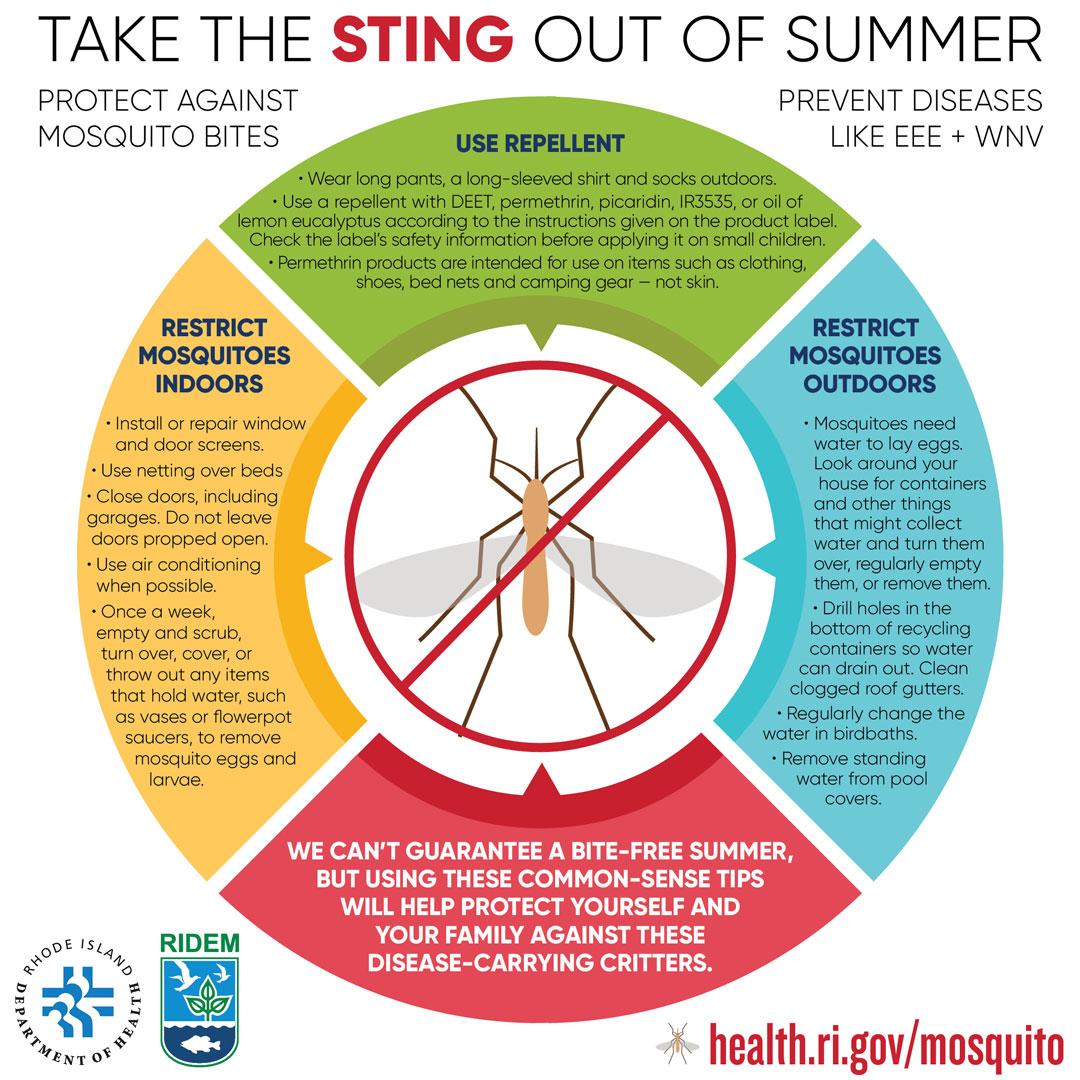
artificial containers, so residents are urged to remove standing water from
containers such as buckets, pots, wheelbarrows, boats, and pools. Clogged rain
gutters and puddles formed on tarps also can support the larvae of this
species. The Asian Tiger Mosquito is known to transmit several diseases,
including WNV.


Routinely drinking alcohol may raise blood pressure even in adults without hypertension
Every additional alcoholic beverage may increase blood pressure over the years
American Heart Association

With the statistical power of seven international research
studies, this analysis confirms for the first time there was a continuous
increase in blood pressure measures in both participants with low and high
alcohol intake. Even low levels of alcohol consumption were associated with
detectable increases in blood pressure levels that may lead to a higher risk of
cardiovascular events.
"We found no beneficial effects in adults who drank a low level of alcohol compared to those who did not drink alcohol," said senior study author Marco Vinceti, M.D., Ph.D., a professor of epidemiology and public health in the Medical School of the University of Modena and Reggio Emilia University in Italy and an adjunct professor in the department of epidemiology at Boston University's School of Public Health.
"We were
somewhat surprised to see that consuming an already-low level of alcohol was
also linked to higher blood pressure changes over time compared to no consumption
-- although far less than the blood pressure increase seen in heavy
drinkers."
How parents can help kids deal with back-to-school anxiety
Spoiler alert: smacking them upside the head is NOT recommended
Elizabeth Englander, Bridgewater State University
 |
| Predictable routines can help children feel calm and in control. Cavan Images/Cavan Collection via Getty Images |
During pre-pandemic times, researchers noted that as many as 7% of children had a diagnosable anxiety disorder that disrupted their everyday functioning. In addition, 20% had a tendency to feel anxious that didn’t rise to the level of a clinical disorder. And all children feel anxious at some time or another.
Most researchers have found that anxiety in children increased during and after the pandemic. Lockdowns that isolated children from their peers and interruptions to their routines may have accounted for the findings in these studies.
As a researcher who’s studied children’s mental health for decades, I know that predictability helps prevent anxiety in children. Predictability means things going along as they’ve always gone: sleep at night, up in the morning, cornflakes for breakfast, off to school, activities in the afternoon, dinner with the family.
In Louise Fitzhugh’s children’s novel “Harriet the Spy,” Harriet’s mother can’t believe that her daughter always takes a tomato sandwich to school. Always. Harriet has no interest in variety. She’s perfectly happy with the same sandwich, year after year.
Anxiety will crop up for many children again this fall, and it can be intertwined with other feelings, such as excitement and shyness. Here are steps parents can take to help reduce their kids’ back-to-school anxiety and encourage a better start to the fall term.
Friday, August 11, 2023
Can you trust AI?
Here’s why you shouldn’t
 |
| AI chatbots are becoming more powerful, but how do you know if they’re working in your best interest? Carol Yepes/Moment via Getty Images |
It doesn’t take much to make it lambaste the other tech giants, but it’s silent about its own corporate parent’s misdeeds.
When Alexa responds in this way, it’s obvious that it is putting its developer’s interests ahead of yours.
Usually, though, it’s not so obvious whom an AI system is serving. To avoid being exploited by these systems, people will need to learn to approach AI skeptically. That means deliberately constructing the input you give it and thinking critically about its output.
Newer generations of AI models, with their more sophisticated and less rote responses, are making it harder to tell who benefits when they speak. Internet companies’ manipulating what you see to serve their own interests is nothing new.
Google’s search results and your Facebook feed are filled with paid entries. Facebook, TikTok and others manipulate your feeds to maximize the time you spend on the platform, which means more ad views, over your well-being.
What distinguishes AI systems from these other internet services is how interactive they are, and how these interactions will increasingly become like relationships. It doesn’t take much extrapolation from today’s technologies to envision AIs that will plan trips for you, negotiate on your behalf or act as therapists and life coaches.
They are likely to be with you 24/7, know you intimately, and be able to anticipate your needs. This kind of conversational interface to the vast network of services and resources on the web is within the capabilities of existing generative AIs like ChatGPT. They are on track to become personalized digital assistants.
As a security expert and data scientist, we believe that people who come to rely on these AIs will have to trust them implicitly to navigate daily life. That means they will need to be sure the AIs aren’t secretly working for someone else. Across the internet, devices and services that seem to work for you already secretly work against you.
Smart TVs spy on you. Phone apps collect and sell your data. Many apps and websites manipulate you through dark patterns, design elements that deliberately mislead, coerce or deceive website visitors. This is surveillance capitalism, and AI is shaping up to be part of it.


Federal Judge Blocks Arkansas Law Criminalizing Librarians
Leave librarians alone!

U.S. District Judge Timothy Brooks—an
appointee of former President Barack Obama—issued a preliminary injunction against
two sections of Act 372 (also known
as S.B. 81), a censorship bill introduced by Arkansas state Sen. Dan Sullivan
(R-20), passed by the Republican-controlled state Legislature, and signed into law by
GOP Gov. Sarah Huckabee Sanders in March.
The law—which would have gone into effect
on Tuesday—makes it a Class A misdemeanor punishable by up to a year in prison
to provide to a minor material "that to the average person, applying
contemporary community standards, the dominant theme of the material taken as a
whole appeals to prurient interest."
The legislation also allows parents and
legal guardians to access minors' library records.
Brooks' temporary injunction against Act
372 applies to Section 3—which criminalizes librarians and booksellers for
providing access to materials deemed "harmful to minors"—and Section
5, which requires libraries to establish material review processes and empowers
courts to compel libraries to remove materials that may be protected by the
First Amendment.
Olive Oil Boosts Brain Health
Regular olive oil consumption is associated with a 28% lower risk of fatal dementia.
By

A recent study suggests that incorporating olive oil into one’s diet could help reduce the risk of death from dementia.
With many countries witnessing rising rates of Alzheimer’s disease and other forms of dementia, the study provides hope that diet, among other healthy lifestyle factors, can aid in preventing or slowing down the progression of these debilitating conditions.
“Our study reinforces dietary guidelines recommending vegetable oils such as olive oil and suggests that these recommendations not only support heart health but potentially brain health, as well,” said Anne-Julie Tessier, RD, PhD, a postdoctoral fellow at the Harvard T.H. Chan School of Public Health. “Opting for olive oil, a natural product, instead of fats such as margarine and commercial mayonnaise is a safe choice and may reduce the risk of fatal dementia.”
Sure to drive RFK Jr. and anti-vaxxers even crazier
The Future of Immunity: The Exciting Progress of Universal Vaccines
By NATIONAL INSTITUTES OF HEALTH
 |
| Illustration of a nanoparticle vaccine that contains proteins from many different flu strains. Credit: UW Medicine Institute for Protein Design |
This often deadly disease, caused by a previously unknown coronavirus called SARS-CoV-2, sparked pandemics globally at an unprecedented pace. By the end of 2022, it had claimed the lives of over 6 million individuals globally.
However, COVID-19 wasn’t the first pandemic to besiege humanity. Merely 15 years prior, a pandemic influenza outbreak affected 60 million individuals worldwide. In 2003, an emergent disease known as severe acute respiratory syndrome, or SARS, infected over 8,000 people globally.
This was triggered by a virus identified as the SARS-associated coronavirus (SARS-CoV). No one can predict when the next pandemic will happen—only that one eventually will.
These recent pandemics have brought into stark relief the need to be prepared for the next emerging disease, whenever it arrives. To this end, NIH-funded research teams have been working to develop universal vaccines against diseases with pandemic potential.
Unlike current vaccines, which confer immunity to one or several strains of a disease, universal vaccines are designed to teach the immune system to defend against all versions of a pathogen—even versions that don’t exist yet. They do this by targeting an element of the pathogen that remains the same across all strains and types.
Such targets are usually those that are least accessible to the immune system. This has posed a significant challenge to vaccine researchers. But with recent progress in vaccine technology, researchers believe that universal vaccines are closer to reality than ever before.
Thursday, August 10, 2023
Campaign finance violations are soaring.
Local candidates caught include MAGA Sen. Elaine Morgan, her opponent Jennifer Douglas and former state rep. Larry Valencia
By Nancy Lavin, Rhode Island Current
Think of Richard Thornton like a financial detective.
Richard Thornton, director of campaign finance for the
Rhode Island Board of Elections, is finding more mistakes on
reports filed by candidates more often.
(Michael Salerno/Rhode Island Current)
As campaign finance director for the Rhode Island Board of Elections, Thornton devotes his days to combing through stacks of spending and fundraising reports for candidates, political action committees and ballot question advocacy groups, cross-checking those accounts with bank statements for potential errors or red flags.
And these days, he’s finding problems a lot more often.
Indeed, the $13,150 in fines candidates paid to the election board in 2022 for campaign finance mistakes (not counting late fees) is more than triple the amount paid the year prior, according to data obtained by Rhode Island Current. With another $5,000 in finance violations paid through July of this year, 2023 is also poised to show a larger increase than in years past.
At face value, this might be cause for alarm. But Thornton sees it as a good thing; it means his three-person team is getting better at sniffing out rulebreakers.
“Our focus has really shifted through the years,” Thornton said. “We have these additional tools which have expanded our role, and we’ve seen a lot of success in that approach.”
The turning point came in 2015, with a trio of bills signed into law by then-Gov. Gina Raimondo that strengthened campaign finance rules and reporting requirements.
John Marion, executive director for Common Cause Rhode Island, describes the bevy of law changes as the “post-Gordon Fox reform,” referring to the former Rhode Island House Speaker who was sentenced to three years in federal prison in 2015 after pleading guilty to bribery, wire fraud and tax evasion.
“I think the number 1 reason you’re seeing more violations is thanks to the post-Gordon Fox reforms, which make it easier for the Board of Elections to spot when there is a violation,” Marion said. “It may look like more people are cheating, but the reality is, people may have been cheating all along, we’re just catching them more.”
Among the bills passed in the wake of the Fox scandal: requiring candidates and political action committees to turn over quarterly bank account statements in addition to their separate accounts of fundraising and spending.
Other laws passed as part of the package of campaign finance reforms require candidates, officeholders and political action committees to keep their campaign accounts separate, and to appoint a treasurer other than themselves if they raise or spend more than $10,000 in a year.
The bank statement law, in particular, was a “gamechanger,” Thornton said.
Comparing a bank statement with a campaign finance report allowed his staff to find “variances,” which in turn, often revealed larger problems with a candidate or committee’s finances.
Also crucial: the almighty subpoena, which the elections board has always had authority to use but has turned to increasingly in recent years if a candidate or committee isn’t willingly turning over their financial information, Thornton said.
While the changes to state campaign finance law went into effect in 2016, the results of those changes took longer to realize. Hence, the increase in fines from campaign finance violations starting in 2021, according to Thornton.
A few of those violations suggest glaring and intentional rule breaking, but more often, Thornton described the violations as inadvertent or accidental errors.
Take Sen. Elaine Morgan. The Hopkinton Republican was among the nine people who entered into consent orders with the election board in 2022 for campaign finance violations. Morgan, who has served in the Rhode Island Senate since 2014, paid a $1,200 fine after she was found to have spent more than $2,600 of campaign funds on personal expenses during the two prior years, according to the election board audit.
Morgan readily admitted to the mistake, which she chalked up to “accidental stupidity.”
She had wrongly thought her campaign debit card was her personal one, since both were marked with her name and from the same bank, Washington Trust Co., she said.
While she characterized her violation as inadvertent, she also stressed the importance of candidates following the rules.
“If we’re going to take money, we have to know the rules,” she said.
Which, based on Thornton’s efforts, they should.

Clarence Thomas’ 38 Vacations
The other billionaires who treated Supreme Court justice to luxury travel
By Brett Murphy and Alex Mierjeski for ProPublica

During his three decades on the Supreme Court, Clarence Thomas has enjoyed steady access to a lifestyle most Americans can only imagine.
A cadre of industry titans and ultrawealthy executives have treated him to far-flung vacations aboard their yachts, ushered him into the premium suites at sporting events and sent their private jets to fetch him — including, on more than one occasion, an entire 737. It’s a stream of luxury that is both more extensive and from a wider circle than has been previously understood.

At least 38 destination vacations, including a previously unreported voyage on a yacht around the Bahamas; 26 private jet flights, plus an additional eight by helicopter; a dozen VIP passes to professional and college sporting events, typically perched in the skybox; two stays at luxury resorts in Florida and Jamaica; and one standing invitation to an uber-exclusive golf club overlooking the Atlantic coast.
This accounting of Thomas’ travel, revealed for the first time here from an array of previously unavailable information, is the fullest to date of the generosity that has regularly afforded Thomas a lifestyle far beyond what his income could provide. And it is almost certainly an undercount.
While some of the hospitality, such as stays in personal homes, may not have required disclosure, Thomas appears to have violated the law by failing to disclose flights, yacht cruises and expensive sports tickets, according to ethics experts.
Subscribe to:
Posts (Atom)