
Thursday, August 17, 2023

DEM teams up with national researchers to protect forests against climate change
Cutting out deadwood, planting new, resilient trees
By Nancy Lavin, Rhode Island Current
 |
| DEM is working to preserve a 45-acre parcel of state forestland in Richmond, pictured in the orange oval. (Courtesy RIDEM) |
The partnership between DEM and the Adaptive Silviculture for Climate Change network will help “future-proof” a 45-acres swath of forest in Richmond, according to a statement from DEM.
“This project aims to find out how different forest types will respond to future climate,” DEM Division of Agriculture and Forest Environment (DAFE) Supervising Forester Will Walker said in a statement.


Ivermectin, rightwing COVID drug of choice, may be useful against tick-borne diseases
A small study showed that feeding deer a type of ivermectin reduced the number of ticks drinking their blood.

The antiparasitic drug, which is mostly used on animals, gained a raucous following during the Covid pandemic after an early search for drugs that could be repurposed to fight it spotted some antiviral activity in a lab assay.
But multiple randomized trials could never reproduce the effect in infected people — including a study published in February that followed more than 1,200 U.S. Covid patients for months. After overwhelming politically driven enthusiasm, ivermectin dwindled to a niche interest.
Now, a team of scientists working within the Connecticut state government has found a new application for something ivermectin was always good at: killing parasites that live in or on animals.
In a small study, they found that feeding deer corn dosed with an ivermectin derivative builds up enough drug in their blood that ticks biting them will (probably) die.
This will be good news, if the finding holds up while the researchers expand the study into more, and larger, sites.
EPA approved fuel ingredient even though it could cause cancer in almost every person exposed over a lifetime
Wrong in so many ways
By Sharon Lerner for ProPublica

Current and former EPA scientists said that threat level is unheard of. It is a million times higher than what the agency usually considers acceptable for new chemicals and six times worse than the risk of lung cancer from a lifetime of smoking.
Federal law requires the EPA to conduct safety reviews before allowing new chemical products onto the market. If the agency finds that a substance causes unreasonable risk to health or the environment, the EPA is not allowed to approve it without first finding ways to reduce that risk.
But the agency did not do that in this case. Instead, the EPA decided its scientists were overstating the risks and gave Chevron the go-ahead to make the new boat fuel ingredient at its refinery in Pascagoula, Mississippi. Though the substance can poison air and contaminate water, EPA officials mandated no remedies other than requiring workers to wear gloves, records show.
ProPublica and the Guardian in February reported on the risks of other new plastic-based Chevron fuels that were also approved under an EPA program that the agency had touted as a “climate-friendly” way to boost alternatives to petroleum-based fuels.
That story was based on an EPA consent order, a legally binding document the agency issues to address risks to health or the environment. In the Chevron consent order, the highest noted risk came from a jet fuel that was expected to create air pollution so toxic that 1 out of 4 people exposed to it over a lifetime could get cancer.
In February, ProPublica and the Guardian asked the EPA for its scientists’ risk assessment, which underpinned the consent order. The agency declined to provide it, so ProPublica requested it under the Freedom of Information Act. The 203-page risk assessment revealed that, for the boat fuel ingredient, there was a far higher risk that was not in the consent order.
EPA scientists included figures that made it possible for ProPublica to calculate the lifetime cancer risk from breathing air pollution that comes from a boat engine burning the fuel. That calculation, which was confirmed by the EPA, came out to 1.3 in 1, meaning every person exposed to it over the course of a full lifetime would be expected to get cancer.
Wednesday, August 16, 2023
After Chariho's narrow escape from a right-wing takeover, focus on 2024
How communities can protect school boards from 'extremist' takeovers
 |
| Future school committee member? |
"Two conservative board members faced reelection in November 2022, and a third Republican-held seat was open. (Board of Education elections are officially nonpartisan, but the major parties generally endorse candidates.) Eleven of the 19 members are elected, with the others gubernatorial appointees," Pepper writes.
"First elected in 2018, Jenny Kilgore had spent much of the prior two years fighting to rescind a resolution against racism that the school board had passed following the 2020 murder of George Floyd. She participated in protests against teaching critical race theory in schools (even though it's not taught in Ohio public schools).
Tim Miller, appointed by Republican
Governor Mike DeWine in 2021 to fill a vacancy in an elected seat, also voted
to rescind the anti-racism resolution. These and other actions
turned the once-quiet school board into a vicious political battleground."
Pepper recalls that "three candidates—two former teachers themselves—ran for those seats promising to end the culture wars," noting that they "faced difficult odds of being elected in 2022, a year that was mostly a smashing success for Ohio Republicans. DeWine won reelection in a landslide.


Ticks claim first Rhode Island fatality of the year
RIDOH Reports Case of Rare Tick-Borne Disease Powassan
Laboratory testing was conducted by the
Centers for Disease Control and Prevention (CDC), which confirmed the finding earlier
this month. The case involved a female over the over the age of 80 from
Washington County, who developed neurological symptoms and died in mid-July.
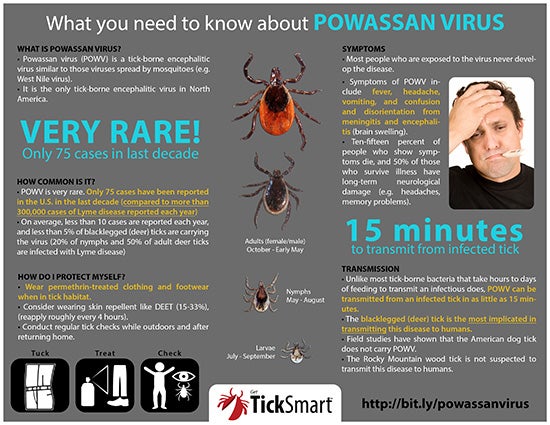
Powassan is a tick-borne disease that is
found mostly in the Northeast and the Great Lakes region of the U.S. and in
eastern Canada. Over 239 cases of Powassan have been reported in the United
States in the past 10 years (2013-2022).
Powassan cases are rare, but the reported
number of cases has increased in recent years. Between 2013 and 2022, there
were 93 cases of Powassan reported in New England: 49 cases in Massachusetts,
18 cases in Connecticut, 16 cases in Maine, five cases in New Hampshire, and
five cases in Rhode Island.
Initial symptoms of Powassan include fever,
headache, vomiting, and generalized weakness. The disease usually progresses to
meningoencephalitis, which may include meningeal signs, altered mental status,
seizures, aphasia (difficulty understanding or speaking), paresis (muscular
weakness or paralysis), movement disorders, or cranial nerve palsies. People
with severe Powassan disease often need to be hospitalized. There is no vaccine
or treatment for Powassan, so preventing exposure to ticks is the best strategy
to avoid this disease.
New Weight Loss Drugs Carry High Price Tags and Lots of Questions for Seniors
Losing weight comes with a weighty price tag

After her weight began climbing in high school, she spent years losing 50 or 100 pounds then gaining it back. Morris, 78, was at her heaviest in her mid-40s, standing 5 feet 10½ inches and weighing 310 pounds. The Pittsburgh resident has had diabetes for more than 40 years.
Managing her weight was a losing battle until Morris’ doctor prescribed a Type 2 diabetes medication, Ozempic, four months ago. It’s one in a new category of medications changing how ordinary people as well as medical experts think about obesity, a condition that affects nearly 4 in 10 people 60 and older.
The drugs include Ozempic’s sister medication, Wegovy, a weight loss drug with identical ingredients, which the FDA approved in 2021, and Mounjaro, approved as a diabetes treatment in 2022. (Ozempic was approved for diabetes in 2017.) Several other drugs are in development.
The medications reduce feelings of hunger, generate a sensation of fullness, and have been shown to help people lose an average of 15% or more of their weight.
We're in hot water
NOAA Releases Updated 2023 Atlantic Hurricane Season Outlook
NOAA
Due to current ocean and atmospheric conditions, such as record-warm sea surface temperatures, NOAA’s Climate Prediction Center—a division of the National Weather Service—has increased their prediction for the ongoing 2023 Atlantic hurricane season to an “above normal” level of activity from a “near normal” level with their most recent update.

Although cyclone formation can occur any time of the
year, the Atlantic Hurricane Season officially runs from June 1 through
November 30, when most tropical cyclones tend to form in the Atlantic.
The 2023 Atlantic hurricane season began surprisingly
early on January 16, when the National Hurricane Center issued a special
tropical weather outlook for a low-pressure system north of Bermuda. This
system became an unnamed subtropical storm southeast of Nantucket,
Massachusetts, which made landfall on January 17 near Louisbourg, Nova Scotia
before dissipating over eastern Quebec the next day.
Then, on the first official day of hurricane season, a
tropical depression formed off the west coast of Florida, over the Gulf of
Mexico on June 1. This strengthened into Tropical Storm Arlene the following
day, bringing several inches of rainfall across South Florida before
dissipating north of Cuba.
Tuesday, August 15, 2023
Compromised Supreme Court justice to hear case that would tax his rich benefactors
Alito Urged to Recuse From Case That Could Preemptively Ban Federal Wealth Tax

Democrats on the Senate
Judiciary Committee sent a letter urging Chief
Justice John Roberts to "take appropriate steps to ensure that Justice
Alito will recuse himself" from Moore v. United States, which
the Supreme Court recently agreed to
take up.
The lawmakers' demand was prompted by
a friendly interview that
Alito gave to The Wall Street Journal's opinion section, which in
June allowed the right-wing justice to get out in front of
a ProPublica story on his luxury
trip with billionaire hedge fund titan Paul Singer.


Brown joins the fight to stem the climate crisis
Brown-led team to establish climate and health research hub for New England coast
Brown University

A new federal grant will enable a team of researchers led by a Brown University scientist to bring together experts and stakeholders in an effort to create a coastal resilience research hub aimed at addressing climate change related challenges faced by low-lying communities in New England.
The National Science Foundation grant is expected to
total approximately $6 million over five years.
The team will include eight faculty members from Brown as well as 21 researchers from University of Rhode Island, Rhode Island College, University of New Hampshire, Gulf of Maine Research Institute and Northeastern Regional Association of Coastal Ocean Observing Systems.
The group will be led
by Emanuele Di Lorenzo, a professor in the Department of Earth, Environmental
and Planetary Sciences at Brown, and Sarah Lummis, a researcher at the
Institute at Brown for Environment and Society and executive director of the
new hub.
The team plans to initially work with four coastal communities in New England — one industrial port and one commercial fishing port in both Rhode Island and Maine — but eventually they hope to bring solutions from these pilot communities to the entire New England coast and beyond.
The goal is to create a set of systems and establish a network of
experts that members of these communities can turn to for help developing
strategies to become more resilient to climate change, including tools for data
collection and predicting rising water levels.
Subscribe to:
Posts (Atom)