Menu Bar

Home           Calendar           Topics          Just Charlestown          About Us

Monday, April 1, 2024

Trump judges do it again

US court blocks EPA order to eliminate PFAS in plastic containers

SHANNON KELLEHER  0

A US appeals court has vacated an action by the US Environmental Protection Agency (EPA)  ordering a company to stop producing plastic containers that leach toxic per- and polyfluoroalkyl substances (PFAS) into pesticides, household cleaners, condiments, and many other products.

The 5th US Circuit Court of Appeals on March 21 ruled that the EPA exceeded its statutory authority when it issued orders to Texas-based Inhance in December prohibiting the company from manufacturing or processing PFAS through its fluorination process for containers.

The EPA move came after the agency determined that types of PFAS created during the fluorination process “are highly toxic and present unreasonable risks that cannot be prevented other than through prohibition of manufacture.”

The agency issued the orders under the Toxic Substances Control Act (TSCA), which authorizes the EPA to regulate and screen chemicals produced or imported into the US.

But Inhance challenged the EPA’s action, arguing that the EPA improperly sought to take action against the company under a section of TSCA dealing with new uses of chemicals, and that Inhance’s process did not constitute a new use.

The court agreed that the fluorination technique Inhance uses to prevent liquids from leaking out of its plastic containers – a process that creates PFAS chemicals – does not count as a significant new use since Inhance has been using this process since 1983.

The EPA’s interpretation of the law “distorts TSCA’s framework and defies common sense,” the court opinion states. The agency could pursue action against Inhance under a different section of TSCA, but would be required to conduct a cost-benefit analysis of the action, the court stated.

Failure to Define Long Covid Will Impede Research Progress

Hard to research what you can't define

By Leonard A. Jason

Case definitions are crucial in science, as they allow scientists to be sure they're studying people with an illness versus those without the illness. Without an accurate case definition — or if there are multiple contrasting ones — it’s difficult to estimate prevalence rates, identify biomarkers, and discover effective treatments for a condition. 

Unfortunately, conceptual confusion has led to many different case definitions for long Covid, the post-viral illness experienced by some people after a SARS-CoV-2 infection. The failure to reach consensus on a single set of defining criteria for long Covid continues to have significant negative ramifications for patients and researchers.

Such complications have occurred for another illness triggered by viral infection known as myalgic encephalomyelitis/chronic fatigue syndrome, or ME/CFS. 

Multiple case definitions and a constellation of varied symptoms among ME/CFS patients has made identifying biomarkers difficult, which has caused some doctors and researchers to inaccurately attribute the condition to solely psychiatric reasons. 

Similarly, the failure of scientists to settle on one case definition for long Covid potentially incurs risks of stigma for people with the illness.

Collecting data on symptoms is a primary way of constructing case definitions, but surveys designed for long Covid have been inadequate. This is because the vast majority of such surveys have focused on just assessing whether a symptom occurs — asking respondents to answer either “yes” or “no.” 

But these questions tell researchers little about critical aspects of these symptoms, such as how frequently they occur (a little of the time to all of the time) or how serious they are (from mild to very severe). 

Because numerous somatic symptoms, such as fatigue and pain, can be found at low levels in healthy people or in people with other conditions, assessing the yes-versus-no occurrence of a symptom does not inherently distinguish people who have long Covid from those who don’t.

Sunday, March 31, 2024

What Would a Second Trump Term in the White House Mean for Efforts To Stave off Cataclysmic Climate Change?

How much damage could he cause?

By RODDY SCHEER

Dear EarthTalk: What would a second Trump term in the White House mean for efforts to stave off cataclysmic climate change? — George B., Saginaw, MI

For years former President Trump has repeatedly made false claims that climate change is a hoax. 

His efforts to negate progressive climate change policies were evident in his first term, when he pulled the U.S. out of the Paris climate agreement, rolled back environmental regulation, and relaxed regulations on oil and gas drilling.

According to Trump’s allies and advisors, a second term for Trump would mean even more extreme environmental policies. While efforts to fight climate change are stronger now than when Trump first attacked them, he can still do substantial damage.

Trump has said that should he become president again, boosting fossil fuels would be one of his top priorities. Trump’s allies have said that Trump plans to drive forward fossil fuel production, which would overturn rules made to curb planet-heating emissions.

$60

The company he keeps

Want to feel young?

Protect your sleep

Stockholm University

Feeling sleepy can make you feel ten years older. Researchers at Stockholm University have discovered that sleep affects how old you feel. The study is published in the scientific journal Proceedings of the Royal Society B.

Do you ever find yourself longing for the energy and vitality of your younger years?

Feeling young is not just a matter of perception -- it is actually related to objective health outcomes.

Previous studies have shown that feeling younger than one's actual age is associated with longer, healthier lives.

There is even support for subjective age to predict actual brain age, with those feeling younger having younger brains.

The Burden of Getting Medical Care Can Exhaust Older Patients

So what's the answer?


Susanne Gilliam, 67, was walking down her driveway to get the mail in January when she slipped and fell on a patch of black ice.

Pain shot through her left knee and ankle. After summoning her husband on her phone, with difficulty she made it back to the house.

And then began the run-around that so many people face when they interact with America’s uncoordinated health care system.

Gilliam’s orthopedic surgeon, who managed previous difficulties with her left knee, saw her that afternoon but told her “I don’t do ankles.”

He referred her to an ankle specialist who ordered a new set of X-rays and an MRI. For convenience’s sake, Gilliam asked to get the scans at a hospital near her home in Sudbury, Massachusetts. But the hospital didn’t have the doctor’s order when she called for an appointment. It came through only after several more calls.

Coordinating the care she needs to recover, including physical therapy, became a part-time job for Gilliam. (Therapists work on only one body part per session, so she has needed separate visits for her knee and for her ankle several times a week.)

“The burden of arranging everything I need — it’s huge,” Gilliam told me. “It leaves you with such a sense of mental and physical exhaustion.”

The toll the American health care system extracts is, in some respects, the price of extraordinary progress in medicine. But it’s also evidence of the poor fit between older adults’ capacities and the health care system’s demands.

Anti-abortion activists want to use the Comstock Act to ban all abortions in the nation, and most birth control pills and devices as a bonus.

Abortion Rights and the Cold, Dead Hand of Anthony Comstock

THOM HARTMANN for ThomHartmann.Com
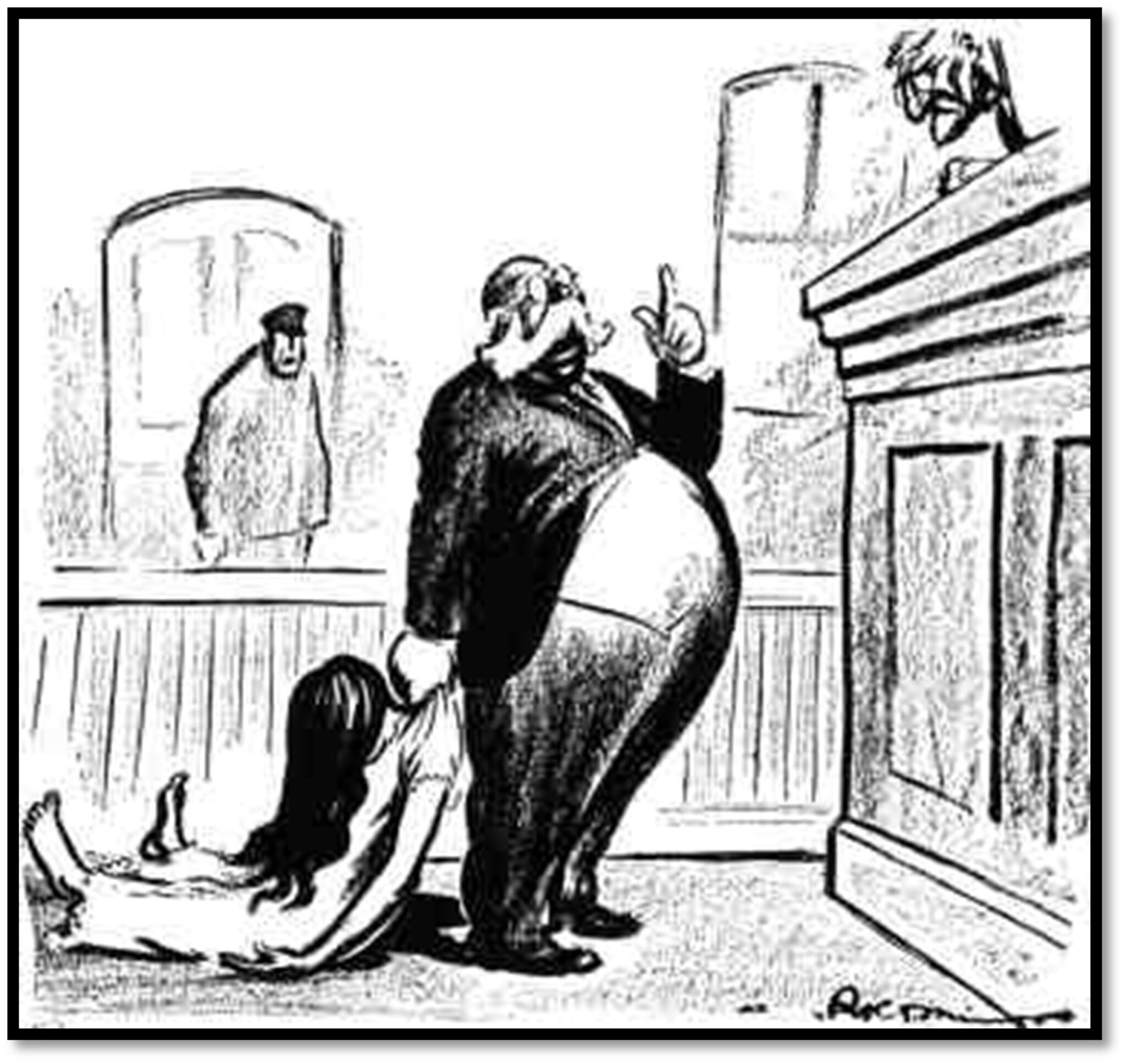
Your Honor, this woman gave birth to a naked child!
[Cartoon from The Masses, September 1915.]
The Supreme Court session on March 26 was a loud and persistent warning: America needs to pay attention.

During oral arguments, the Comstock Act was invoked repeatedly by Justice Samuel Alito, Justice Clarence Thomas, and Erin Hawley, the wife of Republican Senator Josh Hawley, who was arguing before the court that the abortion drug, Mifepristone, should be banned nationwide.

Now that it’s fairly clear the “sad doctors” argument before the court yesterday was so pathetically weak they can’t use it to ban Mifepristone, anti-abortion activists are talking about finding a case they can push up to the court next year that will allow it to ban all abortions in the nation, and most birth control pills and devices as a bonus.

How do they plan to do it? With the Comstock Act. You could see and hear the set-up of this future court case in Yesterday’s arguments.

Justice Sam Alito said:

This [Comstock Act] is a prominent provision. It’s not some obscure subsection of a complicated, obscure law. Everybody in this field knew about it.

Erin Hawley was emphatic:

We don’t think that there’s any case of this court that empowers FDA to ignore other federal law. The Comstock Act says that drugs should not be mailed… either through the mail or through common carriers.

And Clarence Thomas laid out the possibility of future litigation when he essentially threatened the lawyer for Danco Laboratories, the manufacturer of Mifepristone:

“How do you respond to an argument that mailing your product and advertising it would violate the Comstock Act?” He went onto note that the law “is fairly broad, and it specifically covers drugs such as yours.”

In other words, they want the act enforced today.

Bloomberg news laid it out yesterday:

“Do we think the Supreme Court majority is going to rule on the Comstock Act in this case? The answer to that is no,” said Mary Ziegler, a law professor at the University of California at Davis who specializes in reproductive rights. “Do we think that the Comstock Act is going to come up again at some point in the future? The answer to that is definitely.”

So, what the heck is the Comstock Act and why are Republicans trying to revive it before the Supreme Court and in threatening letters to pharmacy chains?

You’ve probably never heard of Anthony Comstock, a Civil War Union soldier and New York postmaster, who died in 1915. You need to learn about him and his legacy, however, as his long fingers are about to reach up out of the grave and wrap themselves around the necks of every American woman of childbearing years.

Anthony Comstock was a mama’s boy who hated sex. His mother died when he was 10 years old, and the shock apparently never left him; women who didn’t live up to her ideal were his open and declared enemies, as were pornography, masturbation, and abortion. He was so ignorant of sex and reproduction that he believed a visible human-like fetus developed “within seconds” of sexual intercourse.

Comstock spent decades scouring the country collecting pornography, which he enthusiastically shared with men in Congress, and harassing “loose women.” For example, when he visited a belly-dancing show (then a new craze) in Chicago at the Cairo Theatre during the World’s Fair of 1893, he demanded the show be shut down.

Saturday, March 30, 2024

Inside the Historic Suit That the Gun Industry and Republicans Are on the Verge of Killing

Endless battle to stop illegal guns

by Vernal Coleman for ProPublica

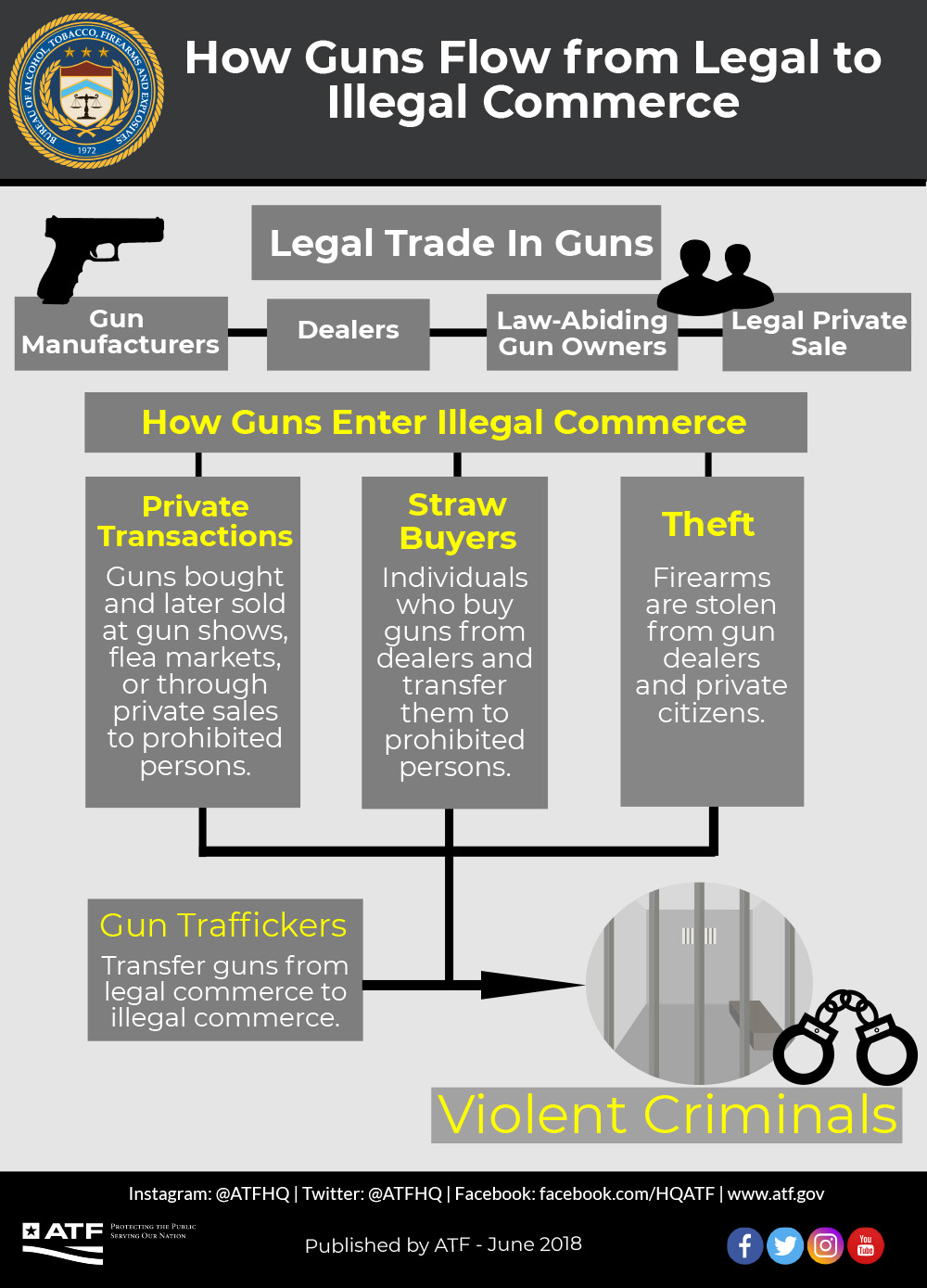
Twenty-five years ago, Scott King, then mayor of Gary, Indiana, spoke solemnly as he described a new strategy the city was taking to deal with the flow of illegally purchased guns fueling violent crime there.

Undercover Gary police officers had fanned out across the area for Operation Hollowpoint, successfully purchasing guns and ammunition at federally licensed firearm retailers despite representing themselves as suspicious buyers. King presented surveillance footage in an 18-minute video produced by the city.

Inside one pawn shop, a bespectacled clerk and two undercover police officers are shown discussing a 9 mm pistol. After the male officer admitted he did not have the permit required to buy the gun, the female officer accompanying him told the clerk she did. The clerk then suggested she buy the gun on her partner’s behalf in violation of federal gun restrictions.

“Might as well put it in your name then so I don’t have to make a call,” the clerk responded. “The feds are constantly screwing with people.”

The footage, which documented four suspicious purchases at different retailers selling guns, showed “how easy juveniles, felons and other prohibited purchasers can acquire guns from legitimate gun dealers through the use of a straw purchaser,” King said in the video.

The stings formed the basis of the city’s historic lawsuit seeking to hold local gun retailers and major gun manufacturers, such as Smith & Wesson, Glock and others, responsible for illegal sales like those uncovered in the investigation. As part of the suit, the city sought monetary damages and changes in industry practices.

Throw in a free pair of sneakers

Happy Easter


Not having job flexibility or security can leave workers feeling depressed, anxious and hopeless

Bad jobs suck

Monica Wang, Boston University

Warehouse employees frequently lack control over their
own schedules. Andres Oliveira/E+ via Getty Images
When employees don’t have control over their work schedules, it’s not just morale that suffers – mental health takes a hit too. 

That’s what my colleagues and I discovered in a study recently published in the medical journal JAMA Network Open.

As a public health expert, I know that the way our jobs are designed can affect our well-being. Research has shown that flexibility, security and autonomy in the workplace are strong determinants of health.

To understand how powerful they are, my colleagues and I looked at the 2021 National Health Interview Survey, a major data collection initiative run out of the National Center for Health Statistics. We analyzed responses from 18,144 working adults across the U.S., teasing out how job flexibility and security may be linked with mental health.

Common Household Chemicals Linked to Brain Damage

From Furniture To Shampoo

By CASE WESTERN RESERVE UNIVERSITY 

New research indicates that chemicals found in countless household products can damage specialized brain cells.

A team of researchers from the Case Western Reserve University School of Medicine has provided fresh insight into the dangers some common household chemicals pose to brain health. They suggest that chemicals found in a wide range of items, from furniture to hair products, may be linked to neurological diseases like multiple sclerosis and autism spectrum disorders.

Neurological problems impact millions of people, but only a fraction of cases can be attributed to genetics alone, indicating that unknown environmental factors are important contributors to neurological disease.

Trump-era tax cuts contributed to a decline in higher ed giving, with fewer Americans donating to colleges and universities

Ending charitable tax deductions for most taxpayers hurt many non-profits

Jin Lee, University of Louisiana at Lafayette

More causes competing for fewer dollars
Policy changes brought on by the Tax Cuts and Jobs Act, which former President Donald Trump signed into law at the end of 2017, appear to have led many small-dollar donors to give less money to colleges and universities – or to stop giving altogether.

Individual donations, whether from graduates or people who didn’t attend those colleges and universities, declined by 4% from US$44.3 billion in the 2017-2018 academic year to $42.6 billion two years later. That’s what my colleague, Sungsil Lee, and I found when we examined a decade of data regarding charitable contributions to 660 colleges and universities and adjusted the totals for inflation.

We also found that the Trump-era tax reforms led to a 7% decline in the number of individual donors, after controlling for other factors such as enrollment size and tuition.

Friday, March 29, 2024

Politicians may rail against the ‘deep state,’ but research shows federal workers are effective and committed, not subversive

Public workers are not the enemy

Jaime Kucinskas, Hamilton College and James L. Perry, Indiana University

A worker at the National Hurricane Center tracks weather
over the Gulf of Mexico. Joe Raedle/Getty Images
It’s common for political candidates to disparage “the government” even as they run for an office in which they would be part of, yes, running the government.

Often, what they’re referring to is what we, as scholars of the inner workings of democracy, call “the administrative state.” 

At times, these critics use a label of collective distrust and disapproval for government workers that sounds more sinister: “the deep state.”

Most people, however, don’t know what government workers do, why they do it or how the government selects them in the first place.

Our years of research about the people who work in the federal government finds that they care deeply about their work, aiding the public and pursuing the stability and integrity of government.

Most of them are devoted civil servants. Across hundreds of interviews and surveys of people who have made their careers in government, what stands out most to us is their commitment to civic duty without regard to partisan politics.